Crashes, No Sound, or Screen Glitches?
Random freezes, missing sound and display glitches usually trace back to one bad driver. Find and replace yours safely.Free scan · under a minuteWindows Errors? Fix Them Before They Spread
Repair common Windows errors and clear accumulated junk for a smoother, more stable PC - no reinstall needed.Free scan · no reinstallThe most effective way to control dust in a basement woodworking shop is to capture it at the tool, before it spreads into the room. Use a hood and local exhaust suited to each machine, keep the system maintained, and clean what escapes with a vacuum or damp methods rather than blowing it into the air. Wood dust and silica dust from concrete or stone are different hazards; silica-specific workplace rules are not universal requirements for a home shop.
Start by capturing dust at the tool
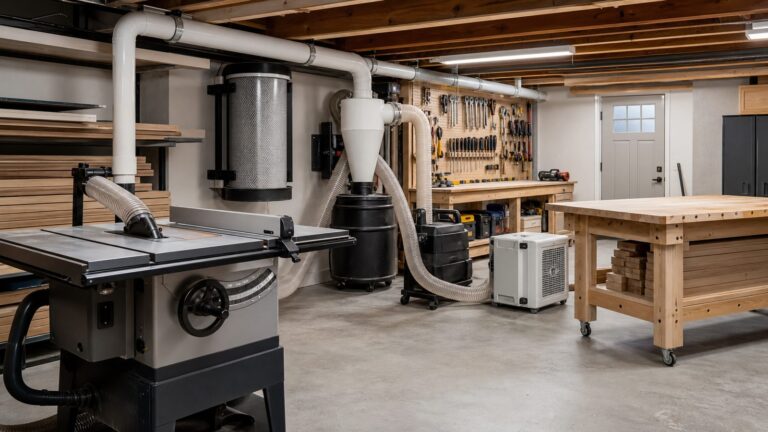
For woodworking, OSHA identifies local exhaust ventilation as the primary control: a hood collects dust at or near the point where it is generated, and an air-cleaning device removes it from the exhaust stream. The closer the hood is to the emission source, the better its chance of capturing dust before it disperses. See OSHA’s woodworking wood-dust guidance and its possible solutions for wood dust.
Match collection to each machine
Check that the hood and dust port fit the tool, then use a collector that can meet the airflow requirements specified for that tool or system. A connection beneath a table saw may collect dust that falls into the cabinet while missing some of the fast-moving dust thrown above the table. Consider how the saw ejects dust, not just whether it has a port.
NIOSH’s 1996 publication on table-saw dust describes an auxiliary hood above the blade. In laboratory testing, that specific hood reduced wood-dust emissions by greater than 90 percent when installed on a typical table saw. NIOSH cautioned that its tested design was not commercially available when the guidance was published, so the result should not be treated as a performance claim for ordinary retail collectors or for a particular basement setup. Read NIOSH publication 96-127.
Recommended Free Tools
#1 Best Overall
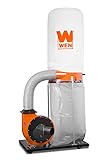
- Circulate up to 1,300 cubic feet of air per minute
- Attach up to two tools at a time with the dual 4-inch air inlets
- Vertical collection bag holds up to 50 gallons of dust
- 14-amp motor rotates the 10-inch steel impeller up to 3450 RPM
- Includes mobile base with four swivel casters for easy mobility
Compare systems on useful criteria
- Tool fit: Does the hood connect securely to the machine’s dust port and cover the likely escape points?
- Airflow: Can the system deliver the airflow the tool or collector manufacturer specifies?
- Capture location: Does it collect dust where the machine throws it, including above a saw table where relevant?
- Filtration and handling: What filtration does the system use, and can dust be emptied or replaced without unnecessarily releasing it?
- Maintenance: Are filters and collection components accessible for inspection and replacement as directed by the manufacturer?
The cited sources do not establish performance, price, or basement suitability for any specific consumer collector or standalone workshop air cleaner. Treat room air cleaners as supplementary rather than a substitute for collecting dust at the machine.
Maintain collection, then clean what settles
A collection system cannot help if its hood is displaced, connections leak, or filters are clogged. Inspect the setup and maintain or replace filters according to the manufacturer’s instructions. After tool capture, remove settled dust with a suitable vacuum or careful wet-cleaning method instead of using compressed air or dry sweeping when those methods could send dust back into the air.
Rank #2
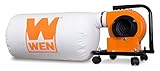
- 5.7-amp brushed motor combined with the 6-inch impeller moves up to 660 cubic feet of air per minute
- 4-inch dust port allows for connection to your favorite woodworking tools
- Compact design includes an onboard carrying handle for easy storage and transportation
- Measures in at 34.25 x 13 x 14.2 inches in size with a weight of 17 pounds
- Features lockable swivel casters, an optional wall mount, a 12-gallon 5-micron zippered collection bag, and a two-year warranty
OSHA’s restrictions on dry sweeping or brushing apply to covered workplaces handling respirable crystalline silica when feasible alternatives, such as wet sweeping or HEPA-filtered vacuuming, are available. CDC/NIOSH silica guidance likewise advises against dry sweeping and compressed air during housekeeping. These are silica-specific occupational recommendations, not a general legal standard for every home woodworking shop. See OSHA’s respirable crystalline silica standard and CDC/NIOSH safe work practices for silica.
Keep wood dust and silica dust distinct
Woodworking produces wood dust. Cutting or grinding concrete, stone, or similar silica-containing material can produce respirable crystalline silica, a separate hazard with its own occupational rules and controls. Do not assume that a dust-collection setup adequate for wood controls silica, or apply silica workplace regulations as though they prescribe a universal home-shop ventilation design.
Free tools Windows power users keep installed
One-click scans. No signup required.
Rank #3
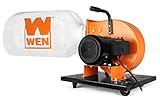
- Powerful 7.4-amp induction motor combined with the 9-inch impeller moves up to 600 cubic feet of air per minute
- 4-inch dust port allows for connection to your favorite woodworking tools
- Mount the unit to the wall of your shop for accessible dust collection whenever you need it
- Features an onboard carrying handle, swivel casters, a 15-gallon 5-micron zippered collection bag, and a two-year warranty
- Measures in at 43.3 x 17.7 x 20.1 inches in size with a weight of 41.1 pounds
For covered construction work involving silica, OSHA says indoor or enclosed work may need exhaust ventilation to minimize visible airborne dust accumulation. That guidance does not specify a universal ventilation design for a residential basement. If a basement project includes silica-generating tasks, assess and control that work separately from routine woodworking dust. OSHA’s silica standards FAQ addresses the workplace context.
Independent reader supportYour contribution helps us test, update, and keep practical guides available for everyone.Understand the health reason for controlling wood dust
NIOSH identifies wood dust exposure as associated with irritation, allergy, reduced lung function, asthma, and nasal cancer. OSHA notes that certain hardwood species have been reported to cause nasal cancer among woodworkers, particularly with high exposure. These occupational hazard findings support reducing airborne dust; they do not predict an individual home woodworker’s outcome.
Rank #4

- 【HIGH EFFICIENCY】 Our DEWALT high efficiency dust separator can capture wood chips and other debris before they enter your vacuum cleaner, reducing suction loss due to clogged vacuum filters. Saves you the cost and time of expensive filter and dust bag replacement.
- 【WIDE APPLICATION】 This dust separator applies to most materials: wood chips, drywall dust, concrete dust, clay silica dust, soda water, cooling ash and soot, water, metal shavings, baking powder, grass and leaves, pets hair, drug waste and more.
- 【COMPATIBLE DESIGN】 The four-caster base of the dust collection system makes it very stable and easy to move around the workshop. Our 6 gallon shop vacuum system barrels are easy to empty. With 1-7/8" or 2-1/2" port, it can be used with most vacuum cleaners, such as household vacuum cleaners, industrial vacuum cleaners, sweepers, etc.
- 【PREMIUM MATERIALS】 All included parts are made of durable, high-quality and heat resistant materials with anti-clogging design for optimum efficiency.
- 【WHAT YOU GET】1 x DEWALT dust separator, 1 x 6 gallon poly bucket (vacuum cleaner not included), 2 x Hose Holder, 1xLid, 2 x Lid Sealing Strip, 2 x Lid Latch, 2 x Handle, 1 x 1-7/8" Hose, 1 x Wheel Bracket, 4 x Caster bushing, 4 x Screws (3.9 * 16 F), 4 x Screws (4.8 * 16 F),1 x 3 years limited warranty.
Use a respirator as added protection, not the collection plan
A respirator may be appropriate for some tasks, but it does not replace source capture and housekeeping. OSHA says selecting a respirator requires knowing the workplace contaminants and their concentrations. Silica guidance also stresses appropriate selection, individual fit, and maintenance. The right choice therefore depends on the hazard and task; a generic mask recommendation cannot establish adequate protection for every basement shop.
Quick Recap
Product prices and availability are accurate as of the date/time indicated and are subject to change. Any price and availability information displayed on Amazon at the time of purchase will apply.
Do these 3 things before closing this tab:
1Repair Windows errors before they cause bigger problems2Fix the driver behind crashes, sound loss and screen glitches3Clear out junk files and repair common Windows errors