The Tool Desk
Outbyte PC Repair FREERepair Windows errors before they cause bigger problemsFix Now →Outbyte Driver Updater FREEScan for outdated or missing drivers - takes under a minuteDriver Scan →Some links on this page are affiliate links: if you buy through them we may earn a commission, at no extra cost to you.
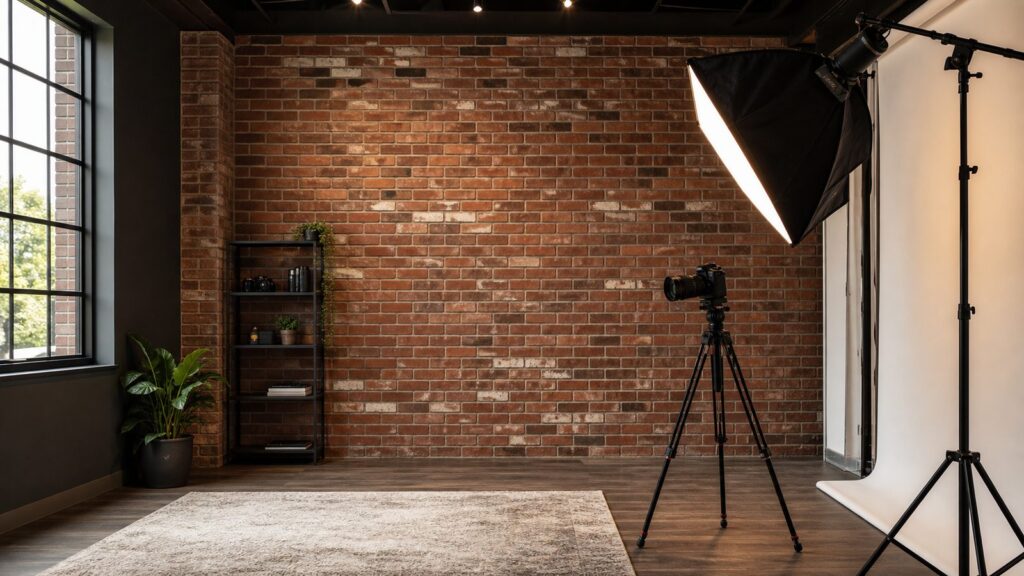
A good brick wall photography background does more than fill empty space. It gives the camera texture, depth, scale, and a sense of place without building a full set. Red brick can make a portrait feel urban and grounded. White painted brick can make headshots and product images feel clean but still warm. Reclaimed brick can add history to restaurant, hospitality, wedding, and editorial shoots. Dark brick can create drama, provided the lighting is controlled.
The best choice depends on how permanent the backdrop needs to be, how close the camera will get, how much weight the wall can carry, and whether the wall is decorative, structural, or part of a building envelope. On our job sites, we look at brick as both a finish and a building system. Mortar condition, moisture movement, anchoring, wall flatness, edge details, and lighting behavior all matter. A wall that looks great in a wide phone photo may not hold up under a commercial lens, repeated client use, or close product photography.
As an Amazon Associate I earn from qualifying purchases.
For most indoor photo studios, thin brick veneer over a proper substrate is the best balance of real texture, manageable weight, and predictable installation. For short-term events, faux panels or printed vinyl may be enough. For exterior shoots or permanent commercial spaces, real masonry and exterior veneer need proper drainage, flashing, support, and code-aware detailing. The camera sees the face of the wall, but the long-term success of that wall depends on what is behind it.
What Makes Brick Work So Well as a Photography Background?
Brick photographs well because it gives the image structure without needing props. The joints create subtle lines, the units create rhythm, and the texture catches side light in a way that flat drywall cannot. A standard modular brick is roughly 2 1/4 inches high by 7 5/8 inches long by 3 5/8 inches deep, with mortar joints commonly around 3/8 inch. That repeated scale reads clearly behind a person, a table setting, a bicycle, a jacket, or a handmade product.
Popular on Amazon

- Large Dimension: with a size of approximately 10 x 8 ft/ 305 x 244 cm (width x height), this dark gray brick wall backdrop is large enough to cover most wall and stages, making it versatile and fitting for numerous occasions, from photoshoots to party decorations
- Quality Material: the fabric brick backdrop is made of polyester fabric, which is not only soft to the touch but also boasts its high resolution characteristics; The use of such fabric ensures that the colors remain vibrant, and the image detail remains clear
- Multi Purpose Usage: the brick backdrop for photography is ideal for newborn birthday parties, Christmas celebrations, Halloween, weddings, game theme events, video conferences, and so on; Additionally, it features brick wall texture patterns, works well as a studio prop and party decoration
- Anti Reflective Feature: the brick background comes with a matte surface, which is non reflective and reduces glare; It ensures that your photos and videos are not affected by distracting reflections, and remain in good condition
- Convenient to Carry and Store: the brick wall photography can keep its shape without deformation; Its fabric material can withstand repeated uses without losing its quality; Furthermore, it is foldable and lightweight, making it convenient to carry around and store, making it an ideal choice for many occasions
The key is control. Brick can support the subject, or it can overpower the subject. If the person stands directly against the wall, every mortar joint stays sharp and facial shadows can land hard on the brick. For portraits, we usually want the subject 3 to 8 feet off the wall when the room allows it. That separation gives the photographer room to soften the background with a wider aperture and keep shadows from attaching to the wall. In small studios, even 30 to 48 inches of separation helps.
Brick also gives useful color contrast. Warm red brick can make denim, black clothing, cream fabrics, and muted greens stand out. White painted brick keeps the frame brighter and works well for headshots, boutiques, wellness brands, and product content where the background should feel clean but not sterile. Dark brown, charcoal, or black brick can produce strong portraits, but the subject needs deliberate light so hair, dark clothing, and edges do not disappear.
For product photography, brick should usually be a lifestyle or brand background, not the only catalog background. Marketplace images often require pure white or very clean neutral backgrounds for accuracy and compliance. Brick works better for secondary images, social media, lookbooks, restaurant menus, local brand storytelling, maker content, and interior shots where the surface reinforces the story.
Best Brick Wall Background Types for Different Shoots
There is no single best brick backdrop. The best wall is the one that matches the subject, the lighting, the room, and the brand. A photographer shooting senior portraits downtown needs a different wall than a contractor building a permanent studio corner for product work.
Exposed Interior Brick
Original exposed brick gives the most authentic look. It often has varied color, imperfect mortar, and years of surface character. It is excellent for portraits, musician branding, hospitality interiors, restaurants, barber shops, boutiques, and editorial work. The risk is condition. Cracked mortar, loose units, bowing, water staining, heavy efflorescence, and dusty surfaces are not just visual texture. They can signal repair needs.
Before using old brick as a recurring client backdrop, have it inspected. Repointing may be needed if mortar can be scraped out easily by hand or if joints are deeply eroded. Cleaning should be gentle. Aggressive grinding, harsh acids, or high-pressure washing can damage older brick faces and make the wall dustier over time.
Quick wins for a faster PC:
Fix the driver behind crashes, sound loss and screen glitchesFind Drivers →Repair Windows errors before they cause bigger problemsFix Now →Exterior Red Brick
Exterior red brick is strong for portraits, senior photos, streetwear, sports portraits, local business branding, and engagement sessions with an urban edge. It gives color and scale quickly. The practical challenge is light. Midday sun can exaggerate texture and create hard shadows under eyes and noses. Overcast days are more forgiving, while golden hour can make red brick warmer and more saturated.
When shooting at exterior walls, pay attention to safety and access. Do not lean clients or equipment against damaged walls, loose site materials, active construction areas, or building exits. For commercial shoots, check whether the location requires permission, insurance, or a permit for tripods, lighting stands, or sidewalk use.
Painted White Brick
White painted brick is one of the most flexible backgrounds for headshots, small products, wellness brands, children’s portraits, and clean commercial content. It reflects more light than red or dark brick, which can help in small studios. The finish matters. Flat or low-sheen paint photographs more predictably than satin or gloss because it reduces glare and hot spots.
Painted brick is not maintenance-free. Brick is porous, and trapped moisture can push paint off the surface. On exterior brick, paint should be approached carefully because it can change how the wall dries. Indoors, a matte coating over sound masonry or thin brick is typically easier to maintain. Plan for touch-ups in high-contact areas, especially at shoulder height where clients, bags, props, and chairs hit the wall.
PC Slower Than It Used to Be?
A free scan shows the junk files, broken settings and background clutter dragging Windows down - then fixes them in one click.Free scan · Windows 10 & 11Outdated Drivers Are Slowing You Down
One free scan finds every outdated or missing driver and matches the right update for your exact hardware.Free scan · exact hardware matchWhitewashed Brick
Whitewashed brick softens red tones without completely hiding the masonry. It works well for wedding, family, lifestyle, boutique, cafe, and farmhouse-style content. In photos, it provides texture without the stronger grid of a fully exposed wall. The wash should be tested on sample brick first because absorption varies. A wall with mixed brick types can take stain or wash unevenly.
Reclaimed or Weathered Brick
Reclaimed brick is useful when the shoot needs history: restaurants, distilleries, boutique hotels, heritage brands, handmade goods, rustic weddings, and editorial portraits. The variation is the appeal. Corners may be chipped, faces may be uneven, and color may range from orange to brown, charcoal, cream, and faded red.
Also popular on Amazon
- Size: 10 x 8ft (W x H) / 3 x 2.5M (W x H)
- Material: Made from high quality vinyl (High resolution,High definition,High quality & not easy fade), easy to keep clean; Please note: it can be easily wiped off with a lightly damp cloth, but NOT waterproof or washable.
- Feature: Matte finish non-reflective, non-glare backgrounds screen,non-deformation,durable,easy to be folded,easy to carry.
- Apply: Suitable for all kinds of occasions, wedding, party, events, birthday, baby showers, bride shower,festival,booth backdrop,home wallpaper,video calls,meeting,teaching online,recording online videos,YouTube,video,sofa background wall,online course,Zoom meeting,clothing backdrop,pet portrait,video conference call,Christmas family backdrop,industrial type wallpaper office decorations and products photography etc. Ideal video studio props backdrop and a must-have to celebrate the special day.
- Customized Service: We can customize any size or patterns for you. For your satisfaction, We have many colors, themes, patterns, sizes backdrops for choice, but please let us know if you have any idea for your party or room decoration, we'd like to make it become real.
The construction concern is consistency. Reclaimed brick may vary in size and absorption. It can cost more than standard common brick, especially when sorted, cleaned, and matched. If you are building a studio wall, have the installer mock up at least 12 to 16 square feet before committing to the full layout. The camera will show whether the wall feels naturally varied or visually chaotic.
Smooth Modern Brick
Smooth brick with tight color control gives a quieter, more architectural look. It is a good fit for commercial portraits, design firms, premium retail, galleries, modern restaurants, and product shoots where the wall should feel refined. Lighter mortar can emphasize the grid; darker mortar can make the wall read as a calmer field of texture. For photography, flush joints usually photograph cleaner than deeply raked joints when the subject should remain dominant.
Thin Brick Veneer Studio Wall
Thin brick is often the best permanent or semi-permanent photography backdrop for indoor use. It gives real shadow texture, real edges, and authentic mortar joints without the weight and structural needs of full-depth masonry. Thin brick is commonly around 1/2 inch to 1 inch thick, depending on the product, and is installed over an approved substrate with adhesive or mortar systems designed for veneer.
For photo use, ask for corner pieces or returns wherever an edge will appear on camera. A thin-brick wall that looks convincing straight-on can reveal itself at the side if the edge shows a flat tile profile. Plan baseboards, outlets, wall caps, and light stands before installation. A clean studio wall is not just a finish; it is a set that needs camera sightlines.
Faux Brick Panels
Faux brick panels can be useful for rental studios, temporary sets, trade shows, small business content rooms, and budget builds. They are lighter and usually much cheaper than masonry. The tradeoff is realism. Close-up portraits and product shots can reveal molded repetition, shallow texture, plastic sheen, visible panel seams, and impact damage.
If you use panels, stagger the seams, avoid glossy finishes, and keep the subject far enough forward that the background can soften. Panels work best when the camera is not inspecting the wall itself.
Printed Vinyl or Fabric Brick Backdrops
Printed backdrops are the most portable option. They are useful for school events, pop-up portraits, temporary headshot stations, and quick content days. They are also the easiest to store and move. Their weaknesses are wrinkles, glare, repeating patterns, and lack of real shadow texture. They can work in shallow-depth portraits, but they usually fail in close product shots, architectural images, or any campaign where the wall needs to feel built.
Cost Comparison: Real Brick, Thin Brick, Faux Panels, and Printed Backdrops
Costs vary by market, access, wall height, substrate, demolition, pattern, corners, and finish level. A simple indoor accent wall is not priced the same as an exterior masonry wall with footing, flashing, drainage, and scaffold access. For 2026 planning, these ranges are useful for early budgeting in the United States.
| Backdrop Type | Typical 2026 Cost | Best Use | Main Tradeoff |
|---|---|---|---|
| Real full-depth brick wall | Common installed ranges run about $10 to $45 per sq. ft.; many homeowner projects land around $2,000 to $9,000, with averages near $5,000 to $5,303 | Permanent exterior walls, architectural features, high-durability spaces | Heavy, slower to build, may need footing, permits, and structural detailing |
| Basic veneer brick wall | Homewyse 2026 benchmark: about $37.79 to $50.55 per sq. ft. installed as of May 2026 | Higher-end veneer work where installed cost must include labor and local adjustment | Still needs proper support, moisture detailing, and skilled installation |
| Thin brick veneer accent wall | About $3 to $13 per sq. ft. for materials; roughly $8 to $18 per sq. ft. installed | Indoor studios, commercial photo corners, offices, retail, restaurants | Needs proper substrate, layout, corner pieces, and good mortar work to look real |
| Exterior brick veneer or siding | Recent 2026 ranges commonly cite about $4 to $22 per sq. ft. installed; some estimates fall around $6 to $15 per sq. ft. | Building facades, durable exterior brand walls, mixed-use commercial spaces | Must handle water with drainage, flashing, weeps, and code-compliant anchoring |
| Faux brick panels | Usually lower-cost than masonry; exact pricing depends on panel material, thickness, and finish | Temporary sets, rental spaces, budget content rooms | Less durable, less convincing close up, seams can show |
| Printed vinyl or fabric backdrop | Low upfront cost and portable; pricing depends on size, material, stand system, and print quality | Events, pop-up portraits, temporary headshot stations | No real texture, can wrinkle, glare, or show repeating print patterns |
Labor is a major part of masonry pricing. Brick masonry labor is often reported around $40 to $100 per hour or about $7 to $17 per square foot for labor only. Masons in many markets are cited around $70 to $110 per hour. That spread is normal. A flat 8-foot-high studio wall with open access prices differently than a tall exterior wall with corners, openings, scaffolding, demolition, and limited material staging.
Material pricing also varies. Standard brick is often cited around $2 to $6 per square foot or about $350 to $900 per 1,000 bricks before labor. Handmade, glazed, reclaimed, premium color blends, or historic-match brick can push that number higher. Mortar color, specialty corners, lintels, wall caps, waterproofing, flashing, and cleanup also affect the final number.
Free tools Windows power users keep installed
One-click scans. No signup required.
For a permanent indoor photo wall, a realistic planning example is a 10-foot by 8-foot wall, or 80 square feet. Thin brick installed at $8 to $18 per square foot would put the installed surface roughly between $640 and $1,440 before unusual substrate repair, trim changes, electrical work, or specialty finishes. A full-depth masonry approach can cost much more once structure, support, labor, and access are included. That is why thin brick is so often the practical studio answer.
How to Choose Brick Color, Mortar, and Pattern for the Camera
Brick selection should start with the subject, not the sample board. A wall that looks beautiful in person can fight the camera if the color, joint pattern, or reflectance competes with faces and products.
Also popular on Amazon

- Backdrop Dimensions: 7x5ft brick backdrops for photography (2.1x 1.5m) suitable for various photography and event needs
- Material and Print Quality: Vinyl pictorial cloth with bright colors, high-resolution digital print featuring eye-catching details and lifelike colors, lightweight and easy to save
- Versatile Applications: Suitable for brick wall backdrop, party backdrop and banners, studio props, and party supplies for various occasions
- Package Contents: You will receive just the backdrop, stand is not included; item will be sent folded for convenient transport and storage
- Easy Installation: Brick backdrops can be hung on a stand using background clips, temporary adhesive hooks, or self-adhesive hooks for quick setup
Brick Color
Red brick is the classic choice for portraits, senior photos, music branding, streetwear, local businesses, and anything that benefits from urban character. It warms skin tones, but very orange brick can make already-warm skin or tan leather look too saturated. If color accuracy matters, shoot a test with the actual subject or product.
White brick works well when the wall needs to recede. It is strong for headshots, small products, salons, wellness spaces, boutiques, and bright commercial interiors. The risk is exposure. White brick can clip highlights if hit with hard light, especially if the paint has sheen.
Do these 3 things before closing this tab:
1Clear out junk files and repair common Windows errors2Fix the driver behind crashes, sound loss and screen glitches3Repair Windows errors before they cause bigger problemsDark brick is excellent for dramatic portraits, whiskey bars, menswear, fitness branding, and moody editorial work. It absorbs light, so plan stronger key light, rim light, or separation from the background. Dark clothing on dark brick can lose edge detail quickly.
Mixed reclaimed brick gives the richest wall, but it can also become busy. Use it where the wall is part of the brand story: food, hospitality, heritage, craft, music, galleries, and local retail. For clean product photography, choose a more restrained blend.
Mortar Color
Mortar controls how graphic the wall appears. Light mortar creates strong grid lines. That can be attractive behind fashion or environmental portraits, but it can distract from small products. Dark mortar softens the pattern and lets the brick color read as a broader field. Gray mortar is the most neutral and forgiving. White mortar brightens the wall but can make every joint prominent.
Joint profile matters too. Flush joints photograph cleanly because they do not create deep shadow lines. Concave joints are durable and familiar. Deeply raked joints create stronger texture and shadow, which can be useful for dramatic side lighting but distracting for headshots.
Bond Pattern and Scale
Running bond is the safest pattern for photography because it is familiar and does not pull attention from the subject. Stack bond feels modern and graphic, but it can create strong vertical and horizontal lines that need careful framing. Herringbone and basketweave are beautiful for floors, inset panels, and design features, but they can overpower portraits if used across a full wall.
For studio walls, keep the scale honest. Thin brick with full-size faces usually photographs better than tiny tile that reads as a decorative backsplash. If you need the wall to look architectural, use masonry units that match real brick proportions and include believable corner returns.
Lighting Brick Without Letting It Steal the Shot
Brick loves side light. A light placed 45 degrees to the wall reveals texture, while straight-on light flattens it. For portraits, start by lighting the person first, then adjust the wall. If the wall is too sharp or too contrasty, move the subject forward, open the aperture, or reduce the light falling directly on the brick.
A practical portrait setup is to place the subject 4 to 6 feet from the wall, put the key light 30 to 45 degrees off camera, and keep the light high enough to shape the face without throwing a hard shadow across the brick. If the room is tight and the subject can only stand 2 feet from the wall, use a larger softbox or bounce source to soften shadows.
What’s actually slowing this PC down?
Pick the symptom - the matching free tool is one click away.
For product shots, treat brick as a secondary surface. Put the product at least 18 to 36 inches forward when possible, especially with reflective packaging, glass, metal, or glossy ceramics. Brick texture can create visual noise around small objects. A longer focal length and moderate aperture can help keep the product sharp while letting the wall soften.
Sealed brick, glazed brick, and glossy painted brick can create glare. Matte surfaces photograph more predictably. If the wall is already glossy, shift the light angle, use flags to control spill, or place the camera outside the reflection angle. Do not assume a wall that looks fine to the eye will behave under strobes.
Also popular on Amazon

- Capture Memories with Our Wall Backdrop: delight your guests and make your event memorable with our brick wall backdrop; The ideal accessory for baby shower parties, this centerpiece offers a fantastic photo opportunity for your guests; Its vibrant colors contribute to creating a festive atmosphere, meeting your needs for attractive decor
- Enjoy Enhanced Durability: the brick background is crafted with quality plastic, exhibiting a combination of durability and style; Its waterproof nature provides assurance against accidental spillages, ensuring the backdrop does not lose its charm
- Impressive Scale: with our red brick chimney backdrop, you receive a scale of about 4 ft tall and 30 ft wide; This large dimension fulfills your needs for decorations for their events including Mardi Gras and inspired festivities, ensuring your party is a talk of the town
- Versatile Themed Backdrop for Endless Parties: from annual celebrations to theme parties, our fireplace backdrop offers versatility; It is ideal for a variety of theme events, be it a classic Mardi Gras party or a 1920s vintage bash; This backdrop's adaptability meets a wide spectrum of customer preferences and needs, making it a must have for party hosts
- Simple Installation for Convenient Use: our brick party backdrop is lightweight and user friendly; It's easy to hang, move, take down, and store, ensuring easy handling; The fact that it's easy to cut offers you more creative space to utilize it according to your event's specific requirements
Exterior brick is schedule-sensitive. Overcast conditions are excellent because the wall keeps texture without harsh facial shadows. Golden hour warms red brick and can make portraits feel rich. Midday sun works for gritty fashion or sports images, but it is unforgiving. Bring diffusion, shade, or a plan to turn the subject away from the hardest light.
Construction Details Most Photography Articles Miss
Brick is not just a visual surface. It is porous, heavy, and affected by moisture. When a wall is part of a building, the hidden detailing matters as much as the face of the brick.
Recommended Free Tools
Moisture and Drainage
Brick veneer is not waterproof by itself. Exterior veneer systems need a drainage path behind the brick, properly placed flashing, and weep holes so water can exit. Skipping those details can lead to trapped moisture, staining, rot in adjacent assemblies, freeze-thaw damage, and interior leaks. A brick backdrop built inside a dry studio is a different situation, but exterior brand walls and facade backdrops must be treated as building envelope work.
Efflorescence, the white powdery staining that appears on masonry, is also a moisture clue. It may be cosmetic, but recurring staining usually means water is moving through the wall. For a photo wall, that can mean inconsistent color, powder on clothing, and extra cleaning before every shoot.
Anchoring and Support
Full-depth brick is heavy. Even thin brick adds load to the wall assembly. A permanent installation needs a substrate and support system that match the product. Exterior veneer also needs code-compliant anchoring and clearances. Tall or freestanding masonry walls require special care because an unsupported wall can be dangerous during construction and after completion.
For studio builds, we prefer wall-mounted thin brick over a properly prepared substrate instead of a freestanding full-depth masonry wall unless there is a clear structural reason to build masonry. If a backdrop must be movable, use engineered scenic flats or panel systems and keep the weight low. Do not build a heavy freestanding brick wall and assume mass equals stability.
Quick wins for a faster PC:
Clear out junk files and repair common Windows errorsFree Scan →Fix the driver behind crashes, sound loss and screen glitchesFind Drivers →Repair Windows errors before they cause bigger problemsFix Now →Wall Flatness and Camera Lines
The camera exaggerates bad layout. Wavy courses, inconsistent joints, crooked edges, and poorly handled corners show quickly in straight-on compositions. Before installation, decide where the main camera positions will be. If the wall will be used for full-body portraits, headshots, and product tables, mark the sightlines and make sure outlets, switches, seams, base trim, and wall caps do not land in the most valuable frame area.
For a typical studio wall, an 8-foot height works for seated portraits and many standing shots, but 9 to 10 feet is better for full-body work, fashion, and flexible lighting. Width matters too. A 6-foot-wide wall is tight. An 8-foot width is workable for single portraits. A 10- to 12-foot width gives photographers room to shoot horizontal compositions and small groups without catching edges.
Independent reader supportYour contribution helps us test, update, and keep practical guides available for everyone.When to DIY and When to Hire a Pro
DIY can make sense for temporary or lightweight visual backdrops. Printed fabric, vinyl, and some faux panels are manageable for careful owners. A small thin-brick accent wall may also be within reach for an experienced DIYer who can prepare the substrate, keep courses level, cut cleanly, and grout without smearing the brick face. The work is slower than it looks. An 80-square-foot wall can take a weekend or more for layout, setting, cuts, mortar or grout work, cleanup, and curing time.
Hire a professional when the wall is exterior, structural, tall, freestanding, attached to a commercial space, or expected to last through repeated client use. Also hire a pro when there are corners, openings, wall caps, moisture concerns, historic brick, heavy units, or code implications. A photographer may only need a background, but the building still needs a wall that behaves properly.
Permits depend on location and scope. Many jurisdictions do not require a permit for minor cosmetic finishes, but structural walls, exterior veneer, retaining walls, changes to egress, electrical relocation, commercial tenant improvements, and work affecting fire or accessibility rules can trigger review. Some local rules exempt low garden walls under certain heights, but those exemptions do not automatically apply to commercial interiors or building facades. Before building, check the local building department and ask the contractor what assumptions are included in the proposal.
Safety during masonry construction is not optional. Masonry walls need proper bracing during construction, controlled access, and competent handling of loads. Cutting brick also creates silica dust, so wet cutting, dust collection, respiratory protection, and cleanup procedures matter. In a finished studio, the safety questions shift to trip hazards, loose units, sharp edges, lighting stand clearance, outlet placement, and whether the wall can handle incidental contact from clients and equipment.
Also popular on Amazon

- Size: 10 x 8FT (W x H) / 3 x 2.5 Meters (W x H). Any size and picture can be customized.If you want to customize your picture,please feel free to contact us and send the custom information by Email or Amazon Message.
- Material: Made of High-quality seamless Vinyl. (High resolution & High-definition printing & not easy fade &easy to keep clean) Please note: It is easy to clean with a dry cloth or lightly damp cloth, but NOT waterproof and NOT washable
- Feature: Using a series of lastest digital design and professional computer-printed to made the colour is bright and vivid. Matte finish non-reflective, non-glare,non-deformation,durable,easy to be folded and carry.
- Application: All kinds of theme photography,birthday,baby shower,party,bridal shower,wedding,engagement ceremony,cake smash,cake table,festival,family,activity,home,music festival,live performances,stage,concert,party decoration,DIY photo booth,pet pictures,food shooting,video shoot,party events,activities,play house,kids playroom,club events,Halloween,Christmas,New Year,indoor/outdoor photography,festival decorations and products photography etc.
- Customized Service: Customized backdrop can also be created upon your request. For your satisfaction, We have many sizes,colors,themes, style,patterns for choice. But please let us know if you have any idea for your activities or party decoration, please feel free to contact us,we'd like to make it become real.
Practical Design Checklist for a Permanent Brick Photo Wall
Before you price or build a brick photography backdrop, answer these questions in writing. They prevent expensive changes later.
- Size: Plan at least 8 feet wide by 8 feet tall for single portraits; 10 to 12 feet wide and 9 to 10 feet tall is better for commercial flexibility.
- Subject distance: Leave 3 to 8 feet between subject and wall when possible, plus room for the photographer and lights.
- Wall type: Use thin brick for most indoor permanent studio walls; reserve full-depth masonry for projects that truly need masonry mass or exterior durability.
- Mortar: Choose light mortar for a graphic grid, gray for neutrality, and darker mortar for a quieter background.
- Finish: Use matte paint or breathable masonry-appropriate coatings where paint is specified.
- Edges: Use corner pieces, returns, trim, or adjacent wall treatment so angled shots do not expose the assembly.
- Utilities: Place outlets, switches, baseboards, cable paths, and lighting rails outside primary camera sightlines.
- Lighting: Test side light, 45-degree light, and soft front light before finalizing color or sheen.
- Maintenance: Plan for dusting, gentle cleaning, touch-ups, and periodic mortar inspection.
- Access: In commercial spaces, maintain clear paths, ADA access, egress, and safe equipment staging.
A well-planned brick backdrop should work at multiple focal lengths, not just one sample photo. Test it with a standing person, a seated person, a tabletop product, and a horizontal crop. If it only works from one angle, it is a decorative wall, not a flexible photo background.
Do these 3 things before closing this tab:
1Clear out junk files and repair common Windows errors2Scan for outdated or missing drivers - takes under a minute3Repair Windows errors before they cause bigger problemsOur Bottom Line
The best brick wall photography background is the one that matches the image and the building reality. For occasional shoots, exterior brick or a portable printed backdrop may do the job. For a serious indoor studio, thin brick veneer usually gives the best mix of real texture, reasonable cost, manageable weight, and repeatable results. For exterior or permanent commercial work, brick must be detailed like construction, not scenery.
Choose the brick color for the story, choose the mortar for the camera, and choose the wall system for safety and durability. Red brick brings local character. White painted brick keeps images clean. Reclaimed brick adds history. Dark brick brings drama. Thin brick gives studios authentic texture without the burden of full masonry. Faux panels and printed drops have their place, but they are visual shortcuts with limits.
When we build or evaluate a brick backdrop, we are looking at the same things the camera will reveal later: straight courses, clean joints, believable edges, controlled sheen, stable surfaces, dry walls, and enough space to light the subject properly. Get those details right, and a brick wall becomes more than a background. It becomes a dependable part of the shot.
Frequently Asked Questions
What type of brick wall looks best in photos?
Red brick is best for urban portraits, senior photos, music branding, and streetwear. White painted brick works well for clean headshots and product lifestyle images. Reclaimed or weathered brick is strong for restaurants, weddings, hospitality, and editorial work. Dark brick creates dramatic portraits but needs controlled lighting.
Is real brick better than a faux brick backdrop for photography?
Real brick or thin brick veneer looks better in close-up work because it creates actual shadow, texture, and depth. Faux panels and printed backdrops can work for temporary sets or events, but seams, repeating patterns, glare, and shallow texture become obvious under close inspection.
How much does a brick wall photography backdrop cost in 2026?
A thin brick veneer studio wall commonly costs about $8 to $18 per square foot installed, with materials around $3 to $13 per square foot. Full brick wall projects commonly fall around $10 to $45 per square foot installed, while higher veneer benchmarks can run about $37.79 to $50.55 per square foot depending on location and scope.
Do I need a permit to build a brick photo backdrop?
It depends on the location and scope. Cosmetic interior finishes may not require a permit in some areas, but exterior veneer, structural walls, freestanding masonry, commercial tenant improvements, electrical changes, egress changes, and retaining walls often require review. Always check with the local building department before construction.
What is the best lighting setup for portraits against brick?
Place the subject 3 to 8 feet off the wall when space allows, then use soft light from the side or about 45 degrees off camera. This reveals brick texture without throwing hard facial shadows onto the wall. If the brick becomes distracting, move the subject forward or use a wider aperture.
Is thin brick good for a photography studio?
Yes. Thin brick is often the best permanent indoor studio option because it provides real masonry texture with less weight and lower installation complexity than full-depth brick. Use a proper substrate, plan visible edges with corner pieces or returns, and keep outlets, baseboards, and trim out of primary camera sightlines.
Quick Recap
Product prices and availability are accurate as of the date/time indicated and are subject to change. Any price and availability information displayed on Amazon at the time of purchase will apply.

