The most effective approach is layered: control dust at the road, keep it from entering the house, capture particles that do get indoors, and clean settled material without re-suspending it. Ask the contractor or public agency to keep haul routes and exposed soil damp, stabilize inactive areas with vegetation or mulch, and use windbreaks. At home, close openings during dusty work, weather-strip practical leaks, use a compatible high-efficiency HVAC filter and a portable air cleaner, then wet-wipe, wet-mop and HEPA-vacuum settled dust.
Ordinary nuisance dust can often be managed this way. If the work may involve respirable crystalline silica, lead, asbestos or another regulated contaminant, stop treating it as routine housekeeping and obtain contaminant-specific professional guidance.
As an Amazon Associate I earn from qualifying purchases.
Why road-construction dust gets into a house
Road work creates fine particles when soil is excavated, trucks travel over unpaved surfaces, aggregate is handled, and wind crosses disturbed ground. Particles 10 micrometers in diameter or smaller are a particular concern in U.S. Environmental Protection Agency (EPA) indoor-particulate guidance (2022). They can remain suspended long enough to move through an open window or door, and outdoor particulate matter can also enter through cracks and crevices around the building envelope.
Recommended Free Tools
Dust control therefore has two different jobs. The first is source control: reduce the amount released by the project. The second is exposure control: keep what remains outdoors from entering occupied rooms and remove any settled material safely. A portable purifier or a new furnace filter cannot compensate for an unwatered haul road, an open window beside a work zone, or dust being blown back into the air during cleanup.
#1 Best Overall

- POWERFUL UPRIGHT VACUUM CLEANER: DuoClean PowerFins Technology combines two brushrolls—a PowerFins and soft roller—for nonstop contact to deep clean carpets and area rugs, directly engage hard floors, and pick up more debris in every pass (vs. original DuoClean)
- LIFT-AWAY ABOVE-FLOOR CLEANING: Step on the easy-release pedal to detach the lightweight Lift-Away pod for portable cleaning on stairs, furniture, baseboards, ceilings, and other above-floor areas
- SELF-CLEANING BRUSHROLL: Delivers powerful pet hair pickup with no hair wrap, continuously removing hair from the brushroll as you clean carpets and hard floors—ideal for homes with pets
- HEPA FILTRATION & ANTI-ALLERGEN SEAL: The HEPA filter and Anti-Allergen Complete Seal Technology trap 99.9% of dust and allergens inside the vacuum cleaner for whole-home cleaning—great for allergy-prone households
- PERFECT FOR PETS: The Pet Power Brush tackles stubborn pet hair on stairs and upholstery, while the Upholstery Tool removes embedded hair and debris from furniture and other fabric surfaces
| Control question | Who usually controls it | Examples |
|---|---|---|
| Can the project release less dust? | Contractor or public agency | Watering haul routes, stabilizing inactive soil, windbreaks, road cleaning |
| Can dust enter the house? | Homeowner, with project cooperation | Closed windows and doors, weatherization, protected HVAC returns |
| Can indoor particles be captured? | Homeowner or building manager | Compatible HVAC filter, portable air cleaner, exhaust and pressure control |
| Can settled dust be removed without making it airborne? | Homeowner or qualified cleaner | HEPA vacuuming, wet wiping and wet mopping |
What to ask the contractor or public agency to do outdoors
Make the request before work reaches the frontage of your home. Ask for a named contact, the normal watering frequency, the truck- and road-cleaning procedure, and the route for escalating a complaint. NIOSH has identified limited communication with occupants as an indoor-environment problem during occupied construction; a clear response plan gives you a way to report conditions before dust travels indoors.
Keep haul routes and exposed ground moist
EPA’s construction Dust Control Best Management Practices sheet (December 2021) says that sprinkling the ground surface with water until it is moist is effective for most sites, especially haul roads and traffic routes. Watering should address the actual source of visible dust rather than only the area immediately next to a house. Ask how often routes are watered during active truck movement and what happens during dry or windy periods.
Water is a control, not a reason to create runoff, mud on public roads or a slipping hazard. The project team should use the method and frequency appropriate to its soil, traffic and drainage plan. If dust returns quickly after trucks pass, report the condition and ask whether the route needs more frequent application or another control.
Stabilize soil that is not being driven on
Inactive soil can release particles whenever wind crosses it. EPA lists vegetative cover and mulch as controls that reduce wind-driven release from areas not designated for traffic. Ask the project team to stabilize stockpiles, shoulders and other inactive areas rather than leaving broad expanses of bare soil exposed between stages.
Stabilization is especially useful when a section will sit idle for days or when watering alone cannot keep up with wind. It also reduces the amount of loose material available to be tracked onto nearby streets and driveways.
Break the wind before it carries particles toward the house
Windbreaks reduce wind velocity and particle suspension. Depending on the site, examples include existing trees and shrubs, wind fences, tarp curtains, hay bales, crate walls and sediment walls. Ask where the project can place a temporary barrier between disturbed ground and your property without blocking required access or creating a safety problem.
A windbreak is most useful when paired with surface moisture and soil stabilization. It is not a substitute for controlling a dusty truck route, and it cannot stop particles generated directly at an uncontained cutting or loading operation.
Do these 3 things before closing this tab:
1Fix the driver behind crashes, sound loss and screen glitches2Clear out junk files and repair common Windows errors3Scan for outdated or missing drivers - takes under a minuteRank #2

- POWERFUL SUCTION. Dirt, fur & dust don’t stand a chance against the Pet Hair Eraser Allergen Lift-Off vacuum’s suction power.
- LIFT-OFF DETACHABLE POD. Conveniently clean anywhere in your home, even hard-to-reach areas, with the lightweight canister and quick-release extension wand.
- HEPA SEALED ALLERGEN SYSTEM. This vacuum captures dust allergens inside the vacuum so they don’t escape back into the air you breathe.
- TANGLE-FREE BRUSH ROLL. Cut the hassle, not the hair. This vacuum is designed to handle hair and fur.
- SCATTER-FREE TECHNOLOGY. Vacuuming hard floors shouldn't be a headache. Strong suction and scatter-free technology makes cleaning a breeze.
Ask how trucks, streets and tracked material will be handled
Request the project’s procedure for keeping trucks from carrying loose soil onto paved roads and for cleaning any tracked material. Ask who inspects the route, how quickly a visibly dusty or muddy section is addressed, and whom to contact outside normal working hours if conditions become severe. Keep a simple log of dates, weather, visible dust and your reports; it helps the contractor identify patterns and gives the public agency specific information rather than a general complaint.
Keep road dust outside the house
Close the main entry paths during dusty periods
Keep windows and exterior doors closed when dust is visible near the property or when local outdoor pollution is high. EPA identifies open windows, doors, cracks and crevices as entry paths for outdoor particulate matter. Coordinate deliveries and ventilation activities so a door is not propped open beside active grading or truck traffic.
If a room must be ventilated, choose a time when work has stopped and outdoor air is visibly clearer. Closing openings is an immediate, reversible measure; it does not remove dust already inside, so pair it with filtration and careful cleaning.
Weatherize practical leaks
Seal or weather-strip practical gaps around exterior doors and windows. Pay attention to loose door sweeps, worn gaskets, gaps at window sashes and penetrations that are obvious from inside the room. EPA identifies weatherization as a way to reduce outdoor particulate entry.
PC Slower Than It Used to Be?
A free scan shows the junk files, broken settings and background clutter dragging Windows down - then fixes them in one click.Free scan · Windows 10 & 11Outdated Drivers Are Slowing You Down
One free scan finds every outdated or missing driver and matches the right update for your exact hardware.Free scan · exact hardware matchDo not block required combustion-air openings, emergency egress, drainage paths or equipment clearances. If you cannot tell whether a gap is intentional, ask a qualified building or HVAC professional before sealing it.
Protect the HVAC system without overloading it
A higher-efficiency HVAC filter can reduce particles that pass through the system, but only when the filter’s dimensions and pressure drop are compatible with the equipment. Check the filter size printed on the existing filter or equipment documentation and follow the manufacturer’s allowable efficiency. A filter that fits the slot but causes excessive resistance can reduce airflow or stress the system.
When dusty work is occurring inside the house, or immediately adjacent to an outdoor air intake or return, a professional may recommend temporarily covering or isolating a nearby return while maintaining safe system operation. Never cover a return, supply, combustion opening or equipment intake in a way that creates unsafe pressure, overheating or inadequate ventilation. If you are unsure, have an HVAC technician set up the temporary protection.
Rank #3
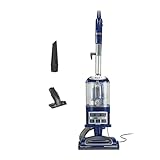
- POWERFUL SUCTION FOR CARPET & HARD FLOORS: Clean carpets and hardwood floors with strong multi-surface suction. This lightweight upright vacuum cleaner lifts dirt, debris, and pet hair for a complete home clean.
- LIFT-AWAY FUNCTIONALITY FOR ABOVE-FLOOR CLEANING: Detach the pod to clean stairs, furniture, and more—attach the upholstery or crevice tools to clean dust and debris from baseboards, curtains, blinds, tight spaces and other surfaces.
- PERFECT FOR PET HAIR CLEANUP: Powerful suction and a specialized upholstery tool removes pet hair from carpets, furniture, and stairs with ease—ideal for homes with pets and everyday messes.
- HEPA FILTER WITH ANTI-ALLERGEN COMPLETE SEAL: Advanced HEPA vacuum technology traps dust and allergens* inside the vacuum, helping deliver a cleaner home environment. *Allergens refer to non-living matter.
- SWIVEL STEERING FOR EASY MANEUVERABILITY: Navigate tight spaces, corners, and around furniture with ease using smooth swivel steering for effortless control across floors.
Use a portable air cleaner as a supplement
Run a portable air cleaner in occupied rooms when outdoor dust is entering despite closed openings. EPA lists portable air cleaners as an action for reducing indoor particulate matter. Place the unit where people spend time, keep its intake and exhaust unobstructed, and maintain the filter according to the manufacturer’s instructions.
A portable unit captures particles already in the room; it does not stop a dusty source, seal a leaky window or replace a compatible HVAC filter. Keep windows and doors closed during the dustiest work so the cleaner is not trying to process a continuous outdoor plume.
Control dust when work is inside or immediately beside the home
Road projects sometimes include work on a driveway, foundation, utility connection or other area directly against an occupied building. In that situation, ordinary closed-window advice may not be enough. EPA recommends barriers and exhaust ventilation to keep pollutants from spreading.
Create a physical barrier
Use taped plastic sheeting or another properly secured barrier to separate the work zone from occupied rooms. Seal edges and penetrations as far as practical, protect doorways used for access, and keep the barrier intact until dusty work and cleanup are complete. A barrier works only when workers maintain it; a torn sheet or an open passage can defeat the separation.
Use exhaust and pressure control
Exhaust ventilation can keep dust from migrating out of the work area. OSHA’s respirable crystalline silica standard states: “For tasks performed indoors or in enclosed areas, provide a means of exhaust as needed to minimize the accumulation of visible airborne dust.” The exhaust arrangement should direct contaminated air away from occupied spaces and make-up air should not pull dust through gaps in the barrier.
Pressure control is a setup issue, not simply a matter of placing a fan in a window. Ask the contractor how the work area will be exhausted, where the discharge will go, and how the setup will prevent air from being drawn from the dusty zone into the rest of the house. If the work could disturb silica, lead, asbestos or another regulated contaminant, use the contractor’s written control plan and qualified professionals rather than improvising a household fan arrangement.
Clean settled construction dust without re-suspending it
Cleaning is safest when it removes material from surfaces instead of sending it back into the breathing zone. Keep children, pregnant people and pets away from the dustiest area until cleanup is finished when practical.
Rank #4

- 【550W High-Power Motor & 45kPa Strong Suction】 Powered by a 550W motor, this cordless vacuum delivers up to 45,000Pa of suction for efficient, deep cleaning. Effectively lifts embedded dirt, fine dust, and stubborn pet hair from hardwood, carpet, and tile floors. Lightweight and tangle-free, it’s an ideal choice for daily maintenance in family homes, apartments, and pet-friendly households.
- 【Upgraded Tangle-Free Turbo Brush & LED Headlight – The Pet Hair Terminator】The Upgraded anti-tangle roller prevents hair wrap—lab-tested to handle hair from up to 6 pets with zero tangles. Built-in LED lights reveal hidden dust under furniture, making it a must-have for pet owners and long-haired households.Note:Easy Care for Lasting Power: Remove tangled hair from the brush head weekly and empty the dust cup at the MAX line. Simple routine maintenance ensures consistent, reliable performance.
- 【One-Touch Hygienic Emptying – No Mess, No Hands】 The patented one-touch ejection system empties the dustbin in just 3 seconds—hands never touch dirt. Sealed design contains dust and allergens, preventing secondary pollution for a cleaner, healthier home.
- 【 Dual HEPA + Stainless-Steel Filtration】The dual-layer HEPA and stainless-steel filter system traps up to 99.99% of fine dust, pet dander, helping maintain cleaner indoor environments.Ideal for allergy sufferers and families seeking fresher, purer indoor air.
- 【Ultra-Lightweight & Maneuverable – Lighter Than a Water Bottle】Weighing only 6 lbs (3.3 kg) with a low-profile design and 180° swivel steering, it glides effortlessly under furniture and cleans stairs with ease. The adjustable telescopic tube suits all family members—adults, seniors, and teens—enabling comfortable cleaning without bending or strain.
- Stop the source and isolate the area. Wait until the dusty task is complete or the work zone is properly contained. Close doors, maintain barriers and prevent foot traffic from spreading material into clean rooms.
- Remove or cover furnishings. Move movable furniture out of the work area. Cover items that cannot be moved. If work is occurring inside the house, seal HVAC vents in the work area as appropriate and confirm that the system is not distributing dust to other rooms.
- Remove visible settled material with a HEPA-equipped vacuum. EPA recommends HEPA vacuuming for homeowner dust cleanup. Use the vacuum on floors, ledges and other surfaces according to its instructions, and avoid equipment that exhausts collected fine dust back into the room.
- Wet-wipe hard surfaces. Use a damp cloth or mop so particles are captured rather than swept into the air. Rinse or replace the cloth as it becomes loaded; otherwise you spread dust from one surface to another.
- Wet-mop floors with rinse water. EPA advises wet mopping floors with plenty of rinse water after using a HEPA vacuum and wet wiping surfaces. Work from cleaner areas toward the work zone and change dirty water before it redistributes dust.
- Inspect before removing containment. Look at horizontal surfaces, corners, door thresholds and the area around returns and supplies. Keep the barrier in place until visible dust is gone and the final wipe or vacuum is complete.
What not to do when silica may be present
Do not dry sweep, dry brush or blow dust with compressed air when respirable crystalline silica exposure could occur. OSHA states: “The employer shall not allow dry sweeping or dry brushing where such activity could contribute to employee exposure to respirable crystalline silica unless wet sweeping, HEPA-filtered vacuuming or other methods that minimize the likelihood of exposure are not feasible.” Compressed air can turn settled material into an airborne cloud and spread it beyond the work area.
This warning is about exposure control, not just visible cleanliness. If the material came from concrete, masonry, stone, asphalt or another operation that may generate silica, ask the contractor what control method and cleanup procedure apply before you begin.
What’s actually slowing this PC down?
Pick the symptom - the matching free tool is one click away.
Choose the right control for the problem
| Tool or action | Primary job | When it helps most | Important limitation |
|---|---|---|---|
| Watering at the road | Source reduction | Active haul routes, traffic lanes and disturbed soil | Requires repeated application suited to conditions; does not clean dust already indoors |
| Vegetation or mulch | Source reduction | Inactive soil and stockpiles | Does not control dust from active vehicle movement |
| Windbreak | Reduces transport | Wind-exposed edges between work and homes | Works best with moist, stabilized soil |
| Closed windows and doors | Entry prevention | Visible dust or high outdoor pollution | Reduces natural ventilation while closed |
| Weather-stripping | Durable entry reduction | Gaps around windows and exterior doors | Do not seal required vents or egress openings |
| Compatible high-efficiency HVAC filter | System filtration | Particles moving through central HVAC air | Must match the equipment’s dimensions and pressure limits |
| Portable air cleaner | Indoor particle capture | Occupied rooms where particles still enter | Does not replace source control or closed openings |
| HEPA vacuum | Removal of settled dust | Post-work floors and surfaces | Use wet methods too; avoid dry sweeping where silica may be present |
| Wet wiping and mopping | Removal without re-suspension | Hard surfaces and floors | Requires changing rinse water or cloths to avoid spreading dust |
| Plastic barrier and exhaust | Containment and pressure control | Dusty work inside or immediately beside the home | Needs a properly planned setup and safe discharge path |
Understand the filter numbers and particle sizes
EPA’s 2022 indoor-air guidance highlights particles 10 micrometers in diameter or smaller. These particles are small enough to enter through ordinary building openings and remain airborne during active work. Capturing them requires a filter or air cleaner designed for fine particles, while preventing entry still matters because no device can capture material that continually enters around a door or window.
OSHA’s 2016 silica-control material gives an example of enclosed-cab filtration at 95% efficiency in the 0.3–10.0 micrometer range, associated with MERV-16 or better. That specification belongs to OSHA’s silica-control requirements for enclosed cabs; it is not a universal instruction to install MERV-16 in every residential furnace. Residential equipment must be able to handle the filter’s pressure drop, and the filter must fit the cabinet correctly.
When ordinary dust advice is not enough
Road construction can involve materials with different hazards. Silica may be generated by cutting, grinding or disturbing concrete, masonry, stone or similar materials. Older structures, painted components, utility work or demolition may raise lead or asbestos concerns. The appearance of dust alone cannot identify its composition.
Use contaminant-specific professional guidance when any of these conditions apply:
- The contractor says the task may generate respirable crystalline silica or another regulated contaminant.
- Dust comes from demolition, painted surfaces, insulation, older building materials or an unknown source.
- Visible dust is entering occupied rooms despite barriers and exhaust.
- Someone in the household has a condition that makes particulate exposure especially concerning and you need a professional exposure assessment.
- You need clearance or verification after containment work rather than a visual check alone.
Do not collect or disturb suspect material merely to test it yourself, and do not rely on a household purifier as protection from a contaminant-specific hazard. Ask the contractor for the material assessment, control plan and cleanup responsibility, or contact an appropriately qualified industrial-hygiene, asbestos, lead or environmental professional.
Best Value

- POWERFUL SUCTION FOR CARPET & HARD FLOORS: Clean carpets and hardwood floors with strong multi-surface suction. This lightweight upright vacuum cleaner lifts dirt, debris, and pet hair for a complete home clean.
- LIFT-AWAY FUNCTIONALITY FOR ABOVE-FLOOR CLEANING: Detach the pod to clean stairs, furniture, and more—attach the dusting brush or crevice tool to clean dust and debris from upholstery, baseboards, curtains, blinds, and other surfaces.
- PERFECT FOR PET HAIR CLEANUP: Powerful suction removes pet hair, dander, and debris from carpets, upholstery, and stairs—ideal for homes with pets.
- HEPA FILTER WITH ANTI-ALLERGEN COMPLETE SEAL: Advanced HEPA vacuum technology traps 99.9%* of dust and allergens**. *Based on ASTM F1977 (0.3 microns+), tested by IBR Laboratories per ASTM F1977-22 standard test method of a vacuum cleaner system, 2024. **Allergens refer to non-living matter.
- SWIVEL STEERING FOR EASY MANEUVERABILITY: Navigate tight spaces, corners, and around furniture with ease using smooth swivel steering for effortless control across floors.
A practical communication and response plan
Before the dusty phase
- Get the project schedule for grading, excavation, hauling, cutting and road cleaning.
- Ask for the named dust-control contact and escalation route.
- Confirm watering frequency, inactive-soil stabilization, windbreaks and truck-route cleaning.
- Identify windows, doors, outdoor-air intakes and HVAC returns closest to the work.
- Have compatible replacement filters, a HEPA vacuum and wet-cleaning supplies ready.
During active work
- Keep nearby windows and exterior doors closed when dust is visible.
- Watch whether haul routes remain moist and whether trucks track loose material onto paved surfaces.
- Run the portable air cleaner in an occupied room if needed, while keeping its airflow unobstructed.
- Report recurring dust with the date, wind or weather conditions, location and activity causing it.
- Do not enter a contained work zone just to inspect it; ask the contractor for an update.
After the work or a dust event
- Wait for the source activity to stop and maintain containment while material settles.
- HEPA-vacuum and wet-clean in the sequence described above.
- Check thresholds, ledges, returns and adjacent rooms for tracking or migration.
- Replace or service filters according to the equipment and filter instructions if loading is visible or airflow changes.
- Escalate to a qualified professional if the source or composition is uncertain, or if dust keeps returning after source control.
Troubleshoot the common failure modes
“The contractor is watering, but dust still reaches the house.”
Check whether watering covers the haul route and inactive soil, not just a small area near the property line. Wind, truck speed, exposed stockpiles and gaps in the watering schedule can all leave a source uncontrolled. Ask for route-specific watering, stabilization of inactive ground and a windbreak where the plume travels.
“The purifier is running, but the room remains dusty.”
Confirm that windows and doors are closed, the unit is sized and positioned for the room, and its intake is not blocked. A purifier captures indoor particles; it cannot overcome a continuously open opening or a source inside the room. Find and control the entry path first.
“The HVAC filter loads quickly or airflow drops.”
Turn to the equipment documentation or an HVAC professional. A more restrictive filter may not be compatible with the system’s pressure limits. Verify the correct dimensions and approved efficiency rather than stacking filters or forcing a filter that does not fit.
Quick wins for a faster PC:
Fix the driver behind crashes, sound loss and screen glitchesFind Drivers →Repair Windows errors before they cause bigger problemsFix Now →Scan for outdated or missing drivers - takes under a minuteDriver Scan →“Dry sweeping seems faster.”
Do not use it where silica exposure could occur. Use HEPA vacuuming and wet wiping or mopping instead. If those methods appear infeasible, the employer’s OSHA-compliant control plan must address the exception; a homeowner should not improvise with a broom or compressed air.
“Dust returns after cleanup.”
Look for an unresolved source: an active work zone, a leaking barrier, a return pulling air from the work area, tracked material at a threshold or dust on high surfaces that was missed. Re-isolate the area, correct the source and repeat HEPA vacuuming followed by wet cleaning. Persistent or unexplained contamination warrants professional assessment.
What the federal guidance does—and does not—decide
EPA guidance and OSHA standards provide broadly applicable control principles, but they do not make a project-specific legal determination. Local dust ordinances, construction permits, air-quality alerts, work hours and agency contacts vary by jurisdiction and can change. Check the current rules and contact details for the road project where you live, and ask the responsible agency how to report a violation or urgent condition.
The most reliable result comes from combining responsibilities: the project controls dust at its source; the household closes and weatherizes openings, filters indoor air and cleans carefully; and qualified professionals handle suspected regulated contaminants. That division prevents a common mistake—expecting one product or one cleanup pass to solve a source-control problem.
The Tool Desk
Outbyte Driver Updater FREEScan for outdated or missing drivers - takes under a minuteDriver Scan →Outbyte PC Repair FREERepair Windows errors before they cause bigger problemsFix Now →Quick Recap
Product prices and availability are accurate as of the date/time indicated and are subject to change. Any price and availability information displayed on Amazon at the time of purchase will apply.

