Some links on this page are affiliate links: if you buy through them we may earn a commission, at no extra cost to you.
The best solar clock for most homes is a hybrid indoor model that combines photovoltaic charging, a rechargeable cell and an auxiliary battery. Seiko’s SF244N and SF244W fit that brief: they are radio-controlled wall clocks for home or office interiors, with approximately three years of operation when exposed to about 200 lux for eight hours a day and approximately two years in continuous darkness, according to Seiko specifications. Choose an outdoor-rated model only when you can provide direct sunlight and weather-appropriate mounting. Solar power keeps the movement supplied, but it does not by itself make a clock more accurate; accuracy depends on the quartz movement and, where available, successful radio synchronization.
What is a solar clock and how does it work?
A solar clock uses a photovoltaic cell to convert light into electricity. That electricity powers a conventional clock movement and charges a storage cell so the clock can continue running when the room is dim or the sun is down. Solar Active describes the basic arrangement as a standard clock mechanism, a photovoltaic solar cell and a rechargeable AA battery.
As an Amazon Associate I earn from qualifying purchases.
Recommended Free Tools
“Solar” therefore describes the power system, not necessarily an outdoor installation. Indoor clocks can harvest daylight or strong ambient light, while outdoor units may depend on direct sun. Charging speed varies with illumination, panel area and exposure time. A backup battery or auxiliary cell provides a buffer for night-time operation, overcast weather and darker seasons.
Which solar wall clock is best for a home?
For a typical bright room, Seiko SF244N or SF244W is the most practical starting point. Both use hybrid solar charging and radio-controlled time correction, and are intended for interior office or home walls. SF244N is specified at 305 × 305 × 47 mm and 800 g, with two AA alkaline backup batteries. Seiko lists approximately three years of battery life when the clock receives about 200 lux for eight hours daily, or approximately two years when it is used continuously in darkness. SF244W is the white-finish counterpart with the same hybrid-solar concept and operating conditions.
Popular on Amazon

- Accessories: Batteries (AA alkaline x 2)
- Radio wave correction function (40 kHz/60 kHz automatic selection, and receive off function)
- Hybrid Solar (photo-powered cells, auxiliary battery)
- Battery life: About 3 years when light is received at a bright location (about 200 lux) for more than 8 hours per day
- When used in dark places (where it cannot generate photos), about 2 years
These models suit a hallway, kitchen, study or office that receives regular daylight. Check that the radio-control system used by the clock is compatible with your country before purchase; time-signal coverage is regional, not universal.
Best for a bedroom or low-light room: Seiko SF241B
SF241B adds a lithium backup battery, sweep seconds and a light sensor that stops the second hand in darkness. Seiko lists approximately three years of operation in bright conditions and approximately two years in darkness. The nighttime stop reduces visual movement and can make the clock less distracting beside a bed, while the stored energy keeps the time display available through periods without useful light.
The Tool Desk
Outbyte Driver Updater FREEScan for outdated or missing drivers - takes under a minuteDriver Scan →Outbyte PC Repair FREEClear out junk files and repair common Windows errorsFree Scan →Best for advanced low-light operation: Seiko SF243B
SF243B uses Solar Plus charging with rechargeable and auxiliary batteries, quick-start functionality, radio correction, sweep seconds and a low-light second-hand stop. It is a suitable choice when automatic synchronization and a calmer night display matter more than the simplest possible mechanism. It still requires enough cumulative light to replenish its storage system.
Best for an exposed wall: Seiko SF211S
SF211S is a 53 cm outdoor, rainproof, radio-controlled solar wall clock with photovoltaic and rechargeable cells. The cited specification gives an operating range of -20 °C to +60 °C and explicitly says it is not suitable for indoor installation because it depends on direct sunlight. It is aimed at gardens, schools, commercial exteriors and other locations where a large dial can be read from a distance.
Also popular on Amazon

- Batteries are required
- Radio wave correction function (40 kHz/60 kHz automatic selection, and receive off function)
- Accessories: Battery (1 AA alkaline battery)
- The subtle design gives a gentle impression
- Please place it on windows where it is most likely to receive radio waves as possible, and avoid places where radio waves are generated
Before mounting it, confirm that the wall can support the clock, that the panel will receive direct sun for a realistic part of the day and that the installation is protected from unusual salt, pollution or standing water. Rainproof construction does not remove the need for sound fixings and a sensible location.
Best when you need weather data and alarms: Oregon Scientific RMR331ESA
RMR331ESA combines a detachable solar panel and rechargeable battery with indoor and outdoor temperature readings, radio-controlled time, a calendar, an alarm with snooze and an LED backlight. The cited retailer currently marks this model out of stock, so treat it as a feature reference and verify present availability, regional support and replacement-battery arrangements before choosing it.
Free tools Windows power users keep installed
One-click scans. No signup required.
Will a solar clock work indoors?
Yes, if the model is designed for indoor ambient light and the room supplies enough illumination for charging to keep pace with the clock’s consumption. A bright room near a window is safer than a dark corridor, basement or cupboard. A clock engineered for direct sun can fail indoors even though it is technically solar powered; Seiko specifically excludes SF211S from indoor installation.
Look for a stated lux requirement or daily-light condition rather than relying on the word “solar.” SF244N, for example, is specified for approximately 200 lux over eight hours per day for its longer battery-life figure. If your room is dimmer, choose a design with a substantial auxiliary battery and expect more frequent battery replacement or shorter reserve periods.
Also popular on Amazon

- Product Size: Diameter 12.6 x 1.9 inches (32.0 x 4.9 cm)
- Weight: 2.6 lbs (1.2 kg)
- Material: Wooden frame (MDF walnut with plank paste / tea wood coating), glass (front)
- Country of Origin: China
- Accessories: Hanging hardware for drywall, instruction manual (English language not guaranteed)
Where should an indoor solar clock go?
- Place the light-collecting surface where daylight reaches it for several hours, without curtains, shelves or ornaments covering the panel.
- Prefer a bright wall near a window, but avoid a position where direct heat from a radiator or strong sun could stress the case or shorten battery life.
- Keep the dial visible from the normal viewing angle; a perfect charging position is not useful if glare makes the hands unreadable.
- Do not assume ceiling LEDs will provide the same charging rate as daylight. Ambient artificial light may help, but the manufacturer’s illumination specification remains the deciding reference.
Do solar clocks need direct sunlight?
Not always. Indoor hybrid clocks are designed to work from daylight and ambient light, while some outdoor products require direct sun. The distinction is set by the panel, electronics and stated operating conditions, not by the appearance of the dial.
SF211S is a clear direct-sun example: its specification says it is unsuitable for indoor use. SF244N and SF244W are the opposite category, intended for home or office interiors and specified around a measured indoor-light condition. If a product page does not state whether ambient light is sufficient, treat placement as uncertain and seek the manufacturer’s installation guidance.
Quick wins for a faster PC:
Clear out junk files and repair common Windows errorsFree Scan →Fix the driver behind crashes, sound loss and screen glitchesFind Drivers →Are solar clocks accurate?
Solar charging and timekeeping accuracy are separate questions. A quartz movement provides ordinary electronic timekeeping; solar power only supplies energy. A radio-controlled movement can correct its displayed time when it receives a compatible broadcast signal, but reception depends on geography, building materials, terrain, weather and the clock’s orientation.
Sundial reports one solar movement as accurate to within 20 seconds per month and capable of a power reserve of up to six months on a full charge. That is a specification for the named movement, not a universal guarantee for every solar clock. If a radio-controlled clock does not synchronize, move it near a window or to a wall with fewer obstructions, then allow the receiving cycle to run again.
Also popular on Amazon
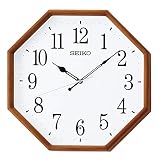
- Radio wave correction function (40 kHz/60 kHz automatic selection, and receive off function)
- Battery operated alarm function (second hand stop)
- Sweep second
- Sleeping second hand (automatic second hand stop function with light sensor)
- Need battery/battery? Yes
Radio control versus quartz-only operation
| Timekeeping system | What it does | What can interrupt it |
|---|---|---|
| Quartz | Keeps time from its electronic oscillator and requires manual setting when it drifts or the battery is changed. | Normal movement drift, depleted batteries or an incorrect initial setting. |
| Radio controlled | Attempts to correct the displayed time from a regional time signal. | Signal coverage, reinforced walls, nearby electrical interference, terrain, weather and antenna orientation. |
| GNSS controlled | Uses satellite positioning signals where the product supports them. | Indoor roof coverage, antenna view of the sky and the product’s regional or technical limitations. |
Radio control reduces routine manual adjustment, but it is not a guarantee that a signal will be received at every installation. Daylight saving changes and time-zone rules are handled only if the clock’s control system and regional settings support them.
Which solar clock keeps working in winter or on cloudy days?
A hybrid clock with both rechargeable storage and an auxiliary battery is the safest household choice. It can draw on stored energy during nights and overcast spells, then recharge when brighter conditions return. Seiko’s SF244N and SF244W specifications illustrate the trade-off: approximately three years of battery life is quoted for regular bright-room exposure, compared with approximately two years in continuous darkness.
What’s actually slowing this PC down?
Pick the symptom - the matching free tool is one click away.
Cloud cover reduces available light but does not necessarily stop photovoltaic charging. The decisive issue is whether the total energy collected over time exceeds the movement’s demand. In a north-facing room, a shaded window or a long winter period, choose a model with a documented reserve and replaceable backup battery rather than a direct-sun outdoor design.
What should you compare before buying a solar clock?
| Decision point | Check on the specification | Why it matters |
|---|---|---|
| Light requirement | Indoor ambient light, direct sun, stated lux value or required daily exposure | Shows whether charging can keep pace with consumption at the intended location. |
| Energy storage | Rechargeable cell, auxiliary battery, lithium reserve or a combination | Determines how the clock behaves overnight and through dark weather. |
| Time correction | Quartz, radio controlled or GNSS controlled | Sets expectations for manual adjustment and signal dependence. |
| Environmental protection | Indoor/outdoor rating, rain resistance, temperature range and mounting requirements | Prevents moisture, temperature and fixing problems. |
| Readability and noise | Dial diameter, hand movement, backlight and nighttime second-hand stop | Matches bedrooms, offices, older eyes and long-distance outdoor viewing. |
| Availability | Regional stock, seller support, batteries and installation hardware | Product listings and inventory change, and some models may not be sold in every country. |
How do you install and maintain a solar wall clock?
- Confirm the intended environment. Verify that the model is rated for indoor or outdoor use and note any temperature limits. Do not install a direct-sun outdoor model inside.
- Assess the light at the actual wall. Observe the position through a normal day. Check for seasonal shade from buildings, trees, blinds or roof overhangs.
- Plan for signal reception. For radio-controlled clocks, begin near a window or on a wall with fewer dense obstructions. Follow the model’s orientation guidance rather than assuming any direction will work.
- Use suitable fixings. Match the screw, anchor and wall plug to masonry, timber, plasterboard or the exterior substrate. Outdoor models need fixings that tolerate moisture and the clock’s full weight.
- Expose the photovoltaic surface. Remove temporary packaging, keep the panel clean and avoid placing tape, labels or decorative objects over it.
- Install the specified batteries. Use the stated rechargeable or alkaline type and observe polarity. Do not substitute a non-rechargeable cell where the design requires a rechargeable battery.
- Allow charging and synchronization time. A newly installed clock may need sustained light before its storage cell reaches a useful reserve, and a radio-controlled model may need a clear receiving window before it corrects itself.
- Inspect periodically. Clear dust from the light-collecting surface with a soft, dry cloth, check that the mount remains tight and replace auxiliary batteries according to the manufacturer’s schedule or when low-power symptoms appear.
Common symptoms and fixes
- The clock stops at night: move it to a brighter location and check that the rechargeable cell is the correct type and healthy.
- The time is wrong but the hands move: treat this as a synchronization or setting issue, not a solar-power issue. Try a window position and repeat the manufacturer’s reception procedure.
- The clock loses time after cloudy weather: increase cumulative light exposure and check the backup battery; a prolonged low-light period may have exhausted the reserve.
- An outdoor clock shows moisture or corrosion: inspect the seal and mounting location, then contact the manufacturer rather than opening a rainproof case without the correct replacement gasket.
- The second hand stops in a dark room: on SF241B and SF243B this is an intentional light-sensor feature, not necessarily a fault.
What are the trade-offs of solar timekeeping?
Advantages
- Less dependence on disposable primary batteries when the photovoltaic system receives adequate light.
- Automatic time correction on radio-controlled models when a compatible signal is available.
- Long reserve operation is possible when the design combines photovoltaic charging and storage.
- Outdoor models can serve locations where running a mains cable would be inconvenient.
Limitations
- Placement is critical; a dim room can undercharge a clock designed for brighter conditions.
- Radio correction is geographically and physically dependent, so it may fail inside heavily obstructed buildings.
- Outdoor suitability varies widely; rain resistance and temperature limits must be stated, not assumed.
- Special features such as backlights, alarms and temperature sensors add utility but also add energy demand and more components to maintain.
- Availability changes by country and retailer. Oregon Scientific’s RMR331ESA, for example, is currently listed as out of stock by the cited retailer.
Which solar clock should you choose?
Choose SF244N or SF244W for a bright indoor room and a balanced combination of hybrid charging and automatic correction. Choose SF241B when a bedroom needs a nighttime second-hand stop and a lithium backup, or SF243B when Solar Plus features and quick start are priorities. Choose SF211S only for a direct-sun outdoor installation with suitable weather exposure and mounting. Select the Oregon Scientific feature set only if indoor/outdoor temperature, alarm and backlight functions justify checking current stock and support.
Also popular on Amazon

- Accessories: Batteries (AA alkaline x 2)
- Radio wave correction function (40 kHz/60 kHz automatic selection, and receive off function)
- Temperature and humidity display; Temperature measurement range: 32 - 104°F (0 - 40°C); Measurement accuracy: ±2°C; Humidity measurement range: 20% RH - 90% RH Measurement accuracy: ±10% RH (25°C)
- Step second
- Sleeping second hand (automatic second hand stop function with light sensor)
The sustainable choice is the model whose light requirement matches the wall where it will actually hang. A modest indoor hybrid clock in a bright room is more dependable than a larger outdoor unit placed in shade, and a radio-controlled movement is useful only where its signal can be received.
Frequently Asked Questions
Can indoor LED lighting charge a solar wall clock?
Some photovoltaic panels respond to artificial light, but indoor LEDs generally provide less usable energy than daylight. Treat artificial light as supplemental unless the manufacturer states a suitable lux level and charging condition for that model.
How often should the backup battery in a solar clock be replaced?
There is no single interval for every design. Follow the model’s battery specification and replace the cell when the clock stops during darkness, loses time after dim weather or displays another low-power symptom; use the exact chemistry and size specified.
Why does my radio-controlled solar clock never synchronize?
The clock may be outside the transmitter’s coverage area or shielded by reinforced concrete, metal structures, terrain or electrical interference. Try a window position, correct the antenna orientation if the manual specifies one and allow a complete receiving cycle before changing settings.
Is a large outdoor solar clock suitable for a covered porch?
Only if the manufacturer’s light requirement can be met under that roof and the product’s weather rating covers the exposure. A porch that blocks direct sun may undercharge a clock such as SF211S, whose specification calls for direct sunlight.

