The Tool Desk
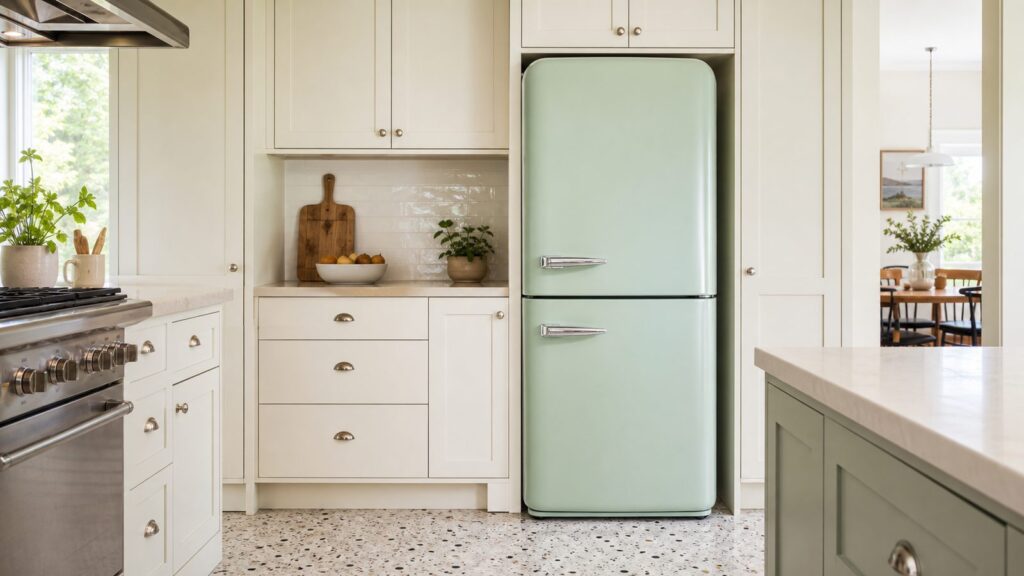
Outbyte PC Repair FREEClear out junk files and repair common Windows errorsFree Scan →Outbyte Driver Updater FREEFix the driver behind crashes, sound loss and screen glitchesFind Drivers →A retro refrigerator is one of the fastest ways to give a kitchen personality, but it is still a working appliance first. The best retro refrigerator for most homeowners is not simply the prettiest color or the most recognizable curved door. It is the model that fits the opening, clears the cabinets, holds enough food, vents correctly, uses reasonable energy, and can be serviced in your area.
For 2026 shoppers, the short version is this: compact retro fridges commonly run about $250 to $700, budget full-size retro top-freezers around 7.6 to 12 cubic feet often land between $500 and $1,200, Smeg FAB-style statement models commonly cost about $2,499 to $4,499, and premium Big Chill full-size or custom-color units run about $3,795 to $5,995 or more before options. Installation is usually straightforward when the space is ready, but water lines, outlet relocation, dedicated circuits, cabinet changes, flooring problems, and delivery constraints can add hundreds or thousands of dollars.
On our job sites, we treat a retro refrigerator like a design feature with construction consequences. Before ordering one, we measure the appliance bay, door swing, handle projection, walkway clearance, outlet location, floor level, shutoff access, and delivery route. That up-front work prevents the expensive surprise where a beautiful fridge arrives and the door hits a wall, the compressor cannot breathe, or the delivery crew cannot get it past the stair turn.
Best Retro Refrigerator Choices by Homeowner Type
The best retro refrigerator depends on how the kitchen is actually used. A couple in a city condo, a family cooking every night, and a homeowner finishing a basement bar do not need the same appliance.
#1 Best Overall

- Refrigerator offers 3 adjustable, slide-out glass shelves, one transparent vegetable crisper, four- clear door shelves. Includes two front mount adjustable leveling legs and two castors mounted at the back to allow for easy movement.Lock Type:Electronic
- Spill-proof glass shelves contain spills and simplify cleanup, preventing liquids from leaking onto shelves below
- Storage bins in the door help to keep smaller items handy and organized
- Vegetable and fruit crisper bin helps preserve the freshness of fruits and vegetables
- This chic unit features easy-to-use accessible mechanical controls - adjustable thermostat - Space-Saving Flush Back Design
Best premium full-size choice: Big Chill-style retro refrigerators
Big Chill is the category to look at when the refrigerator is intended to be a major focal point in a full kitchen. Premium retro models can reach about 20.5 cubic feet, which is much closer to conventional family-fridge capacity than many style-first units. The tradeoff is price. Expect roughly $3,795 to $5,995 or more before color upgrades, delivery, installation, or related construction work.
This category makes sense when the kitchen remodel budget already supports custom cabinetry, durable counters, professional installation, and a cohesive color plan. Before ordering, confirm the authorized retailer, warranty terms, lead time, replacement parts availability, and local service coverage in your ZIP code. A premium refrigerator is not a good value if the nearest qualified service technician is several hours away.
Best statement fridge for small kitchens: Smeg FAB-style models
Smeg is often the refrigerator people picture when they say they want a retro kitchen. The rounded form, bold colors, and chrome-style hardware create an immediate mid-century signal. The popular FAB28 is about 9.5 cubic feet, which is substantially smaller than a standard family refrigerator. Pricing commonly falls around $2,499 to $4,499 depending on model, finish, and retailer.
That capacity can work well for a single person, a couple, a small apartment, an ADU, or a design-forward kitchen where there is secondary cold storage elsewhere. It is less ideal for a family that shops once a week, stores bulk groceries, or needs a large freezer. Do not buy one based on the exterior alone; compare actual refrigerator and freezer capacity against your current habits.
What’s actually slowing this PC down?
Pick the symptom - the matching free tool is one click away.
Best budget retro option: 10 to 12 cubic foot top-freezer models
Budget retro refrigerators from brands such as Galanz can bring the look into reach for rentals, guest suites, small homes, offices, and basement refreshes. Many of these models sit in the 7.6 to 12 cubic foot range, with common prices from about $500 to $1,200. Some are ENERGY STAR certified, and some include practical features such as frost-free operation.
The main caution is safety screening. The CPSC announced a July 30, 2026 recall of about 121,680 Galanz 7.6 cubic foot retro refrigerators because internal electrical components can short circuit and ignite; affected units were sold from 2019 to 2022. If you are buying used, clearance, or refurbished, check the model and date code before bringing the unit into your home.
Best secondary fridge: compact and mini retro models
Mini retro refrigerators are best for beverage storage, home offices, dorm-style use, wet bars, media rooms, and guest spaces. They usually cost about $250 to $700. They are not a true replacement for a kitchen refrigerator because freezer space, door storage, and temperature stability are limited compared with a full-size unit.
For a bar or finished basement, a compact retro model can be the right design move. For the main kitchen, it is usually a compromise unless the household is very small and shops frequently.
Free tools Windows power users keep installed
One-click scans. No signup required.
Retro Refrigerator Costs in 2026
The purchase price is only one line item. The installed cost depends on whether the existing space is ready for the new appliance. If the fridge fits the opening, uses the existing 120V outlet, does not need a water line, and can be delivered cleanly, installation may be modest. If the remodel requires plumbing, electrical, cabinet changes, flooring correction, or a new appliance layout, the cost rises quickly.
| Item | Typical 2026 US Cost | What Drives the Price |
|---|---|---|
| Compact or mini retro refrigerator | $250 to $700 | Capacity, finish, freezer compartment, brand, ENERGY STAR status |
| Budget 7.6 to 12 cu. ft. retro refrigerator | $500 to $1,200 | Size, frost-free operation, delivery, hinge options, certification |
| Smeg FAB-style refrigerator | $2,499 to $4,499 | Model, color, retailer, availability, delivery terms |
| Big Chill or premium custom-color unit | $3,795 to $5,995+ | Capacity, custom color, configuration, lead time, options |
| Basic refrigerator installation | $100 to $400 typical; appliance installation averages about $131 to $270 | Ready hookups, stairs, haul-away, leveling, door removal |
| Refrigerator water line | About $150 to $200 average | Pipe run length, access, wall or cabinet cutting, material, labor rates |
| New standard 120V outlet | About $150 to $350; May 2026 estimates run about $297 to $360 per outlet | Wall access, distance to circuit, finish repairs, local electrician rates |
| New dedicated circuit | About $250 to $900 | Panel capacity, distance from panel, attic or crawl access, permit needs |
| Cabinet or opening modifications | A few hundred dollars for minor trim; much more for cabinet rework | Opening width, height, depth, fillers, panels, finished ends, countertop impacts |
For context, professional kitchen remodels in 2026 commonly average about $14,588 to $41,551, and cabinet replacement is often one of the largest cost drivers. Keeping the refrigerator in the same location is usually the most economical choice. Moving it can trigger electrical work, plumbing work, flooring patches, cabinet changes, inspections, and a new appliance traffic pattern.
Capacity: The Biggest Hidden Tradeoff
Retro refrigerators often trade storage capacity for style. Many popular retro-look models fall between 7.6 and 12 cubic feet. That can be perfectly acceptable for a small household, but it is not the same as a typical full-size refrigerator. For serious cooking households, 18 to 21 cubic feet is closer to normal full-size capacity.
That difference shows up in daily use. A 9.5 cubic foot refrigerator may look wonderful in a photograph, but it can feel tight after one grocery run if you cook with fresh produce, store leftovers, keep beverages cold, or need freezer space for meat and prepared meals. Door bins may also be smaller than modern French-door or side-by-side models, and freezer compartments on retro units are often modest.
A practical sizing rule
For a primary kitchen refrigerator, start by checking the capacity of your current unit. If your current 18 cubic foot fridge is usually full, dropping to a 10 or 12 cubic foot retro model will change how you shop and cook. If your current refrigerator is half empty and you value the design, a smaller retro model may be a reasonable trade.
For ADUs, guest suites, rental refreshes, bars, finished basements, offices, and small second kitchens, a 7.6 to 12 cubic foot unit can be the sweet spot. For family kitchens, look harder at premium full-size retro models or consider using a retro fridge as the visual feature with secondary freezer storage in a pantry, garage, or utility room.
Measure the Space Before You Shop
Every retro refrigerator purchase should start with a measured appliance plan. We measure the rough opening width, height, and depth; the delivery route; the door swing arc; handle projection; adjacent drawer pulls; nearby walls; and the landing space in front of the appliance. The number on the product title, such as 24 inches wide, is not enough.
Depth is a common problem. A retro refrigerator with a curved door and proud handle may project farther than a modern counter-depth unit. That can narrow the walkway, interfere with an island, or make a small kitchen feel pinched. The handle can also hit a side wall before the door opens far enough to remove drawers or shelves.
Recommended Free Tools
Check these dimensions
Measure the finished opening width at the top, middle, and bottom. Older cabinets and floors are not always square. Measure height from finished floor to the lowest obstruction, including upper cabinet trim. Measure depth from the back wall to the cabinet face and to the counter edge. Then compare those numbers with the manufacturer’s required side, top, and rear clearances.
Also measure the path from the truck to the final location. Older homes may have narrow entries, tight stair turns, low handrails, radiator covers, small landings, or kitchen islands that block the route. Delivery crews may remove refrigerator doors when allowed by the manufacturer, but that does not solve every clearance problem.
Ventilation, Electrical, and Water-Line Planning
Many budget retro refrigerators are freestanding appliances. Do not build one tightly into cabinetry unless the manual permits it. Refrigerators need ventilation space to reject heat. If the compressor area cannot breathe, the unit may run hotter, use more energy, cool poorly, or suffer premature wear. In some cases, boxing in a freestanding refrigerator can affect warranty coverage.
Electrical planning matters as well. Most residential refrigerators use a standard 120V receptacle, but the location, grounding, GFCI or AFCI requirements, and circuit loading should be reviewed before installation. A new outlet commonly costs about $150 to $350, while a new dedicated circuit commonly runs about $250 to $900. Panel capacity, distance from the panel, wall access, and local code requirements drive the final number.
Do these 3 things before closing this tab:
1Repair Windows errors before they cause bigger problems2Scan for outdated or missing drivers - takes under a minute3Clear out junk files and repair common Windows errorsWater line decisions
Many retro refrigerators skip water dispensers and icemakers entirely. That is part of the vintage look, but it also changes the installation. If you choose a model with an icemaker, or add an icemaker kit where supported, plan for a proper shutoff valve that remains accessible after the refrigerator is installed.
A refrigerator water line averages about $150 to $200 nationally, but costs rise when the plumber has to route through cabinets, floors, finished walls, crawlspaces, or long pipe runs. We prefer a proper tee and stop valve where feasible and locally accepted instead of a saddle valve. The shutoff should not disappear behind a permanently fixed panel or a packed storage cabinet.
Energy Use and Operating Cost
ENERGY STAR certified refrigerators are about 9 percent more efficient than models that only meet the federal minimum standard. ENERGY STAR also notes that replacing an old refrigerator with a certified model can save about $150 over a 12-year lifetime. That is not enough by itself to justify a luxury appliance, but it is worth considering when comparing similar models.
Rank #2

- RETRO DESIGN: This fridge has a retro style with chrome recessed door handles and hinges covers. Presenting a sophisticated and refined look in your apartment.
- FREEZER: This 2 door refrigerator has a separate freezer shelf compartment. It is equipped with a door bin for frozen foods.
- EASY TEMPERATURE CONTROL: Easily accessible temperature controls make temperature management easy. Bright incandescent lighting illuminates your food and freezer compartments
- STORAGE SPACE: 7.5 cu. ft. of storage capacity lets you stock up on all of your favorite foods. Storage bins in the door help to keep smaller items handy and organized. Vegetable and fruit crisper bin helps preserve the freshness of produce
- SPILL-PROOF SHELVES: Include 3 adjustable spill-proof glass shelves that contain spills and simplify cleanup, preventing liquids from leaking onto shelves below. Dimensions: 23.5 x 23 x 57 inches
The yellow EnergyGuide label is the better comparison tool. Two retro-style refrigerators can look similar and have very different annual kWh ratings. Capacity also matters. A smaller refrigerator may use less total electricity, but if it forces you to run a second freezer or garage refrigerator year-round, the household energy picture changes.
True vintage refrigerators are a separate discussion. They may look authentic, but old wiring, aging insulation, worn door gaskets, unstable temperature control, and refrigerant issues can turn a charming appliance into a safety and performance problem. For food storage, cosmetics should come after electrical safety, gasket condition, temperature stability, and proper refrigerant handling.
Independent reader supportYour contribution helps us test, update, and keep practical guides available for everyone.Designing Around a Retro Fridge
A retro refrigerator works best when the rest of the kitchen gives it room to be the focal point. The mistake is repeating the same bright color everywhere. A red fridge, red backsplash, red mixer, red stools, and red wall paint usually stops feeling curated and starts feeling themed.
We get better results by pairing the appliance with durable, quieter surrounding finishes. Simple shaker or slab cabinetry, chrome or polished nickel hardware, checkerboard flooring, terrazzo-look tile, butcher block accents, white or warm neutral counters, and a restrained backsplash can all support the vintage look without overwhelming the room.
Color and finish strategy
If the refrigerator is a bold color, let it carry the color load. Repeat that color once or twice in smaller accents, such as a pendant shade, small appliance, framed print, or bar stool upholstery. If the fridge is cream, white, black, or pastel, you can use stronger contrast in the floor or backsplash.
For remodels, confirm the appliance color sample before finalizing cabinet paint or tile. Online color names are not enough. A pastel blue refrigerator can read green next to warm white cabinets, and a cream appliance can look yellow against a cool white quartz countertop.
When to DIY vs. When to Hire a Pro
A careful homeowner can usually handle a simple refrigerator swap if the new unit fits the existing space, the outlet is already correct, there is no water hookup, the floor is level, and the delivery team places the appliance in the kitchen. The DIY work is mostly unpacking, leveling, setting temperature controls, checking door swing, and allowing the refrigerator to stabilize before loading food.
Hire a pro when the work touches plumbing, electrical, cabinetry, finished flooring, structural trim, or tight delivery conditions. A plumber should handle a new water line when the route is not simple or when local code requires it. A licensed electrician should install new outlets, correct grounding issues, add GFCI or AFCI protection where required, or run a dedicated circuit. A carpenter or remodeler should modify cabinet openings, fillers, panels, and trim so the installation looks intentional.
Permits depend on the jurisdiction and scope. A simple plug-in appliance replacement usually does not require one. New electrical circuits, new plumbing runs, panel work, and larger remodel work often do. In a permitted kitchen remodel, refrigerator location, receptacle placement, clearances, and plumbing shutoffs should be coordinated before cabinets are ordered.
Safety, Recalls, and Used Retro Refrigerators
Before buying any used retro refrigerator, check the model number, serial number, manufacture date, and recall history. This is especially important for discounted, marketplace, estate-sale, or rental-turnover appliances. The July 30, 2026 CPSC recall involving about 121,680 Galanz 7.6 cubic foot retro refrigerators is a current example of why that step matters. The recalled units were sold from 2019 to 2022, and the reported hazard involves internal electrical components that can short circuit and ignite.
Also inspect the cord, plug, cabinet damage, door gasket, leveling feet, shelves, drawers, compressor noise, and temperature performance. A refrigerator should hold safe food temperatures consistently, not just turn on. If a seller cannot provide the model information or the unit has obvious electrical damage, walk away.
Old-appliance disposal should be handled correctly. The EPA notes that refrigerator recycling involves refrigerant recovery, compressor oil handling, and material recycling. Many retailers offer haul-away for a fee, and some utility or municipal programs offer recycling options or rebates that vary by ZIP code.
Final Buying Checklist
Before you order a retro refrigerator, confirm these items in writing or on a measured plan: appliance width, height, depth, handle projection, hinge side, door swing, ventilation clearance, capacity, freezer size, ENERGY STAR status, EnergyGuide annual kWh, warranty, local service coverage, delivery path, outlet location, water-line needs, floor level, haul-away plan, and recall status.
Crashes, No Sound, or Screen Glitches?
Random freezes, missing sound and display glitches usually trace back to one bad driver. Find and replace yours safely.Free scan · under a minuteWindows Errors? Fix Them Before They Spread
Repair common Windows errors and clear accumulated junk for a smoother, more stable PC - no reinstall needed.Free scan · no reinstallIf you are remodeling the kitchen, make the refrigerator decision early. Cabinet dimensions, filler panels, flooring layout, electrical rough-in, plumbing rough-in, and walkway clearances all depend on that choice. The fridge may be a style piece, but it still controls a surprising amount of the kitchen plan.
For most homeowners, the right retro refrigerator is the one that balances charm with everyday function. Choose compact models for secondary spaces, 10 to 12 cubic foot models for small households or budget projects, Smeg-style units for statement design where capacity demands are modest, and premium full-size retro models when the appliance needs to serve a busy kitchen and carry the design at the same time.
Frequently Asked Questions
What is the best retro refrigerator for a kitchen remodel in 2026?
For a full kitchen, a premium full-size retro refrigerator around 18 to 21 cubic feet is usually the most practical choice. Smeg FAB-style models are strong statement pieces, but popular versions such as the FAB28 are about 9.5 cubic feet, which is better for small households or secondary kitchens.
How much does a retro refrigerator cost in 2026?
Compact retro refrigerators commonly cost about $250 to $700. Budget 7.6 to 12 cubic foot models often run about $500 to $1,200. Smeg FAB-style units commonly cost about $2,499 to $4,499, while Big Chill and other premium full-size models are about $3,795 to $5,995 or more before options.
Quick wins for a faster PC:
Fix the driver behind crashes, sound loss and screen glitchesFind Drivers →Clear out junk files and repair common Windows errorsFree Scan →Scan for outdated or missing drivers - takes under a minuteDriver Scan →Do retro refrigerators need a special outlet?
Most residential retro refrigerators use a standard 120V receptacle, but the outlet must be properly located, grounded, and code compliant. A new outlet commonly costs about $150 to $350, and a new dedicated circuit commonly runs about $250 to $900.
Can a freestanding retro refrigerator be built into cabinetry?
Only if the manufacturer’s manual allows it and the required ventilation clearances are maintained. Many budget retro refrigerators are freestanding only. Boxing them into tight cabinetry can cause overheating, poor performance, higher energy use, and possible warranty problems.
Are Smeg and Big Chill refrigerators worth the higher price?
They can be worth it when the refrigerator is central to the kitchen design and the homeowner values color, shape, finish quality, and brand styling. The decision should still be checked against capacity, warranty terms, service coverage, lead time, and installed cost.
How do I check whether a retro refrigerator has been recalled?
Find the model number, serial number, and manufacture date on the appliance label, then check the manufacturer and CPSC recall information. This is especially important for used or discounted retro units, including Galanz 7.6 cubic foot models affected by the July 30, 2026 recall.
The Tool Desk
Outbyte Driver Updater FREEScan for outdated or missing drivers - takes under a minuteDriver Scan →Outbyte PC Repair FREEClear out junk files and repair common Windows errorsFree Scan →Quick Recap
Product prices and availability are accurate as of the date/time indicated and are subject to change. Any price and availability information displayed on Amazon at the time of purchase will apply.