Some links on this page are affiliate links: if you buy through them we may earn a commission, at no extra cost to you.
The best privacy fence for your yard is the one that solves the specific privacy problem without creating maintenance, drainage, code, or neighbor issues later. For many American backyards, that means a 6-foot wood or Vinyl privacy fence installed in the $25 to $60 per linear foot range. For taller fences, horizontal designs, composite panels, steel-post systems, or difficult sites, the price can climb to $60, $70, or $85 per linear foot and beyond.
On our job sites, we start with a simple question: what are you trying to block? A neighbor’s patio is different from a second-story window. A street-facing side yard is different from a pool enclosure. A dog run, equipment screen, garden fence, and full backyard perimeter all call for different layouts.
This guide will help you choose a privacy fence by looking at height, material, maintenance, budget, wind exposure, slopes, gates, property lines, and local rules. If you get those decisions right before the first post hole is dug, the finished fence will look better, last longer, and cost less to fix later.
As an Amazon Associate I earn from qualifying purchases.
Start With the Privacy Problem, Not the Fence Material
Most homeowners begin by comparing wood, vinyl, and composite panels. That is useful, but it is not the first decision. The first decision is what kind of privacy you need.
If you only need to screen a patio or hot tub, a 12- to 24-foot targeted privacy run may do more good than fencing the whole yard. If the issue is street visibility, a side-yard return with a gate may solve it. If the problem is a second-story window, an 8-foot fence may still not block the view completely, and local code may not allow it. In that case, the better solution may be a 6-foot fence plus arborvitae, a code-compliant trellis, or a focused screen near the seating area.
Popular on Amazon

- Upgrade iCover Privacy Screen For Fence: Our privacy screen is made of heavy-duty knitted net, measuring 4 ft high by 50 ft long. It is suitable for fences with a height of 4 ft or slightly higher. Please accurately measure your fence before purchase
- Fence Toppers for Privacy: The high-density knitting process provides the fence screen with excellent visibility blockage while allowing air and breeze to pass through freely. This design ensures that the area does not feel visually cramped
- Long-lasting Design: iCover privacy fence features a wide design with reinforced black bindings that are tear-resistant. Premium rust-resistant copper grommets are rust-proof. 3 grommets are arranged in triangle works well in sustaining more drug force. All of these helps to extend lifespan
- Easy to install: This fence privacy screen features brass grommets placed at intervals of 12.6 inches vertically and 24 inches horizontally, with three grommets provided at each corner. The shade cloth also includes 40 zip ties to securely fasten the fence screen in place. Compatible with wire fence, wooden palisade, chain link fence, railings and huddles
- Create a Private Area: Use iCover Fence Privacy Screen to create a private area for your backyard, outdoor space, swimming pool, apartment balconies, garden, car, pergola, construction site, or shielding plants. Our privacy fence also provides you with a good solution on balcony privacy screen or in any setting where a degree of privacy is desired. Effectively block surrounding dust, street views, and some animal invaders
Before pricing materials, define the job in plain terms:
Quick wins for a faster PC:
Fix the driver behind crashes, sound loss and screen glitchesFind Drivers →Repair Windows errors before they cause bigger problemsFix Now →- Visual privacy: solid boards, board-on-board wood, vinyl privacy panels, composite panels, or metal privacy systems.
- Pet containment: tight bottom clearance, strong gates, latch height, and no climbable gaps.
- Pool safety: code-compliant height, openings, latches, and climb resistance.
- Wind control: stronger posts, closer spacing, engineered systems, or semi-private designs.
- Noise reduction: mass and continuity matter; a solid wood or composite fence helps more than light slats or screen fabric.
- Curb appeal: finished face, cap boards, trim, color, and how the fence meets the house matter as much as panel type.
A fence that is perfect for one yard can be a poor choice in another. A solid 6-foot panel on a calm, flat suburban lot is straightforward. The same panel on a hill, in clay soil, with high wind exposure and a 5-foot gate needs better structure.
Privacy Fence Costs in 2026
For planning, many standard 6-foot privacy fences in the United States land between $25 and $60 per linear foot installed. A typical full backyard project often totals $5,000 to $12,000, depending on footage, gates, demolition, terrain, and material.
Those numbers are useful only if you compare the same scope. A quote for 160 linear feet with one 4-foot walk gate is not comparable to a quote for 240 linear feet with two walk gates, one double drive gate, old fence removal, staining, and rocky soil.
| Fence Type | Typical 2026 Installed Cost | Best Fit | Main Tradeoff |
|---|---|---|---|
| Pressure-treated wood privacy fence | $18-$38 per linear foot for many 6-foot projects; often $25-$55 in some regional markets | Budget-conscious homeowners who want a traditional look and easy repairs | Requires sealing or staining and can warp, check, or rot if detailed poorly |
| Cedar privacy fence | $25-$55 per linear foot for many 6-foot projects | Warm natural appearance, better dimensional stability than basic pine | Higher upfront cost and still needs maintenance |
| Vinyl privacy fence | About $40-$60 per linear foot for many 6-foot projects; 8-foot vinyl can reach about $85 per foot | Low-maintenance yards and clean, uniform designs | Quality varies heavily by wall thickness, reinforcement, UV protection, and wind rating |
| Composite privacy fence | Often $40-$60+ per linear foot; premium regional projects may start near $60 per foot | Low maintenance, premium appearance, good stability | Higher cost and manufacturer-specific installation requirements |
| Metal privacy system | Often premium; aluminum ornamental may run $40-$85 per linear foot, with privacy systems varying by panel design | Modern yards, mixed-material designs, and long service life | Requires careful specification to avoid panel movement, rust at cuts, or noisy hardware |
| Chain link with slats or screen | Often $15-$35 per linear foot installed | Utility areas, temporary screening, budget containment | Weaker privacy, lower curb appeal, and shorter aesthetic lifespan |
The biggest cost drivers are linear footage, height, material grade, number and width of gates, demolition, access for equipment, soil conditions, slope, frost depth, local labor rates, permits, HOA requirements, decorative tops, horizontal layouts, board-on-board construction, steel posts, and staining or painting.
Do these 3 things before closing this tab:
1Fix the driver behind crashes, sound loss and screen glitches2Repair Windows errors before they cause bigger problems3Scan for outdated or missing drivers - takes under a minuteGates deserve their own line item. A simple walk gate can add several hundred dollars. A wider double gate with heavy-duty posts, adjustable hinges, drop rods, and better latch hardware costs more, but it is usually cheaper than rebuilding a sagging gate two years later.
Choose the Right Fence Height
For most backyards, 6 feet is the standard privacy fence height. It blocks the line of sight from neighboring yards, contains most dogs, and fits within many local zoning rules. Front yards are often limited to 4 feet or lower, especially near sidewalks, driveways, and street corners.
An 8-foot privacy fence can help on lots with elevation changes or close neighbors, but it is not automatically better. Taller fences cost more, catch more wind, need stronger posts, and may require a permit, variance, or HOA approval. In many areas, an 8-foot fence can cost $50 to $85 per linear foot installed, depending on material and structure.
Corner lots need extra attention. Many cities enforce visibility triangle rules near intersections and driveways so drivers can see pedestrians and traffic. Easements can also limit where you build, even inside your property line. Utility easements, drainage easements, and HOA setbacks should be checked before layout.
For pools, do not assume a standard backyard privacy fence automatically qualifies as a pool barrier. Many jurisdictions use requirements similar to the International Swimming Pool and Spa Code: barriers commonly need to be at least 48 inches high, with limits on openings, climbable features, gate swing, self-closing hardware, and self-latching hardware. Local code controls the final requirement.
Compare the Main Privacy Fence Materials
Wood Privacy Fences
Wood remains the most flexible privacy fence material. It can be built as stockade, shadowbox, board-on-board, cap-and-trim, horizontal, lattice-top, or custom stepped sections. It is also one of the easiest fence types to repair because damaged pickets, rails, or sections can be replaced without rebuilding the entire run.
Pressure-treated pine is usually the lower-cost option. Cedar costs more but offers a richer look and better natural resistance to decay. In either case, the fence needs maintenance. Plan on cleaning and staining or sealing after the wood has dried enough for the finish to bond properly. Depending on climate, sun exposure, and product, maintenance may be needed every 2 to 4 years.
The most common wood fence failures we see are not caused by the pickets. They start at the posts and bottom edges. Pickets should not sit in soil or mulch. Sprinklers should not soak the same section every morning. Posts should be set with drainage in mind so water does not sit against the wood at grade.
Free tools Windows power users keep installed
One-click scans. No signup required.
Also popular on Amazon

- Premium Quality: The UPGRADE privacy screen for fences is made from 170 GSM non-recycled High-Density Polyethylene (HDPE). This ensures lasting durability, reliable privacy protection, and excellent weather resistance. A high-density composition makes it a dependable solution for outdoor privacy needs.
- Enhanced Privacy and Protection: UPGRADE Fence Privacy Screen offers up to 90% blackout, ensuring maximum privacy for your outdoor space. Shielded from harmful UV rays, enjoy complete seclusion while safeguarding your plants and flowers. Experience the perfect combination of privacy and protection with UPGRADE Fence Privacy Screen.
- Strong & Durable: The UPGRADE fence privacy screen boasts reinforced edges with double support on each side, complemented by anti-rust brass grommets. Count on long-lasting performance and tear resistance, ensuring your privacy solution stands the test of time. Enjoy peace of mind with the UPGRADE fence privacy screen's enhanced durability.
- Versatile Protection: The UPGRADE fence privacy screen excels in multiple applications. From safeguarding your yard and garden privacy to calming your pets and shielding plants from wind and animals, it's a perfect fit. It also serves construction sites, ensuring privacy and security throughout projects. Embrace the versatility of the UPGRADE fence privacy screen for various settings.
- Tailored to Your Needs: The UPGRADE fence privacy screen supports customization, allowing you to get the perfect fit for your unique requirements. Whether you need a specific size, color, or design, we've got you covered. Enjoy the freedom to personalize your privacy solution with UPGRADE fence privacy screen.
For homeowners who want a wood look with better post longevity, steel posts hidden behind wood framing are worth considering. They cost more upfront than standard wood posts, but they can reduce the risk of post rot and wind movement.
Vinyl Privacy Fences
Vinyl is popular because it does not need staining or painting. A quality 6-foot vinyl privacy fence commonly costs about $40 to $60 per linear foot installed, while taller 8-foot vinyl can reach about $85 per linear foot. It is a good choice for homeowners who want a clean, uniform fence and minimal maintenance.
The word “vinyl” does not tell you enough by itself. Better vinyl systems usually have thicker walls, UV inhibitors, reinforced rails or posts where needed, and published wind ratings. Cheap panels can become brittle, flex excessively, discolor, or rattle in wind.
Vinyl must be installed according to the manufacturer’s specifications. Rail engagement, post depth, post spacing, reinforcement, and allowance for thermal movement all matter. Shortcuts can void warranties and lead to loose panels.
Recommended Free Tools
Composite Privacy Fences
Composite fencing is usually a premium option. It offers a wood-like or modern appearance with lower maintenance than natural wood. Many composite privacy fences fall around $40 to $60+ per linear foot installed, with some regional premium systems starting near $60 per foot before upgrades.
Composite can be a strong fit for homeowners who want dimensional stability, color consistency, and less routine maintenance. The tradeoff is upfront cost and tighter installation requirements. Different manufacturers use different post systems, rails, fasteners, and expansion details, so the crew needs to follow the specific product manual.
Metal and Mixed-Material Privacy Fences
Metal privacy systems, aluminum-framed panels, steel posts with wood infill, and mixed-material horizontal fences are increasingly common in modern yards. These can look sharp and last a long time when specified correctly.
The key is not just the metal itself. Cut edges need protection. Long flat panels need enough support to avoid oil-canning or visible waviness. Horizontal infill needs proper span limits to prevent sag. Hardware should be quiet, corrosion-resistant, and sized for the weight of the panels and gates.
The Tool Desk
Outbyte PC Repair FREERepair Windows errors before they cause bigger problemsFix Now →Outbyte Driver Updater FREEScan for outdated or missing drivers - takes under a minuteDriver Scan →Chain Link With Slats or Privacy Screen
Chain link with slats or fabric screen is the budget option. It can work for utility areas, dog runs, and temporary privacy, often in the $15 to $35 per linear foot installed range. It is not usually the best choice for a primary backyard privacy fence where appearance and long-term curb appeal matter.
Slats leave gaps, fabric can weather and loosen, and the finished look is more functional than architectural. It is a valid choice when budget is the controlling factor, but it should be selected with clear expectations.
Structure Matters More Than Most Homeowners Think
A 6-foot solid privacy fence is a wind-catching surface. The posts, footings, rails, and gate framing carry the real load. A good-looking panel on weak posts is still a weak fence.
Many residential wood fences use 6- to 8-foot post spacing as a baseline. We tighten spacing or increase post and footing size when the fence is taller, the design is horizontal, the site is windy, the soil is loose, or the gate is heavy. Horizontal fences especially need careful framing because the lines make sag and movement easier to see.
Also popular on Amazon

- 𝗢𝘂𝘁𝗱𝗼𝗼𝗿 𝗣𝗿𝗶𝘃𝗮𝗰𝘆 𝗦𝗰𝗿𝗲𝗲𝗻 𝗳𝗼𝗿 𝗣𝗮𝘁𝗶𝗼, 𝗚𝗮𝗿𝗱𝗲𝗻 & 𝗕𝗮𝗹𝗰𝗼𝗻𝘆:Transform your outdoor area with this decorative metal privacy screen. The 72x44in freestanding panel creates a modern garden divider that shields unwanted views while adding a contemporary touch to your patio, balcony, or backyard.
- 𝗗𝗲𝗰𝗼𝗿𝗮𝘁𝗶𝘃𝗲 𝗟𝗮𝘀𝗲𝗿 𝗖𝘂𝘁 𝗧𝗿𝗼𝗽𝗶𝗰𝗮𝗹 𝗟𝗲𝗮𝗳 𝗗𝗲𝘀𝗶𝗴𝗻:Features an elegant laser-cut tropical leaf pattern that blends art and function. This modern outdoor décor screen adds visual interest and turns your patio or garden into a relaxing, stylish retreat.
- 𝗛𝗲𝗮𝘃𝘆-𝗗𝘂𝘁𝘆 𝗦𝘁𝗲𝗲𝗹 & 𝗥𝘂𝘀𝘁𝗽𝗿𝗼𝗼𝗳 𝗙𝗶𝗻𝗶𝘀𝗵:Built from thick, heavy-duty steel with a durable black powder-coated finish, this rust-resistant metal privacy fence stands strong against rain, sun, and wind — ensuring beauty and stability through every season.
- 𝗩𝗲𝗿𝘀𝗮𝘁𝗶𝗹𝗲 𝗙𝗿𝗲𝗲𝘀𝘁𝗮𝗻𝗱𝗶𝗻𝗴 𝗗𝗶𝘃𝗶𝗱𝗲𝗿 𝗣𝗮𝗻𝗲𝗹:Perfect as a garden privacy wall, patio divider, or balcony screen. Use one panel for a decorative accent or connect multiple panels for expanded coverage — a practical and elegant addition to any outdoor landscape.
- 𝗘𝗮𝘀𝘆 𝗗𝗜𝗬 𝗜𝗻𝘀𝘁𝗮𝗹𝗹𝗮𝘁𝗶𝗼𝗻 & 𝗦𝘁𝗮𝗯𝗹𝗲 𝗦𝘁𝗿𝘂𝗰𝘁𝘂𝗿𝗲:Includes base plates, hardware, and step-by-step instructions for a quick DIY setup. The freestanding design ensures flexible placement and reliable stability — ideal for renters or homeowners who want instant outdoor privacy.
Post depth depends on height, soil, frost depth, and local requirements. A common field rule is to set about one-third of the post below grade, but that is only a starting point. A 6-foot fence often uses holes around 24 to 36 inches deep, and colder climates may require deeper footings below frost depth. Rocky soil, sandy soil, clay, and wet areas all change the approach.
Concrete is common, but drainage still matters. We want the post base detailed so water can move away instead of being trapped. For wood posts, ground contact and trapped moisture are major lifespan killers. For metal posts, cut protection and corrosion resistance matter.
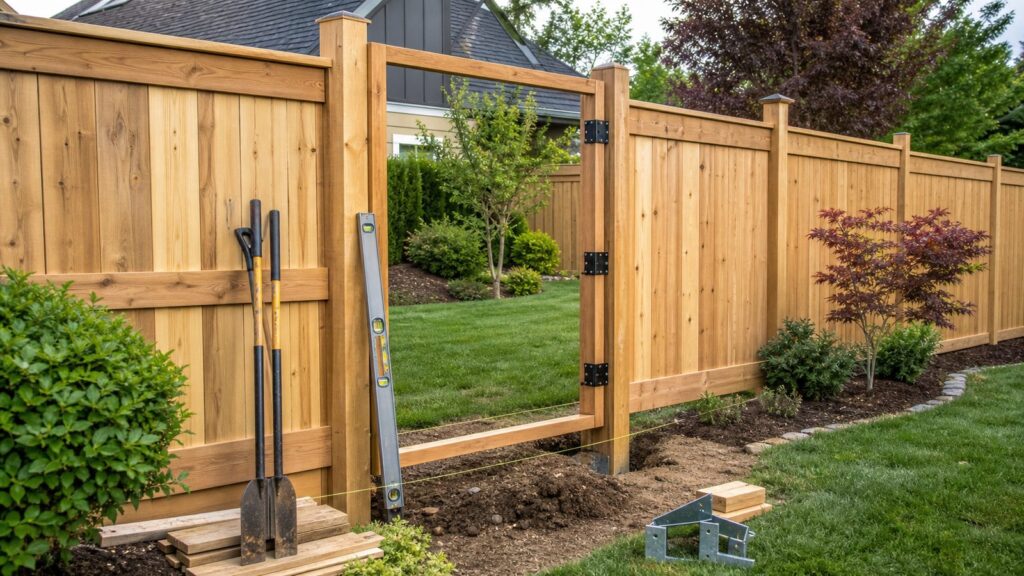
Rails should be sized and fastened for the panel weight. Pickets should have bottom clearance above soil, mulch, and standing water. On a long run, small layout errors become obvious, so string lines, grade references, and consistent reveal lines are worth the setup time.
Plan Gates Like a Builder
Many fence problems start at gates. A gate is a moving framed assembly hanging from one post. It sees more stress than a fixed fence panel, especially when children swing on it, wind catches it, or a mower bumps it.
For a standard walk gate, we look at opening width, post size, hinge rating, latch type, swing direction, and whether the gate needs to be self-closing. A 36- to 48-inch walk gate is common. Wider gates need stronger framing and hardware. Double gates for lawn equipment or vehicles need drop rods, cane bolts, center stops, and posts sized for the span.
Use heavy-duty hinges, adjustable anti-sag hardware, and a latch suited to the use. If pets or children are part of the plan, latch height and opening size matter. If the fence is part of a pool barrier, the gate may need to swing away from the pool, self-close, and self-latch according to local code.
Do not let the gate be an afterthought in the quote. Ask what hardware is included, how the posts will be set, how wide the clear opening will be, and whether the gate frame is wood, welded metal, vinyl-reinforced, or manufacturer-specific.
Account for Slope, Drainage, and Yard Conditions
Flat yards make fencing easier. Most yards are not perfectly flat.
What’s actually slowing this PC down?
Pick the symptom - the matching free tool is one click away.
On slopes, privacy fences are usually handled three ways: stepped, racked, or custom-cut. A stepped fence keeps each panel level and stair-steps down the hill. It looks clean but can create triangular gaps at the bottom. A racked fence follows the grade more closely and reduces bottom gaps, but not every panel system can rack enough. A custom-cut fence follows the terrain more tightly, but it takes more labor.
The right answer depends on the slope, the material, the view from both sides, and whether pets can slip under gaps. On our projects, we decide this before materials are ordered because a steep grade can change post lengths, panel layout, and labor.
Drainage also matters. Avoid creating a dam at the bottom of the yard. Leave enough clearance for water movement where needed, and do not bury pickets in mulch to hide uneven grade. That may look good for a month, but it accelerates rot and staining.
Tree roots, retaining walls, hardscape edges, irrigation lines, sheds, AC units, and tight side yards can all affect layout. If a crew cannot access the fence line with equipment, hand digging and hand carrying materials will increase labor.
Windows Errors? Fix Them Before They Spread
Repair common Windows errors and clear accumulated junk for a smoother, more stable PC - no reinstall needed.Free scan · no reinstallOutdated Drivers Are Slowing You Down
One free scan finds every outdated or missing driver and matches the right update for your exact hardware.Free scan · exact hardware matchPermits, Property Lines, Utilities, and Neighbor Rules
Before digging, call 811 for utility locates. This should happen even for a short fence run. Gas, electric, cable, irrigation, and drainage lines can be closer to the surface than expected. Utility marking does not define your property line; it only helps identify underground utilities.
For property lines, do not rely on an old fence, a mowing edge, or a neighbor’s memory. If the line is uncertain, get a survey or locate existing pins before construction. Moving a finished fence because it was built over the line is far more expensive than confirming the layout upfront.
Also popular on Amazon

- Backyard Privacy Enclosure: Our vinyl fence panel set includes 3 panels measuring 50 x 50 in, ideal for concealing outdoor items like trash bins, pool equipment, and air conditioners, keeping your backyard neat and attractive while meeting HOA guidelines
- Reinforced Wind-Resistant Structure: Upgraded 27.56 in / 70 cm galvanized metal ground stakes enhance overall stability. Insert at least 20 in into the ground for optimal wind and rain resistance. Suitable for soft soil, gravel, sand, and other surfaces
- Easy Installation: The vinyl fence features a slide-in grooved design with detailed instructions, allowing panels to be inserted and secured with screws—no extra drilling needed. Flexible layout options include 90° L-shape or 180° straight arrangements, and additional panels can be added to expand coverage for different needs
- Durable & Weather-Resistant: Made from premium PVC, these vinyl privacy fence are built for long-term outdoor use. Unlike iron or wooden fences, they are waterproof, corrosion-resistant, and rust-resistant for enhanced durability. The surface is easy to clean
- Thoughtful Security Details: All outdoor privacy screen edges come with anti-scratch accessories, including secure U-shaped Channels and protective caps to avoid injury to your family and pets. Caps also prevent dust buildup on the posts, making cleaning easier
Local fence rules can cover height, front-yard restrictions, corner visibility, materials, finished-side orientation, setbacks, easements, and pool barriers. Some cities allow many backyard fences without a permit if they stay under a height limit. Others require permits, zoning approval, or inspections. HOA rules may be stricter than city rules and may control color, material, cap style, and which side faces out.
Good-neighbor details matter. Many communities require or expect the finished face to point outward. Even when not required, it is worth discussing fence location and appearance with adjacent neighbors before work starts. That conversation does not replace permits or surveys, but it can prevent disputes.
Windows Errors? Fix Them Before They Spread
Repair common Windows errors and clear accumulated junk for a smoother, more stable PC - no reinstall needed.Free scan · no reinstallCrashes, No Sound, or Screen Glitches?
Random freezes, missing sound and display glitches usually trace back to one bad driver. Find and replace yours safely.Free scan · under a minuteMaintenance and Lifespan: What You Are Really Buying
Fence cost is not just the install price. A low upfront price can become expensive if the fence needs frequent repair, staining, or early replacement.
A wood fence gives you the most design flexibility, but it asks for maintenance. Expect periodic washing, staining or sealing, fastener checks, and replacement of damaged boards. Keep soil and mulch away from pickets. Adjust sprinklers so they are not soaking the fence. Watch for loose rails, cracked posts, and gate sag.
Vinyl needs less routine maintenance. Usually, washing with mild soap and water is enough. The bigger issue is product quality and installation quality. Thin vinyl, poor rail engagement, or undersized posts can create problems that cleaning will not fix.
Composite also has low maintenance, but it should still be washed periodically. Check manufacturer guidance before using harsh cleaners or pressure washing. Composite systems are not all the same, so replacement parts and warranty terms should be considered before choosing a brand.
Metal and mixed-material fences can last a long time, but they need proper corrosion protection. Powder coating, galvanized steel, protected cut edges, stainless or coated fasteners, and compatible metals reduce rust and staining.
When comparing quotes, ask each contractor what maintenance the fence will need in the first year, years 2 through 5, and after year 10. That answer tells you whether they understand the material beyond installation day.
When to DIY vs. When to Hire a Pro
A capable homeowner can build a short, straight wood privacy fence on flat ground with clear property lines and simple gate needs. DIY makes the most sense when the run is small, access is easy, the soil is workable, and you have time to set posts accurately.
For DIY planning, be realistic about labor. Digging post holes, hauling concrete, setting posts plumb, maintaining a straight line, cutting around slopes, and building a square gate all take time. A 100- to 150-foot fence can consume several weekends for a homeowner, especially with demolition and disposal.
The Tool Desk
Outbyte Driver Updater FREEScan for outdated or missing drivers - takes under a minuteDriver Scan →Outbyte PC Repair FREERepair Windows errors before they cause bigger problemsFix Now →Hire a pro when the fence is tall, long, exposed to wind, built on a slope, tied to a pool barrier, located near uncertain property lines, or includes multiple gates. Also hire a pro for vinyl, composite, and metal systems if the manufacturer requirements are specific. Mistakes in post spacing, rail engagement, or reinforcement can void warranties and cause movement.
A professional quote should include linear footage, height, material, post type, post spacing, footing approach, gate count and width, hardware, demolition, disposal, permit handling, staining or finishing if included, and exclusions. If a quote only gives a total price with little detail, ask for clarification before comparing it to others.
Also popular on Amazon

- STYLISH NATURAL WOOD: This FSC certified wood screen is made with real wood meaning no two boards have the same grain color, finish, or wood knots differing it from vinyl outdoor privacy fence screen panels.
- EASY TO INSTALL: Our wood privacy fence panel assembles in approximately 90 mins and installation is simple and easy. Using a mallet and the included ground stakes, tap your posts into the ground, securing your screen.
- NO DIGGING REQUIRED: Innovative no dig system saves you time and hassle.
- PRIVACY AND CHARM: Our no dig air conditioner fence is perfect for hiding unattractive backyard items such as AC units, trash cans, pool equipment, children's toys, and more.
- DIMENSIONS: Once assembled, your wood outdoor privacy screen will measure 60.5in H x 38.625in W. That's 5ft of height for extra privacy around your patio, deck, garden, or backyard.
Common Privacy Fence Mistakes to Avoid
The most expensive fence mistakes usually happen before installation starts. Choosing by panel price alone is the first one. Posts, gates, demolition, grading, hardware, permits, finishing, and maintenance can change the real cost dramatically.
Other common mistakes include building on an assumed property line, skipping 811 utility locates, ignoring HOA approval, choosing a fence too tall for local rules, and using shallow post holes in windy areas. We also see fences fail early when pickets touch soil, mulch is piled against boards, sprinklers soak the fence, or gates are built with undersized posts.
For vinyl, the mistake is often buying the cheapest panel without checking wall thickness, UV resistance, reinforcement, warranty, and wind rating. For horizontal wood fences, the mistake is treating them like standard vertical fences even though the spans and visual tolerances are different.
If the fence is near a pool, the biggest mistake is assuming privacy equals safety. Pool barriers have specific rules for height, openings, gate hardware, latch location, and climb resistance. Verify those requirements before choosing the design.
How to Choose the Best Fence for Your Yard
For most homeowners, the decision comes down to budget, maintenance tolerance, appearance, and site conditions.
Choose pressure-treated wood if you want the lowest practical installed cost, a traditional look, and easy repairs, and you are willing to maintain it. Choose cedar if you want a better natural wood appearance and can afford the upgrade. Choose vinyl if you want low maintenance and a clean uniform look, but pay attention to product quality. Choose composite if you want a premium, lower-maintenance fence and can accept the higher upfront cost. Choose metal or mixed-material privacy fencing if you want a modern design and are willing to specify the system carefully.
Recommended Free Tools
Then test that choice against the site. Is the yard windy? Are there slopes? Is the soil loose, rocky, or wet? Do you need a pool-compliant gate? Are you near a street corner? Do you need to block a second-story view? Does the HOA limit color or material? The best privacy fence is the one that survives those questions.
If you are comparing bids, give every contractor the same information: total linear footage, desired height, material preference, number and size of gates, old fence removal, slope conditions, pool requirements, and any HOA or city restrictions. Better inputs produce better quotes.
A well-built privacy fence should do more than stand between you and the neighbor. It should fit the yard, drain properly, handle wind, open and close cleanly, meet local rules, and still look intentional years later. That is the difference between buying panels and building a fence.
Frequently Asked Questions
What is the best type of privacy fence for a backyard?
For many backyards, a 6-foot wood or vinyl privacy fence is the best balance of cost, privacy, and availability. Wood is more customizable and easier to repair, while vinyl is lower maintenance. Composite and metal systems are good premium options when budget allows.
How much does a privacy fence cost in 2026?
Many standard 6-foot wood or vinyl privacy fences cost about $25 to $60 per linear foot installed in 2026. A typical full backyard project often totals $5,000 to $12,000, depending on footage, gates, removal, terrain, material, and local labor rates.
Is wood or vinyl better for a privacy fence?
Wood is better if you want a custom look, easier repairs, and a lower starting price. Vinyl is better if you want less maintenance and a clean, uniform appearance. The better choice depends on budget, style, wind exposure, and how much upkeep you are willing to do.
Do I need a permit to build a privacy fence?
It depends on your city, county, and HOA. Many areas regulate fence height, front-yard placement, corner visibility, easements, materials, and pool barriers. Check local rules before construction, and always call 811 before digging post holes.
How deep should privacy fence posts be set?
A common starting point is to set about one-third of the post below grade. Many 6-foot privacy fences use post holes around 24 to 36 inches deep, but frost depth, soil type, wind exposure, height, and gate loads can require deeper or larger footings.
Quick wins for a faster PC:
Fix the driver behind crashes, sound loss and screen glitchesFind Drivers →Clear out junk files and repair common Windows errorsFree Scan →Can a privacy fence also count as a pool barrier?
Sometimes, but only if it meets local pool-barrier rules. Many jurisdictions require at least 48 inches of height, limited openings, climb-resistant details, and self-closing, self-latching gates. Verify local code before assuming a privacy fence qualifies.
Quick Recap
Product prices and availability are accurate as of the date/time indicated and are subject to change. Any price and availability information displayed on Amazon at the time of purchase will apply.

