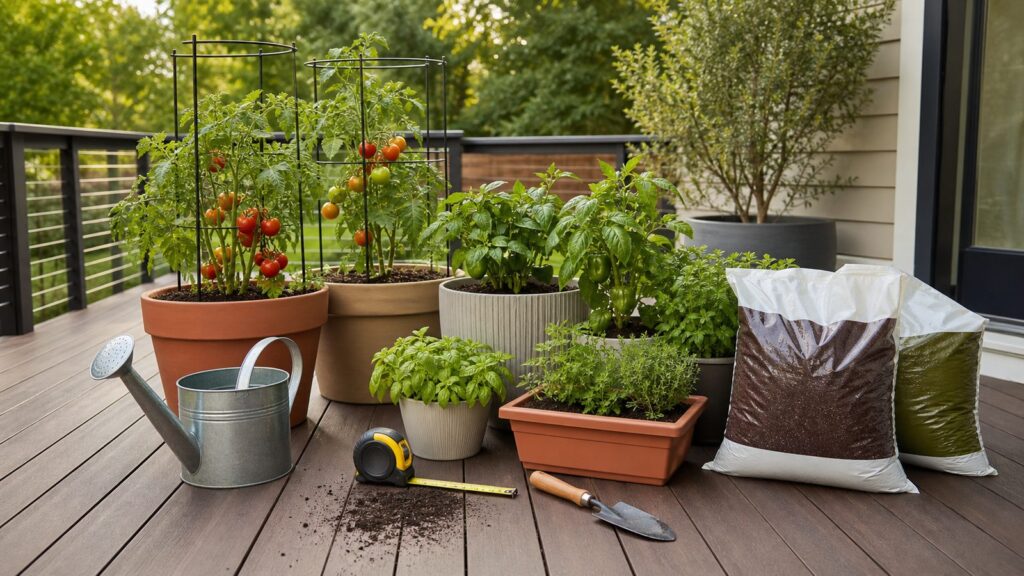
The best potting soil for vegetables in containers is usually not soil at all. For most patio pots, grow bags, railing planters, and raised boxes, you want a lightweight potting mix or soilless growing medium that drains well, holds steady moisture, and has enough pore space for roots to breathe.
That distinction matters. Native yard soil, bagged topsoil, and cheap fill dirt can look fine in the bag, but in a container they often compact into a dense block. Water sits too long, roots lose oxygen, fertilizer gets uneven, and vegetables stall. On our job sites, we treat container planting the same way we treat drainage around a foundation or a patio slab: the material below the surface determines whether the finished project performs.
For 2026 planning, expect standard all-purpose potting mix to run about $5 to $19 per cubic foot at national retailers, with premium or organic mixes commonly landing around $10 to $25+ per cubic foot. A 5-gallon vegetable bucket needs about 0.67 cubic feet of mix. A 20-gallon tomato grow bag needs about 2.67 cubic feet. That means the media alone can cost about $5 to $10 for a 5-gallon pot, $11 to $20 for a 10-gallon planter, and $21 to $40 for a 20-gallon container before you buy plants, fertilizer, cages, mulch, or irrigation.
Use this guide to choose the right mix by crop, container size, watering conditions, budget, and structural risk, especially if your garden sits on a deck, balcony, rooftop, or second-story patio.
The Tool Desk
Outbyte Driver Updater FREEFix the driver behind crashes, sound loss and screen glitchesFind Drivers →Outbyte PC Repair FREERepair Windows errors before they cause bigger problemsFix Now →As an Amazon Associate I earn from qualifying purchases.
What Makes a Good Potting Mix for Vegetables?
A good vegetable container mix has four jobs: hold enough water between irrigations, drain excess water fast, keep air around the roots, and provide or accept nutrients predictably. If one of those jobs fails, the plant struggles even if you picked a great tomato variety or put the pot in full sun.
Look for a mix that feels springy and fibrous in your hand. You should see some visible aeration particles such as perlite, pumice, bark fines, or vermiculite. It should not feel like mud, beach sand, or powdery dust. A sour smell, gray anaerobic clumps, heavy fine material, or water that pools on top for several minutes are warning signs.
Most high-performing container mixes include some combination of:
#1 Best Overall

- OUTDOOR POTTING SOIL: Miracle-Gro Organic Outdoor Potting Mix contains a quick-release natural plant fertilizer and also feeds plants for up to 2 months
- PEAT MOSS: This organic potting soil mix is made with responsibly sourced peat (one hundred percent of peat sourced from certified producers)
- OUTDOOR CONTAINER USE: Use this organic potting mix with all types of outdoor container plants, including flowers, vegetables, herbs, annuals, and perennials
- HOW TO USE: To plant in pots, fill the container partially full with this potting soil for outdoor plants, place the plant in the pot after loosening the root ball, cover with more mix and water thoroughly
- COVERAGE: One 16 qt. bag of Miracle-Gro Organic Outdoor Potting Mix fills one 12-inch pot with garden soil for containers (amounts may vary based on the size of the root ball)
- Peat moss or coconut coir: Holds moisture and gives the mix body. Dry peat and coir can repel water at first, so pre-moisten before planting.
- Perlite, pumice, or vermiculite: Creates air space and improves drainage. Perlite and pumice are especially useful for peppers, tomatoes, eggplant, and herbs that dislike soggy roots.
- Compost or aged bark fines: Adds organic matter, improves nutrient holding, and supports a more forgiving root environment.
- Starter or slow-release fertilizer: Helps young plants establish, but it is not a full-season nutrition plan for heavy feeders.
- Lime or pH adjustment: Many vegetable crops do best around pH 5.5 to 7.0, and most all-purpose mixes are adjusted near that range.
Do not judge by the word “organic” alone. Organic mixes can be excellent, but texture still matters. A dense compost-heavy product may grow herbs acceptably in a large planter but perform poorly in a small plastic pot with limited drainage. For vegetables, the mix has to stay open after weeks of watering, not just look rich on day one.
Potting Mix vs. Garden Soil vs. Topsoil
For container vegetables, use potting mix. Garden soil belongs in the ground. Topsoil belongs in grading, lawn repair, and some large landscape beds, not in a 5-gallon tomato bucket.
The reason is physics. In the ground, water can move down and sideways through a huge soil profile. In a pot, the soil column is short and trapped by container walls. Fine particles settle, pore space collapses, and the bottom of the container can stay saturated while the top looks dry. That is how homeowners end up watering more and still getting curled leaves, fungus gnats, yellow plants, and root rot.
Soilless mixes are commonly two to three times lighter than soil-based mixes. That weight difference matters when the containers are on a deck or balcony. A saturated 20- to 30-gallon planter can become a serious point load once you include wet media, the container, the plant, a cage or trellis, mulch, and water sitting in a saucer.
Crashes, No Sound, or Screen Glitches?
Random freezes, missing sound and display glitches usually trace back to one bad driver. Find and replace yours safely.Free scan · under a minuteWindows Errors? Fix Them Before They Spread
Repair common Windows errors and clear accumulated junk for a smoother, more stable PC - no reinstall needed.Free scan · no reinstallIf you are filling a very large raised planter that sits directly on grade, a small amount of mineral soil may be acceptable as part of a blended fill. Even then, keep topsoil modest, often around 5% to 10% of the total volume, and preserve plenty of coarse organic matter and aeration. For normal patio containers, skip it.
How Much Potting Mix Do You Need?
The quick formula is simple: container gallons x 0.134 = cubic feet of potting mix needed. That gets you close enough for buying bags, estimating cost, and deciding whether a project is still a weekend errand or has become a small material-handling job.
Bag labels can be confusing because some are sold by quarts and others by cubic feet. One cubic foot equals about 7.48 gallons or about 29.9 dry quarts. A 50-quart bag is about 1.67 cubic feet. A 1.5-cubic-foot bag is about 11.2 gallons of loose mix.
| Container size | Mix needed | Approx. 50-qt bags | Media cost at $8-$15/cu. ft. | Best uses |
|---|---|---|---|---|
| 3 gallons | 0.40 cu. ft. | 0.25 bag | $3-$6 | Herbs, lettuce, green onions |
| 5 gallons | 0.67 cu. ft. | 0.4 bag | $5-$10 | Peppers, dwarf tomatoes, herbs |
| 10 gallons | 1.34 cu. ft. | 0.8 bag | $11-$20 | Tomatoes, cucumbers, eggplant |
| 20 gallons | 2.67 cu. ft. | 1.6 bags | $21-$40 | Large tomatoes, squash, mixed plantings |
| 30 gallons | 4.02 cu. ft. | 2.4 bags | $32-$60 | Large patio planters, multiple crops |
Buy a little extra. Fresh potting mix settles after the first few waterings, and containers should usually be filled to within 1 to 2 inches of the rim so you have room to water without washing media out. For a group of five 10-gallon planters, plan on about 6.7 cubic feet of mix, plus another bag for topping off and future refresh work.
Free tools Windows power users keep installed
One-click scans. No signup required.
Best Mix by Vegetable Type
Container size and mix choice work together. A premium mix in an undersized pot still dries too fast and runs out of nutrients. A large container filled with dense material still drains poorly. Match the crop first, then pick the media.
Tomatoes
Tomatoes are heavy feeders with large root systems. A 5-gallon container is a practical minimum for compact or patio varieties, but 10 to 20 gallons is better for full-size indeterminate tomatoes. More media gives steadier moisture, steadier nutrients, and fewer stress problems such as blossom-end rot.
Use a high-quality potting mix with compost, peat or coir, and visible aeration. For large tomato containers, a practical blend is 40% to 50% finished compost with 50% to 60% potting mix, coir, peat, bark fines, perlite, or pumice. Do not use straight compost in small or medium pots unless you know it drains well after repeated watering.
Peppers and Eggplant
Peppers and eggplant usually do well in 5- to 10-gallon containers. They need consistent moisture but dislike soggy roots. Choose a mix with good aeration and avoid heavy moisture-control products if your containers sit in shade or receive frequent rain.
Quick wins for a faster PC:
Fix the driver behind crashes, sound loss and screen glitchesFind Drivers →Clear out junk files and repair common Windows errorsFree Scan →Lettuce, Spinach, Radishes, and Green Onions
Leafy greens and small-root crops can grow in shallower containers, often 6 to 8 inches deep for lettuce and green onions, with deeper media for carrots depending on variety. A moisture-retentive mix with coir, peat, and compost works well because these crops suffer quickly when the surface dries out.
Rank #2

- FEEDS UP TO 6 MONTHS: Miracle-Gro Potting Mix is a gardening soil for outdoor containers that feeds all types of potted plants, including flowers, vegetables, shrubs, annuals, and perennials for up to 6 months
- PROMOTES GROWTH: This potting soil for outdoor plants Grows Plants Twice As Big! (vs. unfed plants)
- WHERE TO USE: Use this home gardening product with all types of outdoor container plants, including annual and perennial flowers, vegetables, herbs and shrubs
- HOW TO USE: To use this plant soil for potting, fill a container about 1/3 full with potting mix, place your plant in the soil, and fill the rest of the pot, pressing lightly
- COVERAGE: This bundle includes two 16 qt. bags of Miracle-Gro Potting Mix, an outdoor potting soil; each bag fills one 12-inch container (amounts may vary depending on the size of the root ball)
Cucumbers and Squash
Cucumbers and squash need volume, water, and support. Use at least 10 gallons for compact cucumbers and 15 to 25 gallons for larger squash or vigorous vines. The mix should be fluffy enough to drain but rich enough to hold moisture through hot afternoons. Add a trellis before the roots fill the pot so you are not driving stakes through an established root system later.
Herbs
Basil likes steady moisture and fertility. Rosemary, thyme, oregano, and sage prefer sharper drainage. For Mediterranean herbs, add extra perlite, pumice, or bark fines to an all-purpose mix. A 3- to 5-gallon pot is enough for many single herbs, while mixed herb planters need more room and compatible watering needs.
What to Buy: Budget, Premium, Organic, or DIY?
For a few patio pots, buying bagged potting mix is usually the right call. It is clean, consistent, and easy to move. For a dozen large containers, DIY blending can save money and let you tune the texture, but it adds handling time and requires a clean mixing area.
| Option | Typical 2026 cost | Best for | Watch-outs |
|---|---|---|---|
| Budget all-purpose potting mix | $5-$10 per cu. ft. | Herbs, greens, seasonal patio pots | May need more fertilizer and added perlite |
| Standard vegetable/container mix | $8-$19 per cu. ft. | Most tomatoes, peppers, cucumbers, and mixed containers | Compare bag volume, not just sticker price |
| Premium or organic mix | $10-$25+ per cu. ft. | Food gardens, high-value crops, gardeners avoiding synthetic inputs | Can still be too dense if compost-heavy |
| DIY bulk blend | Varies by compost, coir/peat, perlite, and freight | Large planters, multiple grow bags, custom drainage needs | Requires mixing, storage, and quality control |
Small bags often look cheap but cost far more per cubic foot. A 6- or 8-quart specialty bag can cost two to four times as much per cubic foot as a 1.5- or 2-cubic-foot bag. Before buying, convert the volume and compare cost per cubic foot.
One reliable large-planter blend is 40% to 50% high-quality compost and 50% to 60% lightweight potting mix or soilless components. If the blend feels heavy or sticky, add perlite, pumice, bark fines, or coarse coir. If it dries out too fast in fabric grow bags, increase compost or coir and add mulch on top.
Drainage Is Non-Negotiable
Every vegetable container needs drainage holes. A pot without drainage is not a planter; it is a water-holding vessel. Even the best potting mix will fail if excess water cannot leave.
For plastic nursery pots and buckets, drill several holes across the bottom, not just one in the center. A typical 5-gallon bucket should have multiple 1/4- to 3/8-inch holes. Larger planters need more drainage area and should be raised slightly on feet, strips, or pavers so water can escape instead of sealing against a flat surface.
What’s actually slowing this PC down?
Pick the symptom - the matching free tool is one click away.
Do not add a layer of gravel at the bottom and assume that solves drainage. In most containers, the better fix is a uniform, well-aerated mix from top to bottom and proper holes at the base. If the container sits on wood decking, use a saucer only if you empty it after watering. Constant trapped moisture can stain concrete, feed algae, and accelerate rot on wood or composite deck framing details.
On finished patios and balconies, plan where the water goes. Fertilizer-rich runoff can stain surfaces and drip onto neighbors below. Use trays, risers, controlled watering, and mats where appropriate, but do not let containers sit in standing water for days.
Fertilizer: What the Bag Does Not Finish
Many potting mixes include a starter charge or controlled-release fertilizer. That helps, but container vegetables usually need more nutrition as the season progresses. Frequent watering leaches nutrients, and heavy feeders such as tomatoes, cucumbers, squash, peppers, and eggplant can exhaust the initial charge quickly.
As a working rule, controlled-release fertilizer often needs renewal after roughly 8 to 10 weeks, depending on the product label, temperature, watering frequency, and crop load. Many container vegetable programs also use liquid feed during active growth and fruiting.
Recommended Free Tools
Follow the fertilizer label rather than guessing. More is not better. Overfertilized containers can develop salt buildup, burned roots, excessive leafy growth, poor fruiting, or distorted plants. If you reuse potting mix, flush it well before replanting to help move accumulated salts out of the container.
For tomatoes, choose a vegetable or tomato fertilizer with balanced nutrition and adequate calcium management through steady watering. Blossom-end rot is usually tied to inconsistent water movement and calcium uptake, not simply a lack of calcium in the bag. Larger containers, even watering, and a stable mix do more good than panic amendments after fruit is already damaged.
Rank #3

- ALL-NATURAL MIX: Burpee Organic Premium Potting Mix is formulated with plant food & coconut coir to promote seed & root growth and healthy flower, vegetable & herb plants. OMRI Listed for organic use.
- PERFECT FOR CONTAINERS: Use this growing mix for planting in containers or raised beds. The potting soil feeds plants instantly, then provides a slow-release plant food that feeds for up to 3 months.
- RETAINS MOISTURE: Sustainable coconut coir helps hold the right amount of water for potted plants, indoors or outdoors. Coconut coir is an organic and sustainable resource that helps maintain moisture between waterings.
- TIP FOR FLOWER POTS: Use flowers and foliage of varying heights to add dimension to your container. Place tall plants in the middle or back, mounding plants all around and spilling plants at the edge.
- Since 1876: Generations of customers have trusted Burpee to deliver the highest quality products and service. Gardeners rely on Burpee for accurate plant information and how-to tips that make gardening easier and more successful. Let’s grow together!
Watering Conditions Change the Right Mix
The same potting mix can behave differently in a plastic pot, fabric grow bag, terra-cotta planter, and self-watering container. Match the mix to the container and exposure.
Hot Patios and Full Sun
Dark containers on concrete can get hot. South- and west-facing patios dry quickly because the pot is heated from the sides as well as the top. Use a mix with coir, peat, compost, or other water-holding ingredients, then add a thin mulch layer on top. One-half inch to 1 inch of shredded leaves, straw, fine bark, or clean compost can reduce crusting and evaporation without smothering stems.
Do these 3 things before closing this tab:
1Clear out junk files and repair common Windows errors2Fix the driver behind crashes, sound loss and screen glitches3Repair Windows errors before they cause bigger problemsFabric Grow Bags
Fabric bags drain and breathe well, but they dry faster than rigid plastic. That can be useful for root health, but tomatoes and cucumbers may need daily watering during hot stretches. Favor a slightly more moisture-retentive mix and avoid placing bags directly on heat-reflective surfaces without a plan for irrigation.
self-watering planters
Self-watering planters need a fluffy, wicking mix. Dense soil can stay too wet and starve roots of oxygen. Dry peat or coir should be pre-moistened before filling the reservoir system. Fill the planter evenly, avoid compacting the mix hard, and keep the overflow working so the reservoir cannot flood the root zone.
Shaded or Rainy Locations
In cooler, shaded, or rainy locations, drainage becomes more important than water retention. Choose a lighter mix, avoid oversized saucers, and check that containers are elevated enough for water to leave freely.
Deck and Balcony Weight: The Part Most Garden Guides Skip
Container gardens can become structural loads. That does not mean every patio tomato needs an engineer, but it does mean you should calculate wet weight before filling large planters on elevated decks, balconies, porches, and rooftop areas.
A 20-gallon container holds about 2.67 cubic feet of media. Saturated lightweight potting mix is still heavy, and the finished setup includes the pot, water, plant mass, cage, stakes, mulch, and sometimes a saucer. A large tomato container can reasonably land in the 100- to 180-pound range when wet, depending on the container and mix. A 30-gallon planter can exceed that.
Deck live-load rules vary by jurisdiction and design, but many residential decks are discussed around a 40 pounds-per-square-foot live load baseline, while some balconies and special conditions are designed differently. The risk with planters is not only total weight; it is concentrated weight. Five wet 25-gallon planters clustered in one corner can load framing very differently than the same planters spread along bearing points.
Use these practical rules:
- Choose lightweight potting mix and lightweight containers for elevated locations.
- Spread large pots out instead of clustering them in one corner.
- Place heavier planters near beams, posts, or exterior bearing walls when possible.
- Avoid storing extra wet bags of mix on the deck.
- Check HOA, condo, or apartment rules before adding railing boxes, trellises, irrigation, or anything that can drip below.
- For rooftop gardens, old balconies, cantilevered decks, or multiple large planters, get structural advice before filling.
We see the same pattern in construction planning: the problem is cheaper to solve before the material is in place. Calculate the filled weight, confirm drainage, and decide where containers belong before you haul bags upstairs.
Independent reader supportYour contribution helps us test, update, and keep practical guides available for everyone.Can You Reuse Last Year’s Potting Mix?
Yes, if the previous crop was healthy and the mix still has structure. No, if it smells sour, stayed waterlogged, had serious disease issues, or is packed with fine roots and collapsed particles.
To refresh used mix, remove old roots and stems, break up compacted clumps, flush the container with water to reduce salts, and blend in 20% to 30% fresh compost or potting mix. Restore pore space with perlite, pumice, or bark fines if the old mix looks dense. Add fertilizer according to label directions because last year’s nutrients are mostly gone.
Rank #4

- Miracle-Gro Indoor Potting Mix for Seed Starting grows stronger roots for seeding success (vs unfed when used as directed)
- This lightweight potting mix is enriched with plant food and designed to be less prone to fungus gnats (contains no compost or bark, which are known to shelter to fungus gnats)
- This seed starting mix is excellent for germinating vegetable, flower, and herb seeds, and also for starting leaf, stem, and root cuttings
- Apply this ready-to-use potting medium to cell trays or containers; keep mix moist and out of direct sunlight until seeds germinate
- Bundle comes with 2 bags of Miracle-Gro Indoor Potting Mix for Seed Starting; each 8 qt. bag fills three 72-cell seeding trays (exact amounts may vary)
Do not reuse mix from containers that had severe tomato disease, root rot, or pest infestations for the same crop family. Use it in non-food ornamental areas if appropriate, or solarize only if you understand the time and temperature requirements. For high-value vegetables, fresh mix is often cheaper than losing a season.
When to DIY vs. When to Hire a Pro
Most homeowners can handle a few containers on grade without hiring anyone. If you are planting three herbs, two pepper pots, and a cherry tomato on a ground-level patio, buy a quality potting mix, confirm drainage, and do the work in an afternoon.
DIY makes sense when the containers are small to medium, sit on a slab or ground-level patio, have simple drainage, and do not affect railings, waterproofing, electrical, irrigation, or structural framing. Expect to spend $30 to $150 for a small container vegetable setup and $150 to $500+ for a larger patio garden with several 10- to 20-gallon containers, cages, premium mix, mulch, and fertilizer.
Do these 3 things before closing this tab:
1Repair Windows errors before they cause bigger problems2Scan for outdated or missing drivers - takes under a minute3Clear out junk files and repair common Windows errorsBring in a professional when the garden becomes part of the built environment. That includes rooftop planters, balcony gardens, heavy built-in boxes, deck-mounted containers, irrigation tied into plumbing, drainage near doors or finished ceilings, or planters integrated with stairs, railings, privacy screens, or outdoor kitchens.
A contractor or qualified deck professional can help verify load paths, protect waterproofing, detail drainage, and keep planters from trapping moisture against wood framing or siding. Depending on your city, HOA, condo board, or apartment lease, you may also need approval for visible balcony planters, railing attachments, rooftop use, drainage discharge, or structural modifications.
Buying Checklist for Vegetable Potting Mix
Before loading the cart, check the bag and your project against this list:
- The label says potting mix, container mix, or raised container mix, not topsoil or garden soil.
- The texture is light, springy, and fibrous, with visible aeration particles.
- The bag volume is clear in cubic feet or quarts, so you can compare cost per cubic foot.
- The mix includes or allows fertilizer, and you have a plan to feed after 8 to 10 weeks if needed.
- The container has enough volume for the crop and enough depth for roots.
- Drainage holes are already present or can be drilled before filling.
- For hot patios, the mix has enough water-holding material and the top can be mulched.
- For decks and balconies, the full wet weight is acceptable and the load is distributed.
If you remember only one rule, make it this: buy the mix for the container, not for the bag claim. Vegetables need root space, air, water, nutrients, and drainage. The best potting mix is the one that keeps those conditions stable for the full season.
Frequently Asked Questions
What is the best potting soil for vegetables in containers?
Use a lightweight potting mix or soilless container mix with peat or coir for moisture, perlite or pumice for aeration, compost or bark fines for organic matter, and a starter or slow-release fertilizer. Avoid dense garden soil and topsoil in normal pots.
Can I use garden soil or topsoil in vegetable pots?
Not for most containers. Garden soil and topsoil compact in pots, drain poorly, and can introduce pests or disease. They also add unnecessary weight, which is a concern on decks, balconies, and rooftop areas.
How much potting mix do I need for a 5-, 10-, or 20-gallon container?
Multiply container gallons by 0.134 to estimate cubic feet. A 5-gallon pot needs about 0.67 cubic feet, a 10-gallon planter needs about 1.34 cubic feet, and a 20-gallon grow bag needs about 2.67 cubic feet.
Is organic potting soil worth it for container vegetables?
Organic potting mix can be worth it for food gardens, especially if it has good texture and reliable ingredients. Do not buy on the organic label alone. A good vegetable mix still needs drainage, pore space, moisture retention, and a clear fertilizer plan.
How often should I fertilize vegetables grown in potting mix?
Many mixes include starter or controlled-release fertilizer, but container vegetables often need more feeding after about 8 to 10 weeks. Heavy feeders such as tomatoes, cucumbers, squash, peppers, and eggplant may also need liquid fertilizer during active growth and fruiting.
Do large planters on decks or balconies need structural approval?
Sometimes. A saturated 20- to 30-gallon planter can create a heavy concentrated load. For multiple large containers, older decks, balconies, rooftop gardens, or built-in planters, check HOA or building rules and get structural guidance before filling.
Quick Recap
Product prices and availability are accurate as of the date/time indicated and are subject to change. Any price and availability information displayed on Amazon at the time of purchase will apply.

