Free tools Windows power users keep installed
One-click scans. No signup required.
Some links on this page are affiliate links: if you buy through them we may earn a commission, at no extra cost to you.
The best micro-mesh gutter guard for most U.S. homes is a stainless steel micro-mesh screen supported by a rigid aluminum frame, installed only after the gutters are cleaned, pitched correctly, securely fastened, and tied into enough downspouts. For homeowners who want a strong DIY value, Raptor and Gutterglove-Style Stainless Micro-Mesh kits are usually the first products we would compare. For homeowners who want a professionally installed premium system with a workmanship warranty, LeafFilter, MasterShield, HomeCraft, and All American Gutter Protection are the names most often worth getting quotes from.
The short version: choose the system for your roof, not for the loudest claim. A house under pine, fir, maple, oak, or asphalt-shingle grit needs a different guard than a house with two large-leaf trees and simple one-story access. Micro-mesh is excellent at stopping small debris, but it is not maintenance-free. On our job sites, we still expect periodic brushing or rinsing of the guard surface, especially after spring pollen drop, pine needle drop, heavy seed-pod seasons, or a roof that is shedding granules.
For 2026 budgeting, common DIY stainless micro-mesh kits run about $2.00 to $3.30 per linear foot for materials. A 200-linear-foot home may spend roughly $400 to $660 on guards before tools, waste, cleaning, repairs, and safety equipment. Professional installation varies far more. Many full-service micro-mesh quotes land around $15 to $45+ per linear foot installed, and national pricing guides show a broad spread from about $3,000 to more than $9,000 for 200 linear feet depending on brand, access, repairs, roof height, and what is bundled into the job.
Do these 3 things before closing this tab:
1Scan for outdated or missing drivers - takes under a minute2Clear out junk files and repair common Windows errors3Fix the driver behind crashes, sound loss and screen glitchesAs an Amazon Associate I earn from qualifying purchases.
What Makes Micro-Mesh Different From Other Gutter Guards?
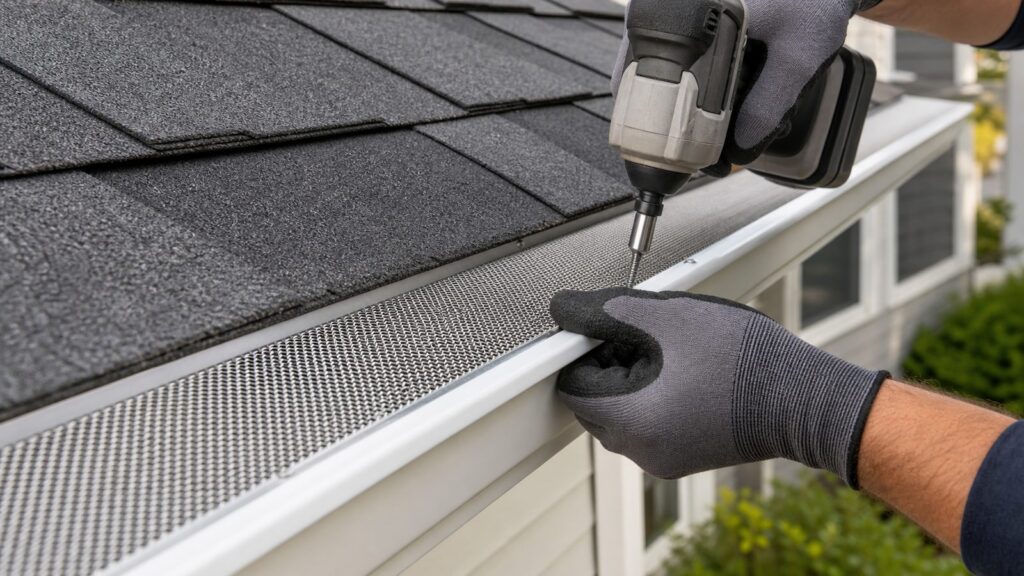
Micro-mesh gutter guards use a fine stainless steel screen over a support frame. Better products use 304 or 316 stainless steel mesh with an aluminum frame. The mesh blocks fine material such as pine needles, fir needles, seed pods, pollen clumps, asphalt-shingle granules, and small leaves. The frame keeps the mesh from sagging into the gutter and gives the guard enough stiffness to bridge the gutter opening.
That is different from basic perforated aluminum covers, which use larger holes. Perforated covers can work well for large leaves, but smaller debris often gets through. Foam inserts sit inside the gutter and can trap sediment. Brush guards catch leaves on bristles and often become debris holders. Reverse-curve guards can shed leaves, but they are bulkier, more visible from the ground, and can overshoot water in hard rain if the roof edge and pitch are not right.
Popular on Amazon

- [EASY TO INSTALL] This kit includes 48 FT. (Nominal) of Stainless Steel Micro-Mesh Gutter Guard and self-tapping screws. Designed to fit on 5 IN. gutters or smaller and easy DIY installation.
- [QUALITY & PERFORMANCE] Engineered with Stainless Steel Micro-Mesh, offering unmatched strength and durability. Offers maximum performance, resisting rust and warping.
- [TECHNOLOGY] V-Bend & Trough Technology optimizes water flow, adds strength and rigidity, improves filtration, and prevents debris from sticking.
- [MAXIMUM PROTECTION] Keep leaves, pine needles, pests, and roof grit from entering your gutters while protecting your home from water damage, landscape erosion, infestation, and fire hazards.
- [UNIQUE FEATURES] WUI (Wild Urban Interface) Compliant and UL Approved for rainwater collection – NSF P151 and NSF 372.
For mixed U.S. yards, micro-mesh is usually the most balanced choice. It blocks the widest range of debris without changing the roofline much. The best versions fasten securely to the front gutter lip, do not rely on flimsy plastic, and allow water to pass fast enough during normal storms.
Quick wins for a faster PC:
Clear out junk files and repair common Windows errorsFree Scan →Fix the driver behind crashes, sound loss and screen glitchesFind Drivers →Our Best Micro-Mesh Gutter Guard Picks
There is no single best gutter guard for every roof. The right answer depends on tree species, roof pitch, gutter size, rainfall intensity, ladder access, and whether the homeowner wants to handle maintenance. These are the systems we would put on the shortlist first.
Best Overall Professional System: LeafFilter
LeafFilter is one of the better-known professional micro-mesh systems because it combines stainless steel mesh with a rigid frame and full-service installation. The value is not just the screen. A good professional installation should include gutter cleaning, minor prep, fitting around corners and rooflines, fastening, and a warranty-backed installation.
This type of system makes the most sense for two-story homes, steep rooflines, heavy fine debris, or homeowners who do not want to work from ladders. It is also a better fit when the gutters need evaluation before guards go on. If hangers are loose, miters leak, or downspouts are undersized, those problems should be corrected before the guard covers the trough.
The tradeoff is cost. Premium installed micro-mesh quotes commonly run in the $15 to $45+ per linear foot range. A 200-foot job could land anywhere from about $3,000 to $9,000 or more depending on access, repairs, and sales model. Always compare the written scope, not just the price per foot.
Best DIY Value: Raptor Stainless Micro-Mesh
Raptor-style stainless micro-mesh guards are a strong DIY option for homeowners with sound gutters, safe ladder access, and basic tool skills. The product category usually offers stainless mesh, an aluminum rail or frame, and screw-fastened installation. Material pricing often falls around $2.30 to $3.30 per linear foot depending on package size and retailer.
For a typical 200-linear-foot home, materials may run about $460 to $660 before extra screws, bits, gloves, snips, sealant, cleaning supplies, and waste. Plan on one full weekend for a careful DIY installation on a one-story home. Two-story work, steep grades, and long ladder moves change the safety equation quickly.
We like this category when the gutter system is already in good shape. We do not like it as a bandage over sagging runs, rusty spikes, rotten fascia, or undersized downspouts. The guard can only protect the opening; it cannot fix drainage capacity.
Best Retail Kit: Gutterglove-Style Stainless Micro-Mesh
Gutterglove-style kits are widely available through large retailers and are easy to price against other DIY systems. A common 80-foot stainless micro-mesh kit is often in the same general material range as other quality DIY guards, roughly $2.00 to $3.30 per linear foot depending on size and current retail pricing.
What’s actually slowing this PC down?
Pick the symptom - the matching free tool is one click away.
The main advantage is availability. If a homeowner needs to protect a straightforward 5-inch K-style gutter on a ranch or simple two-story home, retail micro-mesh kits are easy to source, inspect, and replace in sections later. Look for stainless mesh, an aluminum frame, corrosion-resistant fasteners, and installation instructions that do not force the guard deep under the roofing in a way that could create a warranty concern.
Best Premium Roof-Edge Design: MasterShield
MasterShield is worth considering when roof edge geometry, pitch, and water intake are the bigger concerns. Premium systems like this are not just screens; they are designed as roof-edge drainage products. That can matter on steep roofs, long valleys, and homes that see fast runoff during thunderstorms.
The question to ask is not whether the mesh is small. The question is whether the system can accept water at the rate your roof delivers it. On a steep roof with a large valley dumping into a short gutter run, even a good guard can overflow if the gutter and downspout layout are undersized.
Best Local-Contractor Option: All American or Similar Aluminum-Framed Micro-Mesh
Many homeowners get the best value from a local gutter contractor using a professional-grade aluminum-framed stainless micro-mesh product. Local contractors may be more willing to correct slope, add downspouts, replace weak hangers, and address fascia issues as part of the same job.
This is often the practical middle ground between DIY kits and national premium systems. The product may not have the same national advertising presence, but the installation can be excellent if the contractor understands roof drainage and stands behind the work.
Micro-Mesh Gutter Guard Cost in 2026
Cost estimates for gutter guards vary because different sources include different work. Some numbers include only the guard material. Others include cleaning, sealing, labor, warranty, disposal, sales overhead, gutter repairs, and difficult access. For a realistic budget, separate the material from the condition of the existing gutter system.
| Option | Typical 2026 Cost | 200 Linear Feet | Best Fit |
|---|---|---|---|
| DIY stainless micro-mesh materials | $2.00-$3.30 per linear foot | $400-$660 before tools and repairs | Sound one-story gutters, safe ladder access, hands-on homeowner |
| DIY project total | Often about $1,262-$1,556 depending on product and accessories | Varies with tools, waste, cleaning, and safety gear | Homeowner already comfortable with exterior work |
| General professional gutter guard installation | Broad national averages around $622-$2,053 for many guard types and job sizes | Often not directly comparable to premium full-house micro-mesh | Small jobs, simpler homes, mixed guard types |
| Professional micro-mesh or premium systems | Commonly $15-$45+ per linear foot installed | $3,000-$9,000+ depending on scope | Two-story homes, steep roofs, complex drainage, warranty-focused homeowners |
For a typical 2,000-square-foot home, many estimates use 200 linear feet of gutter as a benchmark. Smaller ranch homes may have 120 to 160 feet. Larger two-story homes with porches, additions, and attached garages may have 250 to 350 feet.
The add-ons can matter as much as the guard. Gutter cleaning, resealing corners, replacing hangers, correcting slope, adding downspouts, repairing fascia, replacing damaged gutter sections, upgrading from 5-inch to 6-inch gutters, or adding heat cable in ice-prone areas can materially change the final price.
Also popular on Amazon

- [EASY TO INSTALL] This kit includes 48 FT. (Nominal) of Stainless Steel Micro-Mesh Gutter Guard and self-tapping screws. Designed to fit on 6 IN. & 7 IN. gutters and easy DIY installation.
- [QUALITY & PERFORMANCE] Engineered with Stainless Steel Micro-Mesh, offering unmatched strength and durability. Offers maximum performance, resisting rust and warping.
- [TECHNOLOGY] V-Bend & Trough Technology optimizes water flow, adds strength and rigidity, improves filtration, and prevents debris from sticking.
- [MAXIMUM PROTECTION] Keep leaves, pine needles, pests, and roof grit from entering your gutters while protecting your home from water damage, landscape erosion, infestation, and fire hazards.
- [UNIQUE FEATURES] WUI (Wild Urban Interface) Compliant and UL Approved for rainwater collection – NSF P151 and NSF 372.
Cheap guards installed over failing gutters are poor value. If the gutter is sloped backward, pulling from the fascia, or trying to drain 70 feet through one small downspout, the finest micro-mesh screen will not solve the water problem.
How to Choose the Right Micro-Mesh Guard
We start with the roof and drainage path, then choose the guard. That order matters. A gutter guard is part of a water-management system that includes roof valleys, drip edge, gutter slope, hanger spacing, downspouts, discharge points, grading, and splash patterns at the foundation.
Match the Guard to Your Debris
Pine needles, fir needles, seed pods, pollen mats, oak tassels, maple helicopters, and shingle grit are the main reasons to choose micro-mesh. Fine stainless mesh blocks debris that would pass through larger perforations.
In pine-heavy areas, ask the installer how the guard handles needles standing upright in the mesh. Some needles will stick. That does not mean the product has failed, but it does mean the top surface may need brushing after the heavy drop season. A realistic maintenance interval is part of a good recommendation.
The Tool Desk
Outbyte PC Repair FREERepair Windows errors before they cause bigger problemsFix Now →Outbyte Driver Updater FREEScan for outdated or missing drivers - takes under a minuteDriver Scan →If your only issue is large leaves from a few deciduous trees, a less expensive perforated aluminum cover may be enough. Micro-mesh is still a strong choice, but the extra cost may not always be necessary.
Match the Guard to Rainfall and Roof Pitch
Heavy rain performance depends on water intake, gutter size, downspout capacity, and roof geometry. A small mesh opening blocks fine debris, but it also has to pass enough water. On steep roofs, metal roofs, long roof planes, and valley discharges, water can arrive faster than a standard 5-inch gutter can carry it.
For problem areas, we look at the roof area draining to that run, the number of downspouts, the length of the gutter, and the discharge location. Guards do not increase gutter capacity. If a valley overwhelms the system, the answer may be a larger outlet, an added downspout, a 6-inch gutter, or a diverter detail, not a different guard alone.
Check the Frame and Fasteners
A good micro-mesh guard should hold its shape. Look for a stiff aluminum frame, stainless mesh, and corrosion-resistant screws. Avoid weak plastic frames in high-heat roof areas, and be cautious with mixed metals near coastal air, copper roofs, or pressure-treated lumber. Galvanic corrosion is not theoretical when water, metal contact, and salts are present.
We prefer guards that fasten cleanly to the front lip of the gutter and sit securely at the back without creating roof warranty concerns. Some products slide under shingles. That can be acceptable in some assemblies, but it is not automatically harmless. If the roof is newer, check the roofing warranty and the guard installation method before slipping anything under the shingle course.
Do Not Ignore the Existing Gutters
Before guards go on, inspect the gutter trough, seams, outlets, hangers, fascia, and slope. Water should move to the downspout without standing in long low sections. Hangers should be tight and spaced appropriately for the gutter type and snow or ice exposure. Seams and miters should be sealed. Downspouts should discharge away from the foundation, not beside the footing.
We like before-and-after photos of the cleaned gutter trough, repaired joints, and hanger spacing before guards cover the system. Those photos help with warranty questions and future diagnosis if an overflow complaint shows up later.
DIY vs Professional Installation
Micro-mesh guards are one of the more DIY-friendly guard types, but only when the house is friendly to ladder work. The risk is not the screw pattern. The risk is working at height while reaching over a gutter line with tools, panels, and debris.
PC Slower Than It Used to Be?
A free scan shows the junk files, broken settings and background clutter dragging Windows down - then fixes them in one click.Free scan · Windows 10 & 11Crashes, No Sound, or Screen Glitches?
Random freezes, missing sound and display glitches usually trace back to one bad driver. Find and replace yours safely.Free scan · under a minuteWhen DIY Makes Sense
DIY installation can make sense when the home is one story, the ground is level, the gutters are 5-inch or 6-inch K-style gutters in good condition, and the homeowner already owns safe ladders and basic tools. A careful homeowner can often install 100 to 200 linear feet over a weekend, assuming the gutters are already clean and repairs are minor.
Expect to need gloves, aviation snips or shears, a drill or driver, nut drivers or bits, a hose, sealant for minor gutter work, and a safe ladder setup. Add 5% to 10% material waste for cuts, corners, and mistakes. Work slowly around inside corners, roof valleys, and end caps because those are common overflow points.
When to Hire a Pro
Hire a professional when the home is two stories or taller, the roof is steep, the grade slopes away from the house, the gutters are high over walkouts, or the job requires fascia repair, gutter replacement, slope correction, or downspout additions. Also hire a pro if you see rot, loose gutters, repeated overflow, water behind the gutter, or foundation erosion below a roof edge.
Professional installation is not automatically better, but a good contractor brings judgment. The installer should check drainage before selling the guard. If the pitch is wrong, outlets are too small, or the fascia is soft, those conditions should be in the scope before the guards are installed.
Recommended Free Tools
Maintenance: What Micro-Mesh Can and Cannot Do
No gutter guard is maintenance-free. Micro-mesh reduces how often you clean the inside of the gutter, but it does not eliminate exterior upkeep. Debris can mat on top of the screen. Pine needles can stick upright. Oak tassels and pollen can create a film. Moss, algae, and shingle granules can collect at low-slope sections.
Also popular on Amazon

- Sample Pack comes with a sample of both the Standard and the Super sizes
- Great way to TRY BEFORE YOU BUY!
- Great way to TRY BEFORE YOU BUY
- Sample Pack comes with a sample of both the Standard and the Super sizes
For most homes, inspect the guards twice a year: once after the heavy spring debris season and once after fall leaf drop. Homes under pine, fir, oak, or maple may need additional surface brushing during peak drop periods. A soft brush, blower, or gentle hose rinse is usually enough from a safe working position. Avoid pressure washing upward into the roof edge or forcing water behind fascia and soffit materials.
If a guarded gutter overflows, do not assume the mesh is the only problem. Check for a blocked downspout, a clogged outlet, a low section full of granules, a roof valley dumping too much water into one point, or a gutter that is too small for the roof area. Overflow is a symptom, not a diagnosis.
Independent reader supportYour contribution helps us test, update, and keep practical guides available for everyone.Safety, Permits, and Code Considerations
Most simple gutter guard installations do not require a building permit in many U.S. jurisdictions, especially when you are not changing structural framing, roof covering, or drainage connections. Local rules vary, so check your city or county before work begins. Some municipalities specifically exempt ordinary gutter work, while others may require permits when roof drainage connects to rainwater harvesting, stormwater systems, or regulated site drainage.
Code and good practice still matter. Roof drainage must move water away from the structure. Where rainwater is collected for reuse, plumbing rules may apply. If exterior drainage changes discharge patterns near a property line, sidewalk, basement, crawlspace, or neighboring lot, treat that as a design issue, not a small accessory purchase.
From a job-site safety standpoint, ladder work is the biggest concern. Use the correct ladder height, place it on stable ground, maintain three points of contact, and avoid reaching sideways across long sections. Do not install guards during wet, icy, or windy conditions. Multi-story work should be handled with proper ladders, staging, fall protection where required, and insured labor.
In wildfire-risk areas, metal micro-mesh guards can reduce combustible debris inside gutters, but they do not eliminate ember risk. Roof valleys, roof-to-wall intersections, and the guard surface still need cleaning. Pair guards with noncombustible maintenance around the roof edge and defensible-space practices recommended for your area.
Buyer’s Checklist Before You Sign or Buy
Use this checklist before ordering materials or accepting a quote. It will prevent most bad gutter guard purchases.
Free tools Windows power users keep installed
One-click scans. No signup required.
- Measure actual gutter length: Count every run, corner, porch, garage, and upper roof section. Add 5% to 10% for waste on DIY jobs.
- Confirm gutter size: Most homes use 5-inch K-style gutters, but 6-inch gutters are common on larger roofs and heavy-rain areas.
- Identify debris type: Pine needles, pollen, and shingle grit favor micro-mesh. Large leaves alone may not require the most expensive system.
- Inspect gutter condition: Fix sagging, leaks, bad slope, loose hangers, and rotten fascia first.
- Count downspouts: Long runs and valley discharge points often need added outlets or downspouts.
- Check installation method: Understand whether the guard screws to the front lip, rests on hangers, or slides under shingles.
- Ask about materials: Look for stainless steel mesh, preferably 304 or 316, with an aluminum or other corrosion-resistant frame.
- Read warranty exclusions: Look for exclusions around maintenance, ice, improper cleaning, roof damage, and transferability.
- Compare written scopes: A $20-per-foot quote that includes repairs may beat a $14-per-foot quote that installs over problems.
Final Recommendation
For most homeowners, the best micro-mesh gutter guard is not the smallest mesh or the most expensive brand. It is a stainless steel micro-mesh guard on a rigid aluminum frame, installed over a gutter system that already drains correctly. If your gutters are straight, secure, properly sloped, and accessible from a safe ladder setup, a quality DIY kit can be a very good value at about $2.00 to $3.30 per linear foot for materials.
If your home is tall, steep, surrounded by fine debris, or already showing water-management problems, pay for professional evaluation and installation. Expect premium micro-mesh quotes to vary widely, often from $15 to $45+ per linear foot installed, because the real scope may include cleaning, sealing, hanger work, custom fitting, warranty, and access difficulty.
Our baseline recommendation is stainless micro-mesh with an aluminum frame. Upgrade to a premium proprietary system when the roof is complex, the debris is fine and constant, ladder risk is high, or the warranty and workmanship support are worth the added cost. Do the drainage work first. Guards protect a good gutter system; they do not rescue a bad one.
Frequently Asked Questions
What is the best micro-mesh gutter guard in 2026?
For most homes, the best choice is a stainless steel micro-mesh guard with a rigid aluminum frame. Raptor and Gutterglove-style kits are strong DIY values, while LeafFilter, MasterShield, HomeCraft, and All American are worth comparing for professional installation.
Recommended Free Tools
How much do micro-mesh gutter guards cost per linear foot?
DIY stainless micro-mesh materials commonly cost about $2.00 to $3.30 per linear foot in 2026. Professionally installed premium micro-mesh systems often run about $15 to $45+ per linear foot depending on access, repairs, brand, and warranty.
Are micro-mesh gutter guards worth it for pine needles?
Yes, micro-mesh is usually the best gutter guard type for pine needles because the fine stainless screen blocks debris that passes through perforated covers. Expect some needles to stick in the mesh, so periodic brushing is still needed.
Do micro-mesh gutter guards work in heavy rain?
They can, but performance depends on roof pitch, gutter size, downspout capacity, and valley discharge. Guards do not increase drainage capacity. Heavy-rain homes may need 6-inch gutters, added downspouts, or larger outlets.
Can I install micro-mesh gutter guards myself?
Yes, if the home is one story, the ground is stable, the gutters are in good condition, and you are comfortable with ladder work. Hire a pro for two-story homes, steep roofs, fascia repairs, gutter replacement, or drainage corrections.
The Tool Desk
Outbyte PC Repair FREERepair Windows errors before they cause bigger problemsFix Now →Outbyte Driver Updater FREEFix the driver behind crashes, sound loss and screen glitchesFind Drivers →Do gutter guards require a building permit?
Simple gutter guard installation usually does not require a permit in many U.S. areas, but local rules vary. Permits or additional requirements may apply if drainage is being redirected, connected to rainwater harvesting, or tied into regulated stormwater systems.
Quick Recap
Product prices and availability are accurate as of the date/time indicated and are subject to change. Any price and availability information displayed on Amazon at the time of purchase will apply.

