Free tools Windows power users keep installed
One-click scans. No signup required.
Some links on this page are affiliate links: if you buy through them we may earn a commission, at no extra cost to you.
The best heat diffuser for an electric stove depends on the burner: the HIC Kitchen Heat Diffuser (item 99134) is the most practical default for exposed electric coils and radiant glass when both the diffuser maker and your range manual permit it. If you have induction, choose a maker-approved magnetic plate instead, such as the Cooks Innovations SimmerMat. A diffuser is a low-and-slow tool, not a shortcut for searing, stir-frying, fast boiling, or fixing a pan that scorches at every setting.
Below are the useful choices, their stove limitations, sizing guidance, safety rules, and the evidence behind each recommendation. Prices are shelf figures checked in November 2026, not guaranteed live offers.
As an Amazon Associate I earn from qualifying purchases.
At a glance
| Name | Best for | Key spec | Free plan / price | Platforms | Checked |
|---|---|---|---|---|---|
| HIC Kitchen Heat Diffuser 99134 | Electric coil and approved radiant-glass use | 8.25-inch perforated 18/0 stainless plate; removable plastic handle; 0.4 lb | About $6 | Electric, gas and glass; not sold for induction | November 2026 |
| Cooks Innovations SimmerMat | Induction or simmering small-to-medium pots | 7 7/8-inch octagonal, approximately 6 mm enameled steel; dishwasher safe | $35.99 sale; $39.99 shown regular price | Gas, electric, glass, ceramic and induction (maker claim) | November 2026 |
| Nordic Ware Heat Tamer | Gas, or induction if the current maker listing applies | About 8 by 8 by 0.25 inches; aluminized steel; approximately 1.4 lb; five-year warranty | About $22 | Current editorial check: gas and induction; older copy also allowed electric coils; not ceramic or glass | November 2026 |
| Heat Equalizer cast-iron plate | Long simmers on gas or an exposed coil with a large pot | 9.25-inch, 0.4-inch cast iron, about 3 lb, 480-plus raised dimples | About $29 | Treat as gas/exposed-coil only; not a confirmed induction or glass plate | November 2026 |
| Ilsa cast-iron diffuser | Gas cooking when a handle is useful | About 8.25 inches; enameled cast iron; clip-on stainless wire handle | About $35 | Gas comparison choice; keep off smooth glass and induction unless the maker specifically approves it | November 2026 |
Prices checked November 2026.
Prices are figures reported by Ezvid Wiki’s November 4, 2026 update or the maker’s page, and can change.
What does a heat diffuser do on an electric stove?
A heat diffuser is a metal plate placed between the heating element and the cooking vessel. It absorbs the element’s on-and-off bursts, then releases heat more gradually, giving a pot a steadier surface temperature during a long simmer. That is why diffusers are useful for chocolate, milk, tomato sauce, rice, oatmeal, custards and other foods that catch on a hot base.
Popular on Amazon

- Material:Stainless Steel, the Diffuser Is Rust-Resistant, Dishwasher-Safe, And Designed For Even Heat Distribution. Effectively Eliminate Hotspots And Reduce The Risk Of Glass Jar Breakage And Warping
- Main Function:Used As A Thermal Buffer Between The Stove And Glass/Ceramic Pot - Capable Of Gentle And Controllable Heating To Avoid Direct Thermal Damage. It Is Also Suitable For Metal Cookware To Reduce Food Adhesion And Burning
- Versatile Kitchen Tool:A Versatile Kitchen Tool—Fits Under Metal Pots/Pans To Reduce Sticking, Prevent Burning, And Protect Cookware From Scorching. Also Works As A Heat Buffer For Glass/Ceramic Pots, Avoiding Direct Heat Damage
- Easy To Use & Clean:Simply Place The Diffuser On The Burner Before Setting The Pot On Top – Dishwasher Or Hand Wash With Mild Soap
- Universal Compatibility: These heat diffusers are specially designed to work seamlessly with both glass cooktops and electric stoves.not recommended for gas stoves
Electric coils and radiant elements regulate many settings by duty-cycling: the element runs at full power, switches off, and repeats. The Cookware Critic reports that Whirlpool and JennAir documentation describes limiter cycling on radiant elements even at high settings, with residual heat remaining after the element switches off. A thin pan transfers those bursts directly to food; a diffuser adds thermal mass between the element and pan. Read the Cookware Critic’s explanation of the cycling problem for the source’s qualification.
The trade-off is slower response. The plate must preheat, and it remains hot after you lower the dial or switch the burner off. That stability helps a low simmer but works against instant high heat. A diffuser therefore does not make an electric burner more powerful or more responsive.
Crashes, No Sound, or Screen Glitches?
Random freezes, missing sound and display glitches usually trace back to one bad driver. Find and replace yours safely.Free scan · under a minuteWindows Errors? Fix Them Before They Spread
Repair common Windows errors and clear accumulated junk for a smoother, more stable PC - no reinstall needed.Free scan · no reinstallWhich diffuser is best for an electric coil burner?
For an exposed electric coil, the HIC Kitchen Heat Diffuser 99134 is the straightforward default. Its maker approves electric use, and its light perforated stainless construction spreads the coil’s ring under a smaller pot without the weight and handling difficulty of cast iron.
1. HIC Kitchen Heat Diffuser 99134 — best overall for electric coil and approved glass use
The HIC product page lists an 8.25-inch diameter, 0.25-inch thickness, 0.4-pound weight and 15.75-inch overall length with its removable plastic handle. The plate is 18/0 stainless steel, dishwasher safe and not microwave safe. HIC says it is safe on electric, gas and glass stovetops and describes the plate as creating a flat surface and reducing scorching in pans with hot spots.
The handle is a practical advantage on a glass top: you can lift the plate rather than drag it. Remove the handle for compact storage, and use a mitt because the handle connection and plate become hot. HIC also positions the plate as a perch for small vessels such as butter warmers and espresso makers on a larger burner.
Its limitation is modest heat storage. The Cookware Critic characterizes this light plate as a low- to medium-low tool; turning the dial high can drive enough heat through it to scorch just as a bare pan would. HIC’s statement about greater energy efficiency is a maker claim, not an independently measured result. Ezvid’s November 2026 listing put the price at about $6, but the cited Amazon offer and stock were not independently verified.
Is the SimmerMat better for induction?
Yes, when induction is the deciding constraint. The Cooks Innovations SimmerMat is enameled steel, which the maker presents as suitable for induction as well as gas, electric, glass and ceramic surfaces. Its magnetic material and explicit maker approval make it a more plausible induction diffuser than a non-magnetic stainless disc.
2. Cooks Innovations SimmerMat — best for induction and multi-fuel households
The maker’s SimmerMat page lists a 7 7/8-inch octagonal plate made from zero-carbon enameled steel and marked dishwasher safe. Ezvid describes raised dimples and a thickness of roughly 6 mm. The page showed a $35.99 sale price against a displayed $39.99 regular price when checked in November 2026.
That smaller footprint suits small and medium pots. A large saucepan whose base extends beyond the plate can still develop a hot ring at the overhang. The SimmerMat has no handle, so lift it with a dry mitt after the entire assembly has cooled enough to move safely.
Several maker phrases—no hot spots, nothing will stick or scorch, energy efficient, and replacement for a slow cooker or rice cooker—are marketing claims. No independent laboratory test of evenness, simmer time or energy savings was found. On radiant glass, treat the maker’s broad compatibility as conditional: GE’s cookware guidance lists enamel on steel among materials to avoid because enamel can melt and bond to ceramic if an empty pan is heated. Read the range manual before using an enameled plate on glass, and prefer the HIC stainless plate when both manuals allow it.
Quick wins for a faster PC:
Repair Windows errors before they cause bigger problemsFix Now →Fix the driver behind crashes, sound loss and screen glitchesFind Drivers →Clear out junk files and repair common Windows errorsFree Scan →Also popular on Amazon
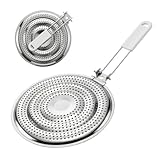
- HIC Kitchen Heat Diffuser: Creates a flat cooking surface, distributes heat evenly, and reduces scorching in pans with hot spots
- Durable Materials: Made from perforated stainless steel, chrome-plated steel, and plastic; sturdy, long lasting, won’t scratch surfaces; measures 8.25 x 15.75-inches
- Efficient And Versatile: Absorbs and diffuses heat evenly for greater energy efficiency; safe for use on electric, gas, and glass stovetops; balances smaller pots like butter warmers and espresso makers
- Perfect For Cooking And Simmering: Slow simmer sauces, soups, stews, oatmeal, rice, and other foods without scorching or boiling over; keeps pan handles cooler and safer to grip
- Convenient Design: Longer stay-cool handle keeps hands away from heat; handle removes for compact storage; dishwasher safe for quick and easy cleanup
What is known about the Nordic Ware Heat Tamer?
The Heat Tamer’s stove advice is inconsistent across dated listings, so it is not a safe glass-top recommendation. Older care text allows gas and electric coils but explicitly excludes ceramic and glass; a November 4, 2026 editorial check reported that the current maker page had shifted to gas and induction and no longer named coil burners. The official page was unreadable during the cited check, so do not collapse those versions into one definitive stove list.
3. Nordic Ware Heat Tamer — a conditional gas or induction choice
A ToTT Store reproduction of older care text describes an 8-by-8-by-0.25-inch aluminized-steel plate, made in the USA, for gas or electric coils, with moderate heat recommended and no ceramic or glass use. Grass Apothecary’s January 2026 description gives an approximately 1.4-pound weight, five-year warranty, hand-wash care and the same electric/gas, not-ceramic-or-glass limitation.
Ezvid’s November 4, 2026 update says the current Nordic Ware listing presents the Heat Tamer for gas and induction, about 8 inches wide, with no handle and a five-year warranty. Because the current primary page did not return readable content, verify the stove list on the package or maker page at purchase. Never place this plate on a smooth glass-ceramic top based only on an older retailer description.
When does a heavy cast-iron diffuser make sense?
Cast iron makes sense when the priority is stored heat during an exceptionally long simmer on gas or an exposed coil, and the cook can safely lift it. It is not automatically a better heat spreader, and plain cast iron is a poor choice for smooth glass because GE warns that it can scratch.
What’s actually slowing this PC down?
Pick the symptom - the matching free tool is one click away.
4. Heat Equalizer cast-iron plate — longest simmer, non-glass use
Ezvid describes the Heat Equalizer as a 9.25-inch, 0.4-inch-thick cast-iron disc weighing about 3 pounds and carrying at least 480 raised dimples. Its size suits a larger pot, but its mass makes it awkward to lift from glass and slow to cool. The brand’s stove guidance is contradictory: one feature list includes gas, electric, glass and ceramic while excluding induction, and other material on the maker site conflicts about induction. Treat it as a gas or exposed-coil plate, not as a confirmed glass or induction accessory.
The maker’s energy-saving language has no published independent test behind it. Do not leave the disc on a lit burner without a pot, and never preheat it empty. GE’s radiant-glass guidance says cast iron has poor conductivity, absorbs heat slowly and will scratch the cooktop surface.
5. Ilsa cast-iron diffuser — gas-only comparison pick
Ezvid lists the Ilsa at about 8.25 inches, with black enameled cast iron, a center hole, radial ribs and a clip-on stainless wire handle. The reported price was about $35, and care is hand wash and dry. Retail listings treat this size as a gas-stove plate. Keep it off smooth glass unless both the diffuser maker and range manual explicitly approve it; the cast-iron surface can scratch.
What about smaller trivets and other plates?
Teabloom sells small stainless grids intended to hold a stovetop-safe glass teapot or coffee pot just above an exposed electric coil. They can gently support a small metal pot, but they are not an 8-inch saucepan diffuser and are not intended for smooth glass-ceramic tops.
The Kuhn Rikon Energy Saver is a wide aluminum disc described for gas only. Its care guidance says never heat it without a pan and never plunge it hot into cold water, which can warp aluminum. Aunt Shannon’s and Runzi products appear in longer lists, but their two-size enameled cast-iron or mixed-feedback magnetic-adapter descriptions do not make them the electric-coil and radiant-glass defaults here.
How do you choose the right size?
Size the diffuser to the pot’s base, not to the burner alone. The entire flat base should sit inside the plate. A wider pot overhanging a small disc can still run hotter at the exposed ring, defeating the purpose.
Also popular on Amazon
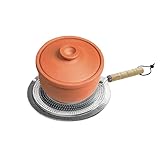
- Even Heat Distribution – Eliminates hot spots and spreads heat evenly for perfectly cooked meals every time. Made from iron which has excellent heat retention and durability
- Great for clay cooking pots and tagines. Slows heating and spreads it evenly—preventing cracks, scorching, and heat damage. Also works great for Italian press, moka pots, Enamel cookware, Copper pots, Stainless steel saucepans, Tea kettles, Soup & stock pots and more
- Versatile – Compatible with gas, electric, open flame and some induction stoves
- Cool-Touch Wood Handle– Unlike metal, wood doesn’t conduct heat as efficiently, so the handle stays cooler and safer to touch even when the diffuser is hot.
- Prevents Scorching & Burning – Protects delicate sauces, chocolates, and soups from direct high heat. Great for simmering, melting, slow cooking, and keeping food warm.
- Small butter warmers, espresso makers and small saucepans: an 8.25-inch HIC plate or 7 7/8-inch SimmerMat can provide a stable perch.
- Medium pots: measure the flat base and compare it with the diffuser’s usable diameter; do not assume an advertised outside diameter equals the contact area.
- Large pots: the 9.25-inch Heat Equalizer covers more area, but its weight and glass-scratching risk make it unsuitable for smooth glass.
Flatness matters on radiant glass. GE advises checking a pan with a straight edge and avoiding rounded, ridged or warped bottoms. The diffuser itself should sit flat and clean; trapped grit can scratch when the plate moves.
How do you use a heat diffuser safely?
Use the diffuser as a controlled low-heat buffer, not as a permanent burner cover. Read both manuals first, then follow this sequence.
Do these 3 things before closing this tab:
1Clear out junk files and repair common Windows errors2Scan for outdated or missing drivers - takes under a minute3Repair Windows errors before they cause bigger problems- Identify the cooktop. Distinguish exposed coil, radiant glass-ceramic and induction. Induction couples its field to ferromagnetic cookware rather than heating the glass beneath it.
- Check both stove lists. If the range manual and diffuser maker disagree, do not use that plate on the surface. A magnet on the plate is only a preliminary check; maker approval still controls.
- Inspect and clean. The diffuser and pot base must be dry, flat and free of grit. GE specifically says not to place wet pans on a glass cooktop.
- Set the plate down while cold. On glass, place it gently and lift it straight up later. Do not slide metal across the surface.
- Place the pot centrally. Keep the entire pot base within the diffuser. Warm the plate and pot together from cold.
- Use low to medium heat. Increase gradually only if the simmer is too weak. High heat can drive scorching through a light plate and defeats its purpose.
- Monitor the first cycle. The diffuser delays response, so give it time before changing the dial. Stir foods that settle or form a skin.
- Turn off early. Stored heat continues cooking after the element is off. Move the pot only when needed; leave the diffuser in place to cool.
- Handle and clean safely. Use a mitt for the plate or handle. Do not quench a hot aluminum or aluminized-steel disc in cold water; thermal shock can warp it. Wash perforated stainless by rinsing and soaking, then use a stiff brush for baked-on food in the holes.
- Watch gas flames. If a diffuser causes a yellow, lifting or extinguished flame, turn off the gas and remove the plate; it may be restricting burner airflow.
Can you use a heat diffuser on a glass-top stove?
Sometimes, but only with a diffuser whose maker approves radiant glass and a range manual that permits it. The safest general approach in the available data is a light, liftable stainless plate such as HIC’s, not a heavy bare cast-iron disc.
GE’s radiant-glass manual says to follow cookware manufacturers’ recommendations and lists stainless steel under recommended materials. It warns that heating an empty enamel-on-steel pan can permanently damage the glass because enamel may melt and bond to the ceramic cooktop; it also says overheated metal can bond to glass. Those warnings make an enameled diffuser such as the SimmerMat conditional rather than automatically safe.
Never slide the plate. The Cookware Critic notes that dragging metal is what scratches glass. Lift with a mitt, keep the contact surfaces clean and dry, and never preheat the plate empty.
Independent reader supportYour contribution helps us test, update, and keep practical guides available for everyone.Do heat diffusers work on induction cooktops?
Only if the plate is magnetic and specifically approved for induction. A standard non-magnetic disc may not trigger the induction burner at all, or may warm too weakly to be useful. The HIC 18/0 plate is not sold for induction, so do not infer compatibility from the stainless grade.
Recommended Free Tools
The SimmerMat is the clearest induction option in this comparison because its maker identifies enameled steel as suitable for induction and for simmering glass, clay or aluminum pots. An induction adapter disc is a different product: the cooktop heats the magnetic adapter, which then heats the nonmagnetic pot more slowly. Do not substitute an unapproved diffuser for an adapter designed and labeled for induction.
Is cast iron or stainless steel better?
For most electric-stove simmering, light stainless is easier to handle and responds sooner; cast iron stores more heat for very long, steady cooking. Cast iron does not automatically spread heat better. The Cookware Critic cites Engineering Toolbox and vCalc figures of roughly 52–53 W/m·K for gray cast iron and 190–193 W/m·K for the aluminum alloy used in clad cores, while noting those tables were not re-opened for a new measurement.
The same source points to skillet thermal-camera and bacon comparisons in which cast iron ran hotter in the center than at the edge. That supports choosing cast iron for heat retention rather than claiming superior conduction. On a glass cooktop, stainless also has the practical advantage of being light enough to lift instead of drag.
Can a diffuser save energy?
There is no independent laboratory result in the available data showing a particular diffuser saves a measured percentage of energy. HIC’s greater-energy-efficiency wording and the SimmerMat’s energy-efficient wording are vendor claims; Ezvid editors likewise report finding no tests to substantiate them.
Also popular on Amazon

- Made of aluminized steel
- Creates flat cooking surface
- Easy to clean
- Made in the USA
- Not for use on ceramic or glass top stoves
A diffuser can prevent a scorched batch and make a low simmer easier to control, which may reduce wasted food. It also adds a preheating step and retains heat after shutoff. Treat any energy benefit as a possible consequence of better control, not a verified performance rating.
Why is food still burning with a diffuser?
First check heat level, coverage and cookware. A light plate cannot compensate for a high dial setting, a pot base larger than the plate, a warped pan or a thin pan with a severe hot spot.
- Burning only during long simmers: lower the setting, stir more often and allow the diffuser to stabilize before judging it.
- Burning at every setting: replace the thin or warped saucepan with a heavier pan with a thick, layered base; a diffuser is only a cheaper patch.
- Burning at the rim: the pot may overhang the diffuser, or the radiant element may be larger than the plate’s effective area.
- No heat on induction: test the plate with a magnet, then check the maker’s induction list. A nonmagnetic plate will not couple properly.
- Scratches or residue on glass: stop sliding the plate, lift it vertically, and clean grit from both contact surfaces.
- Gas flame changes: turn off the burner if the flame turns yellow, lifts or goes out; the plate may be blocking burner air.
When should you replace the cookware instead?
If the same pan scorches regardless of whether food is simmering, the pan—not the cycling element—is the underlying problem. A diffuser may make one recipe manageable, but a heavy saucepan with a thick, even base improves both low and high-heat work without adding a slow, hot intermediary.
Replace cookware that is warped, has a rounded base, rocks on a flat surface or has a damaged coating. GE’s guidance favors flat bottoms and cautions against warped or ridged cookware on radiant glass. A diffuser cannot correct poor contact between a pot and its own base.
The Tool Desk
Outbyte PC Repair FREEClear out junk files and repair common Windows errorsFree Scan →Outbyte Driver Updater FREEScan for outdated or missing drivers - takes under a minuteDriver Scan →How we picked these recommendations
The ranking uses the research’s stove-approval evidence, material and mass, handling on glass, diameter relative to common pot bases, cleaning instructions, price figures checked in November 2026 and clarity of the maker’s limitations. It does not use a test score: no independent laboratory comparison of diffuser evenness, simmer time or energy savings was found. Conflicting or unreadable primary documentation is labeled rather than turned into a broader recommendation.
Bottom line
Choose the HIC 99134 for an electric coil or an approved radiant-glass setup when you need a light, inexpensive simmer buffer. Choose the SimmerMat when induction compatibility is essential and the maker and range manual allow it. Reserve heavy cast iron for gas or exposed-coil long simmers, keep it off smooth glass, and replace a chronically scorching pan rather than relying on a diffuser for every recipe.
Frequently Asked Questions
Can I leave a heat diffuser on the burner between cooking sessions?
No. Remove it or let it cool fully after use, and never leave any diffuser on a lit burner without a pot. Residual heat can damage enamel, stain a cooktop or create a handling burn even after the dial is off.
Will a diffuser protect a glass cooktop from a warped pan?
No. A warped or rounded pan still makes poor contact with the diffuser and can concentrate heat. Replace the pan or use a demonstrably flat vessel; GE recommends checking flatness with a straight edge.
Can I use a clay tagine with a diffuser on an electric stove?
Clay vessels benefit from gradual warming, so a diffuser can help when the clay maker permits stovetop use. Start both pot and diffuser cold, use low heat, and verify that the specific diffuser is approved for your electric surface; this does not make cast iron safe for smooth glass.
How can I tell whether my stove is induction?
Look for an induction label in the range manual or place a magnet on the cookware base: attraction indicates ferromagnetic metal. The magnet is only a screening test, so confirm that the diffuser maker lists your cooktop type before heating.
Are diffuser prices and warranties permanent?
No. The prices in the comparison are November 2026 shelf figures, not guaranteed live offers. Warranty and care terms can also vary by seller, so check the current maker documentation before purchase.

