Some links on this page are affiliate links: if you buy through them we may earn a commission, at no extra cost to you.
The best gravel for drainage behind a retaining wall is clean, washed, angular crushed stone, most often sold as #57 stone or clean 3/4-inch crushed stone. On our job sites, that is the default material we want behind most residential segmental retaining walls because it drains quickly, locks together better than rounded gravel, and has very little fine dust to clog the system.
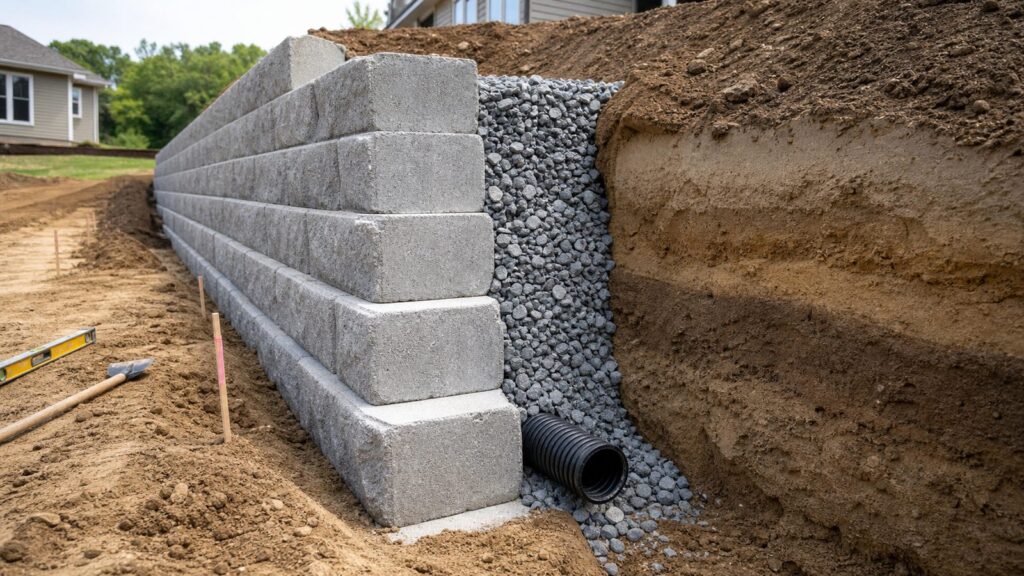
But gravel by itself is not a drainage system. A proper wall drainage detail usually includes a minimum 12-inch-wide column of clean stone behind the wall, a 4-inch perforated drain pipe at the base, a real outlet to daylight or an approved stormwater system, compacted backfill placed in lifts, and surface grading that keeps runoff from dumping behind the wall.
If you remember one rule, make it this: ask for “washed #57 stone” or “clean 3/4-inch angular drainage stone,” not just “gravel.” The word gravel can mean pea gravel, road base, crusher run, decorative river rock, or dusty unwashed aggregate. Some of those materials drain poorly, shift too much, or put unnecessary pressure on the wall.
What’s actually slowing this PC down?
Pick the symptom - the matching free tool is one click away.
As an Amazon Associate I earn from qualifying purchases.
Best Overall Gravel: Washed #57 Stone or Clean 3/4-Inch Crushed Stone
For most US residential retaining wall drainage zones, the best choice is a clean, angular, washed crushed stone in the 3/4-inch range. In many markets, that means ASTM #57 stone. Depending on your region, it may be crushed limestone, granite, trap rock, or another local quarry stone. The exact rock type matters less than the gradation, cleanliness, and angular shape.
Good retaining wall drainage stone should have three traits:
Popular on Amazon

- Superior Filtration: Prevents Clogging.Drain Filter sock Equipped with a precision-woven mesh, our French drain filter sleeve ensures unobstructed water flow while effectively trapping soil, sediment, sand, silt, and small stones. By blocking debris from entering pipes, it prevents stubborn clogs, reduces internal buildup over time, and maintains consistent drainage performance—saving you time and money on costly pipe repairs
- Elastic & Easy to Install: Durable Polyester. French drain fabric is crafted from high-quality synthetic polyester, this drainage filter fabric boasts exceptional wear resistance and longevity, standing up to harsh underground conditions. Its elastic design allows for hassle-free installation: simply slide the sleeve over your 4-inch pipe and stretch it to the desired length. It fits snugly against pipe surfaces without tearing or slipping, ensuring reliable protection
- Suitable for 4-inch pipe: This package comes with one roll of 4" x 50' drain pipe filter sleeve, tailor-made for pipes with a 4-inch diameter. The 50-foot length provides abundant material to cover various drainage needs, making it a go-to solution for both small residential tasks and large-scale commercial or construction projects—no need for frequent repurchases
- Broad Compatibility: Designed specifically for 4-inch diameter piping systems, this filter sleeve is compatible with a wide range of pipe materials, including PVC, concrete, metal, and plastic. Whether you’re working on a new drainage setup or upgrading an existing one, it offers the flexibility to fit your project’s specific pipe type
- Versatile Applications: Perfect for residential, commercial, agricultural, and construction environments, this drain pipe filter sleeve delivers consistent performance across uses. Filter fabric for drainage is an essential addition to French drains, septic systems, subsurface drainage, garden drainage, and more—providing reliable filtration no matter the application or conditions
- Clean: It should contain minimal dust, clay, silt, or stone screenings.
- Angular: Crushed faces help the aggregate interlock and stay stable behind the wall.
- Free-draining: Water should move through it quickly instead of being trapped in fines.
Industry best-practice guidance for segmental retaining walls commonly calls for clean, compactable, free-draining gravel with no more than 5% passing the No. 200 sieve. That technical detail matters because the No. 200 sieve catches very fine particles. Too many fines turn a drainage column into a wet, dense mass that can hold water and increase hydrostatic pressure.
Hydrostatic pressure is one of the main reasons retaining walls bow, lean, crack, or fail. Soil is already heavy. When water builds up behind it, the load increases sharply. The job of the drainage stone is to give water an easy path down to the pipe instead of letting it collect behind the wall face.
What the Gravel Actually Does Behind the Wall
The gravel behind a retaining wall is often misunderstood. It is not there only to “fill space,” and it is not the main structural soil for every wall. Its primary job is to create a vertical drainage column directly behind the wall face.
In a typical segmental block wall, the clean stone is placed directly behind the wall units. A common minimum is 12 inches from the back of the block, running from the base area up toward the top of the wall. The stone may also be placed within hollow block cores if the wall system requires it. At the bottom of that column, a perforated drain pipe collects water and carries it away.
That drainage column handles incidental water that reaches the wall. It is not meant to accept roof runoff, driveway runoff, irrigation discharge, or a steady hillside seep. If water is constantly being sent into the wall, the best gravel in the world will not fix the design problem.
Drainage Aggregate vs. Structural Backfill
For small landscape walls, homeowners often think all backfill is the same. For engineered walls, there is an important difference between the drainage aggregate and the reinforced soil zone.
The drainage aggregate is the clean stone directly behind the wall. It manages water near the face. The structural backfill, especially in geogrid-reinforced walls, may extend several feet behind the wall and must meet the engineer’s or wall manufacturer’s gradation and compaction requirements. Sometimes that reinforced zone uses granular soil, not open stone. Sometimes it uses a specific aggregate blend. The point is that the drainage column and the reinforced backfill are related, but they are not always the same material.
For a structural retaining wall, follow the block manufacturer’s installation guide, the engineer’s drawings, and local code. Generic landscaping advice is not enough when the wall supports a driveway, slope, patio, building, or another surcharge.
Gravel Options Compared
The easiest way to choose correctly is to separate drainage stone from materials that only look similar. The wrong aggregate may be cheaper on the invoice and more expensive after the wall starts moving.
Quick wins for a faster PC:
Scan for outdated or missing drivers - takes under a minuteDriver Scan →Clear out junk files and repair common Windows errorsFree Scan →Fix the driver behind crashes, sound loss and screen glitchesFind Drivers →| Material | Typical Use Behind Wall | 2026 Cost Range | Verdict |
|---|---|---|---|
| Washed #57 stone | Drainage column and block cores where specified | Often about $30-$54 per cubic yard for crushed limestone-type material, depending on market | Best default choice |
| Clean 3/4-inch crushed stone | Drainage column behind wall | Common bulk gravel range is about $15-$75 per cubic yard | Excellent if clean and angular |
| 1-inch-minus clean aggregate | Drainage zone when allowed by manufacturer or engineer | Varies by quarry and region | Good when it has minimal fines |
| Pea gravel | Decorative drainage, small non-structural uses | About $28-$45 per ton or $29-$86 per cubic yard | Usually not preferred behind structural walls |
| River rock | Exposed swales and decorative drainage | About $45-$130 per ton or $50-$160 per cubic yard | Too expensive and rounded for hidden wall backfill |
| Crusher run or road base | Base layers, driveways, compacted subbase | Often about $18-$34 per ton | Wrong for drainage column because of fines |
| Sand, stone dust, topsoil, native clay | Not suitable for drainage column | Varies | Avoid behind the wall face |
Materials to Avoid Behind a Retaining Wall
Some materials are useful elsewhere on a site but risky behind a retaining wall. The problem is usually fines, rounded shape, organic content, or poor drainage.
Crusher Run, Road Base, and Dense-Grade Aggregate
Crusher run and road base compact well because they contain a blend of stone sizes and fine particles. That makes them useful under driveways, slabs, and some base applications. It also makes them a poor choice for the drainage column behind a retaining wall.
The fines can hold water and clog the voids that should let water move down to the drain pipe. If a supplier describes the material as “packs hard,” “has screenings,” “dense grade,” or “road base,” do not use it as the clean drainage stone directly behind the wall.
Pea Gravel
Pea gravel drains, but it is rounded. Rounded stones roll and shift instead of interlocking. That can make placement and compaction less stable, especially behind segmental retaining wall units. It is often fine for decorative areas, dog runs, garden paths, and small drainage features, but it is not our preferred backfill for a serious retaining wall.
Recommended Free Tools
River Rock
River rock is also rounded, and it costs much more than standard crushed drainage stone. In 2026, river rock is commonly reported around $45-$130 per ton or $50-$160 per cubic yard. Since the backfill behind the wall is buried, paying a premium for decorative stone usually makes little sense.
Sand and Stone Dust
Sand and stone dust do not create the same open drainage path as clean crushed stone. They can migrate, hold moisture, and clog pipe or fabric. Sand may be used in certain construction details when specified, but it should not replace clean stone in the drainage column.
Topsoil and Native Clay
Topsoil belongs near the surface for planting, not against the full height of the wall. Organic material decomposes and settles. Clay soils are even more concerning because they hold water, expand, shrink, and drain slowly. Backfilling a wall with native clay is one of the fastest ways to create pressure behind the face.
The Standard Drainage Detail That Works
A dependable retaining wall drainage system is built in layers. The exact detail depends on wall type, height, soil, and manufacturer requirements, but the following layout is a solid starting point for many residential segmental block walls.
Free tools Windows power users keep installed
One-click scans. No signup required.
1. Start With a Proper Base
The wall base must be excavated to firm subgrade and built with the material specified by the wall system. Many segmental block walls use a compacted aggregate leveling pad. The base width often extends at least several inches in front of and behind the block, but the exact dimensions depend on the block and wall height.
Drainage stone behind the wall cannot compensate for a soft, uneven, poorly compacted base. If the first course settles, the rest of the wall follows.
2. Install a 4-Inch Perforated Drain Pipe
A common best practice is a 4-inch perforated drain pipe at the base of the wall, behind the block and low enough to collect water from the gravel column. The pipe must slope to daylight or connect to an approved stormwater system where local code allows it.
The outlet is not optional. A buried pipe with nowhere to discharge simply stores water. On our jobs, we want the outlet visible, protected, and maintainable. It should not empty where water can undermine the wall base, wash out a slope, flood a neighbor’s property, or create an ice hazard on a walkway or driveway.
Crashes, No Sound, or Screen Glitches?
Random freezes, missing sound and display glitches usually trace back to one bad driver. Find and replace yours safely.Free scan · under a minutePC Slower Than It Used to Be?
A free scan shows the junk files, broken settings and background clutter dragging Windows down - then fixes them in one click.Free scan · Windows 10 & 113. Place a 12-Inch Minimum Drainage Column
Place clean stone directly behind the wall units. A common minimum is 12 inches measured from the back of the block. For taller walls, wet sites, clay soils, or manufacturer-specific systems, the required drainage zone may be larger or more detailed.
Place the stone as the wall is built, not all at the end. Backfill and compact in lifts so the wall is supported evenly. Avoid driving heavy compaction equipment right against the wall face. Smaller walk-behind compaction equipment and careful lift thicknesses are usually safer near the blocks.
Also popular on Amazon

- Effective Filtration for Drainage Systems: This French drain fabric features a precision-knitted mesh structure designed to allow water to flow through while blocking soil sand silt and fine debris from entering perforated pipes; Helps reduce clogging and sediment buildup over time supporting consistent drainage performance
- Compatible with 4-Inch Pipes: This drain sock is specifically sized for 4-inch diameter pipes; The roll provides 50 feet in length offering sufficient material for residential drainage projects French drain installations or landscape grading tasks without the need for frequent repurchases
- Durable Construction: Crafted from white polyester knit fabric with a weight of 200 grams this filter sleeve is designed to resist tearing during installation; The material also offers resistance to rot mildew and biological degradation when buried in underground or outdoor conditions
- Elastic and Easy to Install: The knitted fabric has a flexible; stretchable design that slides over pipes much like a compression sock; It conforms to pipe surfaces without the need for special tools or adhesives and can be trimmed to the desired length with standard scissors for customized fitting
- Broad Application Scenarios: Suitable for use with various pipe materials including PVC concrete metal and corrugated drainage pipes; This filter fabric is applicable in French drains septic systems subsurface drainage garden landscaping and construction site water management projects
4. Separate Topsoil From the Drainage Stone
Near the top of the wall, use landscape or filter fabric to separate topsoil from the clean stone so soil fines do not wash down into the drainage column. This is especially useful where planting beds sit above the wall.
Fabric is helpful when used correctly, but it should not be treated as magic. Poor fabric selection can clog. Wrapping a pipe incorrectly can reduce flow. On fine-grained soils, a properly selected filter fabric between native soil and open-graded stone may be appropriate. On engineered walls, the fabric detail should follow the design documents.
Do these 3 things before closing this tab:
1Repair Windows errors before they cause bigger problems2Scan for outdated or missing drivers - takes under a minute3Clear out junk files and repair common Windows errors5. Grade Surface Water Away
Surface drainage is where many walls fail. The finished grade above the wall should send water away from the wall where possible. Downspouts should not discharge into the backfill. Irrigation should be controlled so it does not saturate the retained soil. Patios, pool decks, driveways, and slopes above the wall need deliberate drainage planning.
How Much Gravel You Need
For a simple estimate, calculate the drainage column as a rectangular prism: wall length times wall height times drainage column width. Then convert cubic feet to cubic yards by dividing by 27. Add waste and irregular excavation allowance, often 5% to 15% depending on the site.
Example: a 40-foot-long wall, 4 feet tall, with a 12-inch-wide drainage column:
- 40 feet long x 4 feet tall x 1 foot wide = 160 cubic feet
- 160 cubic feet / 27 = 5.9 cubic yards
- With waste, order roughly 6.5 to 7 cubic yards
- At 1.4 to 1.5 tons per cubic yard, that is about 8 to 10.5 tons
If the supplier sells by the ton, ask what conversion they use for that specific stone. Most crushed stone falls around 1.4 to 1.5 tons per cubic yard, but moisture, gradation, and rock type can shift the number.
The Tool Desk
Outbyte PC Repair FREEClear out junk files and repair common Windows errorsFree Scan →Outbyte Driver Updater FREEScan for outdated or missing drivers - takes under a minuteDriver Scan →| Wall Size | Drainage Column | Approx. Cubic Yards Before Waste | Approx. Tons Before Waste |
|---|---|---|---|
| 20 ft long x 3 ft tall | 12 in wide | 2.2 cu yd | 3.1-3.3 tons |
| 40 ft long x 4 ft tall | 12 in wide | 5.9 cu yd | 8.3-8.9 tons |
| 60 ft long x 4 ft tall | 12 in wide | 8.9 cu yd | 12.4-13.3 tons |
| 50 ft long x 6 ft tall | 12 in wide | 11.1 cu yd | 15.6-16.7 tons |
For walls with curves, steps, corners, geogrid, tiered sections, or irregular excavation, measure generously. Shorting yourself on drainage stone often leads to substitutions on site, and substitutions are where bad wall backfill decisions happen.
What Retaining Wall Drainage Gravel Costs in 2026
Bulk gravel pricing in 2026 is commonly reported around $10-$50 per ton or $15-$75 per cubic yard nationally. Delivered and spread averages are often around $55-$65 per cubic yard in some cost guides, but the number can move significantly by region.
Clean crushed limestone, where locally available, commonly runs about $30-$38 per ton or $35-$54 per cubic yard. That is often close to the practical price range for #57-style drainage stone. In areas where hard rock must travel farther, the price may be higher.
Delivery is a major part of the real cost. Expect delivery to add roughly $10-$25 per ton or a flat local delivery charge. Distance from the quarry, fuel, minimum load size, tight access, steep driveways, and whether the truck can dump near the wall all affect the final price.
For the 40-foot by 4-foot wall example, the drainage column may require about 8 to 10.5 tons after waste. If clean stone costs $35 per ton and delivery adds $150, the stone package might land around $430 to $520. If the site needs wheelbarrow access from the street to the backyard, labor can easily cost more than the gravel.
For complete installed retaining wall projects, national 2026 pricing is often cited around $3,500-$9,400, with wall height, engineering, access, drainage complexity, block type, excavation, disposal, and site restoration as major cost drivers. Drainage is only one line item, but it is one of the last places to cut corners.
When Gravel Choice Changes
Washed #57 stone or clean 3/4-inch crushed stone is the best default, but site conditions can change the full drainage design. The more load and water the wall sees, the less you should rely on a generic rule.
Clay Soil
Clay drains slowly and holds water against the wall. In clay-heavy areas, the drainage column and pipe outlet matter even more. Filter fabric may be needed between the clay and drainage stone, but it must be selected so it does not clog prematurely.
High Walls
Once a wall gets near 4 feet tall, most homeowners should stop guessing. Many jurisdictions require permits or engineering at certain height thresholds, often around 4 feet, though local rules vary. Some areas measure from the bottom of the footing or base, not just exposed height. Surcharges can trigger engineering even below 4 feet.
Slopes and Terraced Walls
A slope above the wall adds load and water. Terraced walls can also interact with each other if the upper wall loads the lower wall. Drainage for these systems should be designed, not improvised.
Driveways, Patios, Pools, and Structures
A driveway or patio above the wall adds surcharge. A house foundation, garage slab, pool deck, or fence can also change the load path. In those cases, the correct backfill may include geogrid, engineered soil, drainage aggregate, and a specific pipe outlet plan.
Water Seepage
If groundwater seeps out of the cut during excavation, the project needs more than a standard stone column. You may need a separate interceptor drain, outlet design, or engineer-reviewed drainage plan.
What’s actually slowing this PC down?
Pick the symptom - the matching free tool is one click away.
Should You Use Landscape Fabric?
Landscape fabric can help, but only in the right location. The most common useful location is near the top of the drainage column, separating topsoil from clean stone. This reduces the amount of soil that washes into the stone over time.
Fabric may also be appropriate between fine-grained native soil and open drainage aggregate. The purpose is filtration: water passes through, while soil particles stay out. The risk is clogging. If the fabric is too restrictive or placed where it collects heavy sediment, it can reduce flow and trap water.
Avoid casually wrapping every part of the system in fabric because it “seems safer.” For pipe, use the pipe and sock detail specified for the site conditions. In silty soils, some pipe socks clog quickly. In other soils, they help. The right answer depends on the soil, aggregate gradation, and outlet plan.
Independent reader supportYour contribution helps us test, update, and keep practical guides available for everyone.Do You Still Need a Drain Pipe?
Yes, in most retaining wall drainage designs, you still need a drain pipe. Clean gravel creates the path for water to move down. The pipe collects that water and carries it away.
The Tool Desk
Outbyte PC Repair FREERepair Windows errors before they cause bigger problemsFix Now →Outbyte Driver Updater FREEFix the driver behind crashes, sound loss and screen glitchesFind Drivers →Without a pipe, water may collect at the bottom of the wall, especially in clay soil or compacted subgrade. If the base stays wet, the wall can settle, rotate, or experience freeze-thaw movement in cold climates. A 4-inch perforated pipe is inexpensive compared with rebuilding a failed wall.
The pipe should have a positive slope. Even a modest slope is better than a flat pipe with bellies that hold sediment. The outlet should remain visible and accessible. We prefer to keep daylight outlets clear of mulch, leaves, sediment, and snow or ice where applicable. A small rodent screen can help, but it must not block flow.
Also popular on Amazon

- Superior Filtration:Prevents Clogging.Drain Filter sock Equipped with a precision-woven mesh, our French drain filter sleeve ensures unobstructed water flow while effectively trapping soil, sediment, sand, silt, and small stones. By blocking debris from entering pipes, it prevents stubborn clogs, reduces internal buildup over time, and maintains consistent drainage performance—saving you time and money on costly pipe repairs
- Suitable for 4-inch pipe: This package comes with one roll of 4" x 30' drain pipe filter sleeve, tailor-made for pipes with a 4-inch diameter. The 50-foot length provides abundant material to cover various drainage needs, making it a go-to solution for both small residential tasks and large-scale commercial or construction projects—no need for frequent repurchases
- Elastic & Easy to Install: Durable Polyester. French drain fabric is crafted from high-quality synthetic polyester, this drainage filter fabric boasts exceptional wear resistance and longevity, standing up to harsh underground conditions. Its elastic design allows for hassle-free installation: simply slide the sleeve over your 4-inch pipe and stretch it to the desired length. It fits snugly against pipe surfaces without tearing or slipping, ensuring reliable protection
- Broad Compatibility: Designed specifically for 4-inch diameter piping systems, this filter sleeve is compatible with a wide range of pipe materials, including PVC, concrete, metal, and plastic. Whether you’re working on a new drainage setup or upgrading an existing one, it offers the flexibility to fit your project’s specific pipe type
- Versatile Applications: Perfect for residential, commercial, agricultural, and construction environments, this drain pipe filter sleeve delivers consistent performance across uses. Filter fabric for drainage is an essential addition to French drains, septic systems, subsurface drainage, garden drainage, and more—providing reliable filtration no matter the application or conditions
Common Mistakes We See on Retaining Wall Drainage
The first mistake is asking for “gravel” without specifying clean, washed, angular drainage stone. That leaves too much room for the wrong product to show up.
The second mistake is using crusher run behind the wall because it compacts nicely. Compaction is valuable in the right place, but fines are the enemy in the drainage column.
The third mistake is skipping the drain pipe. Gravel reduces pressure only if water has somewhere to go. A pipe with no outlet is not much better.
The fourth mistake is letting downspouts, patio runoff, roof water, or irrigation dump directly into the backfill. Drainage stone is designed for incidental water, not as a hidden stormwater basin.
The fifth mistake is poor compaction. Backfill should be placed in manageable lifts and compacted according to the wall system. Dumping all the stone and soil in at once creates settlement and uneven pressure.
The sixth mistake is building too tall without checking permit and engineering requirements. Many homeowners hear “under 4 feet does not need a permit” and treat it as universal. It is not. Local rules vary, and surcharge conditions can require engineering even when the exposed wall height is below a common threshold.
Do these 3 things before closing this tab:
1Repair Windows errors before they cause bigger problems2Scan for outdated or missing drivers - takes under a minute3Clear out junk files and repair common Windows errorsWhen to DIY vs. When to Hire a Pro
A small garden wall may be a reasonable DIY project if the site is simple. A wall under 2 to 3 feet tall, built on stable soil, away from structures, with no slope above it and an easy daylight outlet, is the kind of project a careful homeowner can often handle with the manufacturer’s instructions, proper tools, and patience.
Even then, the work is physical. One cubic yard of crushed stone can weigh around 1.4 to 1.5 tons. A modest 40-foot wall can require 8 to 10 tons of drainage stone before considering base material, block weight, excavation, and soil disposal. Access matters. If the truck cannot dump near the wall, every ton may need to be moved by machine or wheelbarrow.
Hire a professional or engineer when the wall is near or above 4 feet, supports a driveway or structure, sits below a slope, has poor drainage outlets, is built in clay or wet soil, uses geogrid, forms a terrace, or could affect a neighboring property. Also bring in help if excavation exposes seepage, buried utilities, soft subgrade, or old fill.
For engineered walls, the pro’s value is not just labor. It is sequencing, compaction control, drainage detailing, geogrid placement, base preparation, and knowing when site conditions do not match the plan.
Windows Errors? Fix Them Before They Spread
Repair common Windows errors and clear accumulated junk for a smoother, more stable PC - no reinstall needed.Free scan · no reinstallOutdated Drivers Are Slowing You Down
One free scan finds every outdated or missing driver and matches the right update for your exact hardware.Free scan · exact hardware matchHow to Order the Right Material
When calling a quarry, landscape yard, or material supplier, be specific. Say: “I need clean, washed #57 stone for retaining wall drainage,” or “I need clean 3/4-inch angular crushed drainage stone with minimal fines.” Ask whether the material is washed and whether it is suitable for retaining wall drainage.
If the supplier suggests crusher run, dense grade, road base, screenings, or stone dust for the drainage column, clarify that you are not asking for base material. You need open, clean drainage aggregate behind the wall.
Also ask these practical questions:
- Is it sold by the ton or cubic yard?
- What ton-per-yard conversion do you use?
- What is the minimum delivery load?
- Can the truck dump where the stone is needed?
- Is there a separate delivery or fuel charge?
- Is the stone washed and low in fines?
For small projects, bagged stone from a home center is convenient but expensive. For anything more than a few cubic yards, bulk delivery is usually more practical. Plan the dump location before the truck arrives. Moving stone twice wastes time and money.
Bottom Line
For most retaining walls, choose clean, washed, angular crushed stone such as #57 stone or clean 3/4-inch drainage rock. Install it as at least a 12-inch-wide drainage column behind the wall, pair it with a 4-inch perforated drain pipe at the base, and give that pipe a real outlet.
Avoid pea gravel as the main wall backfill, even though it drains, because it is rounded and shifts. Avoid crusher run, road base, stone dust, sand, topsoil, and native clay in the drainage zone because they contain fines, hold water, or settle poorly.
The right gravel is a critical part of the wall, but it is not the whole system. Good retaining wall drainage comes from the combination of clean aggregate, pipe, outlet, grading, soil separation, compaction, and code-aware design. Get those pieces right, and the wall has a much better chance of staying straight, dry, and stable for the long haul.
Frequently Asked Questions
What is the best gravel for drainage behind a retaining wall?
The best choice for most residential retaining walls is clean, washed, angular crushed stone, commonly #57 stone or clean 3/4-inch drainage rock. It drains well, contains minimal fines, and locks together better than rounded gravel.
Is #57 stone good for retaining wall drainage?
Yes. #57 stone is one of the best common choices for retaining wall drainage because it is an open-graded crushed aggregate that allows water to move down to the drain pipe. Confirm with the supplier that it is washed and suitable for drainage.
Recommended Free Tools
Can I use pea gravel behind a retaining wall?
Pea gravel drains, but it is usually not the best choice behind a structural retaining wall because the rounded stones shift and do not interlock like crushed stone. Use clean angular stone instead unless the wall manufacturer or engineer allows pea gravel.
How much gravel do I need behind a retaining wall?
A common rule is a minimum 12-inch-wide drainage column behind the wall. Multiply wall length by wall height by 1 foot, then divide by 27 to get cubic yards. A 40-foot-long, 4-foot-tall wall needs about 5.9 cubic yards before waste, or roughly 8-9 tons.
Do I need a drainage pipe if I use gravel behind the wall?
In most cases, yes. Gravel gives water a path downward, but a 4-inch perforated drain pipe at the base collects that water and carries it to daylight or an approved stormwater outlet.
Do I need a permit for a retaining wall under 4 feet?
Maybe. Many areas use 4 feet as a common permit or engineering threshold, but rules vary by location and by how height is measured. Surcharges from driveways, slopes, fences, or structures can trigger engineering even below 4 feet.
Free tools Windows power users keep installed
One-click scans. No signup required.
Quick Recap
Product prices and availability are accurate as of the date/time indicated and are subject to change. Any price and availability information displayed on Amazon at the time of purchase will apply.

