What’s actually slowing this PC down?
Pick the symptom - the matching free tool is one click away.
The best glue for plastic depends on the plastic and the repair. For a small, close-fitting repair on a rigid plastic, cyanoacrylate gel such as Gorilla Super Glue Gel is usually the most convenient choice. For polyethylene (PE) or polypropylene (PP), use a dedicated plastics-bonding system with an activator, such as Loctite Super Glue Plastics Bonding System. For gaps, cracks, or plastic-to-metal repairs, a compatible two-part epoxy is usually more suitable. For styrene model parts and some fabrication plastics, solvent cement creates a plastic-welded joint rather than simply sticking two surfaces together.
There is no universal plastic adhesive. Joint fit, flexibility, gap size, water and weather exposure, cure speed, and surface preparation all matter. The recommendations below are based on manufacturer specifications and compatibility information, not independent head-to-head strength testing.
Affiliate disclosure: This guide may contain links to qualifying physical products. If you buy through one of those links, the site may earn a commission at no additional cost to you. Product compatibility and label instructions should take priority over any general recommendation here.
As an Amazon Associate I earn from qualifying purchases.
Quick comparison: which plastic glue should you choose?
| Repair or material | Recommended category | Main advantage | Important limitation |
|---|---|---|---|
| Small, rigid, close-fitting household repair | Gorilla Super Glue Gel | Fast, clear, controlled application; no clamping normally needed | Not recommended for PE or PP; ordinary super glue is not waterproof |
| Polyethylene or polypropylene | Loctite Super Glue Plastics Bonding System | Includes an activator designed for difficult-to-bond plastics | Requires the correct two-step preparation and application |
| Demanding or professional plastic bonding | 3M High Performance Industrial Plastic Adhesive 4693 | Broad stated plastic compatibility and a flexible bond | Industrial or occupational positioning may make it less convenient for casual repairs |
| Cracks, gaps, brackets, or plastic-to-metal repairs | Gorilla Epoxy Ultimate | Gap-filling two-part adhesive with indoor/outdoor positioning | Not recommended for PE, PP, vinyl, or rubber |
| Polystyrene model kits | Tamiya Extra Thin Cement | Capillary-flow solvent weld for fitted styrene parts | Not a universal household adhesive; excess can damage finished surfaces |
| ABS, styrene, acrylic, or butyrate fabrication | Plastruct PPC-2 Plastic Weld | Solvent cement for listed compatible plastic combinations | Too much solvent can melt or distort plastic |
1. Best fast-setting glue for small rigid-plastic repairs: Gorilla Super Glue Gel
For a small repair where the surfaces fit together closely and the plastic is rigid, Gorilla Super Glue Gel is a practical starting point. It is a cyanoacrylate adhesive that the manufacturer says sets in approximately 10 to 45 seconds, dries clear, and normally requires no clamping.
The gel is easier to control than a very thin liquid on vertical, curved, or awkward surfaces. That makes it useful for small household items, rigid plastic trim, decorative pieces, and clean breaks where there is little or no missing material. Apply only a small amount: excess adhesive can slow the bond and may leave a visible, brittle residue.
Popular on Amazon

- Dries clear: Our Gorilla Tough epoxy resin dries clear for a clean finish and incredibly durable hold; perfect for household and automotive repairs
- 5 minute epoxy: This epoxy resin kit in just one applicator has a 5 minute set time, plenty for repositioning and adjusting
- Gap filling: Gorilla resin epoxy also acts as a gap filler, filling voids and bonding uneven or vertical surfaces
- Water resistant: Our clear epoxy resin withstands moderate exposure to water for extra durability
- Easy-to-use syringe: Gorilla Epoxy has separate barrels of epoxy resin and hardener to keep the epoxy from hardening; the syringes dispense evenly and include a cap for multiple uses
This is not the right default for every plastic. Gorilla specifically excludes polyethylene and polypropylene, and its guidance states that ordinary Super Glue is not waterproof. Check the product label and the plastic type before using it, especially outdoors or in a damp location. See the manufacturer’s Super Glue specifications for the current limitations.
2. Best choice for polyethylene and polypropylene: Loctite Plastics Bonding System
PE and PP are among the most difficult common plastics to bond. Their low surface energy means that ordinary super glue and many general-purpose epoxies may fail to wet and grip the surface reliably. A repair that appears sound initially can peel away when flexed or exposed to load.
For recycling-code plastics 2 and 5, the more appropriate consumer-oriented option is the Loctite Super Glue Plastics Bonding System. It combines an activator with cyanoacrylate adhesive. The activator primes the difficult surface before the adhesive is applied. Henkel states that the system is designed for polyethylene, polypropylene, PTFE, and other difficult-to-bond plastics; it sets in seconds, dries transparent, requires no mixing or clamping, and is resistant to water, most chemicals, and freezing temperatures according to its product information. Read the current Loctite Plastics Bonding System instructions before use.
Do not substitute ordinary super glue simply because the bottle says “for plastic.” The activator and the application sequence are part of this system. Clean the surfaces, use the activator as directed, allow the specified time if stated on the label, and then apply the adhesive sparingly.
3. Best industrial-oriented option for broad plastic compatibility: 3M 4693
For fabrication work, repeated repairs, or applications where a somewhat flexible bond and broader material coverage are valuable, consider 3M High Performance Industrial Plastic Adhesive 4693. 3M lists compatibility with many plastics, including polypropylene, polyethylene, polyolefin blends, ABS, PMMA, nylon, polyester, and rigid polystyrene. It is described as a fast-drying adhesive with approximately 20 minutes of open time and resistance to weathering, water, sunlight, and cleaning products.
That does not make 3M 4693 the best choice for every job. It is positioned for industrial or occupational use, and its application method, packaging, ventilation requirements, and availability may be less convenient for a one-off household repair. For a construction or fabrication setting, however, the broader compatibility and flexible-bond characteristics may justify evaluating it. Confirm the precise substrate, joint design, and safety requirements in the 3M 4693 technical information.
Quick wins for a faster PC:
Clear out junk files and repair common Windows errorsFree Scan →Fix the driver behind crashes, sound loss and screen glitchesFind Drivers →Also popular on Amazon
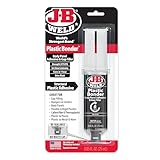
- Plasticbonder: Is A Quick-Set, 2 Part, Urethane Adhesive System That Provides Strong, Lasting Repairs And Works On Thermoset, Carbon Fiber Composites, Thermoplastics, Coated Metals, Concrete & More.
- Count On Us: For More Than 40 Years, Our Products Have Earned A Loyal Following From People Who Take Pride In Their Work. With Each Product We Innovate, We Continue To Provide The World'S Strongest Bond For Your Projects.
- Simple To Use: J-B Plasticbonder Has A 1:1 Mixing Ratio, Sets In 15 Minutes And Can Be Sanded After 30 Minutes. With A Tensile Strength Of 3770 Psi, Plasticbonder Cures To A Hard, Permanent Bond.
- Versatile And Dependable: Perfect For Indoor Or Outdoor Use, Epoxy & Adhesives, Plastic, Composite, Pvc, And More. Plastic Bonder Makes A Great Gap Filler And Dries Black In Color.
4. Best gap-filling epoxy for compatible plastics: Gorilla Epoxy Ultimate
Use a two-part epoxy when the joint has a gap, the broken area needs a reinforcing layer, or you are bonding compatible plastic to metal. Gorilla Epoxy Ultimate is marketed for plastic, PVC, fiberglass, metal, concrete, and ceramics. Gorilla lists a 10-minute set time, a 4,250-PSI bond-strength figure, and indoor/outdoor suitability.
Epoxy is especially useful for cracked housings, broken brackets, missing corners, and uneven surfaces where a thin cyanoacrylate bond would have too little contact area. It also gives you more positioning time than a fast super glue, although the exact working and cure times depend on the formula and conditions.
There are important exclusions: Gorilla does not recommend this epoxy for polyethylene or polypropylene, vinyl, or rubber. It is also not recommended for direct or indirect food contact. Do not infer that the listed strength figure applies equally to every plastic, joint geometry, temperature, or loading direction. Consult the Gorilla Epoxy Ultimate product information and test the actual material when the repair matters.
5. Best solvent cement for polystyrene model kits: Tamiya Extra Thin Cement
For a polystyrene model kit, Tamiya Extra Thin Cement is a different kind of product from super glue or epoxy. It is a solvent cement designed for polystyrene parts that have already been fitted together. The thin liquid flows into a narrow seam by capillary action and softens or dissolves a thin surface layer. As the solvent evaporates, the parts form a plastic-welded joint.
Fit the pieces first, hold them in their final position, and apply a very small amount along the seam. Do not flood the surface: solvent can soften details, mar paint, and leave sink marks or other damage. It is intended for compatible model plastics, not as a universal solution for PE, PP, unknown plastics, or general household repairs. Tamiya’s Extra Thin Cement information describes its model-making use.
Use solvent cement with good ventilation and follow the container’s safety instructions. Keep the applicator under control; a small brush loaded with too much solvent can damage a large finished area very quickly.
Also popular on Amazon

- J-B Weld Clearweld: A Clear, Quick Setting And Multipurpose Two Part Epoxy That Provides A Strong And Lasting Bond On Surfaces Including Metal, Tile, Most Plastics, Ceramic, Glass, Wood And More. J-B Weld Clearweld Comes In A Syringe Allowing For An Easy 1:1 Mix Ratio. The Unique Syringe Has A Re-Sealable Cap That Prevents Drying Out And Leaking, Allowing For Multiple Uses
- Cure And Set Time: After Mixing The Two Part Formula With The Included Mixing Tray And Stir Stick, Clearweld Takes 5 Minutes To Set And 1 Hour To Cure. J-B Weld Clearweld Set And Cure Color Is Clear
- Strength: J-B Weld Clearweld Has Tensile Strength Of 3900 Psi
- Surface Applications: Metal, Most Plastics, Pvc, Wood, Concrete, Ceramic & Tile, Fiberglass And Glass
6. Best solvent-weld option for ABS, styrene, acrylic, and butyrate fabrication: Plastruct PPC-2
Plastruct PPC-2 Plastic Weld is intended for many dissimilar-plastic combinations, including ABS-to-butyrate, ABS-to-styrene, and ABS-to-acrylic. Plastruct says it becomes tacky immediately, sets in minutes, and uses capillary action to dissolve a thin film of the joined surfaces. The intended result is a joint that can be as strong as the surrounding plastic when the materials and fit are appropriate.
This makes PPC-2 useful for model-making, architectural models, display work, and small fabrication projects involving known compatible plastics. It is not a safe choice for an unidentified plastic simply because the name includes “Plastic Weld.” Test a scrap or hidden area first. Plastruct specifically warns that excess cement can melt plastic; its PPC-2 product guidance should be treated as the controlling instruction.
How to identify the plastic before choosing glue
- Look for a recycling or resin code. Code 2 commonly identifies HDPE and code 5 commonly identifies PP. These are difficult plastics and generally need a dedicated bonding system or a mechanical repair.
- Check the manufacturer’s documentation. Product manuals, technical data sheets, and replacement-part information may identify ABS, PVC, polycarbonate, nylon, acrylic, polystyrene, PE, or PP.
- Inspect an inconspicuous location. Molded markings or material labels may be present on the reverse side.
- Test before committing. Try the adhesive on a hidden area or scrap from the same item. Check whether it softens, crazes, discolors, wrinkles, or fails to adhere.
“Plastic” is not a sufficiently precise material description. ABS, acrylic, PVC, polycarbonate, nylon, polystyrene, PE, and PP can behave very differently. If the plastic is unknown and the repair is safety-critical, use mechanical fastening or obtain the material specification rather than relying on a guess.
Surface preparation: the steps that determine whether the bond lasts
- Make the joint fit first. Adhesive is not a substitute for missing material, severe warping, or a badly misaligned joint. A close-fitting joint gives many adhesives a better chance of working.
- Remove grease and residue. Clean both surfaces and allow them to dry completely. For polypropylene preparation, Loctite’s guidance includes isopropyl alcohol; verify that the solvent will not damage the particular plastic or its finish.
- Abrade only when appropriate. Lightly roughening a compatible rigid plastic can increase mechanical keying, but do not aggressively sand thin plastic, glossy finished surfaces, transparent parts, or areas that must remain dimensionally accurate. PE and PP are not made reliably bondable merely by heavy sanding.
- Dry-fit and mark the position. Fast adhesives leave little time for correction. With solvent cement, the pieces should already be aligned before application.
- Apply less than you think you need. Super glue needs a thin film; epoxy needs enough material to fill the gap without creating a large unsupported lump; solvent cement should be drawn into the seam rather than poured over it.
- Control movement during cure. Follow the product’s fixture and full-cure times. A joint that feels stuck may still be too weak for service.
Preparation tools such as plastic repair supplies, a precision glue applicator, small clamps for glue, and sandpaper for plastic repair can be useful when the repair requires controlled application or alignment. Use clamps only where they will not squeeze out all the adhesive or deform thin plastic.
Application instructions by adhesive type
Cyanoacrylate gel
- Apply a small drop to one clean, dry surface.
- Bring the parts together accurately; avoid sliding them after contact.
- Hold them for the product’s stated fixture time, commonly seconds.
- Do not load, flex, or expose the joint to service conditions until the adhesive has cured as directed.
Cyanoacrylate is best for close-fitting joints. It is often hard and relatively brittle, so a constantly flexing joint, impact-loaded part, or large gap may require another design or adhesive.
Activator-based plastic bonding system
- Clean and dry both surfaces.
- Apply the activator exactly as directed to the difficult plastic.
- Use the adhesive in the specified sequence and quantity.
- Align immediately and hold without disturbing the joint.
Using only the cyanoacrylate portion defeats the reason for choosing a PE/PP bonding system.
Free tools Windows power users keep installed
One-click scans. No signup required.
Two-part epoxy
- Dispense the resin and hardener in the specified proportion.
- Mix thoroughly until the color and consistency are uniform.
- Apply and position the parts within the stated working time.
- Clamp or support the joint where the instructions recommend it, without crushing the plastic.
- Leave it undisturbed for the complete cure period, not merely until the surface feels firm.
Gorilla’s general epoxy guidance describes testing a new material, positioning within five minutes for the standard product, and clamping for 30 minutes. The Ultimate formula has a listed 10-minute set time. These times are product-specific; do not apply them automatically to every epoxy.
Also popular on Amazon

- J-B Weld ClearWeld: A clear, quick setting and multipurpose two part epoxy that provides a strong and lasting bond on surfaces including metal, tile, most plastics, ceramic, glass, wood and more. J-B Weld ClearWeld comes in a syringe allowing for an easy 1:1 mix ratio. The unique syringe has a re-sealable cap that prevents drying out and leaking, allowing for multiple uses!
- Cure and Set Time: After mixing the two part formula with the included mixing tray and stir stick, ClearWeld takes 5 minutes to set and 1 hour to cure. J-B Weld ClearWeld set and cure color is clear.
- Strength: J-B Weld ClearWeld has tensile strength of 3900 PSI.
- Do it Yourself: Big or small, you can DIY it with J-B Weld. Our heavy duty epoxy and adhesives repair & restore it right the first time. J-B Weld delivers superior performance, quality, and results for the World’s Strongest Bond.
Solvent cement
- Confirm that both plastics are compatible with the cement.
- Fit and align the parts before opening the seam for application.
- Touch a small amount to the seam and let capillary action draw it inward.
- Avoid flooding the outside surface.
- Allow the solvent to evaporate and the plastic weld to strengthen before handling.
Common mistakes that cause plastic bonds to fail
- Using ordinary super glue on PE or PP: these low-surface-energy plastics frequently need a dedicated activator or another specifically labeled system.
- Choosing epoxy solely because it is “strong”: a strong epoxy can still fail if the substrate is excluded, the joint flexes, or the surface is contaminated.
- Filling a large gap with super glue: cyanoacrylate is generally better suited to a thin, close-fitting bond than a thick unsupported layer.
- Applying too much solvent cement: excess can melt, craze, or distort plastic, especially sheet and thin molded parts.
- Testing only by touching the joint: fixture is not the same as full cure. Wait for the label’s cure time before loading the part.
- Skipping a hidden-area test: solvents and some adhesives can discolor transparent plastic, damage paint, or leave a visible bloom.
- Assuming “water resistant” means suitable for immersion: resistance depends on the exact product, exposure, joint design, and cure. Ordinary Gorilla Super Glue is stated to be not waterproof.
- Using an adhesive for a safety-critical structural repair: replace the part or add an appropriate mechanical fastening method when failure could cause injury, leakage, or property damage.
Choosing glue for common construction and repair situations
| Situation | Best starting point | Why |
|---|---|---|
| Rigid ABS or similar plastic, clean break, tight fit | Cyanoacrylate gel | Fast fixture and controlled application |
| Plastic trim with a small gap | Compatible epoxy | Fills unevenness better than a thin super glue |
| Plastic bracket joined to metal | Compatible epoxy, with mechanical support if loaded | Provides a thicker bond line and gap filling |
| HDPE or PP component | Activator-based plastics system | Designed for difficult low-surface-energy plastics |
| Outdoor plastic repair | Product specifically rated for the exposure | Indoor-only or non-waterproof adhesives may fail |
| Plastic model seam | Model solvent cement | Creates a solvent weld in compatible styrene or other listed plastics |
Safety and suitability limits
Read the container label and safety data sheet for ventilation, skin and eye protection, storage, flammability, and disposal requirements. Solvent cements and industrial adhesives deserve particular care; use them with suitable ventilation and keep them away from ignition sources when the label requires it. Wear appropriate nitrile gloves and eye protection when the product instructions call for them, while remembering that gloves must be compatible with the chemical.
Do not describe an adhesive as universally waterproof, food-safe, or suitable for structural loads. Gorilla Epoxy Ultimate is specifically not recommended for direct or indirect food contact. If a repaired item touches food, drinking water, medical equipment, electrical insulation, pressurized fluid, or a load-bearing assembly, use a product and repair method explicitly approved for that application—or replace the component.
Buying guide: what to put in the repair kit
For ordinary rigid-plastic repairs, start with a compatible gel cyanoacrylate. Add an activator-based plastics system if you regularly encounter PE or PP. Keep a two-part epoxy for gaps and plastic-to-metal joints, and use solvent cement only for identified compatible model or fabrication plastics.
The Tool Desk
Outbyte PC Repair FREERepair Windows errors before they cause bigger problemsFix Now →Outbyte Driver Updater FREEScan for outdated or missing drivers - takes under a minuteDriver Scan →A useful supporting kit may include clean lint-free wipes, an appropriate cleaning solvent, fine abrasive paper, disposable mixing sticks, a small mixing surface, precision applicators, nitrile gloves, and clamps sized for the work. Choose each supply for the job rather than buying the largest assortment: excessive clamp pressure, contaminated sandpaper, or a dirty mixing surface can compromise an otherwise suitable adhesive.
When shopping for best glue for plastic, match the product listing to the exact recommendation in this guide. A general-purpose adhesive should not be presented as suitable for polypropylene or polyethylene when the manufacturer excludes those plastics.
Frequently Asked Questions
What is the strongest glue for plastic?
There is no single strongest glue for every plastic. A solvent cement can form an excellent weld in compatible styrene or ABS assemblies; epoxy can be a better choice for gaps and plastic-to-metal repairs; and a dedicated activator system is more appropriate for PE or PP. Bond strength depends on the plastic, joint fit, loading, preparation, and exposure.
Also popular on Amazon

- J-B WELD PLASTICBONDER (Tan): A quick setting and multipurpose two part urethane adhesive & gap filling system that provides a strong and lasting bond to many plastic surfaces. J-B Weld PlasticBonder is great for DIY plastic repairs, filling dents, bumper repairs and more! J-B Weld PlasticBonder now comes in a syringe allowing for an easy 1:1 mix ratio. The unique syringe has a re-sealable cap that prevents drying out and leaking, allowing for multiple uses!
- CURE AND SET TIME: After mixing the two part formula with the included mixing tray and stir stick, PlasticBonder takes 15 minutes to set and 30 hours to cure. J-B Weld PlasticBonder set and cure color is tan
- STRENGTH: J-B Weld PlasticBonder has tensile strength of 3770 PSI.
- SURFACE APPLICATIONS: Thermoset & Carbon Fiber Composites, Thermoplastics and Coated Metals, Plastic & PVC, Concrete, Ceramic & Tile, Fiberglass, and Aluminum.
- DO IT YOURSELF: Big or small, you can DIY it with J-B Weld. Our heavy duty epoxy and adhesives repair & restore it right the first time. J-B Weld delivers superior performance, quality, and results for the World’s Strongest Bond.
What glue works on polypropylene?
Use a product specifically labeled for polypropylene. Loctite Super Glue Plastics Bonding System is designed for difficult plastics including PP and uses an activator before the cyanoacrylate. Ordinary super glue and general-purpose epoxy should not be assumed to work reliably on PP.
Crashes, No Sound, or Screen Glitches?
Random freezes, missing sound and display glitches usually trace back to one bad driver. Find and replace yours safely.Free scan · under a minuteWindows Errors? Fix Them Before They Spread
Repair common Windows errors and clear accumulated junk for a smoother, more stable PC - no reinstall needed.Free scan · no reinstallWhat glue works on polyethylene?
Polyethylene generally requires a dedicated low-surface-energy plastics system, such as Loctite Super Glue Plastics Bonding System, or an industrial adhesive explicitly rated for PE. Identify the resin and follow the product preparation instructions.
Can I use super glue on plastic outdoors?
Only if the particular product is rated for the expected outdoor exposure. Gorilla states that its ordinary Super Glue is not waterproof, so it should not be treated as a universal outdoor or immersion adhesive. Weather, sunlight, temperature changes, and joint movement can all affect the result.
Is epoxy better than super glue for plastic?
It depends on the repair. Super glue is fast and convenient for clean, close-fitting rigid-plastic joints. Epoxy is generally more useful for compatible plastics with gaps, uneven breaks, or plastic-to-metal joints. Neither should be assumed suitable for PE or PP without explicit manufacturer support.
How long should plastic glue cure before use?
Use the adhesive’s stated fixture and full-cure times. Cyanoacrylate may fixture in seconds but should not immediately be subjected to full service loads. Epoxy may set in minutes but continue curing for much longer. Solvent-welded plastic also needs time for the solvent to evaporate and the joint to strengthen.
Can plastic glue be used for food containers?
Do not assume so. The adhesive must be explicitly approved for the intended direct or indirect food-contact application, and the repaired container must remain safe after cleaning and temperature exposure. Gorilla Epoxy Ultimate is not recommended for direct or indirect food contact.
The Bottom Line
Choose the adhesive by resin and joint conditions, not by the word “plastic” on the package. Use gel cyanoacrylate for small, close-fitting rigid-plastic repairs; an activator-based system for PE and PP; compatible epoxy for gaps and heavier repairs; and solvent cement for identified styrene, ABS, acrylic, or other compatible fabrication plastics. Clean and dry the surfaces, test an inconspicuous area, apply sparingly, and allow the full cure before loading the repair.
Quick Recap
Product prices and availability are accurate as of the date/time indicated and are subject to change. Any price and availability information displayed on Amazon at the time of purchase will apply.

