The Tool Desk
Outbyte PC Repair FREERepair Windows errors before they cause bigger problemsFix Now →Outbyte Driver Updater FREEFix the driver behind crashes, sound loss and screen glitchesFind Drivers →For most apartment residents, the best fire extinguisher is a UL-listed multipurpose ABC dry-chemical extinguisher with at least a 1-A:10-B:C rating, a readable pressure gauge, an intact pull pin and tamper seal, and a wall bracket. If you have the space and budget, a rechargeable 4 lb to 5 lb ABC model rated 2-A:10-B:C or better is the strongest all-around choice. If you live in a small studio or need something lighter, a 2.5 lb 1-A:10-B:C ABC extinguisher is a reasonable compact pick.
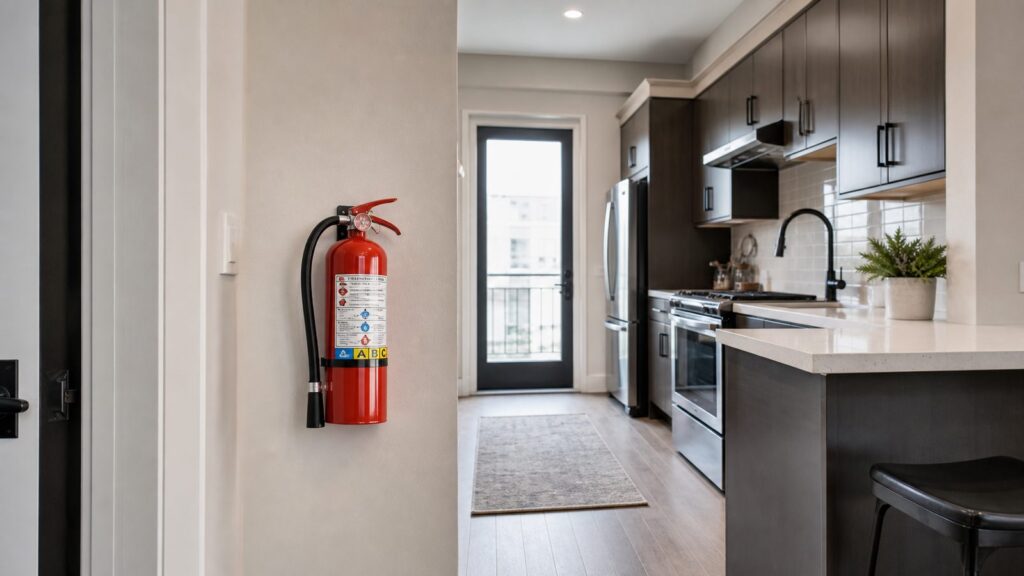
The key is not just what you buy. It is where you put it. Mount the extinguisher near the exit side of the kitchen or along your normal path out of the apartment. You want to fight from your escape route, not from a trapped position between the stove and the door.
Apartment fires are often kitchen fires, but the right extinguisher should cover more than a skillet flare-up. U.S. Fire Administration 2024 estimates show 343,000 residential building fires, with cooking as the leading cause at 46.7%. NFPA research also reports cooking as the cause of about 158,400 reported home structure fires per year, or roughly 44% of reported U.S. home fires. That is why kitchen placement matters, but it is also why a narrow kitchen-only product should not be your only line of defense.
Best Overall Apartment Pick
Our practical recommendation is a rechargeable 4 lb to 5 lb ABC dry-chemical extinguisher, preferably rated 2-A:10-B:C or 3-A:40-B:C. It is not the smallest option, but it gives you more agent, better reach, and usually better long-term serviceability than the cheapest disposable unit.
PC Slower Than It Used to Be?
A free scan shows the junk files, broken settings and background clutter dragging Windows down - then fixes them in one click.Free scan · Windows 10 & 11Crashes, No Sound, or Screen Glitches?
Random freezes, missing sound and display glitches usually trace back to one bad driver. Find and replace yours safely.Free scan · under a minute#1 Best Overall
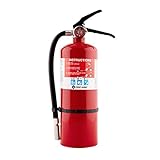
- The First Alert HOME2PRO Fire Extinguisher is UL rated 2-A: 10-B:C and meets minimum 2-A: 10-B:C code requirements; It features durable all-metal construction with a commercial-grade metal valve and trigger
- Heavy-duty fire extinguisher fights wood, paper, trash, plastics, gasoline, oil, and electrical-equipment fires; ideal for offices, homes, and workshops
- Uses mono ammonium phosphate extinguishing agent; Rechargeable by certified professionals after use
- Includes wall hook and easy-to-read, color-coded, corrosion-resistant pressure gauge
- 12-year limited
On our job sites, we do not treat extinguishers as decorative equipment. They have to be visible, reachable, charged, and suitable for the likely hazards. The same thinking applies in an apartment. A fire extinguisher buried behind cleaning bottles under the sink is not really available when a pan flashes or a power strip starts smoking.
A 4 lb to 5 lb ABC unit is usually about 15 to 18 inches tall and roughly 5 inches in cylinder diameter, depending on the manufacturer. Loaded weight is often around 7 to 10 pounds. Most adults can handle that, but not everyone can. If a senior resident, smaller adult, or anyone with limited grip strength cannot confidently lift and aim it, a lighter 2.5 lb model may be the safer real-world choice.
Why ABC Is the Right Default
An ABC extinguisher is designed for three common fire categories. Class A covers ordinary combustibles such as paper, wood, cardboard, cloth, and many furnishings. Class B covers flammable liquids. Class C covers energized electrical equipment. In an apartment, that mix matters: a trash can, a toaster, a power strip, a candle, a pan of oil, and a couch are all different hazards.
A BC kitchen extinguisher can be useful near cooking areas, but it does not cover ordinary combustibles the same way. A small kitchen aerosol spray may help with a very small cooking flare-up, but it should be treated as a supplement, not as a replacement for a code-recognized ABC extinguisher.
Quick Comparison: Apartment Fire Extinguisher Options
| Option | Typical 2026 Cost | Best For | Main Tradeoff |
|---|---|---|---|
| 2.5 lb ABC, 1-A:10-B:C | $22-$40 | Studio renters, tight closets, basic in-unit protection | Less agent; many low-cost models are disposable |
| 4 lb to 5 lb rechargeable ABC, 2-A:10-B:C or 3-A:40-B:C | $55-$80 | Most apartments, condos, townhomes, families | Heavier and needs more wall space |
| Small BC kitchen extinguisher | $25-$50 | Supplement near cooking areas | Less versatile than ABC |
| Fire extinguishing aerosol spray | About $35 for one unit or promotional two-pack | Very small cooking flare-ups, easy handling | Not a substitute for a listed ABC extinguisher in most apartment safety plans |
| Clean-agent extinguisher | Often several times the cost of ABC | Home offices, server closets, expensive electronics areas | High price; usually unnecessary for ordinary apartment use |
If you want one extinguisher for a typical apartment, buy the rechargeable ABC. If you want a second item for the kitchen, add a small BC extinguisher or listed aerosol spray, but keep the ABC as the backbone of the plan.
Understanding the Rating: What 1-A:10-B:C Means
Fire extinguisher labels look technical because they are technical. For apartment buying, you only need to understand the basics.
The letter tells you the fire class. A is ordinary combustibles. B is flammable liquids. C is energized electrical equipment. The numbers tell you relative extinguishing capacity under standardized testing. A 2-A unit has more Class A capacity than a 1-A unit. A 10-B rating is common on apartment-size units and is a good minimum for renters.
For a small apartment, 1-A:10-B:C is the floor, not the ceiling. A 2-A:10-B:C unit is better if the household can comfortably use it. Some 5 lb models carry ratings such as 3-A:40-B:C, which gives more capability for only a modest increase in size and cost.
Rank #2

- Reliable Fire Protection: Stop basic home fires involving trash, wood, paper, liquids, gases, and electrical equipment
- All-Metal Construction: Made with robust materials for long-lasting durability
- Easy pull safety pin
- Compact & Lightweight: Aluminum construction and small size allow for easy storage and use
- Easy-to-Read Pressure Indicator: If arrow is in the green it’s charged
Disposable vs Rechargeable
This is where many buyers miss the true cost. A disposable 2.5 lb extinguisher may cost $22 to $40. After use, discharge, damage, pressure loss, or expiration, replacement is often cheaper than service. A rechargeable 4 lb to 5 lb extinguisher may cost $55 to $80 up front, but it can be professionally refilled and inspected.
Recharge costs commonly run $25 to $60 for standard dry-chemical units, though some 2026 service-market quotes range from $40 to $150 depending on location, size, agent, and service-call minimums. Six-year internal maintenance often runs about $35 to $80 plus recharge. Twelve-year hydrostatic testing for ABC or BC units commonly lands around $80 to $150 plus recharge. For a small disposable apartment extinguisher, those service costs can exceed replacement cost.
For renters, a disposable unit may be acceptable. For condo owners, landlords, townhome residents, and larger apartments, a rechargeable unit usually makes more sense.
Where to Mount a Fire Extinguisher in an Apartment
Placement is as important as the model. The best location is usually just outside the kitchen, near the kitchen entry, or along the route you would naturally take to leave the apartment. The extinguisher should be visible, not hidden behind pantry goods or cleaning supplies.
Do not mount it directly above the stove. That may look logical until you imagine reaching through heat, smoke, or flame to grab it. Do not store it behind appliances, under a cluttered sink, in a deep closet, or on the far side of the room from the exit.
A simple rule works well: stand at the stove, then identify the direction you would move to leave the apartment. Mount the extinguisher on that side of the kitchen, where you can grab it while backing toward safety.
Mounting Height and Clearance
Most apartment extinguishers come with a basic wall bracket. Use it. A mounted extinguisher is easier to find, less likely to be blocked, and less likely to be damaged by being kicked around a cabinet.
For a typical 2.5 lb to 5 lb unit, mount the bracket so the handle is easy to grab, often around 36 to 48 inches above the floor. Keep the label facing outward. Leave a few inches of clearance around the cylinder so the user can lift it off the bracket without fighting nearby shelves or trim. In a rental, use appropriate anchors for drywall and check your lease before drilling into tile, masonry, or cabinet panels.
Quick wins for a faster PC:
Scan for outdated or missing drivers - takes under a minuteDriver Scan →Clear out junk files and repair common Windows errorsFree Scan →Rank #3

- EASY TO USE WITHOUT TRAINING:Patented handle design removes the safety pin—no twisting, no fiddling. This 2.5lb fire extinguisher is ideal for homes, allowing anyone from teens to seniors to act fast without needing instructions.
- TRUSTED ABC PROTECTION THAT WORKS:Rated for Class A, B, and C fires, this ABC fire extinguisher tackles grease, electric, and fuel fires. Proven in kitchens, cars, and offices. A fire extinguisher for home, car, or business that performs when it matters.
- READY FOR HOME GARAGE AND CAR:Install beside your stove, keep under the sink, or place it in your garage or car trunk. This home fire extinguisher fits into daily life and works as a reliable vehicle fire extinguisher or part of any fire safety kit.
- HEAVY DUTY DESIGN FOR REAL FIRES:Weighing 4.4 lb, this fire extinguisher is built with thick-wall steel and a high-performance formula for faster, stronger suppression. A dependable fire extinguisher for vehicle, car kits, garages, or high-risk zones.
- FIRE HITS FAST BE READY ALWAYS:The 2024 California wildfires and rising fire incidents remind us: fire doesn’t wait. This fire extinguisher for kitchen, hallway, or car is a backup plan for the emergencies you hope never happen—but must prepare for.
If wall mounting is not allowed, use a visible stand or a clearly marked open shelf near the exit side of the kitchen. Hidden storage is neater, but visible safety equipment works better under stress.
Which Extinguisher Fits Your Apartment?
| Resident Type | Best Fit | Why |
|---|---|---|
| Studio renter | 2.5 lb ABC, 1-A:10-B:C | Compact, affordable, easier to store and lift |
| Family apartment | 4 lb to 5 lb rechargeable ABC, 2-A:10-B:C or higher | More agent for larger rooms, more cooking, and more occupants |
| Senior resident | Lightest ABC unit the resident can confidently lift | Usability matters more than buying the biggest cylinder |
| High-rise condo owner | Rechargeable 5 lb ABC plus optional clean-agent unit near electronics | Better long-term serviceability and broader coverage |
| Landlord or property manager | Code-compliant tagged units selected with a fire protection contractor | Inspection records, placement, and local code compliance matter |
There is no benefit in buying a large extinguisher that the household cannot use. Before mounting it, have each adult practice finding it, lifting it, and pointing the nozzle toward the floor. Do not pull the pin for practice unless you are prepared to service or replace the unit afterward.
What About Grease Fires?
For a small pan fire, the best first move is often not an extinguisher. Turn off the burner if you can do it safely, then slide a metal lid or baking sheet over the pan to smother the flame. Do not use water on a grease fire. Do not carry a burning pan to the sink or balcony.
An ABC extinguisher can be used on many small cooking fires, but it will leave residue. ABC dry chemical is effective and affordable, but it is messy and can be corrosive to electronics and metal components if left in place. After discharge, the kitchen needs cleanup, ventilation, and often appliance inspection. If the fire involved a range hood, microwave, outlet, or wiring, stop using that equipment until it has been checked.
Do these 3 things before closing this tab:
1Clear out junk files and repair common Windows errors2Fix the driver behind crashes, sound loss and screen glitches3Repair Windows errors before they cause bigger problemsClass K extinguishers are built around commercial cooking oils and deep-fat fryers. They are common in restaurant and commercial kitchen planning, but they are not the default recommendation for apartment residents. Most apartments are better served by an ABC extinguisher, safe cooking habits, working smoke alarms, and a lid or sheet pan kept within reach.
When to Use It and When to Leave
A portable extinguisher is for a small, contained fire only. If the fire is spreading, smoke is filling the room, you do not know what is burning, or your exit is not clear, leave immediately and call 911 from outside.
Use the PASS method: pull the pin, aim at the base of the fire, squeeze the handle, and sweep side to side. Keep your back toward the exit. If the fire does not start going out within a few seconds, leave. A 2.5 lb extinguisher may discharge quickly, often in the range of several seconds. Even a larger 5 lb unit does not give you much time.
After any real extinguisher use, evacuate, call the fire department, and replace or recharge the extinguisher. That applies even if the fire looks out. Heat can remain inside cabinets, walls, appliances, filters, and wiring.
What’s actually slowing this PC down?
Pick the symptom - the matching free tool is one click away.
Rank #4

- IMMEDIATE RESPONSE FROM A SAFE DISTANCE WITH PATENTED HANDLE DESIGN:Act swiftly from a safe distance up to fifteen feet when alarm rings at night or smoke fills a room; patented handle lets anyone—whether grandparent or child—activate the fire extinguisher without training, avoiding panic in emergencies
- SUPERIOR FIRE SUPPRESSION CAPABILITIES:ABC dry powder extinguishes grease, electrical faults, wood, textiles, flammable gases effectively; makes this home fire extinguisher or business fire extinguisher reliable at managing diverse fire sources quickly
- DESIGNED FOR VERSATILITY AND EVERYONE:Compact and lightweight with 5 lb agent, easy to carry or mount in kitchen, vehicle, office; child, elder, or anyone can use this fire extinguisher for vehicle or kitchen fire extinguisher with confidence
- PREVENTING SMALL FIRES FROM BECOMING CATASTROPHES:Use this fire extinguisher at the first sign of smoke or flame to keep a small spark from endangering your property or loved ones; a vital addition to your home fire extinguisher supplies
- PATENTED SAFETY AND DEDICATED SUPPORT:Covered by U.S. patent, marked with production date, supported by six‑year quality program; brings you peace of mind whenever you reach for your fire extinguisher for car or home
Maintenance Schedule for Apartment Residents
A fire extinguisher is not a set-it-and-forget-it purchase. Put it on the same routine as your smoke alarms.
- Monthly: check that the extinguisher is visible, accessible, and not blocked.
- Monthly: confirm the pressure gauge needle is in the charged zone.
- Monthly: look for a readable label, intact pull pin, and intact tamper seal.
- Annually: check the manufacture date, condition, hose or nozzle, bracket, corrosion, dents, and lease or property requirements.
- After any discharge: replace or professionally recharge the unit.
Smoke alarms should also be tested monthly. Pair the two checks. On our projects, safety systems work best when inspection becomes routine instead of something remembered after a close call.
Independent reader supportYour contribution helps us test, update, and keep practical guides available for everyone.Renters, Landlords, and Code Reality
Apartment fire protection is governed by local code, building type, lease language, and property policy. Some multifamily buildings use unit extinguishers, hallway cabinets, sprinkler systems, or other arrangements to satisfy local requirements. The International Fire Code and International Building Code include provisions for portable fire extinguishers in certain occupancies, including R-2 residential settings, but local adoption and amendments control what applies to your building.
Renters should ask the landlord or property manager three direct questions: Is the in-unit or common-area extinguisher part of the building compliance program? Who inspects it annually? Are residents allowed or expected to install their own in-unit extinguisher?
Do not assume a hallway cabinet replaces the value of an in-unit extinguisher. A small kitchen fire can grow while you are unlocking a door, entering a smoky corridor, or searching for a common-area cabinet. At the same time, do not remove, relocate, or tamper with landlord-provided equipment. If a building extinguisher is missing, blocked, uncharged, or past inspection, report it in writing.
When to DIY vs When to Hire a Pro
Buying and mounting a personal apartment extinguisher is usually a DIY task. A renter or condo owner can select a UL-listed ABC unit, install the bracket with appropriate anchors, and add a monthly check to the household calendar. Expect to spend about $22 to $65 for common 2.5 lb to 4 lb apartment-suitable ABC units, or about $55 to $80 for many rechargeable 4 lb to 5 lb models.
Hire a professional fire protection company when the extinguisher is part of a landlord compliance program, a multifamily common area, a condo association requirement, a commercial live-work space, or any situation where inspection tags, service records, and code placement matter. Annual professional inspection commonly costs $25 to $50 per unit nationally, with high-cost markets such as New York City often reported around $40 to $100 per unit.
A pro is also the right call after discharge if the unit is rechargeable, after visible damage, when the gauge is low or overcharged, when the extinguisher is past required service intervals, or when you are managing several units across a property.
Best Value
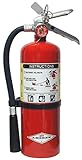
- ABC Dry Chemical, Class A:B:C Extinguisher
- For use on Class A (ordinary combustibles), Class B (Flammable liquid) spills or Fires involving live electrical equipment (Class C)
- 14 sec. discharge time
- All metal valve construction, Aluminum Valve
- Includes Wall Bracket
Buying Checklist
Before you check out, confirm these items on the label or product listing:
- UL-listed extinguisher.
- ABC dry-chemical type for the main apartment extinguisher.
- Minimum 1-A:10-B:C rating; 2-A:10-B:C or higher preferred when practical.
- Pressure gauge with a clearly marked charged zone.
- Included wall bracket.
- Readable instructions on the cylinder.
- Intact pull pin and tamper seal at delivery.
- Rechargeable construction if you want long-term serviceability.
For most apartment households, the premium practical answer is a rechargeable 4 lb to 5 lb ABC extinguisher mounted near the kitchen exit path. The compact answer is a 2.5 lb 1-A:10-B:C ABC extinguisher mounted where it can actually be reached. Either is better than relying on a hidden can under the sink or assuming the building has you covered.
Frequently Asked Questions
What type of fire extinguisher is best for an apartment?
A UL-listed multipurpose ABC dry-chemical extinguisher is the best default. Choose at least a 1-A:10-B:C rating; a rechargeable 4 lb to 5 lb model rated 2-A:10-B:C or higher is better when space and handling allow.
Is a 2.5 lb fire extinguisher enough for an apartment?
A 2.5 lb 1-A:10-B:C ABC extinguisher can be enough for a small apartment or studio if it is visible, charged, and easy to reach. A 4 lb to 5 lb unit gives more agent and is usually the better choice for larger apartments or families.
Free tools Windows power users keep installed
One-click scans. No signup required.
Should I buy an ABC or BC extinguisher for my kitchen?
Buy ABC as your main apartment extinguisher because it covers ordinary combustibles, flammable liquids, and energized electrical equipment. A BC kitchen extinguisher or aerosol spray can be a useful supplement, but it should not replace the ABC unit.
Where should I mount a fire extinguisher in an apartment?
Mount it near the exit side of the kitchen or along your escape path, not directly above the stove or buried under the sink. You should be able to grab it while moving toward the door.
Do landlords have to provide fire extinguishers in apartments?
It depends on local code, building type, lease language, and the property fire safety plan. Ask your landlord or property manager whether any in-unit or hallway extinguisher is part of the building compliance program and who performs annual checks.
How often should an apartment fire extinguisher be checked?
Check it monthly for access, pressure, pin, seal, label, and damage. Do a deeper annual review of the manufacture date and condition. Recharge or replace it after any discharge, even if only a small amount was used.
Recommended Free Tools
Quick Recap
Product prices and availability are accurate as of the date/time indicated and are subject to change. Any price and availability information displayed on Amazon at the time of purchase will apply.




