Do these 3 things before closing this tab:
1Repair Windows errors before they cause bigger problems2Scan for outdated or missing drivers - takes under a minute3Clear out junk files and repair common Windows errorsSome links on this page are affiliate links: if you buy through them we may earn a commission, at no extra cost to you.
The best choice for most wood-kiln buyers is a purpose-built dehumidification kiln system sized to the actual lumber load—not a household basement dehumidifier. Compare usable board-foot capacity, operating-temperature range, airflow, auxiliary heat, controls, condensate handling, enclosure requirements, and conditioning features before you compare compressor horsepower.
What is the best dehumidifier for a wood kiln?
For a small shop or portable sawmill, a dedicated kiln unit such as the Wood-Mizer KD150 is a useful reference point. It is listed for 300 to 1,000 board feet and includes a nominal 1/2-horsepower compressor, two internal fans, 1,000 watts of auxiliary electric heat, a 70°F-to-120°F drying range, and a 120°F-to-160°F heat-treatment range.
As an Amazon Associate I earn from qualifying purchases.
For larger or more integrated installations, Nyle’s dedicated lumber-drying systems are more appropriate than residential appliances. An EBAC LD800-based installation is another useful small-kiln reference: USDA Forest Service plans describe an approximately 800-board-foot kiln built around that type of dedicated dehumidification unit.
These are not universal rankings. No independent head-to-head test establishes one current system as the best for every kiln. The right choice depends on the lumber species, thickness, starting moisture content, target moisture content, charge size, desired drying rate, chamber design, electrical service, and whether the kiln must also support equalization or conditioning.
Popular on Amazon
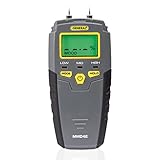
- HUMIDITY SENSOR: Our handy meter tool can quickly determine what level of remediation is needed to keep your family safe from black mold. High levels of dampness that go untreated are the leading cause of harmful fungus growth in the home.
- WATER LEAK DETECTOR: Finding the moisture content in your wood or drywall is the first step in early prevention. Continuously check and test suspicious water stains around the house so you can determine whether the area is wet or has already dried. Low, medium and high moisture tones and on-screen icons, Reading HOLD button
- MOISTURE READER: The mold test features large 0.3" high digits in a backlit LCD for quick and easy detecting. Our mildew scanner includes extra 8mm stainless steel pins, a protective cap that doubles as a calibration checker, and a “9V” battery.
- MOLD TESTER: For an accurate test read, stick the stainless steel pins into the surface of what you're measuring. The gauge has a broad range of 5 - 50% for wood and 1.5 - 33% for building materials such as concrete and drywall.
- GENERAL TOOLS: We're a recognized leader in designing and developing specialized precision tools dedicated to delivering exceptional customer service. We encourage artisans and DIYers to work smarter, measure better, and repair more productively.
Dedicated kiln equipment versus a household dehumidifier
A household dehumidifier may look attractive because it is inexpensive and readily available, but a wood kiln is a much harsher application. The equipment may need to handle:
- Elevated operating temperatures
- Large and continuous moisture loads
- Long duty cycles
- Condensate removal without overflowing
- Wood vapors and potentially corrosive acids
- Forced airflow through a tightly stickered lumber stack
- Controls based on temperature, relative humidity, wet-bulb depression, or equilibrium moisture content
Historical wood-drying guidance warns against assigning commercial kiln duty to a home dehumidifier because wood acids can corrode compressor coils and residential controls are not designed for kiln schedules. A USDA experiment did use a commercially available 30-pint unit in a small experimental kiln, but that result should not be treated as a blanket recommendation for green lumber or production use.
The practical distinction is important: a dehumidifier removes water, while a dehumidification kiln is a coordinated system consisting of a suitable moisture-removal unit, heated and insulated chamber, fans, baffles, controls, condensate management, and a drying schedule.
How to compare wood-kiln dehumidifiers
1. Start with actual board-foot capacity
Manufacturers’ board-foot ratings are the best starting point, but they are not a substitute for understanding the load. A kiln drying 4/4 air-dried hardwood has a very different workload from one drying thick, green northern red oak.
Account for:
- Species and its drying characteristics
- Board thickness
- Green, partially air-dried, or kiln-dried starting condition
- Initial moisture content
- Target moisture content
- Total board feet and stacking density
- Required drying speed
- Expected ambient conditions
As reference points, the Wood-Mizer KD150 is listed for 300 to 1,000 board feet, while USDA plans describe an approximately 800-board-foot kiln using an EBAC LD800 unit. Neither figure guarantees the same result in another enclosure or with another species.
2. Do not size by horsepower alone
“What size kiln will a 1/2-hp dehumidifier handle?” does not have a universal answer. Horsepower is only one component of a system’s performance. The manufacturer’s usable board-foot range, moisture-removal performance at kiln temperatures, fan capacity, auxiliary heat, controls, and chamber design matter more than the horsepower label by itself.
Crashes, No Sound, or Screen Glitches?
Random freezes, missing sound and display glitches usually trace back to one bad driver. Find and replace yours safely.Free scan · under a minutePC Slower Than It Used to Be?
A free scan shows the junk files, broken settings and background clutter dragging Windows down - then fixes them in one click.Free scan · Windows 10 & 11Also popular on Amazon
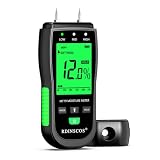
- FIND HIDDEN WALL MOISTURE EARLY — Check suspicious drywall and building surfaces after a leak, water stain, or other moisture concern. Detect abnormal moisture before a small issue develops into more extensive damage and costly repairs
- CHECK BEFORE YOU REPAIR — Don't rely on a wall looking or feeling dry. Use the moisture meter to check questionable areas before painting, repairing, or covering the surface, helping you make decisions based on actual moisture readings.
- CHECK FIREWOOD BEFORE YOU BURN — Test firewood before placing it in your fireplace or wood stove. Knowing the moisture level of your firewood helps you choose wood that is ready for burning and avoid relying on appearance alone.
- PIN-TYPE TESTING FOR DIRECT MEASUREMENTS — The contact pins penetrate the material to measure moisture inside wood and building materials. This makes it useful for checking areas where surface conditions may not tell the whole story.
- ONE TOOL FOR TWO IMPORTANT HOME CHECKS — Keep it ready for two practical jobs: checking walls for hidden moisture and checking firewood before burning. A simple way to make informed decisions before a moisture problem becomes expensive or wood goes into the fireplace.
A 1/2-horsepower unit may be specified for a 300-to-1,000-board-foot kiln system, as with the KD150, but that range is a product-specific claim—not a conversion rule that applies to every 1/2-horsepower compressor.
3. Check the operating-temperature range
The kiln must operate within the temperature limits of its compressor and controls while also supporting the schedule appropriate for the lumber. The KD150’s listed range is 70°F to 120°F for drying and 120°F to 160°F for heat treatment.
Do not simply raise the temperature to shorten the cycle. Older USDA guidance explains that conventional steam schedules can often be adapted to dehumidification kilns by starting at a lower dry-bulb temperature while maintaining the relevant relative-humidity or EMC relationship. The schedule still needs to match the species, thickness, condition of the wood, and operating limits of the equipment.
4. Treat airflow and the chamber as part of the machine
A powerful dehumidifier cannot compensate for a poorly designed kiln. The enclosure must force air through the lumber tiers instead of allowing it to bypass the ends or flow over the top of the stack.
Free tools Windows power users keep installed
One-click scans. No signup required.
Performance depends on:
- Fan capacity and placement
- Sticker spacing and alignment
- Baffles and plenums
- Insulation and airtightness
- Moisture-resistant chamber construction
- Uniform load arrangement
USDA technical material identifies approximately 350 feet per minute through the load as a common minimum for dehumidification drying, with higher velocity sometimes useful for fast-drying species. Actual airflow through the lumber—not the fan’s free-air rating—is what matters.
Small kilns need especially careful insulation because they have less compressor-generated heat available to maintain temperature. For any size kiln, seal leaks that let warm, humid air escape or allow uncontrolled air to bypass the stack.
Also popular on Amazon
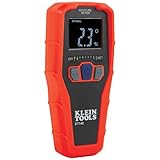
- WATER LEAK DETECTOR detects relative moisture content from leaks and flooding
- PINLESS MOISTURE METER measures relative moisture content in building materials
- NONDESRUCTIVE DETECTION up to 3/4-Inch deep using Electromagnetic field (EMF) technology
- USE ON DRYWALL, MASONRY, HARDWOOD, AND SOFTWOOD; calibrated for these materials only
- REVERSE-CONTRAST DISPLAY for easy viewing of reading and nine LED bars to indicate moisture range
5. Evaluate controls and condensate handling
Look for controls that can regulate or record temperature and relative humidity, wet-bulb depression, EMC, or an equivalent schedule variable. The unit should also provide a reliable condensate drain or collection system sized for continuous water production.
For larger systems, useful features may include fan reversal, data logging, schedule programming, alarms, and dedicated support. Ask whether equalization and conditioning are built into the controls or require separate equipment.
The Tool Desk
Outbyte PC Repair FREEClear out junk files and repair common Windows errorsFree Scan →Outbyte Driver Updater FREEFix the driver behind crashes, sound loss and screen glitchesFind Drivers →6. Check electrical and installation requirements
Before buying, confirm the voltage, amperage, circuit requirements, auxiliary-heat load, permitted operating temperature, and humidity range. Provide a proper condensate drain, a sealed and insulated chamber, and enough clearance for service access.
Best system types for different buyers
| Buyer or use case | Most suitable approach | What to verify |
|---|---|---|
| Small shop or portable sawmill | A packaged dehumidification kiln unit paired with a properly designed chamber | Board-foot range, auxiliary heat, temperature limits, fans, electrical service, and enclosure cost |
| DIY small-kiln builder | A dedicated unit such as an EBAC LD800-based design reference | Airflow path, insulation, baffling, controls, condensate removal, and compatibility with the chamber |
| Commercial or serious small-sawmill operation | An integrated lumber-drying system from a specialist such as Nyle | Capacity, service support, schedule controls, energy requirements, conditioning, and installation |
| Experimental project using a household appliance | Only a carefully controlled experiment, not a default production kiln | Temperature tolerance, corrosion risk, duty cycle, airflow, safety, and the limitations of the test results |
How long does dehumidification kiln drying take?
There is no honest one-number answer. Drying time varies substantially with species, thickness, starting moisture content, stacking, airflow, ambient conditions, and the selected schedule.
USDA Forest Products Laboratory testing provides useful examples:
- 18.4% to 7.3% moisture content in 15 days: mixed air-dried 4/4 hardwoods and softwoods, without casehardening.
- 47.5% to 6.8% moisture content in 27 days: 5/4 black cherry.
- 82.9% to 6.1% moisture content in 45 days: green northern red oak.
- 82.9% to 5.2% moisture content in 50 days: the same green northern red oak charge after additional drying.
The northern red oak load developed severe casehardening that was relieved by conditioning. These figures are results for specific test loads, not promises for every kiln.
Also popular on Amazon

- 🌲【Accurate and fast measurements reveal hidden water leaks】: It has 2 high-precision pins that can penetrate the surface to be tested and quickly measure moisture content to estimate potential moisture increase throughout the home. COCZOW moisture meter is the ideal tool for measuring moisture.
- 🌲【Professional Wood Moisture Meter】: 6 calibrated scales. Our moisture meter is a great tool for manufacturers, floorers, inspectors and wood suppliers to quickly and easily measure moisture content (% Mc). You can quickly determine if the moisture content is low (5-12%), medium (12-17%) or high (17-60%). Checking moisture content prevents wood from cracking and warping.
- 🌲【Widely Used】: PM6811A moisture meter is ideal for carpentry, building construction, agricultural restoration and floor laying. Measure moisture content of wood products such as hardwood floors, cabinets, furniture, lumber, lath, beams, plywood, panels, composite boards, window frames, forestry wood, coils, building materials, etc.
- 🌲【User-friendly】: With LCD backlight, the backlight color is divided into three types of green, yellow and red, or display the moisture content of different measurement types. Hold function, maximum/minimum moisture measurement function and 5-minute automatic shutdown function (no power supply required).
- 🌲【Why choose COCZOW Wood Moisture Meter】: LED display function, large measuring range (wood: 2.0%-75.0%. Building materials: 1.5-30%), durable stainless steel needle, heat insulation, light weight and easy to carry. Get professional and accurate results with Peakmeter Wood Moisture Tester.
Why a moisture meter is essential
Elapsed time cannot establish that lumber is ready. Use a wood moisture meter to check boards before loading, during the process when appropriate, and after unloading. Sample boards from different locations in the stack and measure representative boards rather than relying on a single reading.
A meter also helps reveal uneven drying. Boards near the airflow inlet, outlet, edges, or poorly baffled areas may not match the moisture content of boards in the center of the load.
Pinless meters
The Wagner Orion 930 is documented as a dual-depth pinless meter with readings at approximately 1/4 inch and 3/4 inch. It provides species-specific settings, on-demand calibration, and a stated standard measurement range of 4% to 32%, with the exact range varying somewhat by species setting.
Pinless meters are convenient because they do not puncture the board, but readings can be affected by species, density, thickness, temperature, and the meter’s usable range. They are not universally accurate for every application.
Recommended Free Tools
Pin meters
The Delmhorst J-4 is a conventional pin meter with a stated 6% to 30% wood-moisture range and a connector for Delmhorst electrodes. Pin meters make direct contact with the wood and can be useful when measuring at a particular depth, provided the species correction and temperature considerations are understood.
Do not leave a handheld meter inside the active kiln
Delmhorst recommends remote monitoring equipment for in-kiln measurement and warns that prolonged exposure to kiln heat and humidity can damage a handheld meter. Use a remote kiln moisture monitor when continuous internal readings are necessary; remove a handheld meter after taking measurements.
Also popular on Amazon

- Easy to Read with Large LCD Screen: This wood moisture meter is easy to get an accurate reading from the surface of materials and displays accurate moisture readings on the 2.25" big screen. Use this handheld meter to check the moisture content in firewood or drywall, it can stand up on the table, the moisture content is displayed with a bar graph and percentage (_%RH) on the screen. Date Hold and Max/Min function is used to freezes readings, useful for writing down data
- Tricolor Backlight Display, Easy to Use: TopTes Moisture Meter TS-630 features an HD tri-color backlight to easily know if the wood/wall humidity is Dry, Moist, or Wet. Green backlight for Low moisture, orange backlight for middle moisture, and red moisture for high moisture. After selecting the mode, and putting pins into the firewood, easy and quick to get a visible alert from the clear screen
- Seven Calibration Scales, Two Material Mode: It is designed with built-in characteristic parameters of 7 calibration scales for wood and building material, ranging from 0.0% to 57%. This humidity meter is perfect for woodworking, water damage restoration, building construction, and home renovation. Easily Check and test suspicious water leaks around the wall/floor so you can quickly determine what level of remediation is needed
- Pin Type & Battery Operated: TopTes TS-630 moisture meter is a pin-type moisture meter and operates on batteries. With a high precision multi-material sensor, DON’T need calibration. It’ll support an accurate reading after inserting the stainless steel pins into the surface of the wood or building materials. It will auto shut off after 10 minutes of non-use to help save energy. A low-battery indicator will appear on the screen when the battery is running out
- What's in the Box: One TS-630 Moisture Meter, three AAA Batteries, one User Manual, one Carry Pouch, one Pair of Test Pins, one Mini Wrench
Equalization, conditioning, and drying stress
Dehumidification changes how water is removed; it does not eliminate drying stress. Hardwood intended for furniture, flooring, millwork, or resawing may require equalization and conditioning before it is considered ready for use.
Equalization brings wetter boards closer to the target moisture content. Conditioning relieves stresses such as casehardening, which can cause boards to cup, bow, split, or spring apart when resawn. Depending on the kiln system and schedule, conditioning may require humidification, spray, steam, or another controlled method.
What’s actually slowing this PC down?
Pick the symptom - the matching free tool is one click away.
Ask the equipment supplier how the system supports these stages. A kiln that can remove moisture efficiently but cannot manage the final stress-relief steps may not be suitable for the intended end use.
Wood-kiln buying checklist
- Capacity: Does the stated board-foot range match the actual charge, species, thickness, and starting moisture content?
- Temperature: What are the drying and heat-treatment ranges, and can the equipment stay within them under load?
- Moisture removal: Is the unit designed for continuous kiln duty and high moisture loads?
- Airflow: Do the included fans, baffles, and plenums force air through the lumber?
- Enclosure: Is the chamber sealed, insulated, moisture-resistant, and compatible with the unit?
- Controls: Can the system manage temperature and RH, EMC, wet-bulb depression, or an equivalent schedule variable?
- Condensate: Is there a safe, reliable drain or collection system?
- Conditioning: Can the kiln support equalization and conditioning for the intended end use?
- Electrical service: Does the installation have the required voltage and circuit capacity, including auxiliary heat?
- Monitoring: Do you have a suitable wood moisture meter, and will you keep handheld equipment out of prolonged kiln exposure?
- Schedule: Do you have a species- and thickness-specific drying schedule rather than relying on elapsed time?
Bottom line for choosing a wood-kiln dehumidifier
Choose a purpose-built dehumidification kiln system, not a generic household dehumidifier, unless you are deliberately building a limited experimental setup. Size the complete installation to the real lumber load and drying conditions, then verify that the chamber, airflow, controls, condensate system, and conditioning process are equally suitable.
For a compact packaged option, the Wood-Mizer KD150 provides a documented 300-to-1,000-board-foot reference range, 1/2-horsepower compressor, auxiliary heat, fans, and separate drying and heat-treatment temperature ranges; its chamber is not included. For larger or more integrated installations, investigate specialist lumber-kiln systems such as Nyle. An EBAC LD800-based USDA design is best treated as a construction and airflow reference rather than a universal current product recommendation.
Whichever system you choose, use moisture content—not a calendar estimate—to determine when lumber is ready, and plan for equalization and conditioning when drying hardwood for demanding applications.
Quick Recap
Product prices and availability are accurate as of the date/time indicated and are subject to change. Any price and availability information displayed on Amazon at the time of purchase will apply.

