Free tools Windows power users keep installed
One-click scans. No signup required.
Some links on this page are affiliate links: if you buy through them we may earn a commission, at no extra cost to you.
A good copper saucepan earns its place in a serious kitchen because it responds fast. When you turn the burner down, the pan cools quickly. When you bring heat up, it moves evenly across the base and walls. That makes copper especially useful for sauces, custards, reductions, chocolate, caramel, oatmeal, rice, and any cooking where a few degrees can change the result.
For most culinary enthusiasts, the best first copper saucepan is a lined 2- to 3-quart pan, about 1.5 to 2.5 millimeters thick, with a fitted lid, a comfortable riveted handle, and confirmed compatibility with the cooktop in the home. If the kitchen has induction, traditional copper usually will not work unless the pan has a magnetic stainless base or is built as an induction-ready copper line. In many induction kitchens, a copper-core stainless saucepan is the more practical choice.
As builders, we look at copper cookware differently than a product roundup does. The pan matters, but so does the kitchen around it: the range, hood, task lighting, storage, landing space, backsplash clearance, electrical capacity, and whether the homeowner has a smart place to put a heavy pan that costs $300 to $500. A beautiful saucepan that lives stacked under six other pans in a dark base cabinet will not get used.
As an Amazon Associate I earn from qualifying purchases.
What Makes Copper Saucepans Different
Copper is valued because it conducts heat exceptionally well. In a saucepan, that matters more than it does in many other pans. A skillet can rely on high heat and surface browning. A saucepan often handles liquids, dairy, sugar, eggs, and emulsions where even heating and quick temperature control are the point.
That is why copper saucepans show up in kitchens where people make hollandaise, pastry cream, beurre blanc, caramel, ganache, lemon curd, risotto, polenta, and reductions. Copper does not make those dishes automatic, but it gives the cook a responsive tool. When the sauce starts moving too fast, the pan gives you a chance to correct it.
Popular on Amazon
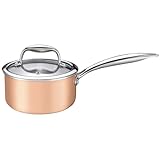
- Pure Cooking : Crafted from 18/10 food-grade stainless steel. This stew pot ensures purely non-toxic cooking, offering peace of mind with no chemical coatings needed.
- Built to Last: Made of rust and stain-resistant Tri-Ply Stainless Steel, this pot is as elegant as it is resilient. It is dishwasher-safe, ensuring effortless cleanup and long-term beauty.
- Refined Design: Featuring seamless one-piece construction for effortless cleanup, Built-in hanging loop for stylish storage.
- Effortless Cleanup: Designed for convenience, this pot is completely dishwasher-safe. Its seamless, non-porous surface ensures that residues rinse away effortlessly, making cleanup a quick and simple task.
- Warranty & Support:Protected by a 12-month warranty. Should any issue arise, contact us for prompt support and a hassle-free resolution.
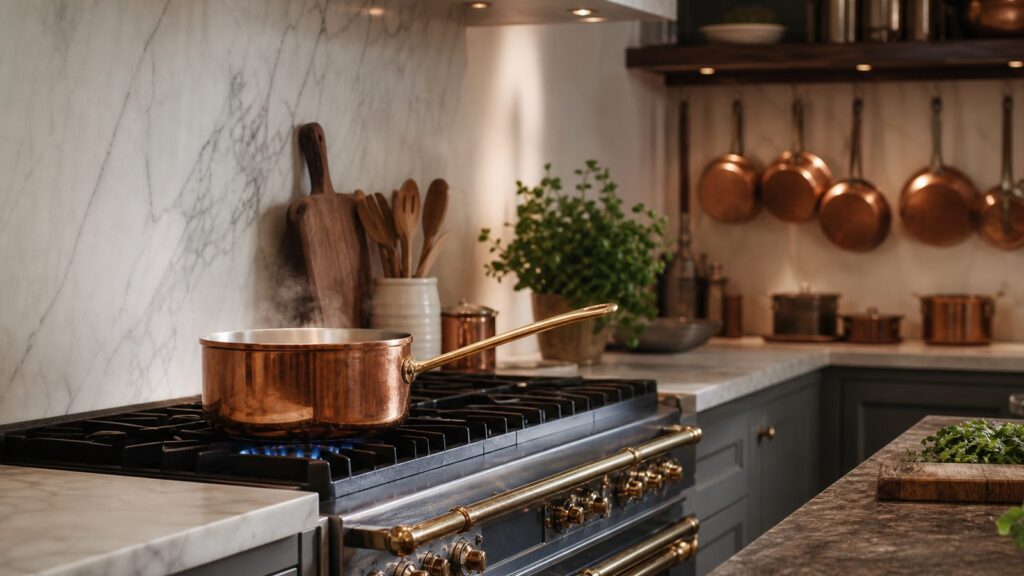
There is also a design reason homeowners like copper. In a high-end kitchen, real copper adds warmth against stone counters, painted cabinetry, plaster hoods, handmade tile, and professional ranges. The key word is real. Copper-colored cookware and thin decorative copper plating may look similar from across the room, but they do not perform like a thick copper pan.
The Best Copper Saucepan for Most Homes
If you are buying one pan, start with a 2- to 3-quart lined copper saucepan or saucier. That size covers the widest range of real cooking: sauces, grains, reheating soup, custards, small pasta portions, oatmeal, vegetables, rice, and reductions. A 1- to 1.5-quart saucepan is useful for butter, chocolate, and small sauces, but it is too limited as a first purchase. A 4-quart or larger copper saucepan makes sense for families, frequent entertaining, or cooks who regularly make stocks and large batches, but it is heavier and more expensive.
In 2026, expect a quality copper saucepan to cost about $150 to $250 for smaller or entry-level lined pieces, $300 to $500 for premium 2- to 3-quart pans, and $500 or more for large, handmade, or heavy 3-millimeter pieces. Full copper cookware sets can run roughly $1,500 to $5,000 depending on brand, thickness, country of manufacture, handle material, lining, and piece count.
On our kitchen projects, we usually advise homeowners to buy one excellent copper saucepan before committing to a full set. Sauce work is where copper gives the clearest benefit. Many cooks still prefer stainless steel, enameled cast iron, carbon steel, or nonstick for daily abuse. One premium copper saucepan gives you the performance where it counts without filling the kitchen with cookware that requires polishing and careful handling.
True Copper vs Copper-Core vs Copper-Colored Cookware
The words on the box matter. A true copper saucepan, a copper-core stainless saucepan, and a copper-colored pan are not the same product. For a homeowner planning a kitchen around serious cooking, this distinction affects performance, cost, induction compatibility, and storage decisions.
Quick wins for a faster PC:
Repair Windows errors before they cause bigger problemsFix Now →Fix the driver behind crashes, sound loss and screen glitchesFind Drivers →| Cookware Type | Typical 2026 Price | Performance | Maintenance | Induction Compatibility | Best For |
|---|---|---|---|---|---|
| True lined copper saucepan | $150-$500+ per pan | Fast, even, highly responsive heat control when copper is thick enough | Exterior tarnishes; tin lining needs gentle use; stainless lining is easier | Usually no, unless built with a magnetic base | Gas or electric kitchens, sauce-focused cooks, showpiece chef kitchens |
| Copper-core stainless saucepan | $150-$350+ per pan | Good heat distribution with more stainless durability | Lower maintenance; usually dishwasher-safe depending on manufacturer | Often yes, but verify the specific line | Induction kitchens and homeowners who want performance without polishing |
| Copper-colored cookware | $40-$150 per pan or set | Varies widely; often aluminum or stainless with a decorative finish | Finish may discolor or scratch | Only if magnetic base is included | Budget kitchens where the look matters more than copper performance |
If you want the culinary reason to buy copper, look for real copper thickness, not just color. If you want easier maintenance and induction compatibility, copper-core stainless may be the smarter long-term fit.
Thickness, Lining, and Handle Details That Matter
Copper Thickness
For true copper performance, many premium pans land around 2.5 to 3 millimeters thick. That heavier gauge gives excellent heat distribution and helps prevent hot spots. Thinner 1- to 1.5-millimeter copper pans are lighter and usually cheaper, but they can heat less evenly and may feel less stable on a powerful burner.
There is a practical tradeoff. A 2.5-millimeter copper saucepan feels substantial, especially once it holds 2 or 3 quarts of liquid. That weight affects who will use it, where it should be stored, and whether it belongs on an open rail or in a drawer with heavy-duty slides.
Stainless Steel vs Tin Lining
Most modern copper saucepans are lined because unlined copper is not appropriate for general cooking. Stainless steel lining is the practical choice for most homeowners. It tolerates metal utensils better, handles higher heat, and does not require periodic re-tinning. Tin lining is traditional, smooth, and responsive, but tin is softer and has a much lower melting point than stainless. It should not be overheated, scrubbed aggressively, or treated like a stainless stockpot.
Do these 3 things before closing this tab:
1Fix the driver behind crashes, sound loss and screen glitches2Clear out junk files and repair common Windows errors3Scan for outdated or missing drivers - takes under a minuteAlso popular on Amazon

- 100% Non-Toxic Saucepan for Healthy Cooking - This 3 qt sauce pan uses PFOA/PFOS-free ceramic coating – zero chemicals leach into food, even when simmering acidic tomato sauce or wine reductions.
- Lifetime Non-Stick Saucepan - Diamond-infused ceramic coating keeps this saucepan truly non-stick and easy to clean. Resists scratches, no flaking after dialy use.
- Any-Stove 3 Quart Saucepan - Triple-layer base makes this 3 quart saucepan heats evenly. Heats 30% faster than standard pots on induction/gas/electric/ceramic cooktops.
- Full-Visibility Sauce Pan with Lid - Steam-vented glass cover on this saucepan with lid prevents boil-overs. Monitor simmering sauces in this sauce pot without lifting cover.
- Balanced 3 Qt Saucepan with Lid - Ergonomic handle securely lifts this 3 quart saucepan with lid when full. Stay-cool grip works with oven mitts for stove-to-oven transitions.
If you cook often and want lower maintenance, choose stainless-lined copper. If you value tradition, cook with care, and accept future re-tinning as part of ownership, tin-lined copper can be a beautiful tool.
Handles, Lids, and Balance
A copper saucepan should have a secure riveted handle, a lid that fits well, and a shape that feels balanced when full. Cast iron handles are traditional and stay visually consistent with French-style copper, but they can feel heavy. Brass handles look warm and decorative. Stainless handles are often easier to maintain and can feel more familiar to homeowners coming from stainless cookware.
Before buying, check the filled weight. A 3-quart copper saucepan full of sauce can easily become a two-hand task. In a remodel, that affects whether the pan belongs in a deep drawer near the range, on an open shelf at shoulder height, or on a hanging rail with proper blocking.
Cooktop Compatibility: Gas, Electric, and Induction
Cooktop type is the first filter. Traditional copper works beautifully on gas and many electric smooth tops, assuming the base is flat and the manufacturer allows that surface. Induction is different. Induction cooktops require magnetic cookware. Traditional copper is not magnetic, so it generally will not heat on induction unless the pan has an induction-compatible magnetic base.
Recommended Free Tools
If you are remodeling and moving to induction, confirm cookware compatibility before buying copper. Do not assume that a premium price means induction-ready. Look for clear manufacturer language such as induction compatible, magnetic stainless base, or induction copper. If that is not stated, test with a magnet on the base or choose a copper-core stainless line designed for induction.
This matters because induction upgrades often involve more than swapping an appliance. A full-size induction range or cooktop may require a dedicated circuit, adequate panel capacity, and code-compliant installation. In many kitchens, we are checking electrical load, outlet placement, GFCI requirements, appliance specifications, and local inspection rules before the cabinet order is final.
Safety: What Copper Can and Cannot Touch
Do not use unlined copper for everyday cooking. Acidic foods such as tomato sauce, vinegar reductions, citrus, and wine-based sauces should not contact bare copper. Damaged, worn, or exposed copper inside a pan is a repair issue, not a patina issue.
For stainless-lined copper, normal acidic cooking is generally the point of the lining. For tin-lined copper, use lower to moderate heat and avoid empty preheating. Tin can wear over time, and once copper is exposed inside the cooking surface, the pan should be re-tinned or retired from general food use.
What’s actually slowing this PC down?
Pick the symptom - the matching free tool is one click away.
Also popular on Amazon

- TRIPLE-LAYER CONSTRUCTION: Features a 304 stainless steel exterior, thermal aluminum core for even heat distribution, and a magnetic base compatible with induction, electric, and gas stovetops.
- HAMMERED COPPER ROSE GOLD FINISH: Stunning hand-hammered exterior with a warm copper rose gold tone, complemented by a matching lid and elegant rose gold handles for a sophisticated kitchen aesthetic.
- 2.2 QUART CAPACITY WITH LID INCLUDED: This generously sized saucepan comes complete with a fitted rose gold stainless steel lid topped with a handle to lock in heat and moisture while cooking.
- EASY TO CLEAN: Dishwasher safe for convenient cleanup, with hand washing also recommended to preserve the beautiful hammered copper rose gold finish and extend the life of the cookware.
- LIGHTWEIGHT AND STURDY: This well-balanced saucepan is easy to handle on the stovetop while offering the durability of tri-ply stainless steel construction.
Care is straightforward but not careless. Hand-wash copper. Avoid the dishwasher. Do not attack polished copper with aggressive abrasives. Use a copper polish or a gentle cleaner when you want shine, and accept that natural patina is part of owning the material. A showroom-bright copper wall requires regular polishing; a working kitchen usually looks better when the copper is clean but not obsessively perfect.
Designing the Kitchen Around Copper Cookware
Copper cookware is heavy, expensive, and often beautiful enough to display. That makes it a design and construction issue, not just a purchase.
Storage That Actually Works
The best storage location for a daily saucepan is within one or two steps of the cooktop. Deep drawers with heavy-duty slides are usually the most practical answer. A drawer designed for cookware should have full-extension slides, solid box construction, and enough height to avoid scraping handles and lids. For premium cookware, we also like peg systems or dividers that keep pans from grinding against each other.
Open shelves and rails can work, but they need planning. A copper pan is not light, and a rack full of copper can carry serious weight. During a remodel, we install blocking in the wall or ceiling framing where pot rails, shelf brackets, or ceiling racks will land. Retrofitting a heavy rack into drywall with ordinary anchors is not acceptable construction practice.
Lighting and Landing Space
Good sauce work needs visibility. Under-cabinet lighting over the prep zone and clear light at the range are worth more than another decorative fixture. We like strong, even task lighting at the counter where liquids are measured, whisked, and transferred.
Landing space also matters. A hot copper saucepan needs a heat-safe place to land near the cooktop. Stone, porcelain, stainless, or protected solid surfaces are better choices than forcing the cook to cross the aisle with a heavy pan of hot liquid. In a practical chef kitchen, the range, sink, prep counter, and landing zone are designed as one workflow.
Backsplash and Finish Coordination
Copper brings a warm metal into the room. It can look excellent with unlacquered brass, aged brass, satin nickel, blackened steel, painted cabinets, soapstone, marble, quartzite, plaster, and handmade tile. It can also look accidental if every metal finish is competing.
We usually limit the finish palette before selections get expensive. For example: copper cookware, aged brass cabinet hardware, stainless appliances, and a quiet stone counter can look intentional. Copper cookware, bright chrome faucet, brushed nickel pulls, gold lights, black range trim, and glossy patterned tile can look unresolved.
Windows Errors? Fix Them Before They Spread
Repair common Windows errors and clear accumulated junk for a smoother, more stable PC - no reinstall needed.Free scan · no reinstallCrashes, No Sound, or Screen Glitches?
Random freezes, missing sound and display glitches usually trace back to one bad driver. Find and replace yours safely.Free scan · under a minuteVentilation for Serious Cooking
A copper saucepan often belongs in the same kitchen as a serious range, and serious ranges need serious ventilation. The best hood is not just the biggest or most decorative one. It needs capture area, correct mounting height, workable duct routing, reasonable noise, and enough performance for the appliance package.
Also popular on Amazon

- [SUPERIOR NON-STICK PERFORMANCE] - These saucepans are equipped with a health-conscious ceramic coating, free from PFOA/PFOS/PTFE/PFAS. Enjoy an ultra nonstick cooking experience with our sauce pan set.
- [Super Easy to Clean] - Our excellent non-stick saucepan pot set simplifies your cleaning process with its superior performance. Just a quick rinse with soapy water after use, and it's as good as new.
- [Perfect Size] - Our sauce pot set, including 1-quart, 2-quart, and 3-quart saucepans, is perfectly sized for everyday use. It caters to your small cooking needs, from instant oatmeal, soup, and sauce to quick gravy.
- [FAST & EVEN HEATING] - The cooking pots in our sauce pan set have durable aluminum alloy bases that greatly enhance heating performance. Suitable for all stovetops. Tip: All but the 1 quart canbe used on induction. Dishwasher safe.
- [ERGONOMICALLY DESIGNED LID & HANDLE FOR CONVENIENCE]- The small pots for cooking set feature a heat-resistant glass lid for easy food monitoring. It locks in flavor and nutrients for healthier, tastier meals. The long handles, designed for comfort and safety, stay cool and provide a firm grip. They are hand double-riveted for added durability.
When we design around a pro-style range, we look at hood width, depth, blower capacity, duct diameter, makeup air requirements, and the path to the exterior. A high-CFM hood can trigger makeup air rules, and local inspectors may enforce amendments beyond the base residential code. The International Residential Code includes makeup air requirements for domestic range hoods over 400 CFM in many jurisdictions, but local rules control the final answer.
For the homeowner, the practical point is simple: do not spend $4,000 on cookware and a premium range, then treat the hood as trim. Grease, steam, heat, and noise will shape how much you enjoy cooking in the room.
Budget: Saucepan Cost vs Kitchen Remodel Cost
A copper saucepan is a small line item compared with a kitchen remodel, but it can reveal the kind of kitchen a homeowner wants. A cook who cares about copper responsiveness may also care about a better hood, a wider prep zone, under-cabinet lighting, drawer storage, an induction-ready electrical plan, and durable counters.
The Tool Desk
Outbyte Driver Updater FREEScan for outdated or missing drivers - takes under a minuteDriver Scan →Outbyte PC Repair FREERepair Windows errors before they cause bigger problemsFix Now →In 2026, national kitchen remodel references cluster around a roughly $27,000 average, with common lower and mid-level project ranges near $14,600 to $41,600. Larger or luxury remodels commonly run $75,000 to $150,000 or more, especially when layout changes, premium cabinetry, stone counters, pro appliances, panel upgrades, structural changes, and ventilation work are involved.
| Item | Typical 2026 Cost | Planning Notes |
|---|---|---|
| Entry or small lined copper saucepan | $150-$250 | Good way to test whether copper fits your cooking style |
| Premium 2-3 qt copper saucepan | $300-$500 | Best first copper purchase for most culinary enthusiasts |
| Large or handmade heavy copper saucepan | $500+ | Check filled weight and storage before buying |
| Copper cookware set | $1,500-$5,000 | Usually not the first move unless you already cook with copper |
| Typical kitchen remodel permit range | $500-$1,500 | Varies heavily by city; electrical, plumbing, and mechanical permits may be separate |
| Common kitchen remodel range | $14,600-$41,600 | Usually assumes limited layout changes and moderate finish level |
| Large or luxury kitchen remodel | $75,000-$150,000+ | Driven by layout changes, cabinet grade, appliances, ventilation, and structural work |
The biggest remodel cost drivers are layout changes, moving plumbing or gas, electrical capacity, cabinet quality, countertop material, ventilation upgrades, appliance specifications, structural wall changes, local labor rates, and finish level. Cookware does not drive the budget, but a serious cooking plan should influence these decisions early.
Independent reader supportYour contribution helps us test, update, and keep practical guides available for everyone.When to DIY vs When to Hire a Pro
Buying and maintaining a copper saucepan is a homeowner task. Selecting the pan, hand-washing it, polishing it, and storing it carefully do not require a contractor. Installing a simple cabinet organizer may also be reasonable for a capable DIY homeowner if it fastens into solid cabinet material and does not alter electrical, plumbing, or structural components.
Hire a pro when the cookware decision touches the building. That includes adding a ceiling pot rack, installing wall-mounted rails into tile or plaster, modifying cabinets, adding a pot filler, changing a range hood, moving ductwork, upgrading to induction, adding circuits, relocating outlets, changing gas piping, or altering backsplash clearances around a cooking surface.
Permits are local. A pot rack may not need a permit, but ceiling blocking during a remodel should still be done correctly. A new hood, makeup air system, induction circuit, gas line change, or pot filler often can trigger permits or inspections depending on the jurisdiction. Some cities require separate electrical, plumbing, and mechanical permits. Others bundle them into a kitchen remodel permit. Always verify with the local building department before work begins.
Also popular on Amazon

- 【Quality Material】 Crafted from high-quality copper, this durable saucepan ensures superior heat conduction for fast and efficient cooking.
- 【Product Dimensions】This durable copper pot measures 20cm in diameter and 8cm in height, offering a compact design with spacious capacity for versatile cooking needs.
- 【Handle Design】The saucepan features an ergonomic long handle for a comfortable grip, ensuring safe handling by keeping hands away from heat during cooking.
- 【Compatibility】Designed for induction cooktops and gas stoves, this copper pot provides flexible use in any kitchen setup.
- 【Versatile Use】Ideal for simmering, frying eggs, and preparing small dishes, this small copper pot supports everyday cooking versatility.
Common Buying and Remodeling Mistakes
The most common cookware mistake is buying copper-colored cookware and expecting it to behave like true copper. The second is buying a beautiful traditional copper pan for an induction kitchen without confirming that it is magnetic. The third is buying a full set before using one pan long enough to know whether copper fits the way you cook.
Other mistakes are more expensive because they happen during the remodel. Homeowners forget where heavy cookware will live, then end up stacking premium pans in a blind corner. They install a decorative hood that looks good in photos but performs poorly. They choose open shelves without blocking. They add a pot filler without thinking through splash, shutoff access, plumbing route, and whether it actually improves the workflow.
Our rule is to place the pan in the plan. If a homeowner wants copper cookware visible, we show exactly where it hangs, what supports it, what light hits it, and how it relates to the range and prep counter. If the homeowner wants copper for performance only, we design a drawer that makes the pan easy to reach and easy to protect.
Our Practical Recommendation
For most serious home cooks, buy one lined 2- to 3-quart copper saucepan or saucier before buying a set. Choose stainless lining if you want durability and lower maintenance. Choose tin lining only if you understand the care requirements. Look for 1.5 to 2.5 millimeters as a practical range, with 2.5 millimeters being the premium sweet spot for many traditional copper pans. Confirm the base works with your cooktop, especially if you have or plan to install induction.
Then make sure the kitchen supports the tool. Store the pan within reach of the range. Give it a heat-safe landing zone. Light the work surface properly. Vent the cooking area correctly. If you want to display copper, plan the blocking, shelf depth, rail height, and metal finishes before drywall, tile, and cabinet installation close off your options.
A copper saucepan is not essential for every homeowner. But in a well-designed kitchen for someone who genuinely cooks, the right copper pan is one of the few luxury items that is both beautiful and functionally better at a specific job.
Frequently Asked Questions
Are copper saucepans worth it for home cooks?
Yes, if you cook sauces, custards, reductions, chocolate, rice, oatmeal, or temperature-sensitive dishes often. For most homes, one premium 2- to 3-quart lined copper saucepan is a smarter purchase than a full set.
What thickness should a good copper saucepan be?
Premium true copper saucepans are often about 2.5 to 3 millimeters thick. Thinner 1- to 1.5-millimeter pans cost less and weigh less, but they usually do not heat as evenly.
Is tin-lined or stainless-lined copper better?
Stainless-lined copper is better for most homeowners because it is lower maintenance and more durable. Tin-lined copper is traditional and responsive, but it is softer, should not be overheated, and may eventually need re-tinning.
Can copper saucepans be used on induction cooktops?
Traditional copper usually does not work on induction because it is not magnetic. For induction, choose an induction-ready copper saucepan with a magnetic base or use copper-core stainless cookware.
How much does a quality copper saucepan cost in 2026?
In the U.S., expect about $150 to $250 for small or entry lined copper pieces, $300 to $500 for premium 2- to 3-quart saucepans, and $500 or more for large, handmade, or heavy copper pans.
Do these 3 things before closing this tab:
1Scan for outdated or missing drivers - takes under a minute2Clear out junk files and repair common Windows errors3Fix the driver behind crashes, sound loss and screen glitchesDo I need a permit for kitchen upgrades related to copper cookware storage or cooking?
A simple organizer usually does not need a permit, but new range hoods, makeup air systems, pot fillers, gas changes, induction circuits, and electrical or plumbing changes often can. Permit rules are local, so verify with your city before work starts.
Quick Recap
Product prices and availability are accurate as of the date/time indicated and are subject to change. Any price and availability information displayed on Amazon at the time of purchase will apply.

