Do these 3 things before closing this tab:
1Scan for outdated or missing drivers - takes under a minute2Clear out junk files and repair common Windows errors3Fix the driver behind crashes, sound loss and screen glitchesSome links on this page are affiliate links: if you buy through them we may earn a commission, at no extra cost to you.
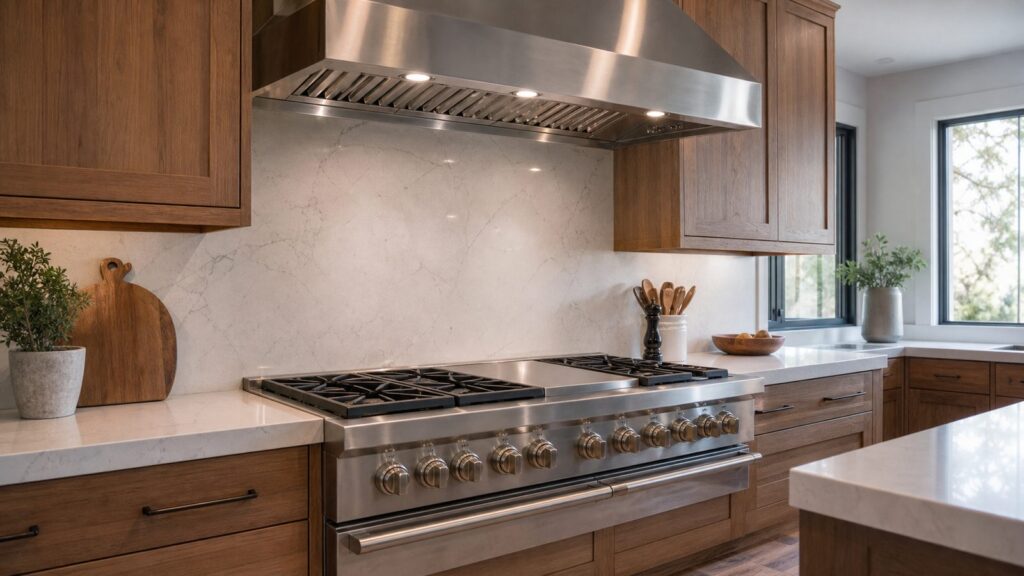
A 48-inch range hood is usually installed over a serious cooking surface: a 48-inch pro-style gas range, a rangetop with griddle or grill modules, a wide induction cooktop, or an outdoor kitchen appliance. The best choice is not automatically the hood with the biggest blower. The right hood is the one that captures smoke and grease at the cooking surface, moves air through a properly sized duct, meets local code, and fits the cabinet, electrical, and makeup-air plan for the house.
On our kitchen remodels, we treat a 48-inch hood as a construction decision first and an appliance decision second. A 1,200 CFM hood can perform poorly if it is mounted too high, connected to undersized duct, or starved for replacement air. A 600 CFM hood can work very well when it has good depth, a short duct run, clean exterior discharge, and the homeowner’s cooking style matches the capacity.
For most U.S. homes in 2026, expect 48-inch range hoods to fall between about 400 and 1,200 CFM. Appliance prices commonly range from about $400 to $5,000+, and installed project costs can range from a simple $650 replacement to several thousand dollars when new ductwork, roofing, cabinet modification, electrical work, or makeup air is involved.
As an Amazon Associate I earn from qualifying purchases.
Start With the Range, Not the Hood
The hood should be selected around the appliance below it. A 48-inch induction cooktop used for everyday boiling and sauteing has a different ventilation load than a 48-inch gas range with six burners, a griddle, and a charbroiler. The first questions we ask on a job site are practical:
- Is the appliance gas, induction, electric, or dual fuel?
- What is the total burner output in BTUs?
- Will the homeowner use a griddle, grill, wok, or frequent high-heat searing?
- Is the hood against a wall or over an island?
- Can we route duct straight out, or do we need a long attic or soffit run?
- Will the hood trigger a makeup-air requirement in that jurisdiction?
A common gas sizing rule is roughly 1 CFM for every 100 BTUs of cooking output. A 60,000 BTU rangetop points toward about 600 CFM. A 100,000 BTU pro-style range points toward about 1,000 CFM before duct losses, hood geometry, and local code are considered.
#1 Best Overall

- HIGH QUALITY: Commercial grade 304 stainless steel and full welding seamless construction make sure that CT range hood insert has high resistance to corrosion and discoloration. The metallic surface gives a stylish look and matches the rest of the stainless steel kitchen appliances.
- POWERFUL VENT&LIGHT: This DUCTED range hood combines dual motors (max 1150 CFM) and an 8" round duct for efficient ventilation. CT hood vent insert has a powerful 4-speed motor to suck the smoke, odor, steam, heat, grease up and out of your kitchen. It works pretty quietly even at the highest setting(1150 CFM/69db). LED light bulbs provide sufficient lighting for the cooking area.
- SAFETY & WARRANTY: When the temperature is too high, the range hood vent insert will automatically shut the power off for safety. ETL Listed; Conform to the UL 507;Certified to CSA. An industry-leading one-year parts warranty gives you peace of mind.
- EASY TO CLEAN AND USE: Power cord with a plug is included in this built-in range hood. Stainless steel dishwasher-safe baffle filters trap grease and oil and make cleaning range hood inserts a breeze. Press-to-use buttons allow you to easily control the airflow speed and LED light levels.
- SIZE & APPLICATION: Product Dimensions(L x W x H): 46-3/8 in x 18 in x 10 in. CT vent hood insert can be used for custom wood, metal, or any other range hoods that you built for your stove. You can also mount it inside a custom cabinet or a custom frame.
That rule is useful, but it is not the whole design. Published residential ventilation guidance also shows 400 CFM as a baseline recommendation for a 48-inch wall-mounted hood. That can be a sensible target for lower-output cooking or a homeowner who wants to avoid the added complexity of high-CFM ventilation. For heavier cooking, island installation, front-burner searing, or long duct runs, 600 to 1,200 CFM becomes much more realistic.
Windows Errors? Fix Them Before They Spread
Repair common Windows errors and clear accumulated junk for a smoother, more stable PC - no reinstall needed.Free scan · no reinstallOutdated Drivers Are Slowing You Down
One free scan finds every outdated or missing driver and matches the right update for your exact hardware.Free scan · exact hardware match48-Inch Range Hood Types
Most 48-inch hoods fall into one of five categories. The best format depends on the layout, cabinet design, and whether the kitchen is being remodeled from the studs or receiving a targeted appliance upgrade.
Wall-Mount Canopy Hoods
Wall-mount canopy hoods are common over 48-inch pro ranges. They mount to the wall and usually vent vertically through the ceiling or horizontally through an exterior wall. A good wall hood should have enough depth to cover the front burners. For serious cooking, shallow decorative hoods are often a compromise.
Many 48-inch wall hoods are 24 to 27 inches deep and use 8-inch or 10-inch duct collars. Common blower sizes include 600, 900, 1,000, 1,170, 1,200, and 1,220 CFM. Stainless steel is the standard finish, with baffle filters, LED lights, and multi-speed controls.
Under-Cabinet Hoods
Under-cabinet hoods mount below a cabinet or custom enclosure. They can be a good fit when the kitchen design includes upper cabinetry above the range. The cabinet must be planned carefully because 48-inch hoods are wide, heavy, and often deeper than standard wall cabinets. Clearances, duct transitions, and access for service matter.
Hood Inserts and Liners
For custom wood, plaster, or paneled hoods, the appliance is usually a listed metal insert or liner mounted inside the decorative shell. This is common in higher-end remodels. The decorative hood is not the ventilation system; the listed liner is.
When we build custom hood surrounds, we coordinate the liner dimensions before cabinet fabrication. The liner needs the right width, depth, mounting height, combustible-clearance protection, filter access, and duct path. Ordering the decorative hood first and trying to force-fit the insert later is a costly mistake.
Island Hoods
Island hoods are exposed on all sides and usually need more capture area because cross drafts can push smoke away from the hood. In practice, an island cooktop often benefits from a hood that is wider or deeper than the cooking surface, mounted at the proper height, and powered by a larger blower than the same range against a wall.
Ductless or Convertible Hoods
Some 48-inch hoods can be configured as ductless or recirculating units with charcoal filters. These can reduce odor and collect some grease, but they do not exhaust moisture, combustion byproducts, or heat outdoors. For a serious 48-inch gas range, ducted ventilation is almost always the better performance choice. Ductless is usually a compromise for apartments, condos, or layouts where exterior ducting is not practical.
Quick wins for a faster PC:
Clear out junk files and repair common Windows errorsFree Scan →Fix the driver behind crashes, sound loss and screen glitchesFind Drivers →Repair Windows errors before they cause bigger problemsFix Now →How Much CFM Do You Need?
CFM means cubic feet per minute, or how much air the blower is rated to move. For 48-inch hoods, do not shop by CFM alone. The number on the box assumes laboratory conditions, not a tight house with a long duct run, three elbows, a roof cap, and a dirty filter.
Still, CFM gives you a useful starting point. Here is the decision matrix we use with homeowners during kitchen planning:
| 48-Inch Hood Category | Typical CFM | Best Fit | Planning Notes |
|---|---|---|---|
| Budget or code-conscious hood | 400 CFM | Moderate cooking, lower-output range, shorter wall duct run | Often easier to permit because many jurisdictions start makeup-air requirements above 400 CFM. Still needs proper ducting and exterior discharge if ducted. |
| Serious home cooking hood | 600-800 CFM | Most 48-inch gas rangetops, frequent searing, griddle use, large family kitchens | Good balance of performance, noise, duct size, and cost. Confirm whether local code requires makeup air. |
| Pro-style high-output hood | 1,000-1,200 CFM | High-BTU pro ranges, grill modules, wok cooking, island layouts, heavy cooking | Requires early duct and makeup-air planning. Usually needs 10-inch duct or manufacturer-approved equivalent. |
For a 48-inch gas range with 60,000 to 80,000 BTUs, we usually look closely at 600 to 900 CFM models. For a 100,000 BTU cooking appliance, 1,000 CFM is a reasonable design target, but only if the house can support it. For induction, the BTU formula does not apply. You still need ventilation for grease, steam, smoke, and fine particles, but the final choice depends more on cooking style, hood depth, mounting height, and duct routing.
Rank #2

- EFFICIENT AIRFLOW: 500 CFM range hood with push-button controls, 3-speed fan, twin centrifugal motors; Quickly ventilate your kitchen. Convert to ductless with optional Carbon Filter Kit Purchase Part # CFK5 (sold separately). Noise level as low as 40 dB on lowest fan speed with rigid ducting (sold separately) under optimal conditions; range hood comes with flexible ducting for convenient installation
- EASY-TO-CLEAN FILTERS: Part of the Haven Collection. Cosmo’s ARC-FLOW Stainless Steel Permanent Filters are dishwasher-safe and extremely durable
- PUSH BUTTON CONTROLS: Range hood equipped with push button control panel to manage multiple functions, including fan speed, lights and power
- ENERGY-SAVING LIGHTS: Range hood features 2-Watt LED bulbs that are long-lasting and provide bright, high lumen LED lighting for better visibility while cooking
- 2-YEAR LIMITED: Our customer support team is based proudly in the USA. Product Dimensions: 47.75" (W) x 22" (D) x 10" (H). Electrical: 120V/60Hz, 3-Prong Plug. Duct Requirements: Top Vented 8" Round
Capture Area Beats Raw Blower Size
A hood only works if it captures the plume rising from the pan. Heat, grease, and smoke do not travel straight up in a neat column. They expand as they rise, especially from front burners and high-heat cooking.
For a 48-inch range, matching the hood width to the range is common. Slightly exceeding the range width can improve capture where the layout allows it. Depth is just as important. A shallow hood over a deep pro range may leave the front burners exposed. If the hood is mounted too high, the plume spreads before it reaches the filters.
Always follow the appliance and hood manufacturer’s required mounting height. Many residential range hoods land somewhere around 24 to 36 inches above the cooking surface, but the exact number depends on the hood, range, fuel type, and surrounding materials. Outdoor grills and some high-output cooking appliances may require different clearances.
On our job sites, we mock up the hood height before final cabinet work when there is any doubt. A beautiful hood that misses the front burners is not a successful installation.
Duct Size and Routing Decide Real Performance
Ductwork is where many expensive hoods lose performance. High CFM through undersized duct creates noise, vibration, poor airflow, and greasy buildup. A premium 1,200 CFM hood connected to a reduced, winding duct can be louder and less effective than a properly installed 700 CFM hood.
Free tools Windows power users keep installed
One-click scans. No signup required.
Use rigid, smooth metal duct. Keep the route as short and straight as practical. Avoid unnecessary elbows. Do not reduce duct diameter below the hood manufacturer’s listed size. Many 48-inch hoods call for 8-inch or 10-inch duct. If the installation instructions require 10-inch duct, plan for 10-inch duct from the hood to the exterior termination unless the manufacturer allows a specific alternative.
Common duct cost drivers include attic access, soffit removal, roof penetration, wall penetration, fire blocking, exterior patching, drywall repair, cabinet modification, and the exterior cap. A straight wall discharge behind the range is usually simpler than a long vertical run through cabinets, ceiling framing, attic space, and roofing.
Exterior discharge also matters. The termination should include a working backdraft damper and should be located where it will not dump greasy air into an attic, soffit, crawlspace, garage, or near an intake opening. Kitchen exhaust should terminate outdoors, not into a concealed space.
Makeup Air: The Detail That Changes the Project
Makeup air is replacement air brought into the home when the range hood exhausts indoor air outdoors. Without it, a powerful hood can depressurize the house. That can make doors hard to open, pull air down chimneys or flues, interfere with combustion appliances, and reduce hood performance.
Recommended Free Tools
Many U.S. jurisdictions use a 400 CFM threshold as the point where makeup air must be considered or provided for domestic kitchen exhaust. Local amendments vary, and some states or municipalities provide exceptions. Do not assume the rule based on the appliance listing alone. Confirm with the local building department or mechanical inspector before ordering the hood.
Makeup-air solutions range from simple to complex:
- Passive damper tied to the hood operation
- Powered makeup-air fan
- Tempered makeup air with heating or cooling support
- HVAC-integrated makeup-air system
- Balanced approach with combustion-safety testing
In a mild climate with a leaky older house, makeup air may be straightforward. In a tight new home, a cold climate, or a house with atmospheric combustion appliances, it needs more attention. A 1,200 CFM hood can remove a large amount of conditioned air quickly. If replacement air comes through random cracks, fireplaces, or mechanical chases, the system is not under control.
Noise: Look Beyond the Lowest Sone Rating
Range-hood noise is usually listed in sones. Lower is quieter. The problem is that some listings emphasize the quietest speed, not the speed you will actually use while cooking. A hood can be quiet on speed one and very loud on speed four.
Rank #3

- Powerful Suction & Quiet Operation:This range hood insert delivers strong suction with a maximum airflow of 1150 CFM, efficiently removing smoke and grease from your kitchen. Even at its highest setting, it operates quietly at just 69 dB, ensuring a peaceful cooking environment.
- Easy-Operating:Designed with simple push-button operation, this built-in range hood insert is easy to use—just select the mode you prefer. It offers four fan speeds so you can adjust from low to high airflow to suit various cooking situations.
- Stainless Steel&Dishwasher-Safe Baffle Filters:Equipped with two stainless steel baffle filters that are easy to remove and dishwasher-safe, this vent hood insert efficiently traps grease and oil, helping keep your kitchen cleaner.
- WIDE APPLICATION:This hood vent insert is highly versatile, compatible with custom wood, metal, or other materials of range hood enclosures. It can be installed within a custom cabinet or framed structure, or used as a standalone unit, providing full ventilation capabilities and efficiently removing smoke and grease from your kitchen.
- SPECIFICATION:(L x W/D x H):46-3/8 " (L) x 18"(W/D) x 10"(H).Electrical Requirements:120V/60Hz,3-prong plug.Duct Size:8" round top vent.
For homeowners who care about quiet performance, we look at the whole system: blower size, working-speed sones, duct diameter, duct length, elbow count, exterior cap, and cabinet vibration. A larger hood run at a lower speed is often more pleasant than a small hood running flat out.
Inline and remote blowers can help move noise away from the cooking area. They add cost and coordination, but they can be worth it in open kitchens where the range is near dining or living space. If quiet operation is a priority, bring it up before rough-in, not after the cabinets are installed.
Features Worth Paying For
Most useful 48-inch hood features are practical, not flashy. We prefer stainless baffle filters over cheap mesh filters for heavy cooking because they are durable, cleanable, and better suited to grease-laden air. Dishwasher-safe filters are a real convenience.
LED task lighting is worth having, especially on wide ranges where the hood becomes the main work light. Variable fan speeds are better than a simple high-low switch because cooking loads change. A delayed shutoff lets the hood keep clearing residual heat and odor after cooking. Heat sensors can be helpful, but they should not replace good habits.
Look for listed safety certification, clear installation instructions, accessible filters, a duct collar that matches your planned duct, and parts availability. For custom inserts, verify the liner is approved for the enclosure and cooking appliance below it.
What’s actually slowing this PC down?
Pick the symptom - the matching free tool is one click away.
2026 Cost Guide for 48-Inch Range Hoods
For 2026 U.S. kitchen projects, the hood appliance itself is only part of the budget. A simple replacement where duct, electrical, and cabinets already line up can be relatively contained. A new 48-inch pro range with a high-CFM hood may require a larger opening, cabinet changes, roof or wall ducting, electrical work, permits, and makeup air.
| Cost Item | Typical 2026 Range | What Drives the Price |
|---|---|---|
| 48-inch hood appliance | $400-$900 budget, $900-$2,500 midrange, $2,500-$5,000+ premium | Brand, blower CFM, island vs wall, insert vs canopy, remote blower, finish, controls |
| Basic installation | $650-$2,500 commonly cited national range | Replacement complexity, mounting, electrical modification, duct connection |
| Vent hood labor benchmark | About $564-$1,030 per hood in 2026 estimating data | Local labor rates, access, layout, finish work |
| Lower-complexity retrofit baseline | $400-$1,500 installed | Works best when duct and wiring are already suitable |
| Permits and inspections | Often $50-$300+ for simple permits | Jurisdiction, mechanical/electrical scope, roof work, larger remodel permit bundle |
| Makeup-air system | Varies widely | Passive vs powered, tempered air, HVAC integration, combustion-safety work |
Real retail examples in 2026 show 48-inch hoods available from about 400 to 1,200 CFM through common appliance channels. We have also seen premium 48-inch 1,200 CFM wall hoods around the mid-$3,000 range before installation, and outdoor-rated 48-inch inserts with 10-inch duct requirements. Those numbers are helpful, but the installed cost depends more on the house than the website price.
Installation Sequence in a Remodel
A 48-inch hood should be planned before cabinets are ordered. The hood affects the cabinet layout, range location, backsplash height, ceiling framing, duct chase, roof or wall penetration, electrical rough-in, and inspection sequence.
A typical remodel sequence looks like this:
- Select the cooking appliance and hood type.
- Confirm hood width, depth, mounting height, duct collar size, and electrical requirements.
- Plan duct route and exterior termination.
- Confirm makeup-air requirements with the local authority having jurisdiction.
- Coordinate cabinet drawings, custom hood enclosure, and clearances.
- Rough in duct, blocking, wiring, and makeup air before drywall or cabinet installation.
- Install cabinets, backsplash, hood, filters, controls, and exterior cap.
- Commission the system and complete inspections.
Commissioning is not complicated, but it is often skipped. We check that the damper opens, air discharges outdoors, filters seat properly, controls and lighting work, the fan does not rattle, and the hood captures smoke from the front and rear burners. Where combustion appliances are present, backdrafting checks may be needed.
When to DIY vs When to Hire a Pro
A capable homeowner may be able to replace a similar 48-inch hood if the existing duct size, mounting location, electrical supply, cabinet opening, and exterior termination are already correct. Even then, these hoods can be heavy. Two-person handling is usually the minimum, and some installations need temporary supports.
DIY is more realistic when:
- The new hood uses the same duct size and location
- No new roof or wall penetration is needed
- The existing electrical connection matches the new hood requirements
- The cabinet or wall structure is already properly blocked
- The local jurisdiction does not require licensed mechanical or electrical work for the scope
Hire a pro when the project involves new ductwork, roof penetration, high-CFM ventilation, makeup air, custom cabinetry, gas appliance coordination, structural changes, hardwired electrical work, or inspection signoff. For a 48-inch pro-style kitchen, the right team may include a remodeler, HVAC contractor, electrician, cabinetmaker, roofer, and inspector. That sounds like a lot for a hood, but it is cheaper than opening finished walls and ceilings after the fact.
Common Buying Mistakes
The most expensive mistake is buying the highest-CFM hood without checking duct feasibility and makeup-air requirements. The second is choosing a shallow decorative hood that looks right in the showroom but fails to cover the cooking plume.
Rank #4

- Powerful 1150 CFM Ventilation: This stainless steel range hood insert delivers up to 1150 CFM airflow to efficiently remove smoke, steam, heat, grease, and cooking odors from your kitchen, making it ideal for heavy-duty home cooking.
- 4-Speed Fan with 3-Minute Delay Shutoff: Choose from 4 fan speeds to match different cooking styles, from light simmering to high-heat frying. The 3-minute delay shutoff keeps the fan running briefly after cooking to help clear remaining smoke and odors.
- Bright 4 × 3W LED Lights with Dimming Control: Equipped with four energy-saving 3W LED lights, this built-in range hood provides clear illumination over your cooking area. The light control supports on, dimming, and off settings for daily cooking convenience.
- Dishwasher-Safe Stainless Steel Baffle Filters: The stainless steel baffle filters are designed to capture grease effectively while staying easy to maintain. Simply remove the filters and place them in the dishwasher for quick, hassle-free cleaning.
- Commercial-Grade 304 Stainless Steel Construction: Made of commercial-grade 304 stainless steel with a fully welded seamless design for durability and a clean built-in look. Product size: 46-3/8" L × 18" W × 10" H; uses an 8" round duct. ETL certified, conforms to UL 507 and CSA C22.2 No. 113 standards. Please check the size guide before ordering.
Other mistakes we see include reducing a 10-inch duct to fit an old 6-inch chase, venting into an attic or soffit, forgetting exterior patching costs, ignoring front-burner capture, ordering cabinets before confirming the insert dimensions, overlooking electrical control wiring for makeup air, and assuming ductless charcoal filtration is equivalent to outdoor exhaust.
The Tool Desk
Outbyte Driver Updater FREEScan for outdated or missing drivers - takes under a minuteDriver Scan →Outbyte PC Repair FREERepair Windows errors before they cause bigger problemsFix Now →Noise surprises are also common. A homeowner buys a premium hood, then discovers it sounds harsh because the duct is too small or the exterior cap is restrictive. Good ventilation is a system, not one appliance.
Our Practical Recommendation
For a 48-inch pro-style gas range, start by pricing a 600 to 800 CFM ducted hood with strong capture geometry, stainless baffle filters, LED lighting, variable speeds, and properly sized rigid metal duct. That range is often enough for serious cooking without automatically pushing the project into the most complex high-CFM category.
Move toward 1,000 to 1,200 CFM when the appliance output, cooking style, island layout, or grill and wok use justify it. At that point, plan makeup air, duct size, noise control, and permitting before ordering the hood. If the kitchen is induction and the homeowner cooks moderately, a lower-CFM hood with excellent capture area may be the smarter choice.
The best 48-inch range hood is the one designed into the kitchen early. Match it to the range, give it a clean duct path, provide replacement air when required, and verify performance after installation. That is how a hood becomes more than a stainless box on the wall; it becomes a ventilation system that protects the kitchen, the finishes, and the air the family actually breathes.
Crashes, No Sound, or Screen Glitches?
Random freezes, missing sound and display glitches usually trace back to one bad driver. Find and replace yours safely.Free scan · under a minuteWindows Errors? Fix Them Before They Spread
Repair common Windows errors and clear accumulated junk for a smoother, more stable PC - no reinstall needed.Free scan · no reinstallFrequently Asked Questions
How many CFM do I need for a 48-inch range hood?
A 48-inch wall hood may start around 400 CFM for moderate cooking, but many pro-style gas ranges need 600 to 1,200 CFM. A common gas rule is about 1 CFM per 100 BTUs, so a 60,000 BTU range points toward about 600 CFM.
Does a 48-inch range hood need makeup air?
Many jurisdictions require makeup air when a kitchen exhaust hood exceeds 400 CFM, but local rules vary. Confirm requirements before ordering, especially for 600, 900, 1,000, or 1,200 CFM hoods.
Is 1,200 CFM too much for a home kitchen range hood?
Not always. It can be appropriate for high-output pro ranges, grill modules, wok cooking, or island layouts. It is too much when the ductwork, makeup air, and house pressure balance are not planned for it.
What duct size is best for a 48-inch range hood?
Follow the hood manufacturer’s instructions. Many 48-inch hoods use 8-inch or 10-inch rigid metal duct. Do not reduce the duct below the listed size unless the manufacturer specifically allows it.
How much does it cost to install a 48-inch range hood in 2026?
The appliance commonly costs about $400 to $5,000+, depending on quality and features. Installation often runs $650 to $2,500, with higher costs when new ductwork, roof penetration, electrical changes, or makeup air are required.
Can a 48-inch range hood be ductless?
Yes, some 48-inch hoods are convertible or recirculating, but ductless hoods do not exhaust heat, moisture, or combustion byproducts outdoors. For a serious 48-inch gas range, ducted ventilation is usually the better choice.
Quick Recap
Product prices and availability are accurate as of the date/time indicated and are subject to change. Any price and availability information displayed on Amazon at the time of purchase will apply.

