Some links on this page are affiliate links: if you buy through them we may earn a commission, at no extra cost to you.
Bathla’s failure should produce two responses at once: rigorous accountability for any defective work, unpaid bills or excessive borrowing, and a careful plan to keep viable housing projects moving. That is the dual argument in David Besser’s opinion column, credited with Good Turtle and published in The Fifth Estate’s Spinifex column on 17 September 2026. He does not claim to know what happened inside Bathla’s many companies. Administrators, regulators and potentially courts must establish that. His warning is that treating every distressed development as a reason to abandon private project finance could strand buyers, contractors and homes that might still be completed.
What “more than a collapse” means
Besser presents Bathla not simply as a company that failed, but as a housing-production system. The operation connected workers, subcontractors, consultants, agents, lenders, certifiers, suppliers and households. When a large developer enters administration, the disruption can therefore spread beyond a corporate balance sheet: construction sites may stop, invoices may go unpaid, purchasers may face uncertainty, and lenders must decide whether more money can be committed to projects already under way.


As an Amazon Associate I earn from qualifying purchases.
That systems view does not excuse poor conduct. Besser explicitly says affordability cannot justify defective construction, unpaid workers or excessive borrowing. His point is narrower and more practical: accountability for a failed group and the completion of viable individual developments are different decisions. “Save the homes – not necessarily the empire” is the governing distinction.
The column is an opinion, not an administrator’s report or a court finding. Its interpretations and forecasts belong to Besser. Any final explanation of Bathla’s causes, liabilities and recoveries must come from the administrators, regulators or courts.
#1 Best Overall
What is known — and what remains unresolved
The figures circulating around the administration are substantial, but they should be read as reported figures in Besser’s column, not as final administrator-verified findings.
| Measure | Reported figure | How to read it |
|---|---|---|
| Total owed | Approximately A$3.4 billion | Reported in the 17 September 2026 column; the final amount may change as claims are examined. |
| Debt to secured lenders | About A$3.08 billion | This is a secured-debt figure, not the same thing as total creditor claims or eventual recoveries. |
| Lenders | More than 40 | A count of reported lenders; it does not by itself show each lender’s priority, security or exposure. |
| Active construction projects | 45 | Projects said to be active at the time of the report, not a complete measure of Bathla’s wider pipeline. |
| Homes under construction | Approximately 2,500 | A reported construction count; it does not establish how many homes will ultimately be completed or delayed. |
Those categories must not be collapsed into one headline. Debt is not the same as secured debt; active projects are not the same as completed homes; and the number of homes under construction does not reveal the result for every purchaser. The reviewed material does not establish final creditor recoveries, the completion outlook for each site or a proven cause of the failure.
Recommended Free Tools
The 43 per cent number is one project, not an industry benchmark
Besser says his own feasibility work for one current project put construction and completion costs at approximately 43 per cent of that project’s end value. He expressly says this is not an industry-wide average. It is an illustration of the margin a particular project may have before allowing for finance, land, professional fees, taxes, contingencies, selling costs and other obligations.
The distinction matters. A project-level feasibility estimate can help an incoming financier or developer decide whether a site is capable of being finished. It cannot be used to claim that all housing developments have a 43 per cent margin, that Bathla earned that margin across its portfolio, or that a distressed site is automatically profitable. Each project needs its own current appraisal, cost-to-complete assessment, contract review and funding plan.
Why cash-to-completion is the central practical question
Besser’s financial warning concerns project cash-to-completion: the money needed to take a specific development from its present state to lawful, saleable homes. A site can have valuable land, presales or partially completed work and still fail if the remaining cash requirement is uncertain or unavailable.
Rank #2
What an administrator and financier need to establish
- Physical progress: what has actually been built, inspected and certified, rather than what a schedule says should be complete.
- Remaining cost: labour, materials, consultants, approvals, insurance, interest, rectification and contingencies through handover.
- Contract position: which builders, subcontractors and suppliers will return, on what terms, and which claims or variations remain disputed.
- Revenue and purchaser position: expected settlement proceeds, presales, cancellations and any changes in market value.
- Authority to act: who can instruct work, draw funds, amend contracts and make decisions across the relevant company and security structure.
Besser argues that a viable project may require coordinated action by its financier, the administrator and an incoming builder or developer. That is a proposed pathway, not a description of what has been approved at any particular Bathla site.
The Tool Desk
Outbyte Driver Updater FREEFix the driver behind crashes, sound loss and screen glitchesFind Drivers →Outbyte PC Repair FREEClear out junk files and repair common Windows errorsFree Scan →Why multiple lenders can complicate a rescue
Private credit can involve several lenders secured across different projects and entities. When a group encounters trouble, those parties may have different priorities, security positions and views about whether new money should be advanced. A decision that preserves one site could affect collateral or cash flows elsewhere. Besser identifies that coordination problem as a reason a portfolio collapse cannot be solved by a single, simple funding switch.
He does not establish that Bathla’s internal structure caused the failure. The structure is presented as a financial risk that administrators and lenders may have to untangle, not as a proven explanation.
What actually happens if your builder goes under?
The outcome is project-specific. The reviewed sources establish administration and uncertainty, not a universal result for every buyer, subcontractor or supplier. A purchaser should not assume either that a deposit is lost or that a home will automatically be finished.
A practical sequence for affected parties
- Confirm the legal entity and project status. Identify the company named in your contract and obtain the administrator’s current notices for that entity and site. A group can contain multiple companies, so a notice about one entity may not answer questions about another.
- Separate the site from the wider group. Ask whether work has stopped, whether the project has a current financier, and whether a cost-to-complete assessment is being prepared. The relevant question is the site’s viability, not only the group’s headline debt.
- Preserve records. Keep contracts, variations, invoices, payment receipts, certificates, correspondence and photographs of work. These records help administrators, builders and advisers understand progress and disputed amounts.
- Ask who can authorise further work. Before paying a new invoice or signing a replacement agreement, establish which party has authority to make that request and how it relates to the existing contract.
- Obtain independent advice. Buyers, trades and suppliers may have different rights and priorities. A qualified insolvency or construction lawyer can interpret the documents and deadlines for the relevant jurisdiction; this article cannot determine an individual claim.
- Track formal updates. Recovery prospects, project transfers and creditor decisions can change as claims are verified and funding is negotiated. Treat early statements about timing or completion as provisional unless confirmed in a formal notice.
This sequence does not promise a particular outcome. It reduces avoidable confusion while the administrator, secured parties and any replacement delivery team determine whether a project can continue.
Rank #3
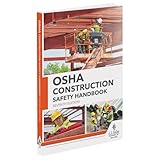
- 2024 OSHA Construction Safety Book is the seventh edition with the new OSHA HazCom final rule on 5/20/24. While the rule takes effect 7/19/24, the compliance dates don’t begin until 1/19/26 per 29 CFR 1910.1200(j).
- Construction Site Book offers quick access to essential OSHA regulations, jobsite hazards, and practical safety tips. It also helps employees identify hazards and prevent injuries and illnesses.
- Features easy-to-read format, full-color images, chapter quizzes with answer key, and comes in a compact size making it a convenient reference for employees.
- Critical topics include Confined Space Entry; Cranes & Derricks; Electrical Safety; Emergency Response; Ergonomics & Back Safety; Excavations; Fall Protection; First Aid & Bloodborne Pathogens; HazCom; Health & Wellness; Jobsite Exposures; Lockout/Tagout; Ladders & Stairways; Materials Handling/Storage; Motor Vehicles; PPE; Scaffolds; Site Safety & Security; Slips, Trips & Falls; Tool Safety; Welding, Cutting & Brazing; and Work Zone Safety.
- Specifications: 5 1/4” x 7 1/4", English, Soft bound. 7th Edition. Copyright 2024.
Why Besser warns against a blanket retreat from private development finance
According to Besser, private lenders sometimes fund projects that banks will not support under their lending requirements. Private credit is more expensive, but it can fill a gap for developments that might otherwise lack finance. If lenders respond to Bathla by withdrawing broadly from residential development, he forecasts that viable developers could face delays, buyers could have fewer new homes to choose from and supply could tighten further.
That is a risk forecast, not a measured outcome supplied by the column. The reviewed material does not quantify how much private credit would leave the market, how many projects would be affected or how prices would respond. A responsible policy response therefore has to distinguish between tightening standards for weak or opaque projects and abandoning finance for projects that can demonstrate a credible path to completion.
Accountability and completion are compatible objectives
A completion pathway is not a bailout of a failed corporate group. Besser’s proposal is to assess individual developments and, where a project is capable of being completed, give its financier, administrator and an incoming builder or developer a route to finish it — or to pursue an unconventional solution where the ordinary structure no longer works.
That approach can be tested against clear safeguards:
- Independent viability: a current feasibility and cost-to-complete review, rather than reliance on the failed developer’s forecasts.
- Ring-fenced funding: money advanced for one project should be traceable to that project’s construction and completion obligations.
- Open accountability: defective work, unpaid claims and possible misconduct should remain available for investigation even if construction resumes.
- Qualified delivery: any incoming builder or developer must have the capacity, licences, insurance and controls required for the remaining work.
- Buyer communication: purchasers need a clear statement of what changes, what remains in force and who is responsible for decisions.
These safeguards address the tension at the heart of the column: preserving homes without preserving an unworkable corporate structure.
The targeted GST idea: a proposal, not current policy
Besser also suggests considering a targeted GST concession for qualifying affordable new homes. He does not present this as enacted government policy, and the column does not estimate its fiscal cost or likely supply effect. Any such measure would need rules that prevent a tax benefit from becoming an unchecked windfall.
| Design question | What a targeted concession would need to specify |
|---|---|
| Who qualifies | Clear definitions for an affordable new home, eligible developer or project, location and purchaser. |
| Buyer eligibility | Income, owner-occupier, first-home or other conditions, if those are intended. |
| Pass-through | Evidence that the tax saving reduces the purchaser’s price or otherwise improves affordability. |
| Audit | Records allowing authorities to verify construction, sale price, purchaser status and use of the concession. |
| Clawback | A mechanism to recover the benefit if conditions are breached, a project is not completed or the saving is not passed through. |
| Time limit | A defined commencement and end date so the measure can be evaluated rather than becoming an open-ended entitlement. |
Targeting matters because a concession attached merely to a developer’s financial distress could reward the wrong behaviour. The relevant test would be whether a completed home meets the public affordability conditions, not whether a particular company is rescued.
Independent reader supportYour contribution helps us test, update, and keep practical guides available for everyone.The wider construction pressure behind the warning
Context reported by Queensland University of Technology academics in 2026 points to broader insolvency pressure. They reported that 3,472 Australian construction companies entered insolvency in the financial year to 30 June 2026, representing 24.5 per cent of all national company insolvencies. The underlying ASIC release was not independently reviewed for this article, so the figures should be attributed to that QUT account.
PC Slower Than It Used to Be?
A free scan shows the junk files, broken settings and background clutter dragging Windows down - then fixes them in one click.Free scan · Windows 10 & 11Outdated Drivers Are Slowing You Down
One free scan finds every outdated or missing driver and matches the right update for your exact hardware.Free scan · exact hardware matchThe same account reported that house construction costs were 51 per cent higher than before COVID. It linked insolvency pressure to thin margins, fixed-price contract exposure, financing conditions, trade shortages and regulatory barriers. Those pressures help explain why a project can become distressed even when demand for housing remains strong; they do not prove which factor caused Bathla’s failure.
The QUT article also quoted ASIC chair Sarah Court describing developments in private credit as “troubling” and saying the issue was not peripheral because Australians are exposed through superannuation funds. That observation is separate from Besser’s column and should not be presented as his statement.
Contemporaneous reporting by Domain quoted Teneo senior managing director Stephen Longley saying Bathla lacked cash to pay wages and suppliers without urgent funding. That is useful context about the reported situation at the time, but it does not establish the final outcome or legal cause of the administration.
How other policy positions fit — and do not settle the question
The Australian Greens advocated a public developer in a September 2026 media release. That is a party policy position, not neutral evidence and not the same proposal as Besser’s project-level completion pathway or targeted GST concession. A public-development model may be part of a broader housing debate, but it does not by itself answer how existing Bathla sites should be funded, governed or completed.
Free tools Windows power users keep installed
One-click scans. No signup required.
Questions decision-makers should ask before committing new money
- Is the individual project capable of completion at a realistic current cost and sale value?
- Which entity owns the land, holds the contracts and controls the relevant accounts?
- What security and priority does each lender have, and can the parties agree on a coordinated funding structure?
- What defects, unpaid claims, approvals or certification issues could change the cost-to-complete number?
- Who will supervise the replacement delivery team and report progress to purchasers and creditors?
- What happens if the viability assumptions fail — is there a defined stop-loss and transparent decision process?
These questions keep assistance tied to deliverable homes rather than to the preservation of a corporate name.
What readers should not conclude yet
- Do not treat the reported A$3.4 billion or A$3.08 billion figures as final until administrators verify the claims and security positions.
- Do not infer that private credit, regulation, construction defects or governance caused the collapse; that remains unresolved.
- Do not assume all buyers will lose deposits, or that all homes will be completed; outcomes differ by contract, entity, project and funding decision.
- Do not use the 43 per cent estimate as an industry margin or as proof that every Bathla project can be rescued.
- Do not describe the GST concession or viable-project pathway as government policy; they are proposals advanced in an opinion column.
The warning for housing policy
Bathla’s administration calls for scrutiny of conduct and stronger information about project finance. It also tests whether the response can be precise enough to protect buyers, workers and suppliers without making every viable development impossible to fund. Besser’s answer is a two-track approach: establish responsibility through the proper legal and regulatory processes, while assessing individual sites for a controlled route to completion.
That is why the event is “more than a collapse” in his framing. The immediate question is what happens to each project and creditor. The larger question is whether the housing system learns to separate a failed empire from homes that can still be delivered.
Quick Recap
Product prices and availability are accurate as of the date/time indicated and are subject to change. Any price and availability information displayed on Amazon at the time of purchase will apply.
Do these 3 things before closing this tab:
1Scan for outdated or missing drivers - takes under a minute2Repair Windows errors before they cause bigger problems3Fix the driver behind crashes, sound loss and screen glitches
