There is no single best woodworking joint for every project. Choose one by matching the parts’ shape and purpose, the appearance you want, the tools you have, and how the assembly will be supported and loaded. A plain butt joint is a straightforward starting point; shaped joints and joints that locate a board in a slot can offer different ways to fit and assemble parts.
What is a woodworking joint?
A woodworking joint is the way two or more pieces of wood meet and are connected. Some joints simply bring surfaces together and rely on glue or fasteners; others overlap, receive a mating board in a cut, or interlock through shaped parts. The names describe different geometries and workflows, not a universal ranking of strength.
As an Amazon Associate I earn from qualifying purchases.
Common examples include butt, pocket-hole, miter, biscuit, dowel, mortise-and-tenon, dado, lap, tongue-and-groove, rabbet, groove, dovetail, and bridle joints. This is an introductory selection, not an exhaustive taxonomy.
How do you choose a joint?
- Start with the parts: Are you making a corner, frame, edge-to-edge panel, case side, shelf, or timber connection? The geometry narrows the useful options.
- Consider the workflow and tools: Simple layout and fastening is different from accurately cutting matching shapes. A jig or dedicated machine can help with repeatability for some methods, but is not a general requirement for woodworking.
- Decide what should show: A joint may leave fasteners or end grain visible, conceal end grain, or display an interlocking detail.
- Think about support and forces: How the parts are supported and the direction of the forces matter. The references do not establish a controlled, universal strength ranking, so do not choose by an unqualified claim that one joint is always strongest.
Joint choice belongs in project planning because it affects both construction and the tools needed. WOOD Magazine’s guide puts it simply: “Joinery makes or breaks a project.” The guide was updated December 17, 2024.
#1 Best Overall

- Box Joint Jig: Make a strong, tight-fitting box joint router bit that is great for small to medium-sized boxes! This woodworking tool makes the perfect accessory for your router table.
- Interchangeable Indexing Keys: Our router jig uses precision-machined solid brass indexing keys to ensure uniform finger spacing. The keys are included for three finger widths: ¼”, ⅜” & ½”. With improvements in design, these router accessories can be swapped and can be stored in slots on the sled.
- Smooth Sliding Sled: The smooth-sliding router table sled features long ''skis'' that keep it square to the router bit and tabs on the bottom that stop the sled at the end of the cut. Lock it into the miter slot of your router table with our comfortable Easy-to-Grip knobs and you're ready to route.
- MDF Platform: Place the MDF fence on your box joint jig to control tear out and apply router bit lubricant on the melamine-coated low-friction MDF platform for easy sliding and enhancing durability. The ergonomic knobs lock the platform into a ¾” miter slot.
- What’s Included: Our router finger joint jig includes the following essential woodwork tools - 1 Melamine-coated MDF platform, 2 Soft-grip knobs with miter track hardware, 1 Glass-filled nylon sled, 1 sacrificial fence face, a ¼” brass indexing key, a ⅜” brass indexing key, a ½” brass indexing key, and an instruction manual, all aimed to help you perfect your box joint routing.
Which basic joints should you know?
Butt joint
One board’s end or edge meets another board’s face or edge. The plain version is easy to lay out, but has limited mechanical interlock. References describe reinforcing it with methods such as screws, nails, glue blocks, or dowels when the assembly calls for added support. A screw can reinforce a joint without changing its basic butt-joint geometry.
Miter joint
A miter changes the meeting edges—often at a corner—to create a cleaner appearance and hide end grain. The miter itself should not be treated as a strength upgrade; its main distinction here is the finished look and the cut required to make it.
Rank #2

- FITS MOST ROUTER TABLES - Locks into a standard 3/4" miter slot. Just check that the distance from your miter track to the center of the router bit falls between 5-11/16" and 7-3/16". Also works on shaper tables with a standard track.
- TIGHT, GAP-FREE FINGER JOINTS - Machined aluminum indexing keys set exact finger spacing, so drawers, boxes and cabinets slide together square and snug. No layout lines or math; one test cut dials in the fit, even for first-time box jointers.
- 3 KEY SIZES, 3 SACRIFICIAL FENCES - Swap between 1/4", 3/8" and 1/2" keys, each with its own Baltic birch fence that backs up the cut to reduce tearout and blowout in plywood, hardwood and end grain.
- SMOOTH BEARING GLIDE, 4-1/4" TRAVEL - Four sealed R4 bearings carry the sled with almost no friction, so every pass lands in the same place. Great for batching drawer sides, gift boxes, keepsake boxes and jewelry boxes in one setup.
- SAFER, ORGANIZED SHOP WORK - An adjustable bit guard shields your hands, a dovetail slot accepts Micro-Jig MatchFit clamps, and open router lift access lets you set bit height without removing the plate. Hangs on the wall for storage.
Pocket-hole joint
This screw-based workflow uses an angled, pre-drilled hole in one piece so a screw can enter the adjoining piece. A pocket-hole jig guides the drilling and helps make the holes accurately. A jig is relevant if you choose this method, not a tool every woodworker needs.
Lap joint
Two pieces overlap rather than simply meeting edge-to-face. The overlap changes how the parts fit and can be useful in assemblies such as frames. The amount and shape of material removed depend on the particular lap joint.
Rank #3
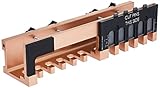
- ADJUSTABLE DOVETAIL JIG: The 1-piece aluminum layout ensures both ends of the dovetail joint match up evenly, and the integrated clamping design accommodates any board width. Our machine is ideal for indoor and outdoor projects and household repairs.
- JOINT BOX: Our set includes 1 dovetail joiner tool and a single 14-degree, 1/2" dovetail router bit for use with a hand table or table router. The user's manual gives beginners and professionals a guide for easy operation when using the parts.
- WOOD MARKER: Professionals and novices can make half-blind or through dovetail joints, including box joints. It has various applications like repairing, making it a handy and necessary tool to own among your other hand and power accessories.
- DOVETAIL JIGS FOR WOODWORKING: Complete a professional carpentry fixture with our professional-quality saw. You can easily adjust the micro jig interface to create loose or tight joints, and the control knobs promise comfortable and accurate use.
- GENERAL TOOLS: We're a recognized leader in developing specialized precision tools dedicated to delivering exceptional customer service. We encourage artisans and DIYers to use our machinery to work smarter, measure better, and repair productively.
Dado, groove, and rabbet joints
These joints use cut-away sections to receive or locate another board, but they are not interchangeable names for one cut:
- Dado: A channel across a board receives the mating piece, often a shelf or divider.
- Groove: A channel running along the grain receives a mating part, as in some panel or board assemblies.
- Rabbet: A step-shaped cut along an edge or end helps another part fit against or into it.
These cuts solve fitting and locating tasks that a plain butt joint does not. Their usefulness depends on the mating parts and the assembly plan.
Rank #4

- Adjustable Spline Jig for Table Saw and Router Table: This spline jig is designed for use with a table saw or router table to help cut spline slots on mitered corners. A practical tool for strengthening joints and adding decorative spline details to woodworking projects
- Right Angle Support for Stable Corner Work: Designed as right angle woodworking jigs, these clamps help hold frame corners securely from both sides for improved stability during cutting. The low-clearance design helps keep the workpiece close to the table for better control and accuracy
- Durable Aluminum Alloy Construction: Made from aluminum alloy with CNC machining and anodized finish, this table saw spline jig is built for durability, wear resistance, and long-term workshop use. The solid structure helps maintain reliable performance during repeated joinery tasks
- Adjustable Clamping Range for Various Projects: This box joint jig offers an adjustable clamping range for frame thickness from 5–42 mm / 0.2–1.65 in. Recommended frame depth is 15–500 mm / 0.59–19.7 in, making it suitable for picture frames, small boxes, and other corner joint projects
- Practical Set for Decorative and Reinforced Joinery: This dovetail jig-style corner fixture can help create spline grooves or decorative joinery accents when used with compatible tools. A useful choice for reinforcing miter joints and adding visual detail to frames, boxes, and other woodworking builds
Dowel and biscuit joints
Both use a separate insert to align and connect pieces. A dowel fits into corresponding holes; a biscuit fits into corresponding slots. The insert is part of the joint, unlike a screw driven through a pocket hole. Accurate matching holes or slots are central to these workflows.
Mortise-and-tenon and dovetail joints
These traditional joints use shaped mating parts rather than relying only on a fastener. A mortise receives a tenon; a dovetail uses complementary angled shapes. They can produce a visible, interlocking detail, but generally call for more technique and/or specialized tooling than the simplest fastening methods.
Best Value

- 【BOX JOINT JIG & FINGER JOINT JIG FOR ROUTER TABLES】Create interlocking finger joints for small to medium-sized boxes, drawers and cabinets. This woodworking jig guides repeated router cuts and helps position matching workpieces for clean, tight-fitting joints.
- 【THREE INTERCHANGEABLE BRASS INDEXING KEYS】This finger joint jig includes 1/4", 3/8" and 1/2" solid brass indexing keys for common finger widths. Insert the selected key into the carriage and index each cut for consistent spacing without remeasuring after setup.
- 【ALUMINUM-ALLOY SLIDE RAILS】 The front-and-rear slide rails are upgraded to aluminum alloy to support smooth, controlled sled movement and help reduce wobble during routing. The sled platform remains melamine-coated MDF, providing a low-friction surface, while the sacrificial fence face helps reduce tear-out. Fits a standard 3/4 inch miter slot on router tables and table saws.
- 【COMPLETE KIT, BEGINNER-FRIENDLY】 Includes 3 brass indexing keys(1/4", 3/8", 1/2"), 2 soft-grip locking knobs, 1 melamine MDF platform, 1 glass-filled nylon sled and 1 sacrificial fence face. Setup: place the jig in the 3/4" miter slot, position the carriage against a key, lock the knob and set bit height. Make a test cut before routing your project pieces.
- 【RELIABLE CUSTOMER SUPPORT】 Each jig is checked before shipment to help verify the listed components are included. If you encounter any usage issues or have questions, please go to your orders → locate the relevant order → click “Contact Seller” to send a message. We will respond within 24 hours
Bridle joint
A bridle is another shaped joint included in introductory joinery lists. As with other interlocking forms, its fit depends on accurately cutting the mating pieces; it is not simply a screw or nail fastening method.
Independent reader supportYour contribution helps us test, update, and keep practical guides available for everyone.How does timber joinery differ from furniture joinery?
Timber joinery works at a different scale and in a different context from many furniture joints. The Canadian Wood Council describes timber connections that use interlocking shaped members, with wooden pegs restraining the assembly. That example should not be generalized to every furniture joint: the member size, connection design, and structural demands are different.
Quick Recap
Product prices and availability are accurate as of the date/time indicated and are subject to change. Any price and availability information displayed on Amazon at the time of purchase will apply.
What’s actually slowing this PC down?
Pick the symptom - the matching free tool is one click away.

