The most important bamboo decision happens below ground. Before choosing a plant for privacy, screening, wind protection, or an ornamental feature, find out whether it is a running or clumping bamboo. Running bamboo spreads through long horizontal rhizomes and can cross property lines; clumping bamboo expands much more gradually and is usually the safer choice for an ordinary residential landscape.
If you do not want a permanent containment and inspection project, choose a correctly identified clumping variety suited to your climate—or choose a different screening plant. If you deliberately plant running bamboo, install containment before planting and plan to inspect it for the life of the planting.
As an Amazon Associate I earn from qualifying purchases.
What bamboo actually is
Bamboo is a perennial grass. The upright stems, called culms, are the visible part of the plant. Below ground, a network of stems called rhizomes produces new shoots, stores energy, and determines how the plant expands.
Crashes, No Sound, or Screen Glitches?
Random freezes, missing sound and display glitches usually trace back to one bad driver. Find and replace yours safely.Free scan · under a minutePC Slower Than It Used to Be?
A free scan shows the junk files, broken settings and background clutter dragging Windows down - then fixes them in one click.Free scan · Windows 10 & 11That underground growth habit matters more than a photograph, pot label, or promise of a “fast-growing privacy screen.” Two plants can look similarly attractive at the garden center but behave very differently after several years in the ground.
#1 Best Overall

- ⚠ Barrier that is under 60 mil thick has been shown to fail when containing bamboo.
- Made in the USA from Durable High Density Polyethylene (HDPE), available in 3 sizes:
- Cold climates use 24-inch depth by 60-mil thick.
- Warm climates use 30-inch depth by 80-mil thick.
- Tropical climates use 36-inch depth by 100-mil thick.
Running or clumping: the decision that determines everything
Running bamboo
Running bamboo, commonly associated with genera such as Phyllostachys, produces long horizontal rhizomes. Under favorable conditions, those rhizomes may travel more than 100 feet from the parent plant, according to the University of Connecticut’s bamboo guidance. Fairfax County describes potential spread of as much as 15 feet per year. Those figures vary with species, soil, water, climate, and maintenance; they are potential rates, not a guarantee of what every plant will do.
Running bamboo is not automatically impossible to grow, but it is a poor choice for an informal, maintenance-free hedge. An escaped rhizome can send up shoots in a lawn, flower bed, driveway edge, neighboring property, or natural area. Golden bamboo (Phyllostachys aurea), for example, has formed dense stands that displace native species after introduction in parts of the United States; the federal National Invasive Species Information Center documents that concern.
Clumping bamboo
Clumping bamboo produces short rhizomes that turn upward near the parent plant. It generally expands only a few inches per year, although the actual size and rate depend on the species and growing conditions, according to UF/IFAS.
Do these 3 things before closing this tab:
1Repair Windows errors before they cause bigger problems2Fix the driver behind crashes, sound loss and screen glitches3Clear out junk files and repair common Windows errors“Clumping” does not mean that the plant is completely maintenance-free or incapable of becoming large. A mature clump can still be substantial and difficult to remove. It does mean that the plant is normally more manageable for a residential planting than a running type.
| Characteristic | Running bamboo | Clumping bamboo |
|---|---|---|
| Underground growth | Long horizontal rhizomes | Short rhizomes that turn upward |
| Spread potential | Can travel far from the original planting | Usually expands gradually near the parent plant |
| Containment | Usually requires a deliberate barrier and regular inspection | Often manageable without a barrier, depending on size and site |
| Residential risk | High if placed near boundaries, pavement, utilities, or natural areas | Lower, but mature size and maintenance still matter |
| Removal | Can become labor-intensive once a rhizome network is established | Usually simpler, though large old clumps can still be difficult |
Check local rules before buying
Bamboo regulations are not uniform across the United States. Some jurisdictions restrict running bamboo, require containment or setbacks, or prohibit new plantings. Connecticut has specific requirements for certain running bamboo plantings, and Virginia law authorizes local governments to adopt ordinances addressing running bamboo. Municipal rules may be stricter than state rules.
Before purchasing, check your:
- city or town code;
- county ordinances;
- state agriculture or invasive-species agency;
- local cooperative extension office; and
- homeowners association rules, if applicable.
Do not assume that a rule applying in one state applies nationwide. The Virginia statute on local bamboo ordinances illustrates why location-specific research is necessary.
Choose a species by climate and mature size—not by its photo
Bamboo hardiness varies widely. UC IPM reports examples with approximate minimum-temperature tolerances ranging from about -20°F to 30°F, depending on species. Mature height can range from dwarf forms around 1 to 2 feet to timber types reaching approximately 55 feet. A plant that thrives in a warm, humid region may fail or suffer severe dieback in a colder climate.
Rank #2
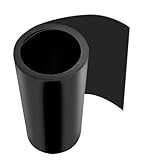
- High Quality: This root barrier is made of high-density polyethylene, which is durable and strong enough to resist root penetration.
- Control Root Growth: Our tree root barrier is 60 mils thick, which can effectively limit root expansion and protect driveways and sidewalks from being lifted off.
- Easy Installation: Bamboo barriers are easy to install, no need to worry about the complicated installation process.
- Customizable Plant Root Barrier: A variety of sizes are available, which can be cut into any length with a utility knife, and horizontal overlap can achieve extra length, flexible customization.
- Keep the Garden Beautiful: Prevent roots from growing unrestricted, protect sidewalks, roads, driveways, septic systems, etc. from tree root damage.
Ask the nursery for all of the following before you buy:
- the scientific name and cultivar;
- whether it is running or clumping;
- expected mature height and culm diameter;
- cold-hardiness or minimum-temperature tolerance;
- sun and water requirements; and
- the expected mature spread.
Labels such as “privacy bamboo,” “fast-growing bamboo,” or “cold-hardy bamboo” are not enough. Use the scientific name to verify the plant’s behavior and suitability with a reputable nursery or local extension service. For example, UF/IFAS identifies Bambusa textilis ‘Kanapaha’ as a large clumping bamboo suitable for parts of Florida. That example should not be generalized to colder regions.
Decide whether the site is suitable
Bamboo can serve as an evergreen screen, specimen, windbreak, or source of garden poles. It is not, however, a set-and-forget privacy hedge. Evaluate the site before digging.
Map the mature footprint
Mark the area the plant may occupy at maturity, not merely the size of the nursery container. Consider the direction in which a screen will grow and the space needed to access, thin, water, and eventually remove the planting.
The Tool Desk
Outbyte Driver Updater FREEScan for outdated or missing drivers - takes under a minuteDriver Scan →Outbyte PC Repair FREEClear out junk files and repair common Windows errorsFree Scan →Be especially cautious near:
- property lines and public rights-of-way;
- sidewalks, driveways, patios, and other hardscape;
- building foundations and retaining walls;
- drainage features, streams, and ponds;
- septic systems and other areas that must remain accessible;
- woodland edges, wetlands, and other natural areas; and
- fences or narrow strips where inspection will be difficult.
For a construction or landscape project, include bamboo’s mature footprint and containment detail on the site plan. A screen that looks appropriately placed in its first season can become a boundary, access, drainage, or maintenance problem later.
Assess light and soil
Bamboo generally performs best in full sun to part shade. It tolerates a range of soils, but establishment is easier where the soil holds moisture while draining excess water. Avoid chronically waterlogged locations. Regular irrigation and feeding can encourage stronger growth, while limiting water and fertilizer can restrain growth; that is useful context if the goal is a controlled ornamental planting rather than maximum biomass.
A soil test can identify major pH and nutrient issues before planting. UGA production guidance gives a pH of approximately 6.0 to 6.5 as a useful reference for grove production, not a universal requirement for every ornamental cultivar or soil. If you use a home soil test kit for garden preparation, treat its results as a screening tool and follow local extension recommendations for interpretation.
Contain running bamboo before planting
For running bamboo, containment is part of the planting—not an optional improvement to add later. The University of Maryland Extension recommends a vertical barrier approximately 30 to 36 inches wide, made from at least 60-mil polypropylene or HDPE, with roughly 6 to 8 inches left above grade so rhizomes can be seen and monitored. UGA also describes a trench approximately 36 inches deep and recommends leaving part of the barrier above the soil.
Recommended Free Tools
Rank #3

- ⚠ Barrier that is under 60 mil thick has been shown to fail when containing bamboo.
- Made in the USA from Durable High Density Polyethylene (HDPE), available in 3 sizes:
- Cold climates use 24-inch depth by 60-mil thick.
- Warm climates use 30-inch depth by 80-mil thick.
- Tropical climates use 36-inch depth by 100-mil thick.
These dimensions are practical guidance, not a guarantee. Species vigor, soil conditions, site risk, local requirements, and installation quality all matter. The barrier must be inspected throughout the plant’s life.
For a running planting, look for a 60-mil HDPE bamboo rhizome barrier or an equivalent durable product that meets the material and thickness requirements appropriate to the site. Do not treat any barrier as proof that a planting cannot escape.
Installation checklist
- Lay out the complete perimeter. The barrier must surround the entire planting area. A gap at one end defeats the system.
- Excavate a continuous trench. A depth of roughly 30 to 36 inches is commonly recommended, subject to site conditions and local requirements.
- Use durable barrier material. Minimum 60-mil polypropylene or HDPE is the range identified by Maryland Extension.
- Join the ends securely. A loose, cracked, or unsealed seam is a likely escape route.
- Leave the top visible. Keeping approximately 6 to 8 inches above grade makes approaching rhizomes easier to spot.
- Prevent soil and mulch from covering the edge. Accumulated soil can create a bridge over the barrier.
- Inspect repeatedly. Cut or remove rhizomes that approach or climb the barrier before they escape.
Maryland Extension cautions against relying on wood, ordinary thin plastic, concrete, or sheet metal because they are more prone to holes or failure over time. An ordinary container is not a dependable long-term solution either: rhizomes can escape through drainage holes and eventually damage the container.
Planting bamboo correctly
Planting time depends on climate. In Georgia and much of the Southeast, UGA identifies the period just before new shoots emerge as a preferred time. Other regions may require different timing, so follow local extension or nursery guidance. Spring is a generally useful recommendation in many areas.
Quick wins for a faster PC:
Clear out junk files and repair common Windows errorsFree Scan →Fix the driver behind crashes, sound loss and screen glitchesFind Drivers →- Water the nursery plant. If the root ball is dry, moisten it thoroughly before planting.
- Dig the hole. Make it approximately twice as wide as the root ball and no deeper than the root ball.
- Set the plant at the correct level. Keep the existing soil line level with, or slightly above, the surrounding ground. UGA advises covering the exposed yellow portion at the base without unnecessarily burying the green culm.
- Backfill carefully. Use excavated soil unless testing indicates a specific amendment is needed. Avoid creating an abrupt soil texture change around the root ball.
- Firm the soil. Press gently around the root ball to eliminate large air pockets, without compacting the soil excessively.
- Water deeply. Irrigate immediately after planting so the soil settles around the roots.
- Apply mulch. Spread approximately 2 to 3 inches of mulch, leaving space between the mulch and the culms.
Do not rush to fertilize a newly planted specimen. UGA advises withholding fertilizer on dug plants until they are established—often about a year—to reduce the risk of root burn. A soil test and local guidance are better bases for fertilization than a generic feeding schedule.
Watering during establishment
New bamboo needs consistent moisture while its roots and rhizomes establish. UGA gives watering once or twice weekly for the first three to six months as a general reference, depending on soil type, and approximately 1 to 1.5 inches of water per week on well-drained soils.
That is a starting point, not an automatic schedule. Adjust for rainfall, heat, wind, soil drainage, plant size, and symptoms of stress. Check the soil rather than watering by calendar alone. The goal is moist soil with adequate drainage—not a permanently saturated root zone.
For a larger installation, drip irrigation or a hose with a controlled flow can make deep, consistent watering easier. Avoid shallow daily sprinkling that wets only the surface. Once established, bamboo can tolerate periods of drought, but drought stress may reduce growth and appearance.
Free tools Windows power users keep installed
One-click scans. No signup required.
Maintenance is part of the ownership decision
Thin old or unwanted culms
Bamboo culms live for several years. Remove dead, damaged, weak, or unwanted culms at ground level to keep the stand orderly and improve access. Thinning also helps control density and lets you maintain a screen without allowing every new stem to remain.
Rank #4
- High Quality: This root barrier is made of high-density polyethylene, which is durable and strong enough to resist root penetration.
- Control Root Growth: Our tree root barrier is 60 mils thick, which can effectively limit root expansion and protect driveways and sidewalks from being lifted off.
- Easy Installation: Bamboo barriers are easy to install, no need to worry about the complicated installation process.
- Customizable Plant Root Barrier: A variety of sizes are available, which can be cut into any length with a utility knife, and horizontal overlap can achieve extra length, flexible customization.
- Keep the Garden Beautiful: Prevent roots from growing unrestricted, protect sidewalks, roads, driveways, septic systems, etc. from tree root damage.
A sharp bamboo pruning saw or suitable long-handled loppers can help with culm removal. Choose the tool according to culm diameter and your reach; do not make brand-specific assumptions about performance. Wear eye and hand protection, particularly when cutting dense stands.
Inspect a running bamboo barrier
Walk the entire perimeter during the growing season. Look for:
- rhizomes approaching the exposed barrier edge;
- rhizomes climbing over the barrier;
- soil, mulch, or roots bridging the top;
- cracks, holes, movement, or failed joints; and
- new shoots outside the intended planting area.
Cutting back visible canes does not replace this inspection. A barrier is an inspection aid, not a set-and-forget product.
What to do if bamboo has escaped
Act early. Once running bamboo has formed an established rhizome network, removal becomes substantially more difficult. Cutting the canes alone may not solve the problem because rhizomes store energy and contain buds capable of producing new shoots.
Removal may require repeated cutting, digging out rhizomes, monitoring for regrowth, or professional intervention. Large stands can involve substantial labor and soil disturbance. If the planting is near a property line, foundation, drainage feature, edible plants, or a waterway, get site-specific advice before choosing a control method.
Herbicide use must follow the product label and local extension guidance. Do not assume that a product is appropriate near edible plants or waterways, and do not apply it in a way that violates local restrictions. The Maryland Extension removal guidance and UC IPM bamboo information describe why established removal is difficult and why repeated follow-up is important.
A practical pre-planting checklist
- Have I identified the plant by scientific name?
- Is it running or clumping?
- What are its mature height, spread, and culm diameter?
- Will it survive the lowest temperatures at this site?
- Could it reach a neighbor, pavement, foundation, septic area, drain, stream, or natural area?
- Have I checked city, county, state, and homeowners association rules?
- Does the site have adequate sun and well-drained soil?
- If it is running bamboo, is the full containment perimeter designed and installed before planting?
- Who will inspect, thin, water, and maintain it over the long term?
- What is the removal plan if the planting outgrows the site?
Bottom line for most residential plantings
If you want a normal residential screen and do not want an ongoing containment project, choose a well-labeled clumping bamboo that matches your climate and the available space—or select a non-bamboo screen plant.
If you choose running bamboo, treat it as an engineered landscape installation: verify local rules, install a durable barrier before planting, keep its upper edge visible, inspect it throughout the growing season, and remove approaching rhizomes promptly. The attractive culms are the easy part; responsible management happens underground.
Best Value

- Prevents Unrestricted Root Growth: Our Tree Root Barrier, measuring 50 feet long x 24 inches deep x 60mil thick, effectively restricts root expansion, safeguarding driveways and walkways from lifting.
- Steady and Flexible: Made of high-density polyethylene, this root barrier is sturdy for long-term use, providing exceptional resistance to root pressure while remaining flexible for easy installation and customization.
- Versatile Garden Solution: Ideal for various applications such as edging tree rings, garden barriers, and landscape edging, our barrier offers a reliable solution to manage root growth and enhance the aesthetics of your outdoor space.
- Easy to Install: The Tree Root Barrier is designed for hassle-free installation, allowing you to create a secure boundary for roots with minimal effort, ensuring a lasting protection for your surfaces.
- Reliable After-Sales Support: We are committed to ensuring customer satisfaction. If you have any inquiries or issues regarding our product, feel free to reach out to our dedicated team for prompt assistance.
Frequently Asked Questions
Is clumping bamboo completely non-invasive?
No. Clumping bamboo generally expands much more slowly and remains near the parent plant, but a large clump can still become difficult to manage. Confirm the species, allow room for mature growth, and maintain it regularly.
Can I grow running bamboo in a large pot?
An ordinary container is not a reliable long-term solution. Rhizomes can escape through drainage holes and may eventually damage the container. In-ground running bamboo requires a properly installed, inspectable containment plan.
How deep should a bamboo barrier be?
Extension guidance commonly recommends a barrier about 30 to 36 inches wide or a trench around 36 inches deep, with approximately 6 to 8 inches above grade for inspection. These are practical guidelines, not a guarantee, and local rules or site conditions may require more.
What’s actually slowing this PC down?
Pick the symptom - the matching free tool is one click away.
Does cutting bamboo to the ground kill it?
Not necessarily. Rhizomes can store energy and produce new shoots after the visible culms are cut. Established stands usually require repeated cutting, digging, monitoring, or professional removal.
When should bamboo be planted?
Timing varies by climate. Spring is a useful general recommendation in many regions, while UGA identifies the period just before new shoots emerge as preferred in Georgia and much of the Southeast. Local extension or nursery advice should control the timing for your area.
The Bottom Line
Rule of thumb: choose clumping bamboo for a manageable residential planting, and choose running bamboo only when you are prepared to install and maintain containment for the plant’s entire life.
Quick Recap
Product prices and availability are accurate as of the date/time indicated and are subject to change. Any price and availability information displayed on Amazon at the time of purchase will apply.




