Some links on this page are affiliate links: if you buy through them we may earn a commission, at no extra cost to you.
For an emergency operations center (EOC), a generator and battery storage solve different parts of the outage problem. A practical design normally layers an uninterruptible power supply (UPS) or battery inverter over a standby generator or microgrid: the battery carries sensitive electronics through the transfer, while the generator or larger energy system sustains operations for the required outage duration. Battery-only power can work when loads are tightly limited and autonomy is short; a fuel-based generator is generally more practical for multi-day operation when fuel deliveries remain possible.
FEMA says an EOC should have emergency auxiliary power sufficient to support operations 24 hours a day for an extended period, with maintenance, testing and trained operators. That mission objective is very different from a building life-safety requirement of about 90 minutes or a small UPS runtime of 10–20 minutes. The right choice depends on mission loads, acceptable interruption, outage duration, fuel or recharge logistics, site hazards and the codes adopted at your facility.
As an Amazon Associate I earn from qualifying purchases.
The Tool Desk
Outbyte Driver Updater FREEScan for outdated or missing drivers - takes under a minuteDriver Scan →Outbyte PC Repair FREEClear out junk files and repair common Windows errorsFree Scan →At a glance
These options are listed alphabetically by option name, not ranked. The figures below are design characteristics from the cited federal and engineering guidance, not equipment quotations; project pricing must come from a licensed designer and vendors.
| Name | Suited to | Key characteristic | Checked |
|---|---|---|---|
| Battery energy storage system (BESS) | Quiet, instantaneous power for defined loads and short-to-medium outages | Inverter-regulated power with no engine start delay; duration depends on usable kWh and recharge access | November 2026 |
| Diesel generator | Large, motor-heavy loads and extended outages with fuel access | Continuous AC output for hours or days; requires fuel, exhaust, cooling, testing and spill controls | November 2026 |
| Generator-plus-storage microgrid | Facilities needing layered sources, demand management and renewable integration | Controls coordinate generators, batteries, transfers and optional solar; system reliability depends on every subsystem | November 2026 |
| Natural-gas generator | Sites with a dependable gas supply and restrictions on stored liquid fuel | Combustion generation without on-site diesel tanks, but utility-gas disruption can remove the fuel source | November 2026 |
| Solar-plus-battery system | Hybrid or distributed EOCs seeking recharge capability and reduced fuel use | Can recharge from solar when conditions permit; weather, storage capacity and controls limit autonomy | November 2026 |
| UPS bridge | Servers, network switches, radio consoles and dispatch workstations | Nearly instantaneous ride-through; small units commonly provide about 10–20 minutes, load dependent | November 2026 |
What backup power does an EOC actually need?
Start with the mission, not a generator or battery nameplate. FEMA’s NIMS EOC quick-reference guide says operators should know which outlets, doors, elevators, HVAC systems and communications loads are backed up. Documenting what will and will not operate prevents an apparently large system from leaving a critical radio console, network switch or ventilation fan unpowered.
Popular on Amazon

- 1500VA/900W UPS: Eight NEMA 5-15R outlets provide reliable UPS battery backup & surge protection for servers, computers, and peripherals. The six-foot NEMA 5-15P input power cord ensures easy connection to compatible AC outlets
- 2U RACK MOUNT UPS: Versatile mounting options in 2U rackmount space or vertical tower with included adapter. Ideal for small servers, network devices, desktop PCs, monitors, workstations, entertainment systems, wireless routers, and more
- AUTOMATIC VOLTAGE REGULATION: AVR corrects brownouts and overvoltages from 75V to 147V back to safe 120V without using battery power. Features Modified Sine Wave (PWM) output in battery mode and Sine Wave in AC mode for low total harmonic distortion
- ADVANCED POWER FEATURES: Extend the UPS service life with user-replaceable batteries. RJ45 Ethernet surge protection supports speeds up to 100 Mbps. Rotatable LCD monitors voltage, runtime, load, and battery. Note: Fans operate continuously at approximately 50 dBA.
- FULLY SUPPORTED: Protected by a 3-Year Limited Manufacturer's Warranty and a $250,000 Ultimate Connected Equipment insurance. To best support your purchase, Eaton's expert technical team is available via phone, web, or email to address any concerns
Divide the load list into five groups:
- Life safety: fire protection, emergency lighting, alarms, egress and other legally required systems.
- Communications: radio consoles, antenna and repeater equipment, telephones, dispatch positions and network connectivity.
- Information technology: servers, storage, switches, security systems and workstations.
- Building systems: HVAC controls, selected air-handling equipment, pumps, elevators and access control.
- Comfort and noncritical loads: general office receptacles, kitchen equipment and other loads that can be shed during scarcity.
For each circuit, record running kilowatts, voltage, phase, power factor, starting or inrush current and the maximum interruption it can tolerate. Motors, pumps, elevators and compressors can demand substantially more current at start than while running. Electronics may reset or corrupt data after a short voltage disturbance even when a generator starts quickly.
How long must an EOC run without utility power?
There is no single duration that applies to every EOC. FEMA’s operating objective is support for 24 hours a day over an extended period. CISA advises evaluating both short- and long-term sources and whether fuel can reach the site. The EPA’s Level 1 facility guidance uses at least 72 hours at rated load without refueling as a stringent design example, not a universal EOC rule.
Model at least three conditions:
- Ride-through: the seconds needed for transfer equipment and generator start, or the time required for an orderly shutdown.
- One operational period: a fully staffed shift with communications, IT and selected HVAC running.
- Longest credible outage: a flood, ice storm, earthquake, wildfire or regional fuel shortage that may prevent replenishment.
For generators, convert the load curve into fuel consumption at realistic loading, include reserve, and verify that tankers can access the site. For batteries, calculate usable—not nameplate—kilowatt-hours after reserve, temperature effects, power limits and end-of-life capacity. Include recharge time and whether the grid or solar array will be available during the outage.
How do generators and batteries compare?
| Decision factor | Generator | Battery or BESS |
|---|---|---|
| Transfer and power quality | Needs start and transfer time; an automatic transfer switch and ride-through device protect sensitive loads. | Inverter can transfer nearly instantaneously and regulate voltage and frequency. |
| Sustainable runtime | Hours or days with adequate fuel, cooling, ventilation and maintenance. | Limited by usable stored energy unless recharged by the grid, solar or another source. |
| Starting-current capability | Well suited to large motors, pumps, fire pumps and elevators when correctly sized. | Inverter and battery must be sized for inrush; high motor starts can sharply increase system size. |
| Local emissions and noise | Combustion exhaust, noise, vibration, fuel spill risk and indoor-air hazards require engineered controls. | No local combustion emissions during discharge and generally quieter, but thermal management and fire protection are essential. |
| Fuel or recharge logistics | Requires stored fuel, testing, polishing where applicable and delivery access. | Requires adequate state of charge, temperature control and a reliable recharge path. |
| Fire and responder hazards | Fuel, hot exhaust and spill hazards; responders need access and isolation controls. | Lithium thermal runaway can produce harmful gases, be extremely difficult to extinguish and reignite hours or days later, according to EPA guidance. |
| Integration | Can coordinate with transfer gear, load shedding and microgrids. | Supports UPS service, peak shaving, solar integration and coordinated microgrid controls. |
1. Battery energy storage system: who it is for
A facility-scale BESS uses battery racks, an inverter, controls, thermal management, detection and fire-safety systems to deliver conditioned AC power. It suits an EOC that can define a limited critical load, needs quiet operation, or wants immediate power for short outages and renewable integration.
A BESS does not provide an unlimited replacement for a generator. Its autonomy is the usable energy divided by the actual load, after reserve, temperature derating and aging. A system sized for radios, servers and network equipment may not also support elevators, large air handlers or fire pumps. Inverter surge ratings and motor-start requirements must be checked circuit by circuit.
Safety engineering is substantial. EPA’s BESS installation and incident-response guidance notes that lithium battery fires can release harmful gases, resist extinguishment and reignite hours or days later. Design teams should address thermal-runaway detection, spacing, ventilation, suppression strategy, responder access, damaged-battery handling and disposal, together with the locally adopted fire code and the authority having jurisdiction.
Recommended Free Tools
Also popular on Amazon

- 1500VA/1000WPFC Sinewave Uninterruptible Power Supply (UPS): Uses sine wave output to provide battery backup power for Active PFC & conventional power supplies; Safeguards security systems, audio/visual equipment, and networking devices
- EIGHT NEMA 5-15R OUTLETS: Provide battery backup & surge protection for connected devices; INPUT: NEMA 5-15P right angle, 45 degree offset plug with six foot power cord
- MULTIFUNCTION, COLOR LCD PANEL: Displays immediate, detailed information on battery and power conditions; Color display alerts users to potential issues before they can affect critical equipment and cause downtime
- SHORT-DEPTH RACKMOUNT: 10.5 inches in depth, the UPS fits comfortably in short-depth rack installations where space is at a premium; AUTOMATIC VOLTAGE REGULATION: Corrects minor power fluctuations without switching to battery power, extending battery life
- 3-YEAR WARRANTY – INCLUDING THE BATTERY; $500,000 Connected Equipment Guarantee; FREE PowerPanel Management Software (Download); UL SAFETY CERTIFIED: Product has been tested in a UL certified lab and listed with UL as meeting or exceeding safety standards
There is no free plan or consumer price for an engineered BESS. The capital cost is project-specific and includes racks, inverters, enclosures, controls, HVAC, fire protection, interconnection and commissioning. Upgrade from a smaller system when the critical-load list, autonomy target or recharge requirement cannot be met after end-of-life capacity and reserve are included.
2. Diesel generator: who it is for
Diesel generators remain familiar to public-safety operators and are suited to high starting currents and extended operation. ASHRAE states that diesel generators are still the dominant source of emergency power. With sufficient fuel, cooling, ventilation and maintenance, a correctly sized set can run for many hours or days.
Diesel is usually the practical sustained source when an EOC must continue through a multi-day outage and fuel deliveries are feasible. It can support large steady loads and motors that would require an oversized battery inverter. The system still needs an automatic transfer switch, selective coordination, bypass capability, load-shedding logic and a UPS for electronics that cannot tolerate generator start or transfer.
Trade-offs include exhaust emissions, noise, vibration, hot surfaces, fuel spills, tank space, permitting and degradation from infrequent exercise. CISA’s value-analysis guidance identifies generator testing and fuel resupply as continuing requirements and states that generators may be more appropriate for long-term backup. Its guide gives a stated lifespan of 25 years or more for generators and associated fuel-storage containers when maintained, but actual service life depends on duty, environment and maintenance.
What’s actually slowing this PC down?
Pick the symptom - the matching free tool is one click away.
There is no free plan or published universal purchase price. Obtain fuel consumption at the EOC’s actual load curve rather than at a generic full-load rating, and include tank inspection, fuel quality management, batteries, filters, coolant, exhaust treatment, spare parts and delivery contracts. Upgrade capacity when motor starting, future loads or a 72-hour-or-longer logistics scenario exceeds the initial design.
3. Generator-plus-storage microgrid: who it is for
A generator-plus-storage microgrid coordinates one or more generators, batteries, transfer equipment, controls and loads, with optional solar. It suits an EOC that needs generator endurance but wants batteries to eliminate start delays, reduce generator idling, support peak loads or keep selected electronics online while larger loads are sequenced.
Also popular on Amazon

- 500VA/300W Smart App LCD Uninterruptible Power Supply (UPS): Uses simulated sine wave output to provide battery backup power to protect department and workgroup servers, network devices, and telecom installations without Active PFC power supplies
- SIX NEMA 5-15R OUTLETS: Four battery backup and surge protected outlets; Two Surge protected outlets; INPUT: 15A, NEMA 5-15P straight plug with 10 foot power cord
- MULTIFUNCTION LCD PANEL: Provides runtime in minutes, battery status, power conditions, alerting users to potential problems before they can affect critical equipment and cause downtime; REMOTE MANAGEMENT: Requires optional RMCARD205 management card
- AUTOMATIC VOLTAGE REGULATION (AVR): Corrects minor power fluctuations without switching to battery power; UL SAFETY CERTIFIED: Product has been tested in a UL certified lab and listed with UL as meeting or exceeding safety standards
- 3 YEAR WARRANTY – INCLUDING BATTERIES; $300,000 Connected Equipment Guarantee
The controller must define black-start behavior, islanding, synchronization, load priority, state-of-charge limits and recovery when utility power returns. CISA identifies transfer systems and microgrids as ways to optimize multiple sources. A microgrid is not automatically more reliable: NREL warns that distributed energy resources are often assumed to be 100% reliable, which can produce gross errors in long-outage estimates. Reliability analysis must include switchgear, controls, fuel or recharge paths, communications and maintenance—not only the generator and battery ratings.
Microgrids also add cybersecurity and commissioning obligations. Networked controllers need access control, monitored alarms, documented fallback modes and an exercise plan that includes loss of communications. There is no free plan or standard published price; engineering, controls integration, protection studies and commissioning can be as important as the generation hardware. Upgrade when the facility needs source diversity, renewable integration or staged load management that a single generator cannot provide.
4. Natural-gas generator: who it is for
A natural-gas generator can reduce reliance on on-site liquid-fuel tanks and may fit an urban site where diesel storage, truck access or noise constraints are difficult. It still uses an engine, transfer equipment, exhaust and maintenance program, so it does not remove combustion, noise or permitting issues.
The key resilience question is whether the gas utility will operate during the same disaster that interrupts electricity. Earthquakes, floods, excavation damage or regional supply constraints can interrupt gas service. Treat the pipeline as a fuel-delivery dependency and document isolation, pressure, monitoring and alternate-source procedures with the utility and authority having jurisdiction.
Natural-gas units must be evaluated for motor starting, actual fuel consumption, ventilation, emissions and black-start behavior. No free plan or universal price applies; the system is project-priced. Upgrade only after confirming gas availability for the required autonomy and verifying that the emissions, seismic, flood, noise and fire requirements at the site can be met.
5. Solar-plus-battery system: who it is for
Solar paired with batteries can extend autonomy when sunlight is available and can reduce generator fuel use. It is useful for hybrid or distributed EOC sites, especially where a renewable source supports daytime recharge or a smaller generator carries the residual load.
Do these 3 things before closing this tab:
1Clear out junk files and repair common Windows errors2Scan for outdated or missing drivers - takes under a minute3Repair Windows errors before they cause bigger problemsAlso popular on Amazon

- 2000VA/1200W PFC Sine Wave Battery Backup Uninterruptible Power Supply (UPS) System designed to support active PFC and conventional power supplies; Safeguards security systems, audio/visual equipment, and networking devices
- EIGHT NEMA 5-20R OUTLETS: Provides battery backup & surge protection for connected devices; INPUT: NEMA 5-20P with six foot power cord
- MULTIFUNCTION, COLOR LCD PANEL: Displays immediate, detailed information on battery and power conditions; Color display alerts users to potential issues before they can affect critical equipment and cause downtime
- SHORT-DEPTH RACKMOUNT: 10.8 inches in depth, the UPS fits comfortably in short-depth rack installations where space is at a premium; AUTOMATIC VOLTAGE REGULATION: Corrects minor power fluctuations without switching to battery power, extending battery life
- 3-YEAR WARRANTY – INCLUDING THE BATTERY; $500,000 Connected Equipment Guarantee; FREE PowerPanel Management Software (Download); UL SAFETY CERTIFIED: Product has been tested in a UL certified lab and listed with UL as meeting or exceeding safety standards
Solar does not guarantee power during a prolonged storm. Cloud cover, smoke, snow, shading, inverter limits and nighttime operation reduce recharge, while the battery still needs enough usable capacity for the critical load. The system must island safely, maintain frequency and voltage, and coordinate with generators and utility interconnection equipment.
Model seasonal solar production, several consecutive low-sun days, battery reserve, end-of-life capacity and black-start sequencing. There is no free plan or standard published price; arrays, inverters, batteries, structural work, protection and controls are engineered together. Upgrade when the required autonomy cannot be met under the site’s worst credible solar conditions without generator support.
6. UPS bridge: who it is for
A UPS is the bridge for equipment that cannot wait for an engine to start. FEMA describes it as a device that powers equipment nearly instantaneously when utility power fails and provides power-quality protection. Small UPS units commonly support two to four devices for about 10–20 minutes, depending on load.
That duration is enough to ride through generator start and transfer or shut down a server safely; it is not a facility-scale energy source. ASHRAE notes that even when an engine starts within 10 seconds, electronic loads may need a ride-through device. Place servers, network switches, radio consoles, dispatch workstations and other sensitive electronics on UPS circuits, then verify runtime at the measured load rather than the front-panel VA rating.
UPS batteries also age and need inspection, replacement and alarm monitoring. There is no free plan or universal price for a system; rack units, larger modular UPS equipment and replacement batteries are specified per load. Upgrade when measured runtime no longer covers transfer and shutdown requirements, or when the load has outgrown the UPS’s power, bypass or fault-current capability.
Independent reader supportYour contribution helps us test, update, and keep practical guides available for everyone.How should an EOC size and sequence its backup system?
- Inventory every mission load. Record running kW, inrush, phase, power factor, allowable interruption and priority. Mark circuits that must remain on continuously and those that can be shed.
- Set the autonomy target. Define ride-through, one full operational period and the longest credible outage. Use 72 hours as a deliberately stringent reference only when the facility’s mission and risk assessment justify it.
- Build the layers. Put sensitive electronics on UPS or BESS. Transfer larger steady and motor loads to a generator or microgrid. Include automatic transfer, bypass, selective coordination, load shedding and black-start logic.
- Validate fuel and recharge logistics. Calculate generator consumption at realistic loading and confirm tank, polishing, inspection and delivery access. For batteries, calculate usable kWh after reserve, temperature effects and end-of-life degradation; document recharge time and source availability.
- Engineer the site. Provide generator combustion air, exhaust, cooling, fire separation, spill control and noise treatment. For BESS, provide thermal detection, spacing, ventilation, responder access and a locally approved suppression and incident plan. Check flood elevation, seismic restraint, structural loading and zoning.
- Commission and exercise under load. FEMA calls testing and training essential. CISA asks whether start and load testing are scheduled, systems monitored and alarms verified. Exercise transfer, UPS ride-through, staged loading, communications, manual bypass and restoration with representative loads.
What should procurement documents require?
Require vendors and the engineer of record to provide:
Also popular on Amazon
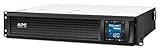
- Power Capacity: 1500VA / 900W Pure Sine Wave UPS battery backup
- Connection Options: Input: NEMA 5-15P. Output: (6) NEMA 5-15R
- Automatic Voltage Regulation (AVR): Adjusts high and low voltages to a safe level, helping preserve the life of the battery
- APC SmartConnect Remote Monitoring: Easy to use remote monitoring feature via a secure portal that provides automatic notifications, firmware updates, and advanced support services. For all units purchased and/or registered after August 1, 2023, SmartConnect will be offered as a 6-month free trial
- Rack Mount Design: 2U Rackmount UPS includes rack mount support rails for easy installation
- Usable battery capacity—not only nameplate energy—at the specified temperature, reserve and end-of-life condition.
- Generator fuel consumption across the actual expected load curve, starting-current capability and emissions data.
- Transfer time, UPS ride-through time, bypass operation, selective-coordination studies and black-start behavior.
- Maintenance intervals, exercise procedures, fuel-quality requirements, spare parts and expected component life.
- Remote alarms, local controls, cybersecurity protections for networked systems and documented loss-of-communications behavior.
- Fire, exhaust, ventilation, spill, seismic and flood provisions, plus responder access and isolation points.
- A commissioning plan and outage exercise using representative radios, servers, HVAC controls, pumps and other priority loads.
Federal guidance does not replace the electrical, fire, mechanical, environmental, zoning or utility-interconnection codes adopted at the EOC site. Confirm requirements with the authority having jurisdiction before selecting equipment or reserving space.
What is the practical answer: generator, battery or both?
Use both when the mission combines sensitive electronics with long endurance. A UPS or BESS handles the instant of failure and conditions power; a generator or coordinated microgrid supplies sustained energy. Choose battery-only power when the critical load is deliberately limited, the autonomy requirement is short and recharge is dependable. Choose a generator-centered design when the EOC must carry large motors, HVAC or other substantial loads through a multi-day outage and fuel logistics are credible.
Free tools Windows power users keep installed
One-click scans. No signup required.
The decision should be documented as a load-and-hazard model rather than a technology preference. NREL’s reliability work shows why source hardware alone is not enough: fuel availability, recharge, switchgear, controls and maintenance determine whether the complete system will operate when the grid is down.
Frequently Asked Questions
Can an EOC run entirely on batteries during a long outage?
It can when the protected load is intentionally small, the battery has sufficient usable energy after reserve and aging, and a dependable recharge source is available. For multi-day operation with substantial HVAC, pumps or motor loads, the required battery and inverter capacity can become impractical without a generator or other source.
Is a 90-minute battery requirement enough for an emergency operations center?
Usually not. About 90 minutes is commonly discussed for building life-safety or evacuation functions, while FEMA’s EOC objective is continuous operation 24 hours a day for an extended period. Treat the code duration and the EOC mission duration as separate design questions.
How can servers stay online while a generator starts?
Place servers, switches, radio consoles and dispatch workstations on a UPS or suitably engineered battery inverter. Verify the UPS runtime at the real load and coordinate its bypass, transfer and shutdown settings with the generator’s automatic transfer equipment.
PC Slower Than It Used to Be?
A free scan shows the junk files, broken settings and background clutter dragging Windows down - then fixes them in one click.Free scan · Windows 10 & 11Crashes, No Sound, or Screen Glitches?
Random freezes, missing sound and display glitches usually trace back to one bad driver. Find and replace yours safely.Free scan · under a minuteWhat happens if a lithium battery catches fire at an EOC?
Thermal runaway can release harmful gases, resist extinguishment and reignite hours or days later. The EOC’s design and emergency plan should provide detection, ventilation, responder access, isolation, locally approved suppression procedures and safe handling of damaged modules.
How often should an EOC exercise its backup power?
The cited federal guidance requires scheduled maintenance, testing and staff training but does not establish one universal interval for every facility. Set an interval in the maintenance and emergency-management program, then verify start, transfer, representative loading, alarms, communications and restoration under realistic conditions.

