The best autonomous mower is the one whose tested daily capacity, traction and installation method match your lawn—not the one with the largest battery. Runtime is measured under specific conditions, cutting width determines how many passes the mower needs, and slope ratings apply only to particular models and surfaces. Before comparing brands, measure your lawn, steepest continuous incline, boundary drops, narrow passages and separate zones.
This guide explains how to compare those specifications, what the published figures actually mean, and how to evaluate installation, warranty and ongoing support.
As an Amazon Associate I earn from qualifying purchases.
What “battery life” means on a robot mower
Robot-mower runtime is not a single universal number. Segway defines continuous mowing time as operation from a full charge until the mower returns to its dock because the battery is low. Its stated test uses a flat, rectangular lawn and specified grass conditions. A real property can produce a shorter working cycle because slopes, thick or wet grass, obstacles, narrow passages, frequent boundary corrections and weather all increase energy use.
Manufacturers also describe capacity in different ways. One figure may be continuous mowing time; another may be the lawn area the mower can maintain over a day while it repeatedly charges. Daily area is normally the more useful buying metric. A mower that works for a shorter continuous period but recharges quickly can maintain more lawn than a model with a longer single session and a slow charger.
#1 Best Overall

- Wire-Free Robotic Lawn Mower with Dual-LiDAR Navigation - GOAT A3000 LiDAR PRO is a wire-free robotic lawn mower that requires no perimeter wire or RTK antenna. The HoloScope 360° Dual-LiDAR system automatically maps your yard and maintains precise 2 cm positioning accuracy — even under trees, along fences, or in shaded areas where GPS-based mowers lose signal.
- Edge-to-Edge Cutting with Built-In TruEdge Trimmer - This robotic lawn mower features an integrated edge trimmer for clean borders along sidewalks, driveways, fences, and flower beds. Designed to reduce manual string trimming after mowing and deliver a consistent, finished lawn appearance.
- 32V High-Power System for Thick American Grass - Built to handle Bermuda, Zoysia, Fescue, and St. Augustine grass. The 32V high-performance platform and dual-blade disc system provide strong cutting torque and fast blade rotation, helping the mower cut through dense, fast-growing grass and uneven terrain.
- 7500 mAh Large-Capacity Battery with 189W Fast Charging - Engineered for medium to large yards, GOAT A3000 is equipped with a 7500 mAh high-capacity battery and 189W fast charging system. It fully recharges in approximately 70 minutes, allowing extended runtime and reduced downtime for efficient, scheduled lawn maintenance.
- Smart App-Controlled Lawn Care with Custom Zones - Manage your robotic lawn mower through the ECOVACS app. Edit maps, create multiple mowing zones, set no-go areas, adjust cutting height and speed, and define travel paths between zones. Ideal for complex yard layouts and personalized lawn care schedules.
Why amp-hours do not answer the question
Battery amp-hours describe electrical storage at a stated voltage, not the area cut on your property. Motor efficiency, blade load, wheel traction, software, charging time and the number of times the mower must navigate back to its station all affect usable output. Compare the maker’s expected daily area and test method rather than converting amp-hours into an assumed mowing time.
Published runtime ranges
Husqvarna’s range brochure lists typical mowing times from 50 to 270 minutes across its listed models. The range is broad because it covers different mower sizes, batteries and intended lawn areas; it is not a promise that every model will run for the upper figure. Treat it as a family-level comparison, then check the exact model’s manual and regional product page.
Model comparison: capacity, width, slope and practical fit
The following figures come from the cited manufacturer pages, the Husqvarna range brochure and, for the Worx row, a TechRadar table dated October 11, 2026. The Worx data is secondary reporting; confirm the current manufacturer manual before purchase.
The Tool Desk
Outbyte PC Repair FREERepair Windows errors before they cause bigger problemsFix Now →Outbyte Driver Updater FREEScan for outdated or missing drivers - takes under a minuteDriver Scan →| Model | Published lawn capacity | Continuous/runtime information | Cutting width | Cutting-height range | Maximum slope | Other published detail |
|---|---|---|---|---|---|---|
| Husqvarna Automower 410 iQ | Not stated in the supplied product information; confirm the current US specification for your region. | Exact figure not stated on the referenced product summary. | Exact figure not stated on the referenced product summary. | Not stated. | Confirm the current regional product page. | US page positions it for North American lawns and lists a kit with mower, charging station, welcome guide, operator manual, standard-installation materials and one year of replacement blades. |
| Segway Navimow H220 | 0.5 acre (manufacturer claim) | Exact continuous runtime not stated on the referenced page. | Exact figure not stated on the referenced page. | Not stated. | Up to 45% (24°), according to the official product page. | Official page advertises up to a three-year warranty; verify the terms in your country. |
| Worx Landroid Vision Cloud WR306E | 600 m² maximum lawn size | 80-minute charge time | 18 cm | 30–60 mm | 30% (16.7°) | 58 dB noise level; figures reported by TechRadar on October 11, 2026. |
| Husqvarna listed models (range brochure) | Varies by model; use the individual model specification. | Typical mow times of 50–270 minutes | 22–24 cm | Varies by model. | 40–70% | Brochure-wide range, not a specification for every mower. |
How to choose enough battery capacity
Start with area and schedule
- Measure the actual grass area, excluding patios, beds and permanent structures.
- Mark sections that are connected by narrow corridors, because a mower may spend significant time travelling rather than cutting.
- Record whether you expect the mower to maintain the entire area every day or only operate on selected days.
- Compare your measured area with the manufacturer’s recommended daily capacity, leaving margin for growth, wet conditions and seasonal density.
Do not select a mower solely because its nominal area rating barely exceeds your measurement. A property with several zones, slopes or frequent obstacles needs more operating margin than a simple rectangle. If the manufacturer gives both a maximum area and a recommended area, use the recommended figure for planning.
Account for charging and weather
A mower that returns to its station often may still maintain the lawn if its schedule allows enough charge-and-mow cycles. Wet grass can add resistance and may trigger a rain delay, reducing the hours available in a day. Cold temperatures can reduce battery performance, while heat may shorten charging or operating windows. Ask the installer how the app handles rain delays, low-temperature charging and restricted mowing hours.
Rank #2

- No Wires, No Hassle, Just a Perfectly Mapped Lawn - The GOAT O1000 RTK robotic lawn mower leverages cutting-edge AI technology to recognize and memorize your lawn’s boundaries, eliminating the need for physical wires or manual setup. Its advanced automated mapping system quickly generates a precise layout of your yard, making lawn maintenance effortless and efficient.
- Avoids Obstacles, Protects Pets & Property - Equipped with AIVI 3D obstacle avoidance, the GOAT O1000 intelligently detects and navigates around objects, pets, and even small wildlife like hedgehogs. GOAT lawn mower ensures your garden stays safe and unharmed, delivering peace of mind with every cut.
- Flawless Lawn Coverage, No Missed Spots or Manual Trimming - The TruEdge Consistent Edge Mowing feature guarantees precise, edge-to-edge cuts, eliminating the need for manual trimming. With zero-edge cutting and LELS navigation, the GOAT O1000 follows boundaries seamlessly and mows in efficient U-shaped patterns, ensuring complete coverage and a professionally manicured lawn every time.
- Conquers Tight Spaces & Steep Slopes - Thanks to its ultra-slim 1.31ft design and smart edge recognition, the GOAT O1000 effortlessly maneuvers through narrow paths as tight as 2.3ft. Its robust 45% (24°) climbing ability ensures it reaches every corner of your yard, while the IPX6 waterproof rating keeps it running reliably in any weather condition.
- Smart App Control for Customized Lawn Care - The editable map allows you to easily add, merge, split, or delete areas, giving you full control over your lawn layout. You can set multiple paths for the robot to travel between zones and define no-go areas. Customize settings for different zones, including cutting speed, cutting height, obstacle avoidance height, and mowing direction, to match your personal preferences and schedule.
What to verify before ordering
- The test conditions behind the continuous-runtime figure.
- Expected daily mowing area, not just battery capacity.
- Charge time and whether the mower can resume automatically after charging.
- Battery replacement procedure, part number and expected availability.
- Whether a connectivity subscription is required for remote control or advanced navigation.
Cutting width: fewer passes versus easier access
Cutting width determines the strip covered by each pass. A wider deck can reduce the number of parallel passes on an open lawn, potentially shortening the schedule. A narrower deck can turn more easily and fit through gates, side paths and passages between planting beds.
The published examples span 18 cm for the Worx WR306E and 22–24 cm across the Husqvarna models in its range brochure. That difference matters most on broad, unobstructed turf. On a complicated property, time spent turning, finding a route or entering a narrow zone can outweigh the theoretical advantage of a wider blade.
Recommended Free Tools
Measure access, not only turf
- Measure the narrowest gate and passage at their actual usable width, including edging and overhanging plants.
- Check turning space at the end of each corridor.
- Identify areas where the mower must cross a driveway or other hard surface.
- Ask whether the model can be assigned separate zones and how it travels between them.
Cutting-height range is equally important. A model may physically reach a zone but leave grass too short or too tall for your preferred finish. Set the height within the manufacturer’s allowed range and change it gradually; a sudden reduction can overload the blade motor in long grass.
Can an autonomous mower handle your hill?
Slope performance is model-specific and installation-sensitive. A percentage slope expresses vertical rise relative to horizontal distance; the degree figure is the angle. Traction depends on surface moisture, grass length, soil firmness, tyre condition, speed and whether the mower is travelling straight uphill or across the slope.
Inside the work area versus at the boundary
A published maximum normally describes a continuous incline inside the permitted mowing area. It does not automatically mean the mower can stop safely at a drop, cross a sharp transition or climb a ramp immediately next to the boundary wire. Boundary placement, turning space and the approach angle can make a route unusable even when the headline slope is within the rating.
Rank #3

- Dual AI Vision System with NRTK Technology:The M5 robotic lawn mower, featuring Adaptive Cruise Control (ACC) and RTK positioning system, delivers centimeter‑level precision through its integrated dual‑camera vision system. M5 easily adapts to diverse lawn layouts and maintains reliable performance even in challenging environments
- Package Contents: This set includes 1 ANTHBOT M5 robotic lawn mower, 1 charging base station, 1 blade set (5 blades in total), and 1 RTK reference station.Your items will be shipped in multiple separate packages
- Efficient Mowing Performance: Handles slopes up to 45% gradient, M5 is suitable for over 99% of residential yards. Features adjustable cutting height (1.2-2.7in) and 5 Free-Rotating Blades design to create a carpet-like lawn. Intelligent path planning allows selection of multiple mowing paths via the app
- Multi-Zone Management & App Control: Easily manage up to 20 work zones via the app. Create seamless paths between different areas and set customizable no-go zones for a tailored lawn care experience. Its self-charging feature ensures it returns to recharge and resumes work automatically, while the ANTHBOT app allows you to monitor your yard anytime, anywhere.
- Beginner-Friendly Design: The ANTHBOT M5 robot lawn mowers is ideal for small to medium-sized yards, max mowing size 0.15 Acre. Powered by advanced AI vision technology, M5 creates a virtual map all by itself in the ANTHBOT app in only 10 minutes-no need to manually drive it around the property anymore, making setup a breeze
Husqvarna all-wheel-drive guidance
Husqvarna’s support guidance says AWD models such as the 435X AWD and 435X AWD NERA can handle up to 70% (35°), described as similar to a black ski slope. The same guidance recommends keeping the boundary wire 1.5 m (5 ft) from the bottom of a slope. That clearance reduces the risk of a mower approaching a transition with insufficient traction or braking room. Follow the model’s installation manual if it requires a greater distance.
What’s actually slowing this PC down?
Pick the symptom - the matching free tool is one click away.
Comparing a less steeply rated model
The Segway Navimow H220 page states a maximum of 45% (24°). The Worx WR306E figure reported by TechRadar is 30% (16.7°). These are not interchangeable test results: the makers may use different surfaces, measurement methods and safety margins. Use the lowest relevant limit for the actual route, and treat a wet, uneven or side-sloping lawn as more demanding than a dry, straight ascent.
How to survey a slope
- Find the steepest continuous run, not just the steepest short bank.
- Measure the rise and horizontal distance, or use a calibrated digital inclinometer.
- Map cross-slopes, drainage channels, retaining edges and transitions at the top and bottom.
- Mark boundary drops and keep-out areas separately from mowable slopes.
- Show the survey to the installer and ask for a route demonstration before finalising the boundary or navigation setup.
Navigation and installation methods
Autonomous mowers generally use one or both of two installation approaches: a physical boundary wire around the work area, or satellite-assisted positioning such as RTK, often combined with virtual boundaries in an app. The choice affects initial labour, tree cover, correction-signal requirements and how easily you can change the lawn later.
Boundary-wire installations
A wire installation defines the perimeter and islands around beds, ponds and trees. It is predictable once buried or pinned correctly, but it requires careful routing around narrow passages and slopes. Ask who locates underground utilities, secures the wire, tests signal continuity and returns if the wire is cut during landscaping.
RTK and app-based mapping
Satellite-assisted systems can reduce physical wire work, but they need a reliable correction signal and a clear enough view of the sky for the installation design. Buildings, dense trees and steep terrain can create coverage gaps. Confirm whether the system needs a local reference station, a cellular connection or a paid service, and what happens when that service is unavailable.
Quick wins for a faster PC:
Scan for outdated or missing drivers - takes under a minuteDriver Scan →Clear out junk files and repair common Windows errorsFree Scan →Fix the driver behind crashes, sound loss and screen glitchesFind Drivers →Rank #4
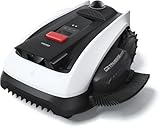
- Wire-Free Robotic Lawn Mower with LiDAR Navigation - GOAT O1000 LiDAR PRO is a wire-free robotic lawn mower that requires no perimeter wire or RTK antenna. The HoloScope 360° Dual-LiDAR system automatically maps your yard and delivers precise 2 cm positioning — even under trees, near fences, or in shaded areas where GPS mowers lose signal.
- Built-In Edge Trimming for Clean Borders - Unlike standard robot lawn mowers, this model features an integrated TruEdge trimmer for true edge-to-edge cutting. It trims along driveways, sidewalks, flower beds, and irregular lawn borders — reducing the need for manual string trimming after mowing. (For highly complex corners, narrow gaps, or raised edges, occasional manual trimming may still be needed.)
- Advanced 3D Obstacle Detection for Safer Mowing - Powered by AI Vision and 3D ToF LiDAR, GOAT O1000 LiDAR PRO accurately identifies and navigates around more than 200 types of obstacles — from kids’ toys and patio furniture to pets and small wildlife. With detection precision down to 5 cm, it maintains safe clearance while mowing closely around objects, helping protect your lawn, landscaping, and loved ones.
- Easy App Setup with Custom Zones & No-Go Areas - Use the ECOVACS app to create mowing zones, adjust schedules, and customize no-go areas for challenging sections of your yard. Initial setup and fine-tuning may require a few adjustments to optimize performance for unique lawn layouts.
- Designed for Tight Spaces Others Can’t Reach - Built with a super-narrow body, GOAT O1000 LiDAR PRO easily passes through tight paths and narrow lawn corridors as slim as 0.8 m. Perfect for compact yards, side lawns, and complex layouts where larger robotic mowers struggle.
Questions for the installer
- Will the quoted work include mapping every zone, exclusion island and passage?
- Who supplies and mounts the charging station, and what power protection is required?
- How are firmware updates delivered, and can the mower operate if the app or network is temporarily offline?
- What is the process for moving a boundary after a garden change?
- Will the installer document the route, wire joins, station position and recovery procedure?
Support, warranty and parts: how to compare them
No authoritative cross-brand statistic establishes which manufacturer delivers the best service quality. Compare the support system you can actually use in your region instead of relying on a brand reputation.
Warranty terms
Check the warranty duration, geographic coverage, registration deadline, authorised repair process and exclusions for water ingress, collision damage, misuse and unauthorised installation. The Segway H220 product page advertises up to three years, but regional terms govern the claim. Husqvarna and Segway publish warranty or support information on their product pages; read the local version rather than assuming that a US or European term applies elsewhere.
Dealer and installation coverage
For a complex lawn, a local dealer who can survey slopes and install boundary or RTK equipment may be more valuable than a longer headline warranty. Ask whether installation is performed by the seller, a certified partner or an independent contractor, and whether labour is covered if a wiring or mapping fault appears later.
Connectivity and software support
Confirm how long cellular, cloud or mapping services are included, whether a subscription is optional or required, and which functions remain available without connectivity. Ask how firmware issues are diagnosed, whether updates can be reversed, and how account ownership is transferred if you sell the mower.
Crashes, No Sound, or Screen Glitches?
Random freezes, missing sound and display glitches usually trace back to one bad driver. Find and replace yours safely.Free scan · under a minuteWindows Errors? Fix Them Before They Spread
Repair common Windows errors and clear accumulated junk for a smoother, more stable PC - no reinstall needed.Free scan · no reinstallConsumables and repair logistics
Replacement blades, blade screws, wheels, charging contacts and power supplies are routine service items. Verify local stock, ordering channels and delivery times. Ask whether collision damage is repairable locally or requires shipping the whole mower. Keep the model and serial number, purchase receipt, installation record and firmware version together for a future support call.
Best Value

- Centimeter-Level RTK Cloud Accuracy: Commercial-grade RTK Cloud technology delivers centimeter-level positioning for this robotic lawn mower with no local antenna installation and no additional cloud costs.
- Auto Mapping for More Complete Coverage: Vision AI helps the robot lawn mower understand lawn shapes and boundary types, then automatically maps your yard for smooth paths, closer edge-following, and fuller coverage from day one.
- AI Obstacle Avoidance with Neural Processing: Vision AI recognizes and understands common yard objects, using a trained neural network and up to 10 trillion operations per second to help mowing stay smooth, safe, and uninterrupted.
- Infinite Zone Mowing & App Remote Control: Create unlimited mowing zones, set custom paths, define no-go areas, edit your map, and monitor your remote control lawn mower from the app anytime.
- Reliable Navigation Even in Shade: RTK Cloud provides centimeter-level accuracy in open areas, while V-SLAM sensor fusion with Vision AI helps maintain precise navigation in shaded or partially covered lawn spaces.
Model-specific buying notes
Husqvarna Automower 410 iQ
The US product page positions this model for North American lawns and lists a kit containing the mower, charging station, welcome guide, operator manual, standard-installation materials and one year of replacement blades. The referenced summary does not establish every current battery, slope or warranty field. Confirm those values for your country, lawn size and installation method before treating the kit as a complete solution.
Segway Navimow H220
The official page claims capacity for 0.5 acre, operation on slopes up to 45% (24°) and a warranty of up to three years. Those are manufacturer claims and may vary by market. Confirm whether the quoted capacity assumes one continuous zone, what navigation hardware is included, and whether connectivity or correction services carry separate terms.
Worx Landroid Vision Cloud WR306E
TechRadar’s October 11, 2026 comparison table lists a 600 m² maximum lawn size, 18 cm cutting width, 80-minute charge time, 30–60 mm cutting height, a 30% (16.7°) slope limit and 58 dB noise. Because this is secondary reporting, check the current manufacturer manual for the exact regional version, especially before installing it on a sloped or divided lawn.
Free tools Windows power users keep installed
One-click scans. No signup required.
A practical buying and installation checklist
- Map the property: measure grass area, passages, gates, separate zones, trees, beds, ponds and boundary drops.
- Measure terrain: record the steepest continuous incline and cross-slope, then identify wet or unstable surfaces.
- Set the finish: choose a cutting-height range and decide whether the mower must enter every zone automatically.
- Shortlist by capacity: use expected daily area and charge cycles, not amp-hours alone.
- Shortlist by access: confirm cutting width, turning space and the narrowest route.
- Shortlist by traction: compare the model’s slope limit with the measured route and leave margin for moisture and transitions.
- Choose the installation method: obtain a written boundary-wire or RTK plan, including station location and exclusion areas.
- Price support: include installation, replacement blades, charging hardware, connectivity fees and likely battery replacement.
- Test handover: require a boundary or map demonstration, app-account transfer, firmware check and instructions for winter storage.
- Document everything: retain the invoice, warranty terms, serial number, map, wire diagram and installer contact.
Common mistakes and how to avoid them
- Choosing by the biggest runtime: replace the headline number with the maker’s test conditions and daily-area rating.
- Using the maximum slope at a drop: keep the recommended clearance and treat transitions as separate hazards.
- Ignoring access width: measure gates and turns before selecting a wider cutting deck.
- Assuming an app equals full automation: verify signal coverage, subscriptions and offline behaviour.
- Buying without a parts plan: confirm blade, battery, charger and wheel availability in your region.
- Skipping seasonal planning: ask about rain delays, winter storage, charging temperatures and spring restart.
Frequently Asked Questions
Which autonomous mower has the best battery life?
There is no universal winner. Compare each model’s continuous-runtime test conditions and expected daily mowing area, then adjust for your lawn’s slopes, obstacles, grass density and weather.
What cutting width should I choose?
Choose the widest deck that can safely pass every gate and corridor. Wider decks reduce passes on open lawns; narrower decks may navigate complex gardens more efficiently.
Can a robot mower work on a steep hill?
Only if the exact model’s slope rating covers the route and the installation leaves safe clearance at transitions and boundaries. Measure the incline and have the installer verify traction on the actual surface.
Does a longer warranty prove better support?
No. Also compare local repair access, installation responsibility, software and connectivity terms, replacement-part stock and the process for collision or wiring faults.
The Bottom Line
Buy from the lawn outward: measure area and terrain, compare tested daily capacity and access width, then verify the model-specific slope limit and installation plan. A dealer or installer who can support mapping, firmware, parts and warranty claims may matter as much as the mower’s battery specification.
Quick Recap
Product prices and availability are accurate as of the date/time indicated and are subject to change. Any price and availability information displayed on Amazon at the time of purchase will apply.

