Short answer: Water freezes at 32°F (0°C), but household pipes do not all freeze at the same outdoor temperature. Start protecting exposed plumbing below 32°F; treat approximately 20°F as a serious alert for vulnerable, uninsulated pipes, especially in attics, crawl spaces, garages, and exterior walls. Keep the thermostat at least 55°F when away, while remembering that insulation, drafts, pipe location, and the duration of the freeze matter.
Water freezes at approximately 32°F (0°C), but household pipes do not all freeze at the same outdoor temperature. Start protecting exposed plumbing whenever the forecast is below 32°F. Treat about 20°F as a serious alert for vulnerable, uninsulated pipes—especially in attics, crawl spaces, garages, exterior walls, and other unheated areas. If you leave the house during freezing weather, keep the thermostat at at least 55°F; that helps protect plumbing inside the heated envelope but cannot warm a pipe in a freezing attic or crawl space.
As an Amazon Associate I earn from qualifying purchases.
The most reliable protection combines steady heat, continuous insulation, air sealing, outdoor-line drainage, and a tested emergency shutoff. A dripping faucet can reduce pressure and sometimes slow freezing, but it is not a guarantee.
The Tool Desk
Outbyte PC Repair FREEClear out junk files and repair common Windows errorsFree Scan →Outbyte Driver Updater FREEScan for outdated or missing drivers - takes under a minuteDriver Scan →The temperature numbers that matter
| Temperature | What it means for your plumbing |
|---|---|
| 32°F (0°C) | Water’s approximate freezing point under ordinary conditions. A pipe can be at risk whenever the pipe itself remains below freezing. |
| Below 32°F | Begin precautionary measures, particularly for outdoor, exposed, poorly insulated, or draft-exposed plumbing. |
| Around 20°F | A high-risk alert threshold for vulnerable, uninsulated pipes. Research on uninsulated attic plumbing found freezing beginning at approximately this temperature, but pipes can freeze above 20°F when drafts and poor insulation create colder local conditions. |
| 55°F | A commonly recommended minimum thermostat setting when you are away during cold weather. It is not the freezing point of pipes and does not guarantee protection for plumbing outside the heated part of the building. |
There is no dependable rule that every pipe freezes after a particular number of hours. Risk depends on the actual temperature at the pipe, how long it stays cold, insulation, air leakage, wind exposure, pipe size and material, water movement, and the temperature of the surrounding building. An exposed line can freeze during one hard overnight freeze, while a well-protected pipe may survive much colder weather. See the National Weather Service explanation of cold and wind chill and the ICC/University of Illinois technical guidance on frozen pipes.
#1 Best Overall

- Duck Brand insulating foam pipe stick covers are great for insulating both hot and cold water pipes
- These foam pipe covers are pre-slit for easy opening and installation on curved pipes and the self sealing edges make it easy to secure
- Versatile foam pipe insulation helps prevent winter freezing and summer sweating of indoor water, air conditioning and HVAC pipes. Safe for temperatures up to 212 F.
- These pipe covers have an R Value of 3.6 and can fit 1/2" to 3/4" pipes
- Each foam pipe stick is 12" long for easy installation. 6 pipe sticks come in a pack for a total of 6 feet of pipe insulation
Which pipes freeze first?
Look for plumbing outside the home’s conditioned space or exposed to moving cold air. Vulnerable locations include:
- Outdoor hose bibs and the short indoor pipe sections that supply them.
- Irrigation, sprinkler, swimming-pool, and other outdoor supply lines.
- Pipes in unheated attics, crawl spaces, garages, sheds, basements, and well houses.
- Pipes installed in or near exterior walls.
- Water lines beneath kitchen and bathroom cabinets, particularly on outside walls.
- Pipes near foundation penetrations, vents, unsealed utility openings, broken windows, and drafty doors.
- Plumbing in vacant, seasonally occupied, or poorly heated homes.
- Water meters and service lines in exposed meter boxes or shallow installations.
Southern and transitional-climate homes deserve particular attention. They may have pipes in attics, crawl spaces, garages, or exterior walls because sustained freezing conditions are less common in their design and construction. A northern home designed for extended cold is not automatically immune, but an exposed pipe in a warmer-climate home can become a weak point quickly.
Pipe material does not make a plumbing system freeze-proof. Copper, PVC, CPVC, and PEX all remain vulnerable when the installation is cold enough for long enough. Material affects heat transfer and how much expansion a section may tolerate, but location, insulation, airflow, fittings, valves, and water movement usually matter more. Do not rely on claims that a particular material “cannot burst.”
Free tools Windows power users keep installed
One-click scans. No signup required.
Why frozen pipes burst
The usual explanation—that ice expands and simply pushes outward until the pipe splits—is incomplete. A more accurate sequence is:
- The pipe loses heat to cold surrounding air or building materials.
- Ice begins forming at the coldest section.
- The ice creates a blockage inside the pipe.
- Water between that blockage and a closed faucet, valve, backflow preventer, or second ice blockage becomes trapped.
- Continued freezing and expansion raise hydraulic pressure in the confined liquid section.
- A pipe wall, fitting, valve, or joint fails—sometimes away from the section that is actually frozen.
- When the ice melts, pressurized water escapes and the leak may suddenly become obvious.
This is why a faucet left open can help even if some ice still forms: it offers water and pressure a path out. It also explains why the visible burst may appear during thawing, not at the coldest moment. The University of Illinois research on frozen pipe failures and the CDC/ASHRAE technical guidance describe the blockage-and-pressure mechanism in more detail.
7 ways to prevent pipes from freezing
1. Keep the home heated steadily
During cold weather, keep the thermostat at least 55°F when the house is temporarily vacant, and avoid large nighttime setbacks during an extreme freeze. Keep interior doors open where practical so warm air can reach plumbing spaces. Do not block registers that heat rooms containing water lines.
Best use: Occupied or temporarily vacant homes with plumbing inside the heated envelope.
Do these 3 things before closing this tab:
1Clear out junk files and repair common Windows errors2Scan for outdated or missing drivers - takes under a minute3Repair Windows errors before they cause bigger problemsLimitation: A 55°F thermostat setting cannot reliably protect a pipe in an unheated attic, crawl space, garage, exterior wall, shed, or poorly sealed chase.
If the furnace fails or the power goes out, use only safe, approved heating equipment. Never use an oven, stove, grill, charcoal appliance, kerosene heater, propane heater, or other combustion appliance as an improvised indoor space heater. These can cause fire or carbon-monoxide poisoning. Follow the CDC’s winter-storm safety guidance.
2. Insulate exposed pipes continuously
Install correctly sized, plumbing-rated pipe sleeves or other approved insulation on accessible vulnerable lines. Cover straight runs, elbows, tees, valves, and fittings as continuously as possible. Close gaps at joints and penetrations, secure the insulation so it cannot slide away, and repair or replace wet insulation.
Rank #2

- STABILITY AND STRENGTH: Tight design with high security and resistance to deformation for a variety of applications.
- PROTECTS PIPES: Helps prevent moisture and condensation in cold water pipes, protects pipes from freezing and damage.
- STABILITY AND STRENGTH: Tight design with high security and resistance to deformation for a variety of applications.
- ADJUSTABLE: It can be cut to size with scissors or cutters and can be bent to any shape, flexible and durable.
- EASY TO INSTALL: Application, removal and storage require minimal effort and leave no residue with a product size of 33" x 2" x 1/8".
Best use: Permanent, low-cost protection for accessible pipes.
Limitation: Insulation slows heat loss; it does not create heat. A pipe can still freeze during a prolonged freeze if the surrounding space remains cold.
3. Stop cold air from reaching the plumbing
Seal cracks and openings around pipes where they pass through walls, floors, foundations, and sill plates. Repair broken windows and drafty exterior doors. Keep garage doors closed when plumbing is nearby. Close foundation vents when appropriate for the building and local climate, and have a professional assess recurring problems.
For a permanent correction, move vulnerable pipes to the conditioned side of the insulation or into an interior plumbing chase. Pipes in exterior walls are especially difficult to protect because cold air can reach them from outside and warm household air may not circulate around them. The Department of Energy’s Building Science Education guidance explains why pipe placement and air sealing matter.
What’s actually slowing this PC down?
Pick the symptom - the matching free tool is one click away.
Best use: Homes with recurring freeze-ups or obvious drafts near plumbing.
Limitation: Caulk or foam is not a substitute for correcting a pipe that is wrongly located in a freezing space.
4. Open cabinets and expose indoor plumbing to warm air
During a severe freeze, open cabinet doors beneath sinks on exterior walls. This lets heated household air reach the supply lines. Move cleaners, chemicals, medicines, and other hazardous products out of children’s reach before opening the cabinets. Keep interior doors open where that improves circulation.
Best use: Short cold snaps affecting pipes beneath sinks or inside base cabinets.
Limitation: This does little if the cabinet backs onto an unheated exterior wall with major air leakage or if the surrounding room is itself unheated.
Rank #3

- [Better Insulation for Pipes] 16.5 ft long x 2 inch wide pipe insulation tape, is longer than other exterior pipe insulation tapes, better to wrap the whole pipeline. Also the outdoor pipe insulation tape is easy enough to customize and cut to size with scissors, bend easily and conform to any shape.
- [Flexible to Fit Various Water Pipes] The pipe insulation tape is made of soft rubber foam, which is more flexible to fit pipes of various shapes even pipe elbows firmly. High density insulation foam tape protects from severe snow, rain, wind and intense sun and heat.
- [Longer Service Life] Upgrade fabric adhesive backing provide stronger adhesion for water pipes of various materials, such as pvc pipe, metal pipe, ac pipe, rv skirting, AC pipes. Easy to wrap and stick firmly, will not come loose even after a long time. No additional glue need. The foam tape is ideal pipe cover for heating pipe, water pipe antifreeze protection and pipes exposed to high temperatures.
- [Avoid Costly Repairs] Pipe insulation wrap foam protect the pipe from freezing and sun exposure. Provide pipes protection such as water pipes or AC pipes to avoid expensive repairs. The pipe wrap insulation is waterproofing, weather resistance, temperature resistance, thermal insulation, and so on.
- [Maximum Pipe Protection] Best pipe protection when used with our pipe cover, such as our backflow preventer covers, outdoor faucet covers and long hydrant covers. Prevents pipeline and valve damage from intense sun and freezing in winter. Best outdoor pipe insulation cover.
5. Disconnect, shut off, and drain outdoor plumbing
- Remove and store garden hoses.
- Close the indoor shutoff valve serving each outdoor faucet, if one is installed.
- Open the outdoor faucet to drain the remaining water.
- Leave the exterior faucet open after draining, unless the product or plumbing design specifies otherwise.
- Winterize irrigation, pool, and sprinkler lines according to the manufacturer’s or installer’s instructions.
Do not add automotive antifreeze to drinking-water, irrigation, pool, or sprinkler lines. It can harm people, pets, wildlife, and landscaping. Use only a product and procedure specifically approved by the equipment manufacturer, if applicable. The American Red Cross outdoor-plumbing guidance covers the basic shutoff and drainage procedure.
A “frost-free” hose bib is not automatically freeze-proof. A hose left attached, incorrect slope, poor drainage, or an improperly installed interior shutoff can leave water trapped. Check the faucet manufacturer’s instructions or ask a plumber if the line has frozen before.
Best use: Hose bibs and outdoor lines with accessible shutoffs.
Quick wins for a faster PC:
Repair Windows errors before they cause bigger problemsFix Now →Fix the driver behind crashes, sound loss and screen glitchesFind Drivers →Clear out junk files and repair common Windows errorsFree Scan →Limitation: Draining a faucet does not winterize irrigation, pool, sprinkler, well, or specialized systems by itself.
6. Use listed heat cable or heat tape where insulation is insufficient
Heat cable can add direct heat to an exposed or inaccessible line, but incorrect installation creates electrical and fire hazards. Use a product listed or certified for water-pipe freeze protection and follow its exact instructions.
- Plug it into the type of grounded, ground-fault-protected outlet required by the manufacturer.
- Never overlap or cross the cable unless the instructions expressly allow it.
- Install it directly on the pipe when specified; do not casually place it on top of insulation.
- Use insulation over it only when the manufacturer permits that combination and specifies compatible materials.
- Inspect it before each season for cuts, charring, discoloration, bare wires, damaged plugs, or other deterioration.
- Replace damaged or old tape. Do not improvise repairs.
The U.S. Consumer Product Safety Commission’s heat-tape guidance warns against overlapping damaged products, using pipe heat tape for other applications such as gutters or fuel lines, and covering tape with foam or vinyl insulation unless the manufacturer permits it.
Best use: Exposed lines that cannot reasonably be relocated or kept warm by building improvements.
PC Slower Than It Used to Be?
A free scan shows the junk files, broken settings and background clutter dragging Windows down - then fixes them in one click.Free scan · Windows 10 & 11Crashes, No Sound, or Screen Glitches?
Random freezes, missing sound and display glitches usually trace back to one bad driver. Find and replace yours safely.Free scan · under a minuteLimitation: It requires electricity and correct installation. It will not protect a pipe during a power failure unless it is connected to a properly designed backup system.
7. Let vulnerable faucets flow during extreme cold—or drain the system for a long absence
For an occupied home during an unusually severe freeze, open the faucet served by a vulnerable pipe slightly. If both hot and cold lines are exposed, account for both lines. Keep the drain and faucet outlet clear.
Flow can help in two ways: it keeps some water moving and provides a pressure-relief path if an ice blockage starts forming. It is not foolproof. Water can still freeze despite a slow flow, and a faucet outlet or drain can freeze and stop the water from leaving. There is no universally correct “one drip per second” setting; the needed flow varies with pipe length, insulation, air temperature, airflow, pipe material, and incoming water temperature. The flow must continue throughout the freezing period. See Clemson Extension’s guidance on flowing water and drain-icing risk.
Rank #4

- EXTREME ADHESION. At a tensile strength of 100 lbs/inch, our adhesive pipe insulation tape is the strongest HVAC pipe insulation tape, rated to last for 25 years against harsh weather.
- SUPERIOR INSULATION. With a low thermal conductivity (0.11BTU), our HVAC insulation wrap tape significantly reduces energy loss, prevents frosting, and effectively regulates home temperatures.
- OPTMIZED THICKNESS. Stretching up to 6x without breaking, our AC insulation tape is the best water pipe insulation tape, withstanding extreme bending for hard-to-reach a/c line insulation wrap outside.
- WEATHERPROOF. Withstanding frost, humidity, corrosion, UV, and high temps, our ac pipe insulation outdoor pipe insulation wrap tape is an ideal insulating tape for harsh outdoor conditions.
- EASY-TO-APPLY. Pipe insulation foam tubes can be inconvenient. Simply wrap our metal pipe insulation tape, and you’re done. Our pipe foam insulation tape is made of EVA foam, allowing for quick AC line insulation installations.
If the home will be unheated, the power or furnace may fail, or you will be away for an extended period, shutting off and draining the system is stronger protection than relying on a dripping faucet:
- Locate and test the main water shutoff before an emergency.
- Close the main valve slowly.
- Open fixtures to drain the system.
- Drain outdoor lines separately.
- Follow manufacturer instructions for water heaters, boilers, pumps, appliances, and other equipment.
- Have a plumber handle systems that will not drain fully by gravity.
The Insurance Institute for Business & Home Safety recommends considering shutoff and partial draining for absences longer than a week when subfreezing weather is ongoing or forecast. Illinois Extension describes complete draining as the strongest protection for a property left unheated.
Do not shut off or drain a fire-sprinkler system, hydronic heating system, shared condominium system, or other specialized installation without professional guidance.
What to do when a faucet only trickles—or stops
A no-flow or low-flow faucet can be an early warning that a nearby line has frozen. It does not prove the entire plumbing system is frozen, but several affected fixtures suggest a broader problem.
- Open the affected faucet. This relieves pressure and gives melting water somewhere to go.
- Check other fixtures. Compare hot and cold water and look for additional weak or nonworking faucets.
- Find the frozen section only if it is safely accessible. Check exterior walls, under-sink cabinets, attics, crawl spaces, garages, and the point where the water service enters the house.
- Apply gentle, gradual heat. Suitable options may include an electric heating pad, hair dryer, warm towels, or a listed space heater positioned well away from combustible materials.
- Begin near the faucet and work toward the colder section while keeping the faucet open.
- Watch continuously as the pipe thaws. A split can begin leaking as soon as ice releases its blockage.
- Stop and call a licensed plumber if the pipe is inaccessible, damaged, leaking, or the normal flow does not return.
Never use a torch, blowtorch, open flame, kerosene or propane heater, charcoal stove, or other combustion device to thaw a pipe. Do not use an electrical appliance while standing in water. Follow the American Red Cross frozen-pipe guidance and the CDC’s electrical and winter-storm safety advice.
Recommended Free Tools
What to do if a pipe bursts
- Close the main water shutoff immediately.
- Open faucets where safe to drain pressure and remaining water.
- Keep people away from standing water near outlets, panels, appliances, or other electrical equipment.
- If electricity must be shut off, do so only from a dry, safe location. Otherwise call the utility or emergency services.
- Call a licensed plumber.
- Photograph the damage before cleanup if it is safe to do so.
- Contact your insurer promptly and follow its mitigation instructions.
- Continue checking concealed walls, ceilings, cabinets, crawl spaces, and insulation after thawing.
Frozen-pipe coverage is policy- and location-specific. Sudden and accidental water damage may be covered in some policies, but heating, vacancy, maintenance, negligence, and other exclusions can change the result. See the Washington State Office of the Insurance Commissioner’s water-damage guidance, then review your own policy.
Special situations
Vacation homes and long absences
Keep heat steady, arrange a reliable property check, verify that the furnace and alarms work, and make sure someone can reach the main shutoff. For a long absence during ongoing subfreezing weather, a plumber can shut off and drain the domestic system.
Power or furnace failure
Do not heat the home with an oven, grill, charcoal appliance, or unvented combustion device. If the building cannot be kept safely warm, shut off the main water and drain what the system allows, following equipment-specific instructions.
Mobile and manufactured homes
Inspect plumbing in the exposed underbelly, along the perimeter, and at the connection to the water service. Protect the system only with methods compatible with its design; do not block required ventilation or improvise heat around combustible materials.
Well systems and well houses
Protect the well house, pressure tank, exposed service line, pump controls, and pipes between the well and the home. Follow the pump and pressure-system manufacturer’s instructions, and use a professional if the system will not drain fully.
Best Value
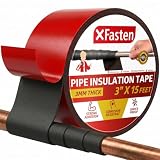
- EXTREME ADHESION. At a tensile strength of 100 lbs/inch, our adhesive pipe insulation tape is the strongest HVAC pipe insulation tape, rated to last for 25 years against harsh weather.
- SUPERIOR INSULATION. With a low thermal conductivity (0.11BTU), our HVAC insulation wrap tape significantly reduces energy loss, prevents frosting, and effectively regulates home temperatures.
- OPTMIZED THICKNESS. Stretching up to 6x without breaking, our AC insulation tape is the best water pipe insulation tape, withstanding extreme bending for hard-to-reach a/c line insulation wrap outside.
- WEATHERPROOF. Withstanding frost, humidity, corrosion, UV, and high temps, our ac pipe insulation outdoor pipe insulation wrap tape is an ideal insulating tape for harsh outdoor conditions.
- EASY-TO-APPLY. Pipe insulation foam tubes can be inconvenient. Simply wrap our metal pipe insulation tape, and you’re done. Our pipe foam insulation tape is made of EVA foam, allowing for quick AC line insulation installations.
Irrigation and pool plumbing
Shut off and drain, blow out, or otherwise winterize these systems according to the manufacturer’s or installer’s procedure. Do not use automotive antifreeze unless specifically approved for that equipment and procedure.
Fire sprinklers, boilers, and shared systems
Never close, drain, or heat a fire-sprinkler system as a DIY project. Hydronic heating loops, boilers, condominium risers, and shared plumbing also require system-specific guidance from a building manager, plumber, heating professional, or fire-protection professional.
Southern homes and recurring freeze-ups
Prioritize attic plumbing, crawl-space lines, exterior-wall supply pipes, and poorly sealed penetrations. If a line has frozen before, improve insulation and air sealing, relocate the pipe if practical, add properly installed heat cable where appropriate, and confirm that outdoor shutoffs drain correctly.
Recommended Free Tools
Quick checklist
Before the freeze
- Locate and test the main water shutoff.
- Remove hoses and drain outdoor faucets.
- Winterize irrigation, pool, and sprinkler systems.
- Insulate exposed plumbing continuously.
- Seal drafts around pipe penetrations, foundations, windows, and doors.
- Test the heating system, smoke alarms, and carbon-monoxide alarms.
- Inspect heat cable for damage.
- Arrange a property check if the home will be vacant.
During the freeze
- Keep the thermostat steady and at least 55°F when away.
- Close the garage door.
- Open vulnerable under-sink cabinet doors safely.
- Let only faucets served by exposed pipes flow slightly when appropriate.
- Keep faucet outlets and drains clear.
- Monitor for reduced flow, frost, dampness, stains, bulging, cracking, or unusual sounds.
If flow stops or a pipe bursts
- Open the affected faucet.
- Use gentle heat only if the area is dry and safe.
- Never use an open flame.
- Shut off the main water immediately if there is a leak.
- Keep away from standing water near electrical equipment.
- Call a licensed plumber.
Frequently Asked Questions
Do pipes freeze at 20°F?
Not necessarily. Water freezes at approximately 32°F, but a household pipe freezes only when the pipe itself remains below freezing long enough. Insulation, drafts, airflow, pipe location, water movement, and surrounding building temperature all affect the result. Around 20°F is a serious alert for vulnerable, uninsulated plumbing—not a universal freezing point.
Does leaving a faucet dripping prevent frozen pipes?
A dripping faucet may keep some water moving and provide pressure relief if an ice blockage begins forming. It does not guarantee that the pipe will stay unfrozen. The outlet or drain can freeze, and there is no universal drip rate that works for every installation.
What temperature should I keep my house to prevent frozen pipes?
Keep the thermostat at least 55°F when away during cold weather, but do not treat that as a guarantee. Pipes in unheated attics, crawl spaces, garages, exterior walls, or poorly sealed chases can freeze even when the thermostat reads 55°F or higher.
What should I do if a pipe is frozen?
Open the affected faucet, locate the frozen section only if it is safely accessible, and apply gentle gradual heat with a hair dryer, electric heating pad, or warm towels. Never use a torch or other open flame. Watch for leaks as the pipe thaws and call a licensed plumber if the pipe is damaged, inaccessible, or leaking.
Outdated Drivers Are Slowing You Down
One free scan finds every outdated or missing driver and matches the right update for your exact hardware.Free scan · exact hardware matchPC Slower Than It Used to Be?
A free scan shows the junk files, broken settings and background clutter dragging Windows down - then fixes them in one click.Free scan · Windows 10 & 11What should I do if a frozen pipe bursts?
Close the main water shutoff immediately, keep away from standing water near electrical equipment, call a licensed plumber, photograph damage if safe, and contact your insurer promptly. A pipe can burst away from the actual frozen section, so inspect concealed areas after thawing.
The Bottom Line
Remember: Water freezes at 32°F, but pipes freeze according to their own exposure. Protect vulnerable plumbing below 32°F, treat around 20°F as a serious alert, keep an away-home at 55°F or higher, and know the main shutoff before winter arrives.
Quick Recap
Product prices and availability are accurate as of the date/time indicated and are subject to change. Any price and availability information displayed on Amazon at the time of purchase will apply.

