Quick wins for a faster PC:
Clear out junk files and repair common Windows errorsFree Scan →Scan for outdated or missing drivers - takes under a minuteDriver Scan →Repair Windows errors before they cause bigger problemsFix Now →Neither artificial turf nor natural grass is the universal choice for a community sports field. Artificial systems can provide more predictable playing time and withstand intensive scheduling, while natural turf can offer lower heat, natural stormwater infiltration and habitat benefits when it is properly designed and rested. The right decision depends on the sports, hours of use, climate, water supply, safety controls, environmental priorities, maintenance capability and whole-life budget at your site.
Choose a surface only after you have measured demand, defined acceptable playing and safety conditions, compared systems designed for the required sports, and priced construction, operation, renewal and disposal over the same period. A field that is inexpensive to build but cannot meet your schedule—or becomes unsafe in local heat—does not deliver good value.
As an Amazon Associate I earn from qualifying purchases.
Start with the decision, not the surface
Community owners often ask which surface is better. A more useful question is: Which surface can safely deliver the required hours for our sports, climate and budget? The Department of Local Government, Sport and Cultural Industries in Western Australia expresses the principle clearly: “An organisation’s (sport club, association, local or state government) decision whether to have a natural grass or synthetic turf sports ground comes down to their specific objectives for environmental, social, health and financial outcomes.” Its 2011 guide is a framework rather than a current price list or a substitute for local advice.
| Decision condition | Why it may favor artificial turf | Why it may favor natural grass | What must be verified locally |
|---|---|---|---|
| Very high, tightly scheduled demand | Durability and more predictable availability can support dense programming. | May work where demand is moderate and fields can be rested or rotated. | Actual games, practices, school use, closures, drainage and the surface standard required for each sport. |
| Hot playing times | Can remain usable after rain, but surface temperatures require active controls. | Usually presents a cooler playing surface, subject to irrigation, turf health and weather. | Local temperature records, shade, irrigation, watering restrictions and heat policies. |
| Limited water supply | Avoids irrigation for plant growth in many sports. | Needs water to establish and maintain turf, although rainfall, recycled water and efficient irrigation can change the balance. | Reliable supply, drought rules, water price, storage and the quality of available water. |
| Environmental priorities | Can reduce irrigation demand but introduces material, heat, runoff, soil and end-of-life questions. | Can infiltrate stormwater and cool surroundings but uses water, fertilizers, energy and land management. | Define the boundaries of the comparison, including manufacture, transport, soil, biodiversity and disposal. |
| Long-term budget | Higher initial works may be offset by a different maintenance and renewal pattern. | Lower or higher whole-life cost depends on labor, irrigation, renovation, closures and replacement assumptions. | Comparable local quotations and a common analysis period with the same service level. |
1. Measure demand and usable capacity
Field capacity is not simply the number of bookings on a calendar. The Western Australia guide defines it as the amount of use a site can sustain before surface decline makes it unfit. Capacity is affected by field condition and drainage, temperature and rainfall, the sport being played and the level of use. A community standard should reflect the intended sport and level of play; applying elite-field specifications automatically can add cost without solving the local problem.
#1 Best Overall

- Quick Dry: Dries quickly, making it ideal for high-traffic or outdoor environments.
- 100% Polypropylene: Durable, high-quality material for long-lasting performance.
- Un-Bound Edges: Provides a more natural, seamless look for a refined aesthetic.
- Marine Backing To Withstand The Elements
- Shipped folded in a sturdy box, there may be some creasing. Initial creasing is normal and the creases will fall out within a few weeks. We advise cross rolling; roll against creases; to help eliminate the bumps.
Build a demand inventory
- List every user group: clubs, schools, casual leagues, disability programs, tournaments and public access.
- Separate matches from training. Training often creates more repetitive wear in the same zones.
- Record the sport, field dimensions, line-marking needs, footwear and any governing-body surface requirements.
- Map the requested hours by season, day and time, including overlapping demand and likely growth.
- Count weather-related cancellations and the number of days when the existing field is closed for safety or recovery.
Define a fit-for-use standard
Write down the conditions that make a field playable and safe: traction, evenness, hardness, drainage, visible defects, standing water limits, line visibility and maximum heat conditions. Set separate standards for community training, competition and special events if they differ. This prevents a proposal from claiming extra capacity without specifying what quality users will receive.
Test capacity against alternatives
Model a natural-turf rotation or a second lower-use field alongside a single synthetic field. Include recovery days, renovation closures and wet-weather restrictions for grass. For synthetic turf, include grooming, infill redistribution, repairs and heat-related operating limits. The output should be a schedule of available, unavailable and conditionally available hours—not a generic promise that one surface is “all-weather.”
2. Match the system to the sport
“Artificial turf” describes several systems, not one product. Filled, unfilled and water-based systems have different traction, ball response, maintenance, irrigation and cooling requirements. Natural grass also varies by species, root zone, soil profile, drainage and management regime. Compare like with like and check the current rules of each sport’s governing body before specifying a field.
| Specification question | Why it matters | Evidence to request |
|---|---|---|
| Which sports and levels will use the field? | Ball roll, bounce, traction, shock response, markings and dimensions differ by sport. | Current governing-body requirements and a written performance specification. |
| What artificial system is proposed? | Infill type, pile, backing, shock pad and irrigation or cooling arrangements affect behavior and maintenance. | Complete system name, test results, warranty terms and maintenance manual. |
| What natural-turf profile is proposed? | Root-zone construction, grass selection and drainage determine recovery and wet-weather performance. | Soil and drainage design, establishment plan, mowing regime and renovation schedule. |
| How will lines and conversions be managed? | Permanent or temporary markings can affect wear, scheduling and compatibility with multiple sports. | Line-marking method, conversion layout and time required between activities. |
| What happens at end of service life? | Backing, infill, shock pads, contaminated soil and turf biomass may need different handling. | Removal, recycling or disposal route, costs, responsibilities and local regulatory requirements. |
3. Account for climate, water and heat
Natural grass: water and weather dependencies
Grass needs water to grow. Irrigation demand depends on rainfall, grass selection, soil, shade, wind, season and the standard of play. Price the supply, pumping, storage, controls, labor and maintenance of irrigation—not just the water volume. Rainwater harvesting or recycled water may reduce potable demand, but their tanks, treatment, approvals and reliability also belong in the budget.
Heavy rain can close a grass field when the root zone is saturated or when play would cause compaction and rutting. Good grading and drainage reduce closures; they do not eliminate the need for recovery. A realistic schedule should show the number of days required after significant rain and the renovation windows needed to restore turf.
Rank #2
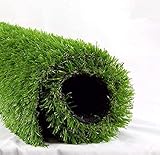
- Environment Friendly: High-density grass height about 1.38inch in length, looks and feels like realistic grass; Our artificial grass is non-toxic and lead free, making it an excellent surface for pets and kids to play on. 4 tone patterns are soft, lush and looks just like natural grass, providing you with year-round green and turf enjoyment.
- Premium Quality Material: LITA is a gorgeous, multi-purpose and very durable superior quality artificial grass/turf brand, made of the highest quality poly polypropylene yarns, resistant synthetic material high temperature.Rubber backed with drainage hole, easy to clean and can be dry quickly. Perfect for all indoor and outdoor projects.
- Wide Application: Artificial grass provides a superior flooring solution for a variety of applications. Artificial Lawns is now popular for residential garden lawns, swimming pools, decking, dog runs, kids play areas, safety flooring, corporate events and school playground flooring.
- Save Money: No mowing, no watering, just enjoy a perfect show garden all year round or a practical maintenance free green space. Lay artificial turf in shaded or dry areas to create much more than just an astro home.
- Best Choice: If you have pets or children who turn your real grass into mud or dust. If you have an extravagant roof garden, modest back yard or a minute balcony, this is the perfect grass for you! we pride ourselves on providing our customers with a professional, personal service and top quality products.
Artificial turf: less plant irrigation, not no water
Many synthetic sports systems do not require irrigation to grow a plant, but water may still be used for dust control, cooling, cleaning or performance management. Drainage layers, sub-base design and maintenance determine whether rainfall leaves the field quickly or creates runoff problems. Water savings therefore need to be calculated for the actual system and operating practice.
Heat is an operating constraint
Artificial surfaces can become substantially hotter than nearby grass. In a 2025 municipal case study in Verona, New Jersey, mid-day infrared readings in June found the artificial field was 24.1 °C hotter than the comparison natural-grass field. That is a measurement from one site, date and method—not a universal temperature difference. Surface color, infill, weather, shade, wind, watering and time of day can change the result.
What’s actually slowing this PC down?
Pick the symptom - the matching free tool is one click away.
Before approving a synthetic field, adopt a local heat plan. Use weather forecasts and on-site surface measurements at the times of scheduled activity; define thresholds for modifying, delaying or cancelling play; provide shade, drinking water and rest; train coaches and officials to recognize heat illness; and specify how the surface will be cooled if that is part of the design. The policy should cover tournaments and exceptional heat, not only ordinary weekday use.
4. Evaluate safety and health without overclaiming
Injury evidence is not a universal verdict
The Verona article’s literature review reported no conclusive overall difference in injury rates between artificial turf and natural grass. The Western Australia guide, prepared in 2011, likewise described little consensus in the limited evidence available at that time. Those statements do not prove that every system performs the same, nor do they establish current rates for every sport.
Injury risk depends on the surface design and condition, footwear, weather, athlete behavior, maintenance and the activity. Ask for sport-specific evidence and inspect the actual field rather than relying on a label such as “synthetic” or “natural.” Track incidents, surface defects, slips, skin abrasions and heat-related events after opening so operating decisions can respond to local experience.
Rank #3

- 【Durable material】-This Realistic Synthetic Grass Mat made of high quality durable UV resistant synthetic material,can resist changing weather conditions, so that the lawn still looks new with the passage of time!3.3 FT x33 FT Realistic Synthetic Grass Mat covers 109 square feet of space. High-density artificial grass soft and lush,looks & feels like real natural grass
- 【Performance】-resistant synthetic material high temperature,superior resilience & durability. Rubber backed with drainage holes,easy to clean and can be dry quickly,no need to worry about stagnant water
- 【Simple installation】 - You only need to choose an area to put and roll out the grass and you are done! ,it can be cut to fit your exact requirements. When you receive our grass rug, please put it in the sun for about 2 hours, and stroke the grass backwards with your hand or a comb if you think the grass is flattened. Besides, if necessary, you can also shake the rug several times in order to remove the little debris on it.
- 【Save Money & Environmentally Friendly】- No fertilizing, No mowing, no watering, no spraying ,safe for pets and children, just enjoy a perfect show garden all year round or a practical maintenance free green space. Never wither away like natural grass, providing you with year-round green enjoyment
- 【Multi purposes】 - Artificial Grass Turf lawn ,limited only by your imagination, perfect for outdoor decor, such as garden, lawn, patio, landscape, backyard, deck, balcony, porch and other outdoor place. Also used as mat, carpet, doormats in indoor home.If you have any problem ,please contact us freely
Heat, abrasions and surface condition
The National Institute of Environmental Health Sciences’ May 20, 2024 explainer notes that artificial turf may be durable and require less maintenance than grass, while also warning that hotter surfaces can increase heat stress and burns. Surface inspections should identify exposed seams, damaged fibers, uneven infill, compacted areas, poor drainage and trip hazards. Natural fields require equivalent attention to holes, bare soil, divots, mud, roots, irrigation hazards and hard or compacted zones.
Recommended Free Tools
Chemical exposure questions
NIEHS discusses potential exposure to PFAS, heavy metals and other chemicals and links to a 2024 federal assessment of potential exposures and health effects associated with recycled tire-rubber infill. The existence of a potential exposure pathway is not evidence that ordinary field use causes illness. Obtain a full materials declaration, understand the infill and backing composition, review applicable local requirements, and control exposure through good housekeeping, hand washing, food restrictions near the field and prompt cleanup of loose material.
5. Compare environmental effects across the whole system
A single “green” score hides important trade-offs. State the boundary of the comparison and include construction, operation, renewal and end-of-life handling.
| Impact area | Natural grass questions | Artificial turf questions |
|---|---|---|
| Water | How much irrigation is required in a typical, dry and drought-restricted year? What are the energy and treatment costs? | Is irrigation avoided for plant growth? Is water still needed for cooling, cleaning or dust? What is the source and reliability? |
| Stormwater | Does the soil profile infiltrate rainfall, and how do compaction and fertilizers affect runoff? | How permeable are the carpet, shock pad and sub-base? What can leach or wash out, and where does drainage discharge? |
| Heat and microclimate | How do turf health, shade and irrigation affect local cooling? | What temperatures occur at playing height, and how will heat affect users and nearby areas? |
| Materials and emissions | What are the impacts of soil amendments, fertilizers, mowing fuel and equipment? | What are the materials, manufacturing energy, transport distance and replacement components? |
| Soil, habitat and biodiversity | Can the field support soil life, drainage and surrounding habitat under the management plan? | Will excavation, sealing or infill change soil function, vegetation, insects or nearby water? |
| End of life | How will soil, turf biomass, irrigation equipment and construction layers be reused or removed? | Can carpet, infill, shock pad and sub-base be separated, recycled or lawfully disposed of, and at what cost? |
The Western Australia guide lists runoff and leaching, manufacturing and transport emissions, disposal, local microclimate, soil, heat, noise, glare and biodiversity as issues to examine. A 2025 Verona case study raised concerns about emissions, microplastic pollution, permeability and PFAS while also identifying grass water use. These are categories and case-specific findings, not a quantified lifecycle result for every field.
6. Build a comparable lifecycle budget
Compare both options over the same analysis period and to the same service level. Sport England defines lifecycle costs to include major replacement, planned preventative maintenance and day-to-day repairs, and publishes separate resources for artificial surfaces and natural-turf pitches. Use current local prices and project quotations rather than old indicative figures from another geography.
Free tools Windows power users keep installed
One-click scans. No signup required.
Rank #4

- IDEAL FOR WALKWAYS, PATIO BORDERS & NARROW SPACES — A Simple Way to Add a Grass-Look Strip — Use it along walkways, patio borders, balcony edges, porch paths, poolside strips, garage walk-through areas, side entrances, and narrow indoor or outdoor runner layouts.
- WATERPROOF WITH BUILT-IN DRAINAGE HOLES — Rain, Hose-Downs & Muddy Paws, No Problem — The waterproof backing and drainage holes mean water passes straight through instead of pooling underneath—so it dries fast, never gets soggy, and won't develop the musty smell cheaper mats get after one season outside. Just rinse, shake, and it's ready again. No special cleaning products, no bringing it inside every time the weather turns.
- LIGHTWEIGHT LITE PILE, CLEAN GRASS LOOK — Flexible & Easy to Place — With 0.35-inch grass blades, this turf is designed for a clean, low-profile surface without the bulk of thicker artificial grass. Its flexible construction makes it easy to place, handle, and use for everyday decorative or utility coverage.
- UV RESISTANT & FADE-PROOF — Built to Stay Green Season After Season — Cheap artificial grass yellows and bleaches within a single summer. This mat's UV resistant grass blades are engineered to hold their color through prolonged sun exposure—no fading, no brittleness, no discoloration after a few months outside. It handles temperature swings, humidity, and direct sunlight without breaking down. Put it down once and don't think about it again.
- EASY TO CLEAN & LOW MAINTENANCE — Simply rinse with a hose and air dry to keep your turf clean. A convenient, low-maintenance solution for busy households and active spaces.
Include every cost category
- Planning and design: surveys, geotechnical work, drainage design, permits, sport certification and project management.
- Construction: earthworks, sub-base, drainage, irrigation, lighting, fencing, access, storage and the playing surface.
- Equipment and labor: mowing, grooming, decompaction, irrigation control, line marking, cleaning, testing and inspections.
- Routine maintenance: grass mowing, fertilizing, aeration, overseeding and renovation, or synthetic brushing, infill management, seam repairs and cleaning.
- Renewal: resurfacing, carpet or shock-pad replacement, soil reconstruction, irrigation replacement and temporary closure during works.
- Risk and compliance: heat controls, water-quality measures, testing, insurance, staff training and regulatory changes.
- End of life: removal, transport, recycling, disposal, restoration of the site and any residual value.
The Verona study modeled a 25-year period and found natural grass less expensive under its assumptions. That result belongs to its municipal case and model; it is not a general rule. Your comparison should show the assumptions behind utilization, labor rates, water, energy, maintenance frequency, replacement timing, inflation and financing.
Use a service-level comparison
Do not compare a heavily scheduled synthetic field with a lightly maintained grass field and call the cheaper one the winner. Price the staffing and work needed for each option to meet the same safety, performance and availability standard. Show a sensitivity range for high and low demand, wet and dry years, and earlier or later replacement.
Independent reader supportYour contribution helps us test, update, and keep practical guides available for everyone.7. Follow a defensible selection process
- Define users and operating hours. Produce a seasonal schedule of games, training, school use, events, recovery closures and likely growth.
- Set performance and safety standards. Specify traction, evenness, drainage, hardness, heat limits, markings, inspection frequency and closure rules for each sport.
- Shortlist compliant systems. Include suitable natural-turf profiles and artificial systems—filled, unfilled or water-based where relevant—and exclude options that cannot meet governing-body requirements.
- Collect site data. Commission surveys of soil, drainage, flood risk, slope, shade, prevailing weather, water supply, utilities and access for construction.
- Obtain local capital and lifecycle estimates. Require itemized quotations, maintenance schedules, staffing assumptions, warranties, renewal dates and end-of-life responsibilities.
- Test heat and weather operations. Write the heat policy, rain response, cooling method, shade and hydration plan, and the authority to cancel or modify play.
- Review health and environmental controls. Request material declarations, runoff plans, microplastic controls, soil and biodiversity measures, and disposal routes.
- Check with independent professionals and operators. Ask field managers, sport governing bodies, drainage and turf specialists, and appropriately qualified health or environmental professionals to challenge the assumptions.
- Publish the decision criteria. Record weighted priorities, rejected alternatives, uncertainties, monitoring commitments and the trigger points for future review.
8. Plan maintenance before opening
Natural-grass operating plan
- Set mowing height, frequency, equipment routes and wet-weather restrictions.
- Schedule irrigation based on soil moisture and weather rather than a fixed timer alone.
- Plan aeration, overseeding, fertilization, pest management and seasonal renovation.
- Inspect for divots, bare areas, compaction, standing water, hard spots and unsafe edges before every use period.
- Reserve recovery blocks in the booking system and communicate closures early.
Artificial-turf operating plan
- Brush or groom at the frequency specified for the system and redistribute infill from high-wear zones.
- Inspect seams, lines, shock pad, drainage outlets, perimeter restraints and exposed fibers.
- Remove litter and organic debris, and document cleaning products and wastewater handling.
- Measure surface temperature during hot conditions and apply the heat policy consistently.
- Budget for specialist testing, localized repairs and eventual full-system replacement rather than treating the carpet as permanent.
9. Avoid common procurement mistakes
Using a 2011 cost as a current quotation
The Western Australia guide is useful for its decision framework but is dated. Do not carry its indicative construction or operating costs into a current business case. Obtain current local prices and state the date, currency, tax treatment and assumptions.
Assuming “all-weather” means unlimited use
Artificial turf can improve availability after rain, but heat, flooding, maintenance, repairs and scheduled testing still create closures. Grass can be highly reliable when designed, irrigated and rested appropriately. Model actual conditional availability.
Windows Errors? Fix Them Before They Spread
Repair common Windows errors and clear accumulated junk for a smoother, more stable PC - no reinstall needed.Free scan · no reinstallCrashes, No Sound, or Screen Glitches?
Random freezes, missing sound and display glitches usually trace back to one bad driver. Find and replace yours safely.Free scan · under a minuteChoosing by surface label
Two synthetic systems can differ in infill, shock absorption, drainage, heat behavior and maintenance. Two grass fields can differ radically in soil profile and recovery. Specify measurable performance and a maintenance regime.
Best Value

- 【Realistic Appearance & Eco-Safe Material】Our premium artificial grass features a rich green color with a soft, natural texture. Crafted from premium PE/PP blend with UV stabilizers, our turf resists fading and degradation under intense sunlight or heavy rain, offering a realistic lawn look year-round. Non-toxic composition ensures pet and child safety during playtime.
- 【3D Drainage Matrix Technology】Multi-layer permeable backing with grid-patterned drainage channels accelerates water dispersion 3X faster than standard turf, preventing puddles while maintaining surface dryness. Cleanup is a breeze—simply rinse with soap water and let air-dry. Enjoy a clean, dry surface, no matter the weather!
- 【Multi-Purpose And Low Maintenance】The fake grass can be used for patios, gardens, balconies, Christmas decoration, and also as a dog pee grass mat. Easy care, no mowing, no watering, no fertilizing, low maintenance. Saving you time and money!
- 【Multiple Sizes for Versatile Use】Available in 5 sizes and easy to cut to your desired fit. Use smaller pieces as dog pee pads or larger ones for indoor and outdoor décor. Includes 10 landscape staples to keep it securely in place outdoors.
- 【Complete Installation Kit】Each turf roll includes 10 buffer washers, 10 landscape staples, and 1 hook—everything you need for quick, hassle-free setup right out of the box.
Ignoring replacement and disposal
A low initial bid can become expensive when renewal, removal and disposal are omitted. Require a funded reserve and a documented end-of-life route from the start.
Leaving operators out of design
Grounds staff know where water ponds, which gates are inaccessible, how equipment moves and which maintenance tasks are skipped under budget pressure. Include them in design reviews, trial scheduling and acceptance inspections.
10. What to ask in a tender or design review
- What exact sports, playing levels and annual hours is the design intended to support?
- Which governing-body performance requirements does it meet, and how will compliance be tested?
- What are the expected closures for heat, rain, maintenance, repair and replacement?
- What staff hours, equipment, consumables and specialist contractors are required each year?
- What water, energy and chemicals are assumed in normal and drought conditions?
- How are runoff, drainage discharge, infill migration, microplastics and nearby soil or habitat protected?
- What materials are present, and what exposure controls apply to users and workers?
- What is covered by the warranty, what voids it, and who pays for wear outside the warranty?
- When will major renewal occur under low, expected and high use?
- Who owns the surface, data, maintenance records and end-of-life obligations?
Illustrative choices for different community conditions
High demand with reliable staffing
A synthetic system may be worth evaluating when one site must carry dense schedules and the community can fund heat controls, specialist maintenance and eventual replacement. The case still depends on sport requirements, local temperatures, drainage and a credible lifecycle reserve.
The Tool Desk
Outbyte PC Repair FREEClear out junk files and repair common Windows errorsFree Scan →Outbyte Driver Updater FREEFix the driver behind crashes, sound loss and screen glitchesFind Drivers →Moderate demand with space for rotation
Well-designed natural fields may provide adequate capacity when bookings allow recovery, water and maintenance labor are available, and the community values infiltration and a cooler surface. A second field or seasonal rotation can be more economical than maximizing one pitch.
Drought-prone location
Compare synthetic options with drought-tolerant grass, recycled or captured water, efficient irrigation and changed scheduling. Count the energy and infrastructure needed to supply non-potable water; do not assume that eliminating plant irrigation eliminates all water use.
Hot climate or frequent midday play
Require measured local heat data, shade and hydration infrastructure, surface-temperature monitoring and enforceable cancellation thresholds before selecting a synthetic field. If those controls cannot be funded or operated, a cooler surface or altered schedule may be safer.
Bottom line
Select artificial turf when verified demand, sport specifications and local conditions justify its capacity and the community can manage heat, materials, maintenance, renewal and disposal. Select natural grass when available capacity, water, drainage, recovery time and skilled management can meet the required standard and its environmental advantages align with community goals. In either case, make the decision with a transparent, site-specific lifecycle model rather than a blanket claim that one surface is safer, greener or cheaper.
Do these 3 things before closing this tab:
1Clear out junk files and repair common Windows errors2Scan for outdated or missing drivers - takes under a minute3Repair Windows errors before they cause bigger problemsQuick Recap
Product prices and availability are accurate as of the date/time indicated and are subject to change. Any price and availability information displayed on Amazon at the time of purchase will apply.

