The Tool Desk
Outbyte Driver Updater FREEFix the driver behind crashes, sound loss and screen glitchesFind Drivers →Outbyte PC Repair FREEClear out junk files and repair common Windows errorsFree Scan →Aniline dyes are a broad historical category of synthetic organic colorants, not one single chemical. The term became associated with the coal-tar dye industry after William Henry Perkin discovered mauveine in 1856. In modern woodworking and leathercraft, however, aniline dye usually means a transparent, soluble colorant used to color a substrate without the opaque, paint-like appearance of a pigment stain.
That distinction matters. Pure aniline—aminobenzene, CAS 62-53-3, formula C6H5NH2—is a hazardous industrial chemical intermediate, not an ordinary household dye. A commercial wood or leather product marketed as an aniline dye is a formulated product whose actual ingredients, solvent, hazards, and performance must be checked on its label and safety data sheet.
As an Amazon Associate I earn from qualifying purchases.
What does aniline dye mean?
The phrase aniline dye has two overlapping meanings:
- Historical and industrial meaning: synthetic dyes made from aniline or related coal-tar chemicals. Nineteenth-century sources often used aniline dye broadly as a synonym for an early synthetic dye, even when the finished colorant was not simply aniline and did not contain free aniline.
- Modern craft and finishing meaning: a transparent, soluble colorant sold for wood, leather, textiles, inks, or related applications. These products may be water-, alcohol-, or solvent-soluble and may contain several ingredients besides the colorant.
Aniline itself is an aromatic amine: a benzene ring attached to an amino group. It is principally a chemical building block. Its structure makes it useful in reactions such as diazotization, coupling, oxidation, and electrophilic substitution, which can produce molecules with strong, selective color.
#1 Best Overall

- Fiebing's Leather Dye is the most recognized penetrating, alcohol-based leather dye in the world!
- For use on vegetable tanned or unfinished leather. Apply with a sponge or wool dauber.
- Will not peel, crack or rub-off when fully dry while remaining flexible. Dries uniformly and mixes easily to create interesting middle tones.
- Available in: Aqua Green, Beige, Black, British Tan, Buckskin, Burgundy, Chocolate, Cordovan, Dark Brown, Dark Red, Green, Kelly Green, Light Blue, Light Brown, Light Tan, Mahogany, Medium Brown, Moccasin Brown, Navy Blue, Oxblood, Purple, Red, Russet, Tan, Turquoise, USMC Black, Yellow.
- Manufactured by Fiebing's. Made in the USA. 4 fl. ounces.
The term is therefore too imprecise to serve as a complete product specification. For a modern product, the useful information is the exact product name, intended substrate, solvent system, Chemical Index or C.I. designation where provided, CAS numbers, residual-aniline information, and the supplier’s safety data sheet. The OSHA chemical information for aniline covers the industrial substance—not every commercial product described as an aniline dye.
Pure aniline versus aniline-dye products
| Term | What it usually describes | What a reader should check |
|---|---|---|
| Aniline | Aminobenzene, a hazardous industrial liquid and chemical intermediate | Exposure controls, storage, ventilation, PPE, emergency procedures, and applicable workplace regulations |
| Historically called aniline dyes | Early synthetic colorants derived from aniline or related coal-tar chemistry | The specific dye’s chemical identity and historical context |
| Aniline wood dye | A formulated transparent colorant intended for wood | Water, alcohol, or solvent base; wood compatibility; fading resistance; cleanup; SDS; and topcoat compatibility |
| Aniline leather | Leather colored primarily with soluble dyes and little or no opaque surface pigment | Leather type, existing finish, absorbency, recoloring method, fixer or topcoat, and product instructions |
The most important rule is simple: do not assume that a product is safe or chemically equivalent to neat aniline because its label says aniline dye. Conversely, do not assume that every historical aniline dye contained free aniline.
How Perkin’s mauveine started the synthetic dye industry
Before the middle of the nineteenth century, important commercial colors generally came from plants, insects, or minerals. Some natural colors were beautiful and durable, but they could be expensive, difficult to obtain consistently, or limited by geography and seasonal supply.
Quick wins for a faster PC:
Clear out junk files and repair common Windows errorsFree Scan →Scan for outdated or missing drivers - takes under a minuteDriver Scan →Repair Windows errors before they cause bigger problemsFix Now →In 1856, the British chemist William Henry Perkin was attempting to make quinine from coal-tar-derived materials. The experiment did not produce quinine. Instead, it produced a purple substance that could dye silk and other textiles. Perkin recognized its commercial potential and developed a manufacturing operation in 1857. The American Chemical Society’s history of mauveine identifies the discovery as the beginning of a major synthetic-colorant industry.
The color became known as mauveine, Perkin’s mauve, or aniline purple. It was especially important for purple silk, and its success was amplified by fashion. Queen Victoria’s public association with mauve helped turn the color into a cultural phenomenon. Aniline-dyed fabrics were displayed at the 1862 London International Exhibition, an indication that synthetic color had moved from laboratory novelty to industrial and commercial technology; the Metropolitan Museum’s account of nineteenth-century European textile production discusses this transition.
Mauveine was also scientifically more complicated than the early descriptions suggested. It is a mixture of related molecules rather than one perfectly defined compound, and the structures of its principal components were not fully resolved until the late twentieth century. That detail illustrates a recurring feature of early industrial chemistry: manufacturers could discover a useful color and scale its production before modern analytical chemistry could completely describe every molecule in the mixture.
Why coal-tar chemistry made large-scale dye manufacture possible
Perkin’s discovery was part of a larger change in chemical manufacturing. Coal gas production generated coal tar, a dark mixture containing aromatic compounds that could be separated and transformed into useful intermediates. Aniline became one of the most important of these intermediates.
Antoine Béchamp’s reduction of nitrobenzene to aniline helped make aniline more available in useful quantities. That supply mattered because a promising laboratory reaction is not automatically a commercial process. Industrial dye manufacture required dependable raw materials, repeatable reactions, purification, equipment, quality control, and distribution. The Chemistry World history of aniline describes the importance of this manufacturing context.
Rank #2

- Dark Brown Leather Recoloring Balm. Breathe new life into your cherished leather goods with our premium dark brown leather recoloring balm, designed to help restore scratched or faded leather to its former glory. More than just a recoloring balm, it revitalizes and enhances the dark brown color of your leather, leaving a rich, vibrant, and stain-free finish.
- Leather Scratch Remover. Our reliable leather couch color restorer eliminates wear and tear signs on your cherished leather and vinyl items. More than just rejuvenating your leather's natural hues, our advanced formula protects from future damage and maintains the material's natural oils. It ensures long lasting use by preventing premature cracking, fading, and peeling.
- Leather Color Restorer. Our potent leather stain restorer helps you get rid of unsightly stains and faded hues. Ideal for maintaining the pristine condition and supple texture of your leather furniture, it is your perfect solution for leather couch paint needs, providing a consistently brilliant finish.
- Leather Color Restorer for Couches. Specially formulated to treat scratches, recolor, and protect, this leather paint for couches, also known as leather restorer for furniture deliver remarkable results on your leather couch and other furniture items. It provides a robust UV shield, enhancing durability and preserving your leather items' natural luster.
- Color Results Vary by Leather Surface. The Dark Brown Color final shade depends on the original leather color, finish, and application. For a deeper, more dominant color, apply additional coats after each layer has dried completely. Two to three coats typically provide richer coverage and enhanced color restoration.
The commercial success of mauve encouraged laboratories and manufacturers in Britain, France, and particularly Germany to search for additional colorants. By the early twentieth century, thousands of dyes had been synthesized from coal-tar chemicals. The dye industry consequently helped establish practices that later became central to modern industrial chemistry:
- systematic modification of organic molecules to obtain desired properties;
- large-scale reaction and purification processes;
- industrial research laboratories connected to manufacturing;
- analytical methods for comparing color, purity, and performance; and
- commercial research programs in which a molecule was developed for a specific practical result.
The influence extended beyond color. Dye chemistry created a pathway toward the investigation of biologically active aromatic compounds and helped shape the modern pharmaceutical industry. That connection should be stated carefully: the dye industry contributed chemical methods, industrial infrastructure, and research traditions, but a specific drug’s history requires its own evidence and should not be inferred solely from the history of aniline dyes.
Important examples of early aniline and coal-tar dyes
| Colorant or family | Why it matters | Terminology caution |
|---|---|---|
| Mauveine | Perkin’s 1856 purple; the first commercially successful synthetic organic textile dye | A mixture of related molecules, not simply a bottle of pure aniline |
| Safranin O | An early synthetic colorant, commonly identified as C.I. Basic Red 2 | Its chemical identity and formulation are more precise than the broad historical label aniline dye |
| Azo dyes | One of the largest families of synthetic colorants; early examples appeared in the early 1860s | Azo describes a structural family, not one color or one hazard profile |
| Aniline black | A black colorant historically produced by oxidizing aniline or aniline salts, especially for cotton and other textiles | Modern products using the name may be pigments or industrial formulations; composition must be confirmed with the supplier |
| Fuchsine or magenta | A prominent early coal-tar color associated with the expansion of synthetic dyes | Historical groupings do not mean all commercial products had identical chemistry |
| Hofmann violet, malachite green, and Bismarck brown | Frequently discussed among the early coal-tar color breakthroughs | They represent different chemical classes and should not be treated as interchangeable formulations |
The early history of these colorants is summarized in the Metropolitan Museum Journal research on synthetic dyes. The broad label is historically useful, but modern technical work should use the exact chemical name, C.I. designation, or manufacturer’s product identity whenever possible.
Do these 3 things before closing this tab:
1Fix the driver behind crashes, sound loss and screen glitches2Repair Windows errors before they cause bigger problems3Scan for outdated or missing drivers - takes under a minuteHow aniline chemistry produces color
Color in a dye molecule generally comes from a conjugated system that absorbs some wavelengths of visible light and transmits or reflects others. Aniline is useful because its amino group changes the electronic behavior of the benzene ring. Chemists can attach or transform functional groups and combine aromatic intermediates to create larger molecules with different colors, solubilities, and affinities for fibers or surfaces.
Early synthetic colorants included several structural families:
- Basic dyes: often used with materials that carry suitable ionic sites, including some textile applications.
- Triphenylmethane-related dyes: a large group that includes several vivid historical colors.
- Oxazine and phenazine colorants: heterocyclic systems with distinctive color properties.
- Azo dyes: compounds containing an azo linkage, commonly represented as –N=N–, and one of the most extensive families of synthetic dyes.
These categories explain why “aniline dye” is not a chemically exact modern classification. Aniline may be a starting material or intermediate, while the final chromophore can belong to a different structural family. The finished colorant may also be purified, blended, dissolved, or stabilized for a particular use.
In modern industry, aniline remains important in dyes and pigments, textile and leather dyestuffs, pharmaceuticals, rubber chemicals, and specialty polymers. It is not only a dye raw material. For example, LANXESS lists aniline as an industrial intermediate and identifies methylene diphenyl diisocyanate, used in polyurethane foams, as a major application. That is a useful reminder that the historical importance of aniline does not describe its entire modern market.
Modern uses: textiles, inks, leather, and wood
Textiles, inks, and pigments
Modern textile and ink colorants are selected for the fiber, binder, printing method, wash resistance, light exposure, migration behavior, and regulatory requirements involved. A product’s marketing description may refer to aniline chemistry, but the exact C.I. name, formulation, impurities, and residual-aniline specification are more informative than the category label alone.
Rank #3

- PERMANENT: Angelus Leather Dye is a permanent dye that is alcohol based and not water based. It is the most pigmented dye on the market today. If needed, it can also be diluted. Our dye penetrates deep into the leather for a permanent rich color
- DURABLE: Our Leather dressing will not crack, peel, or chip. These are easy to use, and no worries about it flaking or chipping off. It can take wear.
- VERSATILE: Angelus Leather Dyes are easily applied using many different methods, Apply dyes using a dye pen, paint brush, airbrush, sponge, rag, or a wool dauber applicator(included in package)
- MANY APPLICATIONS: Angelus Dye can be used for many different things including all smooth leather goods, bags, shoes, furniture, chairs, boots, woodworking, & Saddlery..MADE IN USA: Angelus Leather dye has been proudly made in America for over 100 years. With over 39 colors to choose from, you can be sure to pick your exact match. If you are changing colors, we always suggest looking into preparer and deglazer to take the top finish off for better results
- International products have separate terms, are sold from abroad and may differ from local products, including fit, age ratings, and language of product, labeling or instructions.
The same caution applies to aniline black. A historical description may refer to oxidative treatment of aniline or aniline salts, while a current supplier may use the name for a pigment or a prepared industrial colorant. The dictionary’s description of aniline black is useful historically, but a buyer should obtain the current technical data sheet for the exact product.
Transparent wood dyes
In woodworking, aniline dye usually refers to a soluble colorant that colors the wood while preserving much of its visible grain and figure. Water-, alcohol-, and solvent-soluble products are available, and each behaves differently during mixing, application, drying, cleanup, and subsequent finishing. Woodworking suppliers such as TransTint describe modern transparent dye products for this type of application.
A dye is not the same as a conventional pigment stain. A dye is dissolved or molecularly dispersed in its carrier and can color the wood without leaving a layer of opaque particles on the surface. A pigment stain contains solid color particles that tend to lodge in pores and may obscure some figure or produce a more opaque appearance. Real finishing products can combine dye and pigment, so the label and technical information—not the word stain alone—should control expectations.
Recommended Free Tools
Transparent dyes can be useful where a finisher wants to emphasize figured maple, deepen a uniform color across a large panel, tint bare wood, or create a vivid base under a clear finish. They do not automatically provide durability, UV resistance, or a finished surface. The clear coat, substrate, exposure, preparation, and product chemistry all affect the final result.
For a woodworking project, compare an aniline dye for wood by substrate compatibility, solvent system, transparency, expected color, lightfastness information, cleanup method, SDS, and compatibility with the clear coat you plan to apply. A small test board made from the same species and prepared to the same sanding schedule is more reliable than judging the color from a printed swatch.
Leather and the meaning of aniline leather
Aniline leather does not mean leather was exposed to pure aniline. It normally means that the hide was colored primarily with soluble dyes and given little or no opaque pigment coating. The surface retains more of the natural grain and variation, but it may also show marks, absorb liquids more readily, and require different maintenance from heavily finished or pigmented leather.
In restoration, an aniline leather product may be used for transparent recoloring or to restore color while retaining some of the material’s natural appearance. The outcome depends heavily on whether the leather is unfinished, previously coated, sealed, waxed, corrected, or actually suitable for an aniline-style treatment. Leather suppliers and restoration systems use the term in this finishing sense; for example, this leather-process reference explains the transparent-dye meaning of aniline leather.
Free tools Windows power users keep installed
One-click scans. No signup required.
Before treating a finished item, compare an aniline leather dye with the leather type, existing topcoat, desired opacity, color-matching requirements, drying time, and any recommended fixer. Test on an inconspicuous area or a matching offcut. A product intended for absorbent aniline leather may perform poorly on coated upholstery or sealed footwear.
Choosing an aniline dye for a wood or leather project
The following process is more dependable than choosing solely by color name.
- Identify the substrate. Wood species, veneer, end grain, resinous areas, previously sealed surfaces, unfinished leather, coated leather, and synthetic materials do not absorb color in the same way.
- Define the visual goal. Decide whether you want a transparent color, a stronger pore contrast, an opaque repair, a uniform recolor, or a layered effect. A pigment, toner, glaze, or paint may be more appropriate than a transparent dye for some jobs.
- Read the product label and SDS. Confirm the intended substrate, carrier, required ventilation, gloves and eye protection, storage requirements, disposal instructions, first-aid information, and any warnings about sensitizers or flammable solvents.
- Check performance information. Look for product-specific data on lightfastness, colorfastness, bleeding, water resistance, recoat time, and compatibility with the intended topcoat. Do not assume that all dyes share the same durability.
- Make a representative test. Use the same material, surface preparation, dilution, application method, drying time, and clear finish planned for the actual work. Color often changes after the carrier evaporates and again after a clear coat is applied.
- Control the application environment. Keep dust, ignition sources, incompatible chemicals, children, and unprotected workers away from the work area. Follow the product’s stated ventilation and temperature requirements.
- Apply in controlled stages. Thin, even applications generally make color easier to control than one heavy application, but the manufacturer’s directions take priority. Record the mix ratio and test result so a repair or second component can be matched.
- Allow proper drying before finishing. A surface can appear dry while retained solvent or moisture remains. Apply a clear coat only when the dye manufacturer and clear-coat manufacturer indicate that the systems are compatible.
Wood-specific questions
- Is the product intended for bare wood, previously finished wood, veneer, or a specific species?
- Is it water-, alcohol-, or solvent-based, and will that carrier raise grain, soften an existing finish, or affect glue lines?
- Does the color require a conditioner, sealer, toner, or compatible clear coat?
- Will the finished piece receive sunlight, exterior exposure, moisture, heat, or abrasion?
- Does the manufacturer provide a lightfastness or fading statement for the actual color?
For figured or porous wood, a test board is particularly important. Absorption can vary between face grain, end grain, sapwood, heartwood, and areas repaired with filler or epoxy. A dye that looks even on a small sample can produce strong variation on a large cabinet panel or architectural millwork component.
Rank #4

- From fashion designers to saddle makers, Fiebings is one of the most trusted names in dye for leather worldwide.
- Fiebing's permanent, penetrating dyes are prefect for all your vegetable-tanned leather projects. The safe, non-flammable, water-based dye is designed for unfinished natural leather. Mixes with other Fiebings water-based leather dyes for a variety of color tones. Can be applied with wool daubers, sponges, and sprayers.
- Available 6-packs of Fiebings leather dye: Black, brown, saddle tan, red, blue, yellow
- Includes a 6 count of 2.2 oz bottles for a total of 13.2 fluid ounces of leather dye.
- Made in the USA.
Leather-specific questions
- Is the leather aniline, semi-aniline, pigmented, coated, waxed, corrected-grain, suede, or synthetic?
- Will the dye bond to or pass through the existing finish?
- Is a fixer, binder, conditioner, or protective topcoat required?
- Will rubbing, flexing, sweat, water, or sunlight cause transfer or fading?
- Can the color be tested on a hidden area or matching scrap before the visible surface is treated?
Do not treat a dyed leather surface as repaired merely because its color has been restored. Structural damage, cracking, delamination, and failed coatings may require a different restoration system.
Safety: pure aniline is not a casual finishing chemical
Pure aniline can enter the body through inhalation, ingestion, skin absorption, and contact with the eyes or skin. Skin exposure is especially important because preventing vapor inhalation alone does not address the principal routes of exposure.
The acute toxicological concern is methemoglobinemia: aniline can oxidize hemoglobin into methemoglobin, reducing the blood’s ability to deliver oxygen. Reported symptoms can include headache, dizziness, weakness, shortness of breath, bluish or grayish discoloration of the skin or lips, rapid heartbeat, and confusion. The PubChem aniline record and NIOSH Pocket Guide entry provide hazard and response information.
NIOSH describes aniline as a colorless-to-brown oily liquid that is combustible. Its listed melting point is approximately 21°F, boiling point approximately 363°F, and immediately dangerous to life or health value 100 ppm. These figures apply to the industrial chemical and should not be transferred to a formulated consumer dye.
For United States workplaces, OSHA’s general-industry permissible exposure limit for aniline is a 5 ppm, 8-hour time-weighted average with a skin notation. OSHA’s annotated exposure-limit table also displays a 2 ppm value associated with the ACGIH entry. These are not interchangeable: an OSHA permissible exposure limit is a regulatory standard, while NIOSH recommendations and ACGIH guidance have different legal status. Employers should use the current requirements applicable to their jurisdiction, industry, and process. The OSHA annotated Table Z-1 explains the distinction in context.
What’s actually slowing this PC down?
Pick the symptom - the matching free tool is one click away.
Carcinogenicity classifications also depend on the agency and assessment date. EPA’s historical IRIS assessment characterized aniline as B2, or a probable human carcinogen, based primarily on animal tumor evidence. IARC’s later monograph, which covers aniline and aniline hydrochloride, provides a separate contemporary hazard assessment. The appropriate statement is not an unqualified “aniline is” or “aniline is not” carcinogenic; identify the agency, chemical form, and assessment when making that claim. See the IARC monograph on aromatic amines and related compounds and the EPA information on aniline.
Practical controls for a shop or jobsite
- Do not synthesize dyes from aniline outside a properly equipped and supervised chemical workplace.
- Keep pure aniline and industrial intermediates out of general finishing areas unless the operation has been specifically assessed and controlled.
- For commercial dye products, read the current SDS before opening the container, especially Sections 2, 3, 4, 7, 8, 10, and 13.
- Use the specified gloves, eye protection, protective clothing, and ventilation. Do not select gloves solely by comfort or assume that any disposable glove is suitable for every solvent.
- Control ignition sources when using alcohol- or solvent-based products.
- Keep containers closed, label secondary containers, and never store a mixed solution in an unmarked bottle.
- Clean spills according to the SDS and local hazardous-waste rules; do not wash an unknown or concentrated dye mixture into a drain.
- If exposure occurs or symptoms develop, stop work, move away from the source if safe, and contact emergency services or a poison center. Tell responders the exact product and provide its SDS.
A formulated dye can present a substantially different hazard profile from pure aniline, but “formulated” does not mean harmless. Alcohols, glycol ethers, other solvents, powdered colorants, preservatives, binders, and contaminants can create their own risks. The product-specific SDS is the controlling source for handling instructions.
Environmental considerations
Aniline can be released to air, water, or land during manufacture, storage, transport, use, or disposal. EPA describes it as an oily, flammable liquid that can evaporate into air, dissolve in water, and move through groundwater because it does not bind strongly to soil. Atmospheric, photochemical, and microbial processes can remove it, but that does not eliminate the need for containment and release prevention.
Best Value
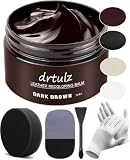
- [ Leather Recoloring Balm] Revitalize your cherished leather items with our advanced formula, designed to deeply penetrate leather surfaces to repair cracks, restore elasticity, and renew original texture. Leather balm seamlessly fills imperfections, giving your leather a like-new look and feel.Please be patient - please watch the tutorial before use. Color variations between screens are unavoidable. Due to variations in leather manufacturing processes, we recommend testing the product on a small, inconspicuous area before applying it to an entire surface to ensure there are no discoloration or quality issues.
- [ Leather Color Restorer for Couches ] Perfect for leather and vinyl car seats, steering wheels, sofas, shoes, boots, handbags, office chairs, wallets, belts, jackets, and all kinds of smooth leather products. Leather dye all-in-one kit meets diverse restoration needs for all your leather better, from automotive interiors to household items
- [ Dark Brown Leather Dye ] This leather dye makes fast, easy DIY repairs. Repairs damaged leather, scratches, fading, general wear, and tear, peeling, and pet marks in one application. Dries fast, is waterproof, and won't rub off! And no bad smell
- [ Leather Repair Kit For Furniture ] Dark brown leather polish contains natural oils that can penetrate the pores of your leather to make your leather couches look shiny and new. Just apply it to leather, then apply and allow to air-dry for 10-20 minutes or use a hairdryer to speed up drying in just 1-2 minutes
- [ Leather Color Restorer ] Leather scratch remover ideal for restoring color to faded and scratched leather. It’s odor-free, waterproof, and leaves no sticky residue. Super easy to use, it's easy to restore leather sofas, leather upholstery, or any genuine and fake leather product
The environmental behavior of a finished dye product will depend on its actual colorants, solvents, binders, concentration, packaging, and waste stream. A small quantity of a ready-to-use craft product is not automatically equivalent to a bulk release of aniline, but neither should it be disposed of casually. Keep dye concentrates and contaminated absorbents out of storm drains and ordinary construction debris unless the SDS and local waste authority specifically permit that method.
Why aniline dyes still matter
Aniline dyes connect three different stories:
- A materials story: transparent colorants remain useful for wood, leather, textiles, inks, and other surfaces where the underlying texture or figure should remain visible.
- An industrial story: aniline chemistry helped demonstrate how coal-tar byproducts could become valuable, engineered materials and supported the rise of industrial organic chemistry.
- A cultural story: Perkin’s mauve changed the economics and fashion of color, showing that a laboratory discovery could rapidly become a mass-market product.
For modern builders, cabinetmakers, finishers, and restoration professionals, the practical meaning is narrower than the historical one. The right question is usually not “Is this an aniline dye?” but “What exact product is this, what substrate is it designed for, how transparent and durable is it, what carrier does it use, and what does its SDS require?”
Frequently Asked Questions
Is aniline dye the same as pure aniline?
No. Pure aniline is aminobenzene, a hazardous industrial chemical intermediate. Aniline dye is a historical category of synthetic colorants and, in modern craft markets, a label for formulated transparent dyes. A product marketed as an aniline dye should be evaluated from its own label and SDS.
Is aniline dye safe to use on wood?
A commercial wood dye can be appropriate when it is specifically intended for wood and used according to its label and SDS. Check the carrier, ventilation requirements, PPE, cleanup, disposal, fading information, and compatibility with the planned clear coat. Do not use pure aniline as a wood-finishing product.
What is the difference between aniline dye and pigment stain?
A soluble dye colors the material while generally preserving more of its transparency and visible grain. Pigment stain contains solid color particles that lodge in pores and can create a more opaque appearance. Some commercial products combine both, so the product’s technical description matters.
Windows Errors? Fix Them Before They Spread
Repair common Windows errors and clear accumulated junk for a smoother, more stable PC - no reinstall needed.Free scan · no reinstallOutdated Drivers Are Slowing You Down
One free scan finds every outdated or missing driver and matches the right update for your exact hardware.Free scan · exact hardware matchWhat does aniline leather mean?
Aniline leather is generally leather colored primarily with soluble dyes and finished with little or no opaque pigment coating. It is not leather that has been exposed to pure aniline. It can show more natural variation and may be more absorbent than heavily finished leather.
Can aniline dyes be made at home from aniline?
No. Do not attempt to synthesize dyes from pure aniline in a home workshop or ordinary construction shop. Aniline can be absorbed through skin and can cause serious toxic effects, including methemoglobinemia. Use a commercially formulated product intended for the substrate and follow its SDS.
The Bottom Line
Aniline dyes are best understood as a historical bridge between coal-tar chemistry and modern synthetic color, with a more specific craft meaning today. Pure aniline is a hazardous industrial intermediate; a commercial wood or leather dye is a separate formulated product. Select the exact product for the substrate, test it on representative material, verify the SDS and finish compatibility, and never rely on the word aniline alone as a safety or performance specification.
Quick Recap
Product prices and availability are accurate as of the date/time indicated and are subject to change. Any price and availability information displayed on Amazon at the time of purchase will apply.
The Tool Desk
Outbyte PC Repair FREEClear out junk files and repair common Windows errorsFree Scan →Outbyte Driver Updater FREEScan for outdated or missing drivers - takes under a minuteDriver Scan →
