Some links on this page are affiliate links: if you buy through them we may earn a commission, at no extra cost to you.
A concrete mowing strip can keep a mower wheel on a firm, level track beside a flower bed, allowing the blade to reach the lawn edge without a separate string-trimming pass. For most residential yards, start at about 6 inches (150 mm) wide, then check that your mower wheel sits completely on the strip. The surface must finish flush with the lawn: a raised lip can catch the wheel, while a low strip leaves grass standing. Poured concrete is durable and continuous, but flat pavers or bricks are easier to replace or rearrange, and a hand-cut edge costs less in materials but needs seasonal renewal.
What is a concrete mowing strip, and how does it reduce trimming?
A mowing strip is a narrow, hard, flat surface installed between turf and a planting bed. The mower’s wheel rides on the strip while the blade reaches the grass alongside it. Pavingexpert defines a mowing strip as a hard surface less than 450 mm wide; its purpose is to separate grass or planting from another area and make edging possible without strimming where the mower cannot otherwise reach.
As an Amazon Associate I earn from qualifying purchases.
The strip does not make a bed maintenance-free. Soil, cracks, movement, corner geometry and plants that spill over the edge still require attention. Its benefit is removing much of the routine line-trimming along a straight, accessible boundary.
How wide should a concrete mowing strip be?
Width should be determined by the mower wheel, not by a universal landscaping rule. House Digest describes about 6 inches as typical for a residential concrete strip. Pavingexpert says approximately 200 mm can be adequate for domestic modular work, while 300 mm is used for larger mower applications.
Popular on Amazon
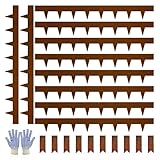
- [MATERIALS AND SIZE]: Landscape Edging made of high-quality corten steel, pre-rusted surface for all-weather use and maintenance-free durability.; Landscape Edging 4.5" H X 40" L, 33FT in total length.
- [FLEXIBLE LANDSCAPE EDGING]: Steel landscape edging is flexible and bendable, and can be easily bent and molded to any shape angle you need.
- [EASY TO INSTALL]: steel landscape edging can be easily inserted into the soil, use clips fix the edging, making the edging seamlessly linked, increasing the stability of the landscape edging, and making the landscape edging more aesthetically pleasing.
- [MULTIPLE USE]: Steel landscape edging is suitable for gardens, patios, paths, planting, farmland, forestry and any other place where you need to separate areas, it effectively prevents grass roots and weeds from spreading and maintains a neat landscape.
- [LANDSCAPE EDGING SERVICE]: we are at your service 24/7, if you have any questions about landscape edging, please feel free to contact us, we will provide you with a solution to your satisfaction within 24 hours!
- Measure the mower wheel’s contact width and allow enough room for the entire wheel to remain on the strip.
- Use about 150 mm (6 inches) only as a starting point for a typical residential mower.
- Consider roughly 200 mm for a wider domestic modular edge and 300 mm where a larger mower needs more stable support.
- Keep the full surface flat and flush with the lawn, including at transitions and corners.
Before setting forms, push or roll the mower along the proposed line and confirm that the wheel will not drop into the bed or ride on the concrete edge. A narrow strip that looks tidy but cannot support the wheel defeats its purpose.
Can a mower run on a concrete flower-bed edge?
Yes, provided the concrete is level with the turf, wide enough for the wheel and free of abrupt lips. The lawn should meet the strip at the same elevation along its length. A strip that stands proud can catch or jolt a wheel; one that settles below grade can leave a band of uncut grass.
Keep the blade and deck clear of the bed’s soil and mulch. At corners, curves and narrow ends, the mower may still miss grass, so plan for occasional hand edging or trimming in those locations.
Also popular on Amazon

- Durable Steel Landscape Edging – Made of heavy-duty galvanized steel with rustproof black finish, this metal landscape edging is built to last through rain, snow, and sun while keeping your garden borders strong and stylish.
- 20ft Coverage with 6 Panels – Each pack includes six 40"x10" panels (20ft total length), offering flexible installation for small or large garden projects. Reliable landscape edging choice for both homeowners and professional landscapers.
- Easy Hammer-in Installation – Designed with a practical hammer-in system, these 40"x10" panels connect seamlessly for quick setup. Perfect metal edging for landscaping projects, saving you time and effort without special tools.
- Neat & Defined Garden Borders – Prevent grass overgrowth and keep mulch, soil, and gravel in place. This metal garden edging creates sharp, professional-looking boundaries that upgrade your flower beds and pathways instantly.
- Versatile Outdoor Use – Ideal for flower beds, pathways, driveways, and lawn edges. Whether for decorative landscaping or functional separation, this metal edging for landscaping ensures a clean, low-maintenance yard design.
How do you pour a concrete mowing strip?
The following sequence follows QUIKRETE’s concrete lawn-border guidance. Trench depth, reinforcement and drainage details must be adapted to local soil, frost and water conditions; the sequence is a project guide rather than a site-specific structural design.
- Mark and clear the line. Remove turf, mulch and loose landscaping material. Snap or paint both edges of the proposed strip.
- Excavate a level trench. QUIKRETE recommends making the trench 1/2 to 1 inch deeper than the border and keeping the sides as vertical as practical so the forms have support.
- Install forms. Use 1/4-inch plywood strips, stake them securely and add spacers so the width remains consistent through curves and straight runs.
- Compact and add a base. Compact the soil, then place a layer of all-purpose gravel as the base material.
- Mix and place concrete. Mix QUIKRETE Crack Resistant Concrete Mix according to its bag directions. Slightly overfill the forms, consolidate the mix to remove voids and level it with a wood float.
- Finish and control cracking. Tool the edges and cut control joints at approximately 8-foot intervals.
- Cure before loading the edge. Keep the surface damp with a fine water mist for at least 3–5 days unless the product’s specified cure-and-seal alternative is used. Remove forms carefully, then backfill and replace mulch or other landscape materials.
Wear eye protection and waterproof gloves during mixing and placement. Do not allow wet cement paste to contact skin, and follow the product label for mixing, handling and cleanup.
What dimensions and materials are typical for modular strips?
Pavers, slabs, bricks and flat edging kerbs can provide the same wheel track without creating one continuous concrete piece. Pavingexpert describes 600 × 300 × 50 mm concrete flags laid 300 mm wide for larger projects and notes that about 200 mm may be enough for domestic work.
The Tool Desk
Outbyte Driver Updater FREEScan for outdated or missing drivers - takes under a minuteDriver Scan →Outbyte PC Repair FREERepair Windows errors before they cause bigger problemsFix Now →Also popular on Amazon
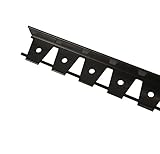
- SNIP TO FLEX PAVER, BRICK, OR LANDSCAPE EDGING: Create a beautifully landscaped yard and paver designs without having to hire a professional with easy to install commercial grade edging
- KIT INCLUDES: 10 6-foot segments for 60 feet of commercial grade plastic edging, measuring 1.75 inches tall
- SNIP TO FLEX: Cut spines where needed to create smooth curves, or leave spines uncut to create rigid straight sections
- DO-IT-YOURSELF: Place the edging around your paved patios, concrete paths, and rock gardens and secure with anchoring stakes (sold separately) for a secure, long lasting border
- DURABLE & FLEXIBLE: Flexible commercial grade plastic allows the edging to be installed in a straight line or molded to form curves
| Application or component | Figure reported by the source | What it means on site |
|---|---|---|
| Typical residential concrete strip | About 6 inches (150 mm) | Starting point; verify against the mower wheel |
| Domestic modular mowing strip | About 200 mm | May suit smaller residential mowers |
| Larger mower application | About 300 mm | Provides a broader wheel track |
| Common flag size cited by Pavingexpert | 600 × 300 × 50 mm | Flags can form a 300-mm-wide strip |
| Typical modular excavation without concrete or mortar bed | 60–70 mm | Adjust for the unit thickness, bedding and finished lawn level |
For a modular installation, mark the boundary, excavate to the required depth (often 60–70 mm where no concrete or mortar bed is planned), and allow extra width for handling. Bed units on coarse grit sand or on a mortar or concrete layer suited to the site, then compact and adjust them until the top is flush with the lawn. Pavingexpert cautions against building sand because it can become unstable when waterlogged.
Should you choose poured concrete, pavers or a hand-cut edge?
| Option | Advantages | Limitations | Best fit |
|---|---|---|---|
| Poured concrete | Continuous, firm track with a strong visual line | Forms, base preparation, mixing and curing are required; later bed changes are difficult | A permanent, straight layout that matches the scale of the planting bed |
| Concrete flags, pavers or bricks | Individual units can be lifted, replaced or rearranged | Every unit must remain level and flush; unstable bedding can cause movement | Layouts likely to change or repairs that should be localized |
| Hand-cut soil edge | Minimal purchased material and a flexible organic appearance | Hard work and seasonal touch-ups | Small beds, temporary layouts or projects where hardscape is not wanted |
Edmonton advises matching a bold poured-concrete border to the scale of the planting bed. A narrow bed can look dominated by a wide, bright strip, while a broad bed may need a more substantial track to look intentional.
Will a mowing strip stop grass from creeping into the flower bed?
It creates a clearer physical boundary and makes stray runners easier to spot, but it is not an absolute root barrier. Grass can spread over the surface, through joints or from soil that accumulates against the edge. Sweep or blow off clippings and soil, pull runners promptly and keep mulch from forming a bridge over the strip.
Also popular on Amazon

- ABOUT THE EDGING: 2.8" above ground, spikes are 3.2” in height; 10 Pack of 41" each, 34Ft in total installed; These black long strips of metal edging are flexible enough to bend to your exact specifications
- GALVANIZED STEEL: These landscape edgings are made of solid galvanized steel with powder coating, the surface is wear-resistant, corrosion-resistant, and has a long service life; You don't have to worry about rain corroding the surface of this edging
- WIDELY USED: These steel edgings can add charm and character to your garden landscaping; They create clean lines and offer natural, rustic finish; They keep grass from spreading into your garden beds or soil and mulch in the garden from spilling onto the lawn; Quality steel landscape edging widely used in outdoor gardens, courtyards and forestry, etc; Used in both commercial and residential settings
- FLEXIBLE AND EASY TO INSTALL: With 3.2" sharp saw teeth, this bendable hammer-in steel edging is easy to bend and install, (Note:Please wear gloves for installation); It can also be easily hammered back down; You can easily pull the edging up and reshape it to match a new shape
- Email anytime for support. Our team is here to help!
Inspect the edge at least seasonally for cracks, settlement, lifted pavers and plant spillover. Repair movement early so the mower wheel does not encounter a step.
What’s actually slowing this PC down?
Pick the symptom - the matching free tool is one click away.
What maintenance does each edge require?
- Poured concrete: Check for cracks, settlement, soil buildup and chipped edges; clear debris so the wheel remains on a clean, level track.
- Pavers or bricks: Reset units that rock or sink, replace damaged pieces and renew bedding where water has displaced it.
- Hand-cut borders: Recut the line with a spade or half-moon edger and pull soil back to form a shallow trench a few inches below grade. University of Illinois Extension says hand-edged beds generally need touch-ups once or twice a year.
Even a permanent strip may need occasional hand work at tight corners, irregular curves and areas where plants lean across the boundary.
What should you check before building one?
- Confirm the mower wheel footprint and choose a width that supports it completely.
- Set the finished elevation against the existing lawn, driveway and paths so water does not pond at the edge.
- Account for local frost, drainage and soil movement before choosing a base or bedding method.
- Plan control joints in long poured runs and provide access for future bed changes.
- Match the strip’s visual weight to the planting bed and surrounding hardscape.
Frequently Asked Questions
Can I install a mowing strip next to an existing lawn without removing much turf?
You still need to remove enough turf and roots to excavate the trench and establish a stable base. Leaving organic material under the strip increases the chance of settlement and an uneven mower track.
Also popular on Amazon
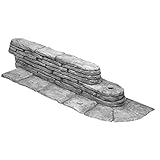
- 20-FOOT LAWN EDGING – This package includes 20 feet of landscape edging for lawn use that sports flanged edging for trim-free mowing. Each piece of this plastic product also has stakes to anchor the edging. The Bedrocks anchor edging requires no additional digging.
- TRIM-FREE LAWN EDGING - The unique trim-free flange on the side of each edging piece prevents grass growth close to the edging and gives lawn mowers a surface to travel on
- EASY TO INSTALL UPSCALE SLATE - This lawn edging has an upscale, modern brick appearance and is fast and simple to install. This trim-free item is do-it-yourself and requires minimal time and tools
- ADJUSTABLE PIECES - This landscape edging is flexible, easily bending around edges. And with T-connectors you can contour to virtually any shape or border design
- VERSATILE DESIGN - This stunning lawn edging evokes the look of natural stacked slate that really pops. The neutral and natural color blends with virtually all gardens and landscapes
Do concrete mowing strips need reinforcement steel?
The cited residential installation guide uses forms, compacted ground and a gravel base but does not specify reinforcement steel. Reinforcement requirements depend on soil, frost, loads and local practice, so a contractor should specify them for unusual conditions or vehicle loading.
How should I handle a curved flower-bed border?
Use flexible form material for poured concrete or smaller modular units that can follow the radius. Check the mower path at the tightest curve; a wheel may not stay on a narrow strip even when straight sections are wide enough.
Do these 3 things before closing this tab:
1Scan for outdated or missing drivers - takes under a minute2Clear out junk files and repair common Windows errors3Fix the driver behind crashes, sound loss and screen glitchesCan I pour the strip directly against a house foundation or retaining wall?
Provide a drainage and movement detail rather than trapping water against the structure. The correct joint and separation depend on the building and site, so obtain local construction advice before tying new concrete to existing foundations.

