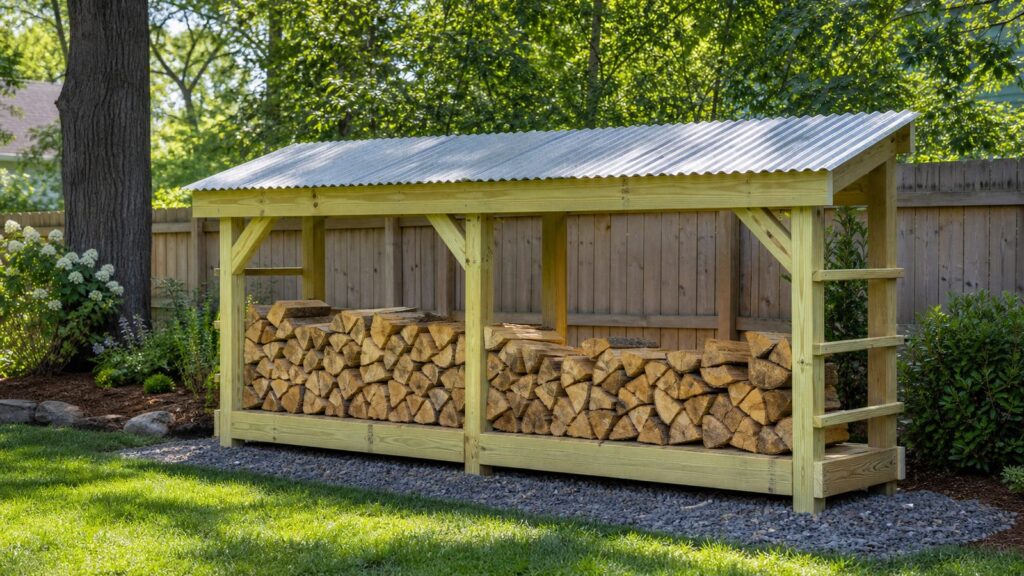
A good DIY firewood rack does three jobs: it keeps the bottom row off wet ground, lets wind move through the stack, and holds a surprisingly heavy load without leaning over by February. For most homeowners burning standard 16-inch split firewood, the best all-around rack is about 8 feet long, 4 feet high, and 14 to 18 inches deep, set on gravel or pavers, with the wood at least 4 to 6 inches above grade and a top cover that leaves the sides open.
That size is popular for a reason. An 8 ft x 4 ft x 16 in single-row rack holds about 42.7 cubic feet of stacked firewood, or roughly one-third of a cord before real-world stacking variation. If you make it only 12 inches deep, it holds about 32 cubic feet, or one-quarter cord. That is enough for weekend fireplace use, patio fires, or staging wood near the house while the larger supply seasons farther away.
On our job sites, we treat firewood storage like any other small exterior structure: start with drainage, size for the actual load, brace against movement, and keep combustible material where it belongs. The rack can be simple, but it should not be flimsy.
Start With the Right Rack Size
Design the rack around the wood you actually burn. Most split firewood sold for home use is cut around 16 inches long. A rack depth of 14 to 18 inches supports one clean row without wasting space or hiding wet, moldy pieces in a second row. If you burn 18-inch stove wood, build the rack closer to 20 inches deep. If your wood is 12 inches long for a small fireplace insert, a 12 to 14 inch deep rack is fine.
The Tool Desk
Outbyte PC Repair FREEClear out junk files and repair common Windows errorsFree Scan →Outbyte Driver Updater FREEScan for outdated or missing drivers - takes under a minuteDriver Scan →Use cord math instead of guessing. A standard full cord is 128 cubic feet, commonly described as a stack 4 feet high, 4 feet deep, and 8 feet long. USDA guidance notes that a full cord can weigh up to about 5,000 pounds depending on species and moisture. That means even a quarter-cord rack can carry 1,000 pounds or more when loaded with dense or partly seasoned hardwood.
#1 Best Overall
- 𝗜𝗚𝗡𝗜𝗧𝗘 𝗧𝗛𝗘 𝗡𝗜𝗚𝗛𝗧. Keep your firewood stacked, dry, and ready with this durable steel firewood organizer — a stylish wood rack perfect as fire waood storage racks outdoor or indoor use. Holds 1/2 cord (64 cubic feet) of 24" logs and is crafted from heavy-duty 16-gauge U.S. steel for strength that lasts. Available with or without a cover, for easy and reliable storage. The standard cover measures 96L × 22W × 12H inches, keeping the top layer dry and ready to burn anytime.
- 𝗟𝗘𝗚𝗔𝗖𝗬-𝗚𝗥𝗔𝗗𝗘 𝗔𝗠𝗘𝗥𝗜𝗖𝗔𝗡 𝗖𝗥𝗔𝗙𝗧𝗦𝗠𝗔𝗡𝗦𝗛𝗜𝗣. Designed and engineered by the Alexander Family since 1927, this Woodhaven firewood rack is built to last for generations. Forged from heavy-duty steel with powder-coated finish, it's more than a log rack or firewood holder, it’s a premium Woodhaven firewood rack made in USA — a bold statement of strength and pride.
- 𝗣𝗢𝗪𝗘𝗥𝗙𝗨𝗟 𝗗𝗘𝗦𝗜𝗚𝗡, 𝗦𝗜𝗠𝗣𝗟𝗘 𝗦𝗘𝗧𝗨𝗣 — 𝗙𝗿𝗼𝗺 𝗕𝗼𝘅 𝘁𝗼 𝗕𝗲𝗮𝘂𝘁𝘆 𝗶𝗻 𝟯𝟬 𝗠𝗶𝗻𝘂𝘁𝗲. No special tools, no hassle. This 8-foot outdoor firewood storage rack assembles quickly and easily, so you can spend more time enjoying the fire. Every detail is designed for effortless setup—from precision-drilled holes that ensure structural integrity to stainless steel nuts and bolts that align perfectly for a smooth build. Built with lumber rack toughness, this lumber storage rack goes together cleanly and stays solid. This wood racks outdoor storage for firewood makes setup simple and frustration-free—an easy, reliable lumber storage rack ready for years of use.
- 𝗖𝗟𝗘𝗔𝗡 𝗕𝗨𝗥𝗡, 𝗖𝗔𝗟𝗠 𝗠𝗢𝗠𝗘𝗡𝗧𝗦. The Woodhaven 8 foot firewood rack comes with a uniquely designed cover to keep the top rows of wood completely dry while allowing airflow, keeping the wood in optimal condition, and promoting faster curing. Built from powder-coated steel, this Woodhaven outdoor wood storage rack with breathable cover for dry logs holds 1/2 cord and serves as a premium fire wood racks outdoor solution for any outdoor fireplace or patio, delivering clean, ready-to-burn flames every time.
- 𝗕𝗨𝗜𝗟𝗧 𝗙𝗢𝗥 𝗕𝗜𝗚 𝗠𝗢𝗠𝗘𝗡𝗧𝗦 𝗔𝗡𝗗 𝗚𝗢𝗢𝗗 𝗖𝗢𝗠𝗣𝗔𝗡𝗬. With room for a serious log supply, this 8-foot firewood rack outdoor keeps wood stacked and ready by your fire pit or gathering space — durable design meets everyday ease. Perfect as a patio firewood rack for fire pit or chiminea, a space-saving firewood storage solution for decks, it keeps logs neatly stacked and ready.
The quick formula is:
Length in feet x height in feet x depth in feet / 128 = approximate cords
For example, an 8-foot rack that is 4 feet high and 16 inches deep is 8 x 4 x 1.33 = 42.7 cubic feet. Divide by 128 and you get 0.33 cord. Real stacks have air gaps, uneven splits, and bark voids, so treat this as a practical estimate, not a lumberyard measurement.
Common Rack Sizes
- 4 ft long x 3 to 4 ft high x 14 to 18 in deep: good for patios, fire pits, and 1 to 2 weeks of casual burning.
- 8 ft long x 4 ft high x 14 to 18 in deep: the best general-purpose outdoor size for most homeowners.
- 12 to 16 ft long x 4 ft high x 16 to 20 in deep: better for wood-stove users, but it needs stronger bracing and a better base.
- Full shed or multi-bay rack: appropriate when you season a full cord or more on site.
Choose the Best Firewood Rack Style
There is no single perfect design. The right rack depends on how much wood you store, how exposed the site is, and whether you want a temporary, seasonal rack or a permanent yard feature. The simplest rack can be built with concrete blocks and 2x4s. A more durable rack uses pressure-treated framing, structural screws, diagonal bracing, and a rigid roof.
Free tools Windows power users keep installed
One-click scans. No signup required.
| Rack type | Best use | Typical 2026 DIY cost | Pros | Watch-outs |
|---|---|---|---|---|
| No-cut concrete block rack | Small seasonal stacks | $20-$60 | Fast, cheap, easy to move | Can spread or lean if overloaded; usually needs a separate top cover |
| Standard framed wood rack | Most homeowners | $75-$180 | Strong, clean-looking, easy to size | Needs treated lumber near grade and proper bracing |
| Covered framed rack | Exposed yards and long seasoning | $150-$350 | Best balance of rain protection and airflow | Roof must be pitched and secured for wind |
| Small firewood shed | Heavy wood-stove use | $400+ depending on size | Stores larger volume, can have multiple bays | More likely to trigger permit, setback, or accessory-structure rules |
| Prebuilt steel rack | Quick installation | $80-$300+ | No carpentry, often neat appearance | Capacity and load rating vary; many still need a better cover and base |
A prebuilt steel rack can be a useful benchmark. Heavy-duty 8-foot covered racks are commonly marketed around one-half cord capacity with load ratings around 1,800 pounds. A DIY wood rack does not need a laboratory rating, but it should be built with that kind of load in mind.
Materials and Tools for a Contractor-Quality 8-Foot Rack
This plan builds a freestanding 8 ft long x 4 ft high x 16 in deep rack for standard 16-inch firewood. It uses pressure-treated lumber where moisture exposure is likely, exterior-rated structural screws, and a simple sloped top cover. If you skip the roof, keep the same rack frame and use a top-only tarp as a temporary cover.
Cut List
- Two pressure-treated 2x4s at 96 inches for the bottom rails
- Two pressure-treated 2x4s at 96 inches for the top rails
- Four pressure-treated 2x4s at 48 inches for upright posts
- Four pressure-treated 2x4s at 16 inches for end depth members
- Two pressure-treated 2x4s cut diagonally or to fit for back bracing
- Optional roof: three 2×4 roof supports, corrugated metal or polycarbonate panel, roofing screws with washers
- Base: four concrete blocks or pavers, plus 2 to 4 inches of compacted gravel
Hardware and Supplies
- exterior structural screws, typically 3 inches for framing connections
- 1-5/8 inch or 2 inch exterior screws for lighter blocking
- galvanized angle brackets or structural connectors where the uprights meet the rails
- Landscape fabric under gravel if weeds are an issue
- Exterior stain or sealer if desired, especially for visible faces
- moisture meter for checking firewood before burning
Expected Cost in 2026
For a standard 8-foot pressure-treated wood rack, expect about $75 to $180 in materials. Current big-box examples in the research pack show pressure-treated 2×4 listings around $4.98 for 6 ft, $9.78 for 12 ft, and $11.62 for 16 ft boards in some Home Depot markets, while Lowe’s pressure-treated lumber pricing commonly varies around the low-teens depending on size, species, and grade. Blocks, pavers, gravel, fasteners, and roof material are often the difference between a $90 rack and a $250 rack.
A covered version with corrugated roof panels usually lands around $150 to $350 DIY. The roof adds cost, but it also reduces wasted top-row wood, mold, and frustration. Lumber commodity prices move, but retail cost still depends heavily on board length, treatment rating, local freight, and store inventory.
Quick wins for a faster PC:
Repair Windows errors before they cause bigger problemsFix Now →Fix the driver behind crashes, sound loss and screen glitchesFind Drivers →Clear out junk files and repair common Windows errorsFree Scan →Build the Base First
The base matters more than homeowners expect. Firewood fails from the bottom up. Soil, grass, and mulch hold moisture, invite insects, and let the rack settle unevenly. A rack that twists out of level will start pushing outward as the stack gets heavier.
Rank #2
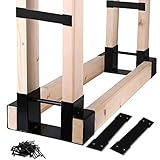
- WHAT YOU GET -- A pair of firewood log brackets with wood screws,13.2" *3.7"*6". (Lumbers are not included).
- HEAVY DUTY BRACKET -- Made of sturdy 14GA steel plate,no sharp corners,welds are even and looking overall,generally well manufactured.
- RUST PROOF -- Coated with electrostatic powder coated paint which gives it an extra layer of protection against the elements compared to raw iron.
- CUSTOMIZE SIZES -- Brackets allowed for personalized board dimension cuts,this allows you to customize just how big you want your rack to be.Stack some fire woods in the house near the fire pit or store several bundles of wood in the garden.You have the choice.
- DRAIN HOLES AT BOTTOM -- Has pre-drilled holes in case water gets inside, which causes the wood to rot.
Pick a sunny, breezy location with decent access from the driveway or wood drop point. Scrape organic material down to firm soil. Set a gravel strip at least 6 inches wider than the rack footprint on all sides. For an 8 ft x 16 in rack, a gravel pad around 9 ft long by 30 in wide is a practical minimum. Use 2 to 4 inches of compacted crushed stone or gravel. In wet soil, snow country, or splash-prone areas, go thicker.
Set concrete blocks or pavers on the gravel and check level side-to-side and front-to-back. The wood rails should sit at least 4 to 6 inches above finished grade. More clearance is better where snow piles against the rack or roof runoff splashes back.
Frame the Rack
Build the two end frames first. Each end frame is essentially a rectangular U-shape: two 48-inch uprights connected by 16-inch depth members at the bottom and near the top. Use exterior structural screws and keep the corners square. If you use metal angle brackets, install them on the inside faces where they will not snag logs.
Connect the two end frames with the 96-inch bottom rails and 96-inch top rails. The bottom rails carry the firewood. The top rails tie the uprights together and resist outward movement. For an 8-foot rack, use two bottom rails spaced so the logs sit securely without falling through. With 16-inch wood, rails near the front and back edges work well.
Add diagonal bracing across the back. This is the difference between a rack that stays square and one that slowly turns into a parallelogram. A single diagonal 2×4 from the lower left to upper right helps, but two opposing braces are better. On racks longer than 8 feet, add rigid intermediate posts or divide the rack into bays.
Keep the rack narrow enough that it cannot become a tall, unstable wall. A 4-foot stack height is sensible for homeowners. Taller stacks are harder to load safely, harder to cover, and more likely to lean. If you need more capacity, build longer or build separate bays rather than stacking higher.
Add a Roof or Cover Without Trapping Moisture
Firewood needs rain protection from above, not a sealed wrapper. EPA-aligned storage guidance and extension recommendations consistently point to the same principle: keep wood off the ground, cover the top, and leave the sides open for airflow. Wood that cannot breathe will not season properly.
The best DIY cover is a simple sloped roof with overhang. Corrugated metal, corrugated polycarbonate, or another rigid panel sheds water better than a flat board or sagging tarp. Pitch the roof at least 1 inch per foot if possible. Give it a 3 to 6 inch overhang at the front and back, and a few inches beyond the ends. Aim runoff onto gravel, not back onto the bottom row.
Rank #3

- HEAVY TUBULAR STEEL:Wooden storage shelves are constructed of heavy-duty tubular steel with a two-layer black powder coat finish that is colorfast, rust-resistant and weatherproof.You can place the firewood rack in any hot, cold, warm or dry climate to provide enough fire wood for a year-round fireplace.
- HEAVY TUBULAR STEEL:Wooden storage shelves are constructed of heavy-duty tubular steel with a two-layer black powder coat finish that is colorfast, rust-resistant and weatherproof.You can place the firewood rack in any hot, cold, warm or dry climate to provide enough fire wood for a year-round fireplace.
- ENHANCED STABILITY: The 14 legs provide superior stability and weight distribution, ensuring the log holder remains steady even when loaded with heavy logs. This sturdy construction minimizes the risk of the wood storage racks tipping or collapsing, providing a safe and reliable firewood storage solution.
- EASY TO INSTALL: Assembly of the outdoor wood storage is quick and straightforward with the included hardware and easy-to-follow instructions. The fire wood racks is compact enough to be placed in a garage, shed or near a fire source, providing maximum convenience while minimizing space usage.
- AFTER-SALES SERVICE: At Tikimilor, we strive to provide exceptional after-sales service to ensure your complete satisfaction with your purchase. We are committed to resolving any issues or concerns you may have promptly and efficiently.
If you use a tarp, cover only the top. Do not wrap the sides to the ground. A full tarp may look tidy for a week, but it traps humidity, slows seasoning, and can create mildew. Use bungees or clips so the tarp stays tight and does not flap loose in wind.
Place the Rack Safely
Convenience matters, but do not put the main rack tight against the house. Firewood can shelter insects and rodents, and stacked combustible material against siding is not good practice. A practical minimum is at least 5 feet from the house foundation for pest reduction, with more distance where local fire, property, or HOA rules require it.
Check local requirements before building anything permanent. Some jurisdictions treat larger covered racks as accessory structures. Others regulate outdoor combustible storage, property-line setbacks, height, screening, or nuisance conditions. Fire code language can also matter if wood is stored near buildings, fences, or ignition sources. In dense neighborhoods, historic districts, wildfire-prone areas, or multifamily properties, ask before you build.
PC Slower Than It Used to Be?
A free scan shows the junk files, broken settings and background clutter dragging Windows down - then fixes them in one click.Free scan · Windows 10 & 11Crashes, No Sound, or Screen Glitches?
Random freezes, missing sound and display glitches usually trace back to one bad driver. Find and replace yours safely.Free scan · under a minutePlacement Checklist
- Keep the rack on a level gravel or paver base, not soil or mulch.
- Allow air to move through the long face of the rack.
- Keep the prevailing-wind side open.
- Stay at least 5 feet from the foundation as a pest-reduction baseline.
- Keep clear of dryer vents, HVAC equipment, grills, fire pits, electrical panels, and egress paths.
- Confirm property-line and accessory-structure rules for larger covered racks or sheds.
For day-to-day use, keep a small indoor hoop or bin with 1 to 2 days of wood. Leave the main supply outside. That limits pests, bark debris, and indoor humidity.
Seasoning Firewood: What the Rack Is Really For
A rack is not just storage. It is part of the drying system. Firewood burns cleaner and hotter when it is seasoned below about 20% moisture content. Wet wood wastes heat boiling off water, smokes more, and contributes to creosote buildup in chimneys.
Use a moisture meter on a freshly split face, not the weathered outside of a log. Split one piece, press the meter pins into the newly exposed interior face, and check several pieces from different parts of the stack. Below 20% is the practical target for burning. Hardwood may need 6 to 18 months depending on species, split size, climate, and exposure. Dense oak often takes longer than softer hardwoods.
Stack loosely enough for airflow but neatly enough for stability. Put irregular pieces, shorts, and knotty splits near the top where they will not destabilize the base. Keep bark orientation consistent where possible, but do not overthink it. Air movement, sun, and top cover matter more.
What’s actually slowing this PC down?
Pick the symptom - the matching free tool is one click away.
Common DIY Firewood Rack Mistakes
The most common mistake is building directly on grass or mulch. It seems harmless until the bottom row turns punky, the rack settles, and the end frames start leaning. Use gravel, pavers, or blocks. Keep the first course of wood up in the air.
Rank #4

- The fire wood rack measures appr 6.0 W x 1.1 D x 3.8 H feet, holds and stores up to 3/8 face cord of firewood and easily withstand a load of upto 1100 pounds. Perfect size to fit on outdoor porch, backyard deck, outside fire pits, under eaves, on patios, or put it on a hard surface, such as paving stones, concrete patio or gravel.
- The 6 feet firewood storage holder is made of heavy tubular steel construction with a double black powder-coated finish, optimal durability, sturdy, rust and weather resistant. You can put it in any hot, cold, warm, wet or dry climates and hold enough wood for fireplace all seasons.
- Features 2 anti tip lock rings and 10 solid rack legs, that means we take more care for the safe of your families. Secure the rack reliably and effectively prevent tipping over of the heavy firewoods, which could otherwise result in serious injuries and even fatalities in the case of babies, children. Just lock up the rack with extra anti-tip straps and put the rack on a hard surface.
- Due to dry firewood burns better, lumber stacking rack keeps logs 4 inches off of the ground, it will give better airflow and maintains a sufficient distance from the ground, meantime avoid the bugs and wood rot. Holds fair amount of firewood log for the outdoor backyard fire pit, outside firepits, wood burning stove logs, rick, woodpile and logs for outdoor camping.
- Artibear is dedicated to providing high-quality products and exceptional customer service. Please don't hesitate to reach out to us directly with any concerns. We offer a 1-year service, a 90-day refund policy, and 24-hour friendly and attentive customer support.
The second mistake is ignoring lateral pressure. Firewood does not sit like books on a shelf. Uneven splits push outward over time, especially when the stack is loaded from one side. Use strong end frames, top rails, and diagonal bracing. If the rack is longer than 8 feet, break it into bays or add intermediate posts.
The third mistake is wrapping the whole stack in a tarp. That protects the top from rain but traps moisture on the sides. A good rack behaves more like a covered porch than a plastic bag: roof above, open air around.
The fourth mistake is building too close to the house because it is convenient. Keep the main stack outside and away from the foundation. Bring in only what you plan to burn soon.
When to DIY vs When to Hire a Pro
A basic or standard firewood rack is a very reasonable DIY project if you can cut lumber square, drive structural screws, level blocks, and handle 8-foot boards. Most homeowners can build the framed 8-foot rack in 3 to 6 hours after materials are on site. A no-cut block rack can take less than an hour, not counting base prep.
Hire a pro or at least get construction help when the rack becomes a roofed structure, sits on a slope, stores more than about half a cord in one continuous run, attaches to another building, or needs to satisfy HOA or municipal rules. Also bring in help if drainage requires excavation, retaining, or a larger gravel pad. The materials are not complicated, but heavy loads on bad soil create problems fast.
From a contractor’s perspective, the line is simple: if failure would only spill a few patio logs, DIY is fine. If failure could damage siding, fencing, vehicles, utilities, or injure someone, build it like a small structure or hire someone who will.
Recommended Build: The 8-Foot Covered Rack
For most homeowners, we would build the 8-foot covered rack: 96 inches long, 48 inches high, 16 inches deep, with pressure-treated 2×4 framing, diagonal bracing, a gravel base, concrete block or paver supports, and a pitched rigid roof. It holds about one-third cord, keeps 16-inch logs in a single row, and is manageable to load without creating a dangerous tall stack.
Do these 3 things before closing this tab:
1Repair Windows errors before they cause bigger problems2Scan for outdated or missing drivers - takes under a minute3Clear out junk files and repair common Windows errorsExpect a realistic 2026 cost of $150 to $350 if you include a corrugated roof and proper base. If you already have gravel, screws, or scrap treated lumber, the cost drops. If you upgrade to cedar trim, larger posts, decorative panels, or a more permanent shed roof, the cost rises quickly.
Best Value

- HEAVY TUBULAR STEEL:Wooden storage shelves are constructed of heavy-duty tubular steel with a two-layer black powder coat finish that is colorfast, rust-resistant and weatherproof.You can place the firewood rack in any hot, cold, warm or dry climate to provide enough fire wood for a year-round fireplace.
- ELEVATED STRUCTURE WOOD RACK: The elevated structure of the firewood holder keeps your firewood off the ground, keep away from humid and pests. This design also promotes proper airflow, allowing your firewood to dry effectively and ensure optimal burning conditions.
- ENHANCED STABILITY: The 8 legs provide superior stability and weight distribution, ensuring the log holder remains steady even when loaded with heavy logs. This sturdy construction minimizes the risk of the wood storage racks tipping or collapsing, providing a safe and reliable firewood storage solution.
- EASY TO INSTALL: Assembly of the outdoor wood storage is quick and straightforward with the included hardware and easy-to-follow instructions. The fire wood racks is compact enough to be placed in a garage, shed or near a fire source, providing maximum convenience while minimizing space usage.
- AFTER-SALES SERVICE: At Tikimilor, we strive to provide exceptional after-sales service to ensure your complete satisfaction with your purchase. We are committed to resolving any issues or concerns you may have promptly and efficiently.
The rack does not need to be fancy. It needs to be level, elevated, braced, ventilated, and covered from above. Get those details right and your firewood will season better, burn cleaner, and stay easier to use all winter.
Frequently Asked Questions
How big should a DIY firewood rack be?
For most homeowners, an 8 ft long x 4 ft high x 14 to 18 in deep rack is the best size. It fits standard 16-inch firewood in a single row and holds about one-quarter to one-third of a cord depending on depth.
How much firewood does an 8 ft rack hold?
An 8 ft x 4 ft x 16 in rack holds about 42.7 cubic feet, or roughly one-third of a cord before stacking variation. An 8 ft x 4 ft x 12 in rack holds 32 cubic feet, or one-quarter cord.
Recommended Free Tools
Does a firewood rack need a roof?
A roof is better than a full tarp, especially outdoors. The best setup is a sloped top cover with open sides. If you use a tarp, cover only the top so the stack can still dry through airflow.
How far should a firewood rack be from the house?
Use at least 5 feet from the foundation as a pest-reduction baseline, and check local fire, property-line, HOA, or wildfire-area rules. Larger setbacks may apply in some jurisdictions.
What wood should I use for an outdoor firewood rack?
Use pressure-treated ground-contact lumber for skids, feet, bottom rails, and any framing near grade. Untreated lumber exposed to soil, splashback, or snow will rot much faster.
Do I need a permit to build a firewood rack?
Small freestanding racks usually do not need a permit, but covered racks, large wood sheds, racks near property lines, and racks in HOA or wildfire-regulated areas may be subject to local rules.
Quick Recap
Product prices and availability are accurate as of the date/time indicated and are subject to change. Any price and availability information displayed on Amazon at the time of purchase will apply.