Urban farming can put fresh produce closer to city residents, but it does not automatically reach the people facing the most severe food insecurity. Whether it does depends on secure land and water, safe production, prices residents can afford, a working way to get food to them, and real participation from the neighborhoods involved. Used well, it supplements the wider food system. It does not replace it.
What counts as urban farming
The USDA Natural Resources Conservation Service (NRCS) and USDA Climate Hubs describe urban agriculture broadly, from a backyard bed to a commercial indoor facility. The table below compares the main models the sources name. Where a sources does not give a value, the cell says so rather than guessing.



| Model | Who can access the produce | Land, water and capital | Main constraint named in the sources |
|---|---|---|---|
| Household and backyard growing (including balconies) | Mainly the growing household. USDA Climate Hubs cites household harvests as a route to fresh food. | Uses the grower’s own space and water. No cost figure stated. | Small scale. The sources state no output figure. |
| Community gardens | Garden members and nearby residents, depending on the garden’s rules. No pricing model stated. | Requires secured land and water access. No cost figure stated. | Insecure tenure and competition for land and water, according to FAO. |
| Rooftop and local farms | Farms may sell to restaurants or donate to food banks, according to USDA. | Requires land or rooftop access and a water supply. Capital and operating costs not stated. | Sales channel decides much of who benefits. |
| Indoor controlled-environment facilities (hydroponic, aeroponic, aquaponic and vertical production) | Depends on the sales channel. USDA’s workshop report on indoor agriculture and sustainable urban ecosystems discusses potential benefits to underserved communities. | Fully indoor systems require high capital investment and energy operating costs, according to USDA. | Economic viability. Successful operation calls for business, horticulture and engineering expertise. |
How urban farming can help food access
The sources describe three routes: household harvests, community gardens, and local sales and donations. Each brings produce closer to where people live, but none guarantees that the food reaches a low-income household.
Household harvests
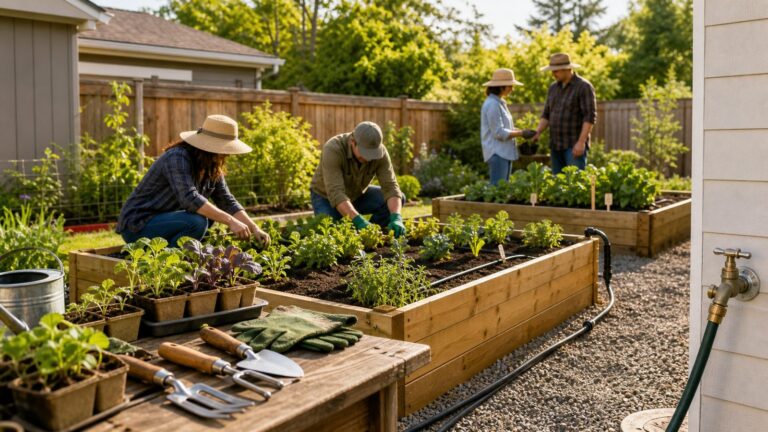
A household that grows its own greens or vegetables gets fresh food without a store trip. USDA Climate Hubs states: “Urban agriculture helps to address local food insecurity issues in cities and suburban areas.” The page does not name a speaker, so the statement is attributed to USDA Climate Hubs. The sources do not measure how much food households grow or how much they save.
Community gardens
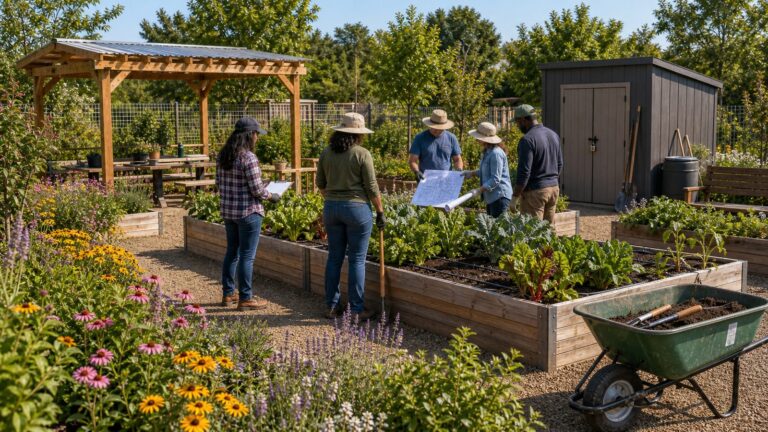
FAO describes direct access to fresh food and household food and nutrition security as potential benefits of urban and peri-urban agriculture. A garden can give neighbors a place to grow and share food, but its reach depends on who is allowed to join, who controls the plots, and how close the garden is to the homes that need it. The sources do not establish how many food-insecure residents community gardens reach.
Local sales and donations
USDA notes that farms may sell to restaurants or donate to food banks. Donation routes reach people in need directly, but the sources present them as one option among several, not as a standard outcome. A farm that sells mainly to higher-paying buyers serves a different customer base than one that donates.
Why reaching the residents who need it most is conditional
Proximity is necessary but not sufficient. The FAO and USDA sources name several conditions that decide whether the benefit lands with the residents who need it most. FAO’s planning approach covers most of them.
Planning and public support
FAO recommends including urban agriculture in city planning from the start. Without a planning role, a garden or farm can be displaced by development, lose its water connection, or never be linked to the distribution points that would make its produce reachable for residents with the fewest options.
Rank #3
Land and water
FAO identifies competition for land and water, insecure tenure, and water quality as challenges. A project whose land can be reclaimed at short notice cannot anchor a long-term food supply. Securing land and water is among FAO’s core recommendations, and it is the first condition to check for any site, whether a community plot or a commercial roof.
Product safety
FAO recommends protecting product quality, and water quality is one of the challenges it names. The sources do not set testing thresholds. Those depend on local rules, which vary by place, so a project should confirm the standards that apply where it operates.
Rank #4

- DIMENSIONS: 32. 3 in. L x 14. 7 in. W x 30. 7 in. H
- The easiest outdoor herb garden planter with built in water gauge it indicates when plants need additional moisture
- DRAINAGE SYSTEM that can be opened or closed for full control of watering
- WATER RESERVOIR: Full watering system includes a reservoir to prevent root decay and over watering
- EASY ASSEMBLY: Simple assembly with easy-to-follow instructions
Markets, prices and who the produce serves
USDA’s workshop report flags the need to balance the dietary needs of underserved neighborhoods with high-revenue niche markets. This is the central equity tension. A farm can be commercially sound while sending little of its output to the neighborhoods nearby. FAO recommends supporting producer professionalization and markets, which matters because producers need business skills to sustain prices residents can pay. Whether produce is free, subsidized or affordable is a question each model must answer for itself. The sources do not establish a general answer.
Community participation
USDA’s workshop report calls for including communities in the local food shed, and FAO recommends involving multiple stakeholders. Participation shapes what is grown, who makes decisions, and who benefits. Where residents have no role in governance, a project can serve its founders more than its neighbors.
What’s actually slowing this PC down?
Pick the symptom - the matching free tool is one click away.
Best Value

- Raised Garden Bed - Add a new level of convenience to your gardening experience with the Galvanized Raised Garden Bed. Enjoy expanded yield and a more assembled garden layout with this garden accessory, each sized at 120 cm X 60 cm x 30 cm.
- Open Base Design - The open base design of the garden box let the plants' roots increase freely into the soil, gaining a broad nutrient system. Securing proper drainage, better ventilation, and healthier root systems for more lively plants and abundant harvests.
- Lightweight Galvanized Steel- The outdoor raised garden beds are made from lightweight galvanized steel, ensuring exceptional longevity and durability. Also, it prevents it from corrosion and rust, offering a long-lasting gardening solution. Moreover, the middle support strip provided exceptional strength to our lightweight Galvanized Raised Garden Bed.
- Easy To Install - Set up your garden bed in just a few minutes. With no complex tools or expertise needed, the lightweight galvanized-steel build allows for easy movement, making it easy to find an ideal spot for your garden.
- Care Instructions - Wiping the planter raised bed with a soft cloth and warm water to remove stains and soil particles is recommended. To eliminate any moisture, please wipe dry with a cloth and air dry.
Access is not the same as food security
Food access means produce is physically and practically available. Food security also depends on income, market access, and the governance of land and water resources, according to the sources. A neighborhood can have fresh produce nearby and still lack the money to buy it, or the transport to reach it. That is why urban farming is best assessed as one part of a wider food-system plan, not a standalone solution.
Can cities grow enough food?
No, and the sources say so. USDA Climate Hubs states that urban agriculture cannot supply all food needs. It is best understood as supplementing supply, especially for local fruits and vegetables. Several figures circulate on this question. The table below sets out what each one measures and how firm it is.
| Figure | What it measures | Date and scope | Status |
|---|---|---|---|
| 15 to 20 percent of global food supply | Estimated contribution of urban agriculture worldwide | USDA Climate Hubs international page. Year not stated. | Estimate. It should not be read as a city-level forecast. |
| About 30 percent of urban land | Land that would need to be converted to agriculture to supply all food demand | USDA Climate Hubs international page. Not dated. | Estimate. The page links it to a study. It describes a hypothetical scenario, not a measured outcome. |
| About 15 percent of U.S. farms | Share of U.S. farms located in the 50 most populated cities | 2017 U.S. Census of Agriculture, as cited in a USDA NRCS and SARE bulletin | Measures the share of farms, not the share of food produced. |
| Food-insecure residents reached by urban farms | Number of residents who receive food from urban farms | Not stated in the sources cited here | Not established. The sources do not support a claim of measured reach or a causal reduction in food insecurity. |
Indoor facilities carry different costs
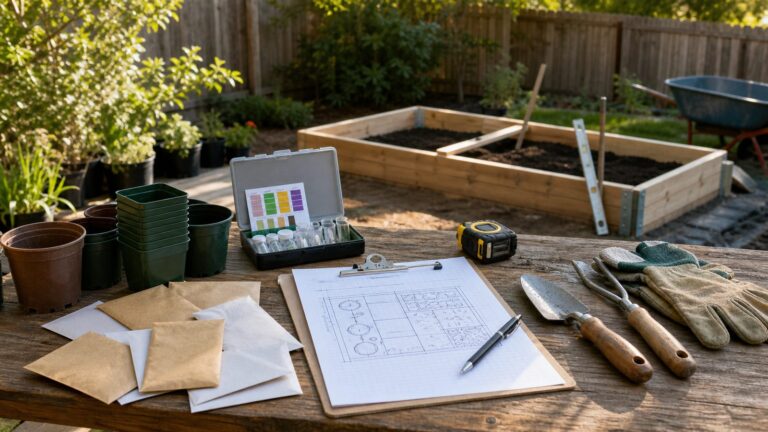
Indoor controlled-environment facilities differ from outdoor gardens in almost every requirement. USDA states that fully indoor systems need high capital investment and energy operating costs, and that they call for business, horticulture and engineering expertise. For builders and property owners evaluating a site, the questions that follow from this are:
- Can the building supply the energy load on a continuing basis, and at what operating cost?
- Is the capital budget sufficient for the facility and for the expertise its operation requires?
- Does the business plan show who the produce is for, and at what price?
- Is the site’s land and water access secure for the length of the operating commitment?
The sources do not give capital or energy figures, so no budget range is stated here.
The Tool Desk
Outbyte PC Repair FREEClear out junk files and repair common Windows errorsFree Scan →Outbyte Driver Updater FREEFix the driver behind crashes, sound loss and screen glitchesFind Drivers →Local production does not automatically mean lower emissions
USDA’s international page describes possible transport-related benefits of local production under particular supply-chain conditions. Those benefits are not universal. Energy-intensive indoor production can offset transport savings, though the sources do not quantify this for any model. The strongest case in the sources is resilience. FAO describes urban and peri-urban agriculture as “a fundamental strategy for building the resilience of a city’s food supply.” That argument depends on the planning and land conditions above, not on proximity alone.
Quick Recap
Product prices and availability are accurate as of the date/time indicated and are subject to change. Any price and availability information displayed on Amazon at the time of purchase will apply.