Free tools Windows power users keep installed
One-click scans. No signup required.
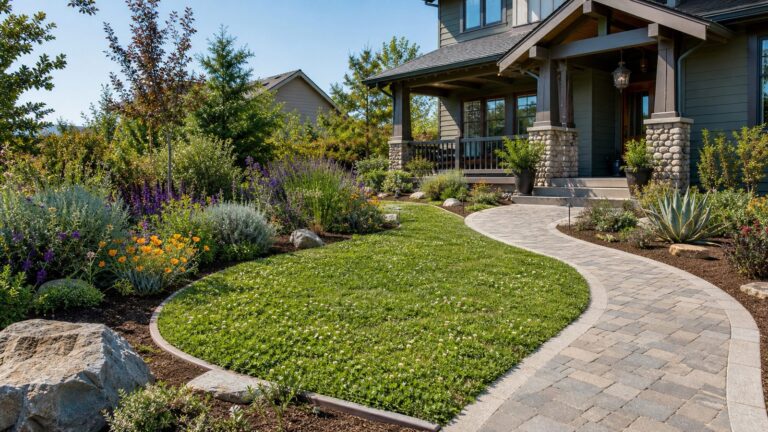
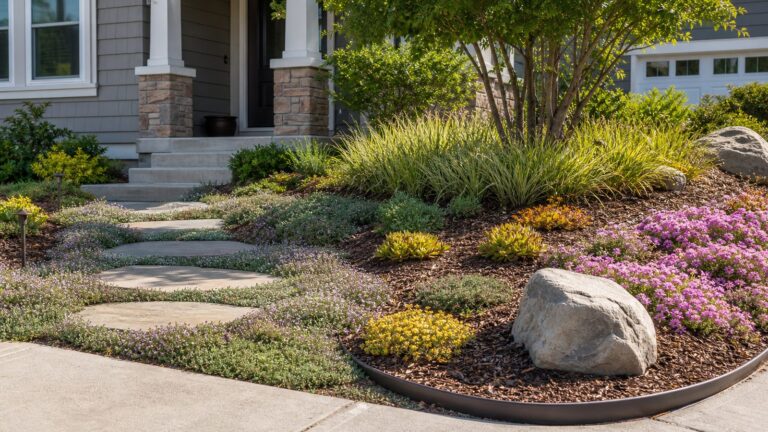
If grass keeps thinning beneath trees or in persistently shady parts of the yard, the lasting fix may be to replace the lawn there rather than keep reseeding. Check light, soil moisture, root competition and how the area is used, then choose a locally suitable groundcover, Pennsylvania sedge, moss, mulch or a durable path or patio.
Why grass struggles under trees
Shade reduces the light turfgrass needs, while tree roots compete for water and nutrients. In some spots, those conditions make a conventional lawn difficult to maintain; repeatedly reseeding without changing the conditions may not solve the underlying problem. Iowa State University Extension and Outreach explains the challenges of shade and alternatives in its guide to groundcovers for shade and overview of lawn alternatives.
Before choosing a replacement, decide whether the area needs to function as a play lawn, a route people walk regularly, or simply a planted surface. Many groundcovers establish slowly and do not withstand heavy repeated foot traffic as well as turf. A path or other durable surface can preserve access while letting nearby planting succeed.
Choose an alternative to match the site
Assess the actual conditions before buying plants or materials. Delaware Cooperative Extension recommends considering light, soil, winter hardiness, mature height, seasonal and ornamental qualities, cost, traffic tolerance and growth rate when selecting groundcovers. Its guidance is regional, so use local extension advice to check plant suitability and invasive-plant concerns.
#1 Best Overall

- This shade grass seed is the perfect mix of Perennial Ryegrass, Kentucky Bluegrass, and Tall Fescue grass seed to thrive in shady conditions
- Grow thick, green grass in areas of your lawn that don't receive much sunlight with this grass seed and fertilizer all in one pack
- Contains just the right amount of fertilizer for lawn seed to help your lawn succeed
- This mix with Kentucky bluegrass seed requires only 2 to 6 hours of sunlight
- Disease and traffic-resistant Pennington grass seed for a strong, durable lawn
- Light: Note how much direct and indirect sun the spot receives. “Shade” varies, and a plant suited to partial shade may be sparse in dense shade.
- Moisture and soil: Check whether the ground dries beneath tree roots or stays damp, and consider the soil type.
- Use: Identify regular foot traffic, pet activity or play. Keep a suitable path or lawn where repeated movement is expected.
- Growth and upkeep: Check mature height, spread, establishment needs and whether the plant is likely to move beyond the intended area.
Delaware Extension’s groundcover selection guidance recommends autumn planting in its region, with spring as the next-best time; summer planting requires careful moisture monitoring. Check local planting advice rather than assuming that calendar applies everywhere.
Compare the main choices
| Option | Best fit | Advantages | Trade-offs |
|---|---|---|---|
| Pennsylvania sedge (Carex pennsylvanica) | Partial to full shade, in a region where it is suitable; dry or moist soil | Fine-textured, turf-like appearance; spreads by rhizomes; Iowa State says it grows 6 to 12 inches tall and can be mowed two to three times a year | Iowa State’s guidance is regional. Check local suitability and expected traffic before choosing it. |
| Other shade groundcovers | Partial or full shade, depending on species and site | Cover soil, reduce routine lawn maintenance after establishment, and may add flowers or habitat | Need time and care to establish; some spread aggressively; generally unsuitable for heavy repeated foot traffic. |
| Moss | Damp, shady places, especially where moss already grows | Can serve as a low-input cover where conditions suit it and may help reduce erosion | Can be difficult to establish and needs appropriate shade and moisture. |
| Organic mulch | Deep, dry shade under trees where few plants grow | Suppresses weeds and conserves moisture without adding a competing planted layer | Needs replenishing as it thins. Iowa State recommends 2 to 4 inches of wood or bark mulch, refreshing thin areas every few years; Maryland Extension recommends 2 to 3 inches under trees. |
| Garden bed or native planting | Places that do not need a lawn surface | Can add seasonal interest and habitat, and can be installed in phases | Plants still need establishment time and ongoing care; choose species suited to the region. |
| Gravel, stone or patio | Higher-traffic or hot, dry areas where a planted surface is not needed | Durable, relatively low-input surface | Weeds can grow in joints; installation may cost more. Rock does not build soil or support most wildlife and can warm its surroundings. |
Where Pennsylvania sedge may work
Pennsylvania sedge is a useful candidate when the goal is a more lawn-like appearance in shade, but it is not a universal substitute for turf. Iowa State University Extension and Outreach describes it as suited to partial to full shade and dry or moist soils. It grows 6 to 12 inches tall, spreads by rhizomes and can be mowed two to three times per year to maintain a lawn-like appearance. These measurements and care details come from Iowa State’s regional low-maintenance turfgrass alternatives guidance; confirm it fits your local climate and intended use.
Rank #2

- SUN AND SHADE GRASS SEED: This combination lawn seed, grass fertilizer, and soil improver thrives in a variety of conditions
- WHEN TO APPLY: Use this sun and shade lawn grass seed mix to seed a new lawn or overseed an existing lawn in the spring or fall when daily average soil temperatures are consistently between 55°F and 70°F, or air temperatures between 60°F and 80°F
- GROW THICK, GREEN GRASS: Scotts Turf Builder Grass Seed Sun & Shade Mix features Root-Building Nutrition crafted to help establish deep roots to build a better, stronger lawn
- WHERE TO USE: This grass seed for lawns is designed for full sun and moderate shade, and has medium drought resistance with medium to high durability
- COVERAGE: One 5.6 lb. bag of Scotts Turf Builder Grass Seed Sun & Shade Mix has a new lawn coverage of 745 sq. ft. and an overseeding coverage of 2,240 sq. ft.
Groundcovers: useful, but not instant lawn
Groundcovers can suppress weeds and, after establishment, reduce some routine turf maintenance. They are not maintenance-free at the outset: plants need time and care to fill in, and some species spread aggressively. Most are a poor choice for heavy repeated traffic.
Iowa State lists candidates for shade including wild ginger, bugleweed, periwinkle, sweet woodruff, barrenwort, spotted deadnettle and hosta. Suitability depends on the species and precise conditions. For example, Iowa State notes that bugleweed does best in well-drained soil and partial shade and may grow thinly in dense shade. Treat regional plant lists as starting points, not guarantees.
Rank #3

- 3 pound bag
- 1,800 Square foot coverage
- 100% superior grass seed
Moss, mulch and other non-lawn surfaces
Encourage moss where it already suits the conditions
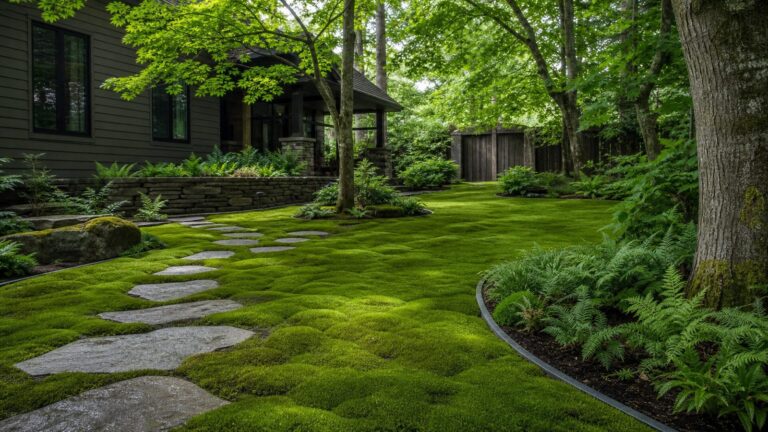
Moss is most promising in damp shade, particularly where it already grows. Iowa State says establishing it can be difficult in Iowa; its described approach involves transplanting small clumps or sheets with some soil attached, then keeping the area shaded and moist. For regional context, see Iowa State’s lawn alternatives guidance and Maryland Extension’s lawn alternatives page.
Use mulch in deep, dry shade
Where deep shade and dry conditions leave few plants likely to thrive, mulch can be a practical alternative. The recommended depth varies by source: Iowa State advises 2 to 4 inches of wood or bark mulch and topping up thin or bare spots every few years; Maryland Extension recommends 2 to 3 inches under trees. These are source-specific recommendations, not one universal depth. For wood mulch around a tree bed, keep the application appropriate to the site and refresh it as it thins.
Rank #4

- This shade grass seed is the perfect mix of Perennial Ryegrass, Kentucky Bluegrass, and Tall Fescue grass seed to thrive in shady conditions
- Grow thick, green grass in areas of your lawn that don't receive much sunlight with this grass seed and fertilizer all in one pack
- Contains just the right amount of fertilizer for lawn seed to help your lawn succeed
- This mix with Kentucky bluegrass seed requires only 2 to 6 hours of sunlight
- Disease and traffic-resistant Pennington grass seed for a strong, durable lawn
Choose a bed or hardscape where turf has no job to do
A garden bed or regionally appropriate native planting can replace lawn where a walkable surface is unnecessary. A phased planting can spread the work over time, but it still requires establishment care. Where people need reliable access—or the location is hot, dry or heavily used—a path, stone or patio may be more practical than trying to establish plants. Gravel and stone are not maintenance-free: weeds can emerge through joints.
Independent reader supportYour contribution helps us test, update, and keep practical guides available for everyone.Plan for establishment and local conditions
Match the replacement to the site rather than choosing only by appearance. University extension guidance is regional: Iowa, Delaware and Maryland recommendations reflect their own contexts, and local climate, hardiness and invasive-plant concerns can change what is appropriate. University of Maine Cooperative Extension’s September 26, 2023 response on lawn replacements reflects the same practical question many homeowners face: what can reduce lawn in shady or extra-dry areas? The answer depends on the conditions and how the surface will be used.
What’s actually slowing this PC down?
Pick the symptom - the matching free tool is one click away.
Quick Recap
Best Value

- SHADE TOLERANT GRASS SEED - Our grass seed mix has shade-tolerant grass seeds designed for areas where the penetration of sunlight is limited. Perfect for lawns with big trees, large shrubs, or areas shaded by houses or other permanent structures.
- PROVIDES A DARK GREEN LAWN - This grass seed mix produces healthy, dense, and attractive turf with a dark-green color.
- GERMINATES & ESTABLISHES QUICKLY - Our lawn seed mixture has a germination time of 14 - 21 days. These turfgrass varieties also possess beneficial endophytes.
- CONTAINS 4 COOL-SEASON GRASSES - Black Beauty Dense Shade contains the four families of cool-season turfgrasses: turf-type tall fescue, Kentucky bluegrass, perennial rye, and fine fescues. This creates great versatility in shady to partial sun lawns.
- COMPLETE COVERAGE - This 1 lb bag will seed up to 300 sq. ft. for new lawns. For overseeding, this bag will seed up to 600 sq. ft. The best time to apply is mid-August to mid-October, or mid-March through mid-May.
- For partial to full shade and a turf-like look, investigate Pennsylvania sedge and verify regional suitability.
- For lower-traffic shade, compare groundcovers for moisture, spread and establishment needs.
- For damp shade where moss is already present, consider encouraging moss.
- For deep, dry shade with few viable planting options, consider mulch.
- For regular movement, retain a suitable route or use a durable surface rather than relying on a groundcover to take heavy traffic.
Product prices and availability are accurate as of the date/time indicated and are subject to change. Any price and availability information displayed on Amazon at the time of purchase will apply.