Choosing electrical wire is not just picking a gauge from a shelf. The right wire depends on where it will run, whether the location is dry or wet, whether it is protected from physical damage, how many conductors the equipment needs, what the load draws, and what your local inspector will approve.
On our job sites, we start with the wiring method before we talk about price. Dry interior walls usually point toward NM-B cable. Conduit runs use individual THHN or THWN-2 conductors. Underground and wet locations often need UF-B cable or wet-rated conductors in approved raceway. Commercial, multifamily, and exposed work may call for MC cable, EMT with THHN/THWN-2, or service-entrance cable depending on the application.
The short answer: match the wire to the location first, then size it to the load, then confirm the installation details against the locally adopted electrical code. The National Electrical Code is widely used, but it is enforced through state and local adoption, and many areas in 2026 still enforce the 2023, 2020, or older NEC with local amendments.
Quick Comparison: 10 Common Electrical Wire Types
This table covers the wire and cable types most homeowners, builders, and remodelers run into. It is not a substitute for an engineered electrical plan, but it will help you ask better questions before buying material or approving a bid.
Do these 3 things before closing this tab:
1Fix the driver behind crashes, sound loss and screen glitches2Repair Windows errors before they cause bigger problems3Scan for outdated or missing drivers - takes under a minute| Wire or cable type | Best use | Common sizes | Typical 2026 material cost | Key caution |
|---|---|---|---|---|
| NM-B, often called Romex | Dry indoor residential branch circuits | 14/2, 12/2, 12/3, 10/3, 8/3, 6/3 copper | About $0.50/ft for 14/2 and $0.72/ft for 12/2 in 250-ft rolls | Not for wet locations, exposed damage-prone areas, or exterior conduit runs |
| UF-B | Outdoor, wet, and direct-burial residential circuits where allowed | 12/2, 10/2, 8/3, 6/3 copper | About $0.87/ft for 12/2, $1.49/ft for 10/2, and $4.69/ft for 6/3 short rolls | Harder to strip and pull; burial depth and protection matter |
| THHN/THWN-2 | Individual conductors inside conduit | 14 AWG through large feeder sizes | About $0.27/ft for 12 AWG copper on a 500-ft roll | Usually cannot be run loose inside walls; conduit, fill, and derating apply |
| MC cable | Commercial, multifamily, institutional, and some residential armored cable runs | 12/2, 12/3, 10/3, larger assemblies | About $0.93/ft for 12/2 solid copper MC; around $1.16/ft for stranded 12/2 MC | Needs proper fittings, support, anti-short protection where required, and correct grounding method |
| AC or BX armored cable | Older armored systems and specific allowed installations | Often 14/2 and 12/2 in older homes | Varies widely by product and market | Grounding rules differ from MC; older BX often needs careful evaluation |
| SE, SER, and SEU cable | Service entrance and feeder work where permitted | Large copper or aluminum conductors | Project-specific; aluminum often lowers material cost | Service and feeder work needs permits, load calculations, and correct terminals |
| USE-2, RHH, RHW-2 | Underground service and feeder conductors | Large copper or aluminum conductors | Project-specific | USE-only conductors have limits inside buildings unless dual-rated |
| Low-voltage thermostat, doorbell, and security cable | Controls, alarms, chimes, thermostats | 18/2, 18/5, 22/2, 22/4 | Usually low material cost, but labor dominates retrofit work | Not a substitute for power wiring |
| Data and communications cable | Cat6, coax, speaker, camera, and network wiring | Cat6, RG6 coax, 14 to 16 AWG speaker wire | Varies by rating and shielding | Keep separation from power wiring and use rated cable in walls or plenums |
| Fixture wire and flexible cord | Luminaires, appliances, portable tools, temporary equipment | 18 AWG to heavy SOOW cord sizes | Varies by cord type and conductor count | Flexible cord is not general permanent in-wall branch-circuit wiring unless specifically permitted |
1. NM-B Cable for Dry Indoor Residential Wiring
NM-B cable is the familiar nonmetallic-sheathed cable used throughout many American homes. People often call it Romex, although Romex is a brand name. A typical cable marking such as 12/2 with ground means two insulated current-carrying conductors plus a bare or covered equipment grounding conductor. A 12/3 cable has three insulated conductors plus ground and is used where a second hot, traveler, or switched conductor is needed.
#1 Best Overall

- SPECIFICATIONS:12/2AWG, 100 ft length; rated 600 volts, Durable Copper Construction Features two solid copper conductors with a PVC jacket
- DIRECT BURIAL: Allows direct underground installation without conduit, significantly simplifying installation and saving substantial piping costs and labor time
- UL Listed: Meets rigorous safety and quality standards for dependable use in a variety of environments
- Weatherproof & UV Resistant: The high-quality PVC jacket provides excellent protection against weather elements, making it waterproof, sunproof, snowproof and windproof, with an operating temperature range from -10℃ to 105℃, it maintains stable performance
- Indoor & Outdoor Use: Indoor for Wet or Corrosive Locations; Outdoor for outlets, landscape lighting, agricultural machinery, and other damp or direct-burial scenarios
NM-B is commonly used inside dry walls, ceilings, attics, and basements for lighting, receptacles, bedroom circuits, living areas, and many appliance circuits. Common branch-circuit pairings are 14 AWG copper on 15-amp circuits and 12 AWG copper on 20-amp circuits. Kitchens, bathrooms, laundry rooms, garages, outdoor receptacles, and other areas may also need GFCI, AFCI, dedicated circuits, or both depending on the adopted code and local amendments.
In July 2026 retail examples, a 250-ft roll of 14/2 NM-B was about $124, or roughly $0.50 per foot. A 250-ft roll of 12/2 NM-B was about $179, or about $0.72 per foot. A short 25-ft coil of 12/2 was about $42, or $1.68 per foot. That short-roll penalty is real. For a small repair it may not matter, but for a basement finish, addition, or whole-home rewire, buying by the reel can materially change the material budget.
NM-B is not universal. It is not meant for wet locations. It is not for direct burial. It should not be run where it is exposed to physical damage unless the installation method provides approved protection. It also is not the right answer simply because it is easy to buy. If the run goes outdoors, enters underground raceway, feeds a detached structure, serves high-load equipment, or passes through a commercial space, confirm the wiring method before purchasing cable.
Free tools Windows power users keep installed
One-click scans. No signup required.
2. UF-B Cable for Wet, Outdoor, and Direct-Burial Runs
UF-B, or underground feeder cable, is a tougher nonmetallic cable designed for wet locations and direct burial where the installation is permitted. It is commonly used for yard circuits, post lights, small outbuilding feeds, detached garage loads, gate operators, pumps, and landscape equipment. Compared with NM-B, the conductors are embedded in a more solid jacket, which helps with moisture resistance but makes the cable slower to strip and terminate cleanly.
Current retail examples show the cost difference clearly. A 250-ft roll of 12/2 UF-B was about $217, or $0.87 per foot. A 250-ft roll of 10/2 UF-B was about $373, or $1.49 per foot. A 50-ft roll of 6/3 UF-B was about $234.50, or $4.69 per foot. Larger outdoor feeders get expensive quickly, especially when copper prices move.
Burial depth is not a guess. The required cover depends on circuit type, GFCI protection, raceway, location, voltage, and local code. A shallow landscape lighting cable is not the same installation as a 60-amp feeder to a detached garage. Trenches also bring non-electrical concerns: utilities must be located, soil conditions matter, and backfill should not damage the cable or conduit.
For long outdoor runs, voltage drop often matters as much as ampacity. A 20-amp circuit that is technically allowed by breaker and wire size may still perform poorly after 120 feet to a gate motor or pump. For garages, sheds, docks, hot tubs, HVAC equipment, and EV chargers, we often discuss future capacity before trenching. Upsizing once while the trench is open is usually cheaper than trenching twice.
Outdated Drivers Are Slowing You Down
One free scan finds every outdated or missing driver and matches the right update for your exact hardware.Free scan · exact hardware matchPC Slower Than It Used to Be?
A free scan shows the junk files, broken settings and background clutter dragging Windows down - then fixes them in one click.Free scan · Windows 10 & 113. THHN and THWN-2 Conductors for Conduit
THHN and THWN-2 are individual insulated conductors commonly pulled through conduit. You see them in garages, shops, basements, commercial buildings, service equipment, exterior raceways, and feeder work. Many modern conductors are dual-rated THHN/THWN-2, meaning they can be suitable for dry and wet locations when installed correctly. That distinction matters because the inside of outdoor conduit is generally treated as a wet location.
A useful rule: individual THHN/THWN-2 conductors belong inside approved raceway. They are not normally run loose through open stud bays the way NM-B cable is. A legal conduit installation also needs the conduit itself, connectors, couplings, boxes, straps, bushings where required, pull points, and enough room to meet conduit fill rules.
Material-only pricing can make THHN look cheap at first glance. A 500-ft roll of 12 AWG solid copper THHN was about $137 in July 2026, or about $0.27 per foot. But a complete conduit run includes multiple conductors, raceway, fittings, supports, labor, and planning. In commercial work, conduit may be the cleanest and most durable method. In a finished house, fishing conduit through walls can be far more labor-intensive than using cable in open framing.
Conduit runs also require attention to derating and conductor count. When several current-carrying conductors share a raceway, heat buildup may reduce allowable ampacity. Bends make pulling harder. Long runs need pull boxes. Large feeders may require pulling lubricant and a crew. Good conduit work looks simple when it is done, but the layout is the job.
What’s actually slowing this PC down?
Pick the symptom - the matching free tool is one click away.
4. MC Cable for Armored Branch Circuits
MC cable, or metal-clad cable, packages insulated conductors inside a flexible metal armor. It is common in commercial, multifamily, health care, institutional, and tenant-improvement work. It can also appear in residential projects where the jurisdiction allows it and the installation benefits from armor, such as exposed basement runs or mechanical rooms.
MC cable is faster than pipe-and-wire in many open commercial ceilings because it arrives as a complete cable assembly. It can be routed, supported, cut, and terminated without building a full conduit pathway. Retail examples from July 2026 showed 12/2 solid copper MC at about $232.20 for 250 feet, or $0.93 per foot. Comparable stranded 12/2 MC was listed around $289, or $1.16 per foot.
The armor does not remove the need for workmanship. MC needs listed connectors, correct box entries, proper support intervals, protection from sharp edges, and correct grounding treatment. Some assemblies include an insulated green equipment grounding conductor. Others rely on an armor and bonding design approved for the product. You do not want field assumptions here; read the cable marking and use fittings listed for that cable type.
On job sites, MC cable is often chosen for speed and durability rather than lowest material cost. In an apartment corridor, office remodel, or exposed ceiling, it can reduce labor and pass inspection cleanly. In a single-family bedroom wall with open studs, NM-B may be simpler and less expensive where allowed.
5. AC and BX Armored Cable
AC cable and older BX-style armored cable deserve a separate category because they are often found during remodels. Many homeowners see metal armor and assume it is the same as modern MC cable. It is not always the same, especially when grounding is involved.
Older BX may rely on the metal armor as part of the grounding path, and some older installations do not provide the grounding reliability expected in modern work. AC cable has its own construction and bonding strip requirements. MC cable is a different wiring method with different product standards and grounding options. When we open walls in older homes, we do not assume that a metal jacket means the circuit is properly grounded for modern devices.
If you are replacing receptacles, adding GFCI protection, extending a circuit, or tying new wiring into old armored cable, this is where inspection experience matters. A simple device swap can become a grounding, box-fill, or bonding issue. You may also find brittle insulation, undersized boxes, missing bushings, or overloaded circuits that were hidden for decades.
AC or BX is not automatically bad. Many older systems are serviceable when evaluated correctly. The risk is mixing old and new methods casually. Before extending older armored wiring, verify the cable type, grounding path, box bonding, conductor condition, and local rules for alterations.
6. SE, SER, and SEU Cable for Services and Feeders
Service-entrance cable is used for larger service and feeder applications, including service conductors and panel feeder work where permitted. You will see terms such as SE, SER, and SEU. SER cable is commonly used for feeders because it includes multiple insulated conductors plus a grounding conductor arrangement suitable for certain feeder applications. SEU cable is often associated with service entrance applications.
Rank #2

- Versatile Outdoor Electrical Cable – Ideal for powering outdoor lamp posts, water pumps, and other exterior loads; also suitable for outbuildings like garages and barns
- Direct Burial Rated – Designed for underground installation without conduit, making it perfect for outdoor residential and agricultural applications
- Durable Copper Construction – Features two solid copper conductors with a PVC jacket for long-lasting performance and corrosion resistance
- High Voltage & Heat Capacity – Rated for up to 600 volts and can withstand temperatures up to 90°C (194°F), meeting NEC requirements
- UL Listed & CSA Certified – Meets rigorous safety and quality standards for dependable use in a variety of environments
This is not casual homeowner wiring. Service and feeder conductors must be sized from load calculations and code tables, with attention to conductor material, insulation rating, terminal temperature rating, grounding and bonding, service disconnect location, and local utility requirements. Aluminum is common in larger feeders and services because it can reduce material cost, but it requires equipment rated for aluminum conductors and proper termination practices.
Aluminum wiring is not a shortcut. The lugs must be listed for aluminum, the conductor preparation must follow the equipment instructions, and terminals must be torqued to specification. Many service failures come from poor terminations, not from the conductor material itself. On inspected work, torque-marking lugs and breakers after using a calibrated torque tool is a small step that shows the work was done deliberately.
If the project involves a main service upgrade, subpanel, detached garage feeder, generator interlock, transfer equipment, solar backfeed, hot tub, large HVAC unit, or EV charging circuit, bring in a licensed electrician and coordinate with the authority having jurisdiction. The cost of getting this wrong is not just a failed inspection. It can create overheating, nuisance tripping, equipment damage, and fire risk.
Quick wins for a faster PC:
Clear out junk files and repair common Windows errorsFree Scan →Fix the driver behind crashes, sound loss and screen glitchesFind Drivers →Repair Windows errors before they cause bigger problemsFix Now →7. USE-2, RHH, and RHW-2 for Underground Service and Feeder Conductors
USE-2 conductors are commonly used for underground service entrance and feeder applications. RHH and RHW-2 are insulation ratings that may appear on conductors used in raceways and wet locations. Many conductors are dual- or multi-rated, and the exact marking matters. A conductor that is only marked USE-2 is not the same as one also marked RHH or RHW-2 for building-wire use.
The common trap is bringing underground service conductors too far inside a structure. Depending on the rating and local interpretation, USE-only conductors may have code-limited transition allowances at building entrances. That is why service laterals, meter bases, disconnects, and panels need a planned pathway rather than field improvisation.
For detached buildings, underground feeders also raise grounding and bonding questions. A detached garage or shop usually needs a feeder with the correct ungrounded conductors, neutral if required, equipment grounding conductor, grounding electrode system, disconnecting means, and panel configuration. Neutral and ground separation in subpanels is a basic inspection item, but it is still commonly missed.
Underground feeder work is also where copper price volatility shows up. Large copper conductors can move a bid by hundreds or thousands of dollars. In 2026, we recommend pricing copper-heavy wire close to purchase date rather than relying on a stale estimate from months earlier.
8. Low-Voltage Thermostat, Doorbell, and Security Cable
Low-voltage cable covers control circuits such as thermostats, doorbells, alarm sensors, access controls, irrigation controls, and some smart-home devices. Common sizes include 18/2, 18/5, 22/2, and 22/4. The first number is the wire gauge; the second is the number of conductors.
This cable is easier to handle than power wiring, but it still needs to be rated for the location. In-wall cable should be listed for in-wall use. Plenum spaces may require plenum-rated cable. Outdoor control wiring needs wet-location or sunlight-resistant ratings where applicable. Stapling low-voltage cable too tightly can damage it, and sloppy routing near power wiring can cause interference or inspection problems.
Thermostat wiring is a good example. A basic heat-only thermostat might use 18/2. A modern heat pump or smart thermostat may need 18/5, 18/8, or more conductors, including a common wire. Pulling extra conductors during a remodel is cheap insurance. Fishing a new thermostat cable through finished walls later can cost far more than the cable itself.
Low-voltage wire is not a substitute for 120-volt or 240-volt power wiring. You cannot use thermostat cable to feed lighting, receptacles, appliances, pumps, or heaters. Keep the categories separate in the design and in the panel schedule.
9. Data, Coax, Speaker, and Communications Cable
Data and communications wiring includes Cat6 network cable, RG6 coax, fiber, speaker wire, camera cable, and structured media wiring. This category is not governed by the same ampacity decisions as branch-circuit wiring, but it still affects the quality and usefulness of a finished building.
For new construction and major remodels, we like to plan communications wiring before drywall. A typical modern house may benefit from Cat6 runs to office locations, media walls, ceiling wireless access points, camera locations, and a structured media panel. Running conduit sleeves or smurf tube to key locations can protect future options even if the owner is not ready to install every device on day one.
Keep data wiring away from power wiring where practical, cross power at right angles when needed, and avoid tight bends that damage cable performance. Use in-wall rated cable inside walls, riser-rated cable in vertical chases where required, and plenum-rated cable in air-handling spaces when the code calls for it. Speaker wire should also be in-wall rated when concealed.
The labor cost of communications wiring often exceeds the cable cost. A $150 box of cable can become a $1,500 to $4,000 low-voltage scope once you include planning, terminations, wall plates, rack hardware, testing, labeling, and cleanup. Good labeling matters. Five years later, a labeled cable bundle saves hours.
Recommended Free Tools
10. Fixture Wire and Flexible Cord
Fixture wire and flexible cord serve specific equipment, luminaires, appliances, portable tools, and temporary setups. Examples include fixture leads inside light fixtures, appliance cords, extension cords, and hard-service flexible cord types such as SOOW. These products are built for movement, vibration, or equipment connection, not for general-purpose permanent wiring hidden inside walls.
Flexible cord should not be used as a substitute for NM-B, MC, conduit wiring, or a proper receptacle circuit unless a specific code rule and equipment listing allow that use. Running an extension cord through a wall, ceiling, doorway, or under flooring is not a permanent wiring method. It may work for a day; that does not make it safe for years.
Fixture wire also has temperature limits. Recessed lights, older luminaires, and enclosed fixtures can create heat conditions that ordinary conductors are not rated to handle. When replacing light fixtures in older homes, check the fixture instructions. Some modern fixtures require supply conductors rated 90 degrees C. Older cable may not meet that requirement without an approved solution.
Rank #3

- SPECIFICATIONS: 12/2AWG, 250 ft length; rated 600 volts, Durable Copper Construction Features two solid copper conductors with a PVC jacket
- DIRECT BURIAL: Allows direct underground installation without conduit, significantly simplifying installation and saving substantial piping costs and labor time
- UL Listed: Meets rigorous safety and quality standards for dependable use in a variety of environments
- Weatherproof & UV Resistant: The high-quality PVC jacket provides excellent protection against weather elements, making it waterproof, sunproof, snowproof and windproof, with an operating temperature range from -10℃ to 105℃, it maintains stable performance
- Indoor & Outdoor Use: Indoor for Wet or Corrosive Locations; Outdoor for outlets, landscape lighting, agricultural machinery, and other damp or direct-burial scenarios
Temporary power on construction sites is another separate subject. Cords need the correct gauge, length, jacket type, GFCI protection, and damage protection. A 100-ft light-duty cord feeding a high-draw saw or heater can overheat and drop voltage. For site work, we size cords and temporary panels around actual loads, not convenience.
The Tool Desk
Outbyte PC Repair FREEClear out junk files and repair common Windows errorsFree Scan →Outbyte Driver Updater FREEFix the driver behind crashes, sound loss and screen glitchesFind Drivers →How to Choose the Right Electrical Wire
A good wire choice starts with a sequence. First, identify the location: dry, damp, wet, underground, exposed, concealed, or subject to physical damage. Second, identify the wiring method: cable assembly, conduit with individual conductors, armored cable, service cable, or low-voltage wiring. Third, calculate the load and conductor size. Fourth, check the equipment terminals and local code. Fifth, price the complete installation, not just the wire.
Start with location
Dry interior framing is the easiest environment. NM-B often works well in one- and two-family residential construction where allowed. Garages, unfinished basements, exterior walls, crawl spaces, wet areas, and exposed runs need more scrutiny. Outdoor conduit is a wet location inside the raceway. Underground work needs burial-rated cable or wet-rated conductors in approved conduit. Commercial spaces may restrict nonmetallic cable entirely.
Match gauge to load
Common residential branch circuits use 14 AWG copper for 15 amps and 12 AWG copper for 20 amps. Larger loads need larger conductors. Electric ranges, dryers, HVAC equipment, welders, subpanels, water heaters, hot tubs, and EV chargers require nameplate review and load calculations. Do not size wire from a guess or from the old breaker someone installed years ago.
Breaker size protects the wire. If a 14 AWG copper branch circuit is placed on a 20-amp breaker, the breaker may allow more current than the wire is intended to carry. That is a serious defect. Conversely, oversizing wire is sometimes useful for voltage drop, but the terminals, box fill, and device compatibility still need to work.
Plan for neutral, ground, and future controls
Modern wiring often needs more conductors than older wiring. Smart switches may need neutrals in switch boxes. Multiway lighting needs travelers. EV chargers and subpanels may need feeder configurations that differ from older appliance circuits. A detached building feeder usually needs an equipment grounding conductor and proper neutral isolation at the subpanel.
Running 12/3 instead of 12/2, or conduit instead of cable, may add cost now but save labor later. This is most relevant for kitchens, garages, workshops, offices, media walls, and outdoor equipment locations.
Check voltage drop on long runs
Voltage drop is not the same as ampacity. A wire can be large enough not to overheat but still small enough that equipment sees low voltage at the far end of a long run. Motors, compressors, pumps, gates, EV chargers, and HVAC equipment are especially sensitive.
As a practical planning habit, we look closely at 120-volt runs over about 75 to 100 feet and 240-volt feeders over about 100 to 150 feet, especially when the load is continuous or motor-driven. The answer may be a larger conductor, a higher-voltage circuit, a different equipment location, or a larger feeder with a subpanel.
Do these 3 things before closing this tab:
1Clear out junk files and repair common Windows errors2Scan for outdated or missing drivers - takes under a minute3Repair Windows errors before they cause bigger problemsConfirm copper, aluminum, and terminal ratings
Copper and aluminum are not interchangeable at the terminal unless the equipment is listed for the conductor material. Larger feeders and service conductors are often aluminum because it can be cost-effective, but the lugs must be rated for aluminum, the wire must be prepared correctly, and the terminals must be torqued to the manufacturer specification.
Temperature ratings matter too. A conductor may have a 90 degrees C insulation rating, while the equipment terminals may require ampacity to be selected from a lower temperature column. This is normal electrical design work, but it is not something to skip.
Independent reader supportYour contribution helps us test, update, and keep practical guides available for everyone.What Electrical Wiring Costs in 2026
Material prices get attention because they are easy to compare online, but installed cost is what owners actually pay. New-construction electrical wiring benchmarks in 2026 range from about $3 to $5 per square foot in some HomeAdvisor data, with rough-in around $2 to $4 per square foot. HomeGuide lists new-house wiring around $4 to $9 per square foot, or roughly $6,000 to $22,500 for a 1,500 to 2,500 square foot home. Commercial new-construction wiring is commonly listed around $7 to $15 per square foot.
Those ranges are broad because the scope changes fast. A simple 1,800 square foot house with standard lighting and a 200-amp service is different from a custom home with EV charging, generator equipment, heated floors, undercabinet lighting, network wiring, exterior lighting, a workshop subpanel, and smart controls.
Windows Errors? Fix Them Before They Spread
Repair common Windows errors and clear accumulated junk for a smoother, more stable PC - no reinstall needed.Free scan · no reinstallCrashes, No Sound, or Screen Glitches?
Random freezes, missing sound and display glitches usually trace back to one bad driver. Find and replace yours safely.Free scan · under a minute| Cost item | Typical 2026 range or example | What changes the price |
|---|---|---|
| Electrical wire material only | About $0.10 to $4.00 per linear foot before installation, with large feeders sometimes higher | Gauge, copper vs aluminum, jacket type, conductor count, roll length |
| 14/2 NM-B, 250-ft roll | About $124, or $0.50/ft | Retail market, copper price, brand, local availability |
| 12/2 NM-B, 250-ft roll | About $179, or $0.72/ft | Bulk reel vs short coil pricing |
| 12/2 UF-B, 250-ft roll | About $217, or $0.87/ft | Outdoor rating, heavier jacket, copper market |
| 12 AWG copper THHN, 500-ft roll | About $137, or $0.27/ft per conductor | Requires conduit, boxes, fittings, supports, and labor |
| 12/2 MC cable, 250-ft roll | About $232 to $289, or $0.93 to $1.16/ft | Solid vs stranded, armor type, conductor count |
| New house wiring installed | About $4 to $9 per square foot, or $6,000 to $22,500 for 1,500 to 2,500 sq ft | Service size, devices, lighting, access, local labor, inspections |
| Commercial new construction wiring | About $7 to $15 per square foot | Conduit, emergency systems, controls, equipment loads, ceiling type |
A complete bid should also include permit fees, inspection coordination, AFCI and GFCI breakers or devices, boxes, connectors, staples, nail plates, conduit, fittings, trenching, patching, firestopping, labeling, and cleanup. In remodels, access is often the biggest variable. Fishing cable through finished walls can take several times longer than roughing in open framing.
Copper pricing deserves its own mention. Wire is copper-heavy, and copper indexes moved quickly enough in 2026 that old estimates can miss real cost. For large homes, service upgrades, multifamily work, commercial tenant improvements, and EV infrastructure, price the wire close to purchase date and keep bid validity windows clear.
Code, Permits, and Inspection Details That Matter
The NEC is not automatically federal law. It becomes enforceable when adopted by a state, city, county, or other authority having jurisdiction. The 2026 NEC was issued in 2025 and includes updates affecting areas such as GFCI protection, EV charging, service disconnects, arc-flash labeling, and code organization. But in 2026, many jurisdictions still enforce the 2023, 2020, or older NEC with local amendments.
That means a national article can explain the decision process, but your permit set has to match the local adopted code. Before starting electrical work, confirm the adopted NEC edition, permit requirements, homeowner permit rules, inspection stages, utility requirements, and any amendments for kitchens, garages, laundry areas, outdoor outlets, basements, pools, hot tubs, solar, generators, and EV chargers.
The Tool Desk
Outbyte Driver Updater FREEScan for outdated or missing drivers - takes under a minuteDriver Scan →Outbyte PC Repair FREEClear out junk files and repair common Windows errorsFree Scan →Rank #4

- Available with 2 or 3 conductors with or without a ground wire
- Conductors are made of annealed (soft) copper
- PVC insulation and a nylon, color coded jacket
- Used indoors for wet or corrosive locations
- Used outdoors for direct burial
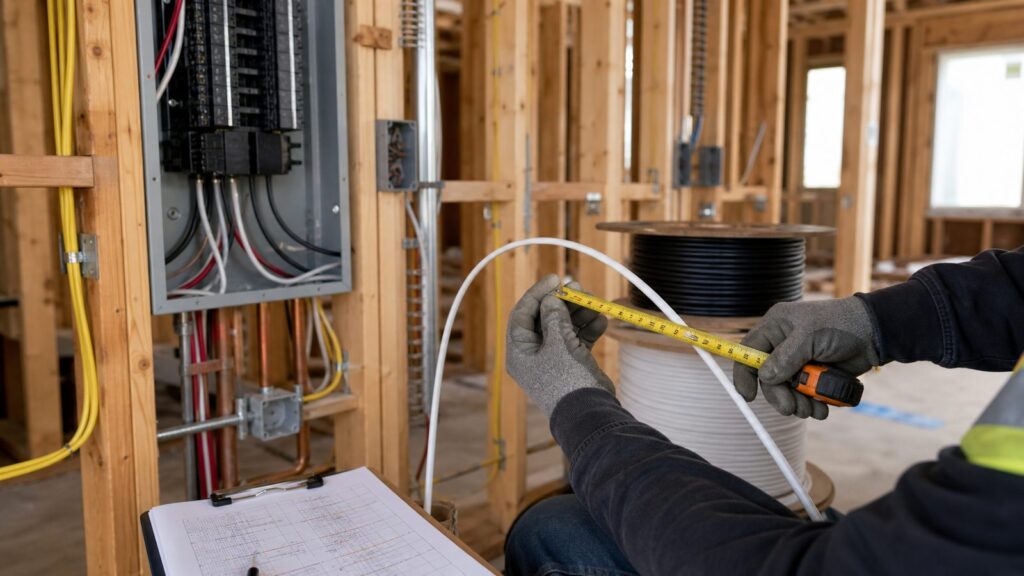
Inspection-friendly electrical work is not mysterious. Cables should run straight and be supported correctly. Bored holes should maintain required setbacks from framing edges. Nail plates should protect wiring where required. Junction boxes must remain accessible. Box fill must be calculated. Cable sheathing should enter boxes correctly. Conductors should be stripped to the right length, landed under the correct terminals, and torqued to specification where the equipment requires it. Circuits should be labeled clearly enough that the next electrician can understand the building.
Article 300 of the NEC covers general wiring methods, including routing, protection, and installation requirements that affect many of these choices. It is one reason the right answer is rarely just a wire type. The wiring method, support, protection, raceway, boxes, environment, and workmanship are all part of the installation.
When to DIY and When to Hire a Licensed Electrician
Some electrical tasks are reasonable for a skilled homeowner in jurisdictions that allow homeowner permits. Examples may include replacing a damaged switch, adding low-voltage thermostat cable, installing a listed low-voltage doorbell circuit, or extending a simple branch circuit in open framing after a permit is issued. Even then, the work should be inspected, and the homeowner should understand box fill, grounding, cable support, device ratings, GFCI and AFCI requirements, and safe lockout practices.
Hire a licensed electrician for panel work, service upgrades, subpanels, aluminum feeders, generator equipment, solar interconnections, EV chargers, hot tubs, pools, docks, outdoor feeders, HVAC circuits, kitchen remodel circuits, and any work involving unknown old wiring. Also hire a pro when walls are finished and the route is unclear. The labor to troubleshoot hidden wiring can exceed the cost of doing it professionally from the start.
Permits are not paperwork theater. They force the design to meet the locally adopted code and give the owner a record that the work was inspected. That matters for insurance, resale, tenant safety, and future renovations. Unpermitted wiring may stay hidden for years, then become expensive when a buyer, inspector, insurer, or remodel exposes it.
On professional jobs, we also build in time for inspection corrections. Even well-planned work can run into local interpretations, equipment substitutions, or field conditions that change the details. A practical schedule allows rough-in inspection before insulation and drywall, then final inspection after devices, fixtures, panels, covers, and labeling are complete.
Common Wire Selection Mistakes
The most common mistake is using indoor cable outdoors. NM-B may be easy to handle, but it is not rated for wet locations. Running it through exterior conduit to a detached structure is not the same as keeping it inside a dry wall. Outdoor conduit can collect condensation and is generally treated as wet inside.
Another mistake is sizing wire only by breaker size without checking the load. A 40-amp breaker does not automatically mean any 8 AWG cable is correct. Continuous loads, terminal ratings, conductor material, ambient temperature, bundled conductors, and equipment instructions can change the answer. EV chargers are a common example because many operate as continuous loads and may require specific circuit sizing.
Recommended Free Tools
Short-roll pricing is a quieter budget mistake. A small 25-ft coil may cost more than twice as much per foot as a 250-ft roll. That is fine for a repair, but inefficient for a basement, addition, or garage project. Contractors usually plan reel quantities so the job has enough cable without paying retail penalty on every run.
Older wiring tie-ins also deserve caution. Extending an old circuit without understanding the existing conductor size, grounding path, splices, boxes, and breaker protection can carry old defects into new work. If a circuit has knob-and-tube, cloth insulation, old BX, aluminum branch wiring, scorch marks, warm devices, nuisance trips, or unlabeled panel problems, stop and evaluate before extending it.
Bottom Line: Choose the Wiring Method Before the Wire
The best electrical wire is the one that fits the whole installation: location, load, protection, conductor count, grounding, voltage drop, equipment terminals, code edition, and inspection requirements. NM-B is usually the practical choice for dry residential branch circuits. UF-B or wet-rated raceway conductors belong in many outdoor and underground situations. THHN/THWN-2 is the standard answer inside conduit. MC cable earns its place in commercial, multifamily, and protected exposed work. Service and feeder conductors need professional design.
If you are planning a remodel, addition, detached garage, EV charger, hot tub, panel upgrade, or commercial build-out, make the wire decision early. It affects framing holes, conduit routes, trenching, panel capacity, inspections, drywall timing, and budget. A clean wiring plan is cheaper to build, easier to inspect, and safer to own.
What’s actually slowing this PC down?
Pick the symptom - the matching free tool is one click away.
Frequently Asked Questions
What type of electrical wire is used most often in houses?
NM-B cable is the most common choice for dry indoor residential branch circuits where local code allows it. Typical examples are 14/2 copper on 15-amp circuits and 12/2 copper on 20-amp circuits.
Can NM-B wire be used outside in conduit?
Do not assume so. NM-B is for dry locations, and the inside of outdoor conduit is generally considered a wet location. Outdoor conduit usually needs wet-rated conductors such as THWN-2 or another approved wiring method.
What wire should I use underground?
Common underground options include UF-B cable for direct burial where allowed or wet-rated conductors in approved conduit. Burial depth, GFCI protection, raceway type, and local code determine the final installation.
Is 12 gauge wire always better than 14 gauge wire?
Not always. 12 AWG copper is commonly used for 20-amp circuits, while 14 AWG copper is commonly used for 15-amp circuits. Larger wire can help with voltage drop, but it must still fit the devices, boxes, and terminals correctly.
Why is electrical wiring so expensive in 2026?
Installed cost includes more than wire. Labor, permits, AFCI and GFCI protection, boxes, conduit, trenching, wall repair, inspections, and copper price volatility all affect the final price.
When should I hire an electrician instead of choosing wire myself?
Hire a licensed electrician for panels, services, subpanels, EV chargers, generators, solar, hot tubs, pools, aluminum feeders, HVAC circuits, outdoor feeders, and any work involving old or unknown wiring.
Quick Recap
Product prices and availability are accurate as of the date/time indicated and are subject to change. Any price and availability information displayed on Amazon at the time of purchase will apply.