PC Slower Than It Used to Be?
A free scan shows the junk files, broken settings and background clutter dragging Windows down - then fixes them in one click.Free scan · Windows 10 & 11Crashes, No Sound, or Screen Glitches?
Random freezes, missing sound and display glitches usually trace back to one bad driver. Find and replace yours safely.Free scan · under a minuteFirst determine whether the problem affects the whole house or only one fixture. If one faucet or shower is cold while other fixtures still have hot water, the water heater may be working and the fault is more likely a failed cartridge, mixing valve, check valve, or plumbing crossover. If every hot-water fixture is cold, investigate the heater’s power, gas supply, controls, heating elements, flow, or condition.
Do not start by replacing a heating element or relighting a pilot. Identify the heater type, check for immediate hazards, and follow the troubleshooting sequence below. A gas odor, carbon-monoxide alarm, active leak near electrical equipment, smoke, burning smell, exposed wiring, or damaged vent is a reason to stop and call for professional help.
Start with the symptom: one fixture or the entire house?
The pattern of the failure is the most useful diagnostic clue. Walk through the home and test more than one hot-water fixture. Do not assume the water heater has failed just because one shower or sink runs cold.
As an Amazon Associate I earn from qualifying purchases.
| What you observe | More likely causes | Best next step |
|---|---|---|
| Only one faucet or shower is cold | Failed cartridge, shower valve, thermostatic mixing valve, or local crossover | Compare another fixture. If other fixtures are hot, investigate the affected fixture or call a plumber. |
| Every fixture is cold and the heater is cold | Lost power, gas, ignition, thermostat, high-limit trip, heating element, or control failure | Identify the heater type and check only the accessible items described in its manual. |
| Every fixture is lukewarm or the supply runs out quickly | Excess demand, low set point, sediment, scale, a failed element, or a plumbing crossover | Check usage patterns, temperature symptoms, filters, error codes, and possible crossover. |
| The heater is hot but a distant fixture is cold | Distribution problem, closed valve, failed mixing valve, or cold-water backflow | Have a plumber isolate the piping and fixtures. |
| The heater displays an error code | Model-specific flow, ignition, venting, condensate, sensor, freeze, or safety fault | Record the exact code and consult the owner’s manual. Do not bypass a safety device. |
Safety first: when to stop troubleshooting
Leave the troubleshooting process and get professional or emergency help if you notice any of the following:
- Gas odor or a suspected gas leak. Do not operate electrical switches, use flames, or keep trying to ignite the heater. Leave the area if necessary, shut off the gas supply only if you can do so safely, and contact the gas utility or an appropriately qualified professional.
- A carbon-monoxide alarm, unexplained headache, dizziness, nausea, confusion, or unusual fatigue near a fuel-burning appliance. Get people and pets outside and contact emergency services or the appropriate emergency authority. Do not re-enter until the situation is declared safe.
- Smoke, a burning electrical smell, melted insulation, sparking, exposed wiring, or a breaker that trips again after one safe reset attempt. Leave the circuit off and call a qualified electrician or water-heater technician.
- An active leak, flooding, water near electrical equipment, a damaged tank, or a damaged or disconnected gas vent. Avoid touching wet electrical equipment or removing covers.
Gas-fired water heaters and other fuel-burning appliances can produce carbon monoxide if combustion or venting is unsafe. In the United States, the Consumer Product Safety Commission recommends professional annual inspection of fuel-burning heating systems, including water heaters, chimneys, flues, and vents. It also recommends carbon-monoxide alarms near sleeping areas and on each level of the home. A carbon-monoxide alarm can warn of a dangerous condition, but it does not repair the heater or make an unsafe appliance safe to operate.
#1 Best Overall

- 【Contains】 1 x Upper water heater Thermostat and 1 x Lower water heater Thermostat , Non-Simultaneous, 120V ~ 480V. Temperature adjustment range:90F (32 ℃)~150F (66 ℃).Thermo-O-Disc(TOD)Style, interchangeable with Apcom type thermostats, 120V - 480V
- 【ONE YEAR WARRANTY】If you find any issue not limited on quality problems, please contact us in time to support or return/refund, we will try our best to solve it for you, please rest assured to buy.
- 【SAFETY APPROVED】 Electric Water Heater Thermostat was tested and approved by 3rd part test lab to ensure the design and the material are sadety for electic water heater application. The safety approved marking is on the products.
- 【POWERFUL PERFORMANCE】 KST series controls are designed to meet the high electrical capacity requirements of electric water heaters, using a temperature sensitive bimetal disc to deliver snap-action to the contacts. It has a long use time.
- 【WIDE MATCH】The Electric Water Heater thermostats( tune-up kit/ Repair Kit/ Plumber'S Pack),FIT MOST MODELS OF WATER HEATERS: Whirlpool, BRADFORD WHITE; CRAFTMASTER; GENERAL ELECTRIC; GS WOOD; KENMORE; LOCHINVAR; A O SMITH; RELIANCE; RHEEM; RICHMOND; RUUD; STATE; MOR-FLO; APCOM
Identify the type of water heater
Find the rating plate or display and record the brand, exact model number, fuel type, approximate age, and any error code. The safe checks and likely causes differ by system.
| Heater type | What commonly matters |
|---|---|
| Conventional electric tank | Breaker or disconnect, thermostats, high-limit or energy-cutoff device, upper and lower heating elements, sediment, and tank condition. |
| Gas storage tank | Gas supply, pilot or electronic ignition, burner operation, gas pressure, venting, controls, sediment, and tank condition. Many gas heaters also need electricity for controls or ignition. |
| Tankless gas or electric | Power, gas or electrical capacity, water flow, inlet filter, scale, venting, condensate drainage, error codes, and freeze protection. |
| Heat-pump water heater | Power, operating mode, air filter, airflow and clearance, surrounding temperature, condensate management, heating elements, and error codes. |
1. The water heater has no electrical power
Electric tank heaters cannot heat water without power, but electricity is also needed by many gas, tankless, and heat-pump systems for controls, displays, ignition, pumps, sensors, or safety circuits. A tripped breaker, blown fuse, switched-off disconnect, failed service, or wiring problem can therefore look like a water-heating failure.
What’s actually slowing this PC down?
Pick the symptom - the matching free tool is one click away.
What you can safely check
- Look at the electrical panel for a breaker that is visibly out of position. Check for a nearby service disconnect that has been switched off.
- Look for moisture, scorch marks, melted plastic, a burning smell, or other electrical damage. If any is present, do not touch the equipment.
- If there is no visible hazard and you are comfortable doing so, reset a tripped breaker once. If it trips again, leave it off.
- Check the heater’s display or status light after a successful reset, but give the unit the time specified in its manual to restart.
A breaker that trips repeatedly is not an inconvenience to work around; it is evidence of an unresolved electrical fault, short circuit, heating-element problem, or unsafe condition. Do not keep resetting it. Electrical compartment work should be performed only by someone qualified, with the power safely disconnected and verified according to the manufacturer’s procedure. A non-contact voltage tester may be useful to a qualified person checking for power, but it is not proof that a circuit is safe to touch and is not a substitute for proper electrical isolation.
2. A gas-supply, pilot, ignition, or burner problem is preventing heating
A gas storage heater may produce no hot water when the gas supply is interrupted, the manual gas valve is off, the pilot is out, electronic ignition fails, the burner will not stay lit, gas pressure is inadequate, or the control system detects an unsafe condition. A status light or error code can help distinguish a normal waiting state from an ignition or safety fault.
What you can safely check
- Confirm there is no gas odor. If there is, stop immediately and follow the emergency guidance above.
- Observe the status indicator or pilot only as far as the owner’s manual permits.
- Check whether the heater’s external gas shutoff appears to have been turned off, but do not manipulate gas piping or controls if you are unsure.
- Follow the exact pilot-lighting procedure printed on the unit or in the manual. Do not substitute a generic internet procedure for the manufacturer’s instructions.
Do not disassemble gas controls, change gas pressure, alter gas piping, bypass flame safeguards, or work on burners and vent connectors as a do-it-yourself repair. If the pilot will not stay lit, electronic ignition repeatedly fails, the burner looks abnormal, or the heater shuts itself down again, call a licensed water-heater professional or qualified gas-appliance technician.
3. A thermostat, high-limit, or energy-cutoff safety has shut the heater down
Electric water heaters use thermostats to control temperature and a high-limit or energy-cutoff device to stop heating if the unit overheats. A failed thermostat, incorrect control setting, wiring fault, or tripped energy-cutoff device can leave the tank cold.
Recommended Free Tools
Some electric heaters have a reset behind an access cover. Do not remove that cover unless the power is disconnected and you are qualified to perform the manufacturer’s documented procedure. A reset that works once may restore heating, but a reset that trips again is a symptom—not a repair. Repeated trips can indicate a failed thermostat, damaged heating element, loose wiring, overheating, or another unsafe fault.
If the unit has an external, manual-access reset described in its instructions, use only that procedure. If the reset is inaccessible, the problem recurs, or you cannot verify that the power is isolated, arrange professional service rather than guessing.
Rank #2

- upper thermostat for Bradford White
4. One or more electric heating elements have burned out
A conventional electric tank commonly has upper and lower heating elements. A failed upper element can result in little or no hot water because the tank cannot heat the upper portion properly. A failed lower element often causes slow recovery or a smaller usable supply. Either can also appear as “not enough hot water.”
One frequent cause of a newly burned-out element is energizing an electric heater before the tank is completely full. An element surrounded by air can dry-fire and fail rapidly. This is why the tank must be filled and air purged from a hot-water faucet before power is restored after installation or service.
Free tools Windows power users keep installed
One-click scans. No signup required.
When an element replacement is appropriate
Element replacement is model-specific and requires safely disconnecting power, draining or partially draining the tank, removing the correct element, installing the proper gasket, and matching the required voltage and wattage. Only after the diagnosis points to an electric tank element—and after you have matched the model, voltage, wattage, dimensions, thread, and gasket—should you consider a replacement water-heater heating element. There is no universal element that fits every tank.
Do not order by appearance alone. Use the rating plate and the manufacturer’s parts information. If you are not trained to verify de-energization and complete the work safely, hire a professional. After any service, the tank must be completely refilled before the circuit is turned back on.
5. Sediment or mineral scale is interfering with heating or flow
Hard-water minerals and sediment can settle in a storage tank, reduce heating efficiency, create rumbling or popping sounds, and contribute to slow recovery or inconsistent temperature. In tankless equipment, scale can accumulate inside the heat exchanger or restrict the water path. The result may be low flow, temperature fluctuations, an error code, or a heater that stops under demand.
Storage-tank symptoms and response
If the tank is otherwise sound and the manual permits flushing, sediment may sometimes be reduced by draining several gallons through the drain valve until the water runs clear. Hot water can cause serious burns, so let the water cool, attach a suitable hose, route the discharge safely, and follow the manufacturer’s instructions. Do not force a stuck drain valve or open a system you cannot safely control.
Tankless symptoms and response
Tankless descaling is not the same as flushing a storage tank. The isolation valves, pump, cleaning solution, flow direction, and service interval vary by model and water chemistry. Use the owner’s manual and the approved service procedure. A compatible tankless water-heater descaling kit can be useful only when the manufacturer permits that type of maintenance and the kit matches the system. Do not improvise chemicals, force isolation valves, or bypass a flow or temperature safeguard.
6. Hot-water demand has exceeded the heater’s capacity or recovery rate
A storage tank can temporarily run out of hot water after several showers, a bath, laundry, dishwashing, or other large draws occur close together. Cold incoming water then replaces the depleted hot water while the heater recovers. Winter can make the symptom more noticeable because incoming water is colder.
This pattern usually means not enough hot water, rather than a sudden total failure. Before changing the heater, check:
Rank #3

- ✅DESIGN- Designed to fit most brands of water heaters. Upper thermostat for dual element water heaters such as American, Craftmaster, Rheem, Richmond, GE, Kenmore, Bradford White, AO Smith, Whirlpool and Reliance.
- ✅QUALITY- Features a built-in safety switch to help prevent the water heater from overheating.
- ✅FUNCTIONALITY- Adjustable temperature range of 90-degrees F to 150-degrees F. The 59T/66T thermostat is equipped with a single pull, double throw (SPDT) Therm-O-Disc style switch that only has a single input and can connect to, and switch between, 2 outputs.
- ✅EASY INSTALLATION- The thermostat includes all necessary parts for an easy installation.
- ✅SAFETY- Certified to be UL listed.
- Whether several high-demand uses happened at the same time.
- Whether a hot-water faucet, shower valve, or appliance is running or leaking.
- Whether the temperature setting is lower than expected. Change it only within the manufacturer’s instructions and local safety requirements.
- Whether the heater is recovering normally after demand stops.
- Whether the household’s peak demand has outgrown the heater.
Staggering showers and laundry may solve a temporary capacity problem. If the problem is persistent, the solution may be a correctly sized replacement, a booster, or a different system—not simply a higher thermostat setting. Sizing should account for peak demand, fuel type, electrical service, venting, installation space, incoming-water temperature, and local code. Tankless systems can also be undersized for simultaneous flow even though they do not store a fixed tankful of hot water.
The Tool Desk
Outbyte PC Repair FREERepair Windows errors before they cause bigger problemsFix Now →Outbyte Driver Updater FREEScan for outdated or missing drivers - takes under a minuteDriver Scan →7. A plumbing crossover, failed mixing valve, or leaking fixture is diluting the hot water
Cold water can enter the hot-water piping through a failed single-handle faucet cartridge, shower valve, thermostatic mixing valve, check valve, or recirculation loop. The heater may be heating normally while cold water backfeeds into the hot line. This is especially likely when one fixture is affected, when hot water is lukewarm at several fixtures, or when the heater outlet is hot but the distribution system is not.
A plumber can isolate fixtures, the hot-water outlet, circulation loops, and mixing valves to locate the crossover. The basic diagnostic principle is simple: if the heater outlet is hot but a fixture remains cold, investigate the path between the heater and that fixture. Do not assume the tank or heat exchanger is defective without checking the plumbing.
A failed cartridge or mixing valve may be a relatively contained repair. However, isolating the correct fixture can require shutting off valves and testing whether unwanted flow continues through the hot-water line. If you are unsure which valves control the system, call a plumber rather than leaving the home without a reliable shutoff.
8. A valve, vent, condensate drain, air filter, or freeze-protection issue is stopping operation
Several problems that look like a heater failure are actually flow, airflow, drainage, or weather-related interruptions.
Quick wins for a faster PC:
Fix the driver behind crashes, sound loss and screen glitchesFind Drivers →Repair Windows errors before they cause bigger problemsFix Now →Accessible checks by system
- All systems: Confirm accessible water isolation valves are fully open. A partially closed valve can restrict delivery or prevent a tankless unit from reaching its minimum flow requirement.
- Gas tankless systems: Check that exterior vent terminations are not blocked by snow, leaves, nests, or debris. Do not change vent materials, clearances, or routing yourself.
- Condensing tankless systems: Look for an obviously blocked or frozen condensate drain, but do not dismantle the drain assembly or bypass a condensate safety switch.
- Heat-pump water heaters: Check the display for an error code, confirm the operating mode, clean the accessible air filter as directed, and verify that the air intake and exhaust have the required clearance. A dirty filter, restricted airflow, inadequate clearance, or temperatures outside the operating range can reduce performance or stop operation.
- Cold-weather installations: Treat freeze protection as a system-wide issue. A tankless heater’s built-in freeze protection may require electricity and may not protect connected pipes, valves, or other plumbing. Insulation or heat tracing may be required in vulnerable areas.
If freezing is suspected, do not keep trying to operate the heater. Follow the model-specific procedure. For some tankless installations, the freeze procedure includes shutting off water, gas, and power and draining the unit according to the manual. Never bypass freeze, combustion, flow, or temperature safeguards.
Independent reader supportYour contribution helps us test, update, and keep practical guides available for everyone.9. The heater is leaking, corroded, recalled, or at the end of its service life
A leak from the tank body or bottom commonly means the tank itself has corroded or failed. A tank shell is generally not a practical or durable repair; replacement is usually the correct path. A leak from a connection, valve, or fitting may be repairable, so identify the exact source without touching hot, energized, or gas-connected components.
Rank #4
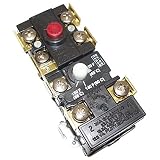
- 100108684 240V DP up thermostat
- This product adds a great value
- This product is manufactured in China
- Thermostat
- Upper position
If water is actively escaping, shut off the water supply to the heater if you can do so safely and without contacting electrical equipment. Protect the area from further damage and arrange service. Photograph the leak and record the model, serial number, approximate age, and warranty information. Those details help determine whether repair or replacement is sensible.
Age alone does not prove that a heater must be replaced, but a unit that is more than about ten years old, leaking from the tank, repeatedly malfunctioning, heavily corroded, difficult to source parts for, or subject to a safety recall deserves a replacement evaluation. In October 2025, the U.S. Consumer Product Safety Commission announced a recall involving certain VESTA.DS gas-fired tankless water heaters because cracked exhaust ducts could allow carbon monoxide into the home. That announcement does not mean every tankless heater is affected. Check the exact model and recall status through the manufacturer or CPSC before operating a suspect unit.
A practical troubleshooting sequence
- Test multiple fixtures. Decide whether the problem is one fixture, several fixtures, or the entire house.
- Check for hazards. Stop for gas odor, a CO alarm, smoke, burning odor, flooding, exposed wiring, or damaged venting.
- Identify the system. Record the fuel type, heater type, model number, approximate age, display status, and error code.
- Check accessible valves. Make sure the water supply and relevant isolation valves are open and that no hot-water faucet is running.
- Check electrical supply once. For electric, heat-pump, and electrically controlled gas equipment, inspect the breaker or disconnect. Reset only once when there is no visible hazard; leave it off if it trips again.
- Follow the gas manual only when safe. Observe a pilot or status indicator only if there is no gas odor and the exact manual permits the check.
- Use the manufacturer’s procedure. Look up the exact reset, error-code, filter, condensate, descaling, and freeze instructions for the model.
- Separate heater faults from plumbing faults. If the heater is hot but fixtures are cold, investigate a cartridge, mixing valve, closed valve, or crossover.
- Escalate the high-risk work. Gas controls, venting, electrical compartments, tank leaks, repeated safety trips, freeze damage, recalls, and replacement sizing belong with a qualified professional.
What you can safely check—and what requires a professional
| Usually reasonable for a homeowner | Call a qualified professional |
|---|---|
| Test more than one fixture; record symptoms and error codes. | Gas odor, suspected combustion problem, abnormal burner, or repeated ignition failure. |
| Look for a tripped breaker, switched-off disconnect, blocked exterior vent opening, open water valve, or dirty accessible heat-pump filter. | Repeated breaker trips, exposed wiring, electrical compartment work, element testing, thermostat replacement, or high-limit faults. |
| Follow the exact manual procedure for an approved pilot relight or external reset when there is no hazard. | Removing covers, changing gas controls or pressure, modifying venting, or bypassing a safety device. |
| Check the model number, warranty, service history, and recall information. | Tank-body leaks, suspected freeze damage, corroded connections, or replacement sizing. |
| Clean a heat-pump filter or perform manufacturer-approved maintenance. | Diagnosing a concealed crossover, mixing valve, recirculation fault, or inaccessible plumbing blockage. |
Repair or replace?
Repair is more plausible when the failure is a breaker or disconnect issue, an accessible filter, a pilot that the manual permits you to relight, a one-time reset that does not recur, a failed fixture cartridge, a replaceable valve, or a confirmed electric element with available compatible parts. The cost and safety of the specific repair matter more than the label of the component.
Replacement becomes more plausible when the storage tank itself leaks, corrosion is extensive, the heater is around or beyond its expected service life, failures keep returning, required parts are unavailable, installation no longer meets local requirements, or the unit is included in a safety recall. Compare the total installed replacement cost—not just the equipment price—with the likely repair cost and the household’s actual hot-water demand.
Before ordering any part, photograph the rating plate and write down the exact model number. A manufacturer-compatible water-heater part must match the equipment’s model and, where applicable, voltage, wattage, dimensions, thread, gasket, fuel, venting, and control requirements. A visually similar part can be unsafe or simply fail to fit.
Bottom line
No hot water is a symptom, not a diagnosis. One cold fixture usually points toward a local valve, cartridge, or plumbing crossover; cold water everywhere points toward the heater, its power or fuel supply, or a system-wide control or flow problem. Check only the low-risk items that apply to your heater, never bypass safety devices, and bring in a qualified water-heater professional for gas, electrical, venting, leaks, freeze damage, recalls, repeated trips, and replacement decisions.
Do these 3 things before closing this tab:
1Clear out junk files and repair common Windows errors2Scan for outdated or missing drivers - takes under a minute3Repair Windows errors before they cause bigger problemsThe Bottom Line
Find out whether the failure is house-wide or fixture-specific, rule out gas, carbon-monoxide, electrical, leak, and venting hazards, then match the diagnosis to the heater type. Safe checks may solve a breaker, filter, valve, pilot, or demand problem; repeated safety trips, gas work, electrical work, tank leaks, and model-specific repairs require a qualified professional.
Quick Recap
Product prices and availability are accurate as of the date/time indicated and are subject to change. Any price and availability information displayed on Amazon at the time of purchase will apply.

