Crashes, No Sound, or Screen Glitches?
Random freezes, missing sound and display glitches usually trace back to one bad driver. Find and replace yours safely.Free scan · under a minutePC Slower Than It Used to Be?
A free scan shows the junk files, broken settings and background clutter dragging Windows down - then fixes them in one click.Free scan · Windows 10 & 118K laser projection is now a serious high-end home-theater option, but the label requires careful reading. JVC’s DLA-NZ900 and DLA-NZ800 combine native-4K imaging chips with optical pixel shifting to produce an 8K-class 8,192 × 4,320 image. They are not native-8K projectors. Their real advantages are a large, bright image, strong contrast, HDR processing, long laser life, and installation flexibility—benefits that matter most in a dedicated theater with a large screen.
For many rooms, a less expensive native-4K laser projector, a better screen, improved light control, or a larger audio budget will produce the more noticeable upgrade.
As an Amazon Associate I earn from qualifying purchases.
What “8K projector” actually means
Projector specifications can use “8K” to describe three different things:
- Native 8K: The imaging device itself contains a true 7,680 × 4,320 or 8,192 × 4,320 pixel array.
- 8K pixel shifting: A native-4K imaging system shifts pixels optically and uses image processing to create a higher-resolution displayed image.
- 8K-input capability: The projector accepts an 8K signal but may display it with native-4K hardware, scaling, or pixel shifting.
The current JVC DLA-NZ900 and DLA-NZ800 belong to the second and third categories. Each uses three native-4K D-ILA devices and JVC’s second-generation 8K/e-shiftX system. JVC specifies an 8,192 × 4,320 displayed resolution, while separately identifying the underlying imaging devices as native 4K. The accurate description is therefore “8K-capable,” “8K pixel-shifting,” or “8K/e-shiftX”—not “native 8K.”
#1 Best Overall
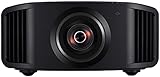
- HOME PROJECTOR WITH REMARKABLE 8K DISPLAY: The JVC DLA-NZ800 D-ILA Projector features (3) Gen3 0.69-inch native 4K D-ILA devices & a 17-element, 15-group all-glass 65mm lens to project high-resolution, realistic images to every corner of the screen
- THE ART OF PROJECTION: Whether the source is 4K or 8K, the Gen2 8K/e-shiftX technology provides clear 8K resolution. Uses a 240Hz driver with 4-way, multi-axis shift that doubles the resolution by shifting a pixel by 0.5 pixels in all four directions
- VIBRANT, DYNAMIC VIDEO: With JVC’s BLU-Escent Laser light source, the home theater projector achieves a peak brightness. Enjoy a Native Contrast Ratio of 100,000:1 (Dynamic Contrast Ratio of Infinity:1) for stunning image reproduction
- EXCEPTIONAL DETAILS & COLOR: The 2nd Gen Frame Adapt HDR & Theater Optimizer can express HDR/HDR10+ content at optimum brightness and darkness in each scene. Features Deep Black, DML, FILMMAKER MODE, and Vivid Mode to get the most out of HDR content
- PERSONALIZED SETTINGS: Includes Auto Calibration to optimize images and Clear Motion Drive for smoothest videos. Offers Installation Mode with 10 customized presets to manage Lens Control, Pixel Adjustment, Anamorphic On/Off, Screen Setting, and more
That distinction matters because most buyers will encounter 4K streaming, UHD Blu-ray, broadcast, sports, or game content rather than a large library of native 8K movies. Processing can improve apparent sharpness, but it cannot recover detail that was never present in the source.
The current high-end 8K-capable contenders
Among the products covered by the current manufacturer specifications, JVC provides the clearest high-end home-theater choices for buyers specifically seeking 8K input and pixel-shifted 8K output.
| Model | Native imaging | 8K capability | Brightness | Claimed contrast | Laser life | Gaming and connectivity | U.S. price observed |
|---|---|---|---|---|---|---|---|
| JVC DLA-NZ900 | Three 0.69-inch native-4K D-ILA devices | 8K/e-shiftX; 8K/60p input | 3,300 lumens | 150,000:1 native | 20,000 hours | 48-Gbps HDMI; 4K/120p | $32,999.95 |
| JVC DLA-NZ800 | Three 0.69-inch native-4K D-ILA devices | 8K/e-shiftX; 8K/60p input | 2,700 lumens | 100,000:1 native | 20,000 hours | 48-Gbps HDMI; 4K/120p | $18,999.95 |
| JVC DLA-NZ700 | Native-4K D-ILA | Not listed as an 8K/e-shiftX model | 2,300 lumens | 80,000:1 native | Laser | Verify current input details | $9,999.95 |
| Sony VPL-XW6100ES | Native-4K SXRD | Not an 8K projector | See manufacturer specification | Not used here | Laser | HDMI 2.1; 4K/120fps; ALLM | Verify current price |
| Hisense XR10 | 4K | Not an 8K projector | 6,000 lumens claimed by third-party coverage | 6,000:1 claimed native | Verify manufacturer specification | 4K/60Hz; 1080p/240Hz | $6,999 launch price; $5,999 discount observed |
Prices are U.S. observations and can vary by dealer, installation package, tax, warranty, and authorized-dealer status. Confirm current pricing before purchase.
Quick wins for a faster PC:
Fix the driver behind crashes, sound loss and screen glitchesFind Drivers →Clear out junk files and repair common Windows errorsFree Scan →JVC DLA-NZ900
The NZ900 is the flagship choice for a very large dedicated theater. Its rated 3,300-lumen output is suited to larger screens, while its claimed 150,000:1 native contrast, second-generation 8K/e-shiftX system, and advanced HDR controls target enthusiasts who want maximum performance from a long-throw installation.
It supports HDR10, HDR10+, HLG, Frame Adapt HDR, and Auto Tone Mapping. Its motorized 2× zoom, focus, and lens shift provide extensive positioning flexibility, including ±100% vertical and ±43% horizontal shift. JVC specifies a 60- to 300-inch image range, although that is an operating range rather than a recommendation that every size will look equally bright or sharp.
The U.S. list price observed for the NZ900 was $32,999.95. It makes the most sense when the room, screen, seating geometry, and budget are all large enough to exploit its advantages.
JVC DLA-NZ800
The NZ800 brings the same fundamental 8K/e-shiftX approach, 8K/60p input, 4K/120p support, and 20,000-hour rated laser life at a lower price. Its rated brightness is 2,700 lumens and its claimed native contrast is 100,000:1. JVC specifies a 60- to 200-inch screen range.
Rank #2

- Bright Room Ready, no Curtains Needed: 3,300 ISO Lumens of RGB triple-laser brightness delivers a vivid, color-accurate image in living rooms with ambient light, open-plan spaces, and soft daytime light — without blackout curtains or a dark room. 110% Rec.2020 color gamut produces lifelike greens, accurate skin tones, and saturated colors that LED TVs and lamp projectors cannot physically reproduce. Whether it's a family movie afternoon, a daytime sports match, or everyday streaming — the Aetherion Max laser tv performs in your room, as it is.
- Deep Blacks, Vivid Highlights: Powered by Noirscene System II, the Aetherion Max's industry-leading 7-level IRIS and EBL algorithm deliver up to 6,000:1 native contrast and 60,000:1 viewing contrast — making dark scenes look deeper and shadow detail sharper whether the lights are on or off. With Dolby Vision, Dolby Vision Gaming, HDR10+, HDR10, HLG, and Dynamic Tone Mapping, bright highlights stay balanced and low-light scenes keep their depth — so every movie and every game feels more cinematic at home.
- Staduim-scale Gaming and Sports: 1ms-class input latency at 240Hz keeps every frame sharp — whether you're deep in a competitive match or watching 90 minutes of live soccer on a 150-inch screen, fast-moving action stays blur-free and responsive. VRR, ALLM, and Dolby Vision Gaming deliver console and PC performance without compromise — connect PS5, Xbox Series X, and gaming PC simultaneously via 3× HDMI 2.1a and DisplayPort 1.4a, no cable switching needed. Native 24/48/50FPS with MEMC preserves cinematic motion for movies and sports broadcasts. Every sprint, every shot, every last-minute goal — stadium-scale, at home.
- Watch Longer, Feel Less Fatigue: Industry-first Anti-RBE technology reduces 99.99% of rainbow-effect distractions in both 2D and 3D content — a level of eye comfort no other UST projector currently offers. TÜV-certified Harmful Light Reduction delivers a cleaner, gentler picture for all-day viewing — movie marathons, full match days, and back-to-back gaming sessions included. The Aetherion Max is built for the moments that bring everyone together, and built to last as long as those moments do.
- THE LIVING ROOM UPGRADE THAT FITS YOUR LIVING ROOM — 0.2:1 ultra-short throw ratio sits inches from the wall, no ceiling mount, no professional installation, setup complete in minutes. At 200 inches, it delivers a screen 6× larger than an 85-inch TV — at a fraction of the wall space. Pair with an ALR screen for clear, high-contrast images even under direct overhead lighting. Consumes up to 500kWh less electricity per year than a comparable large-screen TV based on 4 hours daily use — the display that pays for itself over time. This is the all-in-one laser TV replacement for modern living rooms.
The NZ800 is the more rational choice for buyers who want JVC’s 8K processing and HDR tools but cannot justify the NZ900. The trade-off is lower rated brightness, lower claimed native contrast, and a less expensive lens system. It remains a serious dedicated-theater projector, not a casual living-room product.
Native-4K JVC alternatives
The JVC DLA-NZ700 and NZ500 are native-4K D-ILA laser models rather than the 8K/e-shiftX models at the center of this category. The U.S. prices observed were $9,999.95 for the NZ700 and $6,999.95 for the NZ500.
For a 100- to 130-inch screen, the money saved may be better spent on a higher-quality screen, professional calibration, room treatment, sound system, or better video processing.
Why the laser light source matters
Laser does not determine a projector’s native resolution. It is the light-source technology. Its practical benefits are particularly valuable in a high-end theater:
What’s actually slowing this PC down?
Pick the symptom - the matching free tool is one click away.
- Long operating life: JVC rates the NZ900 and NZ800 laser source at 20,000 hours. That avoids regular lamp replacement, although it does not eliminate cleaning, calibration, dust management, or eventual service.
- More consistent output: Laser brightness generally changes more gradually and predictably over its life than a traditional lamp. It still declines over time.
- Faster operation: Laser models generally start and shut down more quickly than lamp projectors.
- Dynamic light control: JVC can reduce or shut off laser output in suitable dark scenes, improving perceived black level. JVC describes the NZ900’s dynamic contrast as reaching infinity-to-one when the light source is shut off. That is a manufacturer claim and is not equivalent to the per-pixel black level of an OLED.
- Large-screen headroom: The NZ900’s 3,300-lumen rating and NZ800’s 2,700-lumen rating provide more flexibility for large images and HDR highlights than many dimmer cinema-oriented projectors.
Manufacturer lumen ratings are useful for comparison but are not the same as calibrated cinema brightness. Output depends on picture mode, laser setting, HDR mode, color filter, lens position, and calibration. A brighter mode may sacrifice accuracy or color-gamut performance.
Brightness is not the same as a better image
Four different ideas are often confused:
- Projector brightness: the claimed light output, measured in lumens.
- Screen brightness: the light reaching the viewer, affected by output, screen gain, image size, and calibration.
- Perceived HDR brightness: the impact of highlights, determined by tone mapping, black level, contrast, color, and screen performance.
- Room brightness: ambient light reflecting around the room and washing out blacks.
A high-output projector cannot overcome uncontrolled ambient light. Light-colored walls and ceilings reflect light back toward the screen, reducing contrast. In a dark room, excessive output on a small screen can also be counterproductive: blacks may look raised, fan or laser noise may be more noticeable, and an inaccurate picture mode may appear harsh.
For a construction or renovation project, light control is therefore part of the image system. Blackout shades, dark ceiling and wall finishes near the screen, controlled ventilation, and acoustic treatment can be more valuable than simply specifying more lumens.
Rank #3
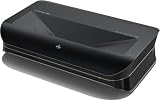
- World’s First UST Projector with Built-in Center Channel Speaker: Innovative center speaker mapping delivers crystal-clear dialogue directly from the screen without extra speakers. Paired with AWOL premium ALR screens and the ThunderBeat 4.2.2 surround sound system, it instantly upgrades your home theater to a 5.2.2 setup. Tip: As an ultra short throw projector, it has a fixed throw ratio of 0.25:1 (approx. 8.54" for 100", 12.84" for 150"). If your cabinet depth is insufficient, use the AWOL motorized Slider to adjust placement for perfect focus and screen size.
- All-Scene 4K 3D Triple Laser Projector: Triple Laser (No Color Wheel) + 4K UHD + Dolby Vision + HDR10+ + 3D support deliver sharp, vibrant images day or night. Combined with Dolby Atmos, enjoy immersive 3D home theater experiences any time. Tip: For the best 4K quality, ensure both your content source and playback device output in 4K resolution.
- Smart Home & Cinema Integration: Supports PJ Link IP control for seamless integration with home automation systems like Control4. Dolby Vision HDR dynamically optimizes color, contrast, and brightness, while Dolby Atmos surrounds you in sound from all directions.
- Explore the 3D Cinematic Realm: Put on active shutter 3D glasses and enter a new dimension. Connect a 3D Blu-ray player to enjoy thrilling 3D movies at home. More than a projector—it’s your key to a new entertainment realm. Source Recommendation: Use 3D Blu-ray discs with a 3D-capable player, or ensure streaming files/content are in 3D format.
- 1+ Billion Colors for Cinema-Grade Visuals: Covers 107% BT.2020 and 147% DCI-P3 for contrast and color accuracy comparable to digital cinemas. With AWOL ALR Daylight screen, enjoy bright, clear images even during the day. Best with 150” screen to replace traditional TVs for an unmatched big-screen experience.
Will 8K look dramatically better than native 4K?
There is no universal answer. The benefit of pixel-shifted 8K depends on the complete viewing geometry and image chain.
The improvement is most plausible when:
- The screen is approximately 120 inches or larger.
- Seating is relatively close to the screen.
- The lens is sharp and well focused across the image.
- The source contains fine texture, foliage, architecture, text, or other high-frequency detail.
- The viewer has good visual acuity.
- The room is dark enough for contrast and fine detail to remain visible.
On a smaller screen viewed from farther away, the resolution difference may be difficult to see. Contrast, black level, HDR tone mapping, motion handling, color accuracy, lens quality, and calibration may have a greater effect on the experience than the move from native 4K to 8K-class processing.
For gaming, 4K/120p is likely to be more immediately useful than 8K gaming. Both the NZ900 and NZ800 support 4K/120p, but the console or PC, cable, AV receiver, matrix switch, and game must all support the format.
Room and screen infrastructure
Plan the throw distance before choosing the projector
These are substantial long-throw projectors intended for permanent installation. Confirm throw distance, screen size, lens position, and mounting location before construction closes up the room. Lens shift can make ceiling mounting and aspect-ratio changes easier, but relying on extreme lens-shift positions or an unsuitable throw distance can reduce installation flexibility and image uniformity.
The NZ900 weighs about 55.7 pounds and the NZ800 about 50.9 pounds. Use mounting hardware rated for the actual projector and secure it to suitable structural framing—not merely drywall or a decorative ceiling surface.
Do these 3 things before closing this tab:
1Clear out junk files and repair common Windows errors2Fix the driver behind crashes, sound loss and screen glitches3Repair Windows errors before they cause bigger problemsChoose the screen as part of the system
A screen that is too large can make even a bright projector appear dim. A high-gain screen can increase brightness but may introduce hotspotting, narrower viewing angles, or visible texture. An ambient-light-rejecting screen can help in a multipurpose room but may compromise uniformity and viewing angles.
A dedicated theater may benefit from a fixed-frame screen, and an acoustically transparent screen can allow the front speakers to sit behind the image. Screen gain, material, aspect ratio, seating width, and projector placement should be evaluated together.
Rank #4

- HIGH-BRIGHTNESS FHD LASER PROJECTOR: This projector delivers Full HD 1920 x 1080 resolution and 5,500 ANSI lumens with a 1.13-1.47 throw ratio for bright, detailed images in boardrooms, classrooms, lecture halls, and golf simulators.
- GOLF MODE FOR REALISTIC SIMULATION: Designed for immersive play, this laser projector supports major golf simulators while its laser phosphor light source provides up to 30,000 hours of operation in Dynamic Eco mode.
- LARGE-SCREEN PROJECTION: Display images from 30 to 300 inches with this video projector, using a 1.3x optical zoom to adapt the image for meeting rooms, classrooms, training spaces, and public venues.
- FLEXIBLE INSTALLATION: H/V keystone, 4-corner adjustment, portrait mode, and 360-degree projection make this ceiling projector easier to position for permanent installations and rooms with challenging projector placement.
- VERSATILE CONNECTIVITY: Dual HDMI 1.4 inputs, USB Type A, RS232 control, audio out, and a built-in 15W speaker make this business projector ready for compatible presentation systems, media devices, and installed environments.
Control light, heat, and sound
Provide ventilation appropriate to the projector and keep intake and exhaust paths clear. Plan access for service and filter or dust management. A hush box may reduce noise but must be engineered so that it does not restrict airflow or allow heat to build up.
Construction details such as blackout treatment, dark finishes near the screen, acoustic isolation, sound absorption, and speaker placement can have a larger effect on the finished theater than the projector specification alone.
8K connectivity and the signal chain
JVC specifies 48-Gbps HDMI inputs and HDCP 2.3 for the current NZ900 and NZ800. That specification is only useful if every part of the signal path supports the intended format:
- Source device and output settings
- HDMI cables and wall plates
- AV receiver or processor
- Matrix switch or distribution hardware
- Video processor
- Projector input
An AVR or switch that does not support 8K/60p or 4K/120p can silently limit the entire system to lower formats. Long cable runs may require active optical HDMI or other signal-management hardware. Test the complete path before walls are sealed, especially when cables will be difficult to replace.
An 8K source must also output a format the projector accepts. An 8K-capable projector does not make a 4K source into native 8K content; it processes and displays the available information.
Independent reader supportYour contribution helps us test, update, and keep practical guides available for everyone.How the alternatives fit
Sony VPL-XW6100ES
The Sony BRAVIA Projector 8 VPL-XW6100ES is a native-4K laser projector using a native-4K SXRD panel. Sony emphasizes 4K HDR performance, image processing, motorized lens adjustment, HDMI 2.1, and 4K/120fps support. It is a competing high-end projector, but not an 8K-input or 8K pixel-shifting model based on the cited specifications.
Recommended Free Tools
Its buying case is native-4K image quality, Sony processing, HDR, and gaming—not 8K output.
Best Value

- Industry-Defining Blacks. NoirScene Mastery: NoirScene Dark Field Engine starts with the EBL black-level algorithm, enhancing shadow detail and contrast for a dynamic range up to 50,000:1. A precision IRIS aperture regulates light intake, while the stray light shield eliminates scatter—delivering crisp, layered blacks and dramatic tension worthy of a true theater.
- Comfortable Viewing Without Rainbow Distractions: Breakthrough Anti-Rainbow Effect (RBE) technology reduces rainbow effects by 99.99%. Even the most sensitive viewers can finally enjoy movies and sports without flicker, strain, or discomfort.
- Flexible Projection Layout – Up to 300” Screen: The native 0.9–1.5:1 throw ratio, ±105% vertical lens shift, and lossless optical zoom let VisionMaster Max adapt effortlessly to your room.From a 40" screen in a compact apartment to a 300" giant home cinema wall, your layout is always easy and precise.
- Brilliant Brightness & Pure Color Performance: The next-gen triple-laser light source reaches 3,500 ISO Lumens, covering 110% Rec.2020 wide color gamut. With ISF certification and dynamic tone mapping, every scene bursts with vivid details and true-to-life hues—exactly as the director intended.
- Hollywood-Grade Content Support: Enjoy Dolby Vision, IMAX Enhanced, HDR10+, and Active 3D sources with true-to-life immersion. Filmmaker Mode faithfully preserves the original tone, contrast, and brightness—bringing you closer than ever to the director’s true vision.
Epson
Epson’s home-theater range includes 4K PRO-UHD and high-lumen laser models such as the LS12000 and QL3000. These are relevant alternatives for buyers prioritizing brightness, large-screen projection, mainstream availability, or lower system cost. They should not be described as 8K home-theater projectors on the basis of the reviewed product pages.
Hisense XR10
The Hisense XR10 is a less expensive 4K laser option aimed at buyers who want high brightness, integrated audio, and a less installation-heavy system. Third-party coverage reported a $6,999 launch price and a $5,999 discounted price with an accessory promotion; those are dated market observations rather than guaranteed current prices.
It supports 4K/60Hz and 1080p/240Hz, not 8K display. A What Hi-Fi report described difficulty achieving 4K/120Hz from an Xbox Series X, so source compatibility should be checked before purchase.
Free tools Windows power users keep installed
One-click scans. No signup required.
Budget for the complete theater, not just the projector
The projector is only one line in a high-end theater budget. Allow for:
- Projector and appropriate ceiling mount
- Screen, frame, masking, and possible acoustically transparent material
- HDMI cabling, wall plates, conduit, and signal distribution
- AV receiver, processor, matrix switch, or video processor
- Professional installation and structural reinforcement
- Calibration
- Blackout shades and light-control finishes
- Ventilation and noise management
- Acoustic treatment and speakers
- Home-automation integration
JVC lists support for Control4, RTI, and Josh.ai integration. Include control wiring and equipment locations during the design phase rather than treating automation as an afterthought.
The NZ900 and NZ800 avoid lamp replacement, but “maintenance-free” would be inaccurate. Dust, calibration drift, brightness decline, ventilation, cables, mounts, and eventual component service remain part of ownership.
Which projector should you choose?
Choose the JVC DLA-NZ900 when:
- You are building a large, dark, dedicated theater.
- Your screen and seating distance are large enough for extra detail to matter.
- Budget is secondary to brightness, contrast, lens performance, HDR tools, and installation flexibility.
- You want 8K input and 8K/e-shiftX output as well as 4K/120p support.
- You need extensive motorized lens shift, zoom, focus, and lens memory.
Choose the JVC DLA-NZ800 when:
- You want the same basic 8K/e-shiftX direction at a substantially lower projector price.
- Its 2,700-lumen rating and specified 200-inch maximum range suit the room.
- You can accept lower claimed native contrast and a less expensive lens than the NZ900.
- You are still investing in a serious dedicated theater rather than a casual living-room setup.
Choose a native-4K laser projector when:
- Most of your content is 4K streaming, UHD Blu-ray, sports, or gaming.
- The screen is below roughly 120 inches or seating is relatively far away.
- Your budget would have a greater effect if spent on the screen, room, sound, or calibration.
- Native-4K sharpness, HDR, motion, low input lag, or easier installation matters more than 8K processing.
Choose a TV instead when:
- The room cannot be darkened reliably.
- You prioritize absolute black, daytime viewing, compact installation, and minimal maintenance.
- Your desired screen is below roughly 100 inches.
- The complete cost of the projector, screen, wiring, mount, installation, and room work approaches the cost of a large OLED or MicroLED display.
Verdict
8K-capable laser projection is a meaningful high-end development, but it is not a wholesale replacement for 4K projection or premium large-screen displays. JVC’s NZ900 and NZ800 demonstrate what the category currently offers: native-4K D-ILA imaging, 8K/e-shiftX processing, 8K/60p input, strong claimed contrast, HDR tools, 4K/120p support, and long-life laser illumination.
The NZ900 is aimed at the largest and most demanding dedicated theaters. The NZ800 offers the more approachable route into the same general technology. For a typical 100- to 130-inch room, however, a native-4K laser projector paired with a better screen, controlled lighting, sound system, and calibration may be the smarter construction and performance decision.
Quick Recap
Product prices and availability are accurate as of the date/time indicated and are subject to change. Any price and availability information displayed on Amazon at the time of purchase will apply.

