Recommended Free Tools
A low toilet-bowl water level is not automatically a defect. It may be normal for the toilet’s design, or it may result from a refill-tube problem, low tank level, leaking flapper, restricted fill valve, mineral buildup, a partial clog, a blocked vent, or a crack. The key question is whether the level has always been that way or changed recently.
First, determine whether the level is actually abnormal
A toilet bowl that looks low is not always malfunctioning. The final standing-water line is determined by the toilet’s bowl and trapway design, together with how much water the tank sends through the refill system. If the bowl has always rested at that level, the toilet flushes normally, and there are no leaks, odors, or drainage symptoms, the level may be normal for that model.
As an Amazon Associate I earn from qualifying purchases.
A recently lower water level is more likely to indicate a problem—especially if the toilet also flushes weakly, refills repeatedly, drains slowly, gurgles, bubbles, or leaves water around its base.
Free tools Windows power users keep installed
One-click scans. No signup required.
Quick diagnostic guide
| What you observe | Most likely area to check |
|---|---|
| The bowl has always been low but flushes normally | Compare the level with the manufacturer’s marked waterline or an identical toilet. It may be normal. |
| The tank water level is low after refilling | Check the shut-off valve, supply line, fill valve, and float adjustment. |
| The tank fills normally but the bowl remains low | Inspect the refill tube, clip, overflow-tube connection, and refill-flow adjustment. |
| The toilet runs or refills periodically | Perform a dye test and inspect the flapper or flush-valve seal. |
| The bowl drains slowly, rises, bubbles, or gurgles | Suspect a trapway, drain, or vent obstruction. Stop flushing. |
| There is a crack, sewer odor, or water at the base | Stop using the toilet and arrange professional repair or replacement. |
1. The refill tube is disconnected, kinked, blocked, or aimed incorrectly
The refill tube carries part of the fill-valve flow into the overflow tube inside the tank. Water then travels through the toilet’s internal passages to restore the bowl level after a flush. The tank can therefore appear to fill normally while the bowl receives too little water.
#1 Best Overall
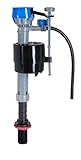
- Fix noisy, or slow filling fill valves with the quietest, most powerful toilet fill valve available
- Easy to install, step-by-step instructions included
- Universal fit for most toilet models and brands
- Tank and Bowl water level adjustment dials to customize the perfect flush and save. EZ-Twist height adjusts from 9 in. to 14 in. to fit more tanks
Inspect the tube with the tank lid removed:
- Flush the toilet and watch the tank as it refills.
- Confirm that water exits the small refill tube and enters the larger overflow tube.
- Look for a kink, blockage, loose connection, or missing clip.
- Straighten or clean the tube and secure it with the supplied clip.
The refill tube should discharge above the tank’s waterline. Do not push it down into the water, because that can create a siphoning risk and interfere with proper operation. If the existing tube is cracked or cannot be secured, a toilet refill tube and clip may be appropriate, although repositioning the original tube often solves the problem without replacing it.
2. The tank water level is set too low
The bowl receives some of its refill water while the tank is refilling. If the fill valve shuts off prematurely, the tank may not contain enough water to produce a full flush or restore the bowl to its intended level.
Remove the tank lid and look for a molded or printed waterline. That line, or the toilet manufacturer’s instructions, takes priority over generic adjustment advice. Some fill-valve instructions call for the tank level to be approximately 1/2 inch below the top of the overflow pipe. An EPA WaterSense tank-type specification cited in the research uses a manufacturer-designated line and a level of approximately 0.25 inch below the overflow tube, with a stated tolerance. These figures are not interchangeable for every toilet.
Windows Errors? Fix Them Before They Spread
Repair common Windows errors and clear accumulated junk for a smoother, more stable PC - no reinstall needed.Free scan · no reinstallOutdated Drivers Are Slowing You Down
One free scan finds every outdated or missing driver and matches the right update for your exact hardware.Free scan · exact hardware matchAdjust the float or fill-valve height according to the valve and toilet instructions, then flush and allow the toilet to finish refilling before judging the bowl level. Do not raise the water above the overflow tube or above the marked line simply to make the bowl appear fuller.
If the float is correctly adjusted but the tank still stops low or fills very slowly, the fill valve may be obstructed or worn. After confirming that the supply stop is open, consider a compatible toilet fill valve. Universal valves are not automatically compatible with every toilet, so compare the existing valve, tank design, adjustment range, and manufacturer instructions before buying.
3. The flapper closes too soon or the flush mechanism is misadjusted
A flapper or flush-valve seal controls how much water leaves the tank during a flush. If it drops too quickly, the toilet may release too little water, resulting in a weak flush and an incompletely refilled bowl.
Check the chain for excessive slack, tangles, or tension. A chain that is too tight can prevent the flapper from seating; one that is incorrectly adjusted can also affect how the flush mechanism opens and closes. Inspect the flapper for mineral buildup, warping, deterioration, or a poor fit.
Rank #2

- Includes a PerforMAX fill valve and 2 in. flapper kit designed to restore the performance of toilets with a 2 in. flush valve by replacing worn or outdated components.
A worn or incompatible flapper can also allow water to leak continuously from the tank into the bowl. That makes the fill valve cycle periodically and may keep the bowl level abnormal. If cleaning does not restore a reliable seal, use a model-compatible toilet flapper replacement. Match the replacement to the toilet’s flush-valve design and size; common dimensions include 2-inch and 3-inch designs, but the measurement alone is not always enough.
Use a dye test to confirm a tank-to-bowl leak
- Remove the tank lid and add several drops of dark food coloring to the tank water. Do not flush.
- Wait about 10 to 15 minutes without using the toilet.
- Look in the bowl. Colored water indicates that water is leaking past the flapper or flush-valve seal.
- Flush and refill the tank after testing.
If dye appears, inspect the flapper, flush-valve seat, chain, and the way the refill tube is positioned. A refill tube pushed too far into the overflow tube can also create an improper connection and siphoning problem.
4. The shut-off valve, supply line, or fill valve is restricted
A toilet that fills slowly or incompletely may never deliver enough water to the tank and bowl. First confirm that the toilet’s supply shut-off valve is fully open. Check that the flexible supply hose is not kinked, crushed, or obstructed.
Debris can also restrict the inlet screen or internal parts of the fill valve, particularly after plumbing work or a water shutoff. Turn off the supply before opening or servicing the valve. If the valve has a manufacturer-provided debris-cleaning procedure, follow it; otherwise, replacing a restricted or unreliable valve is often more practical than disassembling it.
The Tool Desk
Outbyte Driver Updater FREEFix the driver behind crashes, sound loss and screen glitchesFind Drivers →Outbyte PC Repair FREEClear out junk files and repair common Windows errorsFree Scan →A partially closed supply stop and a defective fill valve can look similar. If the tank reaches its marked waterline at normal speed, the supply is probably adequate; if it does not, correct the supply or fill-valve problem before investigating the bowl itself.
5. Mineral deposits have restricted the rim holes or bowl jet
Some toilets send flush water through holes around the underside of the rim, while others also use a larger jet near the bottom of the bowl. Mineral deposits and debris can reduce this flow. The result is often a weak or incomplete flush that leaves the bowl appearing low, even though the tank and refill tube are operating correctly.
Rank #3

- 【Universal Compatibility】Compatible with most toilet models and brands, this toilet fill valve replacement kit features a US standard G15/16" inlet. Its height is easily adjustable from 8 to 13 inches, ensuring a perfect fit for various tank sizes
- 【Upgrade Your Toilet’s Performance】 Fix slow filling, noisy, leaking, or continuously running toilets with this high-performance flush valve replacement kit. Enjoy a quieter bathroom experience with rapid and efficient tank refilling, improving both water efficiency and flushing power
- 【Water-Saving Toilet Tank Parts】 Customize your flush with adjustable tank and bowl water level controls. The fill valve ensures precise water delivery, optimizing performance while conserving water and lowering your water bill
- 【Effectively Prevents Leaks】 The V-shaped silicone seal on the fill valve ensures a secure, watertight fit. The durable, leak-proof flapper is made from premium, corrosion-resistant rubber, combining strength with flexibility for long-lasting performance. Its superior sealing capability effectively eliminates water leakage issues
- 【Easy Installation】 The float valve replacement kit is quick and simple to install. The package includes 1 fill valve and 1 2-inch flapper replacement. Just remove the old parts and replace them with the new ones for a hassle-free DIY toilet upgrade
Inspect the rim holes and jet for visible scale. Clean them with a toilet-safe method that will not damage the porcelain glaze or internal components. Avoid aggressive scraping, drilling, or metal tools that could chip the bowl. If the obstruction is internal, or if the toilet remains weak after cleaning, a toilet auger or professional inspection may be necessary.
Do not confuse a restricted rim hole with a low tank level: rim deposits affect how water moves through the bowl during the flush, while the tank level and refill tube affect how much water is available afterward.
Quick wins for a faster PC:
Repair Windows errors before they cause bigger problemsFix Now →Scan for outdated or missing drivers - takes under a minuteDriver Scan →6. The trapway or toilet drain is partially blocked
A partial obstruction in the toilet’s trapway or nearby drain can alter the way water leaves the bowl. Common clues are slow drainage, a bowl that rises during a flush, weak flushing, bubbling, or a water level that settles unusually high or low after several flushes.
When the bowl is not close to overflowing, use a flange-style toilet plunger rather than a flat sink plunger:
- Close the toilet’s shut-off valve if the bowl is rising or the fill valve may continue supplying water.
- Leave enough water in the bowl to cover the plunger cup. Remove some water if necessary.
- Fit the flange into the drain opening and pump with controlled strokes while maintaining a seal.
- Test with a small amount of water before attempting a full flush.
A flange toilet plunger is the appropriate first tool for many accessible toilet clogs. If plunging does not clear the obstruction, a toilet auger can reach deeper into the trapway without using a household drain snake that may scratch the porcelain. An auger will not solve a blocked building drain or vent, and persistent or recurring blockages should be professionally diagnosed.
7. The building drain or plumbing vent is obstructed
The toilet depends on the building drain and vent system to move wastewater and balance air pressure. A blocked soil pipe, building drain, or vent can interfere with drainage and trap operation even when the toilet’s tank parts are working correctly.
Rank #4

- RESTORES OVERALL TOILET PERFORMANCE: All in one toilet repair kit replaces inefficient fill and flush valves, leaky flappers, and broken toilet handles to make your toilet run like new.
- UNIVERSAL DESIGN: 400A toilet fill valve adjusts easily from 9 – 14 inches, fits most 2-inch flush valve toilets, and is ideal for use in 1.6 to 3.5 gallons per flush toilets or larger
- HIGH PERFORMANCE FLAPPER: PerforMAX high performance 2-inch adjustable water-saving toilet flapper maximizes water usage with each flush
- EASY INSTALLATION: Easily installs in 10 minutes or less to get your toilet flushing like new again
Suspect a system-level problem when:
- the toilet gurgles or bubbles;
- the bowl level changes when a bathtub, sink, washing machine, or another toilet drains;
- several fixtures drain slowly;
- the toilet repeatedly develops the same problem after plunging;
- water moves or air sounds occur in nearby fixtures.
Do not keep adjusting the float or repeatedly flushing in this situation. A plumber may need to inspect or clear the vent or building drain from a cleanout, roof, or another access point. Do not climb onto a roof or dismantle a drain system without suitable training and fall protection. Arrange a licensed plumber when symptoms involve multiple fixtures, recurring blockages, a suspected vent obstruction, or a blocked soil pipe.
8. The bowl is cracked or the installation has a sealing problem
A hairline crack in the bowl can let water escape and can worsen into a structural failure. Water at the base may instead indicate a failed wax or other sealing interface, a loose connection, a damaged flange, or a supply-line leak. None of these should be dismissed simply because the toilet still flushes.
Stop using the toilet if you see a crack, persistent water at the base, porcelain damage, or sewer-gas odor. Do not try to repair a load-bearing porcelain bowl with household adhesive. A qualified plumber can determine whether the bowl, flange, seal, or supply connection is responsible. A cracked bowl generally requires toilet replacement.
Replacement is not the first response to a misplaced refill tube or incorrectly adjusted float. It becomes reasonable when the fixture is cracked, badly damaged, obsolete, repeatedly failing, or more expensive to repair than replace. When buying a new toilet in the United States, look for an EPA WaterSense-labeled replacement toilet rather than assuming every high-efficiency model has the same certification or performance.
Do these 3 things before closing this tab:
1Repair Windows errors before they cause bigger problems2Fix the driver behind crashes, sound loss and screen glitches3Clear out junk files and repair common Windows errorsSafe order of operations
- Establish the baseline. Decide whether the level recently changed and check the manufacturer’s marked waterline.
- Prevent an overflow. Stop flushing if the bowl is slow, rising, bubbling, or close to the rim.
- Observe the tank refill. Confirm the tank reaches its marked level and that the supply stop is open.
- Inspect the refill tube. It should be connected, unobstructed, clipped in place, and discharging above the tank waterline into the overflow tube.
- Check for a tank leak. Perform the dye test before replacing the flapper.
- Investigate flushing and drainage. Clean accessible rim holes or jets; use a flange plunger for an appropriate clog and an auger if necessary.
- Escalate system or structural symptoms. Call a qualified professional for cracks, base leaks, sewer odor, recurring clogs, multiple slow fixtures, or suspected vent and soil-pipe problems.
Parts and products to avoid
Useful homeowner supplies include a model-compatible flapper, a compatible fill valve, a replacement refill tube and clip, a flange toilet plunger, and a toilet auger. Compatibility matters: flush-valve designs, flapper dimensions, tank layouts, and adjustment methods vary.
Avoid in-tank drop-in cleaners containing bleach or chlorine when the fill-valve or toilet manufacturer warns that they can damage rubber seals and tank components. Use a compatible bowl-cleaning method instead, and never mix toilet cleaners or other chemicals.
Best Value

- UNIVERSAL FILL VALVE: This toilet fill valve replaces ballcocks & worn down valves for different types of 2-piece & 1-piece toilets. It's easy to install & keeps your toilet running smoothly.
- EASY TO INSTALL: Quiet replacement fill valve has a twist-lock adjustment that makes installation the easiest when you're doing toilet repairs. Adjustable from 7.75'' to 13.5.''
- INCLUDES: Installs in less than 5 minutes. Includes fill valve, refill tube, metal refill tube clip, mounting nut, cone washer, refill adjuster, coupling nut, tamper proof key & instructions.
- WHY KORKY: Our high quality toilet products are universal & specific to both older & modern toilet models. Our repair parts are easy to install & made exclusively from long lasting chlorazone red rubber.
- REPLACEMENT TOILET PARTS: Try Korky Toilet Repair because we continue to commit to designing toilet repair parts that are unviersal to fit the majority of toilets. Designed & manufactured in Wisconsin.
When a low bowl level is an emergency
Shut off the water and stop using the toilet immediately if it is overflowing, the bowl or tank is cracked, water is escaping at the base, sewage is backing up, or sewer-gas odor is present. A low water line by itself may be a routine adjustment; a low line combined with leakage, odor, gurgling, or structural damage requires prompt attention.
Frequently Asked Questions
Is a low water level in a toilet bowl normal?
Not necessarily. Toilet designs have different trapway geometries and intended waterlines. If the bowl has always been at that level and the toilet flushes normally without leaks, odors, or drainage problems, it may be normal. Compare it with the manufacturer’s marked waterline or an identical toilet.
Why is the toilet tank full but the bowl water low?
The most common checks are the refill tube, tank water level, flapper or flush-valve seal, supply stop, and fill valve. If the tank fills normally but the bowl does not, start with the refill tube and its connection to the overflow tube.
What should I do if the bowl rises when I flush?
Do not repeatedly flush it. Turn off the toilet’s supply valve and use a flange-style toilet plunger only if the bowl is not already near overflowing. If plunging fails, use a toilet auger or call a plumber.
How do I test whether a toilet flapper is leaking?
Add several drops of food coloring to the tank without flushing, wait 10 to 15 minutes, and inspect the bowl. Colored water in the bowl indicates a tank-to-bowl leak, usually involving the flapper or flush-valve seal.
Can a blocked vent cause low toilet-bowl water?
Gurgling, bubbling, slow drainage in several fixtures, or a bowl level that changes when another fixture drains can indicate a blocked vent or building drain. Stop flushing and arrange professional diagnosis.
Can a cracked toilet bowl be repaired?
No. A cracked porcelain bowl can leak and may become a structural hazard. Stop using the toilet and replace it or have a qualified plumber assess it. Household adhesive is not a reliable repair for a load-bearing toilet bowl.
The Bottom Line
A low toilet-bowl water level is usually traced first to the refill tube, tank water level, flush seal, supply, or fill valve—but the level may also be normal for the toilet’s design. Start by comparing it with the manufacturer’s waterline and observing the tank refill. Stop flushing and get professional help when there is slow drainage affecting multiple fixtures, gurgling, a crack, water at the base, or sewer-gas odor.
Quick Recap
Product prices and availability are accurate as of the date/time indicated and are subject to change. Any price and availability information displayed on Amazon at the time of purchase will apply.

