Some links on this page are affiliate links: if you buy through them we may earn a commission, at no extra cost to you.
To get rid of dandelions fast, dig isolated plants below the crown while soil is moist, remove flowers before they become white puffballs, and keep turf dense. For persistent lawn infestations, use a label-approved broadleaf spot treatment in late summer or early fall, when perennial dandelions are moving resources toward their roots.
“Fast” can mean stopping seed spread today, removing visible plants immediately, or reducing reinfestation over a season. The best method depends on whether dandelions are in turf, garden beds, gravel, or cracks.
As an Amazon Associate I earn from qualifying purchases.
Recommended Free Tools
Key takeaways
- Dandelions are perennial broadleaf weeds with deep taproots, so cutting off the leaves or flower usually does not remove the plant.
- Dig isolated dandelions when the soil is moist, and cut approximately 4–5 inches below the soil surface when pulling does not remove enough root.
- Remove yellow flower heads before they become white puffballs to prevent that plant from releasing wind-dispersed seed, but do not confuse seed prevention with root control.
- A dense lawn helps suppress new dandelions; mowing below 2 inches can create more opportunities for weeds in the Oregon State University research context.
- For persistent lawn infestations, late summer through early fall is generally the best herbicide window for perennial dandelions, with spot treatment preferred over unnecessary broadcast spraying.
- Every pesticide or flamer must be permitted by the current product label for the identified weed, turf or landscape site, and application method.
What is the fastest way to get rid of dandelions?
The fastest way to get rid of dandelions depends on the result you need: remove isolated plants today by digging below the crown, stop seed spread immediately by cutting off flowers before they become puffballs, and reduce reinfestation by thickening the lawn or using a properly labeled spot treatment in late summer or early fall.
Dandelions are perennial broadleaf weeds. Their leaves and yellow flowers are visible above ground, but their persistence comes from a taproot that can extend deeply into the soil. Removing only the foliage often leaves enough underground tissue for regrowth. University of Minnesota Extension’s dandelion guidance describes the plant’s perennial nature and explains why control requires more than simply cutting the top.
Popular on Amazon

- Easy to Use: The handheld weeder tool removes weeds from your garden, including stubborn weeds like dandelions and thistles. The stainless steel two-pronged fork cuts through weeding roots with ease, allowing surrounding plants to grow healthy and thrive
- Robust and Sturdy: Made of high-hardness polished stainless steel, this weed puller tool offers excellent rust and corrosion resistance for long-lasting use. And the construction resists bending and breaking, providing reliable performance for various gardening tasks
- Comfortable Wooden Handle: The optimum strength and premium grip allow for easy wrist movement and reduce hand fatigue while working. The weed puller tool is made from sustainably sourced wood for an eco-friendly choice
- Convenient Size for Storage: Our gardening weeding tool is approximately 11.8 inches in length and light in weight (5.3 oz), and the practical handle hanging hole design and lanyard allow for convenient storage after use, allowing for more room and order in your garage or tool shed
- Wonderful Gifts for Gardening Lovers: The manual weed puller can help you weeding easily in farms, gardens, yards, fields, bonsai, and more. A sharp gardening hand tool for weeding, and digging, it is a practical gift for gardening enthusiasts
Which dandelion-control method should you use?
| Method | Best location | Visible improvement | Removes root? | Prevents seed spread? | Best infestation size | Main caution |
|---|---|---|---|---|---|---|
| Dig with a narrow tool | Lawn or isolated plants in beds | Immediate | Often removes much of it; complete removal is not guaranteed | Yes, if flowers are removed before maturity | Isolated plants | Pulling leaves alone can leave the taproot |
| Cut 4–5 inches below the surface | Established plants or compacted soil | Immediate | Removes more root tissue than surface cutting | Only if flower heads are also removed | Isolated plants or small patches | Avoid damaging nearby desirable plant roots |
| Remove flower heads | Any location where plants are flowering | Immediate seed suppression | No | Yes, before white seed heads form | Any size as a stopgap | The existing plant continues growing |
| Improve lawn density | Established turf | Several weeks to a season | No | Reduces new establishment rather than existing seed directly | Recurring lawn infestation | Do not use one mowing height for every grass species |
| Mulch and hand-remove | Ornamental or vegetable beds | Immediate to several weeks | Hand removal can; mulch alone does not | Reduces exposed soil and new establishment | Small to moderate bed infestations | Lawn herbicides can injure flowers, shrubs, or edible crops |
| Labeled selective spot treatment | Lawn containing persistent broadleaf weeds | Several days to weeks | Can control the plant through the roots when used correctly | No direct seed removal | Small patches to widespread infestations | Label, turf species, weather, and local rules control use |
| Flamer or contact treatment | Suitable cracks, gravel, or paths without desirable plants | Immediate browning; repeat treatments may be needed | Usually no | No | Hardscape areas | Keep flamers away from bark mulch and dry grass |
1. How do you dig out isolated dandelions?
Dig isolated dandelions when the soil is moist, working a narrow tool below the crown to loosen and remove as much of the taproot as practical. A dandelion weeder, narrow garden knife, or similar tool gives you more control than pulling the leaves by hand.
According to University of Illinois Extension (2021), dandelion taproots can measure 6–18 inches, and even a 1-inch section left in the soil can produce a new plant. That makes careful digging worthwhile, although removing every last piece of root is not always practical or guaranteed.
Do these 3 things before closing this tab:
1Clear out junk files and repair common Windows errors2Fix the driver behind crashes, sound loss and screen glitches3Repair Windows errors before they cause bigger problemsJennifer Fishburn, Horticulture Educator at University of Illinois Extension, explains: “Moist conditions make the job easier, but even with moist soil, it is difficult to pull a dandelion and remove the entire taproot.”
A long-handle dandelion weeder can make it easier to reach below the crown without kneeling. Choose a tool for the access and digging method you need; no particular model should be assumed to have been tested or to guarantee permanent control.
2. What should you do when pulling does not remove the root?
When a plant breaks during pulling or the soil is compacted, use a knife or narrow garden tool to cut approximately 4–5 inches below the soil surface. The purpose is to remove more root tissue, not merely to shear away the leaves.
Oregon State University Extension Service recommends cutting below the surface with a knife or garden tool for more established dandelions. Work carefully around desirable plants and underground irrigation lines, and remove the loosened crown and root section from the site.
Also popular on Amazon
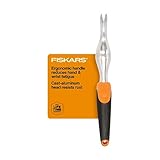
- GARDENING ESSENTIAL: Garden weeder ideal for a variety of gardening tasks like removing invasive weeds, maintaining your herb garden, uprooting dandelions and thistles, and more to encourage overall plant health and appearance
- MAXIMUM POWER AND PRECISION: Cast-aluminum angled head boosts leverage for uprooting in tough soil; Ergonomic handle with SoftGrip allows for more control of scratch tool and reduces fatigue
- LONG-LASTING AND RELIABLE: Aluminum head is rust-resistant and stays sharp through heavy use, providing excellent durability for lasting value; Fiskars hand trowels and garden tools are built to last
- QUALITY GARDEN TOOLS: Designed to help you cultivate a better garden, Fiskars garden and yard tools are equipped with smart technologies and award-winning, ergonomic features that make it easier and more enjoyable to transform your outdoor space
- INCLUDES: 1 Fiskars Ergo Weeder with hang hole; Full lifetime warranty
Deep cutting is a practical compromise when the full taproot cannot be extracted. Inspect the area later and repeat removal if new leaves appear.
3. How do you stop dandelions from spreading?
Remove dandelion flowers before the yellow blooms mature into white, wind-dispersed puffballs. Flower removal stops that plant from adding new seed, but flower removal does not kill the existing root or prevent dandelion seeds already present in the soil from germinating.
If digging must wait, cut off the flower heads and dispose of mature seed heads carefully rather than scattering them across the lawn. Mowing can reduce immediate seed dispersal, but mowing does not stop the existing dandelion from growing. University of Minnesota Extension and Oregon State University Extension both distinguish reducing flowers or seed from controlling the perennial plant itself.
4. How does a dense lawn prevent new dandelions?
A dense, healthy lawn makes it harder for new dandelions to establish because fewer bare openings remain available for weed seedlings. Mow consistently at a height appropriate for the grass species, water and fertilize according to the needs of that turf, and avoid scalping the lawn.
The Tool Desk
Outbyte PC Repair FREERepair Windows errors before they cause bigger problemsFix Now →Outbyte Driver Updater FREEFix the driver behind crashes, sound loss and screen glitchesFind Drivers →Do not treat one mowing height as universal. In a regional research context, Oregon State University Extension research cited in 2021 identifies approximately 2 inches as an optimum height for lawn health and broadleaf weed prevention, while other grass species and climates may require different settings. Oregon State University also reports that mowing below 2 inches can create more opportunity for weeds.
Also popular on Amazon

- Best Garden Dandelion Weeder has a black powder coated spring steel head
- 36 In. L. x 1-1/4 In. diameter hardwood handle
- Manufactured in China
- No assembly required
The long-term objective is not to mow existing dandelions into submission. The objective is to maintain enough turf density that fewer new plants can occupy bare soil.
5. How do you remove dandelions from garden beds?
In ornamental or vegetable beds, cover exposed soil with suitable mulch and hand-remove dandelions that emerge through it. Mulch reduces light at the soil surface, helps suppress new seedlings, and makes remaining plants easier to find.
Dig below the crown when removing individual plants, taking care not to disturb desired plant roots. Do not transfer a lawn herbicide recommendation to a flower bed or vegetable garden: a product labeled for turf may injure flowers, shrubs, or edible crops. Penn State Extension’s landscape-weed guidance discusses the different control considerations for lawns and landscape areas.
PC Slower Than It Used to Be?
A free scan shows the junk files, broken settings and background clutter dragging Windows down - then fixes them in one click.Free scan · Windows 10 & 11Outdated Drivers Are Slowing You Down
One free scan finds every outdated or missing driver and matches the right update for your exact hardware.Free scan · exact hardware matchRefresh displaced mulch and monitor the bed after rain, when small new plants are easiest to remove.
6. When is the best time to spray dandelions in a lawn?
Late summer through early fall is generally the preferred time to spot-treat persistent perennial dandelions in a lawn because the plant is moving resources from its leaves toward its roots. Spring applications may work while plants are actively growing, but fall is often the stronger control window.
Also popular on Amazon

- Old-School, Easy-To-Use Design That's Been Around Since 1913. Please Review Instructions on How To Use The Tool Properly & Watch Product Videos. It's Almost So Simple, People Over Think It!
- Easy & Simple Weeding Tool That Saves Your Back & Knees With Grampa's 45" Stand Up Long Handle. Remove Weeds Without Bending, Pulling, Or Kneeling.
- Grampa’s Weeder Is The Original Garden Weeder & Has Been Removing Weeds & Their Roots For Over 100 Years. Strong & Durable Weed Puller That's Built To Last.
- This Stand Up Weeder Features A 4-Claw Design That Tackles Weeds on Softer Soil Types, Particularly After A Good Watering or Rainfall. Please Note That It May Not Perform As Well on Hard Clay or Rocky Surfaces.
- Controls Weeds Without Harmful Chemicals, Safe For Children, Pets, & Mother Nature.
Jennifer Fishburn of University of Illinois Extension describes the reason for early-fall treatment: “This is when the dandelion plant is taking food from the leaves and storing it in the roots.” Read the University of Illinois Extension guidance on managing weeds in lawns for timing and application cautions.
Use spot treatment instead of broadcasting whenever practical. Extension sources mention active ingredients including 2,4-D, MCPA, dicamba, triclopyr, florasulam, metsulfuron, and combinations, but availability and permitted uses vary by product, turf species, state, and application site. This article does not recommend a particular commercial formulation because the current label must be checked for your exact situation.
What’s actually slowing this PC down?
Pick the symptom - the matching free tool is one click away.
Before applying a lawn herbicide
- Identify the weed and confirm that the product label permits use against dandelions.
- Confirm that the label permits use on your specific lawn or turf type and location.
- Use only the labeled amount and follow instructions for protective clothing, application, storage, and reentry.
- Avoid windy conditions because spray drift can damage desirable landscape plants and garden crops.
- Follow product-specific directions about heat, mowing before or after treatment, waiting periods, and reseeding.
U.S. Environmental Protection Agency pesticide-safety guidance says homeowners should identify the pest, choose a product labeled for the specific pest and site, follow application directions, and use only the labeled amount. A product is not automatically safe for grass merely because the product kills dandelions.
7. Can you use a flamer or contact treatment on dandelions?
A weed flamer or contact organic herbicide may be considered for dandelions growing in suitable cracks, gravel paths, or other hardscape areas where desirable plants and grass are absent. These methods usually affect only the foliage they contact, do not prevent future seed germination, and may require repeat treatments.
Do not use a hardscape treatment in a lawn or garden bed unless the current label specifically permits that site and use. Oregon State University Extension warns that flamers should be kept away from bark mulch and dry grass. Fire and contact herbicides can injure nearby plants, and wind can carry heat or spray beyond the target.
Independent reader supportYour contribution helps us test, update, and keep practical guides available for everyone.What does “permanent” dandelion removal really require?
No single treatment guarantees that dandelions will never return. A practical long-term plan combines three actions: remove existing plants below the crown, prevent flowering plants from releasing new seed, and maintain dense turf or mulched beds that leave fewer places for seedlings to establish.
Also popular on Amazon

- EFFORTLESS ROOT REMOVAL FOR DEEP-ROOTED WEEDS: Say goodbye to stubborn weeds with our 13-inch weed puller tool! The sharp V-shaped fork tip easily digs into soil and extracts the entire root system of dandelions, thistles, and deep-rooted weeds—preventing regrowth. Perfect for lawns, gardens, and flower beds.
- HEAVY-DUTY STAINLESS STEEL WEED REMOVER: Crafted from solid polished stainless steel, this manual weeder resists rust, bending, and corrosion. Designed for tough gardening tasks, it effortlessly removes weeds from lawns, farmland, and garden beds without breaking."
- ERGONOMIC NON-SLIP GRIP & COMFORT HANDLE: Weeding made easy! The soft-grip ergonomic handle offers a secure, non-slip hold that reduces hand and wrist strain—ideal for long gardening sessions and older gardeners."
- PRECISION WEEDER FOR TIGHT SPACES & CRACKS: Target weeds exactly where they grow! This compact hand weeder is perfect as a crack weeder for sidewalks, patios, and garden beds. Its two-pronged fork removes weeds from bonsai, plant gaps, and narrow spaces with accuracy."
- COMPLETE WEEDING KIT FOR ALL GARDENING NEEDS: Get the ultimate weeding solution! This lightweight weed puller is easy to store and the perfect professional weeding tool for yards, gardens and patios!
For a few lawn plants, dig after rain and remove as much root as possible. For flowering plants, remove the heads before they become puffballs. For recurring infestations, correct thin turf and consider a labeled late-summer or early-fall spot treatment. Widespread infestations, uncertain grass identification, or reluctance to handle pesticides are good reasons to consult a licensed local lawn-care or integrated weed-management professional.
Should you remove every dandelion?
Removing every dandelion is a lawn-management preference, not an ecological requirement. University of Illinois Extension (2023) notes that flowering dandelions can provide early-season floral resources for pollinators, while pesticide use during bloom may increase exposure. Readers who want a uniform lawn may choose targeted control; readers who value early flowers may tolerate some dandelions or replace portions of turf with diverse plantings.
A simple dandelion-control schedule
- Today: Cut off open flowers before they become puffballs and dig isolated plants while the soil is moist.
- After removal: Check the hole and surrounding lawn for remaining crown or root tissue, then fill disturbed soil and encourage turf recovery.
- During the growing season: Mow at the correct height for the grass species and address thin or bare areas.
- In beds: Maintain mulch and hand-remove seedlings before they become established.
- Late summer or early fall: If persistent lawn dandelions remain, consider a label-compliant spot treatment rather than automatic broadcast spraying.
- After treatment: Follow the product’s waiting, mowing, reseeding, and reentry directions, and monitor for regrowth.
Frequently Asked Questions
Does pulling dandelions work?
Dig dandelions when the soil is moist, using a dandelion weeder or narrow garden tool to work below the crown. Pulling leaves without removing enough of the taproot can allow the plant to regrow.
How deep are dandelion roots?
University of Illinois Extension reported 6–18-inch dandelion taproots in 2021. A deep taproot is one reason surface cutting and leaf-pulling often fail to eliminate established plants.
Quick wins for a faster PC:
Repair Windows errors before they cause bigger problemsFix Now →Scan for outdated or missing drivers - takes under a minuteDriver Scan →What is the best time to spray dandelions?
Late summer through early fall is generally the preferred spraying window for perennial lawn dandelions because the plants are moving resources toward their roots. The current product label controls the permitted timing, turf, weather conditions, and application instructions.
How do I permanently remove dandelions?
Digging removes individual plants, while a dense lawn, flower-head removal, mulch, and properly timed label-compliant treatment reduce future establishment. No single method guarantees that dandelions will never return.
The Bottom Line
For a few dandelions, dig after rain and remove as much of the taproot as practical. Remove flowers before they turn into puffballs to stop new seed, then keep the lawn dense and avoid scalping. For a severe lawn problem, use a properly labeled spot treatment in late summer or early fall—or hire a licensed local professional if turf identification or pesticide handling is uncertain.
Quick Recap
Product prices and availability are accurate as of the date/time indicated and are subject to change. Any price and availability information displayed on Amazon at the time of purchase will apply.

