There is no single best grout for every tile job. Use the product approved for your joint width, tile surface, exposure, and movement conditions—and make sure the installer can meet its mixing, working, cleanup, and cure requirements. For most conventional residential floors, suitable sanded or High-performance cementitious grout is practical; epoxy is favored when stain or chemical resistance justifies its cost and complexity; acrylic and urethane ready-to-use grouts prioritize convenience; and furan is reserved for specialized industrial service.
The seven types in this guide are practical product families rather than mutually exclusive standards classifications. Manufacturers may classify products differently, so the current technical data sheet for the exact product always takes precedence over a generic sanded-versus-unsanded rule.
What grout should you choose?
Choose grout by the joint width, tile surface, moisture and chemical exposure, movement in the assembly, and the installer’s ability to meet the product’s mixing, working, and cleanup requirements. For many ordinary residential floors, a suitable sanded or high-performance cementitious grout is the practical choice. For stain- or chemical-sensitive installations, epoxy may justify its higher cost. For convenience, a properly approved acrylic or urethane ready-to-use grout can avoid powder mixing. Furan grout is generally reserved for specialized industrial work.
As an Amazon Associate I earn from qualifying purchases.
Do these 3 things before closing this tab:
1Fix the driver behind crashes, sound loss and screen glitches2Repair Windows errors before they cause bigger problems3Scan for outdated or missing drivers - takes under a minuteThe seven types below are best understood as seven practical product families, not seven completely separate standards classifications. The categories overlap: for example, a ready-to-use grout may be acrylic-based but marketed as an alternative to epoxy. Manufacturers also classify and label products differently. The selected product’s current technical data sheet—not a generic sanded-versus-unsanded rule—controls the permitted joint width, tile surface, substrate, exposure, curing conditions, and installation method.
At-a-glance comparison
| Grout type | Mix status | Best fit | Main caution |
|---|---|---|---|
| Unsanded cementitious | Mixed with water | Narrow joints and familiar interior installations | Confirm the approved width and tile compatibility |
| Sanded cementitious | Mixed with water | Ordinary floor tile and wider joints | Can scratch sensitive tile and is relatively absorbent |
| High-performance cementitious | Usually mixed with water | Improved cement-grout performance and color consistency | May cost more and have a shorter working or cleanup window |
| Epoxy | Multi-component chemical cure | Stain, moisture, and chemical resistance | Expensive, time-sensitive, and demanding to clean |
| Acrylic ready-to-use | Premixed | Convenience and consistent color | Exposure and cure restrictions vary |
| Urethane ready-to-use | Premixed | Resin-based convenience for approved residential applications | There is no single universal urethane performance level |
| Furan | Specialized resin system | Severe industrial or chemical service | Requires professional specification and handling |
1. Unsanded cementitious grout
Unsanded grout uses fine aggregate or no conventional sand. Its relatively smooth texture makes it easier to force into narrow joints than a coarse sanded product. It is commonly considered for wall tile, mosaics, and rectified tile where the manufacturer approves the application.
#1 Best Overall

- PROFESSIONAL RESULTS WITH DIY EASE: Achieve expert-level tile grouting without the hassle - perfect for both new installations and repairs
- SUPERIOR DURABILITY: Offers long-lasting performance, maintaining the integrity of your ceramic and mosaic tile projects
- VERSATILE APPLICATION: Excellent adhesion to tile, masonry, wood, and wallboard - ideal for both wall and floor use
- WATER CLEAN UP: Cleans up easily with soap and water
- MADE IN THE USA: Proudly manufactured in Pryor, OK, ensuring high-quality standards
MAPEI’s Keracolor U is an example of an unsanded cement grout intended for narrow joints. That example does not establish a universal width range for every unsanded product. One manufacturer’s narrow-joint grout may have different limits from another’s, and the permitted width may also change with the tile, substrate, and service conditions.
Best uses
- Narrow interior wall or floor joints approved by the product documentation
- Mosaics and tile with small, regular joints
- Installations where a familiar, economical cementitious material is preferred
Advantages and limitations
Unsanded cementitious grout is generally economical and familiar to tile installers. It is not automatically the best choice merely because a joint is narrow, however. It can shrink or crack if used outside its approved range, and cementitious grout is more absorbent and generally more vulnerable to staining than epoxy or some ready-to-use alternatives. A sealer may be recommended for the specific product and exposure, but sealing does not turn cement grout into epoxy or make it maintenance-free.
Recommended Free Tools
2. Sanded cementitious grout
Sanded grout contains aggregate that gives the material more body and helps it fill wider joints. It is a common choice for ceramic, porcelain, quarry, and other ordinary residential floor tile when the product is approved for the joint width and tile surface.
As a concrete manufacturer example, MAPEI lists Keracolor S as a polymer-modified, pre-blended Portland-cement sanded grout for joints from 1/8 to 5/8 inch. That range belongs to that product; it should not be applied to every sanded grout. When shopping for sanded tile grout, check the label and technical data sheet for the exact joint range rather than relying on the word “sanded.”
Best uses
- Ordinary residential floors
- Porcelain, ceramic, and quarry tile where the product permits it
- Wider joints that need a fuller-bodied grout
Advantages and limitations
Sanded cementitious grout is affordable, widely available, and suitable for a large share of conventional tile work. It still depends on accurate water measurement, thorough mixing, proper joint packing, and controlled curing. Too much water, inconsistent cleanup, temperature changes, or poor curing can contribute to color variation, efflorescence, powdering, and staining.
Do not assume that sanded grout is safe for every glass, polished, soft, or easily scratched tile. MAPEI specifically warns that its Keracolor S may scratch glass tile. Make a test panel or follow the tile manufacturer’s recommendation when the surface is delicate, polished, porous, or textured.
Quick wins for a faster PC:
Clear out junk files and repair common Windows errorsFree Scan →Fix the driver behind crashes, sound loss and screen glitchesFind Drivers →3. High-performance cementitious grout
High-performance cementitious grout is still cement-based grout, but it uses improved binders, polymers, fine aggregates, or specialized cement technology to improve some combination of workability, color consistency, abrasion resistance, water resistance, water absorption, or cure behavior.
This is a useful practical category, although “high-performance cementitious” is not one universal product definition. In ISO 13007-3 terminology, cementitious grout is identified as CG, with normal and improved classes and optional characteristics such as fast setting, high abrasion resistance, and reduced water absorption. Manufacturer classification guides may identify products with designations such as CG1 or CG2 and optional F, A, or W characteristics. Read the actual product designation and technical data sheet rather than assuming that every premium-looking bag has the same rating.
MAPEI’s Ultracolor Plus family is an example of a high-performance cementitious approach. It is often considered when a project needs more consistent color or improved performance than a basic cement grout can provide, while retaining a cementitious installation process.
Best uses
- Floors and wet rooms where improved cement-grout performance is desirable
- Projects where color consistency and abrasion resistance matter
- Some exterior applications, but only when the particular product and assembly permit exterior use
Advantages and limitations
These products can provide a useful middle ground between basic cement grout and epoxy. They are usually more expensive than standard sanded or unsanded grout, and some have a shorter working, setting, or cleanup window. “High performance” also does not mean “never seal.” Whether sealing is required, optional, or unsuitable depends on the formulation and the exposure.
4. Epoxy grout
Epoxy grout combines resin, hardener, and filler and cures through a chemical reaction rather than by simply drying or hydrating like cementitious grout. Its low absorption and resistance to many stains and chemicals make it attractive where appearance and cleanability matter more than the lowest purchase price.
Rank #2
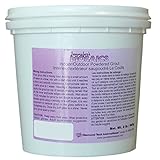
- Package Dimensions: 4.75 in W x 4.75 in H Weight: 2.25 pounds UPC: 79436600580-8
- It's so easy - just add water!
- Excellent workability
- Great for interior OR exterior use
- Sold in 2 lb container
LATICRETE describes its cited SPECTRALOCK epoxy products as highly stain- and chemical-resistant, with very low absorption and no sealing requirement. SPECTRALOCK PRO Premium Grout is documented as meeting ANSI A118.3 performance requirements for residential and light-commercial applications; other epoxy products are designed for more severe commercial or industrial exposures. Those performance statements apply to the specified products and conditions, not automatically to every epoxy grout on the market.
Best uses
- Showers and other wet areas when the product is approved for the application
- Kitchens and high-traffic floors where staining is a major concern
- Commercial food-service or similar areas exposed to frequent cleaning and selected chemicals
- Projects where the owner values low absorption and does not want to seal cement grout
Advantages and limitations
Epoxy’s resistance to staining and chemicals is its principal advantage. It is not, however, a substitute for waterproofing behind tile, correct slope, movement accommodation, or proper installation. Epoxy can also crack or debond when the substrate or tile assembly moves, the joint is improperly designed, or installation is defective.
The installation is less forgiving than ordinary cement grout. The resin and hardener must be combined in the correct proportions, the material must be used within its working time, and the specified wash and cleanup process must be followed. For certain SPECTRALOCK products, LATICRETE lists approximately 80 minutes of working time at 70°F. Temperature, product version, batch size, and site conditions can change the actual working window. Epoxy residue that is left on the tile and allowed to cure may become extremely difficult or costly to remove.
Crashes, No Sound, or Screen Glitches?
Random freezes, missing sound and display glitches usually trace back to one bad driver. Find and replace yours safely.Free scan · under a minutePC Slower Than It Used to Be?
A free scan shows the junk files, broken settings and background clutter dragging Windows down - then fixes them in one click.Free scan · Windows 10 & 11Choose epoxy tile grout when its performance is genuinely needed and the installer can work methodically within the product’s timing and cleaning requirements. Epoxy is not required for every shower, and it is not automatically the best value for a dry room.
5. Acrylic ready-to-use grout
Acrylic ready-to-use grout arrives premixed. It is commonly selected to avoid measuring powder and water, simplify small DIY projects, and improve color consistency from one batch to the next.
MAPEI describes Flexcolor CQ as a ready-to-use grout with color-coated quartz in an acrylic base. It is intended for specified interior and exterior tile installations and does not require added water. That is a product example, not a universal rule for all acrylic grouts.
Best uses
- Residential projects where convenience and consistent color are priorities
- DIY installations where accurate powder-and-water measuring is a concern
- Approved interior or exterior applications with suitable cure conditions
Advantages and limitations
Premixed acrylic grout is clean and convenient to handle compared with powdered grout. It does not eliminate installation discipline: joints still need to be clean and properly filled, and the product needs the required temperature, ventilation, drying, and cure time.
Ready-to-use does not mean universal. Restrictions may apply to submerged areas, steam rooms, spas, irregular or very porous tile, pebble mosaics, joint width, exterior exposure, or low-temperature conditions. MAPEI notes that many ready-to-use grouts cannot be used for submersion. Before choosing premixed tile grout, confirm the exact product’s permitted exposure and cure requirements.
6. Urethane ready-to-use grout
Urethane grout is a resin-based, premixed alternative commonly grouped with ready-to-use products. Depending on its formulation, it may provide good color consistency, stain resistance, and easier handling than a cementitious grout without the multi-component mixing process of epoxy.
“Urethane” is not a single universal performance level. Product formulas, approved joint widths, cure requirements, and service limitations vary. A urethane grout permitted for a residential wall or floor should not automatically be assumed suitable for a pool, steam room, exterior installation, continuously wet area, or high-temperature location.
Best uses
- Residential walls and floors where the technical data sheet approves the tile and exposure
- DIY or small projects where premixed handling is valuable
- Installations where color consistency and resistance to routine staining are priorities
Advantages and limitations
Urethane can offer a useful convenience and performance compromise, but it should not be treated as interchangeable with epoxy. Verify whether the selected product is approved for exterior use, continuous wet exposure, submersion, steam, high heat, the intended joint width, and the particular tile surface. Follow the specified cure time before exposing the installation to water or traffic.
Free tools Windows power users keep installed
One-click scans. No signup required.
7. Furan grout
Furan is a specialized reaction-resin grout intended for unusually demanding chemical or industrial environments. It is relevant to the seven-type comparison because industrial tile systems may require a material beyond ordinary cement and epoxy, but it is not a normal bathroom or kitchen DIY recommendation.
Rank #3
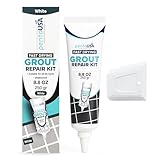
- Acrylic Sanded Grout Filler That Cures Into Solid Grout - This premixed tile grout repair contains acrylic sanded grout material in a clean white tone that fills cracks, missing sections, and damaged joints, curing into solid grout-like material that bonds to existing grout and tile for durable structural repair on floors, walls, and countertops. Designed for DIY tile grout repair, suitable for first-time users, homeowners, and handyperson-level work.
- Reliable Coverage with Standard Cure Time - Touch dry in approximately 2 hours and fully cured in 24 hours. One 8.8 oz tube covers approximately 29 square feet using 12x12 inch tiles at 1mm (1/32 inch) depth including waste, suitable for shower grout repair, bathroom grout repair, and kitchen tile touch-ups. Allow full 24-hour cure before water contact for best moisture resistance. Suitable for renters, rental hosts, and homeowners.
- Water-Resistant Grout Line Filler - Designed to fill missing grout gaps, repair cracked lines, and refresh discolored joints with a clean white finish. Stain-resistant barrier helps guard against moisture penetration in interior wet zones. Suitable for shower walls, bathtub surrounds, bathroom floors, kitchen backsplashes, and laundry room tile. Recommended for splash zones and occasional water contact rather than constant submersion.
- Water-Based Formula for Indoor Use - Premixed grout repair paste with low-odor, water-based formula suitable for indoor use. Thick consistency stays in grout lines without dripping. Built-in anti-clog nozzle pin inside the cap helps keep the tube sealed and grout fresh between uses, so you can store and reuse the tube for future touch-ups. Included scraper makes smoothing and cleanup simple. Designed for easy DIY use with controlled application from the squeeze tube. Cleanup with water before the product sets.
- Premixed Acrylic Sanded Grout Formula - PentaUSA grout repair white features an acrylic sanded grout formula. Kit includes premixed grout tube and precision scraper for tile floor, wall, or shower repair applications. Larger sizes available: 13.4 oz covering approximately 44 sq ft and 17.6 oz 2-Pack covering approximately 58 sq ft for larger projects. Designed for targeted repair as an alternative to full regrouting.
LATICRETE’s technical documentation distinguishes reaction-resin grout as RG and separately discusses furan systems in the context of the more stringent ANSI A118.5 requirements. The correct choice depends on the chemicals, concentrations, temperatures, cleaning regime, traffic, substrate, joint design, and installation specification.
Best uses
- Specialized industrial facilities
- Food-processing environments
- Chemical-service areas and other severe exposures specified by an engineer or qualified contractor
Advantages and limitations
Furan can be appropriate where chemical and service conditions exceed the practical limits of ordinary grout. Its handling and installation requirements are specialized, its residential relevance is limited, and it should not be selected as a casual substitute for epoxy. Use the current, locally applicable product documentation and a qualified installer; do not choose a furan system from a generic consumer product description.
How to choose the right grout
1. Start with the actual joint width
Measure the joint and compare it with the product’s approved range. Do not select grout from tile size alone. The joint width between tiles, the variation in that width, and the product’s aggregate size determine whether the grout can be properly packed and finished.
For example, MAPEI lists Keracolor S for 1/8- to 5/8-inch joints, while LATICRETE lists different narrow- and wider-joint capabilities for different SPECTRALOCK product configurations. Those examples show why “use sanded grout above a certain width” is only a starting point. The selected technical data sheet controls.
2. Identify the tile surface
Consider glass, polished stone, soft natural stone, porous tile, textured tile, and uneven or irregular tile before buying grout. An abrasive aggregate can scratch a delicate surface, while a highly porous or textured surface can trap pigment and make cleanup difficult.
For susceptible tile, the manufacturer may require a test panel, grout release, or a particular grout family. A test panel should use the actual tile, grout color, cleanup method, and sealer or release product planned for the job. Inspect it after the grout has cured, not only while it is wet.
3. Classify the exposure
- Dry interior room: A suitable cementitious grout is often practical.
- Shower or wet room: Choose a grout approved for the exposure, but also verify the waterproofing, drainage, transitions, and movement details behind and around the tile.
- Pool, spa, steam room, or submerged area: Require explicit product approval. Many ready-to-use grouts are not suitable for submersion.
- Exterior installation: Confirm exterior approval, temperature limits, freeze-thaw requirements where relevant, and the entire tile assembly—not just the grout.
- Chemical or food-service exposure: Identify the actual chemicals and cleaning agents. Epoxy may be a strong general-purpose candidate, while severe industrial conditions may require a specifically rated reaction-resin or furan system.
4. Decide how much stain and chemical resistance you need
Epoxy is often the leading general-purpose option when low absorption, stain resistance, or chemical resistance is central to the decision. High-performance cementitious grout may provide a better cost and installation balance for many homes. Acrylic and urethane products can be convenient, but their resistance and exposure limits are formulation-specific.
What’s actually slowing this PC down?
Pick the symptom - the matching free tool is one click away.
Sealer is a maintenance aid for some cementitious grouts, not a guarantee of stainproof performance. It does not make cement grout equivalent to epoxy, and it does not correct poor joint packing, improper curing, or contamination.
5. Match the grout to the installer
The highest-rated material is not automatically the safest choice if the installer cannot follow its instructions. Cementitious grout requires accurate water measurement and curing control. High-performance and rapid-setting products may have shorter work or cleanup windows. Epoxy requires careful proportioning, timing, and residue removal. Ready-to-use products eliminate powder mixing but still have strict application and cure limits.
Rank #4

- Easy to Use: This grout repair kit comes with a specially designed spatula featuring four distinct corners, each tailored for different spreading techniques. This allows for effortless and precise application in a variety of spaces, ensuring a smooth, professional finish even for DIY beginners. The water-based formula is user-friendly and safe, requiring no gloves and making the whole process clean and simple.
- ZippySolve's Unique Formula: ZippySolve's grout repair kit features a unique transition from squeezable caulk to real sanded grout when dried. Its water-based composition effectively prevents dark stains and spots and protects against grubby grout. Being eco-friendly, odorless, and non-toxic, it's safe for families and pets, allowing for a user-friendly experience without the need for gloves.
- Versatile and Fast Drying: Designed for quick and effective application, this grout repair kit offers triple protection by repairing, renewing, and filling various surfaces. Ideal for revamping floors and walls in kitchens and bathrooms, its fast-drying nature and waterproof characteristics make it suitable for both dry and wet areas, enhancing the appearance of showers, bathtubs, sinks, and windows.
- All-in-One Kit: ZippySolve's grout repair kit simplifies home improvement projects. It includes a tube of grout repair solution and a dual-purpose spatula for correction and cleaning.The spatula has four uniquely designed corners for versatile grout application, enabling precise and efficient spreading in various spaces.This streamlined kit ensures a professional finish with minimal equipment.
- Customer Satisfaction and Support : Prioritizing customer satisfaction, ZippySolve backs its grout repair kit with a satisfaction guarantee, offering refunds or replacements for any issues. The after-sales service is committed to providing support, ensuring customers have a seamless experience and confidence in their purchase of this reliable, protecting grout solution.
6. Keep movement joints separate from grout joints
Rigid grout is not a substitute for flexible sealant. Changes of plane, perimeter joints, transitions, and designed movement joints may require a sealant or movement-joint profile specified for that location. Schluter’s guidance, for example, identifies transitions such as a shelf-to-wall joint as locations where sealant is required because movement can cause rigid grout to crack and pop out.
Movement joints accommodate expansion, contraction, moisture-related movement, and loading in the tile assembly. Do not fill every corner, perimeter, or change-of-plane joint with grout simply because the gap looks like another grout joint. Follow the tile assembly and product requirements.
A practical buying list
Buy the grout only after confirming the joint width, tile surface, exposure, color, coverage, and cure requirements. A typical installation may also require:
- Rubber grout float sized for the tile and joint layout
- Tile grout sponge and several buckets of clean water for cleanup
- Clean mixing buckets and a dedicated measuring container for cementitious grout
- Gloves and eye protection; follow the product safety data sheet for additional protection and ventilation
- Grout release for tile that is porous, textured, or difficult to clean
- Penetrating grout sealer only when the selected cementitious product and exposure call for it
- Epoxy grout haze remover or the manufacturer-approved residue cleaner when using epoxy
- The specified flexible sealant for movement joints, changes of plane, and perimeter details where required
Grout release and sealer are not the same product. Grout release is applied before grouting to help protect a susceptible surface and is washed away during cleanup. Sealer is applied after the grout has cured when the product calls for it and remains to provide ongoing protection. Use only products confirmed compatible with the tile and grout.
Installation practices that affect the result
- Read the current technical data sheet first. Confirm joint width, tile compatibility, substrate, temperature, mixing ratio, working time, cleanup stages, cure time, and service limitations.
- Prepare the joints. Remove thinset, debris, standing water, and contaminants to the depth required by the grout manufacturer. Inconsistent joint depth can produce inconsistent color.
- Protect the tile when necessary. Use a test panel and an approved grout release where the surface is porous, textured, polished, or easily scratched.
- Measure cementitious grout water accurately. Do not add extra water to make stiff grout easier to spread, and do not retemper material unless the product instructions expressly allow it.
- Pack the joints completely. Hold the float at an angle and work diagonally across the joints so the grout fills rather than merely coats the surface.
- Clean at the specified time. Too much water can wash pigment from cement grout and contribute to weak or inconsistent joints. Delayed epoxy cleanup can leave permanent residue. Use the product’s staged wash process.
- Protect the installation while it cures. Keep out water, traffic, freezing conditions, excessive heat, and contamination for the time stated by the manufacturer.
- Seal only when appropriate. Wait for the required cure and use a compatible sealer if the product documentation recommends one.
Common selection mistakes
- Choosing from joint width alone: Width matters, but tile surface, exposure, substrate, and product instructions matter too.
- Assuming all sanded grout is scratch-safe: Test glass, polished, soft, and delicate tile.
- Assuming premixed means waterproof or universal: Acrylic and urethane products can have restrictions on submersion, steam, exterior use, joint width, and cure conditions.
- Using epoxy to compensate for defective waterproofing: Grout does not waterproof the tile assembly.
- Putting grout in movement locations: Use the specified flexible sealant or profile at changes of plane, perimeters, and designed movement joints.
- Overwatering cement grout: Extra water can affect color, strength, absorption, and curing.
- Buying more performance than the job needs: Epoxy and specialized resins cost more and demand more careful installation; a suitable cementitious product may be the better choice for a dry residential room.
- Relying on an old product label: Formulas, package sizes, colors, availability, and approved applications change.
Quick decision guide
- Narrow interior joint: Start with an unsanded cementitious product, but confirm the manufacturer’s approved width and tile compatibility.
- Ordinary floor tile with wider joints: Consider sanded cementitious grout; for a specific example, Keracolor S is listed for 1/8- to 5/8-inch joints.
- Improved color consistency or cement-grout performance: Compare a high-performance cementitious grout and check whether sealing is required.
- Stains, chemicals, or difficult cleaning are the primary concern: Compare an approved epoxy product with the exposure requirements.
- Avoiding powder mixing is the priority: Compare an acrylic or urethane ready-to-use grout, then check its joint-width, wet-area, submersion, exterior, and cure restrictions.
- Severe industrial chemical service: Obtain a project-specific specification from a qualified professional; furan may be relevant, but it is not a casual residential choice.
Frequently Asked Questions
Is epoxy grout required for every shower?
No. A suitable cementitious, acrylic, or urethane grout may be approved for a shower, depending on the product and installation. Epoxy is an option when low absorption and stain resistance are especially important. Grout does not replace waterproofing behind the tile, correct drainage, or flexible movement joints.
The Tool Desk
Outbyte Driver Updater FREEScan for outdated or missing drivers - takes under a minuteDriver Scan →Outbyte PC Repair FREEClear out junk files and repair common Windows errorsFree Scan →Should narrow tile joints use unsanded grout?
Not necessarily. Many sanded products are intended for wider joints and many unsanded products for narrower joints, but the product’s technical data sheet controls. Some high-performance and epoxy products cover ranges that do not fit the traditional rule.
Does grout waterproof tile?
No. Grout is not the waterproofing layer of a tile assembly. A shower or wet area needs a correctly designed and installed waterproofing system behind or beneath the tile, plus appropriate drainage and movement details.
Is premixed grout the same as epoxy grout?
Premixed grout is not automatically epoxy. Acrylic and urethane grouts are commonly sold ready-to-use, while epoxy generally uses separate resin and hardener components. Performance, exposure limits, and cure requirements vary by product.
Does cement grout always need sealer?
Often, but not always. Sealing may be recommended for a cementitious grout depending on the formulation and exposure. The sealer does not make cement grout stainproof or equivalent to epoxy. Follow the grout manufacturer’s instructions.
The Bottom Line
The right grout is the one approved for the joint, tile, exposure, and assembly—and one the installer can mix, place, clean, and cure correctly. Use cementitious grout for many conventional applications, high-performance cementitious grout when improved properties are worthwhile, epoxy when stain or chemical resistance justifies the cost and complexity, ready-to-use acrylic or urethane when convenience fits the exposure, and furan only for professionally specified severe service. Never use grout in place of waterproofing or flexible movement joints.
Quick Recap
Product prices and availability are accurate as of the date/time indicated and are subject to change. Any price and availability information displayed on Amazon at the time of purchase will apply.

