Crashes, No Sound, or Screen Glitches?
Random freezes, missing sound and display glitches usually trace back to one bad driver. Find and replace yours safely.Free scan · under a minuteWindows Errors? Fix Them Before They Spread
Repair common Windows errors and clear accumulated junk for a smoother, more stable PC - no reinstall needed.Free scan · no reinstallTo grow red creeping thyme successfully, choose a plant labeled ‘Coccineus’ or a related Coccineus-group name, give it full sun and freely draining soil, and water it while it establishes rather than keeping it wet. It makes a low groundcover that can take light foot traffic, but the available guidance does not establish it as a substitute for a lawn used heavily.
1. Choose the right red creeping thyme
Look for Thymus labeled ‘Coccineus’ or as part of the Coccineus group. Iowa State University Extension describes ‘Coccineus’ as red creeping thyme, with deep rose-red flowers and a spreading habit. Botanical names can vary across labels, so check the cultivar or group name rather than assuming every creeping thyme plant or seed packet will bloom red. Iowa State University Extension’s thyme guide and the Royal Horticultural Society’s Coccineus Group profile describe the naming.
As an Amazon Associate I earn from qualifying purchases.
2. Plant it in full sun
Choose a spot with full sun. Iowa State University Extension, North Carolina State Extension, and the Royal Horticultural Society all recommend sunny conditions for creeping thyme. Shade may mean less flowering or slower coverage; the sources do not establish that shaded sites produce the same results. North Carolina State Extension’s creeping thyme profile provides site and propagation guidance.
Recommended Free Tools
3. Make drainage the priority
Creeping thyme can grow in poor, sandy, gritty, or rocky soil, provided excess water drains away. Rich soil is not the goal: persistent dampness can lead to root rot. If your site has heavy clay, improve its structure and drainage before planting; an Ask Extension response suggests incorporating compost or other organic matter to loosen heavy clay. Amend only where the soil needs it, rather than treating an amendment as necessary for every planting. See the RHS Coccineus Group profile and Ask Extension’s advice on planting red creeping thyme as a lawn replacement.
#1 Best Overall

- Bulk Pack of 30,000 Tiny Red Creeping Thyme Seeds - Ideal for wide or compact areas; due to their fine size, we recommend mixing with sand or peat moss for easier sowing
- Soft Red Blooms in Summer: When properly germinated, creeping thyme forms vibrant lavender-red carpets that bloom in early summer. Please note that germination may take 2-4 weeks, and full coverage requires several months. The effort is well worth the wait for a visually rich and fragrant landscape
- Low-Maintenance Once Established: While red creeping thyme is drought-tolerant as a mature plant, the seeds require consistently moist (not soaked) soil and indirect sunlight during germination. After establishment, it thrives in sunny areas with minimal care
- Pollinator Magnet for Your Garden: Once in bloom, this thyme variety invites bees, butterflies, and hummingbirds, making it not only a ground cover but a vibrant hub for backyard biodiversity. Ideal for eco-conscious gardeners and pollinator-friendly zones
- Flexible for Many Uses: Suitable for borders, between stepping stones, or in rock gardens. For best results, scatter seeds evenly onto moist soil and press gently without covering them - light exposure improves germination
4. Water for establishment, not constant moisture
Water new plants as they establish, then water sparingly in ordinary conditions. Established thyme tolerates drought, while frequent irrigation or persistently wet soil can be more troublesome in a well-drained planting. During a prolonged dry spell, water as needed. Containers, local weather, and soil drainage affect how quickly plants dry, so use the soil’s condition rather than a fixed schedule. Iowa State University Extension covers watering and cultivation, while the RHS thyme-growing guide emphasizes drainage and advises against excessive moisture.
5. Pick a starting method that suits your goal
Seed, nursery plants or plugs, division, cuttings, and layering are all ways to start thyme. Choose based on whether convenience or preserving a named cultivar matters most.
Rank #2

- COVERAGE: Vibrant Ground Cover & Fragrance – Creeping thyme seeds ground cover form a lush, aromatic carpet with magenta-lavender blooms. Ideal for walkways, rocky slopes, and borders
- PERENNIAL GROWTH: Hardy Perennial for USDA Zones 4-9 – Thrives in full sun/partial shade, drought-tolerant, deer-resistant, and spreads low (1–4 inch), perfect for long-lasting beauty
- VERSATILE PLANTING: Ideal for rock gardens, between stepping stones, lawn alternative, or as an attractive border plant that helps suppress weeds
- GROWING SPECIFICATIONS: Thrives in full sun to partial shade, reaches 2-4 inches in height, and spreads up to 18 inches per plant
- Adding thyme flowers plants to gardening benefits the local ecosystem and improves garden health. Thyme flower add beauty to space and promote biodiversity in garden
| Starting method | Why choose it | What to watch for |
|---|---|---|
| Seed | A practical propagation route if you want to raise plants from seed. | Generic creeping thyme seed may not preserve the identity or red flowers of ‘Coccineus’. |
| Nursery plant or plug | A convenient way to begin a groundcover planting. | Check the label for ‘Coccineus’ or a Coccineus-group name, and confirm local availability. |
| Division, cuttings, or layering | Vegetative propagation is preferable when you want to maintain a named parent plant’s characteristics. | You need access to a suitable parent plant or a start to propagate. |
For a red-flowering planting, a correctly labeled nursery start is a straightforward choice; seed is reasonable when exact cultivar identity is less important. Iowa State University Extension and North Carolina State Extension discuss propagation, and an Ask Extension response on creeping thyme notes greenhouse starts as an option.
6. Trim lightly and set realistic foot-traffic expectations
Once established, creeping thyme forms a low-growing groundcover and can tolerate light foot traffic. That does not establish it as a durable replacement for turf where people walk or play regularly. After flowering, a light trim is generally sufficient for low-growing creeping thymes; avoid treating it like grass that needs frequent mowing. The RHS Coccineus Group profile describes its groundcover use, and the RHS thyme-growing guide recommends light trimming after flowering.
Quick Recap
Rank #4

- Creeping thyme is a hardy perennial widely used as a trailing ground cover in aromatic landscapes.
- Creeping thyme plants are slow growing hardy perennials in USDA hardiness zones 4-9. It thrives in full sun or part shade and is tolerant of rocky soils and deer.
- In early summer, red creeping thyme covers your garden floor in a sea of magenta or lavender red.
- The plant is densely covered with small, dark green, glossy leaves that are highly aromatic when crushed.
- Growth Rate - The creeping thyme plant is a low, usually creeping subshrub growing to 2 cm tall with stolons up to 10 cm long.
Rank #3
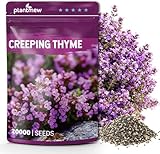
- 🌱 High Germination Ground Cover Seeds – Create a lush green carpet for paths, patios, and empty garden spaces.
- ☀️ Easy Growth & Low Maintenance – Thrives in full sun and poor soil, perfect for effortless landscaping.
- 🐝 Fragrant & Pollinator Friendly – Releases a pleasant scent when stepped on and attracts bees and butterflies.
- 🌿 Fast Spreading Coverage – Quickly forms a dense mat that helps suppress weeds.
- ❄️ Hardy Perennial Plants – Cold-hardy in zones 4–9 and returns year after year with minimal care.
Product prices and availability are accurate as of the date/time indicated and are subject to change. Any price and availability information displayed on Amazon at the time of purchase will apply.




