Quick wins for a faster PC:
Clear out junk files and repair common Windows errorsFree Scan →Fix the driver behind crashes, sound loss and screen glitchesFind Drivers →Repair Windows errors before they cause bigger problemsFix Now →Astilbe, ferns, coral bells, bleeding heart, Japanese forest grass, and goat’s beard can all complement hostas—but the right choice depends on your bed’s light, moisture, drainage, and available space. These are well-supported options, not a universal ranking: choose for the contrast you want and the conditions you can provide.
How to choose companions for hostas
Hostas have broad, bold foliage, so plants with finer leaves, contrasting colors, or a different form can make a shade bed feel more varied. Before planting, compare the site’s light and soil conditions with each plant’s needs, and check the mature size and spread of the specific species or cultivar. A good visual pairing will not compensate for soil that is too dry, too wet, or poorly drained for one of the plants.
As an Amazon Associate I earn from qualifying purchases.
Six plants to consider
1. Astilbe
Astilbe’s finer-textured leaves contrast with hosta foliage, and its flowers add another layer of interest. Iowa State University Extension specifically recommends the pairing. Astilbe prefers rich, moist soil that drains well, so it suits a bed where the soil will not dry excessively. Iowa State University Extension’s growing guidance covers its care and site preferences.
Recommended Free Tools
2. Ferns
Fern fronds provide a fine-textured counterpoint to hostas’ broad leaves. Iowa State University Extension includes ferns among shade perennials that pair well with hostas. “Ferns” covers many plants, however, so select a species suited to your local climate and soil moisture. Spread also varies: ostrich fern, for example, can spread by runners, a trait that should not be assumed of every fern.
#1 Best Overall
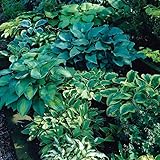
- 6 Fresh, Healthy Bare Root Starts
- 100% Grow Guarantee
- Blooms Summer Through Fall
- Perennializing Hostas
- Low Maintenance & Grows To About 18" Diameter
3. Coral bells (Heuchera)
Coral bells bring colorful foliage and a different leaf shape to a hosta bed. The University of Vermont Extension recommends Heuchera as a hosta companion. It prefers rich, well-drained soil; heavy clay may need drainage improvement for it to perform well. Vermont Extension’s Heuchera guide explains its landscape use and soil needs.
4. Bleeding heart (Lamprocapnos spectabilis)
Bleeding heart offers spring flowers and fern-like foliage. It may die back by late summer, leaving an open space; Penn State Extension recommends planting it near hostas or other perennials whose foliage can fill that gap. It is also commonly listed under the botanical name Dicentra spectabilis. Penn State Extension’s article on bleeding hearts discusses this seasonal habit and companion planting.
Rank #2

- Mix of perennial, hosta plants with heart-shaped leaves
- Produce mildly fragrant white or purple flowers on tall stems
- Low-maintenance plant, perfect for all level gardeners
- Pack includes: 6 bare roots
- Shade-tolerant, ideal for boarders, trees and shady areas
5. Japanese forest grass (Hakonechloa macra)
Japanese forest grass adds narrow, arching blades that contrast with hostas’ broad leaves. The University of Wisconsin–Madison Division of Extension specifically describes it as a plant that combines well with hostas. It prefers evenly moist soil and can grow in light to heavy shade. Variegated forms show their brightest color in partial or dappled shade; in full shade, they tend toward lime green. Wisconsin Extension’s Hakone grass profile provides more on its growing conditions.
Do these 3 things before closing this tab:
1Repair Windows errors before they cause bigger problems2Fix the driver behind crashes, sound loss and screen glitches3Clear out junk files and repair common Windows errors6. Goat’s beard (Aruncus)
Goat’s beard is another fine-foliage shade perennial that Iowa State University Extension lists as a hosta companion. Its texture can balance hostas’ bolder leaves, especially in a larger planting. Check the mature size of the particular species or cultivar before deciding where to place it; size and fit should not be assumed from the common name alone.
Rank #3

- ELEGANT BLOOMS: Each bulb produces stunning flowers accented with distinctive purple stripes, adding a sophisticated touch to any garden or patio.
- SET OF 2 BULBS: This pack includes 2 Hosta bulbs, giving you a great start to creating a lush, decorative landscape display in containers or garden beds.
- VERSATILE PLANTING OPTIONS: Perfect for patio containers, garden borders, or decorative landscape arrangements, these Hosta bulbs thrive in a variety of outdoor settings.
- DECORATIVE LANDSCAPE APPEAL: The striking two-tone foliage and blooms make these Hosta plants an eye-catching focal point, complementing surrounding flowers and greenery beautifully.
- EASY TO GROW: Hosta bulbs are known for their hardy nature and straightforward planting process, making them a great choice for both beginner and experienced gardeners.
Match the plant to the bed
- For fine foliage: consider astilbe, ferns, or goat’s beard alongside hostas.
- For foliage color: coral bells add leaf color, while Japanese forest grass contributes narrow, arching blades.
- For a spring display: bleeding heart flowers early in the season, then may recede by late summer.
- For moist soil: astilbe prefers moist, rich, well-drained soil; Japanese forest grass prefers evenly moist soil.
- For limited space: check mature size and spreading behavior for the specific plant, particularly before using a fern as a groundcover.
Light and drainage matter as much as appearance. Japanese forest grass is suited to light through heavy shade, while Heuchera needs well-drained soil and may struggle in heavy clay without improved drainage. Assess the actual planting spot—including tree-root competition and seasonal wetness—rather than treating “shade garden” as one uniform condition.
Quick Recap
Rank #4

- SHADE PLANTS: Hosta 'So Sweet' is a wonderfully fragrant hosta, hence its name. It is a rapid grower with very shiny, dark green leaves and yellow margins in Spring.
- GROWTH: This hosta grows to be about 12 inches tall and 22 inches wide.
- CARE: All hostas need some shade and few, if any, will do well in strong direct sunlight. Water regularly. They will fully mature in four to eight years. For the best care of hostas, plant them in rich organic soil with a slightly acidic pH.
- FUN FACT: Hosta, also known as plantain lily, is a genus of about 40 plants native to Eastern Asia.
- LIVE PLANTS: Our plants are grown exclusively for Deep Roots and The Three Company, shipped fresh directly from our greenhouse to you!
Sources
- Iowa State University Extension and Outreach, “All About Hostas”
- Iowa State University Extension and Outreach, “Growing Astilbe in Iowa”
- University of Wisconsin–Madison Division of Extension, “Hakone Grass, Hakonechloa macra”
- University of Vermont Extension, “Heuchera: A Versatile Landscape Plant”
- Penn State Extension, “The Timeless Beauty of Bleeding Hearts in the Garden”
Product prices and availability are accurate as of the date/time indicated and are subject to change. Any price and availability information displayed on Amazon at the time of purchase will apply.




