Quick wins for a faster PC:
Repair Windows errors before they cause bigger problemsFix Now →Scan for outdated or missing drivers - takes under a minuteDriver Scan →Clear out junk files and repair common Windows errorsFree Scan →The right landscape edge depends on what it must do: define a bed, keep grass or loose path material in place, create a clean mowing line, or make a transition between surfaces. Choose the material and profile to suit the site, the garden’s style, and the amount of installation and upkeep you want.
Start with the job your edge needs to do
Edging can define a boundary between lawn and planting, help contain mulch, and reduce some hand trimming when it is installed appropriately. For a path of gravel or mulch, a boundary can help keep loose material from spreading into beds or onto the lawn. A sharp, visible edge is not always necessary: the transition might be flush with the grass, a narrow strip of gravel, a planted margin, or a low structure.
As an Amazon Associate I earn from qualifying purchases.
For paths, match the surface and border to the landscape. UF/IFAS notes that brick, cut stone, and pervious pavers can suit formal settings, while flagstones, crushed shells, stepping stones, gravel, or mulch can support a more natural look. Consider where water will drain and how the path connects to nearby paving and planting. UF/IFAS Extension’s walkway guidance also notes that gravel and mulch need edging to help contain them.
Free tools Windows power users keep installed
One-click scans. No signup required.
Choose a material by appearance and upkeep
| Material | Visual fit | Practical considerations |
|---|---|---|
| Hand-cut trench | Understated, natural line | Low material cost, but needs periodic touch-ups; the soil line can soften or collapse. |
| Steel or aluminum | Slim, often unobtrusive boundary | Metal is the longest-lasting category in Illinois Extension’s comparison. Steel can be expensive and difficult to install properly, and frost may heave it. Aluminum is easier to work with, though its silver finish may not suit every landscape. |
| Brick, stone, or concrete | Traditional, formal, rustic, or contemporary, depending on the unit and layout | Can provide a stable, decorative boundary; base preparation affects strength and durability. Use suitable materials for the conditions. |
| Wood | Warm, natural appearance | Can double as a mowing edge; reinforcement may be useful. Avoid old railroad ties treated with materials toxic to plants. |
| Plastic | Usually intended to recede into the landscape | Often inexpensive and easy to install, but stability, durability, and appearance can be concerns. Stakes or reinforcement may help. |
| Gravel or mulch | Soft, informal margin | Creates a visual transition, but loose material can migrate and may need a retaining edge. |
| Plants or hedges | Soft, living boundary | Blends with the garden rather than forming a hard stop; needs ongoing plant care and enough room to grow. |
These trade-offs are drawn from Illinois Extension’s 2015 bed-edge guidance. Its measurements and recommendations are practical guidance for the conditions it discusses, not universal specifications. The extension describes a hand-cut edging area 4 inches deep and wide as able to contain bluegrass. For stone, it gives dimensions intended to stop grass; a sand or concrete base can add durability and strength. Site conditions, grass type, and frost exposure can change what works.
#1 Best Overall

- 𝐅𝐥𝐞𝐱𝐢𝐛𝐥𝐞 & 𝐄𝐚𝐬𝐲 𝐭𝐨 𝐈𝐧𝐬𝐭𝐚𝐥𝐥: Each panel measures 40" (L) × 5" (H), including 3" underground stakes for strong anchoring, leaving 2" visible above ground for a clean, low-profile border. The hammer-in design makes installation fast and effortless—perfect for creating neat, professional-looking edges without digging.
- 𝐃𝐮𝐫𝐚𝐛𝐥𝐞 𝐆𝐚𝐥𝐯𝐚𝐧𝐢𝐳𝐞𝐝 𝐒𝐭𝐞𝐞𝐥 𝐂𝐨𝐧𝐬𝐭𝐫𝐮𝐜𝐭𝐢𝐨𝐧: Made from high-quality galvanized steel, this 33ft landscape edging (10-pack) is built to withstand outdoor conditions, providing long-lasting durability and rust resistance for your garden, yard, or flower beds.
- 𝐒𝐞𝐜𝐮𝐫𝐞 & 𝐒𝐭𝐚𝐛𝐥𝐞 𝐃𝐞𝐬𝐢𝐠𝐧: Comes with 11 stakes, ensuring strong anchoring in soil and stability against shifting over time. Ideal for maintaining defined garden edges and pathways.
- 𝐒𝐥𝐞𝐞𝐤 𝐁𝐥𝐚𝐜𝐤 𝐅𝐢𝐧𝐢𝐬𝐡 𝐟𝐨𝐫 𝐌𝐨𝐝𝐞𝐫𝐧 𝐀𝐩𝐩𝐞𝐚𝐥: The powder-coated black steel adds a stylish, modern touch to your outdoor landscaping while blending seamlessly with various garden styles.
- 𝐕𝐞𝐫𝐬𝐚𝐭𝐢𝐥𝐞 𝐆𝐚𝐫𝐝𝐞𝐧 𝐁𝐨𝐫𝐝𝐞𝐫 𝐒𝐨𝐥𝐮𝐭𝐢𝐨𝐧: Perfect for creating crisp, clean separations between lawns, flower beds, pathways, and patios. Easily cut or bend to fit curves, corners, and custom garden designs.
52 landscape edging ideas
Simple edges that keep the focus on planting
- Hand-cut trench: Cut a crisp line with a sharp spade and remove the soil and grass to create a small cliff between lawn and bed. Expect to refresh the edge periodically.
- Slim steel strip: Use a narrow metal line where you want a clean boundary without a wide visual band.
- Aluminum edging: Consider it for a metal edge that is easier to work than steel; decide whether its silver finish fits the setting.
- Flush metal edge: Set the top close to lawn level for a restrained division that is less conspicuous.
- Reclaimed brick on edge: Stand bricks vertically for a distinct, traditional border between grass and flowers.
- Reclaimed brick flush with lawn: Lay the units level with the grass to create a mowing-friendly band.
- One-course brick ribbon: Run a single line of brick beside a path or planting bed for a simple, regular rhythm.
- Brick soldier course: Set bricks upright in a continuous row for a more pronounced architectural line.
- Stone mowing strip: Use a broader stone band between lawn and planting for a defined edge and a place to guide a mower wheel.
- Concrete edging units: Choose consistent shapes for a neat, durable-looking border suited to a restrained design.
- Contemporary stone: Use large, clean-edged pieces beside modern planting or paving.
- Slate edging: Set slate units or pieces in a repeating line for a dark-toned contrast with foliage or pale gravel.
- Small boulders: Place stones along an informal bed edge, leaving space for planting to soften the gaps.
- Low concrete curb: Use a continuous curb to make a clear division beside a path or paved area.
Edges that echo the path or patio
- Brick path border: Frame a path of gravel or mulch with brick to help contain the loose surface.
- Cut-stone path edge: Pair squared stone borders with a formal walkway or clipped planting.
- Pervious paver margin: Extend a permeable-paver surface into a defined border where the layout calls for it.
- Flagstone-to-bed transition: Let irregular stones meet planting for a softer, naturalistic path edge.
- Crushed-shell path band: Define a shell path with a firm border so the surface stays in its intended footprint.
- Stepping-stone path with planted gaps: Use low plants around the stones as a soft transition rather than a hard raised edge.
- Gravel path with metal restraint: Pair loose stone with a slim boundary that keeps the line visually quiet.
- Mulch path with brick restraint: Use a durable-looking edge where mulch would otherwise spill toward lawn or beds.
- Narrow gravel margin beside paving: Add a slim band between a patio and planting to separate textures and ease the transition.
- Raised patio edging: Use a slightly elevated border to make a patio edge legible against adjacent planting.
- Matching paver soldier course: Turn the patio’s pavers at the perimeter to create a visual frame.
- Contrasting paver band: Introduce a different color or texture at the edge to mark a change from patio to garden.
- Curved patio-to-bed line: Use a gentle curve rather than a straight boundary where the surrounding layout is informal.
- Wide stone threshold: Use a broad slab or band where a path enters a patio, making the change in surface clear.
Natural, rustic, and woven boundaries
- Log edging: Lay logs along a rustic bed or path edge for a warm, informal border.
- Short log sections: Arrange cut rounds in a line for a more patterned version of a timber edge.
- Woven willow wattle: Use low woven panels to bring texture to cottage-style planting.
- Hazel wattle: Choose woven hazel for a natural-looking boundary that suits informal beds.
- Bamboo edging: Use bamboo poles as a warm-toned screen between a path and planting.
- Railway sleepers: Use substantial timber pieces for a bold raised boundary, ensuring they are suitable for garden use rather than old ties coated with plant-toxic materials.
- Timber mowing edge: Set a wood strip to create a clear line beside lawn, with reinforcement where needed.
- Loose boulder line: Group larger stones in an irregular sequence for an edge that feels integrated with a naturalistic garden.
- Gravel ribbon: Lay a narrow contrasting gravel band at the edge of a bed for a soft, low-profile transition.
- Mulch buffer strip: Create a clear mulched margin between lawn and planting, with an edge if the mulch tends to spread.
- Mixed stone sizes: Combine larger stones with smaller gravel for a layered boundary rather than a uniform row.
- Reclaimed-material border: Reuse compatible brick or stone to give an existing garden edge a varied, timeworn character.
- Curved timber line: Follow a broad, flowing bed shape with wood to reinforce an informal layout.
- Woven edge behind flowers: Place wattle at the rear of a shallow bed so flowers soften its profile.
Living and structural edges
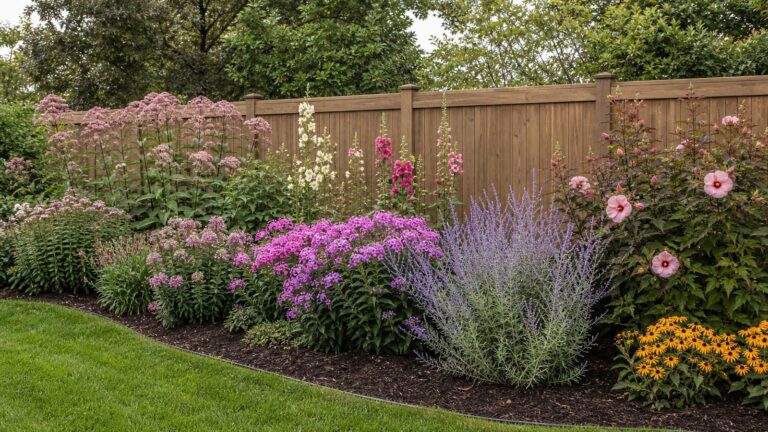
- Low planted border: Use a compact row of plants to define a bed without a hard material boundary.
- Clipped hedge edge: Plant a low hedge where a formal garden benefits from a precise, living line.
- Groundcover at the boundary: Let low-growing plants meet the lawn or path for a softer transition; keep their spread in mind.
- Color-blocked planting edge: Repeat one plant or foliage color along the border to make the boundary read as a deliberate band.
- Raised bed frame: Use a defined frame where planting needs separation from the surrounding surface.
- Bench as an edge: Place a bench along the back of a bed to create a usable boundary and a place to pause.
- Tall planters at a patio edge: Arrange planters to mark the transition between patio and garden without a continuous wall.
- Alternating planters and planting: Combine containers with in-ground beds for a varied, layered boundary.
- Widening and narrowing border: Vary the depth of a bed edge to make room for a focal plant, then taper it along a path.
- Gentle sweeping curve: Let the bed edge follow a broad curve that relates to the path or lawn rather than forcing tight bends.
- Stepped stone transition: Use changes in stone height to connect a level difference to an adjacent planting area.
- Low wall edge: Add a short structural boundary where a bed needs a more substantial visual separation.
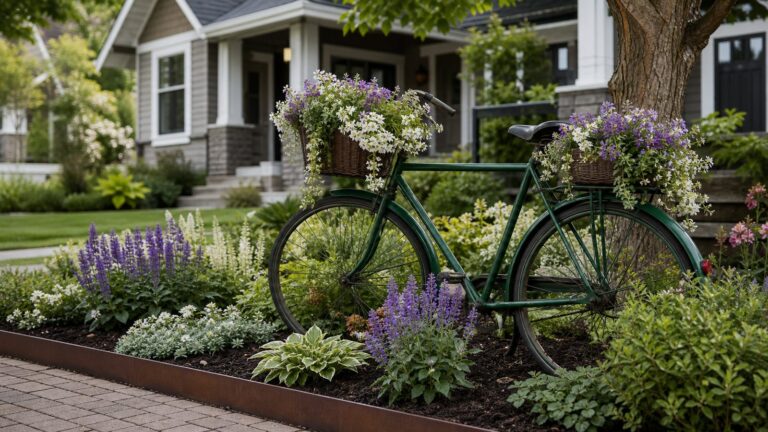
- Edging that disappears: Use a restrained, flush treatment when the plants, paving, or lawn should remain the main visual feature.
- Paired edge materials: Combine a narrow hard boundary with a soft gravel or planted strip to distinguish surfaces without making the line feel heavy.
How to choose and install an edge that suits the site
- Decide whether you need containment. A visual line may be enough for a planted border; loose gravel or mulch calls for a boundary that helps keep the material in place.
- Think about mowing and trimming. A flush band can provide a convenient mowing edge. A planted or raised boundary may need more trimming around it.
- Match the material to the setting. Brick and cut stone suit more formal treatments; flagstone, gravel, mulch, or irregular stones can feel more natural. Consider neighboring paving, building materials, and planting.
- Allow for local conditions. Frost can heave metal edging, and soil and drainage affect how an edge settles. Choose and install the system with those conditions in mind.
- Be realistic about upkeep. A hand-cut trench needs periodic touch-ups; living borders need plant care; loose surfaces can shift; and lightweight edging may need support.
- Use suitable materials. Illinois Extension recommends well-fired waterproof brick or pavers for edging and cautions against old railroad ties coated with materials toxic to plants. Its advice is a starting point, not a universal construction specification.
Rhonda Ferree, retired horticulture educator and former University of Illinois Extension horticulture educator, describes the purpose succinctly: “It forms a clean, neat line between planting areas and turf or groundcovers.” Garden writer Andrew Jackson, creator of The New Build Manifesto, offers a contrasting design principle: “I think the best modern edging often disappears rather than drawing attention to itself.” Both approaches work when the edge serves the garden’s layout.
Independent reader supportYour contribution helps us test, update, and keep practical guides available for everyone.Frequently Asked Questions
What can I use for garden edging?
Options include a hand-cut trench, metal or plastic strips, brick, stone, concrete, wood, gravel, mulch, planted borders, hedges, and woven natural materials. Choose based on whether you need a visible boundary, containment, a mowing strip, or a softer transition.
Rank #2

- What You Get: The garden edging border kit includes a 100 ft long, 2 inch high roll of lawn edging and landscape border and with 120 spikes which help you to create a lovely and warm garden (Note: The Hammer not included)
- Easy Installation: This garden plastic edging for landscaping can be easily installed in your garden or yard; Simply insert the spikes into the ground and secure the border, you don't need to dig,saving you time and effort
- No Need to Dig: Garden edging kit can add charm and character to your courtyard without digging; with edging border, you can design your own garden
- Sturdy and Flexible: The garden border kit is made of plastic material, can be trimmed according to their own needs, according to their own shape, round, square, heart, arc, flexible enough to making it an ideal choice for lawn edging and landscape border
- Wide Applications: Garden edging border is ideal for outdoor gardens, pathways, lawns, plantations, courtyards, and more. It helps prevent weed growth while enhancing the neat and beautiful appearance of your garden
What is the easiest garden edging to install?
A hand-cut edge avoids installing separate edging material, but it needs periodic touch-ups. Plastic edging can be easy to install, though stability and durability vary. Ease depends on the material, site, and the finish you want.
Quick Recap
Best Value

- 【Durable & Flexible Plastic Material】Made of high-quality, weather-resistant rubber, the MIXC garden edging border is designed to bend and shape easily to your landscaping needs. Whether you’re installing in straight lines, curves, or circular beds, the soft yet sturdy material can be trimmed as needed to match your garden layout. Great for long-term outdoor use in all seasons.
- 【Complete 100FT Landscape Edging Kit with 150 Stakes】The edging border kit includes one roll of 100FT black garden border (2" height) and 150 spiral anchoring stakes (6 inch each). The dense stake count allows secure installation in soft or uneven ground, keeping your lawn edging firmly in place—ideal for flower beds, tree rings, stone paths, and yard borders.
- 【Tool-Free Installation for DIY Landscaping Projects】No digging or professional help required! Simply uncoil the edging, let it warm under the sun to increase flexibility, shape it to your desired design, and hammer in the 6-inch stakes using a rubber mallet. If the stakes are difficult to insert into the ground, water the soil first and wait until it softens before installing—this will help secure the spikes firmly. Enjoy a clean and defined edge in minutes with this simple, mess-free setup.
- 【Secure and Weather-Resistant Design】Each 6-inch stake is made of durable plastic that resists rust and breakage. The edging withstands tough weather, including rain, snow, and direct sunlight. Once installed, it holds its form and position even against lawn mowers, wind, and small animals.
- 【Wide Applications for Outdoor Landscaping】Perfect for DIY home landscaping projects. Use this garden edging border to neatly separate flower beds, rock gardens, mulched areas, pavement edges, walkways, and lawn perimeters. Suitable for both flat and uneven terrain—just follow proper spacing with stakes for best results.
Rank #4

- SHIPMENT CONTAINS: One 5 inch x 40 foot brown flexible landscape edging coil with 10 matching stakes for securing garden borders
- RECYCLED MATERIAL CONSTRUCTION: Recycled plastic landscape edging coil designed for gardens, lawns, flower beds and pathways
- NATURAL APPEARANCE: Faux woodgrain texture and color creates a natural look that blends seamlessly with outdoor landscaping
- VERSATILE BORDER CREATION: Build clean, crisp borders for grass, raised garden beds, shrubbery, pathways and more, flexible enough to create custom curves as well as structured boxes
- SECURE INSTALLATION: Includes matching stakes to ensure edging stays in place through the seasons
Rank #3

- Pound‑In Lawn Edging – Create clean, defined garden borders without hiring a professional; installs with minimal ground preparation.
- Simple DIY Installation – Score the soil and gently pound edging into place with a rubber mallet for a secure, long‑lasting border.
- Durable & Flexible Plastic – Made from sturdy recycled plastic that installs in straight lines or tight curves around plants and trees.
- Low‑Maintenance Landscape Border – Designed to withstand string trimmers, temperature changes, and seasonal ground movement.
- Bonus Stake Kit Included – Includes (1) 20‑ft coil of edging and 6 anchoring stakes—triple the stakes of standard kits for added stability.
Product prices and availability are accurate as of the date/time indicated and are subject to change. Any price and availability information displayed on Amazon at the time of purchase will apply.