Recommended Free Tools
No amendment can reliably turn heavy clay into “perfect loam.” Compost, mulch and cover crops can improve soil structure and growing conditions over time, but they do not change the underlying proportions of sand, silt and clay. Start with a soil test, then choose inputs for a specific need rather than mixing in five products by default.
What amendments can—and cannot—change
Clay-rich soil holds water and nutrients well, but it can be more prone to compaction and surface crusting and may drain slowly after heavy rain. Adding organic matter can help soil particles form more stable aggregates and improve water and nutrient retention. It does not turn the mineral soil into a different texture.
As an Amazon Associate I earn from qualifying purchases.
Changing the texture of an existing garden bed takes a very large volume of material. University of Minnesota Extension says changing texture in open fields is generally unrealistic; a high-tunnel example uses one cubic yard of sand per 100 square feet. That specialized example is not a small-garden recipe. University of Minnesota Extension’s high-tunnel soil guidance explains the scale involved.
The Tool Desk
Outbyte PC Repair FREEClear out junk files and repair common Windows errorsFree Scan →Outbyte Driver Updater FREEScan for outdated or missing drivers - takes under a minuteDriver Scan →Test the soil before choosing an amendment
A soil test can assess pH, nutrient levels and organic matter and help determine whether compost, manure, lime or fertilizer is appropriate. Follow the lab’s recommendations for your location and the plants you intend to grow. University of Minnesota Extension notes that compost or composted manure may be useful when organic matter is below 3%, but excessive additions can build phosphorus and create problems for plants and the environment. See University of Minnesota Extension’s soil-testing guidance.
#1 Best Overall
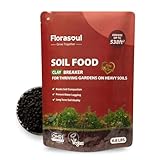
- SOFTENS HEAVY CLAY SOIL: Stop struggling with hard, compacted ground. Our Clay Breaker naturally improves soil structure, making it easier to work and allowing roots to penetrate deeper for stronger, more resilient plants.
- IMPROVES DRAINAGE & AERATION: Helps eliminate standing water and waterlogging by creating vital air pockets in dense soil. This ensures better oxygen flow to the roots and supports a healthy underground ecosystem in your garden.
- PLANT-BASED & VEGAN FORMULA: Crafted from premium seaweed and mineral-derived ingredients. Unlike traditional chemical softeners, Florasoul is 100% vegan and free from animal by-products, making it ideal for organic vegetable and flower gardening.
- PROMOTES ROOT DEVELOPMENT: By loosening tight soil particles, this amendment allows young roots to spread effortlessly. Experience faster growth and improved nutrient uptake for your perennials, shrubs, and lawn.
- CLEAN & ODORLESS APPLICATION: Our high-quality granules are easy to handle and completely odorless. Perfect for comfortable gardening without harsh scents, making it a favorite for residential gardens and areas near the home. Safe for pets and children when used as directed.
Five options, each for a different job
| Option | Main job | How to use it |
|---|---|---|
| Finished compost | Adds organic matter and supports aggregation and water and nutrient retention; does not change mineral texture. | Use a moderate, test-informed amount; avoid repeated additions without checking nutrient levels. |
| Organic mulch | Protects the soil surface and contributes organic matter gradually as it breaks down. | Use as a surface cover; it is not an instant fix for the full root zone. |
| Cover crops or green manure | Protects soil and contributes organic matter over time. | Choose a crop and sowing window suited to your location, rotation and planting schedule. |
| Lime | Corrects acidic soil when a test indicates a need. | Use the material and rate recommended by a soil test; it is not a general clay-softening product. |
| Gypsum | Supplies calcium in certain soil or nutrient-management contexts. | Use only when a relevant diagnosis or recommendation supports it; it does not raise pH like lime. |
1. Finished compost
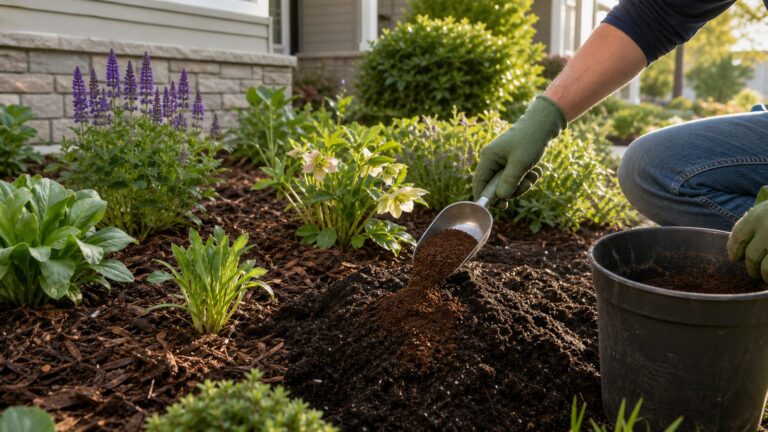
Compost is the broadest-purpose option for many garden beds: it adds organic matter and can support aggregate stability and water and nutrient retention. University of Minnesota Extension recommends incorporating 1 to 2 inches of compost into flower and vegetable soil 6 to 8 inches deep as one healthy-soil practice. Treat that as regional extension guidance, not a universal rate for every soil, crop or climate; let your test results and local advice guide the amount. Prefer finished, quality compost rather than fresh manure or material of unknown quality.
More is not automatically better. Compost and composted manure can add phosphorus and salts along with organic matter, so avoid piling them on year after year without checking soil nutrient levels. University of Minnesota Extension’s healthy-soil guidance discusses compost, mulch, cover crops and reducing compaction.
Rank #2

- Feed the soil not the plants - stimulate microbial activity in your soil and boost probability of success with all types of plants… like composting but faster
- For best results, apply monthly throughout the growing season, especially in the fall and spring
- No synthetic chemicals - main ingredient in this product is activated humics derived from organic sources (OMRI certified organic)
- Concentrated formula - simply dilute at a ratio of 1 oz to 1 gallon and spray/pour on your soil
- Farmer’s Secret products are made with pride in Kentucky and puts the know-how of award-winning farmers into your hands. Get in on the Secret!
2. Organic mulch
Mulch is a surface-management step, not a way to instantly loosen the entire root zone. It helps protect topsoil from erosion, and wood mulch contributes organic matter as it breaks down. Use it to keep exposed soil covered while the soil-building process continues.
Windows Errors? Fix Them Before They Spread
Repair common Windows errors and clear accumulated junk for a smoother, more stable PC - no reinstall needed.Free scan · no reinstallOutdated Drivers Are Slowing You Down
One free scan finds every outdated or missing driver and matches the right update for your exact hardware.Free scan · exact hardware match3. Cover crops or green manure
A cover crop can protect the soil and contribute organic matter. The right species and sowing time depend on your location, crop rotation and how long the bed can remain planted before the next crop. Treat this as an optional seasonal strategy; there is no single seed mix that suits every garden.
Rank #3

- Enhances Soil Structure: Loosens heavy clay soils, improving aeration, drainage, and root penetration.
- Provides Essential Calcium & Sulfur: Supplies key nutrients needed for strong cell walls and healthy plant growth.
- Does Not Alter Soil pH: Acid-neutral and safe for pH-sensitive plants.
- Reduces Soil Crusting & Compaction: Helps maintain a friable soil surface for better seedling emergence.
- OMRI Listed for Organic Use: Approved for certified organic gardening and farming.
4. Lime, only when the soil is too acidic
Lime is used to correct acidic soil, not to soften clay. The type and amount depend on a soil test. Materials that contain calcium are not all liming materials, so do not assume that gypsum can replace lime. University of Minnesota Extension’s explanation of liming materials distinguishes these products.
5. Gypsum, only for a relevant diagnosis
Gypsum is calcium sulfate. Because it lacks carbonate, it does not raise soil pH in the way agricultural limestone does. It may be useful for a specific calcium or nutrient-management need, but it is not a universal clay remedy. Use it only when a soil test or applicable local recommendation supports it.
Rank #4

- Loosen Clay: Earth Science Fast Acting Gypsum granules start immediately to loosen clay and other compact soils for improved water penetration, more workable soil, and better root development.
- Support Healthy Plants: Loosening soil allows for better soil structure, water retention, and airflow which helps to support healthy plants. Gypsum can also help repair salt-damaged soil and adds calcium to soil to help plants suffering from blossom-end rot.
- Finely Ground & Pelletized: Earth Science Fast Acting Gypsum starts working immediately to loosen compact soil. Earth Science gypsum is granular and pelletized to allow for easy application, allowing them to penetrate the soil more quickly.
- Nutri-Bond: Earth Science Nutri-bond Technology naturally bonds with soil to reduce nutrient run-off and waste by up to 50%. Apply Fast Acting Gypsum quickly and easily with any spreader.
- Safe For Kids & Pets: Earth Science Gypsum is safe to use on any grass type, and people and pets can use the lawn immediately after application.
When a raised bed is the better option
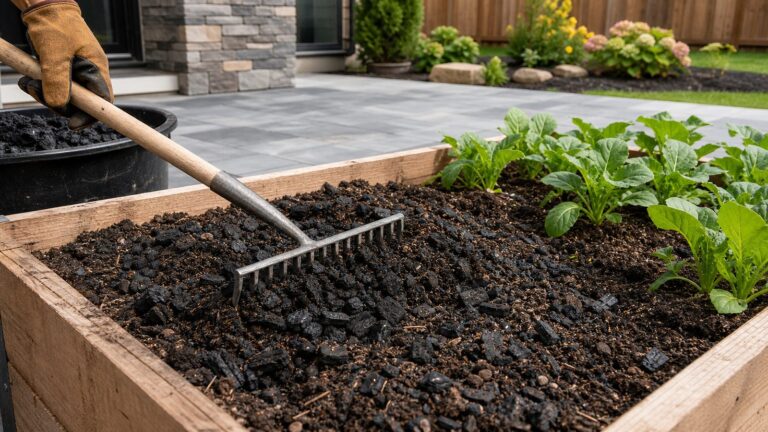
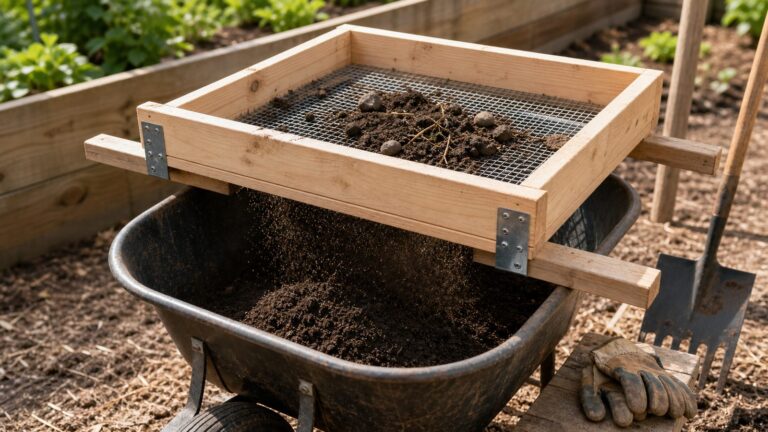
If you need a separate, more manageable growing medium rather than gradual improvement of the ground beneath it, consider a raised bed. University of Minnesota Extension describes raised-bed mixes using roughly one-half to two-thirds topsoil and one-third to one-half plant-based compost. The mix creates a distinct growing medium; it does not change the texture of the clay below. Excess compost can cause water-retention problems, so choose a mix with restraint. Read the extension guidance on raised-bed gardens.
Free tools Windows power users keep installed
One-click scans. No signup required.
A practical order of work
- Get a representative soil test. Ask for pH, nutrients and organic matter, and use the lab’s recommendations for your garden and location.
- Reduce compaction. Keep foot traffic off growing beds and use defined paths so the soil structure you are building is not continually compressed.
- Add finished compost if it is appropriate. Use a moderate, test-informed amount and incorporate it into the bed where suitable.
- Keep the surface protected. Use organic mulch or plant a suitable cover crop during an off-season window.
- Retest periodically. Do not add lime, gypsum, manure or fertilizer without a reason supported by a test or a relevant local recommendation.
Common clay-soil fixes to avoid
- Mixing in a little sand: A small amount will not reliably transform heavy clay into loam; changing texture requires substantial volume.
- Applying gypsum to every clay bed: Gypsum is not lime and does not raise soil pH. Use it only when a relevant need is established.
- Adding unlimited compost or manure: Excess can build phosphorus and salts and create nutrient or water-management problems.
These recommendations come from University of Minnesota Extension and may need adjustment for local soils and growing conditions. For a garden bed, the practical goal is better structure and a suitable growing environment—not a promise that the original clay will become perfect loam.
Quick Recap
Best Value
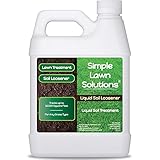
- Liquid Soil Loosener: Can be used Alone or with Mechanical or Core Aeration, Aerating and Aerate Tools. Liquid Soil Loosener Conditions Compact Soil. Helps the Downward Movement of Water Allowing Vertical Drainage and Increased Water Infiltration.
- Concentrated Soil Conditioner: Soften Your Soil with this Advanced Lawn Solution, Easy To Use Treatment. Liquid Soil Loosener is Concentrated Liquid Solution. 32 ounce Bottle Covers up to 32,000 square feet.
- Helps Standing Water, Promotes Drainage: Improves Water and Liquid Infiltration. Use Alongside Any Turf Grass Fertilizer Nutrient Program.
- Produced In The United States: Liquid Soil Loosener is Made and Manufactured in the United States of America, by a Family Owned Business with Over 25 years of Former Experience in the Turf Grass and Agriculture Industry.
- Can Be Used On All Grass types: Including Bermuda, St. Augustine, Zoysia, Buffalo, Centipede, Florida Palmetto, Bahia, Fescue, Ryegrass & Kentucky Bluegrass.
Product prices and availability are accurate as of the date/time indicated and are subject to change. Any price and availability information displayed on Amazon at the time of purchase will apply.