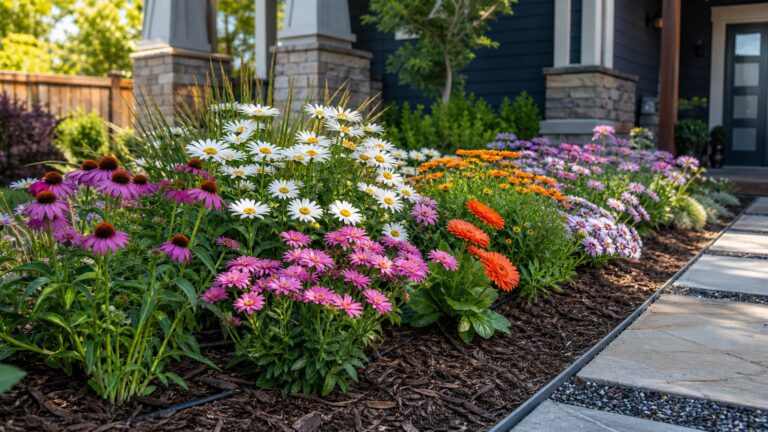
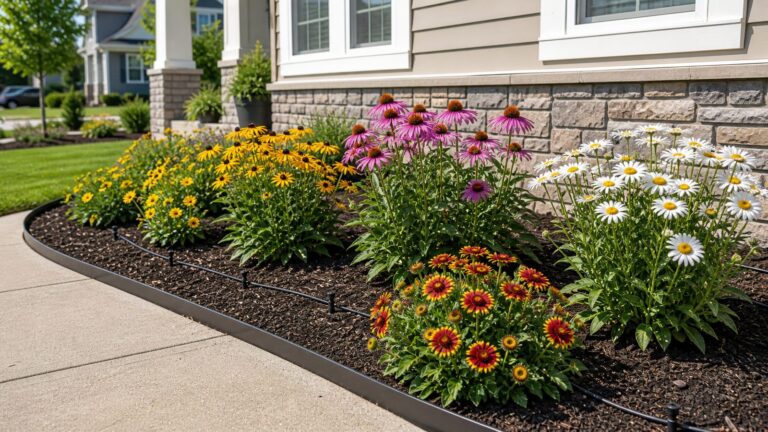
Daisies are a flower form, not one plant with one care routine. For a classic summer border, choose Shasta; for cool-season edging, English daisy; for spring color, painted daisy; for a naturalized planting, ox-eye daisy—if you can manage its spread; and for mid-to-late-summer color, Gloriosa daisy. Match your choice to local climate and soil drainage before planting.
How to choose among these five daisies
Compare bloom timing, color, mature size, preferred conditions, and spreading habit. The hardiness and seasonal guidance below comes from U.S. regional sources; it is not a universal guarantee. Check local extension advice for your location and cultivar.
As an Amazon Associate I earn from qualifying purchases.
| Type | Garden role and season | Color and size | Key consideration |
|---|---|---|---|
| Shasta daisy (Leucanthemum × superbum) | Classic summer border; Illinois Extension lists bloom from June through September. | White petals with yellow centers; Illinois Extension lists 1–3 feet tall. | Needs well-drained soil; may be short-lived, especially in wet winter soil. |
| English daisy (Bellis perennis / Bellis spp.) | Low edging and early spring color. | Size and color range not stated in the cited sources. | Cool-season plant; may fade in summer heat. |
| Painted daisy (Tanacetum coccineum) | Perennial spring color, blooming later in spring than ox-eye daisy. | Red, rose, pink, and white; flower stems can reach 24 inches, according to Missouri IPM. | Excellent drainage is important to avoid weakened plants and winter loss. |
| Ox-eye daisy (Leucanthemum vulgare) | Naturalistic white flowers. | White flowers; mature height not stated in the cited sources. | Reseeds and spreads by rhizomes; check local guidance and be prepared to control it. |
| Gloriosa daisy (Rudbeckia hirta) | Mid-to-late-summer color that extends the season. | Yellow, deep gold, bronze, and brown shades; mature height not stated in the cited sources. | Verify local care and hardiness guidance; a complete cultivar-by-cultivar comparison is not established. |
1. Shasta daisy: a classic summer border perennial
Shasta daisy is the familiar white-and-yellow choice for a sunny border, and it can also suit bedding, containers, cut-flower plantings, or butterfly gardens. Illinois Extension lists full sun to partial shade, moist but well-drained soil, a height of 1–3 feet, USDA hardiness zones 5–9, and June-to-September bloom. These are Illinois Extension’s plant-guide figures, not a promise for every region or cultivar.
Free tools Windows power users keep installed
One-click scans. No signup required.
Drainage matters particularly in winter: Illinois Extension warns that wet, poorly drained winter soil can shorten the plant’s life. Deadhead spent blooms to encourage a longer flowering period. In Chicago, the Botanic Garden describes Shasta as a 2–3-foot clumping border plant and reports watering about one inch weekly during summer heat, deadheading for repeat bloom, and dividing clumps every two to three years to prevent crowding. Those are practices from its Chicago garden, not universal watering or division requirements. Its report that ‘Amelia’ and ‘Becky’ performed well is likewise local experience.
#1 Best Overall

- Classic Perennial Blooms: Shasta daisy seeds perennial produce timeless white daisy flowers with yellow centers, daises grow 24–36 inches tall. Ideal daisy seeds for planting outdoors in zones 4–9.
- Landscape Ready Growth: Daisy wildflower seeds form upright shrubby clumps with 18–24 inch spacing, perfect garden seeds for borders, containers, and flower beds using daisy seeds bulk. Perennial wildflower seeds are proven performers in a wide variety of gardens across North America.
- Reliable Germination: White daisy seeds germinate in 14–21 days when plant seeds started indoors 6–10 weeks before last frost. Alaska flower seeds to plant outside grow some of summer's most recognizable blooms in flower garden and are a floral shop favorite.
- Pollinator Friendly: Shasta daisies attract bees and butterflies while resisting deer and rabbits. These white daisies thrive in full sun to light shade with well-drained soil and moderate watering.
- Cut Flower Favorite: These cut flower seeds bulk produce 3–4 inch blooms prized for bouquets and arrangements. Long daisy flower stems and clean white petals make these daisies flowers ideal for home and floral use.
Climate can change how gardeners use this cold-hardy perennial. UF/IFAS says it is treated as an annual in central and south Florida, where summer heat can kill it. The Florida guidance recommends well-drained soil, full sun to partial shade, avoiding overwatering, and deadheading. For another perspective on Florida’s daisy options, see UF/IFAS Shasta Daisy guidance.
Missouri IPM notes that Shasta flower sizes range from two to six inches. Cultivars vary, so check the plant label for the specific size and habit you want.
2. English daisy: low edging for cool spring weather
English daisy is a low-growing choice for edging, especially alongside spring bulbs or pansies. University of Missouri IPM classifies it as a cool-season plant. In the Chicago Botanic Garden’s regional account, it prefers cool, moist spring conditions and often fades as summer heat arrives. The garden describes it as a biennial in its area; that life-cycle description should not be treated as universal.
Rank #2
- High Germination Performance: Chrysanthemums seeds show reliable sprouting within 14–20 days. These garden seeds flowers thrive across USDA zones 1–12, ideal for gardens and flower beds outdoors.
- Striking Tri-Color Blooms: Painted daisy wildflower seeds bulk produce vivid white, red, yellow, and purple ringed flowers. These wild flowers seeds mix create eye-catching summer displays in home garden beds and borders.
- Compact Bushy Growth: Daisy seeds bulk grow into sturdy, well-branched plants. These chrysanthemum seeds for planting suit containers, raised beds, and outdoor planting with recommended spacing of 6–12 inches.
- Extended Bloom Season: Chrysanthemum plant blooms from early summer through early fall when deadheaded regularly. These daisies seeds deliver continuous color and are excellent cut flower seeds bulk for fresh bouquets.
- Easy Care Annual Flower: Daisy seeds for planting outdoors prefer full sun to part sun and well-drained soil. These hardy chrysanthemum seeds require surface sowing and light moisture for successful establishment.
In Chicago, regular deadheading can lead to sporadic fall blooms. If summer heat is intense where you garden, plan for English daisy as a seasonal accent rather than assuming it will stay lush through the hottest months.
3. Painted daisy: colorful flowers and finely cut foliage
Painted daisy adds red, rose, pink, or white flowers and fern-like foliage to a spring perennial planting. Missouri IPM says it flowers later in spring than ox-eye daisy, and its flower stems can reach 24 inches. Single forms are common, and double-flowered cultivars are available.
Give painted daisy excellent drainage. Poorly drained soil can weaken plants and contribute to winter loss. Despite the similar name, ornamental painted daisy (Tanacetum coccineum) is not Dalmatian pyrethrum, the plant from which pyrethrum insecticide is extracted.
Rank #3

- Beautiful - Large premium packet of Shasta Daisy (Chrysanthemum maximum) seeds. Easy-to-grow perennial flower with pure white petals and golden centers, which blooms its second year. Popular as a cut flower. Produces continual blooms all summer long and attracts beneficial insects to your garden. Plant wildflower style or in arranged beds. Minimum of 500 mg per packet (about 600 seeds).
- Productive - Shasta Daisy germinates in 15-21 days when soil temps are 70°F. Plant 1/8” deep and space 12-18” apart in an area with full sunlight. This variety will grow 2-4’ tall with a spread of 1-2’. Flowers will mature in 150-300 days, plant in USDA zones 3-13.
- Pollinator Friendly - Enhance outdoor spaces while also inviting pollinators, creating a lively environment full of life and color. Shasta Daisies are a favorite with bees and butterflies. Great way to support your local pollinators!
- Easy to Grow - Instructions included on each packet. Plus, we are available to answer all your questions. If these seeds don’t germinate, we will happily make it right for you.
- Safe and Sustainable - Our operation is fully solar powered, and Sow Right Seeds has taken the Safe Seed Pledge to sell only fresh Non-GMO heirloom seeds for you and your family.
4. Ox-eye daisy: a naturalistic flower with a spreading habit
Ox-eye daisy can create an easy, naturalistic display of white flowers, but it is not a plant to choose casually. It reseeds readily and spreads by both seed and rhizomes. Chicago Botanic Garden notes that it is naturalized across a broad range and can become a weed or nuisance; Missouri IPM says plants often live only a few years, while seedlings can flower the year after germination.
Do these 3 things before closing this tab:
1Fix the driver behind crashes, sound loss and screen glitches2Clear out junk files and repair common Windows errors3Scan for outdated or missing drivers - takes under a minuteChoose ox-eye only if you can manage its spread and local rules or guidance allow it. It is not suitable everywhere. If you want a controlled border, a less persistent daisy may be a better fit.
Independent reader supportYour contribution helps us test, update, and keep practical guides available for everyone.5. Gloriosa daisy: color for mid-to-late summer
Gloriosa daisy (Rudbeckia hirta) brings yellow, deep gold, bronze, and brown tones into the garden in mid-to-late summer, after many earlier daisies have flowered. Missouri IPM presents it as an option for extending the season. The cited guidance does not provide a complete hardiness or care comparison for individual cultivars, so confirm requirements for the variety and your location before planting.
Rank #4

- Truly a Classic - Named after snowy mountain peaks, this classic daisy sports abundant bright white petals around golden yellow centers.
- Packet Contents - Each 1 Gram packet contains approximately 700 premium, open pollinated, non-GMO, flower seeds. (See photos on this page of packet and contents.)
- Premium Packaging - All seeds from The Old Farmer’s Almanac are packaged in individually styled packets ideal for gifts, storage or immediate use. Each packet displays the flower, vegetable, plant or herb variety on the front with instructions and plant facts on the back.
- Freshly Packed - These seeds are packed for the current growing season and will provide high germination rates next year as well.
- Slow & Steady Growers - An easy-to-grow perennial, Shasta Daisies take 2 years to mature and bloom.
Site conditions that matter across the choices
Sun and soil
In his University of Missouri IPM article, revised June 18, 2025, David Trinklein writes: “All daisies need a sunny location along with good garden soil.” Treat that as broad guidance rather than a claim that every species has identical needs: for example, Illinois Extension and UF/IFAS allow Shasta daisy full sun to partial shade. Follow the requirements for the plant you buy and your local conditions.
Drainage and local climate
Good drainage is a recurring concern, particularly for Shasta and painted daisies. Shasta’s winter survival can suffer in wet soil, while painted daisy may weaken or be lost over winter in poorly drained ground. Hardiness guidance is regional: Illinois Extension lists Shasta at USDA zones 5–9, but the cited sources do not establish a complete, comparable zone chart for all five types. Check local recommendations rather than applying one region’s advice everywhere.
Control spreading plants
Before planting ox-eye daisy, confirm that it is appropriate where you live and decide how you will limit seedlings and rhizomes. Its potential to spread is a defining selection factor, not a minor maintenance detail.
Quick Recap
Product prices and availability are accurate as of the date/time indicated and are subject to change. Any price and availability information displayed on Amazon at the time of purchase will apply.