Do these 3 things before closing this tab:
1Scan for outdated or missing drivers - takes under a minute2Repair Windows errors before they cause bigger problems3Fix the driver behind crashes, sound loss and screen glitchesSome links on this page are affiliate links: if you buy through them we may earn a commission, at no extra cost to you.
New York City began construction on Oct. 26, 2026, on the $35.7 million North End Recirculation Project in northern Central Park. The system will link the Harlem Meer, the Loch and the Pool with pumps, filtration, piping and controls so the park can store more stormwater before major rain events, reduce flows entering Harlem and East Harlem sewers, and reuse water instead of relying as heavily on city drinking-water supplies.
Completion is expected in fall 2028. City officials project that the project will manage runoff from a 204-acre watershed, keep about 132 million gallons out of local sewers each year, conserve an estimated 175 million gallons of potable water annually and cut stormwater flows to city sewers by 90%.
As an Amazon Associate I earn from qualifying purchases.
Free tools Windows power users keep installed
One-click scans. No signup required.
What is the North End Recirculation Project?
The project is a stormwater-management and lake-circulation system for Central Park’s three northern water bodies: the Harlem Meer, the Loch and the Pool. The Central Park Conservancy is overseeing delivery with the New York City Department of Environmental Protection (DEP) and NYC Parks. Engineering publication ENR identifies eDesign Dynamics as the designer.
Rather than treating the water bodies as isolated features, the project will operate them as a connected system. Pumps, filtration equipment, conveyance pipes, automated controls, a wet well and drainage infrastructure will allow operators to adjust water levels, clean recirculated water and route flows according to weather conditions.
Popular on Amazon

- 【Underground Dry Well, Not a Water Storage Barrel】Designed for underground stormwater management, this dry well helps collect runoff from downspouts, catch basins, channel drains, and low spots in the yard. Unlike an above-ground rain barrel or storage tank, it temporarily holds water underground and allows it to disperse into the surrounding soil.
- 【Helps Manage Yard Runoff More Effectively】The open-bottom design helps water slowly drain into the soil below. It is a practical way to manage runoff from rain and help reduce standing water in low spots and other problem areas.Compared with traditional gravel-filled drainage pits, this dry well gives water more space inside the chamber. It can also help reduce the amount of heavy stone needed during installation.
- 【Flexible Pipe Connections】The top lid knockout allows 4 in. S&D pipe connection from above, while multiple side knockouts support 4 in. S&D and Schedule 40 pipe connections from different directions. Great for downspout runoff, yard drainage, and stormwater management systems.
- 【Use One by Itself or Add More as Needed】You can use one unit for a single downspout or a small drainage area. For larger runoff areas, you can connect multiple units together to build a bigger underground drainage setup.
- 【Includes 3 Side Panels and 1 Cover】This kit includes 3 side panels and 1 cover for underground installation. Assembly is straightforward: set up the chamber, place it in the excavated area, connect the drain line, and backfill evenly. Geotextile fabric and 6-inch top inlet / surface drain connector are not included.
How will the system circulate water and prepare for storms?
In ordinary dry weather, the system will move water through the three connected water bodies. Before a major storm, operators will lower the Harlem Meer so it has room to receive rainfall and runoff. After the storm, the water bodies can return to their normal circulation cycle.
- Dry-weather pumping: Water is pumped from the Harlem Meer toward the Pool.
- Filtration: The flow passes through the new filtration system before entering the Pool.
- Gravity return: Water moves back through the Loch toward the Meer by gravity.
- Storm preparation: Operators draw down the Meer ahead of a major storm to create temporary storage capacity.
- Storm recovery: Rainfall refills the connected water bodies, after which normal recirculation resumes.
This operating sequence is intended to reduce the amount of runoff reaching the city’s combined-sewer network during the most intense rainfall, when sewer capacity is under the greatest pressure.
The Tool Desk
Outbyte Driver Updater FREEFix the driver behind crashes, sound loss and screen glitchesFind Drivers →Outbyte PC Repair FREERepair Windows errors before they cause bigger problemsFix Now →How much stormwater and drinking water will the project affect?
The following figures are City of New York projections for the completed system, not measurements from an operating installation.
Also popular on Amazon

- COLLECT, DETAIN, AND INFILTRATE EXCESS WATER: For draining yard and landscape areas prone to flooding, the Flo-Well Dry Well is installed underground to collect, temporarily store, and slowly release excess water into the ground
- HOW TO INSTALL: Connect to 4" Sewer and Drain (S&D) Pipe through top cover knockout; 12 side-panel knockout points connect 4" S&D and Sch 40 Pipes; Can be buried or stacked up to 8 ft deep and supports pedestrian traffic, including lawn tractors
- GRAVEL-FREE ALTERNATIVE: Unlike a traditional dry well that requires filling a large hole with heavy stone and gravel, the Flo-Well Dry Well only needs a small amount of gravel at the base to prevent scouring and provides 250% more detention volume than comparable gravel-filled dry wells
- USE ONE OR MANY: Works as a stand alone product and can be used in multiples - units can be stacked up to 4 high or side-by-side 18" apart; Ideal for residential and commercial locations such as yards, playgrounds, golf courses, wash-down areas, rain gardens and bioswales
- INCLUDES: 3 side panels and top cover, unassembled; open bottom allows water to seep into gravel and ground below; bottom panel sold separately to provide a base for a sump pump if desired
| Measure | Projected result | Qualification |
|---|---|---|
| Watershed managed | 204 acres | Portion of Central Park’s watershed served by the project |
| Reduction in stormwater flows to city sewers | 90% | City projection for the managed flows |
| Water kept out of local sewers | Approximately 132 million gallons per year | Annual estimate from the City of New York |
| Potable water conserved | Approximately 175 million gallons per year | Annual estimate from the City of New York |
Keeping runoff in the park’s water bodies during storms can reduce peak inflows to sewers serving Harlem and East Harlem. The recirculation loop also reduces the need to replenish the lakes with treated city water, while filtration and circulation are intended to improve water quality and reduce harmful algal blooms.
What is being built underground and along the shore?
Recirculation pipes, filtration and pumping structures
ENR reports that sections of the main recirculation pipe will run about 5 feet below grade across the North Meadow. Suction and filter-discharge piping near the Harlem Meer is planned at about 3 feet deep. The filtration vault and wet well will extend about 15 feet below grade.
| Component | Reported scope |
|---|---|
| Main recirculation pipe | About 5 feet below grade across the North Meadow |
| Meer suction and filter-discharge pipes | About 3 feet below grade |
| Filtration vault and wet well | About 15 feet below grade |
Drainage, sediment and landscape work
- A drain will connect the Pool to a sewer main near Eighth Avenue and West 98th Street.
- Sediment will be excavated from the Harlem Meer.
- Shorelines will be stabilized.
- New aquatic, shoreline and upland plantings will be installed.
How will the project reduce flooding pressure in Harlem and East Harlem?
The project addresses a timing problem: heavy rain can send a large volume of runoff into the sewer system at once. By lowering the Meer before a major storm, the park creates storage space that can capture rainfall instead of sending all of it immediately toward downstream sewers. The city’s projected 90% reduction in stormwater flows for the managed area is intended to lessen combined-sewer stress and associated flooding pressure; the actual benefit will depend on storm intensity, drainage conditions and how the system is operated.
Recommended Free Tools
Also popular on Amazon
How much does the project cost, and who is funding it?
The reported capital package combines city, state, City Council, borough and private funding.
| Contributor or program | Reported amount |
|---|---|
| New York City capital funds | More than $19.6 million, including $14.2 million from DEP |
| New York State Environmental Facilities Corporation Green Resiliency Grant | $10 million |
| City Council Speaker Julie Menin | $2 million |
| Manhattan Borough President Brad Hoylman-Sigal | $500,000 |
| Council Member Gale Brewer | $100,000 |
| Central Park Conservancy donors | $3.5 million |
The project budget is identified by the city as $35.7 million. Because the city funding figure is reported as “more than” $19.6 million, the component amounts should be read as reported funding commitments rather than a precision accounting total.
When will construction finish?
Construction began on Oct. 26, 2026, and completion is expected in fall 2028. An earlier DEP water-conservation report described the project as still in design, anticipated construction in spring 2026 and projected completion in 2027. That earlier schedule has been superseded by the later groundbreaking announcement and the current construction report.
Also popular on Amazon

- Easy Stormwater Dry Well: Controls runoff, prevents pooling, and promotes groundwater recharge excess water with Vodaland’s Easy Stormwater Dry Well—a high-capacity, modular solution. Whether managing runoff in yards, playgrounds, golf courses, parking lots, wash-down areas, rain gardens, or bioswales, this system efficiently redirects stormwater into the ground, preventing flooding and erosion.
- Easy Installation & Versatile Connectivity: Designed for flexibility, the Easy Stormwater Dry Well features 4 durable side panels with multiple knockout points, allowing seamless connections to a variety of pipe sizes. The system can be buried or stacked making it a reliable choice for diverse applications.
- More Water Retention, Less Hassle: Because of the use of HexPave units underneath the system, unlike traditional dry wells that require large amounts of stone and gravel, the Easy Stormwater Dry Well needs only a small gravel base to provide superior detention volume and faster infiltration while simplifying installation.
- Modular & Scalable for Any Project: Use as a individual unit or expand your system by adding additional drywells or stacking them for more drainage in a single location.. Its adaptable design makes it perfect for small residential projects and large-scale commercial applications alike.
- What’s Included: 4 heavy-duty side panels and a reinforced top cover, An open-bottom design with (2) HexPave units, (10) Ground Anchors, and (1) Agro Geo Textile Fabric for ease of installation
The New York City Design Commission granted unanimous final approval on Dec. 16, 2024, with a condition that work commence before Dec. 16, 2026. The Oct. 26, 2026 groundbreaking falls within that approval window.
What historic and archaeological constraints affect the work?
Central Park is a National Historic Landmark, is listed on the National Register of Historic Places and is a New York City landmark. Construction therefore has to fit new infrastructure into a protected cultural landscape as well as an active public park.
Archaeological testing in April 2025 identified sections of the planned route where monitoring is recommended, including areas near the former Kingsbridge Road and Mount St. Vincent and along the park’s western boundary. Those findings add oversight requirements where excavation could encounter historic material. The shallow pipe runs, deep filtration vault and wet well, shoreline work and plantings must all be coordinated with design review, archaeology and landscape protection.
Also popular on Amazon
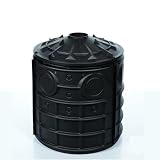
- Built for Underground Stability - This heavy duty dry well is made with reinforced composite material and a ribbed structure to help maintain stability underground. Compared to standard drywell designs, it is less likely to deform under soil pressure and regular yard use.
- Reinforced Structural Design - This dry well system kit features an integrated ribbed structure that helps distribute pressure more evenly, supporting consistent performance for underground installation over time.
- Supports Efficient Drainage - This underground drywell system kit is designed to collect and disperse stormwater, helping reduce water pooling and soil erosion. Suitable for yard, lawn, and driveway drainage applications.
- Simple No-Tool Assembly - Designed as a complete dry well system kit, it includes a 3-piece interlocking structure for straightforward installation without tools. The design also helps improve overall stability after setup.
- Versatile for Yard & Driveway Applications - Ideal for residential drainage systems, including downspout runoff, garden drainage, and driveway water management. Suitable for a wide range of outdoor environments.
Are the projected benefits guaranteed?
No. The 132-million-gallon sewer-diversion figure, 175-million-gallon potable-water estimate and 90% flow reduction are design projections supplied by city agencies. They describe intended annual performance after completion, not a guarantee for every storm or a result already demonstrated in operation.
Performance will depend on rainfall patterns, available storage, filtration and pump operation, maintenance, and the timing of pre-storm drawdowns. The project’s stated goals are to improve resilience and water quality while reducing pressure on sewers and city water supplies.
Frequently Asked Questions
Is the 90% stormwater reduction a guaranteed result?
No. It is a city projection for the flows managed by the project after completion. Results will vary with rainfall, operating decisions, maintenance and the amount of storage available before each storm.
What does the project’s wet well do?
A wet well is an underground chamber associated with a pumping system. In this project it is part of the deeper infrastructure that receives and manages water for pumping and filtration equipment.
Will Central Park stop using city drinking water for these lakes?
The project is designed to reduce that dependence, not eliminate it. The city estimates annual potable-water conservation from recirculation and stormwater capture, while the system will still require operational management and maintenance.
Why does construction require archaeological monitoring?
Excavation routes pass through a nationally and locally landmarked park where earlier testing found areas with potential historic sensitivity. Monitoring helps identify and protect archaeological resources if work encounters them.
What’s actually slowing this PC down?
Pick the symptom - the matching free tool is one click away.

