Some links on this page are affiliate links: if you buy through them we may earn a commission, at no extra cost to you.
You can grow 32 vegetables in partial shade, especially leafy greens, brassicas, peas, and cool-season roots, with roughly three to six hours of direct midsummer sun or constant dappled light. The best choices include lettuce, spinach, arugula, kale, chard, radishes, beets, broccoli, cabbage, and turnips; dense full shade is unsuitable.
Partial shade is not one uniform condition. A bed with bright midday sun, a north-facing wall that receives reflected light, and soil beneath a dense evergreen canopy may all look “shady,” but they offer very different growing conditions. Match the crop to the actual light, then adjust expectations for slower growth, smaller roots, or reduced pod production.
As an Amazon Associate I earn from qualifying purchases.
Key takeaways
- Partial shade usually means about three to six hours of direct midsummer sunlight, while four to six hours of sun or constant dappled shade is a practical target for many vegetables.
- Leafy vegetables, stems, buds, and cool-season roots generally perform better in partial shade than vegetables grown for ripe fruit.
- Spinach, lettuce, arugula, kale, Swiss chard, radishes, beets, peas, and several brassicas are among the strongest choices for a bright, partially shaded bed.
- Tomatoes, peppers, eggplants, melons, squash, and corn should not be expected to produce a normal crop in genuinely shaded conditions.
- Partial shade can improve lettuce and spinach quality during hot weather by slowing bitterness, flowering, and bolting, but weak light still causes slower growth and smaller harvests.
What vegetables can you grow in partial shade?
You can grow 32 vegetables in partial shade, especially leafy greens, brassicas, peas, and cool-season roots, provided the site receives roughly three to six hours of direct midsummer sun or constant dappled light. The strongest choices include lettuce, spinach, arugula, kale, chard, radishes, beets, broccoli, cabbage, peas, and turnips; dense full shade is not suitable for a productive vegetable garden.
The most useful definitions come from established horticultural guidance. The Royal Horticultural Society describes partial or semi-shade as three to six hours of direct midsummer sunlight. Oregon State University Extension uses four to six hours of sun or constant dappled shade as a workable threshold for a group of vegetables, while the University of Minnesota Extension describes part shade as about three to six hours of sunlight and full shade as less than three hours.
Popular on Amazon

- USDA CERTIFIED ORGANIC VEGETABLES: Enjoy 100% clean, non-GMO heirloom crops grown from seed. Certified organic by Oregon Tilth, this open-pollinated variety pack ensures your home garden yields healthy, chemical-free organic vegetables directly to your table.
- 10 ESSENTIAL VEGETABLE VARIETIES: Elevate your home garden with a curated kit of popular kitchen staples: Genovese Basil, Cascadia Snap Pea, Di Cicco Broccoli, Bush Blue Lake 274 Bean, Jalapeño Pepper, Brandywine Pink Tomato, Gourmet Mix Lettuce, Marketmore Cucumber, Scarlet Nantes Carrot, and Cocozelle Zucchini.
- GERMINATION GUARANTEE: Never worry about dud seeds again. We sustainably store our vegetable seed packets in temperature- and humidity-controlled facilities to maximize freshness, ensuring robust sprouting and a thriving harvest. If you experience any issues, we promise to make it right.
- EXPERT GROWING SUPPORT INCLUDED: Perfect for beginners and seasoned gardeners alike. Every purchase grants exclusive access to our step-by-step seed-starting video guides, plus on-packet planting tips to help your garden flourish.
- HIGH-YIELD HEIRLOOM SEEDS: Packed with high germination rates and generous seed counts, these non-GMO heirloom varieties are specially selected for reliable growth, vibrant flavor, and impressive garden yields all season long.
These categories are practical rather than exact. A garden receiving bright, direct midday sun for four hours may grow more successfully than one receiving six hours of weak light at the edge of a tall building. Season, latitude, tree canopy, soil, water, variety, and the intensity of the shade all affect the result.
Which 32 vegetables are best for partial shade?
The table separates the crops by confidence level. “Strong” means the crop is a sensible first choice for a bright partial-shade site. “Bright partial shade” means the crop can work when light, moisture, and season are favorable. “Conditional” means the crop may produce something useful, but the harvest is more likely to be reduced than with leafy or cool-season crops.
Quick wins for a faster PC:
Clear out junk files and repair common Windows errorsFree Scan →Fix the driver behind crashes, sound loss and screen glitchesFind Drivers →| Vegetable | Light fit | Edible portion | Best season | Likely trade-off | Starting method and space |
|---|---|---|---|---|---|
| Arugula | Strong partial-shade choice | Leaf | Spring or fall | Slower growth in weak light; may bolt in heat | Direct sow; compact and container-friendly |
| Beets | Strong partial-shade choice | Root and leaf | Spring or fall | Roots may be smaller or slower; tops remain useful | Direct sow; compact |
| Broccoli | Strong partial-shade choice | Head and side shoots | Cool season | Smaller or slower heads if growth is inconsistent | Direct sow or transplant; moderate space |
| Brussels sprouts | Strong partial-shade choice | Buds | Long cool season | Needs a long season and bright rather than deep shade | Usually transplant; large, upright plant |
| Cabbage | Strong partial-shade choice | Leaf and head | Spring or fall | Heads may be smaller or slower to form | Direct sow or transplant; moderate space |
| Baby carrots | Strong partial-shade choice | Root | Spring or fall | Baby roots are more realistic than large full-size carrots | Direct sow; compact and container-friendly |
| Cauliflower | Strong partial-shade choice | Head | Cool season | Head quality depends on steady growth | Usually transplant; moderate space |
| Swiss chard | Strong partial-shade choice | Leaf and stem | Spring through fall | Growth is slower, but shade can reduce heat stress | Direct sow or transplant; container-friendly |
| Collard greens | Strong partial-shade choice | Leaf | Spring, fall, or mild winter | Smaller plants or slower harvest in weak light | Direct sow or transplant; moderate space |
| Garden cress | Strong partial-shade choice | Leaf | Cool seasons | Slower growth away from bright light | Direct sow; compact and container-friendly |
| Endive | Strong partial-shade choice | Leaf | Spring or fall | Slower growth in low light | Direct sow or transplant; compact |
| Kale | Strong partial-shade choice | Leaf | Spring, fall, or mild winter | Leaves may develop more slowly | Direct sow or transplant; container-friendly |
| Kohlrabi | Strong partial-shade choice | Swollen stem | Spring or fall | Stem enlargement may be slower or smaller | Direct sow or transplant; compact |
| Leaf lettuce | Strong partial-shade choice | Leaf | Spring or fall | Slower growth, but shade can improve summer quality | Direct sow or transplant; compact and container-friendly |
| Mustard greens | Strong partial-shade choice | Leaf | Spring or fall | Slower growth; heat can still trigger bolting | Direct sow; compact and container-friendly |
| Peas | Strong partial-shade choice | Pod and seed | Cool season | Fewer or later pods than in full sun | Direct sow; needs a trellis or support |
| Potatoes | Strong partial-shade choice | Tuber | Spring through early summer | Full sun generally supports stronger growth and larger yields | Plant seed potatoes; containers can work with drainage |
| Radicchio | Strong partial-shade choice | Leaf head | Cool season | Slower growth; cooler conditions may improve quality | Direct sow or transplant; compact |
| Radishes | Strong partial-shade choice | Root and leaf | Spring or fall | Roots may be smaller; harvest promptly for best quality | Direct sow; compact and container-friendly |
| Rhubarb | Strong partial-shade choice | Stem | Cool season and perennial | Stems may be thinner or slower to develop | Plant crowns; needs permanent space |
| Rutabagas | Strong partial-shade choice | Root | Fall or cool season | Slower enlargement and smaller roots in weaker light | Direct sow; moderate space |
| Spinach | Strong partial-shade choice | Leaf | Spring or fall | Slow growth in deep shade; shade can delay bolting | Direct sow or transplant; compact and container-friendly |
| Turnips | Strong partial-shade choice | Root and leaf | Spring or fall | Young roots and greens are more dependable than large roots | Direct sow; compact |
| Bok choy | Bright partial shade | Leaf and stem | Cool season | Smaller heads and slower growth in weak light | Direct sow or transplant; compact and container-friendly |
| Tatsoi | Bright partial shade | Leaf | Cool season | Needs adequate light; not suitable for dense shade | Direct sow; compact and container-friendly |
| Mizuna | Bright partial shade | Leaf | Cool season | Slower growth away from bright light | Direct sow; compact and container-friendly |
| Escarole | Bright partial shade | Leaf | Spring or fall | Less vigorous growth in weak light | Direct sow or transplant; compact |
| Celery | Bright partial shade | Stem | Cool, moist season | Requires consistent moisture and is less forgiving than lettuce or spinach | Usually transplant; container possible with regular watering |
| Leeks | Bright partial shade | Stem | Cool season | Stems may be thinner or smaller | Direct sow or transplant; moderate space |
| Green onions | Bright partial shade | Leaf and slender stem | Spring through fall | Better for scallions than large bulbs | Direct sow or transplant; compact and container-friendly |
| Snap beans | Conditional; use the brightest site | Pod | Summer | Pod production may be lower because beans need light for flowering and fruiting | Direct sow; bush types are compact, pole types need support |
| Runner beans | Conditional; bright partial shade | Pod | Summer | Yields may be lower than in full sun | Direct sow; requires a strong trellis |
The crop groupings reflect guidance from the Oregon State University Extension vegetable-growing guide and the RHS lists of crops for shady spots and vegetables suitable for different garden positions. The groups are not a guarantee of equal performance: a lettuce plant and a Brussels sprout both tolerate partial shade, but they do not have the same season, space requirement, or time to harvest.
Why does partial shade favor leafy vegetables?
Partial shade favors leafy vegetables because leaves, stems, buds, and young roots can provide a useful harvest without requiring the same sustained light needed to ripen large fruits. Tomatoes, peppers, melons, and squash must produce flowers and mature fruit, so they generally need substantially more direct sun.
According to Oregon State University Extension, tomatoes, peppers, melons, and squash need at least six to eight hours of sun. That requirement is materially higher than the three-to-six-hour range used to describe partial shade. Fruiting crops may survive in a dim location, but surviving is not the same as producing a dependable harvest.
Also popular on Amazon
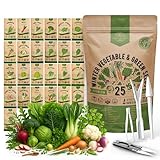
- Gardening Kit: 25 Winter Vegetable & Greens Garden Seeds Variety Pack NON GMO Heirloom Seeds LESS THAN $1.00 PER SEED VARIETY PACK 27,675+ seeds including: Arugula, Beet Detroit Dark Red, Bok Choy, Broccoli, Brussel Sprouts, Cabbage, Carrot Imperator 58, Cauliflower, Celery, Collards, Curled Mustard, Kale, Kohlrabi, Buttercrunch, Oakleaf Green, Romaine, Leek, Tokyo Long White Scallion, Walla Walla, Parsnip, Pea, Radish Cherry Belle, Spinach, Swiss Chard, Turnip
- Enhanced Gardening Experience: Our seeds for planting outdoor and indoor garden come in a waterproof resealable bag with 25 individual craft seed packets inside. Enjoy planting home garden with mini gardening supplies including leaf clipper, tweezers, seed dibber tool, weeding fork, and widger tool. Scan the QR codes on the seed packets to access online gardener basic growing guide and culinary book. Learn about vegetable gardening, discover everyday recipes to make the most of your harvest
- Garden Success Assured: Whether you have an indoor hydroponic garden or an outdoor vegetable patch, our seeds are perfect for any setting. With a superior germination rate proven through various tests, enjoy fresh vegetables growing food all year round. Enjoy the satisfaction of growing seeds in your own garden, knowing that our high-quality seeds for planting vegetables guarantee an abundant harvest and delicious meals for you and your family
- Perfect Survival Seeds Garden Gift: Our garden starter kit makes an ideal gift for couples, vegetarians, vegans, gardeners, and anyone looking for a new hobby. Whether it's a housewarming, party, birthday, anniversary, or any occasion, surprise your loved ones with the joy of gardening and the promise of fresh, homegrown plant food
- Quality You Can Trust: Proudly made in the USA by a Small Family-Owned Business, our seeds for planting vegetables undergo rigorous testing with a 90%+ germination rate. Sealed to last for up to 2 years, you can trust the freshness and viability of our garden seeds
Shade can nevertheless help cool-season greens. The RHS notes that spinach and lettuce can become bitter in sun and heat, while cooler conditions can delay flowering or bolting and preserve leaf quality. Summer shade is therefore useful when the site still receives enough light for growth; shade does not compensate for a location that is dark all day.
What’s actually slowing this PC down?
Pick the symptom - the matching free tool is one click away.
What can you grow with only four hours of sun?
With about four hours of direct sun, start with lettuce, spinach, arugula, Swiss chard, kale, mustard greens, radishes, beets, baby carrots, turnips, peas, kohlrabi, cabbage, and broccoli. According to Oregon State University Extension, four to six hours of sun or constant dappled shade is a workable range for many vegetables, but four hours of bright midday sun is more useful than four hours of weak light.
Choose crops harvested for leaves or young roots first. A four-hour site is a better place for cut-and-come-again lettuce than for snap beans, because bean pods depend on flowering and fruit production. If the four-hour window occurs early in the morning or late in the afternoon, test the site carefully before dedicating it to a demanding crop.
Can vegetables grow under trees?
Vegetables can grow under trees only when the canopy allows enough bright direct or dappled light and the soil provides adequate water and nutrients. Trees create two separate problems: shade reduces available light, while roots compete with vegetables for moisture and nutrients.
Large trees and shrubs can also make soil dry quickly. The RHS and University of Minnesota Extension both caution that root competition matters in shaded gardens. A bed beneath a sparse deciduous canopy may support greens, while dense evergreen cover may provide too little light for a productive vegetable garden.
Also popular on Amazon

- Includes 30 Different Varieties! 30 Packs of Seeds!
- High Germination Rate within 7-14 days
- All Seeds are Heirloom, 100% Non-GMO (Non Genetically Engineered)
- Create a Deluxe Vegetable Garden
- All seeds are dated Sell By December of the year you are purchasing them in but if kept in a cool dry place seeds typically stay viable for years
Improve the odds by growing in a raised bed or container filled with suitable growing medium, keeping irrigation consistent, and choosing compact greens and roots. Do not assume that a tree-shaded site will behave like a naturally fertile woodland soil; the vegetable crop still needs a reliable supply of water and nutrients.
Which vegetables grow in shade but not full shade?
Spinach, lettuce, arugula, chard, kale, mustard greens, radishes, beets, turnips, baby carrots, peas, broccoli, cabbage, and kohlrabi are among the most practical choices for partial shade, but none should be presented as a full-shade vegetable. A site receiving less than roughly two to three hours of direct light, particularly beneath dense evergreen cover, is usually too dark for a productive vegetable garden.
University of Minnesota Extension distinguishes part shade at about three to six hours of sunlight from full shade at less than three hours. In dense shade, focus on changing the site rather than buying a more “shade-tolerant” seed: prune or remove an obstruction where appropriate, move containers toward the brightest edge, or use a different growing area.
How should you choose crops for a north-facing side of the house?
A north-facing side of the house should be judged by measured light rather than orientation alone. A north-facing wall can receive useful reflected or seasonal light, while a narrow passage between buildings may remain dark even in summer.
Do these 3 things before closing this tab:
1Clear out junk files and repair common Windows errors2Scan for outdated or missing drivers - takes under a minute3Repair Windows errors before they cause bigger problemsObserve the location at different times of day and through the growing season. Fences, walls, buildings, and trees change the duration and intensity of direct light as the sun moves. The Oregon State University container-growing guidance also emphasizes that containers need suitable drainage and regular watering, which can make movable pots useful when the brightest position changes.
Also popular on Amazon

- 14,000 QUALITY SEEDS: Loaded with 14,000 fresh, wildflower seeds specially selected to thrive in areas with limited sunlight.
- SHADE-LOVING WILDFLOWER BLEND: A curated mix of hardy, shade-tolerant varieties that brighten dim corners with soft, natural blooms. Ideal for woodland borders, tree lines, and filtered-sun gardens.
- PACKED FOR THE 2026 SEASON: Freshly processed and packaged for the 2026 Season to ensure strong germination and vibrant blooms.
- BEAUTIFUL, EASY GROWTH: Create a vibrant sanctuary for bees and butterflies with blooms that thrive where others struggle. Low maintenance, forgiving, and great for new gardeners.
- FAMILY SOWN PROMISE: Sealed in a freshness-lock 1-ounce pouch and includes simple planting instructions. If your seeds don’t grow, we’ll refund your purchase—no questions asked!
For a north-facing site that reaches the partial-shade threshold, plant leafy greens, Asian greens, radishes, beets, peas, and brassicas before attempting beans. For a site that stays below about three hours of useful light, use the location for ornamental plants, storage, or a trial container rather than promising a normal vegetable harvest.
Independent reader supportYour contribution helps us test, update, and keep practical guides available for everyone.How can you improve harvests in a shaded vegetable garden?
- Measure the light first. Watch the site at different times of day and across the season. Record direct-sun hours, dappled shade, and the dates when nearby trees leaf out or lose their leaves.
- Use the brightest shade. Midday light is generally more valuable than weak early-morning or late-afternoon light. Place the tallest crops where they will not cast additional shade over short greens.
- Choose the season strategically. Spring and fall are often the most reliable seasons for cool-season shade crops. Summer shade can slow bolting, but plants still need adequate light to replace harvested leaves.
- Start seedlings in bright conditions. The RHS recommends sowing in modules in bright conditions and transplanting established seedlings into the shaded bed. This gives seedlings a stronger start than germinating them in a dark corner.
- Keep moisture consistent. Drought stress is especially damaging when growth is already slow. Containers need particular attention because they can dry out faster than beds, while poorly drained containers can keep roots waterlogged.
- Reduce root competition. If trees or shrubs are nearby, use a separate bed or container where you can control water and fertility rather than planting directly among dense roots.
- Set a realistic harvest target. Plan for baby carrots, young turnips, leafy harvests, side shoots, scallions, and smaller heads when light is limited. A smaller crop is often a successful crop in partial shade.
For a first planting, buying shade-tolerant vegetable seeds by crop is more sensible than treating a generic seed collection as universally suitable. Choose packets or a compatible collection built around lettuce, spinach, arugula, kale, chard, radishes, beets, peas, broccoli, cabbage, and other cool-season crops; not every vegetable in a mixed collection will perform equally well in shade.
Are containers useful for partial-shade vegetables?
Containers are useful when a shaded site changes during the day or when tree roots make in-ground gardening difficult. Containers can be moved toward the brightest edge, filled with a controlled growing medium, and planted with compact crops such as lettuce, spinach, arugula, radishes, baby carrots, chard, Asian greens, green onions, and herbs alongside vegetables.
Containers also require closer management. Use drainage holes, avoid letting the growing medium dry repeatedly, and water according to weather and plant size. The Colorado State University Extension container guidance and Oregon State University Extension both treat drainage and moisture management as essential parts of container vegetable growing.
Deep containers are more appropriate for potatoes, beets, carrots, and leeks, while shallow compact containers suit lettuce, cress, radishes, and green onions. A container does not create sunlight; moving a pot helps only when a brighter position is available.
Which vegetables should you avoid promising in shade?
Do not promise a normal harvest of tomatoes, peppers, eggplants, melons, squash, or corn in a genuinely shaded site. These fruiting crops need more light to flower and mature fruit, and Oregon State University identifies tomatoes, peppers, melons, and squash as crops needing six to eight hours of sun.
Also popular on Amazon

- HEAT & DROUGHT READY CROPS - Selected vegetables that perform in hot weather and low-water conditions, ideal for southern gardens, dry climates, and challenging growing seasons
- 10 RELIABLE FOOD PRODUCERS – Fordhook Swiss Chard (Beta vulgaris var. cicla), Sorrel (Rumex acetosa), Scarlet Nantes Carrot (Daucus carota subsp. sativus), Red Russian Kale (Brassica napus), Cherokee Purple Tomato (Solanum lycopersicum), Rainbow Bell Pepper (Capsicum annuum), Contender Green Bean (Phaseolus vulgaris), Sugar Baby Watermelon (Citrullus lanatus), Long Eggplant (Solanum melongena), and Hale’s Best Melon (Cucumis melo) for steady harvests across spring, summer, and extended heat
- GROW FOOD IN TOUGH CONDITIONS - Build a dependable home garden with drought-resistant varieties that can handle heat stress and reduced watering once established
- BEGINNER FRIENDLY CROPS- Heirloom, non-GMO seeds with planting guidance for success across USDA zones 7-10 and similar warm-weather regions
- FAMILY OWNED USA SMALL BUSINESS – Heirloom non-GMO seeds from Survival Garden Seeds, a trusted American brand; always open-pollinated, untreated, and quality tested for garden success
Cucumbers and beans are conditional rather than dependable shade crops. Beans can be attempted in the brightest partial-shade position, especially runner beans with a strong trellis, but pod production may be lower than in full sun. If the site has only a few hours of weak light, use the space for lettuce, spinach, chard, kale, arugula, radishes, beets, and other cool-season crops instead.
How should you describe the expected harvest?
Use precise language: a crop “tolerates partial shade,” “is suitable for bright shade,” or “may produce a smaller or slower crop.” Avoid saying that a vegetable “thrives in full shade” when the crop still requires several hours of direct or dappled light.
No authoritative, comparable percentage-yield figure applies to all 32 vegetables under partial shade. Yield depends on season, latitude, shade intensity, soil, water, variety, and whether the crop is harvested for foliage or fruit. Qualitative expectations are more accurate: leafy crops are usually the safest bet, roots may be smaller, heads may take longer, and pods may set less heavily.
Frequently Asked Questions
How many hours of sun do vegetables need in partial shade?
Partial shade usually means about three to six hours of direct midsummer sunlight, or four to six hours of sun or constant dappled shade. Less than roughly two to three hours of useful direct light is generally too little for a productive vegetable garden.
What vegetables can I grow with only four hours of sun?
Lettuce, spinach, arugula, kale, Swiss chard, radishes, beets, peas, broccoli, cabbage, and turnips are strong choices for about four hours of bright sun. Fruiting vegetables such as tomatoes and peppers are poor choices for that light level.
The Tool Desk
Outbyte Driver Updater FREEFix the driver behind crashes, sound loss and screen glitchesFind Drivers →Outbyte PC Repair FREERepair Windows errors before they cause bigger problemsFix Now →Can I grow vegetables under trees?
Vegetables can grow under trees when the canopy provides enough bright light, but tree roots compete for water and nutrients. Containers or raised beds, consistent watering, and compact leafy crops usually give better control than planting directly among large roots.
Can lettuce and spinach grow without full sun?
Lettuce and spinach can grow without full sun when they receive partial shade rather than dense shade. Cooler shade can help delay bitterness and bolting during hot weather, but the plants still need enough light for steady growth.
The Bottom Line
Bottom line: Partial shade can support a productive vegetable garden when the site receives roughly three to six hours of useful light. Prioritize leaves, stems, buds, and cool-season roots—especially spinach, lettuce, arugula, chard, kale, radishes, beets, peas, and brassicas—and treat beans as conditional. Dense full shade is not a realistic setting for a normal vegetable harvest.
Quick Recap
Product prices and availability are accurate as of the date/time indicated and are subject to change. Any price and availability information displayed on Amazon at the time of purchase will apply.
Free tools Windows power users keep installed
One-click scans. No signup required.

