The best indoor flowering plant for your home depends on the light you can provide and how much care you want to give. For an easier starting point, choose a Phalaenopsis orchid, African violet, kalanchoe, holiday cactus, bromeliad, or wax begonia. If your priority is fragrance, look at gardenia or jasmine—but both need substantially brighter, steadier conditions than their glossy leaves may suggest.
These plants do not all bloom continuously. Some rebloom indoors, some flower in a predictable season, some need a cool or dry rest period, and some are sold already forced into bloom. A plant that stops flowering after its display fades is not necessarily failing; in many cases, it is simply returning to the next stage of its natural cycle.
Choose by room, light, and maintenance level
| What you want | Good choices | Important qualification |
|---|---|---|
| Easiest starting point | Phalaenopsis orchid, African violet, kalanchoe, holiday cactus, bromeliad, wax begonia | Easy does not mean carefree: reliable light and correct watering still determine flowering. |
| Bright indirect light | African violet, gloxinia, New Guinea impatiens, wax begonia, anthurium | These tolerate filtered light better than sun-loving plants, but a dark room will usually produce leaves rather than flowers. |
| Brightest window | Hibiscus, gardenia, jasmine, gerbera daisy, geranium, miniature rose, kalanchoe, orchid | Use a sheer curtain if direct summer sun scorches foliage or heats the room. |
| Fragrance | Gardenia, jasmine, miniature rose | Gardenia is especially demanding indoors and should not be treated as a low-maintenance beginner plant. |
| Dramatic seasonal color | Amaryllis, cyclamen, holiday cactus, florist azalea, bromeliad | Expect a rest period, seasonal flowering, or a display that lasts longer than the plant’s next bloom cycle. |
| Small spaces | African violet, kalanchoe, cyclamen, mini phalaenopsis orchid, compact anthurium | Keep leaves and flowers away from cold glass, radiators, and heating vents. |
What makes an indoor flowering plant bloom
Light comes first
Flowering plants generally require more light than foliage plants. A bright room that looks comfortable to human eyes may still be too dim for dependable flowering, particularly during winter. Place a plant as close to an appropriate window as its care needs allow, while protecting shade-loving plants from harsh midday sun.
As an Amazon Associate I earn from qualifying purchases.
Do these 3 things before closing this tab:
1Repair Windows errors before they cause bigger problems2Fix the driver behind crashes, sound loss and screen glitches3Clear out junk files and repair common Windows errorsWhen natural light is inadequate, supplemental lighting can help. University indoor-light guidance commonly recommends about 14–16 total hours of light per day for many flowering houseplants under artificial lighting. Use a timer, but do not leave the light on around the clock: plants need a dark period as well. Day length also affects flowering. Christmas and Thanksgiving cactus need shorter days and/or cool nights to initiate buds, while African violet, gloxinia, and tuberous begonia are long-day plants. Gerbera daisy and flowering maple are day-neutral, so day length is less central to their flowering response.
A LED grow light for indoor plants is an optional tool for a dim room, a north-facing window, or a plant that grows well but refuses to flower. Choose a fixture that can be positioned at the manufacturer’s recommended distance and put it on a timer. More light is not automatically better if the leaves become bleached, crisp, or overheated.
Water the plant you have, not a universal schedule
Check the soil and the plant’s condition instead of watering every Saturday or following a fixed number of days. Use a container with a drainage hole, water thoroughly when the plant’s needs indicate it is time, and empty excess water from a saucer or cachepot. Constantly wet soil is particularly risky for orchids, cyclamen, begonias, and succulent-leaved kalanchoes.
#1 Best Overall

- Plant Pots / Flower Pots - Invest in a beautiful garden to harvest the seeds of love, with the set of pots for indoor or outdoor plants
- Multiple Sizes – This nursery plant pots indoor comprises multi-size pots – Extra Large (7” W x 5.9” H), Large (6.6” W x 5.4” H), Medium (6” W x 5” H), Small (5.3” W x 4.4” H), and Extra Small 4.8”W x 4” H. Also comprises of matching saucers.
- Impeccable Febrication - Make the pots ideal for both original and fake plants comprises of reinforced PP plastic. The hassle-free decorative flower pots contain drainage plugs, to preserve the life of your exquisite plants.
- Space Saving - Take time to smell the roses and revel in the art of planting with the indoor planter. The minimalist design is convenient and optimizes storage space, while enhancing the aesthetics of your home/office décor.
- Ideal For Decor or Christmas Gifts For Women –The pots for indoor plants is a great gift idea for all gardening enthusiasts for occasions like Earth Day, World Environment Day, National Forest Week, New Year, Housewarming, birthdays and Christmas.
There are important exceptions. Bromeliads with a central cup can hold water in the rosette; refresh that water periodically rather than treating the cup like stagnant storage. Florist azaleas should not be allowed to dry completely, while amaryllis and dormant cyclamen need a different watering pattern after flowering. The instructions for each plant below are more useful than a single watering rule.
22 indoor flowering plants to consider
1. African violet
Streptocarpus section Saintpaulia, formerly Saintpaulia
African violet is one of the most practical flowering plants for a shelf, desk, or small windowsill. It stays compact, produces flowers in several colors, and can bloom for long periods when it receives bright, indirect light. The familiar plant is now classified in the Streptocarpus section Saintpaulia, although nurseries and gardeners still commonly call it African violet.
Keep it warm and provide reasonably consistent humidity and moisture. Letting the plant repeatedly swing from very dry to saturated can interrupt growth and flowering. A grow light is useful when winter windows are dim, but set it on a timer with a daily dark period. African violet is a strong choice for small homes, provided the light is bright enough.
2. Phalaenopsis orchid
Phalaenopsis is widely considered one of the best beginner orchids because its flowers are showy and long-lasting, and its care is less demanding than that of many specialty orchids. Give it bright, indirect light, a well-draining orchid bark-based medium, regular but not excessive watering, and moderate humidity.
Do not leave the roots sitting in water, and do not assume that ordinary potting soil is suitable. The plant may take a break after its flowers fade before producing another spike. That pause is normal. Good light, healthy roots, and patience matter more than trying to force a new flower spike immediately.
3. Kalanchoe
Kalanchoe brings clusters of bright flowers to a sunny windowsill and has thick, succulent-like leaves that store water. Let the potting mix dry somewhat between waterings, and make sure the container drains freely. Removing faded flower clusters keeps the plant tidier and can extend the usefulness of its display.
It is often sold as an easy gift plant, but light still determines whether it reblooms. Place it in a bright window rather than a dim corner. ASPCA identifies kalanchoe as toxic to dogs and cats. Keep it away from pets, and verify the exact species and cultivar through a current veterinary-toxicology source before bringing any unfamiliar flowering plant into a pet-accessible home.
4. Miniature rose
Miniature roses provide the classic red, pink, or white rose display in a small package. Indoors, however, they need unusually bright light, steady temperatures, adequate humidity, regular attention to watering, and deadheading. A plant that looks easy in a store may struggle in a dim room.
Many miniature roses benefit from spending warm weather outdoors, where stronger light and better air movement support growth. Bring the plant indoors before frost and acclimate it to the change in conditions. Depending on the cultivar and growing conditions, it may also perform better with a dormant period rather than being expected to flower continuously in a heated room.
5. Cyclamen
Cyclamen’s heart-shaped foliage and swept-back flowers make it especially attractive in a cool room. It prefers bright, indirect light and cooler temperatures than many tropical houseplants. Keep the growing medium moderately moist while it is actively growing, but avoid keeping it waterlogged.
Outdated Drivers Are Slowing You Down
One free scan finds every outdated or missing driver and matches the right update for your exact hardware.Free scan · exact hardware matchPC Slower Than It Used to Be?
A free scan shows the junk files, broken settings and background clutter dragging Windows down - then fixes them in one click.Free scan · Windows 10 & 11Rank #2

- 【Practical Size Combo】-These plastic planters indoor combines with 6 different sizes, 8 inch 7inch 6.5 inch 6 inch 5.5 inch 5 inch which are suitable for planting most small and medium-sized home office plants.Ideal gift,Carbonfree Certified.
- 【Durability, Light weight, Sturdiness】-Made of durable recyclable plastic, solid plastic plant pots protect plants and soil. Premium polypropylene planters feel sturdy in hand but not too heavy. Thick sidewalls 4mm in size keep everything in place. These planters are perfect gardening gift for your mom, your father, your sister or your friends who are plant lover.
- 【Intriguing Design】-A simple modern aesthetic and clean matte finish planters indoor plants bringing out a minimalistic styled. representation for any home/office decor without any sense of violation.
- 【Excellent Drainage Holes】-These flower pots for plants come with multiple drainage holes in the bottom. The holes and watering lip provide an air circulation system for the plant roots.
- 【Self Watering For Bottom】- I really like how big the bottom tray is to catch all the extra water. They come with a string to put at the bottom of the pots if you want to do bottom watering. A separate reservoir completely separates the plant growth environment from the water storage environment.
After flowering, cyclamen commonly enters dormancy. Foliage may yellow and disappear, and the plant needs a drier resting period rather than constant watering. If you continue treating a dormant cyclamen like an actively growing plant, the tuber is more likely to rot.
6. Christmas cactus
Christmas cactus is a long-lived, easily shared houseplant that can become a family gift passed between generations. Despite its name, it is a rainforest cactus, not a desert cactus. It prefers bright filtered light, relatively moist but well-drained soil, and more humidity than a typical desert succulent.
Short days and/or cool nights help initiate flowering. Once buds form, avoid abrupt changes in temperature, watering, or location, because stress can cause buds to drop. It may flower seasonally rather than continuously, but a healthy older plant can provide a dependable annual display.
7. Thanksgiving cactus
Thanksgiving cactus is closely related to Christmas cactus and is commonly associated with late-fall flowering. It likes bright filtered light, good drainage, and moderate moisture. Heavy, wet soil can damage its roots even though it needs more moisture than a desert cactus.
Quick wins for a faster PC:
Scan for outdated or missing drivers - takes under a minuteDriver Scan →Clear out junk files and repair common Windows errorsFree Scan →Fix the driver behind crashes, sound loss and screen glitchesFind Drivers →Short days and cool night temperatures help it set buds. If the plant is healthy but does not flower, excessive evening light, warm nights, insufficient light, or a recent environmental change may be interfering with its seasonal signal.
8. Easter cactus
Easter cactus is the spring-flowering member of the holiday-cactus group. Provide bright filtered light, a well-draining mix, and moderate moisture during active growth. It generally needs a longer short-day period to initiate buds than Thanksgiving or Christmas cactus.
Like the other holiday cacti, it should not be left in heavy, saturated soil. Its flowering season is part of its appeal, so plan for a plant that alternates between active growth and a quieter period rather than one that stays in bloom all year.
9. Amaryllis
Amaryllis, commonly sold under the botanical name Hippeastrum, creates one of the most dramatic indoor bulb displays. Its large trumpet-shaped flowers rise above relatively simple foliage, making it a popular seasonal gift and centerpiece.
Free tools Windows power users keep installed
One-click scans. No signup required.
After flowering, keep the foliage growing in bright light and care for it as a leaf-producing plant. The leaves are rebuilding the bulb’s reserves. Later, the plant naturally dies back and enters dormancy. Post-bloom foliage and dormancy are part of the cycle, not proof that the bulb has failed. Follow the bulb’s seasonal care needs rather than discarding it as soon as the flowers fade.
10. Bromeliad, especially urn plant
Urn plant, or Aechmea fasciata, delivers high-impact color through long-lasting bracts and architectural foliage. It likes warmth, bright indoor light, humidity, and a very free-draining growing medium. Many urn-shaped bromeliads can be watered in the central rosette cup as well as receiving appropriate care at the roots.
Refresh the water in the cup periodically so it does not become stagnant. The colorful bracts can last for months, but the individual rosette generally flowers once. Afterward, it may produce offsets that can eventually mature into new flowering plants. That slow replacement cycle is normal for bromeliads.
Rank #3
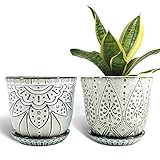
- 【With Drain Holes and Mesh Pad】:Large drain holes are good for draining, and with leak-proof mesh pads, it keeps soil from running away, suitable for orchids, succulents, cacti, other flowers and green plants, perfect for home decoration.
- 【Removable Trays】:There are two methods to place saucer, which can be changed at will, not only suitable for planting plants, but also more ornamental value.
- 【Makes Gift】:It's the perfect suitable present for your relatives and friends, they make great birthday gifts, anniversary gifts, Housewarming gifts, Thanksgiving or Christmas gifts and more!
- 【Size & Package】:Pot Top Dia:5.9"/15cm (can match a 5 inch inner pot), Pot Bottom Dia:3.15"/8cm, Pot H:5.15"/13.1cm; Saucer Top Dia:4.92"/12.5cm, Saucer Bottom Dia:3.74"/9.5cm, Saucer H:0.86"/2.2cm. Package: contains 2 ceramic flower pots, 2 ceramic saucers and 2 mesh pads(NOT INCLUDE PLANT)
- You are covered with excellent product quality and great customer service. The pot with tray has been packaged and prepared carefully to prevent any damage during transit. If there is any issue or question, please contact us, and we will get back to you very quickly with a full satisfying resolution.
11. Anthurium, or flamingo flower
Anthurium combines glossy leaves with durable, flower-like spathes in red, pink, orange, or white. The tiny true flowers are carried on the central spadix, while the colorful spathe provides most of the visual impact. It is a strong choice for a bright room where a compact tropical plant is wanted.
The Tool Desk
Outbyte Driver Updater FREEFix the driver behind crashes, sound loss and screen glitchesFind Drivers →Outbyte PC Repair FREEClear out junk files and repair common Windows errorsFree Scan →Give it bright indirect light, warmth, humidity, fast drainage, and protection from cold drafts. Direct hot summer sun can scorch the foliage. If anthurium produces leaves but few spathes, improve light gradually rather than compensating with extra fertilizer.
12. Wax begonia
Wax begonia stays relatively compact and produces clusters of pink, red, or white flowers. It generally prefers shade or filtered light over intense direct sun, making it useful near a bright window with a curtain or in a room that receives strong indirect light.
Water at the base where possible, avoid leaving the foliage wet for long periods, and provide enough air circulation to limit fungal problems. Let the surface begin to dry without allowing the plant to remain bone-dry for extended periods. Wax begonia can flower generously when light and moisture are steady.
13. Tuberous begonia
Tuberous begonia is the more dramatic begonia option, with large flowers and upright or trailing forms that work well in containers. Its bright filtered-light preference makes it suitable for a protected indoor location rather than a hot, unshaded window.
What’s actually slowing this PC down?
Pick the symptom - the matching free tool is one click away.
It is more sensitive to overwatering than many foliage plants. Use a draining mix and a container that does not hold excess water around the tuber. Tuberous begonias also have a dormancy cycle; foliage decline after the growing season can be expected rather than automatically treated as a disease.
14. Tropical hibiscus
Tropical hibiscus is a choice for a genuinely sunny window or a strong supplemental grow light. It needs very bright light, warmth, stable conditions, and a rich but well-drained growing mix. It can reward the right location with large, vivid flowers.
The trade-off is that individual flowers are short-lived, often lasting about a day. A plant can still look colorful because new buds open in succession, but do not judge it against a plant whose individual blooms last for weeks. Sudden changes in light, temperature, watering, or placement can also reduce flowering.
15. Gardenia
Gardenia is the fragrance specialist on this list. Its white flowers and strong perfume can make a room feel especially inviting, but indoor gardenia is a high-attention project rather than an easy beginner plant.
Recommended Free Tools
It needs bright light, moderate-to-high humidity, acidic well-drained media, and careful moisture management. The soil should not swing between completely dry and saturated. Bud drop is common when the plant experiences changes in temperature, humidity, light, or watering. Choose gardenia because you are willing to manage those conditions—not simply because a blooming plant looks attractive at the store.
16. Jasmine
Fragrant jasmine can be grown indoors in a bright location, but flowering performance depends heavily on light. It belongs in the high-light group and is a better fit for a sunny window or a grow-light setup than for a dim living-room corner.
Rank #4

- 🌿【Self-Watering Pots with Water Level Indicator】 Designed for busy plant lovers, our 8/10/12 self-watering pots feature a built-in ABSORBENT COTTON WICK SYSTEM that automatically draws water from the detachable bottom tray. The TRANSPARENT WATER LEVEL WINDOW WITH MEASUREMENT MARKINGS lets you monitor hydration at a glance, ensuring no overwatering or underwatering. Perfect for indoor/outdoor plants, this system keeps soil evenly moist for up to 7-10 days—ideal for vacations or hectic schedules.
- 💧【Planters with Drainage & Detachable Trays】 Each plastic plant pot includes a REMOVABLE SAUCER TRAY and strategic DRAINAGE HOLES to promote healthy root development. The plastic large pot for plants promotes airflow and efficient water flow, while the leak-proof design protects floors. Easy to clean and refill, these planters for indoor plants with drainage simplify maintenance for herbs, succulents, or tropical foliage.
- 🛡【Durable Plastic Construction】Crafted from premium HIGH-TEMPERATURE-RESISTANT PLASTIC, these lightweight yet sturdy self-watering flower pots with stand harsh sunlight, rain, and indoor humidity without cracking or fading. Use them safely in gardens, balconies, or living rooms—their sleek design blends seamlessly into modern decor while lasting seasons.
- 🌿【Effortless Indoor/Outdoor Versatility】 From large indoor planters for fiddle-leaf figs to compact outdoor outdoor self-watering pots for patio herbs, this set adapts to any space. The neutral minimalist style complements farmhouse, urban, or bohemian themes. Bonus: The WATER LEVEL INDICATOR and SPILL-PROOF TRAYS make these plastic flower pots indoor/outdoor ideal for renters or pet owners.
- 🌱【Smart Design for Strong Root Development】 Unlike traditional pots, our self-watering planters deliver water directly to roots through absorbent cotton wicks, promoting consistent hydration and nutrient uptake. The ELEVATED BASE AND BREATHABLE DESIGN prevent soggy soil, ensuring robust growth for large indoor plants like monstera or palms. With this thoughtful design, your plants thrive with minimal maintenance.
Give it support if the variety climbs, keep moisture reasonably even while it is actively growing, and expect the best flowering when the plant receives strong light and stable care. Jasmine is a good choice when fragrance matters, but its light requirement should be treated as a deciding factor.
17. Gerbera daisy
Gerbera daisy brings large, bold flower heads in bright colors to a sunny room. It needs strong light for the best flowering and should be watered carefully so the root zone does not remain saturated.
Gerbera is considered day-neutral in indoor-light guidance, meaning day length is less central to flowering than it is for short-day holiday plants or long-day African violets. That does not make it a low-light plant: adequate intensity remains important. Treat it as a bright-room plant and allow good air circulation around the foliage.
18. Gloxinia
Gloxinia has soft leaves and richly colored, trumpet-shaped flowers that stand out in bright indirect light. Protect it from harsh direct sun and avoid rough handling of its delicate foliage.
It is a long-day flowering plant, so supplemental lighting can help when natural winter light is weak. Use a timer and preserve a dependable dark period. After flowering, gloxinia may enter a resting phase; reduce care according to the plant’s condition rather than keeping dormant growth constantly wet.
19. Martha Washington or zonal geranium
Martha Washington geraniums and zonal geraniums, both in the genus Pelargonium, can be maintained as potted flowering plants indoors. They are available in many flower colors, growth habits, leaf patterns, and scents.
Geraniums need strong light and careful watering. Allow excess moisture to drain and avoid keeping the roots continually wet. If a plant has been growing outdoors, take cuttings before moving it inside or propagate from healthy cuttings as a way to preserve a favorite plant. Indoors, expect the strongest flowering near a bright window or under supplemental light.
20. Florist azalea
Florist azalea creates a dense, colorful seasonal display and looks particularly good in a bright, cool indoor location. It is a higher-attention plant: keep the root ball from drying completely, provide bright light, and avoid the hot, dry air produced by heating vents.
Many florist azaleas are sold already forced into bloom. Once the display fades, reblooming is not guaranteed under ordinary indoor conditions. The plant may remain attractive as foliage, but maintaining it for future flowers requires more consistent care than simply placing it in a warm room and watering occasionally.
21. New Guinea impatiens
New Guinea impatiens is useful when a home lacks a sunny south-facing window. It produces colorful flowers and generally prefers bright indirect light over harsh direct sun, which makes it a good option for a bright room filtered by curtains or nearby trees.
Keep moisture reasonably consistent without leaving the pot waterlogged. It may be best treated as a seasonal indoor display, especially if the plant becomes leggy or flowering declines after its initial flush. Even so, it can provide more color in a shade-tolerant location than many sun-loving flowering plants.
Best Value

- 🌿 【Self-Watering Pots with Water Level Indicator】 Designed for busy plant lovers, our 8/10/12 self-watering pots feature a built-in ABSORBENT COTTON WICK SYSTEM that automatically draws water from the detachable bottom tray. The TRANSPARENT WATER LEVEL WINDOW WITH MEASUREMENT MARKINGS lets you monitor hydration at a glance, ensuring no overwatering or underwatering. Perfect for indoor/outdoor plants, this system keeps soil evenly moist for up to 7-10 days—ideal for vacations or hectic schedules.
- 💧【Planters with Drainage & Detachable Trays】 Each plastic plant pot includes a REMOVABLE SAUCER TRAY and strategic DRAINAGE HOLES to promote healthy root development. The plastic large pot for plants promotes airflow and efficient water flow, while the leak-proof design protects floors. Easy to clean and refill, these planters for indoor plants with drainage simplify maintenance for herbs, succulents, or tropical foliage.
- 🛡【Durable Plastic Construction】Crafted from premium HIGH-TEMPERATURE-RESISTANT PLASTIC, these lightweight yet sturdy self-watering flower pots with stand harsh sunlight, rain, and indoor humidity without cracking or fading. Use them safely in gardens, balconies, or living rooms—their sleek design blends seamlessly into modern decor while lasting seasons.
- 🌿【Effortless Indoor/Outdoor Versatility】 From large indoor planters for fiddle-leaf figs to compact outdoor outdoor self-watering pots for patio herbs, this set adapts to any space. The neutral minimalist style complements farmhouse, urban, or bohemian themes. Bonus: The WATER LEVEL INDICATOR and SPILL-PROOF TRAYS make these plastic flower pots indoor/outdoor ideal for renters or pet owners.
- 🌱【Smart Design for Strong Root Development】 Unlike traditional pots, our self-watering planters deliver water directly to roots through absorbent cotton wicks, promoting consistent hydration and nutrient uptake. The ELEVATED BASE AND BREATHABLE DESIGN prevent soggy soil, ensuring robust growth for large indoor plants like monstera or palms. With this thoughtful design, your plants thrive with minimal maintenance.
22. Flowering maple
Flowering maple, or Abutilon hybrid, is a distinctive choice for someone who wants something less familiar than an orchid or African violet. Its hanging, bell-like flowers and maple-shaped leaves give it a different silhouette from most compact flowering houseplants.
It is identified as day-neutral in indoor-light guidance, but it still needs a bright location to grow and flower well. Provide filtered or bright indirect light, consistent watering with good drainage, and room for its growth habit. Pruning can help maintain a manageable shape, especially when the plant is kept indoors year-round.
Independent reader supportYour contribution helps us test, update, and keep practical guides available for everyone.How to keep the display attractive after purchase
- Inspect the plant before bringing it home. Look for firm foliage, healthy roots where visible, and a plant that is not already collapsing from saturated soil. Remove decorative foil or place it over a draining pot only if excess water can escape freely.
- Give it the correct light immediately. A flowering plant placed in a dark corner may keep its existing flowers for a while but struggle to make new buds. Move it gradually if the available light is much stronger than the store’s light.
- Deadhead when appropriate. Remove faded flowers and damaged foliage with clean snips. This improves appearance and prevents the plant from putting energy into old flower structures, although deadheading cannot overcome inadequate light.
- Keep temperature changes modest. Cold window glass, drafts, heating vents, and sudden moves can cause bud drop in sensitive plants such as gardenia, hibiscus, orchids, and holiday cactus.
- Feed only during active growth and according to the label. Fertilizer cannot replace light, and excess fertilizer can damage roots. Dormant amaryllis, resting cyclamen, and plants declining after a seasonal display should not be treated like actively growing plants.
- Reassess after the first bloom cycle. If the plant was sold in full flower, its next challenge is often not survival but rebuilding enough energy to flower again. Decide whether you want a reblooming houseplant or a temporary seasonal centerpiece.
Pet safety: check the exact plant before buying
Plant labels and common names are not always precise, and cultivars can differ. Kalanchoe is specifically identified as toxic to dogs and cats, while other flowering houseplants may also pose risks. Any plant material can cause gastrointestinal upset if eaten.
If pets or young children can reach the plant, verify the exact botanical identity through a current authoritative veterinary-toxicology resource before purchase. Keep questionable plants behind a barrier, and contact a veterinarian or appropriate poison-control service promptly after suspected ingestion. Do not wait for symptoms to decide whether a plant is safe.
A simple decision framework
Choose African violet, gloxinia, New Guinea impatiens, or wax begonia when your brightest location provides filtered or bright indirect light rather than hours of intense sun. Choose hibiscus, gardenia, jasmine, gerbera, geranium, miniature rose, kalanchoe, or orchid when you have a genuinely bright window or are willing to add supplemental light.
Choose amaryllis, cyclamen, holiday cactus, florist azalea, or bromeliad when you mainly want a dramatic seasonal display and are comfortable with a rest period or a less certain rebloom. Choose gardenia or jasmine when fragrance is worth the extra work. For the smallest shelf or sill, start with African violet, kalanchoe, cyclamen, a mini phalaenopsis orchid, or compact anthurium.
Frequently Asked Questions
Do indoor flowering plants bloom all year?
Some, including African violets and well-grown anthuriums, can flower for long periods under suitable conditions. Others bloom seasonally, respond to day length, or need a rest period. A plant sold in bloom may also need time to rebuild energy before flowering again.
What’s actually slowing this PC down?
Pick the symptom - the matching free tool is one click away.
What is the best indoor flowering plant for a beginner?
Phalaenopsis orchid, African violet, kalanchoe, holiday cactus, bromeliad, and wax begonia are among the more approachable choices. The best one is the plant that matches your available light and watering habits; none will flower reliably in unsuitable conditions.
Can I use a grow light for flowering houseplants?
Yes. Supplemental LED lighting can help when window light is insufficient. Many flowering plants benefit from roughly 14–16 total light hours per day under artificial lighting, but they also need a daily dark period. Short-day plants such as Christmas and Thanksgiving cactus require different timing to initiate buds.
Which indoor flowering plants are fragrant?
Gardenia and jasmine are the strongest fragrance choices on this list, with miniature rose offering a lighter fragrance in some cultivars. Gardenia is considerably more difficult indoors because it needs bright light, humidity, acidic media, and stable moisture.
Are these flowering plants safe for pets?
Do not assume that a common houseplant is safe without checking its exact species and cultivar. Kalanchoe is toxic to dogs and cats, and other plants may also be harmful if eaten. Consult a current veterinary-toxicology resource before buying for a pet-accessible room.
Crashes, No Sound, or Screen Glitches?
Random freezes, missing sound and display glitches usually trace back to one bad driver. Find and replace yours safely.Free scan · under a minuteWindows Errors? Fix Them Before They Spread
Repair common Windows errors and clear accumulated junk for a smoother, more stable PC - no reinstall needed.Free scan · no reinstallThe Bottom Line
For the best balance of color and manageable care, start with a phalaenopsis orchid, African violet, holiday cactus, bromeliad, kalanchoe, or wax begonia. Match the plant to the room first, provide drainage and the correct watering pattern, and expect seasonal pauses rather than demanding nonstop flowers. The right expectations are what turn a temporary bloom into a happier, healthier home display.
Quick Recap
Product prices and availability are accurate as of the date/time indicated and are subject to change. Any price and availability information displayed on Amazon at the time of purchase will apply.

