Free tools Windows power users keep installed
One-click scans. No signup required.
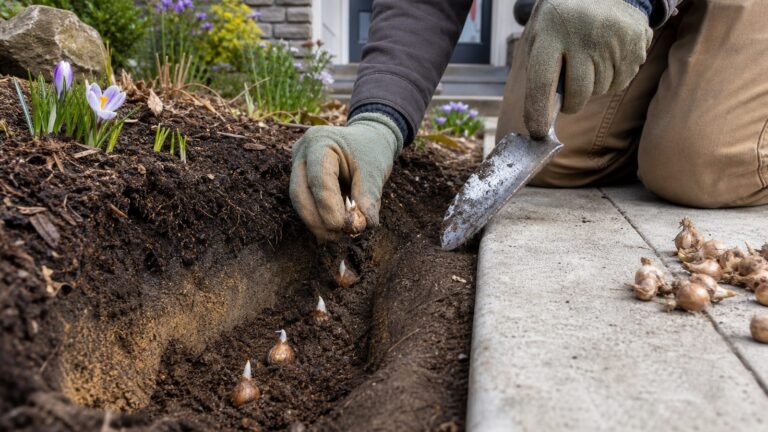
Fall is often the best planting season for spring-flowering bulbs and many spring-blooming herbaceous perennials—but not every plant should be planted in fall, and no plant can guarantee flowers the following spring. The 16 choices below include hardy bulbs, corms, rhizomes, crowns, and container-grown perennials that can use the cool season to establish roots or complete the winter dormancy many spring bloomers need.
Use your local first-frost and ground-freeze dates rather than a universal calendar. A practical starting point is to plant most potted or bare-root perennials about six weeks before the expected first frost, while spring bulbs should go into the ground after it cools but before the soil freezes. Illinois Extension explains the six-week window for fall transplants, and Penn State recommends planting spring bulbs before the ground freezes.
As an Amazon Associate I earn from qualifying purchases.
What to plant in fall for spring flowers
For the earliest color, choose snowdrops, crocuses, hellebores, and daffodils. For the main spring display, add grape hyacinths, hyacinths, bleeding hearts, Virginia bluebells, lungwort, brunnera, columbine, and woodland phlox. Tulips, bearded iris, peonies, and ornamental alliums extend the show into late spring and, in the case of alliums, sometimes early summer.
This list uses perennial in the practical garden sense: herbaceous plants that return from crowns or roots, plus hardy geophytes such as bulbs, corms, and rhizomes. Botanically, trees and shrubs are also perennials, but they belong to a separate woody-plant category and are not included in the core list.
#1 Best Overall

- VIBRANT POLLINATOR GARDEN: Create a natural habitat that attracts butterflies, bees, and birds; Features Purple Coneflower, Shasta Daisy, and Black-Eyed Susan; Supports biodiversity with 19 varieties of wild flower seeds; Perfect for butterfly garden seeds and pollinator seed mix
- PREMIUM BULK VALUE: Contains 63,200+ wildflower seeds bulk (4oz); Ideal for creating meadows, cottage gardens, or flower beds; Economical wild flowers seeds mix for large and small projects; Non-GMO flower seeds to plant outside for natural, vibrant growth
- PERENNIAL BEAUTY & VARIETY: Includes perennial wildflower seeds that return year after year; Enjoy continuous blooms from spring flower seeds through fall varieties; Creates stunning garden flowers with diverse colors, shapes, and heights; Low-maintenance perennial flowers
- ESTABLISHES ROOTS YEAR 1, BLOOMS YEAR 2 (PERENNIAL CYCLE): Unlike temporary annuals, these are true perennials that represent a long-term investment in your garden. They dedicate the first season entirely to building a deep, robust root system to survive winter. Expect a spectacular, vigorous explosion of blooms starting in the second year and returning for years to come. Patience pays off with a lifetime of color!
- COMPLETE SEASONAL DISPLAY: Mix includes White Yarrow, Lupine, Blanketflower, Blue Flax, and more; Provides continuous blooms from spring through fall; Creates drought tolerant wildflower seeds collection; Perfect for sustainable, low-maintenance flower seeds for planting outdoors
Quick selection guide
| Plant | Typical spring contribution | Best conditions | Buy or plant as |
|---|---|---|---|
| Snowdrops | Late winter or very early spring | Moist but well-drained soil; sun to part shade | Dry bulb or, preferably, plant in the green |
| Crocus | Very early spring | Full sun and good drainage | Corm |
| Daffodils | Early to mid-spring | Sun to partial shade; well-drained soil | True bulb |
| Tulips | Mid- to late spring | Full sun and drainage | True bulb |
| Hyacinths | Fragrant early- to mid-spring flowers | Sun and well-drained soil | True bulb |
| Grape hyacinths | Early to mid-spring | Sun to light shade | True bulb |
| Ornamental alliums | Late spring to early summer | Full sun and sharply drained soil | True bulb |
| Hellebores | Winter or very early spring | Part shade and rich, well-drained soil | Container-grown perennial |
| Bleeding heart | Early to mid-May in many temperate regions | Part shade and moist soil | Container plant or division |
| Columbine | Spring into early summer | Sun to part shade, depending on species | Container plant, division, or seed |
| Woodland phlox | Spring | Part shade and woodland-style soil | Container plant or division |
| Virginia bluebells | Early spring | Part shade to shade; moist, fertile soil | Container plant, division, or seed |
| Lungwort | Early spring | Part shade | Container plant or division |
| Heartleaf brunnera | Spring | Part shade to shade | Container plant or division |
| Peonies | Late spring | Full sun and well-drained soil | Bare-root eyes or container plant |
| Bearded iris | Late spring | Full sun and excellent drainage | Rhizome division |
Why fall planting works
Fall gives many spring bloomers a useful combination of conditions:
- Roots can grow while the soil is still warm. Air temperatures may be dropping, but soil often remains suitable for root development after hot weather has passed.
- Plants lose less water. Cool air and reduced sunlight lower water loss, easing transplant stress compared with planting during a hot spring or summer spell.
- Bulbs receive their dormant winter period. Many spring-flowering bulbs need a period of cold dormancy before they produce normal flowers.
- Some seeds receive natural stratification. Certain perennial seeds need a period of moist cold before they germinate. Fall sowing can provide that treatment outdoors, although seed mixes may contain annuals, biennials, and perennials rather than one predictable plant type. Penn State explains winter sowing and cold stratification.
Fall planting is a head start, not a bloom guarantee. Flowering depends on the plant’s size, whether it is a bulb, division, bare-root plant, seedling, or mature container specimen, as well as local climate and establishment conditions. Small divisions and late-planted specimens may need an additional season.
The 16 best fall choices for a spring garden
1. Snowdrops (Galanthus spp.)
Bloom: Late winter or very early spring. Light: Sun to part shade. Soil: Moist but well drained.
Recommended Free Tools
Snowdrops are among the first plants to signal that winter is ending. They work especially well beneath deciduous trees, along paths, and in woodland-style beds where early flowers can be seen before the canopy fills in.
Dry bulbs are available for fall planting, but snowdrops are an important exception to the usual bulb-buying rule. Freshly lifted plants sold in the green—with foliage present just after flowering—often establish more reliably than dry bulbs. The Royal Horticultural Society’s snowdrop guide covers both options. Do not place them in a site that becomes waterlogged over winter.
2. Crocus (Crocus spp.)
Bloom: Very early spring. Light: Full sun is best, although some can tolerate light shade. Soil: Well drained.
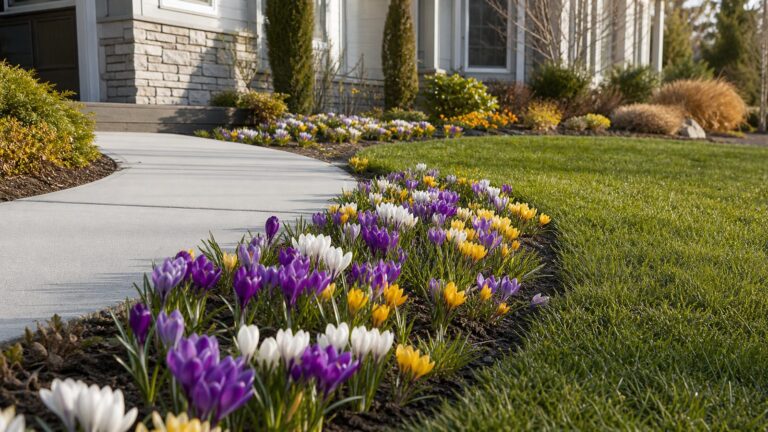
Spring-flowering crocuses are planted as dry corms in autumn and provide intense color before most herbaceous perennials wake up. Plant them in groups or drifts rather than singly; individual flowers are small and can disappear visually when scattered through a large bed.
The Tool Desk
Outbyte PC Repair FREEClear out junk files and repair common Windows errorsFree Scan →Outbyte Driver Updater FREEFix the driver behind crashes, sound loss and screen glitchesFind Drivers →Crocuses are vulnerable to squirrels and chipmunks in some gardens. A layer of anchored chicken wire beneath the mulch can protect a new planting. See the RHS crocus growing guide for distinctions among species and hybrids.
3. Daffodils (Narcissus spp.)
Bloom: Early to mid-spring. Light: Sun to partial shade. Soil: Well drained.
Daffodils are among the most dependable bulbs for naturalizing. They generally return more consistently than many bedding tulips and are less attractive to squirrels and other bulb-eating rodents. Use them in lawn edges, borders, woodland margins, and perennial beds.
Plant the bulbs pointed end up at approximately two to three times the bulb’s height, measured from the base; large bulbs are often planted about 6 to 8 inches deep, depending on their size and soil. Always give precedence to the supplier’s instructions. Penn State’s daffodil guidance provides additional planting information. Daffodil bulbs are not edible, so keep them away from children and pets that dig or chew in garden beds.
Quick wins for a faster PC:
Fix the driver behind crashes, sound loss and screen glitchesFind Drivers →Clear out junk files and repair common Windows errorsFree Scan →4. Tulips (Tulipa spp.)
Bloom: Mid- to late spring. Light: Full sun. Soil: Well drained, especially during summer dormancy.
Tulips deliver some of the strongest color combinations in a spring garden, but they require a more careful expectation than daffodils. Many large border tulips flower spectacularly in their first year and then decline. For repeat performance, look for species tulips, Darwin hybrids, or other groups specifically described as perennializing. The RHS tulip guide and its information on longer-lasting tulip types are useful when shopping.
Plant dormant bulbs in fall, pointed end up, at a depth appropriate to their size—often about 6 to 8 inches for large bulbs. In areas with heavy rodent pressure, protect the planting immediately after installation.
5. Hyacinths (Hyacinthus spp.)
Bloom: Fragrant early to mid-spring flowers. Light: Full sun to light shade. Soil: Well drained.
Hyacinths are a strong choice for an entry, patio, or walkway where their fragrance can be noticed. Plant outdoor bulbs in early fall, approximately 4 inches deep in a border unless the package specifies otherwise. Drainage is essential because bulbs sitting in saturated soil can rot.
Rank #2

- Freshest Wildflower Seeds: Our hummingbird and butterfly wildflower mix includes 24 beautiful annual, perennial and biennial plants. We offer the freshest seeds to enhance the quality of your garden, we ensure a high germination rate, 99% pure live seed, no filler
- Attract Pollinators: These flowers will attract pollinators to the garden, such as many beautiful butterflies, bumblebees, bees, ladybugs etc. It can beautify the environment and keep your garden alive!
- High Germination Rate: We meticulously test the germination rates of our seeds to ensure that a high proportion of the seeds you plant will successfully sprout and grow. These wildflowers grow well in spring and summer. They grow to an average height of 12 to 48 inches, covering 194 SQ.FT, about 5-10 days to germination, 35-75 days to flower
- High Quality Packaging: Our seed packs are resealable and provide optimal storage conditions to keeps seeds fresh. Our packaging material is aluminum foil, waterproof and moisture resistant. The planting instructions are displayed on the back of each package, You can also use our online guide to Learn how to grow wildflowers like a professional gardener
- Great Gift Choice: Groundio wildflower seeds make an ideal holiday gift. Perfect for Birthdays, Mothers' and Fathers' Days, Weddings, Thanksgiving Day, Valentine's Day and so on. You can also make the perfect combination of wildflower seeds for kids. Planting hummingbird and butterfly garden seeds is an easy and educational way to do it
The tightly packed flower display often becomes less impressive after the first year. Treat hyacinths as valuable long-lived bulbs with potentially reduced later performance rather than expecting the same dense flower spike indefinitely. The RHS hyacinth guide provides the relevant planting guidance.
6. Grape hyacinths (Muscari spp.)
Bloom: Early to mid-spring. Light: Full sun to partial shade. Soil: Ordinary soil with good drainage.
Grape hyacinths produce low blue or white clusters that work well at the front of a border, under deciduous shrubs, or mixed with early bulbs. They can naturalize and gradually form colonies, making them useful for a low spring carpet.
What’s actually slowing this PC down?
Pick the symptom - the matching free tool is one click away.
That spread is a benefit only where expansion is welcome. Some forms can move beyond their original planting area, so avoid placing them beside a tightly controlled bed unless you are prepared to divide or remove them. See the RHS information on Muscari.
7. Ornamental alliums (Allium spp.)
Bloom: Late spring to early summer. Light: Full sun. Soil: Sharply drained soil.
Alliums add height and architecture after many early bulbs have finished. Their spherical flower heads rise above lower perennials and can bridge the gap between the main bulb display and the summer garden. Their bulbs are planted in autumn.
Allium foliage often appears before the flowers and may yellow early. Place the bulbs among plants that can hide the fading leaves, and allow the foliage to mature naturally after flowering. Full sun and excellent drainage improve performance. The RHS allium guide covers their conditions, while Oregon State Extension notes their usefulness as fall-planted spring bulbs and their relative deer resistance. “Deer resistant” does not mean immune to every animal or condition.
8. Hellebores (Helleborus spp.)
Bloom: Winter or very early spring. Light: Part shade. Soil: Rich, well drained, and not excessively dry.
Hellebores fill the period before most spring bulbs reach their peak. Their nodding flowers and often evergreen foliage provide both bloom and structure in a shade garden. They can be planted from autumn through spring, but fall planting gives the root system time to settle before flowering season. RHS guidance and Penn State’s overview of evergreen perennials describe their timing and foliage.
“Shade” is not a single condition. Hellebores prefer a cool, reasonably fertile site, not dense, dry shade beneath thirsty mature trees. Keep plant material away from children and pets that may chew it, and check species-specific toxicity information if that is a concern.
9. Bleeding heart (Lamprocapnos spectabilis)
Bloom: Early to mid-May in many temperate climates. Light: Part shade. Soil: Moist and well drained.
Old-fashioned bleeding heart provides arching stems covered with pink-and-white or red-and-white heart-shaped flowers. It is especially effective in a woodland border or beneath deciduous trees where spring light is brighter than summer light.
Do not mistake its summer dormancy for failure. Bleeding heart may die back by late summer, leaving an empty patch unless it is paired with hostas, ferns, heucheras, or another later-foliage plant. Penn State discusses this seasonal habit, and Iowa State’s May-blooming perennial guide provides timing and site information.
10. Columbine (Aquilegia spp.)
Bloom: Spring into early summer. Light: Sun to part shade, depending on species and climate. Soil: Well-drained soil with regular moisture during establishment.
Columbines bring nodding flowers in a wide range of colors and suit cottage, woodland, and pollinator-oriented plantings. Native forms often prefer woodland conditions, while hybrids may tolerate a broader range of locations.
PC Slower Than It Used to Be?
A free scan shows the junk files, broken settings and background clutter dragging Windows down - then fixes them in one click.Free scan · Windows 10 & 11Outdated Drivers Are Slowing You Down
One free scan finds every outdated or missing driver and matches the right update for your exact hardware.Free scan · exact hardware matchColumbines can reseed. That is useful for a relaxed garden but means seedlings may not match a named cultivar. Remove unwanted seedlings before they mature, or allow them to mingle if variation is part of the design. Iowa State’s spring perennial guide includes columbine among the major spring bloomers. If native status matters, select a species native to your region rather than assuming every Aquilegia is locally native.
Rank #3

- EXTRA LARGE PACKET: Embark on a wildflower journey with our generous 1-ounce packet, bursting with over 7,500 pure live seeds! Transform 100 square feet into a vibrant haven for nature.
- THE FRESHEST SEEDS: Elevate your gardening game with our freshest seeds, ensuring high germination rates. Make gardening a joy, where success sprouts effortlessly and blooms into a kaleidoscope of colors.
- PREMIUM PACKAGING: Unwrap gardening delight with our premium seed packaging. Tailored for optimal storage, complete with planting instructions and a reusable zipper – a thoughtful gift for any nature-loving enthusiast.
- GUARANTEED TO GROW: Plant with confidence! We stand by our seeds. If they don't germinate, we'll refund you within 30 days, no questions asked. Sweet Yards guarantees a worry-free and flourishing garden.
- ATTRACT MORE WILDLIFE: Enchant your outdoor space with 23 species of flowers, creating a vibrant tapestry that beckons hummingbirds, butterflies, honey bees, ladybugs, and more. Let your garden buzz with life!
11. Woodland phlox (Phlox divaricata)
Bloom: Spring. Light: Part shade. Soil: Moist, humus-rich woodland soil with drainage.
Woodland phlox forms a low, useful groundcover with fragrant blue, lavender, or white flowers. It is a strong companion for spring bulbs and a natural-looking choice under deciduous trees or at the edge of a shade garden.
It is not suited to every dark corner: dense, dry shade beneath established trees can be difficult even for shade-tolerant plants. Prepare the broader bed rather than filling a small planting hole with compost that holds water. For its spring-flowering role, see Iowa State’s blue-flowered perennial guide and Illinois Extension’s woodland wildflower discussion.
12. Virginia bluebells (Mertensia virginica)
Bloom: Early spring. Light: Part shade to shade. Soil: Moist and fertile.
Virginia bluebells create a striking display of blue flowers in a suitable woodland setting. They are spring ephemerals: after flowering, the foliage fades as the tree canopy fills in. That makes them excellent under deciduous trees but less suitable where you need year-round foliage.
Combine them with ferns, hostas, or heucheras to cover the summer gap. They can spread in favorable moist shade, which is desirable in a naturalistic planting but not necessarily in a small formal bed. Illinois Extension’s guide to Virginia bluebells explains their seasonal behavior. Native status is regional; Illinois native does not mean native to every U.S. state.
13. Lungwort (Pulmonaria hybrids)
Bloom: Early spring. Light: Part shade. Soil: Moist but well drained.
Do these 3 things before closing this tab:
1Scan for outdated or missing drivers - takes under a minute2Repair Windows errors before they cause bigger problems3Fix the driver behind crashes, sound loss and screen glitchesLungwort earns its place twice: it produces early blue, pink, or purple flowers and then continues contributing silver-marked foliage after the flowers fade. It is useful at the front of a shade border and beside spring bulbs, where the foliage can help disguise declining bulb leaves.
Protect it from hot, dry afternoon exposure, especially during establishment. Iowa State lists lungwort among the blue-flowered spring perennials suited to part shade.
14. Heartleaf brunnera (Brunnera macrophylla)
Bloom: Spring. Light: Part shade to shade. Soil: Moist, well-drained soil.
Heartleaf brunnera produces small blue, forget-me-not-like flowers and heart-shaped foliage. It is a particularly useful companion for spring bulbs because its leaves remain valuable after the bulbs finish.
Quick wins for a faster PC:
Fix the driver behind crashes, sound loss and screen glitchesFind Drivers →Repair Windows errors before they cause bigger problemsFix Now →Scan for outdated or missing drivers - takes under a minuteDriver Scan →Variegated forms can brighten shade, but they may need protection from harsh afternoon sun and drought. Give the plant consistent moisture while it establishes, even though it may later tolerate ordinary garden conditions. Iowa State’s blue-flowered perennial guide and Penn State’s bulb-companion recommendations provide useful context.
15. Peonies (Paeonia hybrids)
Bloom: Late spring. Light: Full sun. Soil: Well drained, fertile soil with room for the mature plant.
Peonies are long-lived plants with large, showy flowers and are among the strongest reasons to make room for a fall planting. Bare-root peonies are commonly planted in autumn, and container plants can also be established during the cool season.
Depth is critical: place the buds, or “eyes,” only 1 to 2 inches below the soil surface. A deeply planted peony may produce leaves but few or no flowers. Do not bury the crown under a thick pile of mulch. Penn State’s peony instructions address the planting depth and fall timing.
Outdated Drivers Are Slowing You Down
One free scan finds every outdated or missing driver and matches the right update for your exact hardware.Free scan · exact hardware matchWindows Errors? Fix Them Before They Spread
Repair common Windows errors and clear accumulated junk for a smoother, more stable PC - no reinstall needed.Free scan · no reinstall16. Bearded iris (Iris × germanica hybrids)
Bloom: Late spring. Light: Full sun. Soil: Excellent drainage.
Rank #4

- Easy-Growing Wildflowers: This Early-Blooming, Carefree Wildflower Seeds Mix Includes 14 Of North America’s Most Beautiful Wildflower Varieties; This Gorgeous Blend Will Quickly Delight Pollinators And People Alike
- Pollinator-Friendly: Bees And Butterflies Will Flock To The Colorful Buffet Of Flowers; Good For Your Garden And For The Environment; The Bulk Seed Bag Contains Over A Dozen Wildflower Favorites In One: Cornflower, Zinnia Elegans, And More
- 25,000 NON-GMO Seeds: Easy-To-Sow Perennial Flower Seeds Mix Covers Up To 1,000 Square Feet And Is Ideal For Most Soil Types; Select A Sunny Area To Scatter The Seed Outdoors For Planting After Danger Of Heavy Frost
- Burpee Seeds Grow: Burpee Offers The Highest Quality, NON-GMO Seeds Hand-Picked By Expert Horticulturalists For Growing In The Home Garden; Burpee Has Been Loved By Gardens And Trusted By Gardeners For Over 140 Years
- Since 1876: Generations Of Customers Have Trusted Burpee To Deliver The Highest Quality Products And Service; Gardeners Rely On Burpee For Accurate Plant Information And How-To Tips That Make Gardening Easier And More Successful; Let’s Grow Together
Bearded iris provides dramatic flowers in an unusually broad color range. Late summer through early fall is a useful time to divide and replant established clumps, giving the rhizomes time to root before winter.
Set the rhizome at the soil surface or barely below it, with the top visible or nearly visible. Deep planting encourages rot and can reduce flowering. Unlike many bulbs, a bearded iris rhizome should not be buried deeply. Illinois Extension demonstrates how to divide and plant bearded iris.
When to plant: calculate the window from local weather
“Fall” can arrive weeks apart in different parts of the United States. Use these rules instead of copying a fixed month:
What’s actually slowing this PC down?
Pick the symptom - the matching free tool is one click away.
| Planting task | Target timing | Why it matters |
|---|---|---|
| Bearded iris divisions | Late summer to early fall | Rhizomes need time to root before severe cold and wet conditions. |
| Bare-root peonies and many potted perennials | About six weeks before the expected first frost | Allows root establishment before the ground freezes. |
| Hyacinths, daffodils, tulips, crocuses, alliums, and other spring bulbs | After soil cools, but before the ground freezes | Bulbs need autumn rooting and winter dormancy. |
| Native perennial seeds requiring cold | Often after a hard frost | Reduces the chance of premature germination and supplies natural cold, moist stratification. |
| Last-chance bulb planting | Any time before the soil becomes unworkable | Late planting may still succeed, but the risk of poor rooting and frost heaving increases. |
To calculate the transplant target, take your local expected first-frost date and count back approximately six weeks. For bulbs, use your local expected ground-freeze date as the deadline. Illinois Extension gives roughly four to six weeks before ground freeze for spring bulbs in its region, often around mid-October to early November, but that example is not a national schedule. Check local Extension advice and the plant label.
Adjust the timing for your region
- Northern and cold-winter areas: Plant early enough for roots to establish, and watch for frost heaving. Newly planted crowns may need a loose protective mulch after the soil has cooled.
- Midwest and Mid-Atlantic: Fall is often an excellent window for both spring bulbs and herbaceous perennials, but the actual date varies by latitude and year.
- South and warm-winter regions: Calendar dates move later, and some bulbs may need a dependable chilling period. Follow local Extension recommendations and supplier instructions rather than assuming a cold-winter schedule applies.
- Pacific Northwest: Autumn rain can support establishment, but wet winter soil makes drainage especially important.
- Desert and Mediterranean climates: Fall planting can work well, but irrigation, heat, and chilling requirements differ substantially from cold-winter gardens.
Use the official 2023 USDA Plant Hardiness Zone Map as a baseline for perennial survival. A hardiness zone does not replace a frost date: drainage, exposure, elevation, winter wet, and microclimate can determine whether a particular plant succeeds.
Bulbs, corms, rhizomes, and crowns need different treatment
Gardeners often call every underground storage organ a bulb, but the planting method is not identical:
- True bulbs: Daffodils, tulips, hyacinths, grape hyacinths, and alliums have layered or compact storage structures. Plant them with the pointed growing tip up and roots down.
- Corms: Crocuses grow from solid, swollen underground stems called corms. They are still commonly sold under the broad gardening term “bulb.”
- Rhizomes: Bearded iris spreads from thick horizontal stems that must remain at or very near the soil surface.
- Crowns and bare roots: Peonies and many herbaceous perennials are planted with the crown or buds at a shallow, plant-specific depth.
Penn State’s bulb guide explains why “bulb” is often used as a general term for several types of underground storage structures.
Planting depths that prevent common failures
- Most true bulbs: Start with approximately two to three times the bulb’s height, measured from the base, then follow the package instructions.
- Large tulips and daffodils: Often about 6 to 8 inches deep, depending on bulb size and soil.
- Crocus: Commonly about 3 to 4 inches deep.
- Hyacinths: Approximately 4 inches deep in a border, unless the supplier specifies otherwise.
- Peony eyes: Only 1 to 2 inches below the soil surface.
- Bearded iris rhizomes: At or barely below the soil surface, with the top exposed or nearly exposed.
Depth is measured from the base of the bulb or crown to the soil surface, not from the tip of the shoot. Heavy clay, sandy soil, containers, and unusually cold sites can change the recommendation, so the plant label takes priority. More general depth guidance is available from Illinois Extension and University of Minnesota Extension.
How to plant fall perennials correctly
- Match the plant to the site. Check mature height and spread, light, drainage, hardiness, and whether the plant is likely to go dormant after spring.
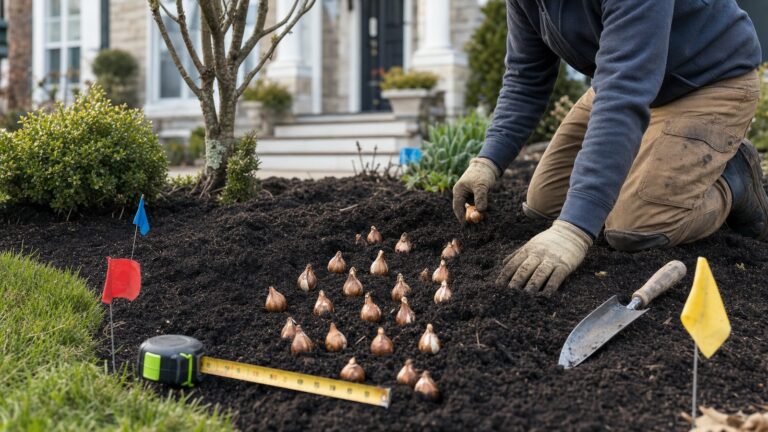
- Prepare the entire bed. Remove perennial weeds and loosen compacted soil across the planting area. Add compost only as needed. Do not fill a single hole with rich material that creates a water-holding pocket around the roots.
- Inspect drainage. Bulbs, bearded iris, and many other spring perennials fail in saturated soil. Improve the bed broadly, plant on a raised area, or choose a moisture-tolerant plant instead.
- Water container plants before planting. A hydrated root ball is easier to establish than one that is already dry.
- Correct root problems. Gently loosen circling roots. If the root ball is severely rootbound, tease or lightly score the outer roots rather than leaving them tightly wound.
- Set the plant at the correct depth. Most herbaceous perennial crowns should sit at soil level unless the label says otherwise. Do not use the general bulb rule for peonies or bearded iris.
- Plant bulbs and corms in the right orientation. The pointed end faces up and the roots face down. If orientation is unclear, plant the structure on its side rather than upside down.
- Water thoroughly. Soak the planting area after installation so the soil settles around the roots. Continue watering during dry autumn weather until the ground freezes.
- Skip high-nitrogen fertilizer in fall. Wait until spring or follow a soil-test recommendation. Compost may be incorporated or applied appropriately, but do not push tender top growth just before winter. Illinois Extension recommends waiting until spring to fertilize new fall transplants.
- Mulch at the right time. Let the soil benefit from autumn warmth, then apply loose mulch as temperatures approach freezing. Keep mulch away from crowns and stems. Heavy, wet mulch placed too early can retain excess moisture and create rot problems. Oregon State Extension offers additional fall planting and mulching guidance.
- Mark the planting. Labels, photographs, and a simple garden map prevent accidental digging when dormant plants disappear beneath mulch or soil.
Design the garden by bloom succession
A gorgeous spring garden is more than a shopping list. Arrange plants so one wave overlaps the next, and repeat groups instead of planting one specimen of every type. Bloom dates shift with latitude, weather, cultivar, and exposure, so treat the following as a sequence rather than a fixed calendar:
- Snowdrops
- Crocus
- Hellebores
- Daffodils
- Grape hyacinths
- Hyacinths
- Bleeding hearts
- Virginia bluebells
- Lungwort and brunnera
- Columbine and woodland phlox
- Tulips
- Bearded iris
- Peonies
- Alliums
Design around bloom time, height, color, and massing rather than scattering isolated plants. A dozen bulbs planted in a drift usually create more impact than twelve different bulbs planted singly. Penn State’s spring-bulb design guidance also emphasizes massing and succession.
Five combinations that solve common garden situations
- Sunny formal border: Daffodils, perennializing tulips, alliums, and peonies create a progression from early color to late-spring flowers.
- Fragrant entry: Hyacinths and scented daffodils provide early fragrance, followed by peonies.
- Woodland shade: Snowdrops, Virginia bluebells, bleeding heart, and woodland phlox suit a moist, deciduous-tree setting.
- Low spring carpet: Crocuses, grape hyacinths, and lungwort produce layered color at the front of a border.
- Late-spring color: Bearded iris, peonies, and columbine overlap after the earliest bulbs fade.
Best choices by garden goal
For reliable naturalizing
Start with daffodils, crocuses, grape hyacinths, species tulips, and Virginia bluebells where the site suits them. Daffodils are generally dependable and less appealing to squirrels than tulips. Grape hyacinths and bluebells may spread, so naturalizing should mean desirable expansion, not uncontrolled spread.
For shade
Choose hellebores, bleeding hearts, Virginia bluebells, woodland phlox, lungwort, brunnera, and columbine. First identify what kind of shade you have. Cool woodland shade with spring moisture is very different from deep, dry shade beneath mature trees. No shade label overrides poor soil, root competition, or lack of water during establishment.
For sun
Daffodils, crocuses, tulips, hyacinths, alliums, peonies, and bearded iris are the strongest choices for sunny beds. Bearded iris and many bulbs are especially intolerant of standing water, while peonies need enough sun and space to mature.
For native or wildlife-oriented planting
Virginia bluebells, woodland phlox, and regionally native forms of columbine are useful choices where their habitat requirements match the site. Bloodroot can also be considered as an optional spring-wildflower companion. Native status is geographic, not universal: confirm the species’ status in your state or region rather than applying the word “native” to every plant on a national list.
For fragrance
Hyacinths are the most obvious choice, with certain daffodils, woodland phlox, and some hellebores adding scent. Lily-of-the-valley (Convallaria majalis) is a traditional fragrant spring perennial, but it should not be a default recommendation. It is poisonous if eaten, can spread aggressively, and is considered invasive or weedy in some regions. Check North Carolina Extension’s plant profile and local invasive-plant guidance before planting it.
What does not belong in the core list?
Some popular fall-gardening recommendations are good plants but do not fit the specific goal of planting a perennial in fall for a dependable spring display:
Best Value

- High-Value Wildflower: 10,000 Black eyed susan seeds perennial (tender) deliver masses of yellow daisy blooms for pollinator gardens. Great wildflower seeds for beds, borders, containers, and meadows, USDA 1-12.
- Many Sowing Options: 1. Sow blackeyed susan flower seeds Directly in late Fall. 2. Or, For spring, cold stratify rudbeckia seeds 4 wks with moist sand, 3. Or start indoors 6–8 wks early. Versatile flower seed packets and gardening seeds. Surface-sow; needs light.
- Resilient Growth Habit: Black eyed susan reach 24 inches; space 18–30 inches. Full sun; black eye susan seeds tolerates clay or rocky soils. Black eyed susans are heat and drought tolerant—ideal perennial flower seeds.
- Extended Bloom Season: Black eyed susan bloom early summer to late fall; deadhead for longer color. Attracts butterflies and bees — black-eyed susan seeds are great for cut flowers and deer resistant seeds.
- Cut & Save: Harvest stems as flowers open for vases. Save seed by drying cones and rubbing out seed. Bulk black eyed susan seeds value suits large borders and diverse seed packets for planting.
- Mums: They provide fall color, and many are treated as annuals because they do not establish sufficiently to survive winter. University of Maryland Extension discusses their overwintering limits.
- Hydrangeas: They are woody shrubs and many flower from mid-July into August, not in spring.
- Dogwood, lilac, forsythia, and fruit trees: These can be excellent fall-planted woody plants for spring blossom, but they are trees or shrubs rather than herbaceous perennials. UConn’s home garden resources distinguish spring-blooming woody plants such as lilac and forsythia.
- Pansies: They may survive winter and bloom again in early spring in suitable climates, but summer heat commonly ends their season. They are not dependable long-lived perennials.
- Black-eyed Susans: These are valuable summer-to-fall perennials, not spring bloomers. Iowa State places their flowering from June or July through frost, depending on the species. See Iowa State’s coneflower and black-eyed Susan guidance.
- Generic wildflower mixes: “Wildflower” describes a mixture, not one plant. The packet may contain annuals, biennials, and perennials, and results depend on the species, seed quality, regional climate, and site preparation.
These distinctions matter because a plant can be worth planting in fall without being a spring-blooming herbaceous perennial. Trees and shrubs may belong in a different article, while fall annuals and summer perennials should not be presented as guaranteed spring color.
Fall-planting problems and how to fix them
The ground froze before I planted
If the soil is still workable, plant as soon as practical and water once. A very late planting can survive, but it has less time to root and is more vulnerable to frost heaving. If the ground is frozen solid, do not force a planting hole; follow local Extension advice and keep dormant material in appropriate storage according to the supplier.
New plants heaved out of the soil
Repeated freezing and thawing can lift shallow-rooted or late-installed plants. Replant exposed crowns at the proper depth, firm the soil gently, and apply loose mulch after the soil has cooled. Avoid packing heavy material against stems or crowns.
Bulbs or iris rotted
Suspect poor drainage first. A small amount of compost in an individual hole will not correct a bed that stays saturated. Improve drainage across the bed, raise the planting area, or choose plants adapted to moisture. Bearded iris rhizomes are particularly prone to problems when buried deeply or kept wet.
The peony grows leaves but does not flower
Check the planting depth before adding fertilizer. Peony eyes should be only 1 to 2 inches below the soil surface. Excessive depth is a common reason for disappointing flowering.
The iris has foliage but few flowers
Confirm that the rhizome is not buried. Bearded iris should sit at or barely below the surface, in full sun and well-drained soil. Crowded clumps may also need division during the late-summer-to-early-fall window.
Nothing flowered the following spring
The plant may have been too small, a seedling, a late division, or a bare-root specimen still building its root system. Excess shade, incorrect depth, poor drainage, and insufficient winter chilling can also affect bloom. “Can bloom the following spring” is a more accurate expectation than “will bloom.”
Free tools Windows power users keep installed
One-click scans. No signup required.
Tulips disappeared or declined after one season
Many bedding tulips are selected for first-year impact rather than long-term naturalizing. Replace them annually for a formal display, or choose species tulips, Darwin hybrids, or another group labeled for perennializing behavior.
Squirrels dug up the bulbs
Tulips and crocuses are common targets. Replant disturbed bulbs, firm the soil, and cover the area with chicken wire anchored under mulch until the ground settles. Daffodils are generally less attractive to bulb-eating rodents, but no planting is completely pest-proof.
A spring ephemeral left a bare patch
That is normal for Virginia bluebells and can also occur with bleeding heart and other plants that retreat after spring. Pair them with later foliage plants such as ferns, hostas, heucheras, or other perennials that tolerate the same conditions.
The bulb leaves look untidy after flowering
Allow the foliage to mature naturally so the bulb can replenish its reserves. Hide declining leaves with companion perennials rather than removing them while they are still green. This is particularly useful with daffodils, tulips, and alliums.
Fall planting is not a universal rule
The best fall choices depend on plant form, local weather, soil, drainage, and the result you want. Fall is usually advantageous for hardy spring bulbs, peonies, bearded iris divisions, and many container-grown spring perennials. Late-summer and fall bloomers are often better planted or divided in spring, and a plant installed immediately before hard frost has a greater risk of heaving and delayed establishment.
Use the plant label, your local first-frost date, your expected ground-freeze date, and advice from your state or county Extension service. That combination is more reliable than a nationwide month or an absolute promise that every fall purchase will flower next spring.
Frequently Asked Questions
Can I plant spring bulbs after the first frost?
Often, yes, if the soil is still workable and not frozen solid. Plant as soon as possible, water once, and apply loose mulch after the soil cools. However, bulbs planted very late have less time to root and face greater risk of frost heaving. The package instructions and local Extension guidance should take priority.
Which of these fall-planted perennials are best for shade?
Hellebores, bleeding hearts, Virginia bluebells, woodland phlox, lungwort, heartleaf brunnera, and columbine are the strongest shade candidates. Match the plant to the type of shade: moist woodland shade is much easier than dense, dry shade beneath mature trees.
The Tool Desk
Outbyte PC Repair FREEClear out junk files and repair common Windows errorsFree Scan →Outbyte Driver Updater FREEScan for outdated or missing drivers - takes under a minuteDriver Scan →Will tulips come back every year?
Not necessarily. Many border tulips provide their best display in the first year and then decline. For better repeat performance, choose species tulips, Darwin hybrids, or varieties specifically described as perennializing, and give them full sun and well-drained soil.
Can I sow perennial seeds in fall instead of buying plants?
Yes, for species whose seeds benefit from moist, cold stratification. Many native perennial seeds are sown after a hard frost to reduce premature germination. Read the packet carefully because a wildflower mix may contain annuals, biennials, and perennials, with results varying by region and site.
The Bottom Line
For the best chance of a beautiful spring garden, plant the right material at the right time: spring bulbs before the ground freezes, potted and bare-root perennials about six weeks before the expected first frost, and late-summer iris divisions early enough to root. Prioritize drainage, respect the shallow planting requirements of peonies and bearded iris, water until freeze-up, delay heavy mulch until the soil cools, and choose perennializing tulips if repeat flowers matter. Fall gives these plants a head start—but local conditions determine whether that head start becomes spring color.
Quick Recap
Product prices and availability are accurate as of the date/time indicated and are subject to change. Any price and availability information displayed on Amazon at the time of purchase will apply.
Recommended Free Tools