Do these 3 things before closing this tab:
1Fix the driver behind crashes, sound loss and screen glitches2Clear out junk files and repair common Windows errors3Scan for outdated or missing drivers - takes under a minuteThe best saw is the one that matches the cut. Use a hand or panel saw for a few simple lumber cuts, a jigsaw for curves, a circular or track saw for long straight cuts, a miter saw for repeatable angles, and a table saw for controlled ripping. For branches, use a pruning or bow saw; treat chainsaws as a separate, higher-risk option for larger or faster outdoor work.
This guide compares 15 saw types by task, material, accuracy, portability, reach, speed, and repeatability so you can choose a tool without buying more saw than the job requires.
The right saw depends on the cut, not just the material. Choose a hand or panel saw for a few straightforward cuts, a jigsaw for curves and cutouts, a circular or track saw for long straight cuts, a miter saw for repeatable angles, and a table saw for controlled ripping. For branches, use a pruning or bow saw; reserve chainsaws for larger or faster outdoor work when you have the training, equipment, and conditions to use one safely.
As an Amazon Associate I earn from qualifying purchases.
Quick wins for a faster PC:
Scan for outdated or missing drivers - takes under a minuteDriver Scan →Repair Windows errors before they cause bigger problemsFix Now →Fix the driver behind crashes, sound loss and screen glitchesFind Drivers →The 15 saw types below are grouped by the job they do best. Before choosing, answer four questions:
- What are you cutting? Wood, metal, drywall, plastic, branches, or mixed demolition material?
- What shape must the cut be? Straight, angled, curved, or an interior opening?
- How accurate must it be? A rough demolition cut and a visible trim joint need very different tools.
- Do you need portability, speed, reach, or repeatability? A handheld saw travels well; a stationary saw is often easier to control for repeated cuts.
Quick saw-selection chart
| Saw type | Best for | Typical material | Cut character | Main limitation |
|---|---|---|---|---|
| Hand or panel saw | Basic wood cuts | Lumber, boards | Straight manual cuts | Slower and less repeatable |
| backsaw | Joinery and miter-box work | Wood | Accurate straight cuts | Limited depth |
| coping saw | Interior curves | Thin wood, trim | Tight curves | Slow stock removal |
| hacksaw | Metal and pipe | Metal, PVC | Controlled manual cuts | Requires effort and suitable blades |
| Pruning or bow saw | Branches | Green or dry wood | Outdoor cuts | Limited by branch size and reach |
| Jab or drywall saw | Panel cutouts | Drywall, plywood | Starter and rough cutouts | Not a finish-cut tool |
| circular saw | Fast straight cuts | Lumber, sheet goods | Rip and crosscuts | Freehand accuracy and blade exposure |
| Track saw | Guided panel cuts | Plywood, sheet goods | Long, precise cuts | Requires a track and setup |
| Jigsaw | Curves and cutouts | Wood, plastic, thin metal | Curved or intricate cuts | Blade wander in thick stock |
| reciprocating saw | Demolition | Wood, metal, pipe | Rough cuts | Poorer finish quality |
| Miter saw | Trim and framing | Wood, molding | Repeatable crosscuts and miters | Limited to stock that fits the saw |
| Table saw | Ripping and repeatability | Lumber, sheet goods | Straight workshop cuts | Kickback and contact hazards |
| band saw | Curves and resawing | Wood, some metals | Curved or continuous cuts | Setup and guarding matter |
| scroll saw | Fretwork and crafts | Thin wood and craft stock | Fine, intricate curves | Slow and limited capacity |
Manual saws
1. Hand saw or panel saw
A hand saw is the simplest choice for cutting lumber, boards, and small pieces of wood when you do not need power. It is inexpensive, portable, quiet, and ready whenever you are. A general-purpose hand saw is a sensible first purchase for basic woodworking, cutting a board to length, or handling an occasional DIY repair.
Retail categories commonly separate panel saws, pull saws, tooth patterns, and crosscut saws. For ordinary construction lumber, choose a saw whose tooth pattern suits the direction of the cut: ripping follows the grain, while crosscutting goes across it. A hand saw is slower than a powered tool and takes practice to keep straight, so it is less suitable for a large stack of identical pieces.
#1 Best Overall

- [ Product Included ]- 8-in-1 Adjustable blade hand saw, The TPR non-slip handle with ergonomic designed reduces hand fatigue.
- [ Clever Design ]- Lockback mechanism secures teeth blades in place firmly, Through the ingenious clamping design, large and small blades can be supported, so we provide 8 different saw blades for use to meet different use needs.
- [ High quality Blades ]- Include 8 different saw blades witch are made of high speed steel (HSS steel), be very resistant, sharpened tip and hardened blade for durability.
- [ Replacement Blades ]- The replacement reciprocating blades are available anywhere tools are sold. The hand saw has a professional clamping mechanism,which can be fixed well for both large and small blades that can be meet your different needs and easy to get spares.
- [ Compact Design ]- Compact design, Save space in the go toolbox.
2. Backsaw
A backsaw has a stiffening strip along the top edge of the blade. That reinforced back limits flex and makes it easier to maintain a controlled, straight cut. Backsaws are commonly used with a miter box or for joinery, trim, small molding, and other work where accuracy matters more than speed.
The Tool Desk
Outbyte Driver Updater FREEFix the driver behind crashes, sound loss and screen glitchesFind Drivers →Outbyte PC Repair FREERepair Windows errors before they cause bigger problemsFix Now →The stiff back also limits the depth of cut. If you need to cut through a thick beam or sheet quickly, use a different saw; if you need a clean, repeatable cut on relatively small stock, a backsaw is better suited.
3. Coping saw
A coping saw holds a narrow, replaceable blade in a U-shaped frame. The blade can turn tightly, making this the traditional hand tool for interior curves, trim work, and detailed woodworking. It is useful for coping one piece of molding around the profile of another and for small decorative cutouts.
Use a narrow blade for tighter curves and a coarser blade when removing more material. The trade-off is speed: a coping saw provides control, not rapid stock removal.
4. Hacksaw
A hacksaw is designed for cutting metal and other hard materials when fitted with the appropriate blade. Typical jobs include cutting pipe, conduit, bolts, threaded rod, and some PVC. The frame alone does not determine the result; blade material, tooth pattern, tension, and suitability for the workpiece matter just as much.
Use steady strokes rather than forcing the blade. A bi-metal blade is a useful general-purpose choice for many metal-cutting tasks, but match the blade to the material and thickness. A hacksaw can cut PVC, but a dedicated plastic-cutting blade or another suitable tool may produce a cleaner, faster result for repetitive work.
5. pruning saw
A pruning saw is made for branches and shrubs. Folding models are convenient for occasional yard work and easy storage. Fixed-blade models usually offer a longer cutting stroke and greater capacity, though they are less compact.
Capacity varies by model, wood condition, branch shape, and access. STIHL’s pruning-saw catalog describes models intended for branches in approximately the 2-to-4-inch range, but that should not be treated as a universal rating. Check the specific tool’s instructions. For branches beyond comfortable hand-sawing range or above shoulder height, use a suitable pole pruner or hire a qualified professional rather than stretching, climbing, or cutting from an unstable position.
6. Bow saw
A bow saw has a large framed opening and a relatively long blade. It is a useful manual outdoor saw for larger branches, firewood, and manageable green or dry wood. The frame gives the blade clearance and supports a long cutting stroke.
PC Slower Than It Used to Be?
A free scan shows the junk files, broken settings and background clutter dragging Windows down - then fixes them in one click.Free scan · Windows 10 & 11Crashes, No Sound, or Screen Glitches?
Random freezes, missing sound and display glitches usually trace back to one bad driver. Find and replace yours safely.Free scan · under a minuteIt is a practical alternative to a chainsaw for smaller outdoor work when the material can be reached and controlled safely. A bow saw is not a substitute for a chainsaw on large-diameter logs, storm-damaged trees, or work that requires cutting while standing in an awkward or unstable position.
7. jab saw or drywall saw
A jab saw has a pointed blade that can start a cut in the middle of drywall, plywood, or another panel without first entering from an edge. Push the point through the panel only after checking what is behind it, then enlarge the opening for an outlet box, fixture, access panel, or rough installation cutout.
Rank #2

- High Cutting Power for 6–7 Inch Branches with SK-5 Steel Blade——SK-5 steel blade with aggressive 7 TPI staggered teeth delivers strong cutting performance for green wood, branches, and general yard work, allowing efficient cutting of branches up to 6–7 inch diameter, making it highly effective for camping, survival, bushcraft, and landscaping tasks where fast and controlled wood cutting is required.
- Optimized Sharpness and Sawing Performance for Wood Cutting Tasks——Aggressive staggered tooth geometry combined with SK-5 steel construction provides effective cutting performance for green wood, branches, firewood, and outdoor materials, helping reduce cutting resistance and supporting efficient sawing in outdoor use scenarios.
- Lightweight Folding Design for Backpacking, Camping, and Survival Kits——Lightweight and compact folding structure makes this saw easy to carry in backpacks and survival bags, providing strong portability for camping, hiking, bushcraft, and emergency outdoor use, while maintaining full cutting capability without adding unnecessary weight.
- Reinforced Blade Structure for Improved Stability and Long-Term Use——Reinforced blade design improves structural stability during heavy cutting tasks, helping maintain consistent performance during repeated use in wood cutting applications, addressing common outdoor tool concerns such as blade tip stress during intensive branch cutting.
- Ergonomic Rubber-Coated Handle for Secure Grip and Outdoor Control——Ergonomic rubber-coated polymer handle provides a firm and stable grip in wet, cold, or dry conditions, improving safety and control during extended outdoor use, reducing hand fatigue and ensuring reliable handling in camping, survival, and landscaping environments.
It is primarily a starter and rough-cut tool. Mark the opening carefully, identify studs, pipes, wiring, and other obstructions, and avoid driving the blade deeply into a concealed service. For a cleaner finish in thin wood or laminate, a jigsaw or another guided tool is usually more appropriate.
Portable power saws
8. Circular saw
A circular saw is a handheld motor-driven saw with a round blade. With the right blade, support, and guide, it can rip lumber, crosscut boards, and break down plywood or other sheet goods quickly. It is one of the most versatile portable power saws for construction because it can go to the work instead of requiring the workpiece to reach a machine.
Its limitation is control. A freehand cut can drift, especially in sheet goods, and the rotating blade remains a serious contact hazard. Support the material so the kerf does not close on the blade, set the depth appropriately, keep the factory guard functional, and use a straightedge when accuracy matters. The saw’s arbor, blade diameter, and blade specification must all match.
9. Track saw
A track saw is a circular saw designed to travel along a guide track. It is especially useful when a long, straight, repeatable cut in plywood, countertop material, or another panel matters more than maximum portability. The track helps establish the line and reduces reliance on freehand control.
Track saws are often easier to use than a conventional circular saw for breaking down large panels because the guide also helps support and locate the saw. They still require careful panel support, correct blade selection, and a clear path. The track adds setup time and cost, and it does not remove the need to control the workpiece.
10. Jigsaw
A jigsaw moves a narrow blade up and down through the workpiece. It is the preferred portable category for curved cuts, interior cutouts, sink openings, and relatively thin wood, plastic, laminate, or metal. A narrow blade can negotiate tighter turns; a wider blade generally tracks straighter on gentler curves.
Recommended Free Tools
Use blades made for the material and desired finish. A fine-tooth blade can reduce splintering in appropriate materials, while a coarser blade removes wood faster. The blade can wander in thick stock, and the bottom of the cut may not match the top, so a jigsaw is not the ideal tool for long, perfectly straight cuts or heavy stock removal.
11. Reciprocating saw
A reciprocating saw is a rough-cutting handheld tool for demolition, remodeling, pruning, and difficult-access work. Its blade moves back and forth and can cut wood, metal, pipe, nails, and mixed materials when the blade is correct. It is useful for removing framing, cutting through fasteners, opening walls, or making a cut where finish quality is secondary.
Do not choose it for visible trim or precision joinery. The aggressive stroke makes it easier to damage surrounding material and harder to follow a fine line. Before cutting into a wall, confirm the location of electrical wiring, plumbing, gas lines, and structural members. Use a blade designed for the material rather than assuming a wood blade will handle embedded metal or pipe.
Stationary workshop saws
12. Miter saw
A miter saw is built for accurate crosscuts and angled cuts. It is particularly useful for trim, molding, framing stock, baseboards, and repeated miters. A compound miter saw adds bevel adjustment, and a sliding model increases the width of material it can crosscut within the machine’s rated capacity.
What’s actually slowing this PC down?
Pick the symptom - the matching free tool is one click away.
Choose it when you make many pieces to the same length or need consistent angle settings. It is not a general replacement for a table saw: the workpiece must fit the saw’s cutting capacity, and a miter saw is primarily for crosscutting rather than long ripping. Support long stock on both sides and keep the material firmly against the fence.
Rank #3
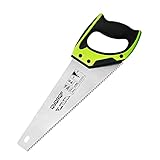
- Size:14inches, 350mm hand saw, 0.9MM Thick.
- Material: 65Mn steel, heat treated, soft Ergonomic Non-Slip TPR Handle.
- Wide usage: Our pro hand saw is designed for precise cutting including wood, plastic pipe, plywood, wallboard. Ideal for framers, general contractors and woodworkers.
- QUICK CUTS: Three cutting surfaces to cut up to 50% faster than traditional handsaws. Pro hand saw fast cuts on push and pull strokes. Deep Gullets provide rapid removal of chips.
- Package: With low-friction coating on blade and extra plastic protection on teeth and hard paper sleeve around blade.
13. Table saw
A table saw has a circular blade projecting through a table. It is primarily used for controlled ripping and repeatable cuts in lumber and sheet goods, and it can be configured for a broad range of woodworking operations. The table provides a stable reference surface and the fence helps maintain a consistent cut line.
Table saws demand disciplined setup and technique. Kickback can propel the workpiece toward the operator, and the exposed point of operation creates a serious blade-contact risk. Keep the blade guard and riving or anti-kickback equipment installed as designed, use the fence correctly, use push sticks or push blocks when hands would approach the blade, and never reach over or behind a moving blade to retrieve an offcut.
A portable table saw can be useful on a construction site, while a larger shop saw generally offers more working support and capacity. In either case, the machine’s guard system, instructions, and rated limits determine how it should be used.
14. Band saw
A band saw uses a continuous loop blade running around wheels. It is well suited to curved cuts, irregular shapes, thick stock, and resawing, depending on the machine’s throat depth, cutting height, blade, and power. Some band saws are configured for wood; others can be equipped for certain metals, so do not assume one machine or blade handles every material.
Guard the blade except at the point where it enters the work. Set the upper guide close to the stock, keep the blade correctly tensioned and tracked, and use a push stick, push block, or fixture for small pieces. OSHA guidance specifically emphasizes guarding, close guide adjustment, and suitable aids for small workpieces. A band saw can make controlled curves, but a poorly adjusted or exposed blade can still cause severe injury.
15. Scroll saw
A scroll saw uses a fine blade in a stationary machine for delicate curves, fretwork, puzzles, toys, ornaments, and craft patterns. Its small blade and controlled reciprocating action make intricate interior shapes easier than they are on a band saw.
Scroll saws are for precision and detail, not fast stock removal. They generally work best with thin craft stock within the machine’s throat and depth capacity. Drill a starter hole when the design requires an interior cut, thread the blade through it, and work slowly enough to keep the pattern line visible.
Where chainsaws fit
A chainsaw is an important outdoor saw category, but it is better treated as a related power-saw variant than as a replacement for one of the 15 core types above. It is intended for larger or faster branch and log work, not routine light pruning by default.
For ordinary homeowner pruning, a manual pruning saw or suitable pole pruner may be the more proportionate option. Use a chainsaw only when the saw, bar, chain, protective equipment, access, weather, and work area are appropriate—and only if you understand the operating technique. Tree work involving height, tensioned or fallen limbs, power lines, significant diameter, or uncertain structural loading is a strong reason to use a trained professional. Model-specific pruning-saw and pole-pruner capacities must not be generalized to all chainsaws or pole pruners.
Independent reader supportYour contribution helps us test, update, and keep practical guides available for everyone.Blade choice can matter as much as saw choice
The saw body provides the motion; the blade determines how that motion meets the material. Match the blade to:
- Material: wood, metal, plastic, drywall, laminate, tile, masonry, or a mixed demolition assembly.
- Thickness: the blade must have sufficient cutting capacity and remain controllable through the workpiece.
- Cut direction: ripping, crosscutting, curved cutting, plunge cutting, resawing, or demolition.
- Finish: coarse teeth generally remove material faster; finer teeth generally favor a smoother cut, although the correct tooth count depends on the particular saw and material.
- Speed and heat: a blade that is too aggressive, dull, or unsuitable can burn wood, bind, bend, chip the work, or overload the tool.
Keep blades sharp and use the blade specified for the saw and material. Replacement options include circular-saw, miter-saw, table-saw, jigsaw, reciprocating-saw, band-saw, and specialty blades for applications such as metal, tile, masonry, and laminate. A fresh, appropriate blade is often a more useful upgrade than simply buying a larger saw.
Rank #4

- VERSATILE CUTTING TOOL – Professional pruning saw for tree trimming, branch cutting, and wood cutting. This folding hand saw works as a reliable tree saw, limb saw, garden saw, and curved pruning saw, making it an ideal tree trimming saw for camping, bushcraft, woodworking, and outdoor garden work.
- TRIPLE-CUT SK5 STEEL BLADE – Premium SK5 high-carbon steel blade with 7 TPI razor teeth delivers fast, aggressive cutting through branches, limbs, and dry or green wood.
- HEAVY DUTY CONSTRUCTION – Rugged folding design built for reliable performance during tree pruning, garden maintenance, camping, and bushcraft use.
- ERGONOMIC NON-SLIP HANDLE – Comfortable grip reduces hand fatigue and provides secure control while cutting branches, limbs, and firewood.
- COMPACT FOLDING DESIGN – Lightweight folding saw fits easily in a backpack or tool bag for camping, hiking, survival kits, and garden tools.
Which saw should you buy first?
- For a few basic wood cuts: start with a general-purpose hand or panel saw if you want the lowest-cost, lowest-complexity option.
- For frequent construction cuts: choose a circular saw and add a straightedge or track-style guide when long cuts must be accurate.
- For plywood breakdown: a track saw is preferable when guided, repeatable panel cuts justify its additional setup and cost.
- For curves and openings: choose a jigsaw; use a jab saw when the opening is rough and you need to start in the middle of a panel.
- For trim and repeated angles: choose a miter saw, with compound or sliding capability if your stock and joint requirements call for it.
- For ripping boards repeatedly: use a properly guarded table saw, provided you have enough space and can follow safe operating procedures.
- For demolition: choose a reciprocating saw with separate wood, metal, or demolition blades as the job requires.
- For branches: use a pruning saw or bow saw within its practical reach and capacity; move to a pole pruner or chainsaw only when the tool and operator are properly suited to the work.
Safety rules for every saw
No saw is “beginner-proof.” Manual saws can slip, and powered saws add blade contact, flying-particle, kickback, noise, and electrical or battery hazards. Apply these controls before every cut:
- Keep factory guards installed, correctly adjusted, and functional. Never defeat a guard to make a cut easier.
- Use the blade specified for the material and saw. Inspect it for damage and replace or sharpen dull blades as appropriate.
- Wear eye protection or a face shield where flying particles are possible. Add hearing protection around loud powered tools.
- Secure the workpiece and support it so the cut does not pinch the blade or allow the offcut to fall unpredictably.
- Keep hands away from the point of operation. Never reach under, behind, or across a moving blade.
- Use push sticks, push blocks, fixtures, or suitable guides when the workpiece brings your hands close to a blade.
- Keep loose clothing, jewelry, and unsecured long hair away from moving parts.
- Check both sides of a panel before plunging a jab saw, jigsaw, or reciprocating saw into it.
- Wait for the blade to stop completely before setting down a handheld saw, retrieving an offcut, or making an adjustment. Disconnect power or remove the battery before changing blades or servicing the tool.
- Read the tool’s instructions and stay within its rated cutting capacity.
Workplace users must also follow applicable OSHA requirements and their employer’s safety program. OSHA guidance addresses blade contact, flying particles, kickback, guarding, push-stick use, and control requirements for handheld and stationary saws. Residential DIY users should apply the same principles even when a workplace rule does not technically govern the project.
Bottom line
Pick the saw by the geometry and quality of the cut: hand saw for simple manual work, backsaw for controlled joinery, coping saw for tight curves, hacksaw for metal, pruning or bow saw for branches, jab saw for rough interior openings, circular or track saw for straight panel cuts, jigsaw for curves, reciprocating saw for demolition, miter saw for repeatable angles, table saw for ripping, band saw for thick or curved stock, and scroll saw for delicate patterns. Then fit the correct sharp blade, secure the work, and use the guard or guide exactly as designed.
Frequently Asked Questions
What is the best saw for a beginner?
For basic DIY wood cuts, a general-purpose hand or panel saw is the simplest starting point. It needs no power, costs relatively little, and handles boards and lumber, although it is slower and less repeatable than a powered saw.
Free tools Windows power users keep installed
One-click scans. No signup required.
What is the most versatile power saw?
Use a circular saw for fast straight cuts in lumber and sheet goods, a track saw when guided long cuts in panels need to be especially repeatable, a jigsaw for curves and cutouts, and a reciprocating saw for rough demolition cuts.
What is the difference between a miter saw and a table saw?
A miter saw is designed for accurate crosscuts and angled cuts in trim, molding, and framing stock. A table saw is primarily for ripping and repeatable workshop cuts. They overlap in some work but are not interchangeable.
Should I use a pruning saw or chainsaw for branches?
Use a pruning saw for ordinary manageable branches and a bow saw for somewhat larger outdoor wood that can be reached and controlled safely. A chainsaw is for larger or faster work only when the operator is trained and has suitable equipment and conditions.
Does the saw blade matter more than the saw?
Coarser teeth generally cut faster and remove more material, while finer teeth generally produce smoother cuts. The correct tooth pattern and count still depend on the specific saw, material, thickness, and desired finish.
The Bottom Line
Choose by the cut: use a hand saw for simple lumber, a jigsaw for curves, a circular or track saw for straight panels, a miter saw for repeated angles, a table saw for ripping, and a pruning or bow saw for manageable branches. The correct blade, secure workpiece, functional guard, and safe technique matter as much as the saw category.
Quick Recap
Product prices and availability are accurate as of the date/time indicated and are subject to change. Any price and availability information displayed on Amazon at the time of purchase will apply.