Container gardening works best when a design fits the site as well as the plants: check sunlight, drainage, mature size, watering access, and the filled pot’s weight before you arrange it. These 15 ideas range from edible gardens to seasonal displays, with practical notes to help you choose what suits your space.
Start with the site and the container
Before choosing a look, identify the available direct sunlight, the space for roots, and how easily you can reach the pots to water them. Most vegetables do best in containers holding 2–5 gallons of soil and at least 12 inches deep, though crop needs differ, according to Oregon State University Extension. Maryland Extension recommends 6–8 hours of direct sun for warm-season crops such as tomatoes and peppers, and 3–5 hours for cool-season greens; Virginia Tech notes fruiting vegetables generally need at least six hours and do better with eight to ten. See Maryland Extension’s container vegetable guide and Virginia Tech’s container gardening guide.
As an Amazon Associate I earn from qualifying purchases.
- Drainage: Use containers with drainage holes for plants. If a decorative vessel has no holes, use it as a cover for a removable nursery pot rather than planting directly into it.
- Growing medium: Choose a container and medium appropriate for the mature plant; a small decorative pot may not provide enough root room for vegetables.
- Water: Check the growing medium regularly. Containers can need daily watering during hot, dry weather, and porous materials such as terracotta dry faster.
- Weight and access: Decide where a large pot will live before filling it. Maryland Extension notes that a 20-inch container filled with moist growing medium and plants can weigh 100 pounds.
15 container gardening ideas
1. Raise pots on bricks for a tiered display
Use stable bricks or blocks to lift some pots above others, placing shorter plants toward the front and taller ones behind. This creates depth without taking much additional floor space. Keep every pot level and stable, and make sure its drainage holes are not blocked.
2. Rotate a seasonal tabletop centerpiece
Keep a few similarly sized planters ready and move the one currently in flower to the table. A removable nursery pot makes the display easier to water without leaving a wet ring on the tabletop. Choose plants for the table’s actual light exposure, not just the conditions where the plants were started.
#1 Best Overall

- 300G THICKENED FABRIC, BUILT FOR MULTIPLE SEASONS — 300 g/m² non-woven fabric (vs. 200 g/m² or thinner on entry-level bags), so the walls hold their shape when filled and resist tearing at the seams. Each empty bag weighs 4 oz — 16 oz for the 4-pack. Fold flat and store indoors over winter and they are built to be replanted season after season 3.
- AIR-PRUNED ROOTS, NO ROOT ROT — Water drains through the whole fabric wall instead of pooling at one drainage hole, and air reaches the root ball from every side. Roots stop at the fabric edge and branch out instead of circling the pot, which is why plants in fabric bags build a denser feeder-root system than plants in plastic pots. Indoors, set the bags on a saucer or tray — the fabric drains from the base.
- DOUBLE-STITCHED HANDLES THAT DON'T RIP — Two woven webbing straps are sewn to the bag wall with a double-stitched box-X reinforcement (not cut from the same fabric as the bag body), tested to carry 180 LB. A filled 5-gallon bag of damp soil runs roughly 40–50 lbs, so the handles are the part that decides whether you can chase the sun across a patio — or not.Equipped with strong reinforced handles, easy to move the plants around your garden, patio or balcony, even when the bag is filled with soil.
- SIZED FOR HERBS, GREENS, STRAWBERRIES & FLOWERS — 12.2" across and 10.2" deep is the right root room for basil, mint, cilantro, rosemary, lettuce, spinach, strawberries, marigolds and compact peppers. Growing full-size tomatoes, potatoes or squash? Size up to our 7, 10 or 15 gallon bags instead — those crops need more depth than a 5-gallon bag can give.
- FOLDS FLAT — STORE THE WHOLE SET IN A DRAWER — Empty the soil, fold each bag flat, and all 4 stack down to about 1.96inch — they slide into a cupboard gap or under a shelf instead of taking up a corner of the balcony all winter. Rigid plastic pots can't do this, which is what makes fabric bags practical for apartments and small patios.
3. Plant summer-flowering bulbs in pots
A pot lets you give bulbs a defined place on a patio or doorstep and can make it easier to lift and store bulbs that are not winter-hardy in your area. Choose bulbs and planting dates for your local climate and growing zone; winter care varies by bulb and location.
4. Make a pot wreath
Attach small planted pots to a sturdy wreath frame for a vertical display of annuals. Plan for the frame to carry the weight of wet growing medium, plants, and water, and secure it to a suitable support. Keep the pots accessible so you can water and maintain them safely.
5. Use a basket as a decorative pot cover
Place a drained nursery pot inside a basket instead of planting directly into the basket. You can lift out the inner pot to water it, let excess water drain, and return it when it is no longer dripping. This approach also keeps the basket from being constantly exposed to damp growing medium.
Rank #2

- Package Included:Our products include 60 pcs 1 gallon plants nursery pots.Each black nursery pot dimensions:Height 6.7",opening diameter 7.1",bottom diameter 5.3".
- High Quality:These nursery pot are made of soft thin plastic,lightweight and easy to use.When it is compressed,it can be restored to its original state,and is not easily broken.
- Drainage Design:16 small drainage holes at the bottom of the plastic plant pot.It can allow water to run put,help soil drained and ventilated;soil remained moist but not waterlogged,help prevent root rot after watering.
- Apperance:These plastic plants pots have a simple and elegant appearance in black.It's beautiful and practical.They are nice seedling pots to start seed in,a good start to creating your own garden.
- Widely used:The nursery pots are suitable for most plants,such as peace lily,snake plant,mint,orchid or herbse.You will have variety choice to decorate your garden,yard,porch,greenhouse and more.
6. Build a patio vegetable patch
Choose crops according to the sun and container volume rather than trying to reproduce a ground-level garden in tiny pots. Compact or bush varieties can suit limited space. Tomatoes and peppers need substantial sun; leafy greens can manage with less. Carrots and radishes need enough depth for their roots, while herbs can fit in smaller containers. Maryland Extension’s crop and container guidance and Oregon State Extension’s vegetable container guide offer examples and growing considerations.
7. Add a wind spinner or decorative stake
A stake adds height and movement without using another patch of floor. Keep its scale in proportion to the pot and plant, and anchor it so wind cannot tip a light container. Avoid placing it where it will shade plants that need direct sun.
8. Choose one compact accent plant
Make a small display feel intentional with one flowering plant or compact shrub as a focal point. Check its mature size and local hardiness before buying, then choose a container large enough for its roots. A plant that outgrows its pot quickly can turn a low-maintenance accent into a frequent repotting task.
Rank #3

- Sturdy Fabric Material: Our Non-Woven fabric grow bags are crafted using high-strength weaving technology, which allows the planting bags to remain lightweight while possessing an impressive ability to bear weight.
- Excellent drainage: It provides water drainage through the soil to eliminate over-watering and allows your plants to breath, translating to healthier and more vigorous growth.
- Easy to Use: Grow bags prevent circling root structures. Heavy-duty handles and rugged material means you can move bags full of soil and plants with ease.
- Versatile in function:The non-woven planting bag features space efficiency, excellent thermal insulation, and durability. These characteristics make it space-saving and root-protecting during storage, transportation, and use, while also extending its service life and enhancing overall planting efficiency.
- Your Great Gardening Partner – Land Guard is a customer-focused company committed to exceeding expectations in both quality and service. Since our inception, we've received excellent feedback. The garden grow bag is one of our flagship products, designed to enhance the gardening experience, and we are confident in its quality and performance. Happy Gardening!
9. Create a container water feature
Use a watertight vessel for a small water feature and place it where it can be maintained without spilling onto a walkway or neighboring space. Keep this setup distinct from edible planting. If you later reuse the vessel as a planter, make sure the new use includes appropriate drainage.
Recommended Free Tools
10. Plant a hanging basket for hummingbirds
Fill a securely hung basket with nectar-rich flowers suited to your climate and the basket’s sun exposure. Hanging baskets have limited growing medium and can dry quickly, so make them easy to reach for regular watering. Choose plants for the local season and keep the basket’s weight, including water, within the support’s capacity.
11. Make a planter bench
Use substantial planters as supports for a board or seat only if the assembly is stable and safe for its intended use. Keep the pots reachable for watering and plant care, and account for the weight of both the filled containers and anyone who may sit on the bench. Do not rely on lightweight decorative pots as structural supports.
Rank #4
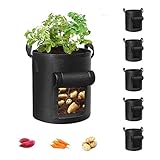
- Durable Material: Made of 300g thick non-woven fabric that can be reused for more than 3 years.
- Excellent Drainage: Breathable material ensures rapid drainage and provides ideal growth environment.
- Reinforced Handle: Strong polypropylene webbing with X-shaped stitching provides support.
- Preventing Root Circling: Good ventilation and breathability prevent root circling.
- Visualization Design: Visualization window allows you to determine when plants are mature for harvest.
12. Set pale planters against a dark boundary
A light-colored pot against a dark fence or wall creates a clear visual focal point. Choose the planter’s material and size for the plant and location as well as its appearance; a small pot may dry quickly or restrict roots. Leave room to access the container for watering.
13. Group Mediterranean-style herbs in terracotta
Rosemary, thyme, oregano, and sage can work together when their light and watering needs are compatible. Iowa State Extension advises grouping herbs with similar growing requirements; its container herb guide covers light, drainage, materials, and care. Terracotta is porous, so check the growing medium often rather than assuming it will stay moist as long as soil in a less porous pot.
Crashes, No Sound, or Screen Glitches?
Random freezes, missing sound and display glitches usually trace back to one bad driver. Find and replace yours safely.Free scan · under a minuteWindows Errors? Fix Them Before They Spread
Repair common Windows errors and clear accumulated junk for a smoother, more stable PC - no reinstall needed.Free scan · no reinstall14. Grow strawberries in a hanging basket
A basket puts strawberries within reach and uses vertical space instead of a floor-level planter. Choose a variety suited to container growing and a basket with drainage. Because baskets hold a limited amount of growing medium, check moisture frequently, especially in warm or windy weather.
Best Value

- STURDY FABRIC MATERIAL: Our fabric grow bags are made of high-quality, thickened non-woven fabric and features reinforced stitching, which is breathable, reusable and durable for long time use. With the fabric planter , your plants will grow well in your balconies, backyards, terrance or patios
- PROMOTE PLANT GROW HEALTH: The non-woven fabric garden bed provide 360-degree ventilation, allowing for optimal plant root growth by facilitating excess water drainage and air flow throughout the soil and roots. This design helps prevent root circling and promotes healthier, more vigorous plant growth
- 15 GALLON LARGE GROW BAGS: Our 15 gallon fabric raised planter diameter: about 23.5 inch/60cm, height: about 8 inch/20cm, offering a large area for your fun gardening. very suitable for indoor and outdoor planting, perfect solve the problem of limited garden space and poor garden soil
- EASY TO USE AND STORAGE: The Fabric Pots for Gardening are designed with 4 handles around it, which is easy to carry. No assembly required, which is the fastest and easiest way to start planting. When the growing season is over, simply empty the earth out of the Plant Container, fold it for storage and can be reused year after year
- WARM TIPS AND GUARANTEED : Please keep plants warm in winter and cooler in summer. We are responsible seller, If receives the fabric raised planting bed is not in a good condition or any unhappy with the purchasing, please contact us for support
15. Use an old ladder as a pot stand
Arrange pots on the steps of a sturdy ladder to create a vertical display. Stabilize the ladder, keep the load within its capacity, and position each plant according to its light needs. Put plants that need more sun where they will not be shaded by the pots above them, and leave enough access to water the upper steps safely.
Independent reader supportYour contribution helps us test, update, and keep practical guides available for everyone.What can you grow in a container garden?
Depending on sunlight, container depth, and local conditions, containers can hold vegetables, herbs, flowers, bulbs, and compact shrubs. Tomatoes and peppers need more direct sun than cool-season greens; root crops need enough depth for their roots; and herbs should be grouped only when their water and light preferences match. Virginia Tech’s container guide, Oregon State Extension’s vegetable guidance, and Iowa State Extension’s herb guide describe these differences.
How to choose the right idea for your space
- For very little floor area: Try a hanging basket, a ladder display, a pot wreath, or a tiered arrangement. Check the support and watering access before adding plants.
- For a sunny patio: Consider vegetables, strawberries, or flowering bulbs, provided the container has enough depth and volume for the plants you choose.
- For a partly shaded spot: Choose plants suited to the available light, such as some cool-season greens, rather than assuming every edible crop will thrive there.
- For a flexible seasonal display: Use removable nursery pots inside decorative covers or rotate a tabletop planter. These arrangements are easier to move and maintain than permanent plantings.
- For heavy or large containers: Decide on placement before filling, and keep a clear route for watering and care. A full pot may be difficult to move.
For mixed planters, combine plants with similar light and water requirements, then create visual variety through height, form, color, and texture. Virginia Cooperative Extension explains this principle in its container and raised-bed publication. A design is most successful when the arrangement is attractive and each plant can get the conditions it needs.
Quick Recap
Product prices and availability are accurate as of the date/time indicated and are subject to change. Any price and availability information displayed on Amazon at the time of purchase will apply.

