Some links on this page are affiliate links: if you buy through them we may earn a commission, at no extra cost to you.
Household appliances eased specific jobs—washing clothes, cleaning floors, keeping food cold, and preparing meals—but they did not make housework effortless or reach every household at once. Running water, electricity, cost, and changing expectations about cleanliness all shaped who could use them and how much work remained. These 13 examples trace that uneven shift, mainly through U.S. history, with museum examples from Australia and Britain.
How appliances changed household work
Powered household devices became practical as homes gained access to electricity and running water. That change unfolded over decades, not in one leap. A patent, a commercially successful machine, an electrically powered model, and widespread household adoption are different milestones; claims about which appliance was “first” depend on which milestone is meant.
As an Amazon Associate I earn from qualifying purchases.
The machines also addressed different kinds of effort. Washers agitated laundry, vacuums drew dirt from floors, refrigerators cooled food, and dishwashers directed water at dishes. But lower effort for one task did not automatically mean less total housework: appliances could also raise expectations for cleanliness or output.
13 appliances and the work they changed
1. Refrigerator
Before home refrigerators, ice boxes relied on harvested ice. History.com describes Alfred Mellowes devising a compact home refrigerator in 1915; after General Motors president William Durant acquired the struggling business, the Frigidaire design was refined for assembly-line production. This is one account of the compact home refrigerator’s development, not the sole origin of refrigeration. Museum collections also document later domestic compression refrigerators, including a 1930s example in the Science Museum Group catalogue.
#1 Best Overall

- AIRTIGHT LIDS & 3 GRATER ATTACHMENTS:The airtight lids that come with this mixing bowl set make it easy to store ingredients and leftovers without worrying about spills or leaks. 3.5qt had a removable lid inside the main lid, for adding contents or pairing it with your blender without removing the entire lid to prevent splash. This bowl set comes with 3 different grater attachments (slicing/grating/shredding) just shred or slice right into the bowl!
- NON-SLIP SILICONE BOTTOMS: The rubber on the bottom of the mixing bowls is for gripping and staying put which prevents sliding on the countertops when mixing and also protects the desk from high temperatures. ATTENTION: The stainless steel bowls needs to be cleaned in time after use, to avoid excess stains caused by rust, especially oil stains
- NESTING BOWLS & DISHWASHER SAFE: These kitchen serving bowls can be nested together and offer space-efficient storage in neat kitchen cupboards. The mirrored interior makes cleaning a breeze, This mixing bowl set also is dishwasher-safe, just put it in the dishwasher after use, and you will get a new bowl set. But pay attention that the lid is suitable for hand washing, as the heat of the dishwasher can warp them
- 6 SIZES BOWLS & EXTRA KITCHEN TOOLS SET: The range of sizes from 7QT down to 1QT. Each bowl comes with a QT label to make it easier to choose the right size, Bowl sizes fit on standard-size refrigerator shelves and cabinets. Comes with a brush, spatula, whisk, measuring spoons
- DURABLE STAINLESS STEEL: The stainless steel construction is durable. This bowl set is constructed of a mirror-finish interior and matte-finish exterior ensuring dent resistance and rustproof. Food-grade stainless steel will not corrode or produce spots after long time use, please attention that after each cleaning, it is necessary to dry the inside with a cloth to prevent the corrosion of the remaining water on the bowl
2. Dishwasher
Josephine Cochran’s design used water pressure to clean dishes rather than scrubbers. History.com dates her first patent to 1886. At the 1893 Chicago World’s Fair, the Garis-Cochran machine won an award, and Cochran’s factory opened by 1898. The late-19th-century machines cost $300 or more, according to History.com, and primarily served hotels and restaurants; the source says most U.S. families could not afford dishwashers until after World War II. The machine changed the mechanics of dishwashing, but price delayed its place in many homes.
3. Washing machine
Mechanical washing reduced the need to agitate laundry by hand. History.com describes Frederick Maytag’s hand-cranked washer in 1907, a powered version by 1911, and the 1922 Gyrofoam agitator washer with an aluminum tub. Museums Victoria documents a separately developed Syracuse “Easy” electric washer patented in 1912, which used vacuum cups. These examples show why a single “first washing machine” date can be misleading: designs and power sources developed along different paths.
4. Clothes dryer
History.com says the modern electric clothes dryer arrived soon after the early electric washing machines. Dryers addressed the work of hanging, monitoring, and bringing in laundry, although the available historical account does not establish a precise household adoption date or quantify time saved.
Rank #2

- Meal Prep MVP - A practical and innovative way to dice, slice, julienne, grate or spiralize your vegetables and fruits. With the Ultimate Chopper/Slicer & Spiralizer, preparing your favorite dishes for your whole family is no longer a chore. Made with premium materials like grade 420 stainless steel blades and food-grade bpa-free materials, it's the perfect tool to make home cooked meals easier and faster.
- 12 Diverse Blades - With nine interchangeable blades, the vegetable chopper offers the functionality of multiple kitchen tools all in one, unique kitchen gadget with a bonus adjustable Spiralizer for extra versatility. Make use of the 3 blade options of the Spiralizer for colorful veggie pasta, shapely salads, and gorgeous garnishes. The high-quality 2mm stainless steel slicer will create perfectly chopped onions, tomatoes, and peppers for salsa, or slice cabbage for coleslaw in no time.
- Innovative Design - Free-up countertop space with the Food Container. Use the Food Holder while cutting small vegetables and fruits. This prevents food from slipping while slicing it. It also makes it clean, safe, and easy to work with. No more hassles of washing and wiping. Dismantle it and just put it in dishwasher. Cleans easily in minutes with the complementary scrubbing fork. Its compact size allows you to store it almost anywhere.
- Improves Your Health And Saves Time – Busy lifestyles make us fall into the fast-food trap. It can take a lot of time and effort to dice, chop and slice the ingredients of a desired dish. Do not despair. Our multi-functional tool makes this process less time-consuming making it easier to add vegetables to your meals. That being said, you’re less likely to reach for unhealthy options. From now on, enjoy having more time for your family without missing out on any of the important nutrition.
- Live Customer Care – Talk to us via out toll-free number or live chat, not by email like our competitors. Mueller believes in making life easier, better and more enjoyable in all that we do. Our unparalleled 24/7 live telephone customer support is ready and waiting to assist with anything you need!
5. Vacuum cleaner
Vacuum cleaners mechanized floor cleaning through suction. History.com dates Ives McGaffey’s hand-cranked suction carpet-sweeper patent application to 1869 and describes James Murray Spangler’s electricity-driven cleaner; Hoover purchased the patent in 1908. Smithsonian records show that the Hoover Model 700, with an aluminum body, switch, and agitator brushroll, was made from 1926 to 1929. Mass production and sales did not take off until after the First World War. The Smithsonian also cautions that more exacting cleanliness expectations could make the promise of simpler housework illusory.
6. Electric iron
History.com dates Henry W. Seely’s electric-iron patent filing to 1882. The iron brought heat to the task of smoothing clothes, but a better work surface mattered too: Sarah Boone, a Black dressmaker and inventor, received a 1892 patent for an improved ironing-board design. The Library of Congress includes irons among the household technologies covered in its reference material.
7. Electric mixer
History.com identifies Black inventor Willie Johnson’s geared egg-beating device in 1884 and Rufus M. Eastman’s early electric mixer. By the early 20th century, the standing mixer had become a popular household innovation. It reduced repetitive effort in mixing and beating, though the historical account does not quantify how much time it saved.
Do these 3 things before closing this tab:
1Fix the driver behind crashes, sound loss and screen glitches2Repair Windows errors before they cause bigger problems3Scan for outdated or missing drivers - takes under a minuteRank #3

- POWERFUL BLENDING PERFORMANCE: With 700 watts of peak blending power and stainless steel Ice Sabre blades, this protein shake blender gives you all the power you need to make smoothies, protein shakes, frozen drinks and more.
- ULTRA-SMOOTH RESULTS WITH PATENTED WAVE~ACTION(R) SYSTEM: As you blend, ingredients are continuously forced down into the blades and circulated around the jar — thoroughly crushing the hardest foods with ease in this smoothie blender.
- SERVE WITH EASE: The spout on this countertop blender lets you pour contents into your glass without spills or drips, so serving with this electric blender is easy and mess-free.
- EASY TO CLEAN WITH DISHWASHER SAFE GLASS JAR, LID AND BLADES: This Hamilton Beach blender has a glass jar that holds 40 ounces; The jar, lid, and removable blades on the blender are all dishwasher safe.
- 12 BLENDING FUNCTIONS FOR MAXIMUM VERSATILITY: This multi-function kitchen blender has 12 functions controlled by 5 buttons on the easy-to-read control panel. It blends and crushes ice for smoothies and milkshakes, purees, dices, chops and more.
8. Cooking range
Electric cooking ranges appear in the Science Museum Group’s household-appliance catalogue. A range brought cooking functions together in a domestic appliance, but a museum record establishes that such examples existed—not how quickly they became affordable or common in every household.
9. Toaster
The DAR exhibition notes that the toaster helped define the electrically equipped modern home by the 1920s. Its contribution was narrow but familiar: it mechanized browning bread, rather than replacing the broader work of preparing a meal.
10. Microwave oven
Microwaves brought a different method of heating food into the home. The Science Museum Group catalogue includes a 1982 Sharp microwave and a 1990s Samsung microwave; the Smithsonian’s household exhibition also includes a microwave among objects used to explore domestic change. These records document examples and the category’s place in household history, not a universal adoption date.
Rank #4
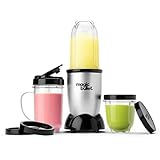
- The O.G. magic bullet: the tiny flavor vortex that started it all. This compact countertop wizard chop chop chops the freshest pico, whips up the creamiest milkshakes, and zhuzhes all your concoctions in basically zero seconds
- COMPACT SIZE: Not only is it fast and versatile, it’s also compact. This easy-to-use blender takes up way less countertop space than bulky full-size food processors and blenders
- EASY-TO-USE: Just load your ingredients into the cup, twist on the blade, line up the tabs and place on the power base
- POWER: High torque 250-watt motor powers the machine’s versatility. There’s no limit to the sauces, dips, drinks and snacks you can create
- HASSLE-FREE CLEANING - simply twist off the blade, rinse with soap and water, and put the cups in the top rack of the dishwasher. This item comes with a 1 year Limited Warranty
11. Twin-tub washing machine
The Science Museum Group catalogue includes a 1962 twin-tub washing machine. Its presence illustrates the variety of washer designs beyond the single machines often used in simplified invention timelines. The catalogue record does not establish how widespread this model or format was in households.
Recommended Free Tools
12. Early automatic washer
Museums Victoria describes the 1950s Bendix “Automatic Home Washer” as an early example of concern about water and energy use. The detail matters because labor-saving technology also has resource requirements: the household task may become easier while the machine’s consumption becomes part of the design question.
13. The electrically equipped kitchen
Appliances such as the toaster, range, and microwave changed how particular kitchen jobs were done, but they were not equally accessible. The DAR exhibition connects the toaster with the idea of an electrically equipped modern home by the 1920s; that image should not be mistaken for evidence that all homes had electricity or could afford the same devices. Infrastructure and household budgets determined which conveniences were actually available.
Best Value
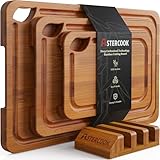
- 【Nature Bamboo for Lasting Strength】 Crafted from premium bamboo and treated with high-heat carbonization, this wood cutting board set resists warping, cracking, and water absorption. Stronger than standard cutting boards for kitchen, it protects knife edges and stays smooth through years of everyday use.
- 【Everyday Versatility with Natural Style】 Simplify daily meal prep with natural bamboo cutting boards for chopping, slicing, and serving. The natural bamboo grain adds a warm, elegant touch to your kitchen, making them a practical choice for everyday cooking and casual entertaining.
- 【Sized Right for Every Task】 The set includes 15×10, 12×8, and 9×6 in cutting boards to handle everything—whether you’re chopping veggies, carving roasts, or plating cheeses and breads. From small prep to large feasts, there’s always the perfect cutting board at hand.
- 【Dual-Sided with Deep Juice Grooves】 Each board is reversible: one side with deep grooves to catch juices, the other smooth for serving. Use them as charcuterie boards to present meats, cheeses, or fruit, or flip back for daily prep. Keeps countertops neat and your presentation stylish.
- 【Gift-Ready, Eco-Friendly Choice】 More than just another wood cutting board, this full set with storage stand makes a thoughtful gift for weddings, housewarmings, or holidays. Durable, sustainable, and elegant, it’s a versatile bamboo cutting board set every kitchen will appreciate.
Why labor-saving did not mean less work for everyone
Appliances required the conditions to use them: electricity for powered devices and, for many machines, a dependable water supply. Their cost also mattered. History.com’s account of Cochran’s dishwasher shows that an effective device could serve commercial users long before most U.S. families could afford one.
Expectations could rise alongside convenience. A vacuum might make it easier to clean floors, while also making more frequent or thorough cleaning seem achievable—or expected. Museums Victoria notes that appliance advertising’s promise of labor-saving was not entirely true. The sources do not provide a comparable figure for total household hours saved, so a precise claim about how much time these machines freed would overstate what is established.
The Tool Desk
Outbyte PC Repair FREEClear out junk files and repair common Windows errorsFree Scan →Outbyte Driver Updater FREEFix the driver behind crashes, sound loss and screen glitchesFind Drivers →What the history does—and does not—show
These 13 examples are an editorial selection, not a definitive ranking of the most important appliances. The historical record supports a more careful conclusion: appliances changed the effort, method, or pace of particular chores, while adoption depended on utilities, affordability, and household circumstances. Invention dates alone cannot tell us when a machine became ordinary, who could use it, or whether the total burden of housework fell.
Quick Recap
Product prices and availability are accurate as of the date/time indicated and are subject to change. Any price and availability information displayed on Amazon at the time of purchase will apply.

