The easiest way to maximize closet space is to treat it as a layout problem—not a container problem. First remove items that no longer belong, then measure the closet, use its vertical and door surfaces, separate daily clothing from seasonal storage, and buy organizers only for the bottleneck you can identify.
These 13 methods work for reach-in closets, wardrobes, and small walk-in closets. The right combination depends on your closet’s width, depth, ceiling height, rod placement, door clearance, and the types of clothing you store.
As an Amazon Associate I earn from qualifying purchases.
Before you start: identify the space you actually have
Do not begin by filling a cart with bins. Spend 15 to 20 minutes documenting the closet first.
Recommended Free Tools
- Empty and declutter it. Set aside items to keep, donate, repair, recycle, or discard.
- Measure the footprint. Record the interior width, depth, ceiling height, rod height, shelf depth, door clearance, and the location of trim, outlets, sloped ceilings, or other obstructions.
- Take a photograph. A quick photo makes it easier to see unused vertical space and plan an arrangement before installing anything.
- Find the main bottleneck. Is the problem short hanging space, folded clothes, shoes, accessories, or seasonal items? Solve that problem first.
- Check construction and hardware. Before adding a shelf, rod, hook, or wall-mounted rack, determine what it will attach to and follow the manufacturer’s installation and load instructions.
Product dimensions vary considerably. For example, IKEA lists its SKUBB six-compartment organizer at 13 3/4 inches wide, 17 3/4 inches deep, and 49 1/4 inches high. Measure before purchasing rather than assuming that a similarly named organizer will fit.
#1 Best Overall

- Unique Trapezoid Design: Our closet bins feature a unique trapezoid design with a lower front for easier visibility and access. The Homsorout shelf organizers now come in 10 new colours, offering more options for your space
- Sturdy Baskets Reinforced with thick cardboard for the sidewalls and bottom, these storage bins are sturdy and resistant to deformation. Delicate stitches enhance their sturdiness, preventing tears
- Sturdy Handle: Designed with two delicately stitched handles, these closet baskets are easy to carry and remove from shelves. They can be easily folded and stored when not in use, saving valuable space
- Premium Material: All our storage baskets for organizing are made of high-quality non-woven fabric, which is sturdy, and easy to clean. Homsorout cube organizer bins are an excellent choice to keep your space tidy
- Multipurpose Cubes: Measuring 16.53" L x 11" W x 7.87" H, these decorative storage boxes are ideal for storing clothes,towels, books, yarn, etc. Our fabric storage bins suitable for living room, bedroom, office, closets
1. Declutter before buying organizers
Organizers cannot create useful space if the closet is holding clothing you do not wear. Remove garments that no longer fit, are damaged beyond practical repair, duplicate something you already own, or have not been worn for a meaningful period.
Work from the top of the closet down, removing items as you go. This approach is consistent with closet-planning guidance from Home Depot: clean and edit the space before combining storage components. It also prevents a common failure mode—buying attractive containers that simply hide low-value clutter.
Keep a small “decide later” group if necessary, but give it a deadline. If those items remain untouched after a month or a full change of season, reassess them.
2. Measure the closet before choosing products
Measure the usable space, not just the outside dimensions. Write down:
- clear width between the side walls;
- usable depth from the back wall to the door or opening;
- ceiling height and the height of the existing shelf;
- distance between the floor, shelf, and hanging rod;
- shelf width, depth, and thickness;
- door thickness and the clearance behind the door;
- baseboards, trim, light fixtures, vents, and other obstructions.
Allow room for the closet door to open and for hangers, baskets, or pull-out racks to move. A product that fits the width may still block the door or protrude too far into the room.
3. Use the full vertical height
The area above an existing shelf is often the least-used part of a closet. Use it for luggage, spare bedding, seasonal clothing, hats, or accessories that do not need daily access.
Use labeled soft cases or lidded containers so the upper shelf does not become an unmarked pile. Put the least frequently used items highest, and leave everyday clothing within comfortable reach.
For a larger redesign, modular wardrobe systems can combine frames, rails, shelves, pull-out trays, and interior fittings. IKEA describes systems such as PAX, KOMPLEMENT, and BOAXEL in this way, but compatibility depends on the specific system, wall, and dimensions. Treat a modular system as a layout project rather than assuming that components from different lines will interchange.
4. Install a second hanging level
A lower rod or closet rod extender can turn one tall hanging section into two shorter sections. This is particularly effective for shirts, blouses, skirts, children’s clothes, and trousers folded over a hanger.
It is not a universal solution. A second rod may reduce the clearance needed for long dresses, coats, robes, or suits. Before installing one, measure the longest garments in the section and leave enough room for them to hang without dragging or bunching.
Rank #2
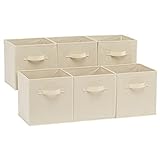
- INCLUDES SIX CUBES: Keep your home tidy and organized with this set of six cloth storage cubes
- EASY PORTABILITY: Each collapsible fabric storage cube comes with one sewn-in fabric handles.
- STURDY YET LIGHTWEIGHT: Made from lightweight yet durable fabric, these cube storage bins offer both strength and breathability
- MULTIFUNCTIONAL USE: These fabric cube organizer bins can be used as either open-top bins or as drawers in a storage-cube organizer (not included)
- STORAGE SPACE: Each collapsible fabric cube storage bin is suitable for organizing a variety of items
Also check the existing rod’s construction, the extender’s width range, and the manufacturer’s installation or load guidance. A rod extender is useful only if the closet can safely support the added hanging weight.
Free tools Windows power users keep installed
One-click scans. No signup required.
5. Add a hanging compartment organizer
A hanging closet organizer uses the vertical air space below the existing rod. It can hold folded shirts, sweaters, scarves, small bags, shoes, or accessories without consuming another section of floor or shelf space. Some hanging organizers can also fold flat when not in use.
This is a good choice when the closet has unused height but not enough room for another fixed shelf. Choose the organizer by its actual width, depth, height, compartment size, attachment method, and stated load guidance. Confirm that it will not interfere with the door or with clothing hanging beside it.
For shoppers comparing options, a hanging closet organizer is the relevant product category to search. Do not assume that a six-compartment model is automatically better: large compartments may suit sweaters, while smaller compartments may work better for accessories.
6. Divide wide shelves
Wide shelves often waste space because stacks of clothing lean into one another. Shelf dividers separate sweaters, jeans, handbags, towels, or linens into stable categories and make each stack easier to remove.
The Tool Desk
Outbyte Driver Updater FREEScan for outdated or missing drivers - takes under a minuteDriver Scan →Outbyte PC Repair FREERepair Windows errors before they cause bigger problemsFix Now →A divider separates items from side to side; it does not create another level of storage. If the shelf has unused height above a stack, a shelf riser may be the better solution. If the problem is collapsing stacks spreading across the shelf, use dividers.
Before choosing closet shelf dividers, measure the shelf thickness and depth and check whether the product clamps on, slides over, or requires installation. Keep heavy items on a properly supported shelf rather than relying on a divider to carry structural weight.
7. Use the back of the door
The back of a closet door can provide storage for shoes, belts, scarves, handbags, or other small items. An over-the-door shoe organizer is especially useful when footwear is occupying the closet floor or taking over a shelf.
Do not assume every door-mounted product fits every door. Check door thickness, hook clearance, the gap between the door and the frame, and whether the pockets or rack will strike a wall when opened. For footwear, pocket dimensions also matter: bulky shoes and tall heels may not fit the same way as flats or sandals.
Quick wins for a faster PC:
Fix the driver behind crashes, sound loss and screen glitchesFind Drivers →Clear out junk files and repair common Windows errorsFree Scan →An over-the-door shoe organizer is best for light-to-moderate, frequently accessed items when the door and hardware are compatible. Avoid overloading the door or using adhesive hooks for weight they were not designed to support.
8. Store shoes according to frequency of use
Sort shoes by how often and when they are worn:
- Everyday shoes: keep them at eye or waist level, near the closet opening.
- Less-used shoes: use higher shelves or stackable storage if they remain accessible.
- Seasonal and special-occasion shoes: place them in labeled boxes or a higher, less convenient zone.
Possible formats include hanging organizers, stackable shoe boxes, drop-front boxes, rolling racks, narrow shoe racks, and shoe cabinets. Choose based on the available width and depth, not just the number of pairs a package claims to hold. Leave enough clearance for the door and for removing a pair without shifting the entire row.
9. Replace wasted floor space with a narrow rack or pull-out solution
A closet floor should not become a permanent landing zone for loose shoes, bags, and laundry. If there is a narrow strip of usable floor, fit it with a low basket, narrow shoe rack, or rolling rack sized to that strip.
Rank #3
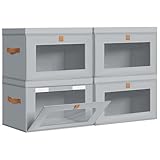
- Front Opening:Even if the storage bins is placed high, you can quickly access items by simply opening the front cover without moving it.Suitable for living room, bedroom, closet, utility room, under bed, office
- PVC Visible Window: The transparent PVC window of the decorative storage boxes with lids allows you to clearly see the stored items, suitable for seasonal item storage, crafts or office necessities
- Sturdy & stackable: The storage bins for shelves are made of fabric with high-quality cardboard at the bottom, which maintains shape and structure, can withstand heavy objects, and can be stacked for storage, and keep items neat and organized
- Double Handles: The fabric storage bins with lids uses 2 handles with widened stitching, which are not easy to tear, reducing hand pressure and making it easy to move around the room
- Large Capacity: The clothes storage organizer measures 16.5"L x 11.8"W x 11"H, and its spacious capacity can hold more items such as blankets, sweaters, pet supplies, books, yarn, office supplies, etc
A freestanding rack can be rolled out for access, but it still needs sufficient clearance and a stable base. Measure around baseboards and door swings, and verify that the rack will not tip when partly loaded or pulled forward. If the remaining floor space is too shallow for a rack, a door-mounted or shelf-based solution may be safer and more practical.
What’s actually slowing this PC down?
Pick the symptom - the matching free tool is one click away.
10. Organize drawers and small accessories with compartments
Small items consume disproportionate amounts of time and space when they are mixed together. Use compartments or small bins for socks, underwear, belts, jewelry, ties, and other accessories.
Group items by type and keep the most frequently used categories in the top drawer or the easiest-to-reach bin. Compartments also prevent a drawer from becoming a single deep pile that must be emptied to find one item.
Foldable fabric boxes, including IKEA’s SKUBB boxes, are designed for categories such as socks, lingerie, accessories, belts, and jewelry and are available in multiple sizes. Measure the drawer or shelf first; a foldable box is only useful if its assembled dimensions leave room to open the drawer or remove neighboring bins.
11. Use soft storage for seasonal clothing
Move out-of-season clothing out of prime closet positions. Zippered fabric cases or lidded containers can go on an upper shelf, under the bed, or at the back of a wardrobe. Label each case on at least two sides so you can identify its contents without opening several containers.
Do these 3 things before closing this tab:
1Clear out junk files and repair common Windows errors2Fix the driver behind crashes, sound loss and screen glitches3Repair Windows errors before they cause bigger problemsIKEA describes SKUBB storage cases as suitable for wardrobes or under-bed storage and notes that they are intended to protect contents from dust and dirt, with ventilation mesh. Whatever container you use, store garments clean and completely dry. No container can guarantee protection from mildew in a damp room, so address moisture problems separately and avoid sealing damp clothing.
Do not pack seasonal items so tightly that they are difficult to remove or inspect. Keep a small amount of room for folding and add a brief contents list to the label.
Independent reader supportYour contribution helps us test, update, and keep practical guides available for everyone.12. Create a visible accessory zone
Belts, scarves, handbags, hats, and jewelry are easier to use when they are visible and assigned to a specific zone. Options include hooks, a pegboard, a narrow wall rack, or the side of a shelving unit.
Place the accessory zone near the area where you dress, but do not obstruct the door or make hanging clothes difficult to remove. Use properly secured hardware for wall-mounted items. Do not place heavy handbags or other concentrated loads on adhesive hooks unless the hook and surface are specifically rated for that use.
Rank #4
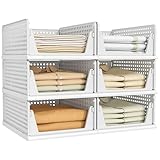
- 【Multi-Functional】: The closet shelves are convenient to store your lightweight items such as shoes, clothes, toys, snacks, file etc. Suitable for bathroom, kitchen, living room, office.
- 【Assembly Easily & Stackable】: Easy to set up, follow the steps in pictures. Adjust to your own liking by stacking the perfect number to fit your own space. Set of 6 wardrobe clothes organizer can be stackable which make home space organized, max the use of vertical space. You can stack multi-layer wardrobe storage organizer according to your needs freely.Dimensions of each when set up: 17" x 12.8" x 6.8" (L x W x H).Note: The depth of your cabinet should be no less than 17 inches.It weighs 10 pounds in total.
- 【Slide Rails Design】: The slide rails at the bottom of closet organizer box is convenient, so you can easily pick item even it's in the most inner.【 NOTE: These bins can only be pulled out up to halfway, so they can't slide out completely like a drawer. If you want to use them like a drawer cabinet, try leaning them against the wall so the wall can support part of them.】
- 【Durable & Sturdy】: These storage drawers made of PP plastic which is waterproof,only wipe it with wet cloth for daily cleaning.
- 【Customer Service】: We strive to provide you with the highest quality product and the best customer experience. If you have any problem, we will solve it within 12 hours.
A pegboard can be flexible because hooks and small shelves can be rearranged. IKEA’s walk-in wardrobe guidance illustrates this type of accessory storage, but modifying a manufacturer’s product may affect its warranty or return rights. Check the product instructions before drilling, cutting, or attaching components.
13. Anchor or secure tall furniture and inspect hardware
More storage is not an improvement if a dresser, wardrobe, cabinet, or other tall unit can tip. The U.S. Consumer Product Safety Commission identifies clothing storage units as a tip-over hazard and recommends paying attention to stability and anchoring practices.
Follow the furniture manufacturer’s instructions and use the specified anti-tip hardware or anchoring method. The correct attachment depends on the furniture, wall construction, and location. Do not substitute an improvised restraint and assume it is universally safe.
Inspect existing restraints periodically, especially after moving furniture or changing the wall arrangement. CPSC also reported a 2024 recall involving certain plastic furniture tip-restraint kits, so check whether an existing kit is affected before relying on it. Keep heavy items low, do not allow children to climb furniture, and use current manufacturer and CPSC instructions in preference to generic closet advice.
A practical order for putting the plan into action
- Edit the inventory. Remove items that no longer belong.
- Measure and photograph the closet. Record all clearances and obstructions.
- Map zones. Reserve the easiest-to-reach locations for daily clothing and shoes.
- Use existing vertical space. Add a second hanging level, upper-shelf storage, or a hanging compartment organizer where measurements support it.
- Stabilize categories. Add shelf dividers, drawer compartments, or a shoe solution only where items are collapsing or spreading.
- Move seasonal items out of prime space. Label cases and store garments clean and dry.
- Install carefully. Secure wall-mounted hardware and anchor tall furniture according to the manufacturer’s instructions.
- Reassess after one week. If an organizer is difficult to access, items will migrate back to the floor. Move or remove it rather than allowing the system to fail.
The goal is not to fill every inch. Leave enough clearance to remove clothing, open doors and drawers, inspect stored items, and maintain safe, stable furniture. A smaller number of correctly sized organizers will usually outperform a crowded collection of containers.
Frequently Asked Questions
What is the fastest way to create more closet space?
Declutter first, then use unused vertical space. A second hanging level works well for short garments, while a hanging compartment organizer can add folded-item storage below an existing rod. Measure before buying either product.
Are shelf dividers and shelf risers the same thing?
No. Shelf dividers separate stacks from side to side and stop them from spreading or collapsing. Shelf risers create another vertical level. Choose dividers for wide, unstable stacks and risers when there is unused height above the shelf.
Will an over-the-door shoe organizer fit any closet door?
No. Check the door thickness, hook clearance, frame and wall clearance, door swing, and pocket dimensions. Bulky shoes and tall heels may require a different storage format.
PC Slower Than It Used to Be?
A free scan shows the junk files, broken settings and background clutter dragging Windows down - then fixes them in one click.Free scan · Windows 10 & 11Crashes, No Sound, or Screen Glitches?
Random freezes, missing sound and display glitches usually trace back to one bad driver. Find and replace yours safely.Free scan · under a minuteHow should seasonal clothes be stored?
Store garments clean and completely dry in labeled zippered fabric cases or lidded containers. Place them on upper shelves, under the bed, or at the back of a wardrobe. Containers can reduce dust, but they do not guarantee protection from mildew in a damp environment.
The Bottom Line
Maximize closet space in this order: remove what no longer belongs, measure the usable footprint, reclaim vertical and door space, create zones by frequency of use, and add only the organizers that solve a specific problem. Check fit, clearance, load guidance, and furniture stability before installation.
Quick Recap
Product prices and availability are accurate as of the date/time indicated and are subject to change. Any price and availability information displayed on Amazon at the time of purchase will apply.

