Free tools Windows power users keep installed
One-click scans. No signup required.
The most effective natural slug control is a combination, not a single miracle remedy. Confirm that slugs are causing the damage, remove their damp hiding places, water in the morning, hand-pick them after dark, and protect seedlings and small beds with physical barriers. Traps can help reduce numbers, while biological controls or a labeled lower-risk bait are options for persistent hotspots.
Complete eradication is rarely realistic—or necessary. Slugs are part of the garden food web and help decompose organic matter. The practical goal is to protect seedlings, vegetables, and especially vulnerable ornamentals while keeping the rest of the garden in balance.
As an Amazon Associate I earn from qualifying purchases.
Before you treat: make sure slugs are the problem
Slug damage typically appears as irregular holes, ragged edges, or missing sections of tender plant tissue. You may also find shiny slime trails. Slugs are most active at night and during cool, wet weather, particularly in damp shade.
Do these 3 things before closing this tab:
1Clear out junk files and repair common Windows errors2Scan for outdated or missing drivers - takes under a minute3Repair Windows errors before they cause bigger problemsCheck the garden with a flashlight after sunset, or look beneath leaves, pots, boards, stones, dense weeds, and thick plant debris. Caterpillars, beetles, other insects, and plant diseases can also cause holes, so identifying the pest first prevents wasted effort.
#1 Best Overall

- Practical Garden Protection: this set includes 10 reusable slug and snail traps, providing enough coverage to help manage slug and snail activity across your garden; Ideal for reducing plant damage and protecting flowers, vegetables, and garden beds in a simple, practical way
- Compact Size with Pentagonal Lid Design: each snail trap measures about 3.86 x 4.41 inches/ 9.8 x 11.2 cm; The pentagon-shaped lid helps keep bait protected while allowing snails and slugs to crawl in easily; Compact and low-profile, the traps won't take up much space in your garden
- Reusable & Weather Resistant: made from sturdy PP plastic, these slug traps are odorless, waterproof, and resistant to deformation; Designed for repeated outdoor use, they can withstand rain and moisture, making them a reliable choice throughout the growing season
- Easy to Use with Common Baits: simply add beer, yeast solution, or other suitable attractants into the trap, then place it near affected plants; The simple structure allows for easy setup, cleaning, and refilling, making garden maintenance more convenient
- Various Usage for Gardens & Planting Areas: suitable for gardens, vegetable patches, orchards, greenhouses, and farms, these plastic snail catchers help gardeners and growers manage snail and slug problems without complicated tools or equipment
Once you have confirmed slugs, begin with the least disruptive measures below. The recommended sequence is to change the habitat first, then remove active slugs and add targeted protection where damage continues.
1. Hand-pick slugs after dark
For a small or moderate infestation, hand-picking is one of the simplest and most dependable methods. Go out after sunset or early in the morning when slugs are active. Inspect the undersides of leaves and the soil around damaged plants, then remove every slug you find.
Drop them into soapy water or place them in a sealed container for disposal. Gloves are optional but useful if you dislike handling slimy pests. Repeat the inspection nightly for several nights rather than expecting one collection to solve the problem. Once numbers fall, switch to less frequent monitoring.
The Tool Desk
Outbyte PC Repair FREEClear out junk files and repair common Windows errorsFree Scan →Outbyte Driver Updater FREEScan for outdated or missing drivers - takes under a minuteDriver Scan →A headlamp makes both hands available, and waterproof gardening gloves can make repeated nighttime checks more comfortable. Neither is essential, but both are practical tools for this method.
2. Make shelter traps from boards or cardboard
Slugs seek cool, dark shelter during the day. Use that behavior to create an easy-to-check trap: place a flat board, shingle, piece of damp cardboard, or folded newspaper near damaged plants in the evening.
Inspect the underside the following morning, remove the slugs, and reset the trap. Check it daily while numbers are high. These shelters do double duty as monitoring stations: if they are consistently occupied, you know where control efforts should be concentrated.
Do not leave unnecessary boards, pots, stones, or thick debris scattered around the garden once you have finished trapping. Otherwise, you may simply create more daytime refuges.
Quick wins for a faster PC:
Scan for outdated or missing drivers - takes under a minuteDriver Scan →Repair Windows errors before they cause bigger problemsFix Now →Fix the driver behind crashes, sound loss and screen glitchesFind Drivers →3. Use beer or yeast traps
Sink a container into the soil so its rim is approximately level with the surrounding ground. Fill it with beer, or use a yeast-and-water mixture. The fermenting odor attracts slugs, which may enter and drown.
beer traps have a limited attraction range, so several may be needed around a heavily damaged bed. They also require regular emptying and refilling. Position or cover them so children and pets cannot drink from them, and avoid treating a trap as a substitute for removing the damp hiding places nearby.
If you prefer a ready-made option, a slug trap for garden can make the container-and-maintenance routine easier. Choose a design that is stable, easy to empty, and positioned where pets cannot access the contents. A trap is an optional tool—not a guaranteed whole-garden solution.
4. Water in the morning, not at night
Water plants early in the day so leaves, mulch, and the soil surface have more time to dry before slugs become active at night. Apply water at the root zone with drip irrigation, a soaker hose, or careful hand watering where practical.
Rank #2

- Dark Green Slug Trap
- Slug Trap 7.137 Inch 4.446 Inch 4.212In
- Green Ceramic Slug Trap
- No Assembly Required
Avoid routinely wetting foliage and avoid leaving the bed surface damp overnight. Irrigation equipment will not eliminate slugs by itself, but morning root-zone watering removes one condition that favors them. It can also reduce the amount of time plants remain wet, which is useful for general garden health.
5. Remove damp hiding places
Reduce the shelters slugs use during the day. Remove unnecessary boards, stones, pavers, pots, dense weeds, fallen leaves, and excessive plant debris from around susceptible crops. Thin crowded growth and prune low foliage where the plant can tolerate it.
In persistently wet areas, improve drainage if possible. Do not strip away every piece of organic matter: compost and appropriate mulch support soil health. The aim is to remove excessive, constantly damp cover immediately around vulnerable plants while retaining a well-managed growing environment.
6. Improve sunlight and air circulation
Where the plants permit it, open overcrowded beds, stake sprawling growth, prune low branches, and avoid dense ground-level vegetation around seedlings. Better sunlight and air movement can make the planting area less favorable to slugs by reducing cool, lingering moisture.
What’s actually slowing this PC down?
Pick the symptom - the matching free tool is one click away.
This is a habitat adjustment, not a reason to expose shade-loving plants to damaging conditions. Preserve the light and moisture requirements of the plants you are growing. A well-designed bed may still contain shady areas; focus on the specific hotspots where slug damage is occurring.
7. Protect containers and small beds with a physical barrier
Physical barriers are most practical around containers, raised beds, propagation areas, and other small spaces that can be inspected thoroughly. Copper tape, foil, or copper flashing may deter slugs in some installations, but the barrier must be continuous and wide enough that a slug cannot bridge it.
Clean the outside of the container or bed first and remove any slugs already inside. Seal gaps at corners, overlaps, supports, and drainage points. A broken strip is not a complete barrier.
Keep expectations realistic. Results vary with the design, cleanliness, width, weather, slug pressure, and garden conditions. A controlled trial by the Royal Horticultural Society found no reduction in slug damage from several tested barriers, including copper tape, eggshells, sharp grit, bark mulch, and wool pellets. Copper is therefore best treated as a targeted experiment for a small protected area, not a guaranteed garden-wide fix.
If you try it, copper slug barrier tape is the relevant product category for containers and raised beds—but do not buy it expecting it to solve an open garden on its own.
8. Skip eggshells, coffee grounds, and similar folk barriers
Crushed eggshells and coffee grounds are often recommended as natural slug repellents. However, available horticultural guidance has not shown them to be dependable deterrents. The RHS garden-realistic trial also found no reduction in slug damage from eggshells and several other rough-textured materials.
Rank #3

- Effective Slug & Snail Defense: Copper Stopper creates a powerful barrier against slugs and snails, serving as a slug repellent for garden beds in a pet-safe solution.
- Unpleasant Sensation: This innovative copper tape for slugs serves as a natural & eco-friendly plant pest control by creating an unpleasant sensation that deters them from crossing.
- Versatile Application: Ideal to repel slugs & snails from greenhouse benches, raised flower beds, & flower boxes without the use of plant guards for potted plants.
- Non-Toxic & Pet Safe: GONZO is committed to providing safe & pet-friendly solutions. Protect your plants without compromising safety for pets with this pet safe slug tape & snail barrier.
- Easy-to-Use: Tear off the paper backing and apply the Copper Stopper Tape, making it a convenient and easy-to-use slug barrier.
Used coffee grounds and eggshells may have other composting or soil-management uses, but spreading them around plants should not be presented as reliable slug control. The same caution applies to claims about sand, grit, wool pellets, or rough mulch: texture alone is not a proven protection strategy.
9. Treat diatomaceous earth as unreliable outdoors
Diatomaceous earth can abrade soft-bodied pests when it is dry. In an ordinary garden, however, rain, irrigation, dew, and humidity quickly compromise the dry, continuous band it would require. University horticultural guidance generally describes outdoor use as ineffective or difficult to maintain under normal conditions.
If you use it at all, understand that it would need repeated replacement after moisture and should not be treated as a permanent barrier. “Food-grade” does not mean every use is risk-free; avoid breathing dust, follow the product directions, and keep it away from children, pets, and unintended areas.
10. Choose less-susceptible plants and protect seedlings
Seedlings and plants with tender, succulent foliage are often the first to suffer serious damage. Where they suit your climate, soil, light, and design, consider plants that regional extension services identify as less susceptible, such as some grasses, ferns, sage, rosemary, lavender, yarrow, coneflowers, and sedums.
No plant list is universal. Susceptibility varies by species, growing conditions, local slug species, and population pressure. Even a relatively resistant plant can be damaged during a wet season.
For valuable or vulnerable young crops, use a garden row cover for seedlings or suitable seedling-protection mesh. Install it so slugs cannot crawl underneath, and monitor the plants inside. Covers may need to be removed or opened for pollination, watering, ventilation, and normal plant growth. They are particularly useful while plants are small and most vulnerable.
Recommended Free Tools
11. Encourage natural enemies—without importing problem species
Ground beetles, rove beetles, fireflies, toads, snakes, shrews, birds, and ducks may all consume slugs. Reduce unnecessary pesticide use, maintain suitable habitat, and avoid indiscriminately disturbing predators that already live in or around the garden.
Do not release nonnative predatory snails or other organisms without local regulatory guidance. For example, decollate-snail releases are geographically restricted in California because of potential effects on native and endangered mollusks. Introducing a predator can create a new ecological problem rather than solving the original one.
Independent reader supportYour contribution helps us test, update, and keep practical guides available for everyone.12. Reserve biological controls or labeled bait for persistent hotspots
If habitat changes, hand-picking, traps, and physical protection have not adequately protected a high-value area, consider a final control step rather than treating the entire property routinely.
Rank #4
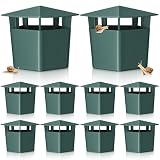
- Practical Garden Protection: this set includes 10 reusable slug and snail traps, providing enough coverage to help manage slug and snail activity across your garden; Ideal for reducing plant damage and protecting flowers, vegetables, and garden beds in a simple, practical way
- Compact Size with Pentagonal Lid Design: each snail trap measures about 3.86 x 4.41 inches/ 9.8 x 11.2 cm; The pentagon-shaped lid helps keep bait protected while allowing snails and slugs to crawl in easily; Compact and low-profile, the traps won't take up much space in your garden
- Reusable & Weather Resistant: made from sturdy PP plastic, these slug traps are odorless, waterproof, and resistant to deformation; Designed for repeated outdoor use, they can withstand rain and moisture, making them a reliable choice throughout the growing season
- Easy to Use with Common Baits: simply add beer, yeast solution, or other suitable attractants into the trap, then place it near affected plants; The simple structure allows for easy setup, cleaning, and refilling, making garden maintenance more convenient
- Various Usage for Gardens & Planting Areas: suitable for gardens, vegetable patches, orchards, greenhouses, and farms, these plastic snail catchers help gardeners and growers manage snail and slug problems without complicated tools or equipment
Slug-parasitic nematodes
Nematodes in the genus Phasmarhabditis are a genuine biological-control option in some markets. Availability, labeled species, application timing, soil conditions, and local effectiveness vary. They are not universally available or guaranteed, so check that the product is legally sold and labeled for your location and target pest.
Windows Errors? Fix Them Before They Spread
Repair common Windows errors and clear accumulated junk for a smoother, more stable PC - no reinstall needed.Free scan · no reinstallOutdated Drivers Are Slowing You Down
One free scan finds every outdated or missing driver and matches the right update for your exact hardware.Free scan · exact hardware matchLower-risk labeled bait
Where permitted and appropriate, a labeled iron-phosphate or ferric-sodium-EDTA slug bait may be considered after nonchemical measures fail. These products are generally described by extension sources as lower-risk than metaldehyde, but “lower-risk” does not mean harmless. The product label controls where, how, and how much you may apply.
Read the current label before use. Follow directions for application rate, harvest intervals, children, pets, wildlife, waterways, and storage. Formulations and registration can vary by state or other jurisdiction. Never assume that every product with a similar ingredient has identical instructions.
Metaldehyde deserves particular caution: EPA labeling warns that ingestion can be fatal to dogs and other pets. Do not use it casually where pets can reach treated areas, and do not make it the default recommendation for a naturally managed garden.
A practical slug-control sequence
- Confirm the pest. Look for slime trails and inspect after dark.
- Remove the worst shelters. Clear excess debris, dense weeds, and unnecessary objects near damaged plants.
- Change irrigation. Water in the morning at the root zone.
- Hand-pick repeatedly. Check nightly for several nights, then monitor less often as numbers decline.
- Add shelter traps. Use boards or damp cardboard to concentrate daytime hiding slugs.
- Use beer traps selectively. Add them where regular emptying and refilling is practical.
- Protect hotspots. Use a continuous barrier around a small bed or container, or cover vulnerable seedlings.
- Review plant choice. Replace persistently damaged plants with better-suited, less-susceptible options where appropriate.
- Support predators. Avoid unnecessary broad-spectrum pesticide use and do not introduce nonnative species.
- Escalate only if necessary. Consider a permitted biological control or labeled lower-risk bait for remaining hotspots.
What not to do
- Do not promise permanent eradication. Slugs are normal garden organisms and new individuals can move in.
- Do not rely on eggshells, coffee grounds, sand, grit, or wool as proven repellents.
- Do not present copper tape as universally effective.
- Do not spread salt around plants; it can increase soil salinity and damage soil and vegetation.
- Do not assume iron-phosphate bait is risk-free or that all brands share the same label.
- Do not use metaldehyde as a casual recommendation, particularly where pets can access the treated area.
- Do not release predatory snails or other organisms without checking local rules and ecological risks.
Frequently Asked Questions
What is the fastest natural way to reduce slugs?
For a small or moderate infestation, inspect after dark and hand-pick slugs repeatedly. At the same time, remove damp shelters and begin watering in the morning. These steps address both the slugs currently feeding and the conditions that help them hide.
Do coffee grounds or eggshells keep slugs away?
They should not be relied upon. Horticultural guidance and a garden-realistic RHS trial did not find them to be dependable slug deterrents.
Does copper tape really work on slugs?
It may deter slugs in some contained installations, but results are inconsistent. The strip must be continuous, sufficiently wide, clean, and free of bridges. Copper tape is more sensible around a container or small raised bed than across an open garden.
Are beer traps safe around pets?
They should be covered or placed where pets and children cannot drink from them. Empty and refill them regularly, and treat the contents as a pest-control material rather than leaving an accessible open container.
What should I use if natural methods are not enough?
First protect the specific hotspot with hand-picking, habitat management, traps, barriers, or row cover. If damage remains unacceptable, a legally labeled slug-parasitic nematode or iron-phosphate or ferric-sodium-EDTA bait may be considered. Follow the current product label and all child, pet, wildlife, waterway, and harvest precautions.
The Bottom Line
Start with confirmation, moisture management, repeated hand-picking, and removal of damp hiding places. Add shelter traps and protect only the plants or beds that need it. Barriers and beer traps can help when carefully installed and maintained, but eggshells, coffee grounds, salt, and outdoor diatomaceous earth are poor bets. Reserve biological controls or a labeled bait for persistent hotspots, and judge success by healthy plants—not by the unrealistic goal of eliminating every slug.
Quick Recap
Product prices and availability are accurate as of the date/time indicated and are subject to change. Any price and availability information displayed on Amazon at the time of purchase will apply.

