Quick wins for a faster PC:
Repair Windows errors before they cause bigger problemsFix Now →Fix the driver behind crashes, sound loss and screen glitchesFind Drivers →Some links on this page are affiliate links: if you buy through them we may earn a commission, at no extra cost to you.
River birch is the best all-around choice for many eastern and central U.S. landscapes, especially where summers are hot or the soil stays wet. Paper birch is the better-known white-barked classic, but it needs a cooler, consistently moist site. Other birches offer compact size, unusual bark, long life, or strong native-plant value—but none is ideal everywhere.
If you are choosing a tree for a new home, construction project, or landscape renovation, select the site first and the bark color second. Summer heat, soil moisture, drainage, mature size, soil pH, and bronze birch borer risk matter more than a nursery photograph. The list below includes both birch species and named cultivars, because a compact river birch cultivar can be a far better fit for a small yard than a full-size species.
As an Amazon Associate I earn from qualifying purchases.
Birch trees at a glance
| Birch | Approximate mature scale | Best use | Main caution |
|---|---|---|---|
| River birch | 40–70 feet | Moist soil, rain gardens, hot-summer regions | Chlorosis can develop in alkaline soil, particularly above about pH 6.5 |
| Heritage river birch | 45–50 feet tall × 30–35 feet wide | Large landscapes needing attractive peeling bark | Too large for many small lots |
| Dura-Heat river birch | Full-size river-birch scale; verify the cultivar label | Heat-prone sites where river birch is appropriate | Still needs adequate moisture and growing room |
| Fox Valley river birch | About 10 feet tall × 12 feet wide | Small yards and compact plantings | Do not assume every nursery dwarf has the same dimensions |
| Paper birch | Medium to large tree | Cool, moist northern landscapes and white bark | Heat and drought increase stress and borer risk |
| Gray birch | Small, narrow-growing tree | Naturalistic groupings and smaller Northeast properties | Still needs protection from severe heat and drought |
| Yellow birch | About 70–80 feet | Cool woodland edges and mountain landscapes | Slow-growing and sensitive to compaction, heat, and drought |
| Sweet birch | About 40–75 feet | Moist, fertile woodland settings in eastern North America | Unsuitable for compacted, drought-prone ground |
| European white birch | Medium to large, narrow or pyramidal tree | Cool northern gardens with acidic, well-drained soil | Highly susceptible to bronze birch borer |
| Japanese white birch | ‘Fargo’ Dakota Pinnacle: about 35 feet × 12 feet | Narrow vertical accents | Borer susceptibility and drought stress |
| Himalayan birch | Varies by cultivar; some weeping forms reach about 4–8 meters | Premium white bark and winter interest | High borer risk; requires a cool, well-maintained site |
| Water birch | Usually under about 33 feet | Streams, moist mountain sites, and smaller western landscapes | Match it to local elevation, water, and native-plant suitability |
Dimensions are estimates, not guarantees. Cultivar, nursery stock, climate, soil, and maintenance can all change the final size. Before buying, confirm the scientific name, cultivar, mature dimensions, and regional recommendations on the plant label.
1. River birch (Betula nigra)
River birch is the most dependable general recommendation in this group for much of the eastern and central United States. It handles wet or poorly drained soil better than most birches, performs in full sun, and is relatively resistant to bronze birch borer. That combination makes it particularly useful for rain gardens, streamside properties, damp lawns, and hot-summer locations where paper birch often struggles.
#1 Best Overall
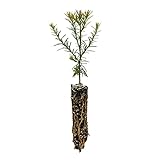
- Grow the world's tallest tree species!
- Seed-grown on California's Redwood Coast
- Transplanting and care instructions included
- Trees can provide a natural barrier against high winds, temperatures, noise pollution and soil erosion, all while benefiting local air quality, wildlife and property values — a Jonsteen seedling will only grow in value and beauty!
The bark exfoliates in layers of tan, salmon, copper, gray, and cream rather than producing the clean, bright white trunk associated with paper or Himalayan birch. Its mature size—roughly 40 to 70 feet—still makes it a substantial tree, so measure the available planting space before selecting it for a new landscape.
River birch is not a license to ignore soil conditions. It prefers a cool, consistently moist root zone, and chlorosis can occur in alkaline soils, especially when pH is above approximately 6.5. Correct the soil or select another tree rather than expecting watering alone to solve a pH problem. Its borer resistance is also relative, not immunity; drought, root injury, and poor planting conditions can still weaken it.
2. Heritage river birch (Betula nigra ‘Cully’ HERITAGE)
Heritage is a widely planted river-birch cultivar chosen for its attractive peeling bark, glossy foliage, and broad oval habit. Extension descriptions place it at approximately 45 to 50 feet tall and 30 to 35 feet wide at maturity.
It is a strong choice for a large lawn, park-like yard, or spacious commercial landscape where the broad canopy has room to develop. Like the species, it tolerates wet soil and has resistance to bronze birch borer. Its size is the deciding factor: a tree that looks modest at the garden center can eventually compete with buildings, paving, utilities, or other mature trees if the planting area is too small.
3. Dura-Heat river birch (Betula nigra ‘BNMTF’ DURA-HEAT)
Dura-Heat is a named river-birch selection for landscapes where heat tolerance and reliable performance are priorities. It retains the core advantages of river birch—better wet-soil tolerance and better borer resistance than many white-barked birches—while offering a cultivar option for a more deliberately specified landscape.
Do not interpret the name as meaning that it can survive a hot, dry planting bed without care. Dura-Heat still needs an adequately moist root zone, protection from severe establishment stress, and enough room for mature growth. It is a sensible candidate for a warm site only when the soil and irrigation plan are also suitable.
Windows Errors? Fix Them Before They Spread
Repair common Windows errors and clear accumulated junk for a smoother, more stable PC - no reinstall needed.Free scan · no reinstallOutdated Drivers Are Slowing You Down
One free scan finds every outdated or missing driver and matches the right update for your exact hardware.Free scan · exact hardware match4. Fox Valley river birch (Betula nigra ‘Little King’)
Fox Valley, also sold as ‘Little King,’ is the practical river birch for a smaller property. University of Minnesota guidance lists an approximate mature height of 10 feet and spread of 12 feet. Its compact, multi-stemmed form provides river-birch bark and foliage without committing a small yard to a 40- to 50-foot tree.
Use the cultivar’s mature dimensions—not its size in the container—to plan the location. It remains a river birch, so it appreciates moisture and can be useful in a smaller rain-garden or damp-yard setting. Verify the label carefully, because similarly named nursery selections may not have identical mature dimensions.
5. Paper birch (Betula papyrifera)
Paper birch is the classic North American white-barked birch, also called canoe birch or white birch. Its bright, peeling bark and graceful form make it one of the most recognizable birches in residential and naturalistic landscapes. It is native across much of Canada, Alaska, the Great Lakes, New England, and northern portions of the western United States.
Its best site is cool, moist, and well drained. Paper birch is a poor choice for a hot, dry, exposed yard, particularly where pavement, walls, or other surfaces reflect heat. Drought and heat stress make the tree more vulnerable to bronze birch borer and can shorten its useful landscape life. Paper birch is also comparatively short-lived for a large landscape tree, commonly reaching no more than about 140 years.
Choose paper birch for the climate and root-zone conditions it naturally prefers—not simply because its bark is white. In a hot-summer region, river birch is usually the more responsible starting point.
6. Gray birch (Betula populifolia)
Gray birch is a smaller, narrow-growing native with white to gray bark and an airy crown. It works well in naturalistic plantings, informal groups, woodland edges, and smaller properties in the Northeast and other compatible cool climates.
When healthy, gray birch is more resistant to bronze birch borer than many introduced white-barked birches. That does not make it drought-proof. Keep the root zone from becoming severely dry, avoid damaging its roots during construction or grading, and do not place it in an exposed heat trap simply because it is smaller than paper birch.
7. Yellow birch (Betula alleghaniensis)
Yellow birch is a large, long-lived native tree with yellow-bronze exfoliating bark. Its inner bark and twigs have an aromatic wintergreen scent, and its natural character is more woodland-like than the stark white-barked ornamental birches.
Free tools Windows power users keep installed
One-click scans. No signup required.
Expect a mature tree of roughly 70 to 80 feet. Yellow birch is best suited to cool, moist, well-drained uplands, mountain ravines, and woodland-edge conditions. It is slower growing and generally more tolerant of longevity than paper birch, but it is sensitive to heat, drought, and soil compaction.
This is an excellent choice when the property already resembles its preferred habitat. It is a poor fit for a compacted building lot, a dry roadside strip, or an exposed lawn in a hot climate.
8. Sweet birch (Betula lenta)
Sweet birch—also called black birch or cherry birch—is an eastern North American native with dark mature bark, attractive fall color, and aromatic twigs and foliage. It commonly reaches approximately 40 to 75 feet, making it a major landscape tree rather than a small-yard accent.
Rank #2

- Comprehensive Seedling Protection Set: receive 5 pcs tree seedling sapling grow tubes, each measuring an impressive 60 inches in length; This essential set ensures that your planting needs are well-covered, providing reliable protection for every seedling and cutting; Optimize your resources with these sturdy, individually-packaged tree grow tubes
- Durability with Polyethylene Strength: made from polyethylene, these tree seedling protectors offer remarkable resilience, designed to last 5 to 7 years under UV exposure; These growth tubes for trees are ready to withstand harsh elements, providing unwavering protection and stability for your thriving green investments
- Versatile Plant Protection: our standard vented seedling protectors are not limited to just trees; These versatile tubes extend their protection to a variety of plants such as grapevines, strawberries, and even tomato plants; They act as a mini greenhouse, safeguarding your flora from critters with ease
- Optimal Size and Structure: each tubes for trees boasts dimensions designed for efficiency, a tube diameter of 4.15 inches, an unfolded width of 12.99 inches; These measurements ensure that our tree protectors deliver sustainable and optimal growth conditions for your plants
- Innovative Ventilated Design: featuring ventilation holes, these tree grow tubes prevent overheating while regulating temperature; The 25 included releasable zip ties make assembly straightforward, ensuring a seamless, flexible fit around your seedlings, enhancing the conditions for robust plant development
Give it moist, fertile, well-drained soil and a cool setting. Its native status and comparatively strong resistance to bronze birch borer make it an ecologically sound option within its natural range, but it will not compensate for compacted soil, drought, or poor root-zone preparation.
Recommended Free Tools
Sweet birch is a better choice for a spacious woodland property than for the narrow strip between a driveway and a foundation. As with yellow birch, its eventual size and site requirements should be resolved before construction or landscape installation begins.
9. European white birch (Betula pendula)
European white birch has a graceful, narrow-to-pyramidal form, white bark, drooping branches, and finely textured foliage. It can be attractive in a cool northern garden with moist, acidic, sandy or rocky, well-drained soil.
It may tolerate some dry soil, but warm, humid summers and exposed sites are poor conditions. This species is also among the birches most susceptible to bronze birch borer. That makes it a poor default choice for a stressed landscape, even when its appearance is exactly what the design calls for.
Plant European white birch only when the climate and maintenance plan support it. If a site is hot, drought-prone, compacted, or difficult to irrigate, its white bark is not worth overlooking the pest risk.
10. Japanese white birch (Betula platyphylla)
Japanese white birch is a white-barked Asian birch with an upright, often narrowly pyramidal form. The cultivar ‘Fargo’ Dakota Pinnacle is listed in Minnesota guidance at approximately 35 feet tall and 12 feet wide, giving it a useful vertical profile where a broader tree would interfere with the design.
Its narrow form can suit a formal entry, a vertical accent, or a restricted planting area—but narrow does not mean miniature. Confirm the mature width and height before placing it near a building, walkway, or overhead obstruction.
Japanese white birch is susceptible to bronze birch borer and needs careful watering, mulch, and avoidance of compacted soil. It should be treated as a site-sensitive ornamental, not as a universal substitute for river birch.
11. Himalayan birch (Betula utilis var. jacquemontii)
Himalayan birch is the premium ornamental choice when exceptionally white, peeling bark and winter interest are the main goals. Depending on the cultivar, it may have an upright or weeping habit. Some weeping forms reach approximately 4 to 8 meters at maturity, but dimensions vary considerably among selections.
Do these 3 things before closing this tab:
1Scan for outdated or missing drivers - takes under a minute2Repair Windows errors before they cause bigger problems3Fix the driver behind crashes, sound loss and screen glitchesIt performs in full sun or light shade with moist but well-drained soil. The glossy, toothed leaves turn yellow in fall, but the trunk is the feature that usually motivates its purchase.
The trade-off must be stated plainly: Himalayan birch is considered highly susceptible to bronze birch borer in North American extension guidance. Reserve it for a cool, well-maintained site where drought stress, root injury, compaction, and reflected heat can be controlled. If the property routinely experiences hot summers or irregular watering, a beautiful white trunk may come with substantial long-term risk.
12. Water birch (Betula occidentalis)
Water birch is a smaller western native that often grows as a multi-stemmed small tree or large shrub. It is typically under about 33 feet across much of its range and is naturally associated with streams, riparian corridors, moist mountain habitats, and some semiarid western landscapes.
Its smaller scale makes it useful where a full-size paper, yellow, or sweet birch would overwhelm the property. It can also be a strong native-plant choice, but only when matched to the local elevation, water availability, and regional plant palette. A western streamside species is not automatically suitable for every dry garden or low-elevation site.
What’s actually slowing this PC down?
Pick the symptom - the matching free tool is one click away.
How to choose the right birch for your property
Choose river birch for heat, wet soil, or flood-prone ground
Begin with river birch and suitable cultivars when the soil stays wet, drainage is poor, or summer heat makes paper birch unreliable. Heritage is appropriate for a large planting area, Fox Valley for a small one, and Dura-Heat when a named heat-tolerant river-birch selection is being considered. Check the soil pH before planting river birch in alkaline ground.
Choose paper birch for iconic white bark in a cool climate
Paper birch earns its reputation on cool, moist sites in northern climates. It is not the best choice for a hot, dry, exposed yard. Keep the root zone cool and consistently moist, and recognize that stress raises borer risk.
Choose a compact type for a small yard
Fox Valley river birch is the clearest compact choice in this list. Water birch may also work in a suitable western region. A full-size paper, yellow, or sweet birch can eventually dominate a small property even if the young tree fits easily at installation.
Choose yellow or sweet birch for a long-lived woodland setting
Yellow birch and sweet birch are better candidates than paper birch when the goal is a substantial, longer-lived native woodland tree and the site has the necessary cool, moist conditions. Neither belongs in compacted, drought-prone soil.
The Tool Desk
Outbyte PC Repair FREERepair Windows errors before they cause bigger problemsFix Now →Outbyte Driver Updater FREEFix the driver behind crashes, sound loss and screen glitchesFind Drivers →Rank #3

- Comprehensive Seedling Protection Set: receive 20 tree seedling sapling grow tube, each measuring an impressive 48 inches in length; This essential set ensures that your planting needs are well-covered, providing reliable protection for every seedling and cutting; Optimize your resources with these sturdy, individually-packaged tree tubes
- Durability with Polyethylene Strength: made from polyethylene, these tree seedling protectors offer remarkable resilience, designed to last 5 to 7 years under UV exposure; These growth tubes for trees are ready to withstand harsh elements, providing unwavering protection and stability for your thriving green investments
- Versatile Plant Protection: our standard vented seedling protectors are not limited to just trees; These versatile tubes extend their protection to a variety of plants such as grapevines, strawberries, and even tomato plants; They act as a mini greenhouse, safeguarding your flora from critters with ease
- Optimal Size and Structure: each tubes for trees boasts dimensions designed for efficiency, a tube diameter of 4.15 inches, an unfolded width of 12.99 inches; These measurements ensure that our tree protectors deliver sustainable and optimal growth conditions for your plants
- Innovative Ventilated Design: featuring ventilation holes, these tree tubes avoid overheating while regulating temperature; The 100 included releasable zip ties make assembly straightforward, ensuring a seamless, flexible fit around your seedlings, enhancing the conditions for robust plant development
Choose the whitest bark only after checking the risk
Himalayan, European, and Japanese white birches provide the strongest white-bark effect, but all carry more serious site or bronze birch borer concerns than river birch. White bark should be a design preference within the limits of the site—not the reason to select a tree that is poorly adapted.
Favor native birch where ecological fit matters
Depending on geography, river, paper, gray, yellow, sweet, or water birch may be the regionally appropriate native. Confirm local provenance, availability, and any invasive-plant or planting restrictions before ordering. A regional native-tree nursery can be useful when you need to verify the species, cultivar, mature size, and local suitability rather than buying from a generic listing.
Independent reader supportYour contribution helps us test, update, and keep practical guides available for everyone.Planting and care requirements shared by most birches
1. Prepare the root zone before the tree arrives
Most birches perform best in full sun to part shade with a cool, moist root zone and good drainage. River birch tolerates wet or poorly drained soil better than the others, but even it should not be treated as a solution for every drainage problem. Correct severe compaction, avoid unnecessary grading over the root zone, and keep construction traffic away from the planting area whenever possible.
Do not plant a moisture-sensitive birch beside a heat-reflecting wall or in a narrow bed that will dry rapidly. For a construction or renovation project, resolve the tree’s mature height and spread before finalizing paving, utilities, walls, irrigation, and overhead clearances.
2. Water consistently during establishment
Newly planted birches need consistent watering while their roots establish and during later drought. The objective is a moist root zone, not permanently saturated soil. Monitor the soil rather than relying only on surface appearance.
A tree-watering bag can help deliver water slowly around a newly planted tree, particularly when the planting area is difficult to irrigate by hand. For larger beds or multiple trees, a soaker hose for newly planted trees can make consistent root-zone watering easier. Neither product makes an unsuitable birch suitable for a hot, dry site, and neither prevents every borer infestation.
A root-zone moisture meter is an optional aid for gardeners who have trouble judging moisture in variable soils. Use it to improve watering decisions, not as a substitute for understanding the tree’s drainage and climate requirements.
3. Mulch without covering the trunk
Apply mulch across the root zone to help conserve moisture and moderate soil temperature, but keep it away from direct contact with the trunk. Mulch piled against bark can create persistently wet conditions and conceal problems at the base of the tree.
The Tool Desk
Outbyte Driver Updater FREEScan for outdated or missing drivers - takes under a minuteDriver Scan →Outbyte PC Repair FREEClear out junk files and repair common Windows errorsFree Scan →4. Avoid root damage and compaction
Birches respond poorly to repeated drought, compacted soil, root injury, and other forms of stress. These problems are especially important during construction, when heavy equipment, stored materials, trenching, and altered grades can damage the future planting zone before the tree is installed.
5. Prune minimally
Birches generally need only limited pruning when the right tree has been placed in the right location. Avoid unnecessary wounds, and remember that some birches bleed sap when pruned during active sap flow. Remove only what is necessary for structure, clearance, or safety, using a qualified professional for large or hazardous limbs.
Bronze birch borer: the selection issue that matters most
Bronze birch borer risk is one of the strongest reasons not to choose a birch solely for bark color. White, paper, and cut-leaf weeping birches are serious hosts, and European, Asian, and Himalayan white-barked birches are especially vulnerable in extension guidance. Native birches are generally more resistant when healthy, with river birch considered particularly resistant or rarely infested.
Resistance is not immunity. A resistant river birch can still be weakened by drought, root injury, compaction, or a poor site. Conversely, a susceptible white-barked birch may decline rapidly when planted in heat and allowed to dry out.
Quick wins for a faster PC:
Clear out junk files and repair common Windows errorsFree Scan →Scan for outdated or missing drivers - takes under a minuteDriver Scan →Repair Windows errors before they cause bigger problemsFix Now →If an established birch develops unexplained dieback or you suspect bronze birch borer, do not assume that routine watering or a cosmetic treatment will identify the problem. A certified arborist can assess the tree, distinguish borer symptoms from other causes of decline, and determine whether treatment or removal is appropriate. Large trees near buildings, driveways, or occupied areas deserve professional evaluation because safety and diagnosis are separate from ordinary landscape care.
Common birch-buying mistakes
- Buying “white birch” without the scientific name: This label may refer to paper, European, Himalayan, or Japanese birch, which have different climate and pest tolerances.
- Planting paper birch in a hot, dry yard: The white bark may look attractive at installation, but heat and drought stress can create long-term problems.
- Ignoring mature dimensions: Heritage, yellow, and sweet birch are large trees; even the narrower Japanese white birch cultivar needs substantial vertical and horizontal clearance.
- Assuming borer resistance means immunity: River birch is more resistant, not invulnerable.
- Planting a moisture-loving tree in compacted fill: Watering cannot fully compensate for damaged structure, poor drainage, or restricted roots.
- Using a generic tree recommendation for the whole United States: Birch performance varies sharply between cool northern climates, humid heat, dry western elevations, and alkaline soils.
- Choosing a cultivar without checking the label: Mature size and form vary by selection, nursery stock, climate, and site.
Final selection checklist
- Identify your summer climate and whether the site is exposed, shaded, or affected by reflected heat.
- Test or otherwise confirm soil drainage and pH, especially before choosing river birch for alkaline ground.
- Decide whether the root zone will remain consistently moist without becoming unsuitable for the species.
- Measure the planting area against the tree’s mature height and spread, not its container size.
- Check the scientific name and exact cultivar on the nursery label.
- For a white-barked birch, weigh the ornamental benefit against bronze birch borer susceptibility.
- Protect the future root zone from construction traffic, compaction, trenching, and grade changes.
- Arrange establishment watering and mulch before planting day.
- Choose a regionally appropriate native species when local ecology is a priority.
Frequently Asked Questions
Which birch tree is easiest to grow?
River birch (Betula nigra) is the strongest general-purpose choice for much of the eastern and central United States, particularly where summers are hot or soil stays wet. It still needs adequate moisture, room to mature, and suitable soil pH.
What is the best birch tree for a small yard?
Fox Valley river birch, also sold as ‘Little King,’ is the most clearly compact choice in this list, reaching approximately 10 feet tall and 12 feet wide under the cited guidance. Water birch may also suit a small western landscape if the local climate and habitat match.
Are birch trees good for hot climates?
Some are better than others. River birch is the leading option for many hot-summer regions, while paper, European, Japanese, and Himalayan birches are more vulnerable to stress or bronze birch borer. No birch should be described as universally heat-tolerant; local extension guidance and the actual root-zone conditions should decide the planting.
Do these 3 things before closing this tab:
1Repair Windows errors before they cause bigger problems2Scan for outdated or missing drivers - takes under a minute3Clear out junk files and repair common Windows errorsWhy is my birch tree losing branches or declining?
Drought, heat, compacted soil, root injury, poor drainage, and bronze birch borer can all contribute to decline. Because symptoms can overlap, unexplained dieback or suspected borer damage—especially on a large tree near a building—should be assessed by a certified arborist.
The Bottom Line
Choose the birch that fits the site, not the one with the most attractive nursery photograph. River birch is the safest broad recommendation for many eastern and central U.S. properties; Fox Valley solves the size problem; paper birch suits cool, moist northern sites; yellow and sweet birch belong in compatible woodland settings; and the whitest ornamental birches require the greatest caution because of stress and bronze birch borer risk.
Quick Recap
Product prices and availability are accurate as of the date/time indicated and are subject to change. Any price and availability information displayed on Amazon at the time of purchase will apply.

