Crashes, No Sound, or Screen Glitches?
Random freezes, missing sound and display glitches usually trace back to one bad driver. Find and replace yours safely.Free scan · under a minuteWindows Errors? Fix Them Before They Spread
Repair common Windows errors and clear accumulated junk for a smoother, more stable PC - no reinstall needed.Free scan · no reinstallSome links on this page are affiliate links: if you buy through them we may earn a commission, at no extra cost to you.
WD-40 Multi-Use Product is most useful as a five-in-one workshop helper: it penetrates stuck parts, provides light lubrication, displaces moisture, removes residue and helps protect metal from corrosion. The manufacturer says its original formula has more than 2,000 user-shared uses, but those examples are not a guarantee for every material or design. Use the 11 applications below as practical starting points, follow the label, and test an inconspicuous area first.
What can DIYers use WD-40 for?
The original WD-40 Multi-Use Product is intended for broad household and workshop jobs rather than one specialized repair. Its most useful roles are freeing movement, cleaning deposits, driving out moisture and leaving a temporary protective film.
As an Amazon Associate I earn from qualifying purchases.
What’s actually slowing this PC down?
Pick the symptom - the matching free tool is one click away.
| Job | Typical DIY applications | Important qualification |
|---|---|---|
| Free | Rusted fasteners, locks, latches, hinges and runners | Work gradually; do not contaminate brake friction surfaces |
| Lubricate | Small hinges, zippers and other light-duty moving parts | Use a small amount and wipe excess |
| Remove | Adhesive, labels, tree sap, grime and mineral residue | Clean or rinse the surface afterward when appropriate |
| Displace moisture | De-energized electrical equipment and damp metal parts | Isolate power and let the area dry fully |
| Protect | Tools, mower blades and garden equipment in storage | Apply to clean, dry metal; remove excess where a dry surface is required |
How do I loosen rusted nuts, bolts and stuck hardware?
Spray a small amount at the joint, allow time for it to penetrate, then work the fastener back and forth instead of forcing it suddenly. Repeat as needed and use eye protection. Keep all spray away from brake pads, discs, drums and other friction surfaces, where contamination can reduce braking performance.
How can WD-40 quiet squeaky hinges?
Use a short, controlled spray at the hinge pivot, open and close the hinge to distribute it, and wipe away drips. This works for door hinges, cabinet hinges and other small moving hardware listed by the manufacturer.
Popular on Amazon

- PINPOINT PRECISION: The chisel-shaped, fibrous tip allows for precise application of Original WD-40 Formula exactly where it's needed. The non-aerosol format keeps lubricant from getting on the parts that don’t need it
- PORTABLE & POCKET-SIZED: Great for keeping on-hand, in your pocket, glove box, or tool belt for quick fixes anywhere you go
- PRECISE, CONTROLLED APPLICATION EVERY TIME: Easy-to-hold, multi-purpose lubricating pen and chiseled tip allow for precise application exactly where you need it. Press quickly to dispense a small amount of formula or press longer for a steady, controlled flow
- CLASSIC WD-40 FORMULA: Stop squeaks, protect against corrosion, loosen rusted parts, and displace moisture with the trusted, Classic WD-40 Formula you love
- USE ANYWHERE & EVERYWHERE: Get the Job Done Right with the perfect, pocket-ready tool at work, at home, and on-the-go
Can it free sticky locks, latches and window runners?
A light application can help when dirt, corrosion or old lubricant is causing a bind. Apply sparingly to a lock, latch, deadbolt, window hinge or runner, operate the mechanism gently several times, and wipe off residue that remains on an exposed surface.
How do I use WD-40 to displace moisture from electrical equipment?
Only treat equipment that is switched off and isolated from its power source. Spray sparingly with good ventilation, keep the area away from ignition sources, and allow every component and cavity to dry completely before restoring power. The product is not a substitute for electrical inspection when water has reached energized circuits or safety-critical parts.
The Tool Desk
Outbyte PC Repair FREEClear out junk files and repair common Windows errorsFree Scan →Outbyte Driver Updater FREEScan for outdated or missing drivers - takes under a minuteDriver Scan →How do I protect tools and mower blades during storage?
Clean and dry the metal first, then apply a light film to tools, garden implements or lawnmower blades. Wipe off excess where the tool needs a dry gripping or cutting surface, and keep the product off brake components and other friction areas. Inspect stored equipment before use and remove residue that could attract dirt.
How can I remove sticker, label and tape residue?
Work a small amount into the adhesive, wait briefly, and lift the softened residue with a cloth or suitable scraper. Finish by cleaning the surface with a method compatible with its material. Always test first on painted, printed or plastic surfaces because finishes vary.
Also popular on Amazon

- With Smart Straw, never lose the straw again
- Penetrates, loosens and frees stuck, frozen or rusted parts
- Excellent corrosion prohibitor, protects metal against mpisture and corrosive elements
- Removes grease, grime, water deposits and much more
- Displaces moisture
Does WD-40 remove tree sap?
Yes, the manufacturer lists sap removal from outdoor ornaments and tree snippers. Apply to the sticky area, allow a short dwell time, wipe it away, and wash the surface afterward when its material or finish calls for rinsing.
Can it clean grime from garden tools?
Use it as a cleaning aid on compatible metal parts of hedge trimmers, chainsaws and similar garden equipment. Wipe the loosened buildup away and clean the tool before returning it to service. Follow the equipment maker’s instructions for blades, chains, electrical housings and lubricants that require a specific product.
Quick wins for a faster PC:
Fix the driver behind crashes, sound loss and screen glitchesFind Drivers →Clear out junk files and repair common Windows errorsFree Scan →How do I lubricate a sticky zipper without ruining the fabric?
Put a tiny amount on a cloth, cotton swab or other applicator rather than flooding the zipper or surrounding fabric. Move the slider gently several times, then remove visible residue. Try a hidden area first on light-colored, delicate or coated textiles.
Is WD-40 safe for rubber seals and O-rings?
The manufacturer’s safe-surface guidance lists rubber, seals, gaskets and O-rings as compatible when used as directed, but the equipment maker’s approval comes first. Apply lightly, test an inconspicuous spot and check that the seal still moves and seats correctly. For components specifically requiring a rubber- and plastic-focused lubricant, a task-specific silicone product is the more targeted choice.
Can it remove hard-water and mineral deposits?
The use list includes hard-water deposits and mineral residue on suitable nonporous surfaces. Apply sparingly, wipe thoroughly, then rinse or wash when the surface material requires it. Do not assume that a product suitable for metal is suitable for every stone, coating, plastic or clear finish.
Also popular on Amazon

- Drives out moisture and quickly dries out electrical systems to eliminate moisture-induced short circuits
- Acts as a corrosion inhibitor to shield against moisture and other corrosive elements to prevent rust
- Frees sticky mechanisms, loosens rust-to-metal bonds and helps release stuck, frozen or rusted metal parts
- Removes grease, grime, gunk, gum, tar, sap, super glue, sticker residue, and other sticky stuff from multiple surfaces
- Lubricates moving parts such as hinges, wheels, pulleys, rollers, chains, and gears
Which WD-40 product should I choose?
Choose the original Multi-Use Product when the job combines penetration, light lubrication, moisture displacement, residue removal or corrosion protection. Choose a Specialist formula when the material or duty is more specific; for example, the manufacturer’s regional guidance identifies Specialist Silicone for rubber and plastics.
Before spraying, check five things:
- What is the actual job: free, lubricate, remove, displace moisture or protect?
- What material and finish will the product touch?
- Can all residue be wiped or washed away?
- Will the part face friction, heat or a safety-critical load?
- Does the equipment manufacturer permit this product?
What surfaces and situations should I avoid?
The safe-surface guide generally lists metal, rubber, wood, most plastics and painted metal as suitable when used as directed. It specifically advises avoiding polycarbonate plastics, including some safety glasses and headlight lenses, and clear polystyrene plastics, including some rigid food packaging. Test an inconspicuous area before treating an unfamiliar surface.
- Never spray brake pads, discs, drums or other friction surfaces.
- Do not use the Multi-Use Product in food-preparation areas.
- Keep aerosol cans away from heat, sparks and other ignition sources.
- Ventilate the area, avoid spraying toward people, and wear suitable eye protection for penetrating or overhead work.
- Follow the warning language and directions printed on the specific can.
What should be in a basic DIY application kit?
For these jobs, keep the Multi-Use Product with clean rags, disposable gloves, eye protection and a small applicator such as a cloth or cotton swab. Add a compatible cleaner for the final wipe-down and, for sensitive rubber or plastic components, use the task-specific lubricant required by the equipment maker.
Independent reader supportYour contribution helps us test, update, and keep practical guides available for everyone.Frequently Asked Questions
How long should WD-40 sit on a rusted bolt?
Give the penetrant time to work rather than applying force immediately; heavily corroded joints may need repeated light applications. If the fastener remains seized, stop before rounding it or damaging the surrounding part and use the equipment maker’s approved procedure.
Also popular on Amazon
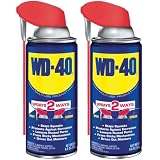
- Drives out moisture and quickly dries out electrical systems to eliminate moisture-induced short circuit
- Acts as a corrosion inhibitor to shield against moisture and other corrosive elements to prevent rust
- Frees sticky mechanisms, loosens rust-to-metal bonds and helps release stuck, frozen or rusted metal parts
- Helps life grease, grime, gunk, gum, tar, sap, super glue, sticker residue, and other sticky stuff from multiple surfaces
- Lubricates moving parts such as hinges, wheels, pulleys, rollers, chains, and gears
Can I spray WD-40 into a keyhole?
A light application may help a dirty or corroded lock mechanism, but excess liquid can collect dust. Use only what the lock manufacturer permits, operate the key gently, and wipe away residue around the cylinder.
Will WD-40 stain clothes or upholstery?
It can leave an oily mark, so apply it to an applicator rather than directly onto fabric whenever possible. Test a hidden area and launder or clean according to the material’s care instructions.
Is WD-40 a substitute for grease on bearings?
The Multi-Use Product provides light lubrication, not every type of long-life bearing grease. Use the lubricant grade specified by the bearing or equipment manufacturer when a part operates under high load, high temperature or continuous service.

