Some links on this page are affiliate links: if you buy through them we may earn a commission, at no extra cost to you.
To grow quinoa for edible seed, sow it shallowly in a fine, workable seedbed, keep weeds under control while seedlings establish, and plan for the seed to mature and dry before autumn rain. Oregon State University Extension’s detailed guidance comes from field trials in western Oregon, so use its recommendations as a starting point—not a guarantee for every garden or climate.
How do I grow quinoa at home?
Quinoa is grown from seed. The main tasks are choosing seed suited to your growing season, establishing it in a prepared seedbed, protecting young plants from weed competition, and harvesting mature seed before wet autumn weather can cause it to sprout.

As an Amazon Associate I earn from qualifying purchases.
The Tool Desk
Outbyte Driver Updater FREEScan for outdated or missing drivers - takes under a minuteDriver Scan →Outbyte PC Repair FREEClear out junk files and repair common Windows errorsFree Scan →1. Choose seed with your climate in mind
Look for quinoa seeds or seed varieties with maturity information relevant to your region, and verify current availability and cultivar identity before buying. Oregon State University Extension evaluated varieties including Oro de Valle, Kaslaea, Titicaca, Puno, QQ74, Cherry Vanilla, Ivory, Mint Vanilla, Red Head, and Bio Bio in its Willamette Valley trials. Those trial names are not a recommendation for every climate, and the guide does not establish that each variety is currently sold.
2. Plan for the full growing season
OSU Extension gives a range of 100–120 days for varieties to reach full maturity. Count backward from the point in your local season when autumn rain is likely to interfere with drying or cause mature seed to sprout. This is a planning range from Oregon production guidance, not a universal planting calendar.
3. Sow into a workable seedbed, not waterlogged soil
Quinoa generally does not thrive in excessive soil moisture. If spring rain leaves standing water, wait until the seedbed is workable rather than sowing into saturated ground. In Oregon’s trials, earlier planting could benefit yield, but wet soil and limited access for cultivation made the earliest timing more difficult to manage.
4. Prepare a fine seedbed and sow shallowly
OSU’s production guide specifies a fine seedbed and a sowing depth of one-quarter inch. It warns that deeper planting can result in poor emergence. This is field-production guidance that can inform garden sowing; the publication does not report a separate home-garden trial.
What’s actually slowing this PC down?
Pick the symptom - the matching free tool is one click away.
When should I plant quinoa?
Plant when the soil is workable, but leave enough of the growing season for seed to mature and dry before autumn rain. The right date depends on local spring conditions and fall weather, so the Oregon trial dates should not be applied nationally.
Also popular on Amazon

- AMAZING COLOR: Hot pink to royal burgundy, red, orange, yellow, white, green, and every bright combination.
- EASY TO GROW: Sows 25 feet at (thinned) spacing of 12-18'on 24' rows. From Frank Morton... Our latest selection from our most striking color choices.
- CZ GRAIN GUARANTEE: Get the highest quality seeds and all of our seeds are Non-GMO. Pick from our large variety of heirloom or organic seeds! Satisfaction Guaranteed
- GROW OR GIFT: Seeds are a great gift for anyone from kids, parents, grandparents. Great STEM project. Its fun and easy to grow your own food.
5. Allow for emergence, then keep checking the row
Under favorable conditions, quinoa usually germinates and emerges within a week, according to OSU Extension. That is not a guarantee: weather and seedbed conditions affect emergence. Check the planting regularly so you can spot uneven establishment and weeds early.
6. Stay ahead of weeds while seedlings establish
After the first true leaves appear, quinoa’s canopy growth may slow for two or more weeks as roots develop. During that interval, weeds can get ahead of the crop. The OSU guide emphasizes good seedbed preparation and describes mechanical cultivation or hand-weeding. Its statement that no selective herbicides were labeled for quinoa production is dated; do not treat it as a current registration check or as advice to use any particular product.
7. Balance early planting against weed pressure
In OSU’s 2018 Oregon trial, estimated hand-weeding labor was 166 hours per acre for a March 31 planting, compared with 41 hours per acre for May and June planting dates. These are field-scale estimates, not a prediction of garden labor. The same regional work found the earliest planting dates produced the greatest yields, while late planting risked lower yields and harvest conflicts. For a home plot, the practical choice is a workable planting window that leaves enough time to mature without making early weed control unmanageable.
Free tools Windows power users keep installed
One-click scans. No signup required.
Also popular on Amazon
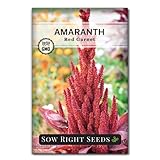
- Productive - Amaranth germinates in 14-21 days when soil temps are 65-75°F. Plant 1/8” deep and space 6-12” apart in an area with full sun. This variety will grow 6’ tall with a spread of 1-2’. Seed heads will mature in 50-60 days, plant in USDA zones 5-12.
- Good Eats - Produces edible leaves and seed heads that can be eaten or left to feed goldfinches and other wildlife. Young leaves can be harvested and eaten as greens, or try toasting the grains. It is lovely in flower beds or your vegetable garden!
- Easy to Grow - Instructions included on each packet. Plus, we are available to answer all your questions. If these seeds don’t germinate, we will happily make it right for you.
- Safe and Sustainable - Our operation is fully solar powered, and Sow Right Seeds has taken the Safe Seed Pledge to sell only fresh Non-GMO heirloom seeds for you and your family.
What can affect quinoa seed production?
8. Watch for heat and pest-related seed damage
OSU Extension reports that many quinoa varieties may fail to produce seed if summer temperatures exceed 95°F during flowering and early seed set. This is a conditional risk from the guide, not a prediction for every variety or location. In the 2018 Willamette Valley trial, lygus bug feeding caused heavy seed damage; in 2019, seed set improved with experimental insecticidal controls. Those trial findings identify possible risks, not a pesticide recommendation for home gardeners.
How long does quinoa take to grow?
The OSU guide’s estimate is 100–120 days to full maturity, with actual timing depending on variety and conditions. Maturity is best judged by the seed itself rather than by assuming a fixed number of days or waiting for the whole plant to become dry.
Independent reader supportYour contribution helps us test, update, and keep practical guides available for everyone.How do I harvest quinoa?
9. Check that the seed is firm
Oregon State University Extension states: “Quinoa seed is mature when it is hard.” Press a seed between your fingers as a simple maturity check. A mature seed head can remain on an upright plant even while stems and leaves are still moist.
Also popular on Amazon

- TRI-COLOR QUINOA: A vibrant blend of organic red, white, and black quinoa. Mild, nutty, and tender when cooked.
- GET CREATIVE: Perfect as a base for grain bowls, veggie burgers, or hearty salads; pairs beautifully with grilled meats, roasted vegetables, and endless plant-based dishes.
- SUPERFOOD GRAIN: A complete protein with all 9 essential amino acids, plus fiber, iron, magnesium, and antioxidants to support energy and muscle health.
- CERTIFIED QUALITY: Certified organic and Kosher.
- FUN FACT: Quinoa contains nearly twice the fiber of most grains and was considered the “mother of all grains” by the ancient Incas.
10. Harvest before fall rain can sprout seed in the head
Mature quinoa seed left in the field during rain may sprout while still attached to the head, ruining the crop. For small-scale harvesting, OSU describes cutting plants, drying them on tarps, and then threshing them. The guide does not establish a home-scale drying time or storage method.
Recommended Free Tools
11. Remove saponins before using seed as food
Quinoa seed contains bitter saponins. OSU Extension says seed intended for human food needs saponins removed by abrasion, washing, or both before packaging or food processing. Its guide does not provide a household cleaning recipe, so it should not be taken as a specific processing or food-safety protocol.
What the Oregon guidance can—and cannot—tell you
Oregon State University Extension’s Quinoa production for the Willamette Valley is a peer-reviewed production guide based on trials at the North Willamette Research and Extension Center in Aurora, Oregon, including work from 2018 and 2019. The 2019 trials evaluated 17 varieties and four planting dates. The results offer useful clues about establishment, weeds, heat, pests, and harvest timing, but they do not establish expected yield from a garden bed, a home irrigation schedule, or a universal variety ranking.
Quick Recap
Product prices and availability are accurate as of the date/time indicated and are subject to change. Any price and availability information displayed on Amazon at the time of purchase will apply.

